Online B2B platform RateHawk has introduced a new sustainability certification filter in its accommodation search – this tool helps travel professionals find properties with lower carbon footprints, eco-friendly practices, and thoughtful sustainability initiatives.
Users can select this filter to browse a list of greener options. Relevant accommodation will also display a sustainability certification badge on their hotel card for easy identification.
RateHawk has launched a sustainability certification filter to help travel professionals find eco-friendly accommodation
The new filter is available on the RateHawk website and mobile web.
Ilya Kravtsov, chief commercial officer of Emerging Travel Group, RateHawk’s parent company, commented: “By rolling out a sustainability certification filter, we aim to help travel professionals and their clients quickly and easily find eco-certified options. This update is particularly crucial for users in the travel management company sector, as sustainability policies are increasingly prioritised by their corporate clients. This initiative reflects our commitment to creating a user-friendly platform that meets all our customers’ needs and supports the sustainable development of the tourism industry.”
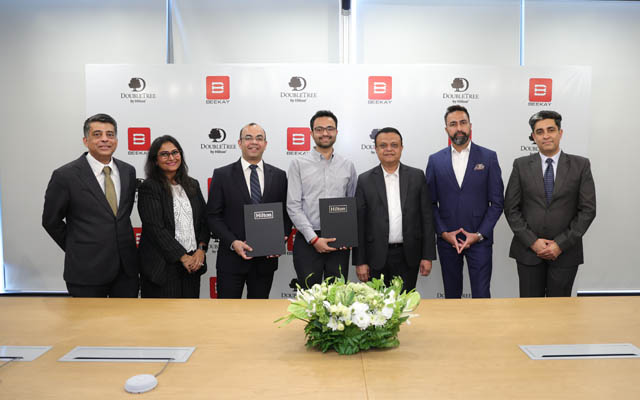
Hilton has signed its first DoubleTree by Hilton Hotel in Siliguri Sevoke Road, in partnership with Soonerio Hotels, a subsidiary of the Beekay Group, marking the brand’s debut in Siliguri, West Bengal, known as the gateway of North-east India.
Set to open in 2028, the 120-key DoubleTree by Hilton Siliguri will enhance Hilton’s presence in North-east India, offering guests the signature hospitality the DoubleTree brand is known for globally.
DoubleTree by Hilton Siliguri marks Hilton’s debut in West Bengal
Upon completion, the property will offer a variety of standard rooms and suites, diverse dining options, flexible meeting and event space, and wellness amenities including a fitness centre, spa, and outdoor pool. Its prime location on Sevoke Road, one of the city’s most prominent corridors, will provide an easy accessibility to Bagdogra Airport and the new Jalpaiguri Railway Station
Gopal Garg, director of Soonerio Hotels and executive director of Beekay Group, commented: “Siliguri is a pristine destination, one with the right blend of urban comforts, rich cultural heritage and untapped natural beauty. Partnering with global hospitality giant, Hilton, to bring the first DoubleTree by Hilton hotel to the city is a great opportunity to tap into the growing tourism market and elevate the hospitality landscape.”
“With a trading and pipeline estate of over 20 DoubleTree by Hilton hotels in South Asia, this new property in Siliguri joins a growing portfolio. We are optimistic about the brand’s growth momentum and look forward to capturing even more opportunities in this segment,” added Clarence Tan, senior vice president, development, Asia-Pacific, Hilton.
Urban Resort Concepts has appointed three senior executives to lead its corporate team, reinforcing the company’s commitment to delivering handcrafted experiences through culturally immersive guest journeys while driving innovation and growth across its expanding portfolio in Asia.
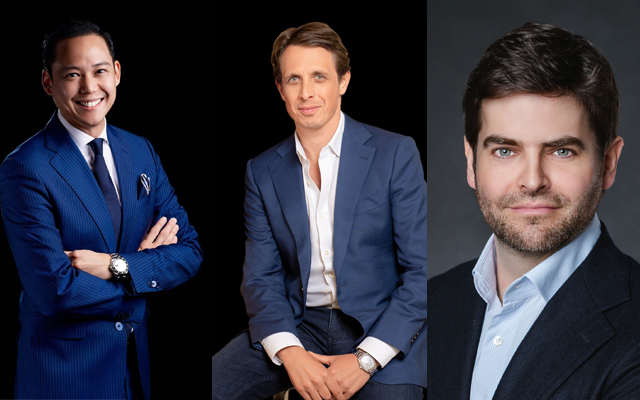
Nicholas Liang, with over 22 years of luxury hospitality experience across Asia, Europe, and the Middle East, is the new vice president of operations. He was recently general manager at Four Seasons.
From left: Nicholas Liang, Michael Faulkner and Andreas Zimmermann
Michael Faulkner takes on the vice president of brand and commercial role. He brings with him an extensive experience in luxury hospitality, having held senior commercial leadership roles with brands such as Swire Hotels, Park Hyatt, and Crown Resorts.
Named vice president of development, Andreas Zimmermann hails from a strong background in luxury hospitality project management. Formerly corporate director of development for Rosewood Hotel Group, he has led the development of luxury hospitality projects across Asia-Pacific, overseeing feasibility studies, financial management, and contract negotiations.
South African Tourism is intensifying its efforts to restore tourism from its two key Asian outbound markets, India and China, to pre-Covid growth levels. In addition to trade initiatives such as roadshows and fam trips, the NTO is prioritising faster visa processing to regain pre-pandemic visitor numbers from these markets.
“India and China are our two key growth markets in Asia. We are organising a roadshow in China in September 2025 and another in South Africa in January next year, specifically targeting the Chinese market. Additionally, fam trips are planned for China. As part of our efforts, we will be hosting 30 to 35 travel agents from India at our annual trade show, Indaba 2025,” said Gcobani Mancotywa, regional general manager for Asia, Australia and Middle East, South African Tourism on the sidelines of a roadshow in New Delhi.
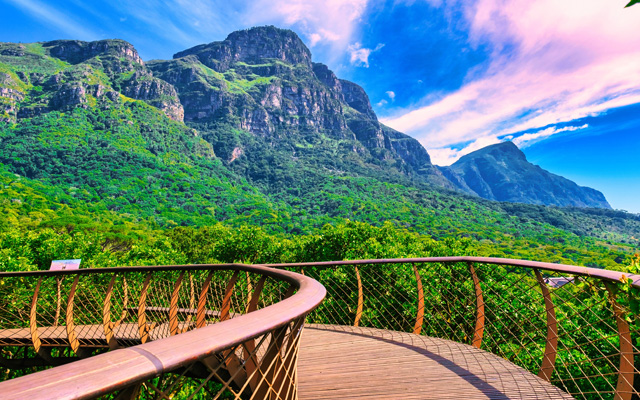
South Africa is ramping up efforts to restore tourism from India and China to pre-pandemic visitor levels; Kirstenbosch National Botanical Garden in Cape Town, pictured
South African Tourism’s 21st annual India roadshow series commenced in New Delhi on March 18, followed by stops in Chennai and Mumbai on March 19 and 20, respectively.
A major factor impeding tourism growth from India and China to South Africa has been visa constraints. To address this, the South African government introduced the Trusted Tour Operator Scheme (TTOS) last year for both India and China, simplifying visa procedures. The scheme allows approved tour operators from South Africa’s Department of Home Affairs to submit group visa applications on behalf of their clients, reducing the number of required supporting documents. Phase 1 of the scheme saw fourteen tour operators from India and twenty-nine from China accredited, and plans are now in place to expand TTOS and accredit more tour operators in Phase II of the scheme this year.
“TTOS provides an opportunity for ease of visa processing. The commitment that we have given to the market through our home affairs is a maximum of three days turnaround in visa issuance which for example in the case of India was previously taking more than 12 days,” said Mancotywa.
In 2024, South Africa welcomed approximately 75,000 tourists from India, representing around 80 per cent of pre-Covid arrival numbers. Meanwhile, about 50,000 Chinese tourists visited the country during the same period, nearly half of the 95,000 recorded before the pandemic. South African Tourism is expecting a full recovery of tourist arrivals from India by the end of this year and from China by the end of next year.
Auckland Airport has signed a memorandum of understanding (MoU) with Delhi Indira Gandhi International Airport to further strengthen existing close ties between New Zealand and India through the sharing of best practices in airport operations, management, and customer experience.
Auckland Airport CEO Carrie Hurihanganui highlighted significant opportunities to enhance connectivity, tourism, and freight between New Zealand and India. She stated that both Auckland and Delhi Airports would collaborate to support the goal of establishing non-stop flights between Delhi and Auckland.
The MoU aims to strengthen ties between New Zealand and India while sharing best practices in airport operations and customer experience
Travel between India and New Zealand has grown 78 per cent since 2015, with 351,000 people travelling in 2024. Of these, 110,000 travelled between Delhi and Auckland. In 2024, 102,000 New Zealanders visited India, while 83,000 Indians visited New Zealand.
Hurihanganui noted that the Indian market offers significant growth opportunities, with Tourism New Zealand data revealing that around 18 million people are actively considering a visit to New Zealand, and 57 per cent of them identify it as their top destination choice.
Delhi Airport is directly connected to 71 international cities, including London, Dubai, Singapore, New York, Toronto, and Sydney.
Hurihanganui added: “While there are no non-stop flights at this time, we know there is strong and growing demand for people wanting to travel between India and New Zealand, and this partnership will work to grow that demand even more.”
Commenting on the collaboration, Videh Kumar Jaipuriar, CEO of Delhi International Airport, said: “This partnership promises to drive long-term growth and strengthen the ties between our two great nations. We look forward to working closely with Auckland Airport to help make non-stop flights a reality and to share best practices in airport operations and customer experience.”
Kerala, one of India’s most renowned tourist destinations, is expanding its tourism offerings beyond its traditional backwaters, beaches and houseboats by focusing on new segments like adventure, heli and caravan tourism. This strategic shift aims to attract a wider range of visitors and enhance the state’s global tourism appeal.
Under the public-private partnership (PPP) model, Kerala Tourism is facilitating private operators in establishing heliports at key locations to boost heli tourism. Caravan parks are also being developed in destinations like Palakkad and Munnar in collaboration with private players.
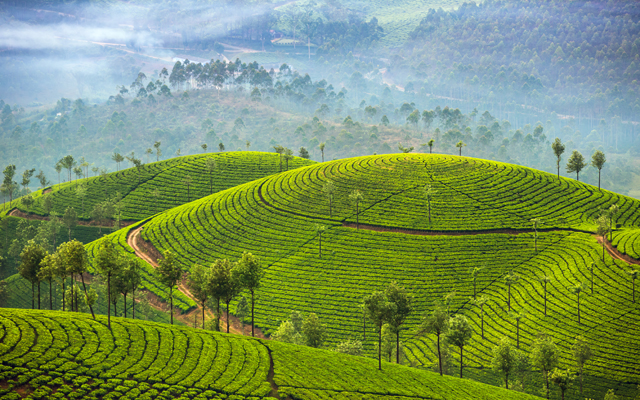
Munnar is known for its beautiful tea estates and tea cultivation
“We are focusing on heli tourism with the objective of providing easy and quick access to tourist destinations, especially to remote locations. For adventure lovers, the state offers trekking, rock climbing and camping in the hills. A host of events are lined up to promote Kerala as a destination for adventure tourism,” said Sikha Surendran, director of Kerala Tourism. Some of the adventure sporting events planned for 2025-2026 include the Malabar River Festival, Chaliyar River Paddle and Tour of Thekkady.
E M Najeeb, chairman of ATE Group of Companies emphasised the importance of diversifying Kerala’s tourism offerings. “Introducing new tourism products such as heli tourism and caravan tourism is essential to boost tourist numbers as visitors who have already experienced the existing products seek new experiences,” he said.
To enhance heritage tourism, the Kerala government has announced plans to organise heritage walks, engaging students and local communities in promoting the state’s rich cultural legacy. These walks will bring historical landmarks to life, offering tourists an opportunity to deepen their understanding of Kerala’s traditions and heritage sites.
Sejoe Jose, chairman of the Indian Association of Tour Operators (IATO) southern region welcomed these initiatives.
“It is good to see that Kerala is looking beyond its usual tourism products to grow the sector. Once these plans are effectively implemented, they will greatly improve the visitor experience and boost Kerala’s tourism reputation,” he noted.
Despite strong growth in the domestic tourism market, international arrivals have yet to reach pre-pandemic levels in the state. Kerala welcomed approximately 1.19 million international tourists in 2019 but this number declined to 0.65 million in 2023. On the other hand, Kerala recorded 21.87 million domestic tourist arrivals in 2023 compared to 18.83 million domestic tourist arrivals in 2019.
Rama Mahendru, country general manager for India at Intrepid Travel, said: “We have seen a steady demand from our source markets including the UK, Australia and North America. However, it will take another year for us to reach pre-pandemic growth levels. Kerala is often marketed as ‘God’s Own Country’, but it is high time to shift from traditional promotions to more authentic and experience-led storytelling. The state government should focus on digital campaigns, influential collaborations and immersive videos that showcase real traveller stories, cultural depth and sustainable tourism efforts.”
Giving an example of Cochin International Airport, which is the world’s first airport fully powered by solar energy, Mahendru said there is a need to create awareness about such sustainable tourism practices undertaken by the state.
Surendran: Kerala can offer diverse tourism experiences
To spur international arrivals, Kerala Tourism is expanding its focus to South-east Asia alongside key markets like Europe and North America. “We have already done a roadshow in Malaysia and plan to organise similar roadshows in other South-east Asian markets,” Surendran added.
For The Fern Kochi, international travel demand is trending up. General manager Anoop Peter told TTG India that “strong demand” is coming out of Arab markets, including Saudi Arabia and Dubai, Russia, and European countries like the UK and Germany.
He added that guests from Italy and the Netherlands have started to arrive – something not seen previously.
“In fact, demand is so strong that we have international bookings extending until 2027,” stated Peter.
Kerala’s travel and tourism industry stakeholders also see potential in growing the destination through medical tourism and destination weddings.
Ayurveda, in particular, deserves more promotion, they say.
Abhilash K Ramesh, executive director of Kairali Ayurvedic Group, said: “Last year, we recorded a healthy 80 per cent occupancy, with domestic markets contributing 70 per cent and international visitors 30 per cent. I believe that much more can be done to attract international visitors. It is high time we start promoting Kerala as a medical tourism destination, especially for Ayurveda. Enhancing direct air connectivity from Europe, the Middle East, and South-east Asia will go a long way in boosting the medical tourism sector.”
As for destination weddings, Kerala’s strengths lie in its “wide range of wedding venues including serene backwaters, pristine beaches, lush hill stations and charming village properties,” opined Kerala Tourism’s Surendran.
“We also have expert wedding planners and exceptional hospitality service providers to ensure a stress-free and memorable experience,” she added.
Meanwhile, a key initiative introduced in the state government’s recent budget to further boost tourism is the K-Homes project, which aims to increase accommodation availability by utilising unoccupied homes near major tourist destinations.
Initially rolling out in Kovalam, Kumarakom, Munnar and Fort Kochi, the project will provide visitors with comfortable stays that offer an immersive cultural experience. Online booking facilities will be developed to streamline reservations for these stays, complementing Kerala’s existing hospitality infrastructure of five-star hotels, premium resorts and government rest houses.
With strong backing from the government and the local travel trade, the southern Malaysian state of Johor is gaining more attention in the space of travel and tourism. It recently played host to the ASEAN Tourism Forum (ATF), South-east Asia’s premier travel trade event.
It was the state’s first such prestigious gathering, which attracted nearly 300 international buyers and 100 exhibitors from across the region. The event featured ASEAN bloc ministerial meetings, technical tours, and site visits that introduced delegates to Johor’s attractions firsthand, including Legoland Malaysia Resort, Johor Premium Outlets, and a city tour of Johor Bahru, the state capital.
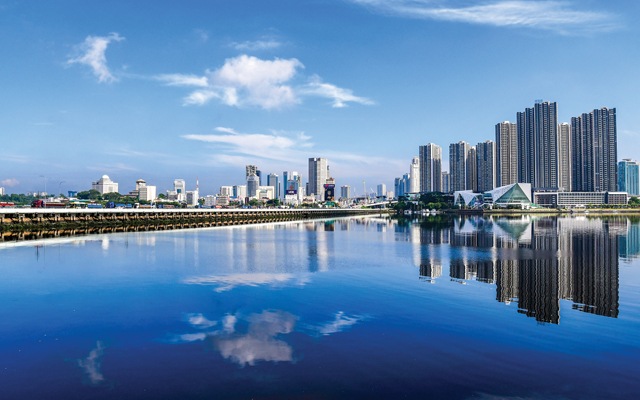
Skyline of Johor Bahru, the capital of Johor state
Sharil Nizam Abdul Rahim, director of Tourism Johor, told TTG India: “Hosting ATF allows us to showcase our offerings and for the travel trade to experience the destination firsthand. It’s also a valuable networking opportunity to build relationships with foreign travel agents.”
The timing of ATF was strategic, aligning with preparations for Visit Malaysia Year 2026. Johor’s own Visit Johor Year 2026 campaign will run concurrently, leveraging the national initiative spearheaded by the Ministry of Tourism, Arts, and Culture Malaysia.
The national campaign aims to draw 35.6 million international arrivals, up from 31.4 million in 2024, and generate 147.1 billion ringgit (US$32.7 billion) in tourism revenue. Johor’s ambitious targets include welcoming 12 million foreign tourists and generating 42.48 billion ringgit in tourism receipts by 2026, building on its 2024 goals of 22 million tourists and 38.94 billion ringgit in revenue.
Infrastructure upgrades are central to Johor’s strategy to enhance accessibility. The completion of Senai International Airport’s upgrade in late 2023 significantly bolstered its capacity to accommodate international arrivals.
Edwin Tay, chairman of the Malaysian Chinese Tourism Association’s Johor chapter, highlighted the strategic impact of new direct flights introduced by Batik Air in late 2024, including daily services from Johor Bahru to Thailand’s Bangkok and biweekly flights to China’s Kunming. “These flights provide international travellers with direct access to Johor Bahru, without the need to go through Kuala Lumpur or Singapore. It will also attract potential business investors to the state,” Tay noted.
Senai International Airport also connects Johor with major cities such as Guangzhou and Haikou in China; Ho Chi Minh City in Vietnam; Jakarta and Surabaya in Indonesia; Mecca and Medina in Saudi Arabia. To further enhance connectivity, Tourism Johor collaborates with Senai Airport Terminal Services and local authorities to attract more international airlines, offering marketing and operational support to optimise their operations.
Cross-border travel with Singapore, Johor’s largest tourist market, has also been streamlined.
Both countries have implemented QR code systems for faster immigration clearance, reducing land congestion. This initiative stems from an MoU to develop a framework for the Johor-Singapore Special Economic Zone, which includes exploring passport-free clearance.
Sharil highlighted that Singaporean tourists, who often visit for shopping, dining, and leisure, contribute significantly to Johor’s tourism economy. “Singaporeans typically have higher spending power compared to tourists from other ASEAN member countries,” he said.
Other markets are no less valuable, he emphasised, as their travellers tend to travel in large groups, translating into substantial revenue for the travel and hospitality sectors.
Johor’s appeal is bolstered by its diverse attractions, to attract tourists with varied interests.
The Desaru Coast Adventure Waterpark features Kraken’s Revenge, Malaysia’s first water coaster, and Tidal Wave Beach, which generates waves up to four meters high, ideal for surfing. This waterpark is part of Desaru Coast, Malaysia’s first premium integrated destination.
Less than a decade old, Desaru Coast boasts renowned five-star international hotel brands, a conference centre, two championship golf courses, and pristine white sandy beaches along the South China Sea.
Arokia Das Anthony, executive director of The Essence of Asia Tours & Travel, emphasised Desaru Coast’s growing prominence.
“Desaru Coast is a premium development that has quickly become a sought-after destination for both leisure tourism and business events,” he remarked.
“Seven years ago, we included Johor as part of a multi-destination programme with Singapore, Melaka, and Kuala Lumpur. Today, Johor stands on its own as a mono-destination for regional travellers, thanks to its world-class offerings.”
Johor’s tourism evolution reflects a dynamic partnership between the public and private sectors. As the state prepares for Visit Johor Year 2026, it is positioning itself as a key player in Malaysia’s broader tourism strategy. With enhanced infrastructure, new flight routes, and a growing portfolio of attractions, the state is poised to attract an even larger share of international visitors, securing its place as a premier destination in South-east Asia.
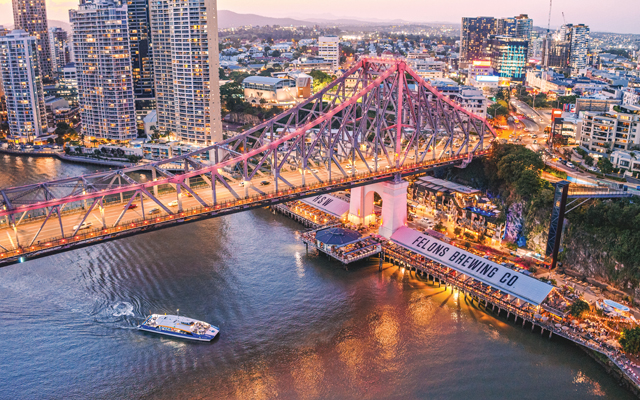
Howard Smith Wharves is Brisbane’s popular dining and party precinct
Brisbane: Big buzz coming
Brisbane is emerging as Australia’s most exciting city for tourism, driven by a culmination of strategic developments, new attractions, and the 2032 Olympic Games on the horizon.
From the multi-staged opening of the Queen’s Wharf Precinct to the activation of the Brisbane River and the launch of Bluey’s World, these efforts have been elevating Brisbane’s appeal on the global stage, transforming it into a key destination rather than just a stopover.
“Brisbane’s momentum is the product of a crescendo that’s occurred over a decade. (We have) enormous prospects, prosperity, and opportunity for growth, and that’s exciting,” Oliver Philpot, acting CEO at Tourism and Events Queensland (TEQ), told TTG India.
Philpot said Bluey’s World has been an important addition because of its global profile. The attraction has drawn unexpected fans like Virat Kohli, the captain of the Indian Cricket team, who posted about his recent visit with his family to his 150 million Facebook followers.
Other drawcards include Agnes, which was voted Australia’s best restaurant in 2023, alongside a growing array of exceptional dining experiences, rooftop venues, and laneway bars.
“What’s now added is your ability to string together a two- or three-day itinerary, particularly for international visitors, that offers enough quality and density to keep them here longer and use Brisbane as a base, something that wouldn’t have occurred 10 years ago,” Philpot explained.
Brisbane’s growing popularity is confirmed in its international overnight visitor statistics, which were up 8.5 per cent last September over its previous five years.
The growth of international aviation links has been a significant contributor to Brisbane’s tourism story. Flight capacity from North America recently reached record levels and connections to South-east Asia and India are expanding.
At the same time, premium and luxury offerings are thriving, catering to a growing market of sophisticated international tourists.
Brisbane will be hosting this year’s Australian Tourism Exchange, which is expected to showcase its expanding portfolio to global tourism stakeholders. – Adelaine Ng
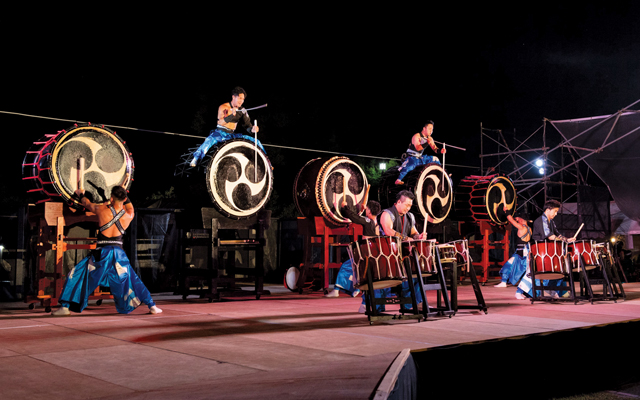
Matsumoto Drum Festival
Matsumoto: Timeless appeal
In Nagano Prefecture’s Matsumoto, halfway between Tokyo and Kyoto, tourism stakeholders are strengthening the city’s reputation as a historic destination while developing new cultural and outdoor attractions.
At Matsumoto Castle, a National Historic Site and the city’s largest draw for visitors, the southern and western outer moats are being restored to their mid-19th century form. New experiences within the grounds include wearing samurai armour and making traditional candy.
From December to February, the event Light and Ice Matsumoto transforms the castle at night with colourful projection mapping related to the city, ranging from ukiyo-e woodblock prints to screen paintings from centuries ago. Two model courses, which showcase nature walks and photogenic spots in winter, have also been introduced for visitors.
Matsumoto City Museum, which opened in 2023, celebrates the city’s feudal heritage and tells the story of how Matsumoto and the surrounding region developed, with a permanent exhibition on the castle. Special exhibits introduce the city’s rich culture, such as the temari silk hand-embroidered balls that were first made in Matsumoto, and proximity to nature including the Chubu Sangaku National Park.
There is greater activity in adventure tourism. The new Shinpi Trail, a 113km walking route, connects Matsumoto with Takayama in six sections that traverse the area’s ancient highways through mountains and villages. Hikers can expect views of rivers, volcanic peaks and valleys, rice fields and historic sites.
In the Norikura Highlands, there are new trekking and mountain bike tours, while companies in the Northern Alps offer experiences related to sake and hot springs.
Supporting infrastructure improvements have also emerged, in the form of more free Wi-Fi locations across the city and the deployment of fuel-efficient buses. Some roads are being widened, with dedicated lanes for pedestrians and cyclists.
Matsumoto Tourism and Convention Association has released a tourism website and guide, both in English, and participated in international industry events in Thailand, Taiwan and Japan. – Kathryn Wortley
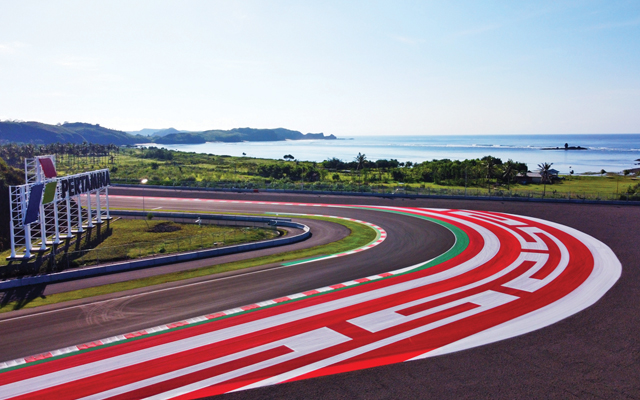
Pertamina Mandalika International Street Circuit in Lombok
Lombok: Highlight in the making
Lombok in Indonesia’s West Nusa Tenggara Province is fast gaining travellers’ attention, in part due to the Mandalika Special Economic Zone (SEZ), which is positioned as one of the country’s five super-priority destinations.
SEZ is home to the Pertamina Mandalika International Street Circuit, which hosts international races such as Superbike World Championship, MotoGP Indonesia, the Asia Talent Cup, and the Asia Road Racing Championship. This year, the GT World Challenge Asia is among the races on Pertamina Mandalika International Street Circuit’s agenda.
Ni Made Ayu Marthini, deputy of marketing at the Indonesian Ministry of Tourism, pointed out that each super-priority destination has its own tourism development and marketing focus – for Mandalika, sports tourism and festivals get top attention.
Infrastructure development is still ongoing to ensure the destination attracts a wider range of year-round visitors.
The Indonesia Pertamina MotoGP Experience Gallery is a new addition, opened in 2024. It is the result of a collaboration between the Indonesia Tourism Development Corporation (ITDC) and Pertamina, Indonesia’s state-owned oil company. The museum is the world’s first MotoGP museum. It showcases race history and Pertamina’s support of automative sports since the 1960s.
ITDC has also signed a Land Use and Development Agreement with Morocco’s Kenzo Hospitality Investments in January for a 4,510m² beach house at Tanjung Aan. This luxury facility will offer dining, water sports, adventure activities, as well as spa and wellness facilities, making it a product suitable for families and sports enthusiasts.
Troy Warokka, ITDC commercial director, said the beach house was “part of ITDC’s strategy to strengthen Mandalika’s position as a world-class destination”. He added that the project would “create a sustainable and positive impact for the local community and economy”.
Hotels are a key component of Mandalika’s development plans. According to the SEZ masterplan, ITDC aims to expand room inventory from 1,000 currently to 9,000 across various categories.
However, Lombok’s tourism potential does not solely lie in Mandalika.
Sahlan Saleh, chairman of West Nusa Tenggara Tourism Promotion Board, shared that the Senggigi Art Market is being revitalised and transformed into an open public space with art performances, while tourism villages, such as the Bonjeruk and Tete Batu in East Lombok, have been developed to offer more home stays and improved infrastructure. Furthermore, local people are well trained to welcome travellers.
Premium stay options are emerging in Lombok. New openings include The Cocana Resort by Social Living Collections on Gili Trawangan, and Marriott International’s The Sira, a Luxury Collection Resort and Spa, Lombok.
As these investments come through, the government’s Regional Long-Term Development Plan 2025-2045 also show connection improvements. A bypass road will connect Lembar Port in West Lombok and the Kayangan Port in the East, while North and South cross-island roads will connect Mataram and Central Lombok to North Lombok. – Mimi Hudoyo
Lord Ram Temple opened in Ayodhya in 2024
Ayodhya: From ancient town to tourist hotspot
The government of northern Indian state, Uttar Pradesh is spearheading efforts to transform Ayodhya into a premier tourist destination. The grand inauguration of the Ram Temple last year, constructed at an estimated cost of US$225 million, marked a pivotal moment in Ayodhya’s transformation.
According to international brokerage firm Jefferies, a US$10 billion makeover that included the construction of a new airport, a revamped railway station, enhanced road connectivity, and modern townships has also contributed to Ayodhya’s rise as a tourist hotspot.
“Ayodhya is experiencing exponential growth, attracting a significant number of tourists every month,” said Prateek Hira, president and CEO of Tornos, an experiential travel company based in Uttar Pradesh. “The state’s tourism policy is also highly conducive for investment, with infrastructure and policy incentives attracting top hospitality brands to open their properties in Ayodhya.”
Indeed, the hospitality industry has responded swiftly to Ayodhya’s rise. Major hotel chains such as ITC, IHCL, Radisson Hotel Group, Espire Hospitality Group, and Cygnett Hotels & Resorts are establishing a presence in the city to make the most of the tourist influx.
While Ayodhya’s spiritual significance remains a central draw, the state government is diversifying the destination’s tourism offerings.
The Uttar Pradesh Eco Tourism Development Board has initiated a project to enhance facilities around Udhaila Lake in Milkipur, a picturesque spot known for its migratory bird population. The development will include a kids’ play area, ghats (riverfront steps), cottages, a canteen, parking facilities, a nature trail, and more to attract nature enthusiasts and photographers.
“The new development at Udhaila Lake will provide much-needed amenities for visitors. The department of tourism aims to expand beyond spiritual tourism, with a focus on attracting tourists through other segments like ecotourism and rural tourism,” shared Jaiveer Singh, minister of tourism and culture, Uttar Pradesh. – Rohit Kaul
Sky Mirror Kuala Selangor
Selangor: Malaysia’s true gateway
It is easy to mistake Kuala Lumpur as the gateway to Malaysia, given that the country’s top two busiest airports, Kuala Lumpur International Airport Terminal One (KLIA1) and Kuala Lumpur International Airport Terminal 2 (KLIA2), carry the city’s name.
The Visit Selangor Year 2025 (VSY2025) campaign aims to correct this misconception and firmly position Selangor as the true gateway to the country. Both major airports are, in fact, located within Selangor.
Selangor is unique as the only state in Malaysia that is home to three airports with domestic and international passenger traffic. In addition to KLIA1 and KLIA2, the state also boasts the Sultan Abdul Aziz Shah Airport, more commonly known as Subang Airport.
While Subang Airport is smaller compared to its counterparts, it is a vital transit hub for domestic and regional flights. It is well-regarded for its proximity to urban cities, catering primarily to domestic and regional travellers.
The VSY2025 campaign underscores Selangor’s infrastructure readiness and connectivity beyond its airports. The state boasts an extensive network of highways and public transportation systems that link urban and rural attractions to other parts of Malaysia.
Anchored under the theme Surprising Selangor, VSY2025 aims to attract eight million visitors and generate 11.7 billion ringgit (US$2.6 billion) in tourism revenue.
Ng Suee Lim, state executive councillor for local government, tourism, and new village development, said: “VSY2025 aligns with Selangor’s long-term tourism strategy by focusing on a variety of tourism segments such as eco-tourism, agro tourism, art and culture, gastronomy, business events and medical tourism.
“Through the campaign, we want to reach out to all demographics with special emphasis on solo and female travellers, honeymooners, students and business professionals.
“Our goal is to showcase Selangor as a destination that has it all – breath-taking nature, rich cultural heritage and modern attractions.”
Collaborative initiatives with the travel trade, as well as organising fam trips for media, key opinion leaders and travel agents, aim to amplify the campaign’s global reach. – S Puvaneswary
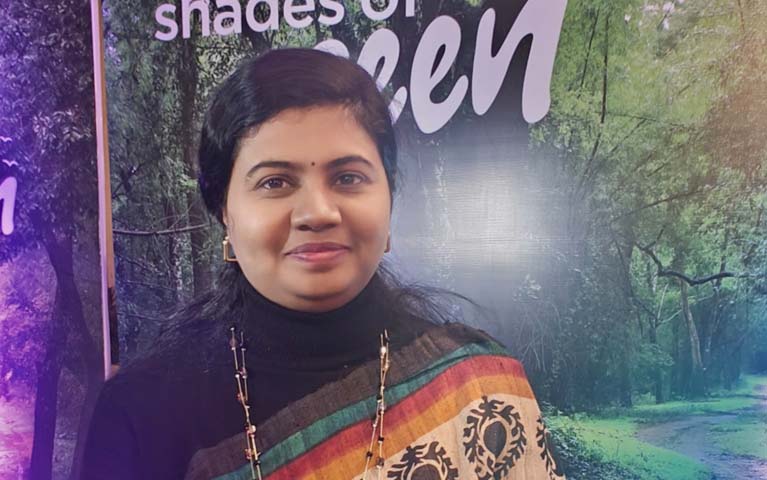
Kindly throw some light on the latest developments in your agency business.
We are continuously evolving to enhance our service offerings across travel, hospitality, and event planning. Recently, we introduced a new luxury service to elevate ground transportation for corporate and leisure travellers. Additionally, we unveiled a refreshed brand identity that encapsulates our three core verticals: holidays, celebrations and corporate services.
Tamarind Global is also investing significantly in digital transformation to enhance efficiency and elevate client experiences.
Our focus remains on expanding our presence in new markets, leveraging technology for efficiency, and curating top-tier, tailor-made experiences for our clients.
India’s inbound tourism business has been recovering relatively slower than outbound. How do you expect the upcoming inbound peak season this year to look?
Inbound tourism to India is on a gradual recovery path, though it hasn’t yet reached pre-pandemic levels. With improved infrastructure, targeted global marketing, and enhanced air connectivity, we anticipate steady growth for the upcoming season. India offers a wealth of diverse cultural and natural attractions, which is exactly what tourists are after. We expect increased demand from long-haul markets as well as a renewed interest in heritage, wellness and adventure tourism to help drive inbound numbers.
What trends are you spotting in inbound travel to India?
There has been a noticeable shift toward experiential travel (and) a rise in demand for sustainable tourism, where visitors are keen on eco-friendly stays and community-based tourism. Wellness retreats, spiritual journeys, bespoke cultural tours, among many, have also gained traction. The luxury segment is growing, with high-net-worth travellers looking for personalised itineraries that combine comfort with exclusivity.
Long-haul markets like Europe and North America have been key source markets for India. Do you see opportunities in short-haul markets like South-east Asia?
Absolutely. While Europe and North America remain crucial, there is significant potential in short-haul markets like South-east Asia and the Middle East. Many South-east Asian countries share cultural and historical ties with India, making it a natural extension for (people there) to seek diverse experiences (in India). By promoting customised itineraries, including Ayurveda retreats, wildlife safaris, religious and heritage circuits, we can position India as an attractive destination for these tourists.
What would you say are the current challenges hampering India’s inbound tourism growth?
One of the biggest challenges is India’s complex visa process. While some improvements have been made, simplifying and expediting visas will be crucial in attracting more foreign visitors.
India needs a stronger international marketing push (through) participation in global trade fairs and digital outreach, led by the ministry of tourism and government of India, to showcase its vast tourism potential.
Infrastructure development, including better roads, sustainable tourism initiatives, and enhanced public transport in key tourist regions, will also play a major role in scaling up inbound tourism.
Tax benefits, subsidies, and incentives for inbound tourism will encourage greater investment in the sector.
A more robust public-private partnership in policy-making, training programmes, and destination and site management will lead to more effective tourism growth.
How do you view the present corporate travel growth in India?
Corporate travel in India is witnessing a resurgence. As businesses expand and in-person meetings return, we have observed a steady increase in corporate bookings for events. Companies are now prioritising unique destinations and high-quality hospitality services for their events. We also see a growing trend toward bleisure travel, where business trips are combined with leisure experiences to offer professionals a more holistic travel experience. However, the affordability of international destinations compared to Indian offerings is causing many corporates to prefer taking their groups overseas.
What other plans are on the horizon for your company?
We are focusing on expanding our inbound travel business across key markets in Europe, North America, and South-east Asia. We are also investing in digital tools to enhance efficiency for a more intuitive digital booking platform.
Sustainability is on our agenda too. We are looking at ways to incorporate more eco-conscious travel options into our offerings. Our goal is to strengthen India’s positioning as a global luxury and experiential travel hub.
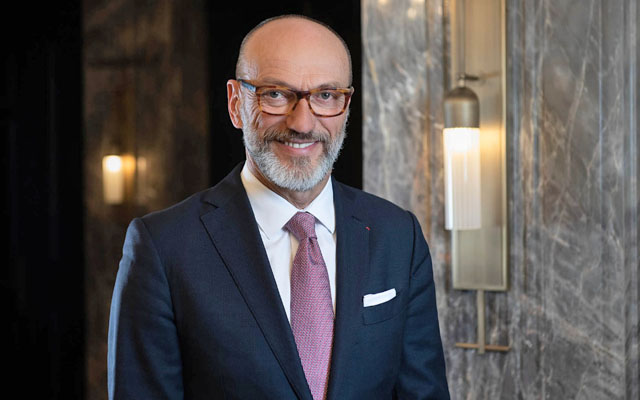
Dorchester Collection has appointed Philippe Leboeuf as CEO, effective June 2025.
A seasoned hotelier, Leboeuf joins from Raffles London, where he served as managing director.
With extensive experience in the luxury sector across multiple continents, he has held senior leadership roles, including director general of Concorde Hotels, owned by Taittinger, overseeing 19 owned and 70 affiliated hotels. He also served as a Board director of Leading Hotels of the World.









 Kindly throw some light on the latest developments in your agency business.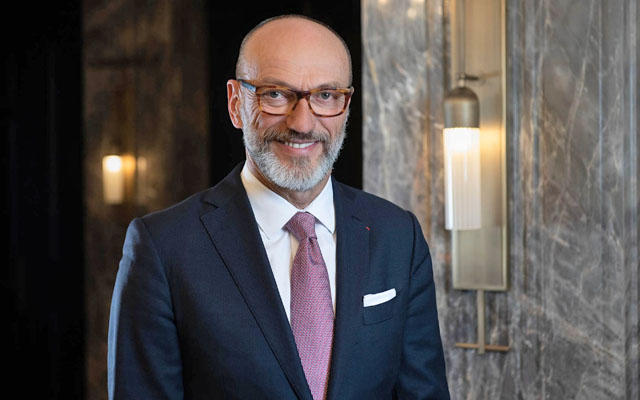
 With extensive experience in the luxury sector across multiple continents, he has held senior leadership roles, including director general of Concorde Hotels, owned by Taittinger, overseeing 19 owned and 70 affiliated hotels. He also served as a Board director of Leading Hotels of the World.