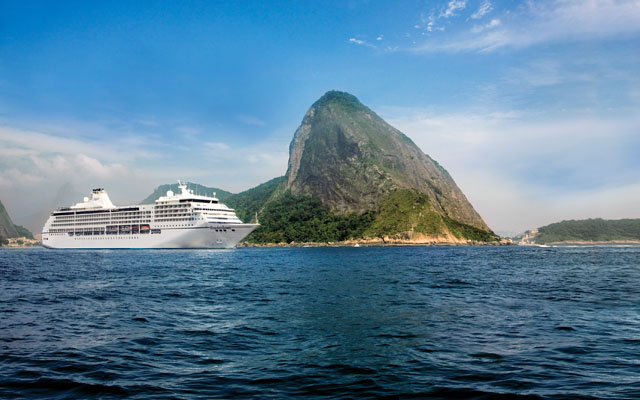
Royal Caribbean’s Navigator of the Seas will homeport in Singapore for the first time from October 2026 to February 2027, offering a range of three- to 12-night sailings across South-east and East Asia.
Itineraries include visits to destinations such as Penang, Langkawi, Phuket, Ho Chi Minh City, Danang, Bangkok, Tokyo, Hong Kong, and Taipei.
Navigator of the Seas’ Caribbean poolscape includes more pool space for all, a Splash Pad for children, The Lime and Coconut bar, and Johnny Rockets Express
Shorter cruises of three to five nights will focus on regional ports, while longer sailings of up to 12 nights will include extended visits and overnight stays.
Navigator of the Seas will feature a variety of onboard activities and dining options. These include waterslides, a surf simulator, a rock climbing wall, laser tag, and an escape room. Dining venues will range from seafood and Mexican eateries to American diner-style options. Entertainment includes theatre productions and ice skating shows.
The ship also offers a Caribbean-style pool deck, a blow dry bar, and themed bars such as The Bamboo Room.
Ayana Komodo Waecicu Beach has appointed Jean Philippe Lovotti as its new general manager.
Lovotti brings over 25 years of international experience in the luxury hospitality sector, having held leadership roles across Europe, South-east Asia, and the Pacific.
Groundbreaking for Changi Airport’s Terminal 5 (T5) took place on May 14, marking the start of construction on the airport’s largest expansion to date. The ceremony was officiated by Singapore’s prime minister and minister for finance, Lawrence Wong.
T5 will be equipped with automated systems to improve operational efficiency and meet future travel demand. Once completed, it will be connected to the existing terminals at Changi Airport, enabling integrated operations. The first phase of T5 is scheduled to open in the mid-2030s and will be able to handle around 50 million passengers annually.
Changi Airport marks the start of construction on Terminal 5, set to expand capacity and enhance connectivity; rendering of the baggage claim area, pictured
The terminal is being developed in response to expected growth in air travel, particularly in the Asia-Pacific region. It will also support the consolidation of the Singapore Airlines Group’s operations under one terminal, with space for other carriers to expand.
T5 will include a ground transport centre, which will integrate train, bus, taxi, and other transport services. Plans are underway to extend the Thomson-East Coast Line and Cross Island Line to the new terminal, improving access to and from the city and other parts of Singapore.
The terminal will also facilitate air-sea connectivity through improved links to ferry services for regional travel.
Automation will be used across both passenger-facing and operational areas. Technologies currently under trial will be scaled up by the time T5 begins operations, supporting efficiency and reducing reliance on manpower.
T5 will be built to energy-efficient standards, classified as a Green Mark Platinum Super Low Energy building. It will use renewable energy, including a large rooftop solar system, as well as a central building management system to monitor and control energy use.
The terminal design includes a series of curved roof structures of varying height to break up the building’s scale. The layout allows for natural light and includes indoor landscaping. Travellators and an automated people mover (APM) system will reduce walking distances. The APM will also connect T5 with Terminal 2 to facilitate transfers between terminals. Passenger flow will be supported by intuitive layout and wayfinding features.
The design work was paused in 2020 due to the Covid-19 pandemic and resumed in 2022. The terminal’s layout will allow it to be sectioned off to manage different passenger risk profiles if necessary, and will include features such as contactless touch points to support public health.
T5 is part of the larger 1,080-hectare Changi East development, which includes the Changi East Industrial Zone (CEIZ) and Changi East Urban District (CEUD). The CEIZ will support aircraft maintenance, logistics, and cargo operations, while the CEUD will provide commercial and business facilities near the terminal.
Yam Kum Weng, CEO, Changi Airport Group, said: “Our vision is for T5 to be mega yet cosy, a terminal that embraces the Changi DNA – delivering a personalised, stress free and positively surprising airport experience. As a new gateway to Singapore, T5 offers new possibilities and will bring new surprises.”
Scoot increases flight frequencies and capacity
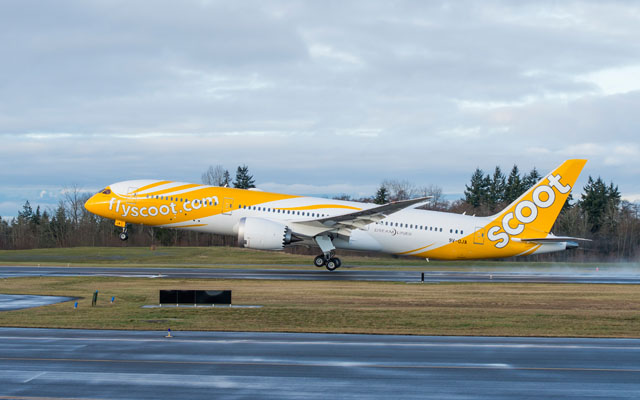
Scoot has announced a series of flight frequency increases and capacity upgrades across its network to meet growing travel demand in the coming months.
From June 6, Scoot will double its flights to Iloilo City from two to four times weekly. Flights to Cebu will increase from seven to ten times weekly starting June 24, while services to Davao will rise from nine to 12 times weekly from August 30.
In Australia, Scoot will expand its Perth services from 12 to 14 weekly flights beginning August 4. Sydney services will also increase from 10 to 14 weekly flights starting October 5.
The airline will boost services to Koh Samui from 21 to 25 weekly flights from June 24. Flights to Taipei and Seoul (via Taipei) will become daily from August 2, up from five times weekly.
Scoot has already implemented several changes since March this year. Flights to Jakarta increased from 19 to 25 times weekly on March 30. Capacity to Bali has grown, with all 21 weekly flights now operated by Boeing 787 Dreamliners. Yogyakarta flights now use Airbus A321 aircraft on all seven weekly services.
Scoot has also increased capacity on its Taipei and Tokyo (via Taipei) route, with all 12 weekly services now operated by Boeing 787s since March 30. Additionally, the airline raised frequencies to Phu Quoc from five to six flights per week.
Qantas
Qantas adds two new international routes, upgrades Dreamliner
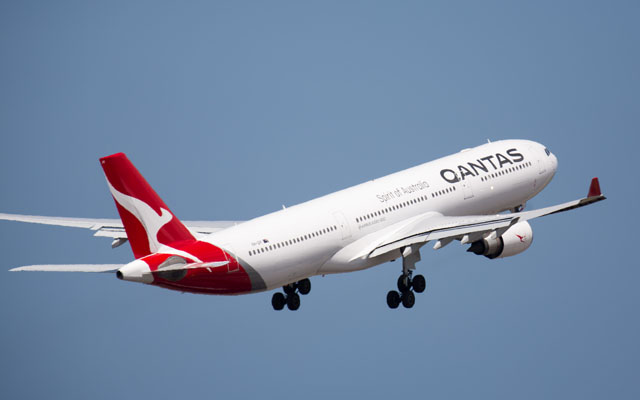
Qantas has announced the launch of two new international routes from Perth, with direct flights to Auckland and Johannesburg set to commence in December 2025. These services will operate three times weekly using Airbus A330 aircraft, offering 27 lie-flat Business Class seats and 224 in Economy.
The Perth-Auckland service will run on Mondays, Wednesdays and Saturdays, while the Perth-Johannesburg route will operate on Tuesdays, Thursdays and Sundays.
This expansion is part of Qantas’ broader strategy to grow its western hub, adding over 155,000 annual seats in and out of Perth.
Further bolstering its longhaul operations, Qantas will also introduce the Boeing 787 Dreamliner on its Brisbane-Los Angeles route from October 2025, operating daily.
During the peak travel season of December 2025 and January 2026, Qantas and American Airlines will jointly maintain daily Dreamliner services between Brisbane and Los Angeles, with Qantas operating four weekly flights and American Airlines three. Qantas will also increase Melbourne-Dallas flights to daily during this period, continuing daily Brisbane-Los Angeles services from February 2026.
In a network adjustment under its dual-brand strategy, Jetstar will end its Sydney-Honolulu route after October 24, 2025. Qantas will take over with five to six weekly flights, complementing its newly launched Melbourne-Honolulu service.
Lastly, Qantas will reintroduce its final Airbus A380 to daily Sydney-Dallas Fort Worth services from January 2026, offering expanded premium seating across First, Business, and Premium Economy cabins.
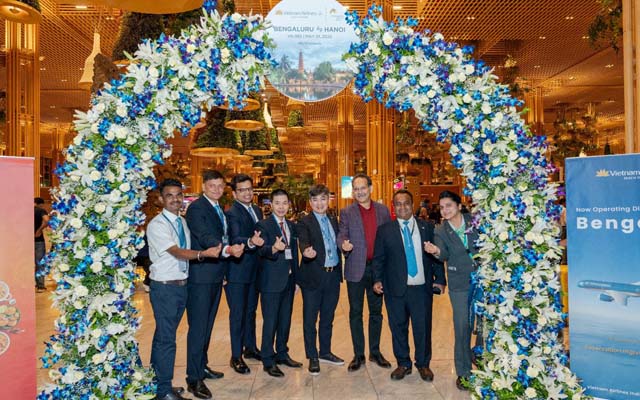
The inaugural Vietnam Airlines flight from Bengaluru to Hanoi was marked by a celebration at Kempegowda Airport
Vietnam Airlines starts direct flights from Bengaluru to Hanoi
Vietnam Airlines has commenced direct flights between Bengaluru and Hanoi. The airline will operate four flights a week using Airbus A321 aircraft. The service includes Indian meal options and basic onboard facilities.
This new route makes Bengaluru the third Indian city in Vietnam Airlines’ network, after Delhi and Mumbai. The airline is aiming to expand its connections with South India.
Philippine Airlines and Alaska Airlines
Philippine Airlines, Alaska Airlines partner on frequent flyer programme
Philippine Airlines (PAL) has teamed up with Alaska Airlines to expand travel options for members of their frequent flyer programmes. Soon, PAL’s Mabuhay Miles and Alaska’s Mileage Plan members will be able to earn and redeem miles across both airlines.
The partnership will also improve connections for PAL passengers travelling through the US West Coast, including Seattle, Los Angeles, San Francisco, and Honolulu, granting better access to Alaska Airlines’ domestic network in the United States.
Both airlines are also considering reciprocal codeshare flights, which would add more destinations and make travel between the Philippines and the US more convenient.
The partnership builds on PAL’s existing relationship with Hawaiian Airlines. PAL passengers can continue booking Hawaiian codeshare flights to cities in Hawaii, and soon, Hawaiian Airlines passengers will also be able to earn and redeem miles on PAL flights.
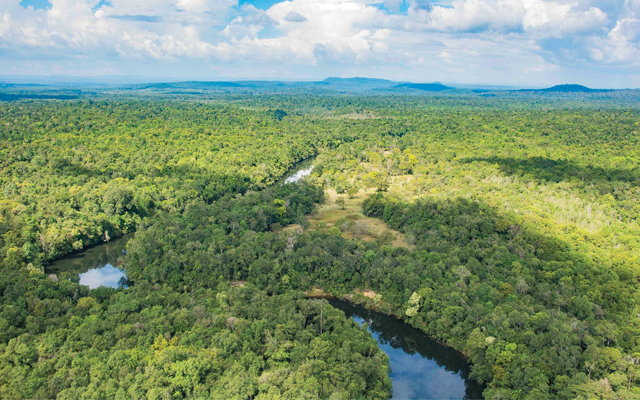
A major project is underway to make Cambodia’s Cardamom Mountains – the largest remaining intact rainforest in South-east Asia – and surrounding areas a regional ecotourism hub, with a series of tourism products, activities and infrastructure being developed in the Cardamom Mountains-Tonle Sap (CMTS) landscape.
Approved in 2021, the Cambodia sustainable landscape and ecotourism project (CSLEP) is a joint collaboration between the nation’s Ministry of Environment (MoE) and the World Bank. The US$55 million project, which runs until 2027, marks the World Bank’s heaviest tourism investment in the country.
The Cardamom Mountains will become an ecotourism haven, with CSLEP focusing on protecting ecosystems and biodiversity through sustainable practices
Its aim is to develop ecotourism, cut deforestation, and boost the livelihoods of impoverished communities throughout the seven provinces the Cardamoms span, the Tonle Sap Lake’s flooded forests, and Phnom Kulen in Siem Reap province. The area covers more than 3.8 million hectares, including one of the world’s most productive freshwater fisheries and Indochina’s largest protected forest.
“CSLEP will use ecotourism as a driver to boost economic prosperity of rural communities and strengthen management of the rich natural capital of the CMTS landscape,” MoE undersecretary of state Vann Saravuth said, adding the project also aims to strengthen the value chains of non-timber forest products to further elevate local income.
Many remote communities in the area traditionally rely on illegal logging and wildlife trafficking to support their livelihoods. The aim is to provide them with an alternative income source through tourism to halt these environmentally-detrimental activities and curb the deforestation that plagues the area.
Khin Meng Kheang, director of the MoE’s ecotourism department and CSLEP project manager, said the first phase of the project has seen 90km of roads built to connect target areas. Park ranger offices have also been constructed and 11 ecotourism destinations selected.
“Our landscapes are important green destinations,” he stated. “We need to take advantage of the opportunity to develop green ecotourism, which will support (forest and environmental) protection, law enforcement, and connectivity.”
A ranger moves through the Cardamom Mountains, watching for poachers
Hong Sok Heng, business development director at Travel Asia a la Carte, said the area has huge untapped ecotourism potential, welcoming it being sensitively developed.
“It has nature, forests, lakes, mountains and conservation projects. There are also local communities that we can work with and can give benefits to local people.”
Heng pointed to Shinta Mani Wild as an example of an upscale ecolodge in the area that doubles up as a guardian of the forest. The luxury jungle retreat protects more than 300 hectares of forest through a partnership with Wildlife Alliance to support a team of rangers who patrol the area on the lookout for poachers, loggers, and other illegal activities.
Under CSLEP, much needed infrastructure has also been added to connect various outlying areas. These include roads, a major bridge, and a planned network of more than 500km of hiking trails, of which some have already been completed.
“With products, activities, infrastructure, and more being added, I believe it will provide a better way to promote Cambodia to those who wish to enjoy nature,” Heng said, adding that due to upgraded infrastructure nation-wide, it is now possible to travel from Battambang to Koh Kong in the Cardamoms within one day.
“This is a good way to combine the Cardamom Mountains with other destinations, such as Angkor Wat in Siem Reap and Battambang,” Heng noted. “With the new added infrastructure, it will help us to promote the area better. So, we hope we will be able to get more demand.”
Heng added that to attract more visitors, a broader range of restaurants and accommodation is needed.
“Tourism should cater to different markets, both international and domestic, and for all levels of budget, from backpackers to luxury guests.”
A range of accommodation is starting to emerge, from the existing luxurious Shinta Mani Wild and Canvas and Orchid, to mid-scale options, including Krâvanh La Vallée Eco Resort, through to basic camp sites operated by local communities. Later this year, five-star wellness-centred Samanea River Resort and Spa is slated to open in Osoam, Pursat province.
To further promote the area, CSLEP recently organised a four-day fam trip to showcase the latest additions to the area and the potential in a bid to stamp CMTS firmly on the region’s ecotourism map.
Minor Hotels has made two senior leadership appointments for its Anantara resorts in Chiang Mai and the Golden Triangle.
Arnaud Béril, general manager of Anantara Golden Triangle Elephant Camp & Resort, will now also oversee Anantara Chiang Mai Resort as cluster general manager of both resorts. Jean-Marc Pougnet, resort manager at Avani+ Khao Lak Resort, will take on the role of general manager at Anantara Golden Triangle Elephant Camp & Resort.
From left: Arnaud Béril and Jean-Marc Pougnet
Béril, who returned to Anantara Chiang Mai after holding various operational roles across Minor Hotels’ properties in Thailand, has led various initiatives to enhance the resort experience, including the introduction of Canopy, A Tree Top Dining Experience, and the launch of Samsarn restaurant and the Mekong Explorer Tents.
Pougnet first joined Anantara Golden Triangle in 2018 as F&B manager, before moving to Avani+ Khao Lak Resort in 2021. He brings extensive experience in food and beverage and operational roles across Europe, Africa, and Asia.
EY has released its first Media & Entertainment (M&E) Pulse Poll, exploring global consumer attitudes towards experiential entertainment activities, including cruises, theme parks, local events, sporting events, live shows, casinos and resorts.
Conducted in April 2025, the survey draws on responses from more than 4,000 consumers across the US, the UK, Western Europe and Asia-Pacific, offering a snapshot of consumer sentiment amid economic uncertainty.
Theme parks, live shows and casinos remain the top global entertainment picks
The results highlight a continued interest in real-world entertainment experiences. Local and live entertainment were the most commonly purchased categories over the past year, with 48% and 46% of respondents respectively reporting recent purchases. Looking ahead, 21% of consumers globally plan to increase their spending in both areas. Regional differences are notable, with Americans more likely to plan a casino visit in the next 12 months (66% compared to 49% globally), while Asia-Pacific consumers show a stronger interest in theme parks (74% vs. 65%).
Technology also plays a key role in shaping the entertainment experience. Consumers of all ages identify digital tools as valuable, especially digital ticketing, navigation aids, and contactless services. Among Gen Z, 66% plan to purchase fast or priority passes for theme parks in the coming year, compared with 59% of all respondents, underlining the importance of convenience for younger consumers.
When choosing entertainment activities, cost and value for money are the most important considerations for 59% of respondents. Lower-income groups are more price-sensitive than higher earners. High costs were also cited as the biggest barrier to enjoyment (52%), ahead of crowded spaces and long wait times (both 42%). Younger consumers, particularly Gen Z, place more importance on cleanliness (27%) compared with the overall average (21%).
The poll also found that premium offerings remain in demand. About half of those who visited large theme parks or went on cruises in the past year purchased upgrades. A third of those who visited casinos, resorts or sporting events did the same. Most of these consumers felt the upgrades were worth the additional expense, particularly in theme parks, where 56% said the upgrades met expectations. Consumers in Asia-Pacific were more likely than the global average to pay for premium options across several categories, including theme parks (59% vs. 49%), sporting events (42% vs. 37%) and live entertainment (37% vs. 26%).
Motivations for entertainment purchases vary by age. While most respondents said they sought enjoyment (62%) and time with loved ones (55%), younger people were more likely to cite mental health as a key factor. Improving mental health was mentioned by 32% of Gen Z and 27% of millennials, compared with 23% overall.
Sustainability also influences purchasing decisions, especially among younger consumers. The most popular sustainable features globally were locally sourced food (69%) and contributions to local communities (67%). Gen Z and millennials were more willing to pay a premium of 26% or more for sustainability-related features, including carbon offsetting (28% Gen Z and 16% millennials vs. 12% globally), lower carbon footprints (25% Gen Z and 15% millennials vs. 11%), and water conservation (23% Gen Z and 15% millennials vs. 11%). This is notable given that younger consumers typically belong to lower income groups.
Javi Borges, EY Global and EY Americas Media & Entertainment (M&E) sector leader, commented: “At a time of global economic and geopolitical upheaval, our research shows consumers’ desire for immersive, live entertainment experiences is as strong as ever – and potentially getting stronger. For providers offering these experiences, this robust demand presents major opportunities. But to reap the full benefits, they’ll need to understand consumers’ varying motivations and preferences – and align their efforts, accordingly, including making effective use of technology to meet rising expectations.”
Bhutan is the first country to implement a national-level crypto payment system for tourism, in partnership with Binance Pay and Bhutan’s fully digital DK Bank.
This initiative allows travellers with Binance accounts to make cashless transactions throughout their journey, with more than 100 merchants now live with DK Bank and Binance Pay.
Enjoy a seamless crypto-powered journey in Bhutan, from flights and visas to local purchases; Taktshang Goemba, pictured
Visitors can use cryptocurrencies to pay for a wide range of services, including flight bookings, tourist visas, Sustainable Development Fees, hotel bookings, tour guides, monument entry fees, and local shopping, with payments made securely and swiftly via static and dynamic QR code payments.
The system enables Binance Pay users to pay for nearly all aspects of their trip to Bhutan. Bhutan, which prioritises Gross National Happiness over GDP, seeks to balance sustainability, cultural preservation, and technological innovation. This partnership with Binance Pay and DK Bank furthers that vision by offering digital solutions that enhance travel experiences and support local communities. The initiative includes a fully integrated system across immigration, travel agents, hotels, guides, and retail, and allows small vendors in remote areas to accept QR code payments.
The payment system, supported by Bhutan’s first fully digital bank, offers significantly lower fees than traditional payment methods, with no gas fees, and provides immediate, seamless crypto-powered transactions. It supports over 100 cryptocurrencies, including BNB, BTC, and USDC, and ensures secure transactions with encrypted payments, 2FA, and real-time confirmations via the Binance app.
This partnership marks the first time a national-level tourism product has accepted cryptocurrency, addressing common barriers to digital payments, such as high transaction fees and limited merchant acceptance. It offers low transaction fees, prompt settlements, and real-time notifications to ensure transparency for both merchants and visitors.
Binance CEO Richard Teng remarked: “We are excited to partner with Bhutan as we are not only advancing the use of cryptocurrencies in travel but also setting a precedent for how technology can bridge cultures and economies. This initiative exemplifies our commitment to innovation and our belief in a future where digital finance empowers global connectivity and enriches travel experiences.”
“This is more than a payment solution – it’s a commitment to innovation, inclusion, and convenience,” said Damcho Rinzin, director of the Department of Tourism, Bhutan. “It enables a seamless experience for travellers and empowers even small vendors in remote villages to participate in the tourism economy.”
Skyscanner has appointed Bryan Batista as CEO, effective June 1, 2025. He succeeds John Mangelaars, who is stepping down after four and a half years in the role.
Batista, currently chief operating officer, joined Skyscanner in January 2024 following senior roles at Tesla and Booking.com, where he served as CEO of Rentalcars.com and senior vice president of the Trips business unit. Since then, he has overseen the company’s long-term strategy and operations.
In his new role, he will lead Skyscanner through its next stage of development, focusing on product expansion and market growth.
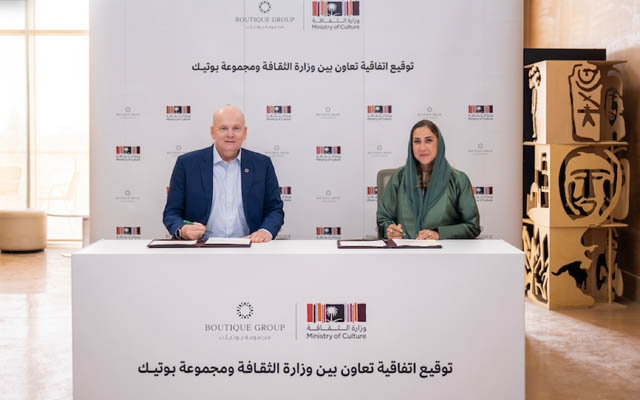
Saudi Arabia’s Ministry of Culture and Boutique Group have signed an agreement to strengthen collaboration and showcase the Kingdom’s rich cultural heritage.
The agreement was formalised by Noha Qattan, deputy minister of national partnerships and development, and Christoph Mares, CEO of Boutique Group, during a ceremony at the Ministry’s headquarters in Al-Bujairi, Ad Diriyah.
Saudi Arabia deepens cultural storytelling through palace-turned-hotels
Boutique Group, owned by the Public Investment Fund, develops, manages and operates historic and cultural palaces across Saudi Arabia as luxury hotels. Its portfolio includes Al Hamra Palace in Jeddah, The Red Palace in Riyadh – formerly home to the Council of Ministers for three decades – and Tuwaiq Palace, a recipient of the Aga Khan Award for Architecture.
The partnership spans a range of cultural elements, from incorporating traditional Saudi cuisine into culinary offerings to featuring local attire for staff and design elements across properties. The aim is to deliver a luxurious guest experience rooted in Saudi heritage, celebrating the unique culture of the Kingdom’s 13 regions.
“This partnership with Boutique Group is important for Saudi heritage and culture, showcasing our cultural legacy while contributing to the pursuit of building a future that opens new and diverse outlets for creativity and cultural expression to the world,” said Qattan.
Mares added: “Boutique Group is dedicated to crafting unparalleled experiences deeply rooted in a distinct Saudi identity. This partnership allows us to seamlessly weave the Kingdom’s vast tapestry of cultural heritage into our operations, offering an immersive visual, auditory and gastronomic journey into the heart of Saudi Arabia.”
The agreement reinforces the Ministry of Culture’s commitment to preserving cultural heritage, supporting the creative economy, and encouraging public-private collaboration.



 Lovotti brings over 25 years of international experience in the luxury hospitality sector, having held leadership roles across Europe, South-east Asia, and the Pacific.









 In his new role, he will lead Skyscanner through its next stage of development, focusing on product expansion and market growth.