Malaysia Airlines has launched a global campaign, Time for Premium Escapades, offering Business Class fares on international routes. The campaign runs from June 6 to 19, 2025, for travel between June 6, 2025, and May 31, 2026. It includes destinations across Asia, Australia, Europe and other regions.
For departures from Taiwan, return Business Class fares begin at TW$18,979 (US$580). Passengers flying in Business Class have access to fast-track services, Malaysia Airlines’s Golden Lounge, and private airport transfers at Kuala Lumpur International Airport Terminal 1, through a partnership with Mercedes Benz.
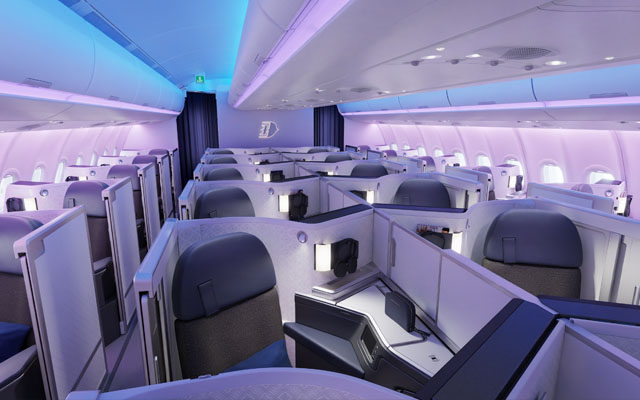
Malaysia Airlines rolls out global Business Class fares with new A330neo offering
On board, passengers can use lie-flat seats and complimentary Wi-Fi, available on selected aircraft for all passengers, regardless of class or loyalty status.
The airline has introduced updated meal options under its Best of Asia menu, with new dishes inspired by various destinations. Passengers may also pre-select meals through the Chef-on-Call service. On selected flights, additional amenities include pyjamas for Business Class passengers and child-friendly meals and activity packs for families.
The campaign also includes Economy Class fares, with return flights starting from TW$8,480. Economy passengers receive the same core onboard services across both regional and long-haul routes.
Fares are available through Malaysia Airlines’s website, the MHmobile app, and authorised travel agents.
Dersenish Aresandiran, chief commercial officer of airlines, Malaysia Aviation Group shared that the airline’s new A330neo, featuring elevation seats and private suites, marks an upgrade to its premium offering.
He said: “At Malaysia Airlines, we are proud to offer a Business Class experience that reflects our continuous commitment to providing our passengers with comfort, innovation and the signature warmth of Malaysian Hospitality.”
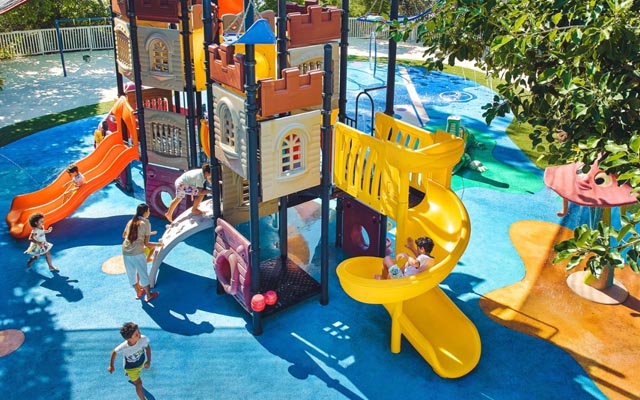
Kids and teens enjoy endless fun at Kandiland’s new play hub
Kandima Maldives will launch a two-month programme titled Summer Kamp from July 7 to September 7, 2025, featuring a series of workshops and activities focused on music, motorsport, art and creative learning.
The event will be held at the resort and aims to attract families and travellers looking for immersive, experience-based travel. The curated line-up will include talent from India and abroad, reflecting the rising trend of travel that combines leisure with personal enrichment.
Kids and teens enjoy endless fun at Kandiland’s new play hub
Summer Kamp 2025 will offer a range of activities tailored to different age groups. This includes DJ workshops, karting events, and art sessions led by visiting creatives.
From August 30 to 31, Mumbai-based artists Kunj Mehta and Rushil Sheth of Paintheads will host a series of hands-on art workshops at the resort’s KULA Art Studio and Breeze Pool Bar. Participants will create layered, mixed-media works using techniques such as masking and collage, drawing inspiration from the Maldivian environment.
From August 15 to 17, Garvi Kotak, founder of Craft India Collaborative, will conduct clay sculpting workshops focused on everyday inspiration and tactile engagement.
Motorsport activities will take place from August 1 to 4, led by Formula 2 champion Théo Pourchaire at the resort’s e-go karting track, Fast Track. Guests will be able to take part in karting sessions, meet-and-greets, and a Time Trials Challenge. Pourchaire will also host a Q&A and an art session, where participants can design miniature karts or helmets, with one design selected for a prize.
On July 24 and 25, BBC Radio 1 DJ Jaguar will lead DJ workshops and a Q&A session on electronic music and mixing techniques. Music sessions will also be hosted at the Breeze Bar and Fast Track area.
A new entertainment facility called PlaySpace is expected to open soon, offering VR experiences, arcade games, bowling and other attractions suitable for families and older children.
The Summer Kamp programme is open to all guests staying at the resort between July 7 and September 7. Stays start from US$260 per night in a Sky Studio with breakfast, when booked directly with the resort.
ALL Accor, Accor’s booking platform and loyalty programme, has partnered with Plusgrade to introduce an enhanced exchange solution for members, which allows the conversion of points from other participating loyalty programmes into reward points for ALL Accor.
The move is in response to loyalty members’ demand for more flexibility, simplicity, and choice in how points are used.
ALL Accor members can now convert rewards earned from institutions such as Bilt, Capital One and Citi loyalty programmes into ALL Accor points
With Plusgrade’s exchange technology, ALL Accor members can convert rewards earned from institutions such as Bilt, Capital One and Citi loyalty programmes into ALL Accor points.
“Giving loyalty members more ways to use their rewards makes their programs even more valuable,” said Ken Harris, founder and CEO of Plusgrade**.**
Mehdi Hemici, chief loyalty & ecommerce officer, Accor, added that the partnership was a “key milestone for ALL Accor”, as it “answers our members’ desire for more than discounts by delivering unforgettable experiences”.
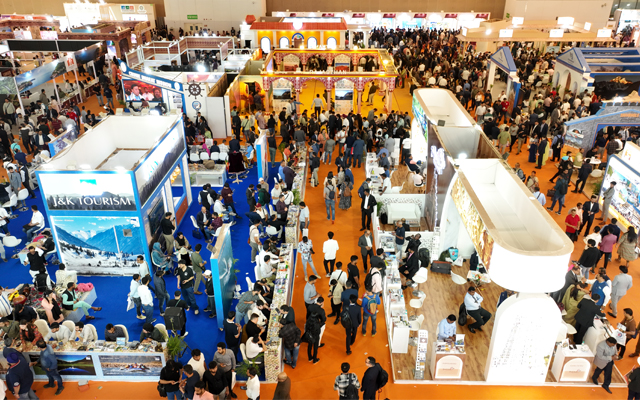
The 29th edition of the South Asia’s Travel & Tourism Exchange (SATTE), which was held from February 19 to 21 this year at New Delhi’s Yashobhoomi Convention Centre, has recorded its strongest-ever participation and performance across all key metrics – establishing new standards for scale, satisfaction, and strategic business impact.
With over 2,000 exhibitors from more than 50 countries and 28 Indian states and union territories, as well as a record attendance of more than 40,000 trade visitors, SATTE 2025 has declared itself to be the largest and most influential travel industry congregation in the region.
SATTE 2025 turns in a strong performance report
The event also hosted over 800 buyers and 250 international buyers, allowing it to facilitate high-value B2B networking and drive tangible outcomes across the travel, tourism, and hospitality ecosystem.
SATTE 2025’s performance was was independently validated by Explori, a global exhibition benchmarking firm. Key performance indicators included a Customer Satisfaction Score of 9.22/10; Exhibitor Net Promoter Score of 72.2 and the Visitor Net Promoter Score of 79.3 – significantly above international benchmarks.
Notably, 88.5 per cent of exhibitors confirmed they will return for SATTE 2026, compared to the global benchmark of 27 per cent, while 86 per cent of visitors said they are extremely likely to recommend the event.
In terms of business impact, 84 per cent of visitors and 78 per cent of exhibitors rated SATTE as “very important” to their business – far exceeding global exhibition averages.
Pallavi Mehra, senior group director, Informa Markets in India, said: “SATTE 2025 reaffirms its position as the undisputed leader in India’s travel trade landscape. It is not just an exhibition – it’s a powerful movement that continues to fuel the growth of travel and tourism across India and beyond. The industry’s overwhelming response, despite a venue transition, is a true testament to SATTE’s value as a future-ready platform delivering real business impact.”
SATTE 2025 also reaffirmed its elevated role within the industry, beyond a commercial showcase to a policy-aligned, future-focused platform influencing the global tourism agenda. The event continues to benefit from the steadfast support of the Ministry of Tourism, Government of India, along with national and international travel and trade associations.
Complementing this alignment, SATTE 2025 curated a focused knowledge agenda addressing the industry’s most urgent priorities. From business events and AI-driven travel innovations to destination management and the impact of viral digital storytelling, the event delivered timely, trendsetting content designed to empower travel professionals.
SATTE will return in 2026 from February 25 to 27 at the same venue along with new initiatives focused on cross-border tourism, digital transformation, and investment-led growth across the travel and hospitality value chain.
The latest Mastercard-CrescentRating Global Muslim Travel Index (GMTI), an annual study on the value and evolution of the Muslim travel market, has underscored continued growth in both travel volume and spend potential of the segment.
Unveiled at the fifth Halal in Travel Global Summit 2025 on June 12, which was conducted in-person in Singapore and online, the study stated that international Muslim arrivals reached 176 million in 2024 – up 25 per cent from 2023 and 10 per cent over 2019 levels – and are projected to grow to 245 million by 2030.
A growing global Muslim population, projected to reach 2.54 billion by 2035, will make the demographic a crucial tourism source market for many destinations
By 2030, total travel spending by this segment is expected to reach US$230 billion, highlighting the growing influence and economic potential of Muslim travellers.
It stated that with a growing global Muslim population, projected to reach 2.54 billion by 2035, this demographic segment will be come a crucial tourism source market for many destinations.
The GMTI 2025 study noted a significant evolution of the modern Muslim traveller’s profile and purpose, where there is a clear shift towards more independent and conscious journeys, evidenced by the rise of solo and female travellers seeking empowerment, safety, and autonomy.
At the same time, travel motivations are diversifying beyond leisure to include purpose-led experiences such as regenerative tourism that restores local ecosystems, digital detox retreats that align with faith values of mindfulness, and sports tourism adapted for family and faith needs. This signals a demand for more personalised, inclusive, and meaningful travel experiences that cater to a broader range of abilities and interests, prompting destinations to offer more than just standard holiday packages.
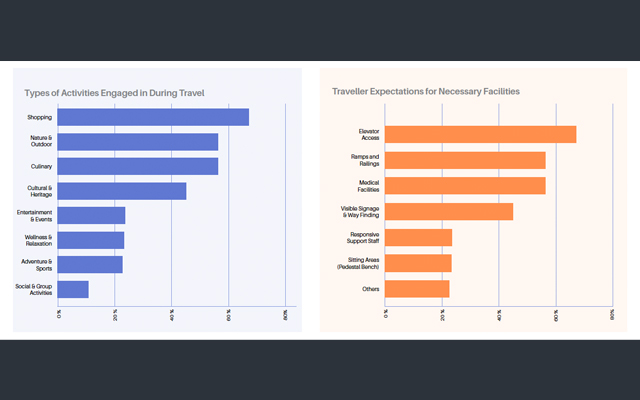
The study also pointed to a need for faith-related awareness to be integrated into the industry’s use of robots and/or humanoids in streamlining operations, the use of smart apps to engage Muslim tourists, greater attention to accessible tourism and blending inclusive design with faith-specific needs, and stronger consideration for female Muslim travellers.
In sharing key findings of GMTI 2025, Fazal Bahardeen, founder of Crescentrating, highlighted the need to better understand and cater to active senior travellers, especially as “global birth rates are plummeting and lifespans are extending”.
“That has a huge impact on tourism; accessible tourism is going to be a lot more important,” he said, adding that the GMTI had, therefore, introduced accessible travel asset metrics and a basic framework on building accessible travel destinations last year.
This year, the study has taken a step further with increased focus on understanding active seniors, who will be “one of your most important segments going forward, because of the (population) and their spending power”, he said.
GMTI 2025 noted that senior travel is valued at 15 per cent of the global travel market, with value projected to reach US$2.63 trillion by 2030. This segment aged 60 years and up also allocates more than 50 per cent of their discretionary spending on leisure and travel.
With the flexibility of travel during off-seasons and the tendency to embark on longer, more relaxed journeys, this segment offers high-value opportunities for travel industry stakeholders aiming to tap into a resilient and expanding market.
While the outlook for Muslim travel is rosy, Fazal tempered expectations with warnings of “disruptive forces” – unpredictable geopolitical and economic conditions that would impact visitor flows; AI’s threat to job security and basic income, which could impact people’s ability to spend on travel; and growing anti-Muslim rhetoric, where even the slightest perception of lacking welcome would erode travel confidence.
Meanwhile, as with every GMTI, the study also ranks top performing destinations in the Muslim travel market.
Among Organisation of Islamic Cooperation (OIC) destinations, Malaysia retains the top spot, followed by Turkiye, Saudi Arabia and the UAE sharing the second spot. Indonesia takes fifth position.
Among non-OIC destinations, Singapore is top, followed by the UK, Hong Kong and Taiwan. Thailand (fifth) and the Philippines (eighth) are steadily emerging as rising Muslim-friendly destinations in South-east Asia, where investments in infrastructure and experiences for Muslim travellers are being made, stated Umair Hameed, vice president of consumer products & solutions for Southeast Asia at Mastercard.
GMTI 2025 marks the 11th year of collaboration between Mastercard and CrescentRating, and the 10th year of jointly publishing the annual study.
The latest edition of the Long-Haul Travel Barometer (LHTB 2/2025), published by the European Travel Commission (ETC) and Eurail BV, reveals a decline in longhaul travel sentiment to Europe for the summer 2025 season. While global tourism continues to show resilience, growing cost concerns, geopolitical instability, and weakening consumer confidence are influencing decisions across key markets.
The latest survey finds that 57% of respondents across major longhaul source markets plan to travel overseas between May and August 2025, a 1% decline compared to the same period last year.
Fewer travellers from key longhaul markets plan to visit Europe this summer, as rising costs and global uncertainties affect travel intentions; Eiffel Tower and the Seine river in Paris, pictured
The intention to visit Europe specifically has dropped from 41% in 2024 to 39% in 2025, with sentiment softening most notably in the US (-7%), Brazil (-6%), Canada (-5%), and Japan (-5%).
However, China remains a standout. Driven by economic recovery and a shift in consumer values, 72% of Chinese respondents say they plan to visit Europe this summer – a remarkable 10% year-on-year increase.
Affordability concerns weaken travel intention
The perception of high costs remains the most cited barrier to travel to Europe, mentioned by almost half of respondents not planning a trip to the region. This marks a significant 7% increase from last summer, reflecting growing price sensitivity amid inflation and exchange rate shifts.
Among the US and Brazilian respondents – where economic uncertainties and cost sensitivities are more acute – over half cite travel costs as the primary deterrent. Limited vacation time and a preference for domestic holidays also remain key factors, especially in Japan, South Korea, and Australia.
On a more reassuring note, concerns about the Russo-Ukrainian War have significantly declined – only 4% of respondents cited it as a barrier to European travel this summer.
Mixed sentiment across regions
Travel sentiment towards Europe is diverging across key longhaul markets. In the US, 33% of respondents plan to visit Europe this summer, a 7% decline from 2024. Rising costs and political concerns, including unease over how the US is perceived abroad, have dampened enthusiasm.
Brazilian interest has also declined (-6%) compared to last year, though 45% of respondents still intend to travel to Europe – with younger and higher-income travellers remaining the most enthusiastic. In Canada, sentiment is rebounding from earlier this year but remains below summer 2024 levels. Currently, 37% of Canadian respondents are planning a European trip, down 5% from last year.
Japanese respondents show the lowest interest in visiting Europe among all surveyed markets, with only 13% planning a trip – down 5% year-on-year. This reflects the ongoing impact of a weak yen and subdued consumer confidence.
In South Korea, overall longhaul travel sentiment remains stable. Only 30% of respondents are considering Europe, with preferences centred on France, Spain, and Italy. Alongside China, Australia stands out as the only other market registering a clear increase in travel intent, with 40% of respondents planning to visit Europe – a 3% rise from last summer.
Earlier departures and shifting budgets
More travellers are choosing to travel earlier in the summer season this year. While July and August remain peak months for 46% of respondents, interest in May and June has grown from 24% in 2024 to 34% in 2025.
Spending patterns are also shifting. The share of respondents planning to spend over 200 euros (US$228.62) per day has dropped by 11%, while those expecting to spend 100 to 200 euros per day has risen to 40%.
Across all markets, dining remains the top budget priority (65%), followed by tourist activities and shopping. Transport budgets (41%) are also significant, likely reflecting the high number of multi-destination trips being planned – a trend that continues to define the appeal of European travel.
ETC president Miguel Sanz commented: “At a time of declining consumer confidence globally, it is more important than ever to strengthen Europe’s position as a top destination. This means improving the competitiveness and accessibility of European experiences while continuing to showcase lesser-known destinations and off-season travel. With the right strategic focus, Europe can continue to deliver meaningful, high-quality tourism for visitors and residents alike.”
Amanoi, Vietnam
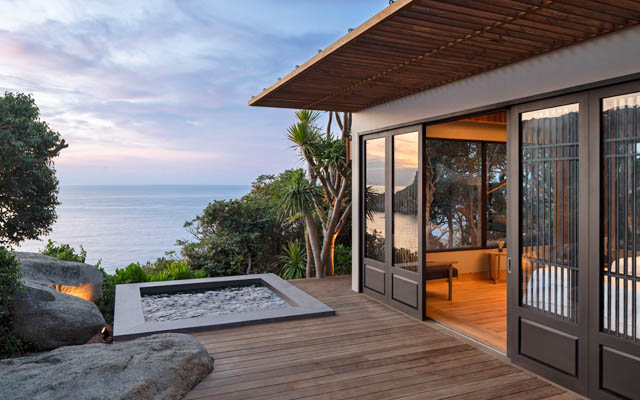
Amanoi, nestled between Núi Chúa National Park and Vinh Hy Bay, has unveiled its newest private villa – the Amanoi Ocean Pool Residence. The new residence is a 925m², three-bedroom villa perched above a beach, offering privacy, wellness, and ocean views. The interiors include an open kitchen, wine cellar, living room, large sundeck, alfresco dining sala, and a central swimming pool with private beach access.
The villa features a private spa house with a double treatment room, steam room, sauna, outdoor Jacuzzi, and daily 90-minute spa treatments included. Guests enjoy exclusive perks like private dining, a catamaran cruise, a 24-hour butler, minibar, buggy, daily breakfast, and airport transfers (for stays of more than two nights).
Access to resort facilities offers guided treks, snorkelling, kayaking, and a kids’ programme, plus amenities like a lakeside spa, hilltop infinity pool, restaurant, bar, library, and Beach Club.
Rosewood Luang Prabang
Rosewood Luang Prabang, Laos
Rosewood Luang Prabang reflects Laos’ cultural identity through traditional architecture and materials. Located 10 minutes from the UNESCO World Heritage city, the resort is set among mountains with a waterfall and creek running through the estate.
The property offers 23 accommodation options including Riverside Rooms, Riverside Suites, Riverside Villas, Waterfall Pool Villas and Hilltop Tents. Each unit borders the riverbank, with Hilltop Tents featuring private dining areas and balconies.
Dining options include The Great House, serving farm-to-table Laotian and Western cuisine with indoor and open-air seating overlooking gardens and a waterfall, and the Elephant Bridge Bar, located above the river offering cocktails, light snacks, and local flavours.
The spa provides treatments using Laotian healing remedies and Western techniques in tented villas overlooking the river, with ingredients from the resort’s organic garden. The central swimming pool, adjacent to a natural waterfall, offers sun beds and cabanas in a forest setting. Guests can also play pétanque or croquet in the gardens.
Tailored experiences are also available, such as trekking, river cruises, cultural tours, and wellness activities.
Courtyard by Marriott Danang Han River
Courtyard by Marriott Danang Han River, Vietnam
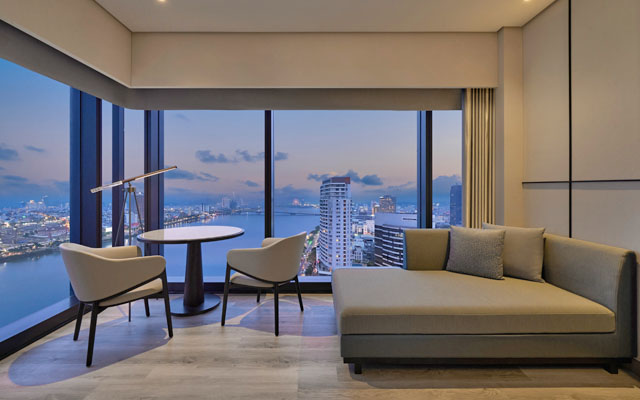
Courtyard by Marriott Danang Han River marks Marriott’s debut in Vietnam with a 45-storey hotel in downtown Danang. Overlooking the Han River, the 300-room property features floor-to-ceiling windows as well as amenities.
Dining options include a restaurant serving Vietnamese and international cuisine with live kitchens, an espresso bar, and a lobby lounge.
The hotel offers 10 meeting rooms totalling 1,000m², including a grand ballroom with an 8.5-metre ceiling, ideal for conferences, weddings, and social events. Leisure facilities feature a rooftop infinity pool, kids’ pool, and a fitness studio on the 29th floor.
Located near Danang’s famous beaches and cultural sites, the hotel is just 4.4 km from Danang International Airport.
Pullman Phu Quoc Beach Resort
Pullman Phu Quoc Beach Resort, Vietnam
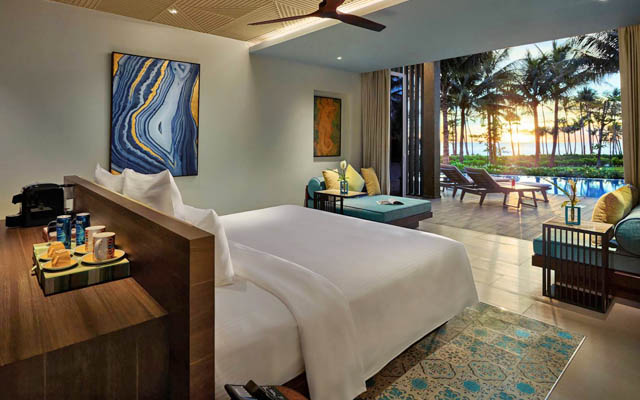
Pullman Phu Quoc Beach Resort, just 15 minutes from Phu Quoc International Airport, offers 331 rooms, suites, and cabanas, including Premium Deluxe Ocean View rooms with sweeping Gulf of Thailand vistas. The resort combines bold design with comfort, perfect for both relaxation and dynamic events.
Ideal for MICE and weddings, it features versatile indoor and beachfront venues. Dining highlights include Mad Cow Wine & Grill, a rooftop restaurant known for its Surf & Turf and sunset views.
Guests can explore nearby attractions such as pearl farms, Duong Dong night market, Hon Thom cable car, and Phu Quoc National Park.
Sri Lanka, with 167 shipwrecks submerged in its surrounding waters, has been identified as a location with potential for marine tourism. This perspective was shared during a recent conference in Colombo, organised by the newly-formed Indian Ocean Divers Association (IODA), where discussions centred on Sri Lanka’s prospects for developing sustainable tourism.
To date, dive tourism – particularly visits to shipwrecks and underwater sites – has not been a prominent feature in Sri Lanka’s tourism offerings, which have traditionally focused on beaches, wildlife, culture, and nature-based attractions. However, participants at the conference suggested that shipwrecks and underwater exploration could become significant elements of a future tourism strategy.
Experts highlight opportunities and challenges in developing sustainable underwater tourism during the recent conference in Colombo
Prasad Jayasuriya, director of tourism planning at the Sri Lanka Tourism Development Authority, said there is growing interest in ocean-related tourism, especially given that Sri Lanka’s maritime area is twice the size of its landmass. He noted the need to consider how best to develop ocean tourism, with diving forming a central component, and pointed to the country’s extensive marine resources.
Participants also discussed the idea of intentionally sinking decommissioned ships to create new dive sites, in addition to promoting existing wrecks, many of which date back to the world wars.
Praladh Kakkar, president of IODA, co-founder of ReefWatch Marine Conservation, and an experienced scuba diver, described the event as a platform for those interested in marine environments, including hoteliers, fishing communities, and divers. He suggested that establishing standards in dive tourism and underwater activities “could be the start of a worldwide movement”.
Kakkar emphasised the importance of preserving ocean ecosystems, stating that shipwrecks – some of which may contain historical artefacts – must be protected from vandalism and theft. He proposed that promoting these wrecks through tourism channels could attract global interest, particularly from those interested in wartime history.
Anees Adenwala, vice president of IODA and a pioneer in India’s outbound scuba diving and underwater filming industry, said that divers are naturally inclined to explore underwater environments. He highlighted the need for divers to adopt a role in protecting marine ecosystems.
The conference concluded with a call for the development of clear regulations and responsible practices in marine tourism, to ensure that ocean resources are preserved while supporting tourism growth.
Scoot debuts Singapore-Vienna service
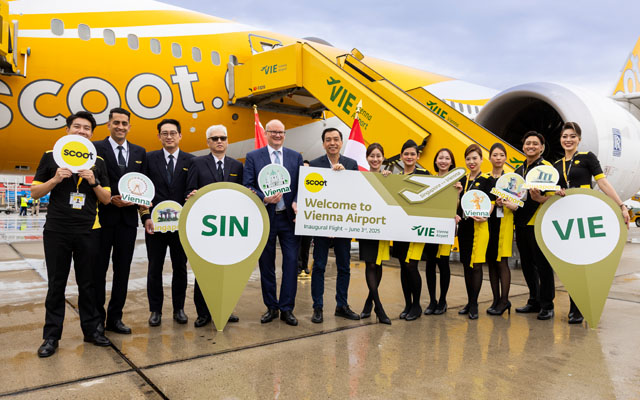
Scoot, the low-cost subsidiary of Singapore Airlines, has launched direct flights between Singapore and Vienna, becoming the only airline to operate non-stop on the route.
The service operates three times weekly using Boeing 787-8 Dreamliners, further strengthening connectivity between South-east Asia and Central Europe.
The inaugural flight, TR710, was welcomed at Vienna International Airport with a water cannon salute and an onboard celebration featuring Austria-themed souvenirs such as artisanal chocolates and paper fans.
Passengers also enjoyed a live classical performance by Singapore’s T’ang Quartet on both the outbound and return flights.
Cathay Pacific
Cathay Pacific flies direct from Hong Kong to Rome
Cathay Pacific has resumed direct flights between Hong Kong and Rome, operating three times a week with Airbus A350-900 aircraft. The new route marks the airline’s return to Italy’s capital and is its fourth new passenger destination in 2025, following Hyderabad, Dallas-Fort Worth, and Urumqi.
The service joins existing flights to Milan and expands Cathay’s European network to 12 cities. The Cathay Group, including HK Express, is on track to serve 100 global destinations by mid-2025.
Vietjet
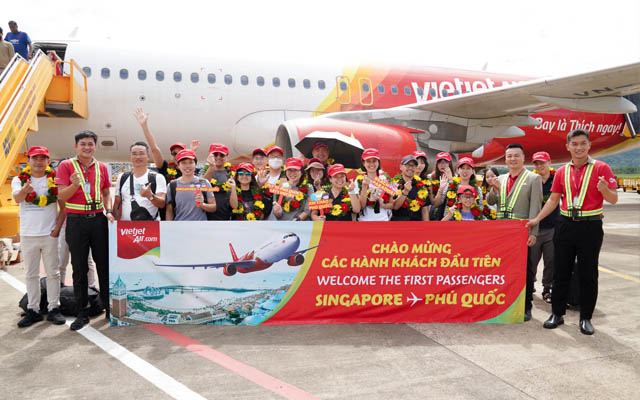
Vietjet launches Phu Quoc-Singapore route
Vietjet has introduced a new international route connecting Phu Quoc with Singapore, operating four return flights weekly. The airline now runs 78 flights per week between Vietnam and Singapore across four routes.
Vietjet has also resumed two domestic services: Danang to Nha Trang and Hanoi to Tuy Hoa, supporting growing demand for beach destinations.
This expansion follows new routes to India, Japan, and China, as Vietjet continues strengthening its Asia-Pacific network.
Emirates and Air China
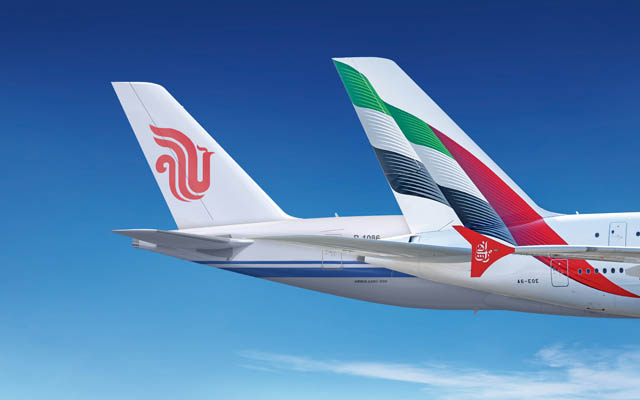
Emirates, Air China sign MoU to deepen strategic partnership
Emirates and Air China have signed a memorandum of understanding (MoU) to strengthen their existing interline cooperation and explore broader collaboration across passenger, cargo, and loyalty programmes.
Signed during the IATA AGM in New Delhi, the MoU outlines plans to expand codeshare routes between the two airlines, covering key China-UAE services and selected destinations beyond Beijing and Dubai.
The partnership aims to improve connectivity and booking convenience for customers of both airlines through integrated ticketing, aligned flight schedules, and lounge access.
The agreement also includes a framework for cooperation in air cargo, loyalty programme integration, and knowledge exchange in areas such as revenue management, digitalisation, and sustainable aviation.
Emirates will soon operate 49 weekly flights to the Chinese mainland, including new routes to Shenzhen and Hangzhou, reflecting its commitment to deepening links with China.
Hilton has launched the latest iteration of its It Matters Where You Stay campaign, spotlighting its collaboration with Indian actor and producer Deepika Padukone.
The campaign underscores Hilton’s commitment to delivering stays that support guests’ ambitions – particularly for a new generation of Indian travellers shaping success on their own terms.
Hilton partners with Deepika Padukone to celebrate the moments that make every stay meaningful
Filmed in Bengaluru, the city Padukone calls home, the campaign captures the everyday moments that make a stay memorable. Whether preparing for something important, balancing work and downtime, or simply taking time to reset, the campaign highlights Hilton’s signature service and design that help guests feel both grounded and ready for what lies ahead.
“At Hilton, we’re For The Stay – an experience you only get at Hilton and our 24 brands around the world. The Stay empowers our guests to rest, recharge, and prepare for whatever the rest of their trip has in store for them,” said Mark Weinstein, chief marketing officer, Hilton.
“We designed this campaign around the spirit of a new generation of Indian travellers. They are shaping success on their own terms and we’re here to host them in India and around the world. Deepika brings her own, authentic Stay story to life in a way that’s both powerful and deeply human and her journey reflects the kind of drive we see in our guests every day.”
Padukone shared: “It’s always the little things: the warm welcome, the personal touches, the attention to detail – that turn a Hilton stay into a memory.”
Hilton is rapidly expanding in India, with plans to grow its portfolio tenfold over the next decade. With new hotels opening in Bengaluru, Surat, Jabalpur, Hyderabad and Mumbai this year, Hilton is introducing more ways to stay across the country. It is also launching five new brands tailored to India’s evolving travel market.