Ken Orr has been appointed general manager of Millennium Hotel Queenstown by Millennium & Copthorne Hotels New Zealand Limited.
With more than 20 years of experience at the company, Orr has held a range of managerial and operational roles across Auckland, Wellington, Christchurch and Queenstown.
He stepped down from his previous position as vice president of operations in June 2025 to relocate to the South Island.
Batik Air’s first Bangkok–Subang flight departed on July 28
Batik Air connects Subang and Bangkok Batik Air has launched its first international service from Sultan Abdul Aziz Shah Airport (Subang Airport), with flight OD533 from Don Mueang International Airport, Bangkok.
The new Subang-Bangkok route operates daily using Boeing 737 aircraft and marks a key step in strengthening air links between Malaysia and Thailand. Positioned closer to Kuala Lumpur’s city centre, Subang Airport offers a convenient alternative to Kuala Lumpur International Airport.
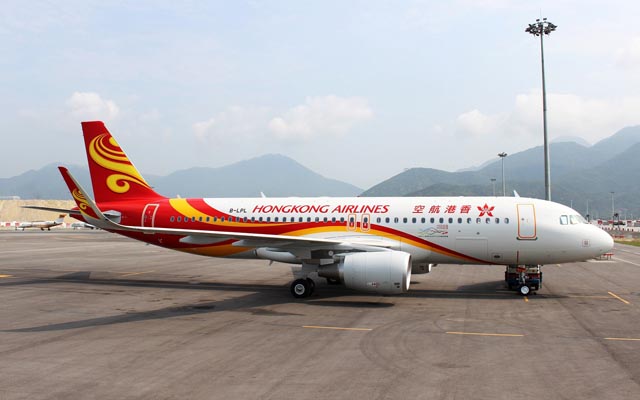
Hong Kong Airlines
Hong Kong Airlines to launch Hong Kong-Lijiang route from September Hong Kong Airlines will begin operating direct flights between Hong Kong and Lijiang three times weekly from September 8, 2025. It will be the sole local carrier on the route.
Lijiang is the airline’s third new destination in mainland China this year, following Hulunbuir and Xi’an, as part of its ongoing network expansion. The route will be served by Airbus A320 aircraft.
Flight HX412 will operate from Hong Kong to Lijiang on Mondays, Wednesdays and Fridays. The return service, HX413, will run from Lijiang to Hong Kong on Tuesdays, Thursdays and Saturdays.
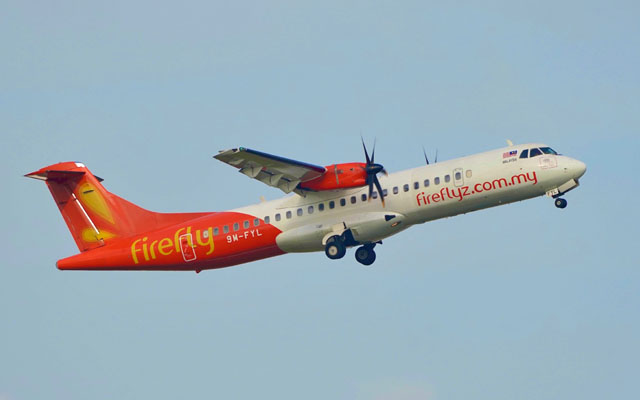
Firefly; photo by DLeng
Firefly to relocate jet operations to KLIA Terminal 1 Firefly will relocate its jet operations from Sultan Abdul Aziz Shah Airport (SZB) to Kuala Lumpur International Airport (KLIA) Terminal 1 from August 19, 2025. The airline’s turboprop services will continue to operate from SZB.
Jet services from KLIA will begin on August 19 with the first flight to Tawau. This will be followed by flights to Kuching and Kota Kinabalu on August 21; Singapore on August 22; Johor Bahru on August 23; Kota Bharu and Terengganu on August 30; and Sibu on September 3.
Firefly will also increase its services between KLIA and Penang from twice weekly to six times weekly starting August 23, with plans to increase to 10 times weekly from November.
The routes will be operated using Boeing 737-800 aircraft.
AirAsia adds Pontianak to network with new Malaysia–Indonesia routes
AirAsia expands Indonesia network with new Pontianak services AirAsia Malaysia will launch two new direct routes to Pontianak, Indonesia, from Kuala Lumpur and Kuching starting September 12, 2025. It will be the only airline operating international services to the capital of West Kalimantan.
The new routes expand AirAsia’s network in Indonesia, following the recent launch of services to Palembang in July and the upcoming Kuala Lumpur-Semarang route in September. With the addition of Pontianak, AirAsia Malaysia will serve 17 destinations in Indonesia, operating 223 weekly flights between the two countries.
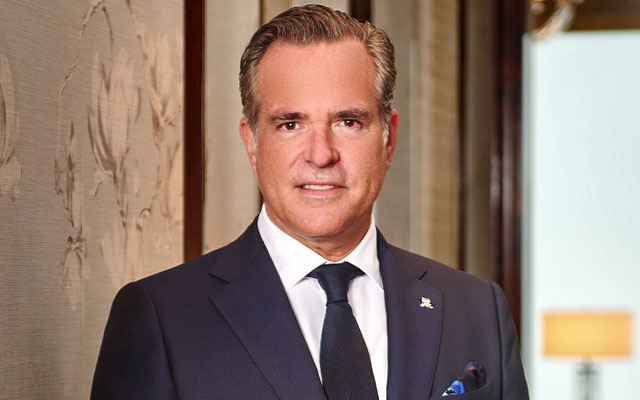
The St Regis Singapore has appointed Nick Heath as its new general manager. He will oversee the hotel’s ongoing transformation, drawing on his strategic leadership and international expertise.
He brings nearly 30 years of hospitality experience to the role, having most recently served as general manager at JW Marriott Hotel Singapore South Beach.
Heath began his career with Hyatt and has worked across Asia, the Middle East, and the US.
Four Seasons Resort Maldives at Kuda Huraa, the Maldives
Four Seasons Resort Maldives at Kuda Huraa has introduced new Beach Villas with Pool, replacing the former Beach Bungalows. Located close to the shoreline with ocean, lagoon and sunrise views, each villa accommodates up to three adults or two adults and two children under 12.
The updated villas feature 70m² of indoor space and 285m² of outdoor area. Interiors have been redesigned with a lighter colour palette and improved layout, including a bedroom with daybed, dining and study area, and direct access to a reconfigured walk-in closet and bathroom. Each villa includes an outdoor shower garden, with some offering an additional family room.
Outside, the former plunge pool has been replaced with a 36m² pool positioned for ocean views. A new pergola with a round swing adds a shaded space for relaxing or dining.
Villas include daily fresh fruit, drinking water, coffee and tea, twice-daily housekeeping with turndown service, and beach essentials for children under 12.
Yotel Tokyo Ginza
Yotel Tokyo Ginza, Japan
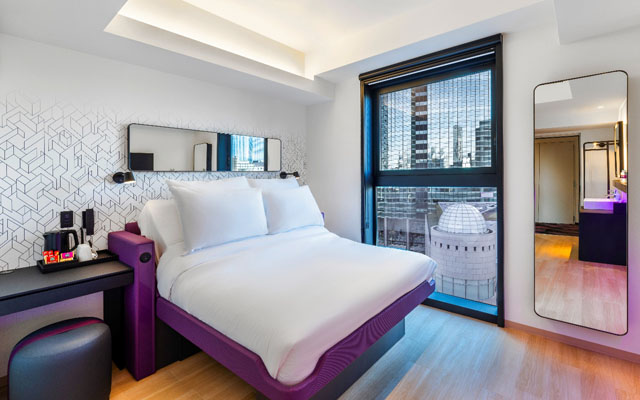
Yotel Tokyo Ginza has officially opened in the heart of Ginza. The 244-room hotel is a three-minute walk from Shimbashi Station, a key transport hub with access to bullet trains and both Haneda and Narita airports.
The hotel is close to Ginza’s luxury shopping streets, the historic Kabuki-za Theatre, Tsukiji Outer Market and Hamarikyu Gardens, all within walking distance. It offers a flexible co-working space, a multi-storey parking garage for 26 vehicles, laundry service, gym and F&B venues.
Public transport links connect the hotel to Tokyo Station, Haneda Airport in 30 minutes and Narita Airport in around 60 minutes.
M Social Resort Penang
M Social Resort Penang, Malaysia
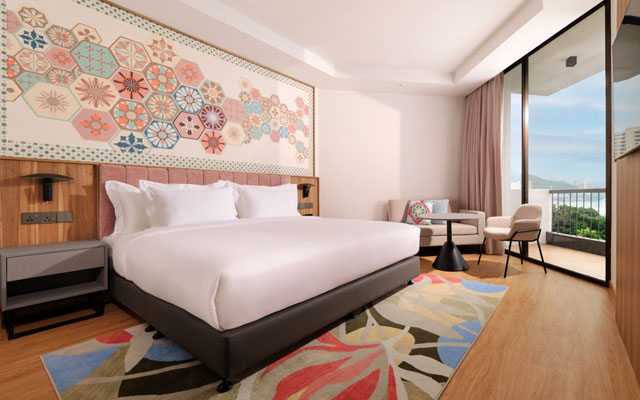
M Social Resort Penang has opened as the first M Social property in Malaysia and is located in Tanjung Bungah, close to George Town, Gurney Drive and key cultural and food destinations.
The resort offers 318 rooms and suites across two wings, with sea or beachfront views. Interiors reflect Peranakan influences, and rooms are equipped with a 55-inch smart TV, high-speed Wi-Fi and an in-room AI voice assistant.
Facilities include a 24-hour gym, outdoor pool and Grand Ballroom. Dining options are available at Beast & Butterflies, the Social Hub and Breezy Bites.
Ayana Segara Bali
Ayana Segara Bali, Indonesia
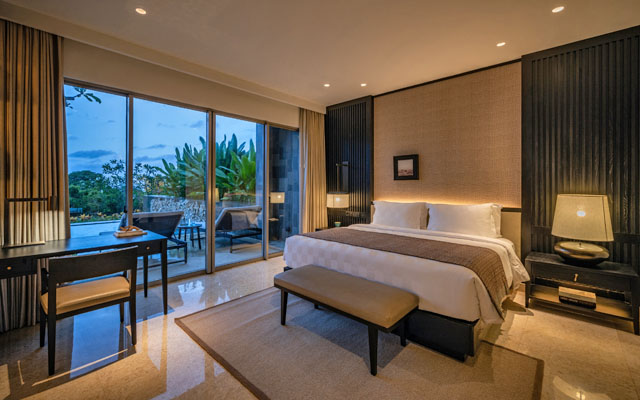
Ayana Segara Bali now offers its Ocean View Residences for short stays, previously reserved for long-term guests. The residences are located in a private annex with access to the full 90-hectare Ayana Bali resort.
The one-bedroom Ocean View Residence includes ocean views, a kitchen, laundry, and access to rooftop pools. The two-bedroom options offer added space, with one featuring a private pool and garden.
All guests can access Ayana Bali’s pools, restaurants, spa, museum, farm, and resort-wide transport services.
People around the world are becoming increasingly health conscious, and their needs are fuelling impressive growth in wellness products and services. According to the Global Wellness Institute, there was a 26.4 per cent leap in demand between 2022 and 2023, valuing the segment at US$41 billion.
Factors driving wellness pursuits include an aging population that is focused on healthspan, increasingly congested urban hubs and hurried pace of life that demand a deliberate deceleration, and improved education around holistic wellness.
It is, therefore, of little surprise that public and private sectors in the travel and tourism industry are responding eagerly to health and wellness trends. From government-led curation to private sector experience development, health and wellness offerings in Asia-Pacific are flourishing.
Indonesia, for example, has been raising the standards of its traditional treatments while working with destinations and private sector players to introduce more modern, science-backed programmes, so as to cater to a wider range of health-focused travellers.
Competition among destinations in Asia-Pacific is burning hot. Singapore is expanding its calendar of high-profile wellness events while Western Australia initiated its Wellness Tourism Strategy last year, with an ambition to use the wellness sector to drive higher value, year-round visitation.
The expansion of health and wellness experiences and products not only benefits overseas visitors, but locals as well.
While tourism leadership may sound the intention to develop a health and wellness specialisation, private sector players must also come to the party with ideas and investments. At the same time, relevant government agencies must step up with systems to facilitate talent acquisition, licensing, and cross-border training because the health and wellness business is labour intensive and continuous innovations demand ongoing education led by experts who may hail from overseas.
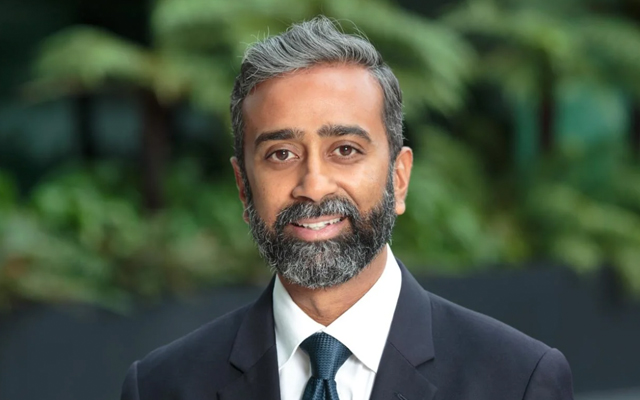
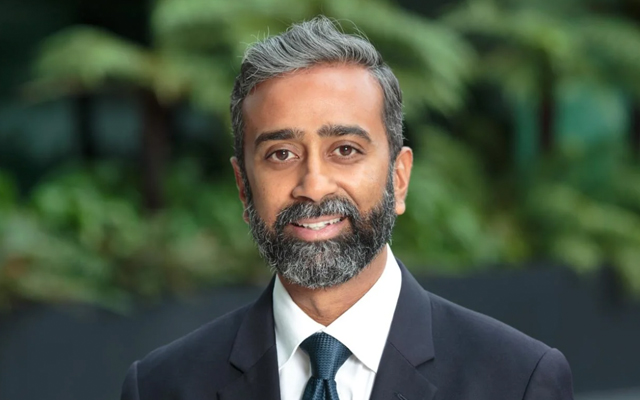
Air New Zealand has appointed Nikhil Ravishankar as its next CEO, effective from October 20, 2025.
He will replace Greg Foran, who is stepping down after nearly six years in the role.
Ravishankar is currently Air New Zealand’s chief digital officer and has been with the airline for almost five years. In that time, he has led improvements across the airline’s technology systems, loyalty programme, and customer experience.
Before joining Air New Zealand, Ravishankar held senior roles at Vector and Accenture.
Feria Kazemi has been named director of communications at The Peninsula Hotels.
She joined the company’s global headquarters in Hong Kong earlier this year after relocating from the UK. In her new role, she will lead global communications efforts, including earned media, content development and brand partnerships, while also serving as a representative of the nearly 100-year-old hospitality group.
Kazemi brings more than 12 years of international communications experience across the travel and technology sectors. She was most recently reputation and industry relations manager, EMEA, at Google in London.
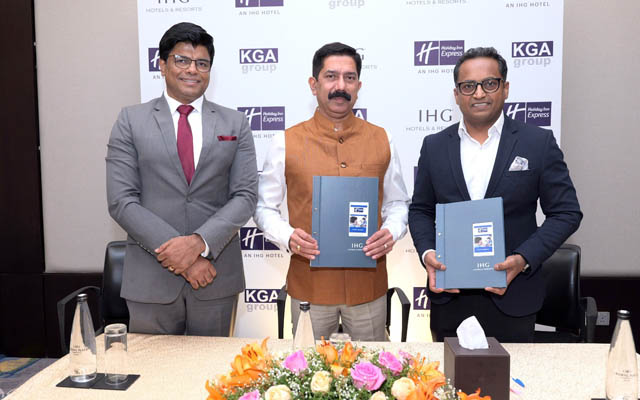
IHG Hotels & Resorts has signed a franchise agreement with KGA International Trades for the development of Holiday Inn Express Kottayam Changanassery in Kerala, India. Scheduled to open in 1Q2027, the agreement supports IHG’s plans to expand in secondary markets in India through local partnerships.
Holiday Inn Express, IHG’s largest hotel brand with more than 3,200 properties globally, targets short-stay travellers. The brand’s Generation 5 design concept focuses on flexible public areas and practical room layouts.
Holiday Inn Express Kottayam Changanassery will be the first internationally branded hotel in the city, supporting business and tourism in the region
The hotel will be located in Changanassery, a town in Kerala’s Kottayam district. It will be part of KGA Mall, a mixed-use development currently under construction. The property will have 90 rooms, food and beverage outlets, a banquet hall for over 100 guests, a swimming pool, multiplex, family entertainment centre and a range of domestic and international retail tenants.
The hotel is near the CBD and is accessible from nearby towns including Kochi, Alleppey, Pathanamthitta, Kollam and Thiruvananthapuram. The Changanassery area draws demand from religious tourism, local trade and natural attractions.
Sudeep Jain, managing director, South West Asia, IHG Hotels & Resorts, said: “This hotel will bring international brand standards to a high-potential micro market in Kerala that is currently underserved by quality hospitality offerings. This also marks our second collaboration with KGA Group, following the successful partnership for Crowne Plaza Kochi.”
“Our goal is to deliver the consistent, reliable service and global standards that IHG is known for, while honouring the distinctive charm of Changanassery and addressing the growing demand for quality accommodation among corporate, transit, leisure travellers.”
K C Eapen, director and CEO of KGA Group, added: “After the successful partnership with IHG Hotels & Resorts for Crowne Plaza Kochi, we are pleased to join hands with them again for a new project in Changanassery. Development of Holiday Inn Express Kottayam Changanassery is part of our broader vision to bring modern infrastructure and business opportunities to the region. We believe the combination of the mall and the hotel will make it a key destination for both natives and travellers.”
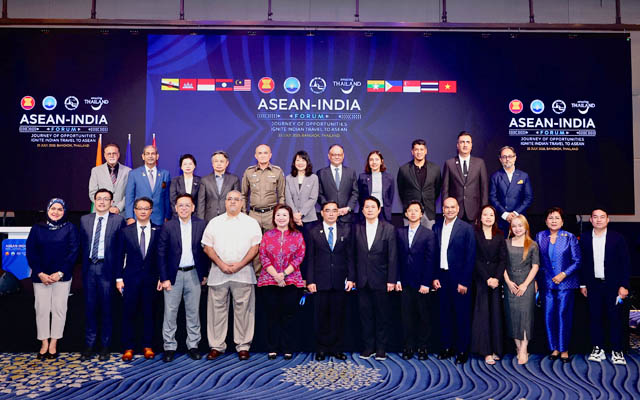
ASEAN tourism leaders are calling on member states to present a unified front to tap the full potential of India’s booming outbound travel market, positioning the region as a culturally rich, seamless destination.
The call was made during the ASEAN-India Forum in Bangkok, hosted by the Tourism Authority of Thailand (TAT) in celebration of the ASEAN-India Year of Tourism 2025 and under the ASEAN-India Cooperation Work Plan 2023–2027 – of which Thailand has been designated the lead country for promotion and marketing.
The ASEAN-India Forum brought together industry leaders to explore ways to boost Indian travel to the ASEAN region; photo by Tourism Authority of Thailand
“India is now one of the fastest-growing source markets for ASEAN, with over five million travellers recorded in 2024,” said Verna Esmeralda C Buensuceso, chair of ASEAN NTOs and assistant secretary at the Philippines Department of Tourism.
“This growth is being fuelled by economic trends, policy changes, and evolving travel preferences,” she added.
Thailand alone welcomed more than two million Indian arrivals in 2024, placing India among its top three inbound markets, shared Pattaranong Na Chiangmai, TAT’s deputy governor for International Marketing (Asia & South Pacific).
She noted that Thailand, Singapore, Malaysia, and Indonesia all ranked among the top 15 destinations for Indian travellers in 2023.
Buensuceso highlighted recent visa liberalisation measures by ASEAN countries.
“Thailand, Malaysia, Vietnam, and Indonesia have led the charge, offering visa-free or simplified entry processes to Indian visitors,” she observed, mentioning that air capacity from India to South-east Asia is projected to surpass pre-pandemic levels by 2025.
The forum also spotlighted cruise tourism as a growth opportunity. In June, the inaugural ASEAN-India Cruise Dialogue in Chennai brought together all 10 ASEAN nations to discuss the creation of a regional cruise network.
ASEAN secretary-general Kao Kim Hourn urged the region to shift perception from a cluster of destinations to “one incredible region – connected, diverse, and culturally rich”.
He called for co-branded campaigns that appeal to Indian sensibilities, such as “Bollywood-style escapes, spiritual trails, and multigenerational family holidays”, and outlined a three-pronged strategic focus: connectivity, inclusivity, and sustainability.
“We must collaborate on new city-pair routes, ensure culturally inclusive tourism experiences, and promote low-carbon, climate-smart travel. Tourism is not just an economic driver – it is a bridge for deeper connection. Every journey taken strengthens our regional bonds,” he summarised.
The forum concluded with a roundtable between ASEAN NTOs and Indian travel stakeholders to discuss best practices, operational challenges, and future collaboration. A technical visit to Pattaya followed on July 24, showcasing Thailand’s readiness to serve the Indian market and adapt its offerings to high-yield segments.
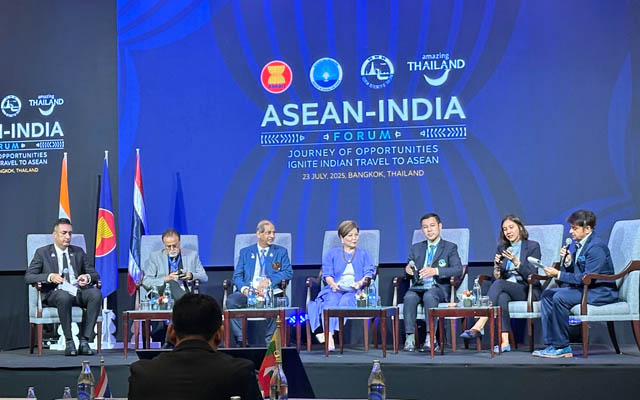
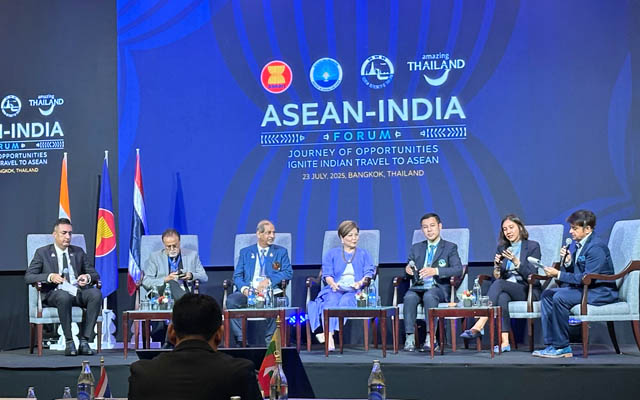
At the ASEAN-India Forum, the session titled Emerging Trends in Demand and Travel Experiences that Attract Indian Travellers explored ways for the region to tap India – the world’s fastest-growing outbound travel market.
Last year, ASEAN as a region welcomed six million Indian tourists. Thailand alone drew nearly 2.1 million Indian tourists in 2024 – a record number – making India one of its largest source markets.
Six industry leaders join a Tourism Authority of Thailand forum to discuss trends in high-spending Indian travel to ASEAN countries; photo by Anne Somanas
“India currently sends nearly 30 million outbound travellers annually; that’s just two per cent of our population. Once airlift improves, ASEAN can expect a surge,” commented Shreyash Shah, commercial director at Destination Hospitality Management.
“Tier II and III cities are where the next wave will come from,” underscored Santosh Kumar, country head, Indian Subcontinent & Indonesia at Booking.com.
He added that destinations should move beyond massive blanket campaigns to consider micro-targeting secondary destinations.
“Regional influencers often outperform Bollywood stars or national celebrities in building trust and engagement,” he advised.
Vathanachai Vathanakul, vice president of the Association of Thai Travel Agents (ATTA), highlighted the group’s 2024 road shows to Hyderabad and Chennai – cities that have historically received less attention.
“During this two to three year period, we’re focusing on South India. North India has already seen many road shows, but South India has been left behind,” he said.
Vathanakul notes this is shifting, driven by direct flights from both Thai Airways and budget carriers such as Nok Air. ATTA road shows in September 2025 will target Cochin and Andhra Pradesh, with Cochin already ranked among Thailand’s top 10 Indian source cities.
“India is performing,” said Nikhil Sharma, managing director and COO, South Asia at Radisson Hotel Group, highlighting a rise in premium hotel stays, group travel and multi-generational family travel.
“Guests are willing to pay more for larger rooms and upgrades. They travel with extended families and want rooms in the same corridor, vegetarian food options, and high-speed Wi-Fi. Personalised service is essential – they’re used to being pampered at home and expect that abroad,” he underscored.
Even small details like seeing Hindi channels or having Hindi-speaking staff can foster loyalty. He also pointed to the distinct mindsets, customs, and preferences of North, South, and West Indians.
“Indians are diverse – that’s why true personalisation matters – whether it’s during check-in, dining, or respecting religious practices,” he observed.
Shivya Nath, travel writer and founder of The Shooting Star, pointed to a mindset shift among younger Indian travellers. She said: “They’re done with traditional marketing. They want immersive, conscious travel that tells stories – not just photo ops. They’re seeking value – not in terms of price, but in meaning.”
She encouraged destinations to move away from performative culture and instead offer authentic community engagement and emotional storytelling.
“Reintroduce known places with fresh angles. Offer bespoke itineraries. Give them something real,” she commented.
Sharma added: “Social media is leading the way for this market – get the value for money, family-friendliness and food choices right and you win.”
Chuan Thakar, president of the Indian Association of Thailand, called on ASEAN governments to think bigger, especially with sports tourism: “If you want to bring Indians to ASEAN, bring cricket. It’s a religion in India. Just one Indian Premier League event could bring 10,000 visitors and a billion baht in value. Why should Dubai host it all?”
He added that Dusit Thani Hua Hin is one of the few Thai hotels with a cricket ground – a missed opportunity in his view.
Panellists agreed that simplifying travel, particularly through visa relaxations, has been highly effective in attracting Indian travellers.
Sharma also noted a strong preference for last-minute deals and bundled experiences: “They’re looking for curated packages that agents are well-positioned to deliver, along with shorter trip durations and priority access.”
Meanwhile, improved regional airlift remains a critical enabler.
“Airlines are the bridge,” said Krid Pattanasan, head of government relations at Thai AirAsia.
He noted that as of November 2024, only 36,759 weekly seats were allocated between major Indian metro cities and Thailand.
Sharma also suggested that India should actively look to attract more travellers from ASEAN markets.
“India sent six million travellers last year to ASEAN countries, but we only received 700,000. Cultural exchange and greater understanding will happen once India starts to receive more ASEAN travellers,” he concluded.


 He stepped down from his previous position as vice president of operations in June 2025 to relocate to the South Island.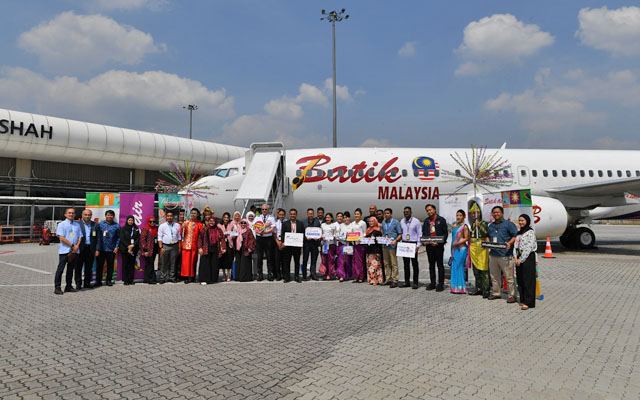


 Heath began his career with Hyatt and has worked across Asia, the Middle East, and the US.



 Ravishankar is currently Air New Zealand’s chief digital officer and has been with the airline for almost five years. In that time, he has led improvements across the airline’s technology systems, loyalty programme, and customer experience.
 Kazemi brings more than 12 years of international communications experience across the travel and technology sectors. She was most recently reputation and industry relations manager, EMEA, at Google in London.