Tourplan, a software provider for tour operators and destination management companies, has appointed Eduard Liebenberger as chief technology officer (CTO).
He brings more than 25 years of experience in technology leadership, with roles across New Zealand, Australia, Germany, the UK and Austria. He joins from Streamliners, where he was CTO, and has previously held senior roles at Jade Software and William Hill, leading digital transformation and product engineering teams.
The escalating conflict in Iran is already affecting the travel and tourism sector across the Middle East, with international visitor spending estimated to be falling by at least US$600 million per day, according to the World Travel & Tourism Council (WTTC).
The organisation said disruptions to air travel, traveller confidence and regional connectivity are affecting tourism demand across the region.
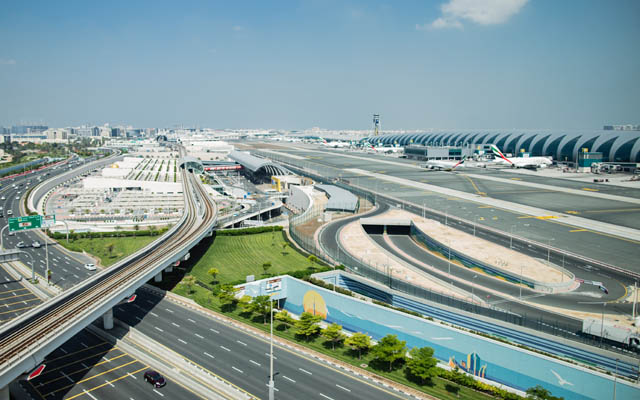
Major aviation hubs in the Middle East have faced disruptions as the conflict in Iran affects regional travel demand; Dubai International Airport, pictured
The Middle East accounts for about five per cent of global international arrivals and 14 per cent of global transit traffic. Disruptions in the region therefore affect a wide range of sectors including airlines, airports, hotels, car rental companies and cruise operators.
Major aviation hubs such as Dubai, Abu Dhabi, Doha and Bahrain, which normally handle about 526,000 passengers per day, have experienced closures and operational disruptions as the conflict escalates. These interruptions have affected both regional and global travel connectivity.
WTTC said its estimate is based on its 2026 pre-conflict forecast, which projected US$207 billion in international visitor spending across the Middle East this year.
Despite the disruption, the organisation said the travel and tourism sector has historically shown strong recovery following security-related crises.
Previous WTTC research indicates that tourism demand can recover within about two months when governments and industry take steps to restore traveller confidence.
“Travel and tourism is the most resilient of sectors. Our analysis of previous crises demonstrates that security-related incidents often see the fastest tourism recovery times, in some cases as quickly as two months, when governments and industry work together to restore traveller confidence,” said Gloria Guevara, president and chief executive officer of WTTC.
“Clear communication, strong coordination between the public and private sectors, and measures that reinforce safety and stability are critical to rebuilding trust with travellers and supporting the sector’s recovery.”
WTTC said it will continue monitoring developments and remains in contact with governments and industry leaders regarding traveller safety and sector recovery.
Dubai International Airport (DXB) has begun gradually restoring flight operations after a temporary suspension triggered by a drone-related fire near the airport, adding further disruption to aviation across the Middle East.
A Dubai Airports spokesperson confirmed that some flights to and from DXB are resuming on a limited basis to selected destinations following the precautionary halt. Travellers have been advised to check directly with their airlines for the latest information regarding their flights.
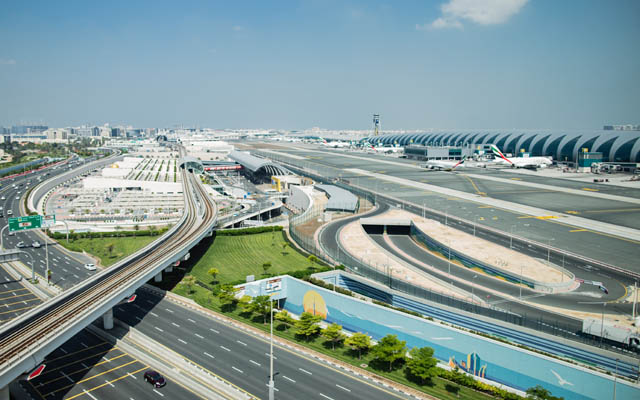
Dubai International Airport is gradually restoring flights after a temporary suspension triggered by a drone-related fire near the airport; photo by Nigel J Harris
Earlier, Dubai Airports had announced the temporary suspension of operations at DXB as a precautionary measure to ensure the safety of passengers and staff.
According to media reports by The Straits Times and Reuters, the disruption on March 16 followed a fire caused by a drone attack that affected a fuel tank near the airport, though no injuries were reported. The incident forced a temporary halt in flights at one of the world’s busiest international air travel hubs.
Emirates said it expected to partially resume operations from 06.00 GMT, although some services were cancelled. Sister airline flydubai also temporarily halted flights, while several aircraft were diverted to Al Maktoum International Airport.
In a separate statement on X, the Dubai Civil Aviation Authority said some flights had begun operating again to selected destinations as the airport works towards restoring normal activity.
The disruption comes amid wider regional tensions linked to the US-Israel conflict with Iran, which has unsettled aviation across the Middle East. Airlines have been cancelling, rerouting or rescheduling flights as large sections of regional airspace remain closed over concerns of missile and drone attacks.
Reuters reported that the March 16 incident marks the third attack affecting Dubai International Airport since Iran began launching strikes across Gulf countries on February 28, which Tehran has said target US military presence in the region.
Gulf Arab states have faced more than 2,000 missile and drone attacks since then, Reuters reported, targeting military facilities as well as civilian infrastructure including airports, hotels and ports.
Earlier in the conflict, two drones were reported to have fallen near Dubai International Airport on March 11, causing damage during an overnight attack across Gulf states.
With the US-Iran conflict disrupting global energy supply chains, Indian hotels are increasingly feeling the strain as shortages of commercial LPG is creating operational uncertainty across the sector.
“There has been some disruption in the supply of commercial LPG cylinders over the past few days. Deliveries that were usually scheduled on time are now delayed, and the availability from distributors has become less predictable. Since the hospitality industry heavily relies on commercial LPG, even short disruptions can create significant operational uncertainty,” said Arindam C Bahel, general manager of The Fern Brentwood Resort Mussoorie.
Hotels in India are turning to electric appliances such as induction cooktops as disruptions in commercial LPG supply affect kitchen operations
Hospitality associations including the Federation of Hotel & Restaurant Associations of India (FHRAI) and Hotel And Restaurant Association (Western India) HRAWI have issued advisories to its members to adopt practical operational measures to manage the situation including conserving available fuel, temporarily rationalising menus to reduce high gas consumption items, integrating electric appliances such as induction cooktops and convection ovens where feasible and adjusting operating hours to focus on peak service periods.
“We strongly urge establishments to avoid panic buying or hoarding of LPG cylinders as such actions could further destabilise the market and invite regulatory scrutiny,” said Pradeep Shetty, vice president, FHRAI and spokesperson, HRAWI.
Last week, the Indian government announced that 20 per cent of the average monthly commercial LPG requirement will be allocated by oil marketing companies in coordination with the state governments so that there is no hoarding or black marketing.
“If there is a prolonged shortage, it could affect kitchen planning and meal preparation schedules, particularly in a wellness retreat like ours where meals are prepared fresh and tailored to individual guest requirements,” noted Abhilash Ramesh, executive director Kairali Ayurvedic Group.
“That said, we maintain contingency measures and buffer inventory to ensure guest meal services continue smoothly and without compromising quality.”
Multi-generational travel is thriving across Asia-Pacific markets, where 50 per cent of surveyed families are going on holidays with three or more generations of a family, finds Hilton’s 2026 Trends Report. Within this movement, Hilton is also seeing a spike in skip-generation travel, where grandparents are choosing to connect with their grandchildren on leisure trips.
In this episode of TTG Conversations: Five Questions, Ben George, senior vice president and commercial director for Asia-Pacific, Hilton, details the appetite for family travel, reflects on factors that are spurring skip-generation travel demand, and discusses business opportunities tied to family travel.
Airlines across the Asia-Pacific region have moved into an emergency defensive posture this week, implementing a wave of flight cancellations, steep fare hikes, and phased fuel surcharges.
The drastic measures come as the US-Israel-Iran conflict sends jet fuel prices toward a staggering US$200 per barrel, nearly tripling costs from earlier this year. Aviation fuel currently accounts for up to 40 per cent of an airline’s operating expenses.
Surging fuel prices are forcing airlines to adjust their flight schedules and raise fuel surcharges
Air New Zealand has taken the most aggressive action to date, announcing the cancellation of approximately 1,100 flights – roughly five per cent of its total schedule – through early May. The cuts primarily target off-peak domestic rotations to consolidate fuel use, affecting an estimated 44,000 passengers. The carrier has also implemented immediate fare increases, adding NZ$10 to domestic tickets and up to NZ$90 (US$52) for longhaul services. While the airline is heavily hedged against crude oil, it remains exposed to the cost of refining oil into jet fuel, which has spiked from US$22 to over US$115 per barrel in mere days.
Air India and Air India Express have introduced a three-phase surcharge expansion to combat rising costs and high domestic taxes. Starting March 12, a new Rs 399 (US$4.30) fee applies to all domestic routes, while surcharges to South-east Asia have risen to between US$40 and US$60. A second phase on March 18 will see longhaul surcharges jump to US$125 for Europe and US$200 for North America and Australia, with further adjustments for Hong Kong and Japan expected shortly.
Both Cathay Pacific and Qantas are raising international fares while shifting capacity toward Europe. As travellers avoid Middle Eastern transit hubs, Qantas reported that its European flights are reaching over 90 per cent capacity. Cathay Pacific has suspended flights to Dubai and Riyadh through March, but is adding frequencies to London and Zurich to meet redirected demand. Qantas has flagged a general fare increase of approximately five per cent, warning that some routes may become uneconomical if prices stay at US$200 per barrel.
Across the rest of the region, Malaysia Airlines, Firefly, and Batik Air is set to implement phased rollouts of surcharges. Malaysia Airlines has extended the temporary suspension of its Doha services until March 20, but all other services including Jeddah Madinah, London and Paris continue to operate as scheduled. Malaysia Airlines is also increasing widebody capacity between Asia and Europe to support onward journeys, with flights operating on alternative routes that avoid affected regions.
Vietnam Airlines and VietJet have seen operating costs jump 60 to 70 per cent, leading the former to petition the government for waivers off environment taxes on jet fuel to remain viable.
Over in South Korea, Korean Air has entered discussions regarding significant increases to fuel surcharges for April. Surcharges for longhaul routes like Incheon–New York could triple, potentially reaching 325,000 won (US$220) per ticket.
Singapore Airlines (SIA) and its budget subsidiary Scoot have extended the suspension of their Middle East services. SIA flights between Singapore and Dubai are now cancelled through March 28, while Scoot has suspended its Jeddah services until March 17 at the earliest.
SIA is regarded as having one of the more robust fuel hedging programmes, providing some protection against the refined jet fuel price surge. TTG Asia has reached out to SIA for comments on potential network-wide surcharges, but a response was not provided at press time.
With the US-Iran conflict intensifying, its impact is increasingly being felt on inbound wellness travel from the Middle East to India. The tensions have disrupted international flight connectivity between the region and India, leading to cancellations, rerouted services and uncertainty in travel schedules.
Abhilash Ramesh, executive director of Kairali Ayurvedic Group, shared: “We regularly receive guests from the Middle East, with the UAE accounting for the largest share, followed by Jordan, Syria and Saudi Arabia. Over the next two weeks, we were expecting eight arrivals, three directly from the Middle East and five travelling via the region. While the three guests arriving directly from the Middle East have cancelled their trips, those travelling via the region may still reroute their journeys. Their plans are currently uncertain, and we are awaiting final communication from them.”
India’s Ayurvedic wellness retreats are monitoring travel disruptions as Middle Eastern arrivals face flight uncertainty
Ramesh also expects future enquiries to be affected due to travel restrictions, higher airfares and the limited availability of flights.
Sandeep Arora, director of Brightsun Travel, noted: “Yes, there has been a slight short-term impact on wellness bookings due to travel uncertainty and flight disruptions in the Middle East region. Some international travellers are postponing or reviewing their travel plans. However, interest in wellness retreats in India remains strong, especially from domestic travellers and neighbouring Asian markets.”
The Middle East has also been one of the most consistent source regions for India’s medical travel sector for many years. Patients from markets such as the UAE, Oman, Iraq, Iran, Saudi Arabia and Yemen have traditionally travelled to India for specialised treatments, particularly in areas such as cardiology, oncology, orthopaedics and complex surgeries. However, industry stakeholders say the segment remains relatively insulated from the current geopolitical developments.
“In medical travel, demand tends to behave differently from leisure tourism during periods of geopolitical uncertainty. In situations like the current tensions in the region, what we typically observe is a short-term pause or adjustment in travel timelines rather than a sharp drop in demand. Patients planning elective procedures may wait briefly until the situation becomes clearer, but those requiring treatment generally proceed once logistics such as flights and visas remain workable,” said Ishaan Dodhiwala, co-founder of Medijourn Solutions.
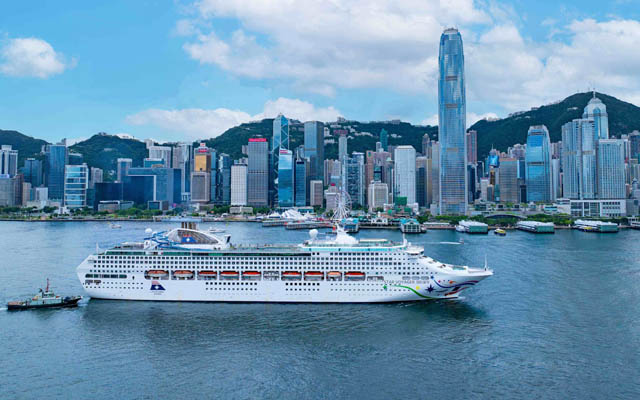
StarCruises will introduce three five-night cruises from Hong Kong in 2026 aboard Star Voyager, expanding its regional itineraries to Japan, Vietnam and Sanya.
The sailings include two Okinawa Adventure cruises and one Enchanting Vietnam & Sanya Cruise. The Okinawa itineraries depart March 22, 2026 to Miyakojima and Naha, and May 3, 2026 to Ishigaki and Naha. The Vietnam and Sanya sailing departs April 26, 2026, calling at Halong Bay, Danang and Sanya.
Star Voyager will operate new five-night cruises from Hong Kong in 2026, calling at Okinawa in Japan, Halong Bay and Danang in Vietnam, and Sanya in China
The new cruises complement StarCruises’ existing short sailings from Hong Kong, which include two-night cruises to Xiamen or the high seas and three-night cruises to Sanya.
Passengers on the Okinawa cruises can visit coastal areas in Miyakojima and explore Naha, including sites such as Shurijo Castle. The Vietnam and Sanya itinerary includes stops at Halong Bay, known for its limestone formations, the coastal city of Danang and the resort destination of Sanya.
StarCruises continues to offer short cruises from Hong Kong, including the three-night Tropical Escape to Sanya departing Sundays, the two-night Cultural Discovery Cruise: Xiamen departing Wednesdays, and the two-night Weekend Sea Breeze Cruise departing Fridays.
Bookings for the two- and three-night cruises are open through travel agents and online. Reservations for the three new five-night cruises open from March 13, 2026.
Satair has made three leadership appointments in Asia-Pacific and China, naming Andy Lee as managing director of Asia-Pacific, Liu Bo as managing director of Satair China and Mingyang Chen as general manager of Satair Chengdu.
Lee assumed the role on January 1, 2026, after previously serving as managing director of Satair China, where he led market growth and capability development. He succeeds Rene Frandsen, who has moved into a strategic advisory role.
From left: Andy Lee, Liu Bo and Mingyang Chen
Liu will take over as managing director of Satair China on June 1, 2026. He joins from Airbus, where he spent 14 years in roles across France and China covering engineering, procurement and programme management.
Chen was appointed general manager of Satair Chengdu in November 2025. The entity supports the company’s expansion of used serviceable material activities and strengthens local operations in the region.


 He brings more than 25 years of experience in technology leadership, with roles across New Zealand, Australia, Germany, the UK and Austria. He joins from Streamliners, where he was CTO, and has previously held senior roles at Jade Software and William Hill, leading digital transformation and product engineering teams.