Asia/Singapore Tuesday, 7th April 2026
Page 388

Carlson Rezidor acquires Country Inns & Suites in India

0

radisson-blu

Radisson Blu Hotel New Delhi Dwarka

CARLSON Rezidor Hotel Group has acquired Country Development & Management Services (CDMS), a joint venture between Country Inns & Suites by Carlson and Chanakya Hotels that was set up to pioneer the Country Inns & Suites By Carlson brand in India.

The acquisition includes operation of four Radisson Blu hotels managed in India by CDMS.

With this deal, the Country Inns & Suites By Carlson brand in India will now be managed by Carlson Hotels (South Asia), the Indian affiliate of Carlson Rezidor Hotel Group.

Explaining the decision to acquire CDMS, Raj Rana, CEO, South Asia, Carlson Rezidor Hotel Group, said: “India is an important market for Carlson Rezidor Hotel Group, where we offer seven brands from mid-scale to luxury. Country Inns & Suites By Carlson is an integral part of our brand portfolio in the mid-scale segment. This consolidation will help us in directing our resources more efficiently to support our hotels.”

Commenting on the move, Thorsten Kirschke, president, Asia-Pacific, Carlson Rezidor Hotel Group, added: “This acquisition, resulting in the full ownership of CDMS, is a strategic move to further strengthen our position as the leading international hotel operator in India.

“We aim to have 170 hotels in operation and under development by 2020 in the country.”

Asia’s next travel generation

0

PATA’s second youth travel report reveals the travel traits of Asia’s millennials and how tourism stakeholders can benefit from their hunger to veer off the beaten track

Following its earlier The Rise of the Young Asian Traveller report, PATA’s second youth survey Stepping Out of the Crowd looks at the travel tastes and attitudes of over 1,000 millennials (16-35) from 13 source markets in Asia as this generation will be the main demographic behind region’s outbound tourism growth in the next 10-15 years.
12-may-nightspent

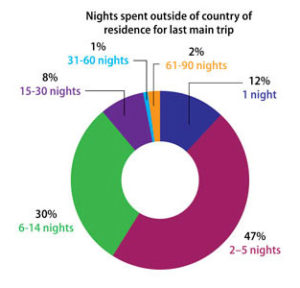
A high proportion of millennials (four out of five respondents) has taken an independent trip outside of their home country. However, overseas travel is still at a low level as only 47% of respondents had taken one trip away from their home country in the past 12 months and 20% had taken two overseas trips in the past year.

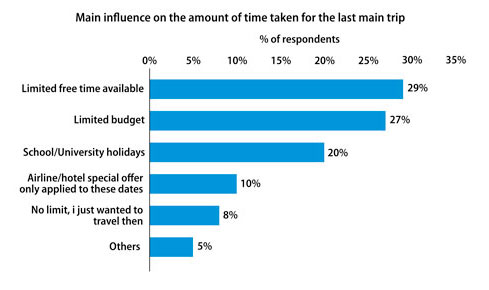
For these young travellers, free time is in short supply, making short breaks of between two to five nights the most popular option (47%), while longer holidays of one to two weeks were also common (30%). Given the high proportion of student respondents (66%), it is unsurprising that one in five stated time was more of a constraint on their travel plans than money.

Extended holidays of more than two weeks are rare though. This correlates with responses that respondents felt they did not have enough time in their destination. This may be due to the reason that the concept of extended travel periods such as a gap year is relatively uncommon in Asia, where cultural and family expectations of studying hard and climbing up the career ladder were more important than travelling.

As such, the lack of available free time is the biggest limitation to how much Asian millennials can travel. Limited budgets come in at a close second, and this influences the number of days that their money will last for food and accommodation.
12-may-main-influence

Millennials are tech-savvy and global curious, which is also driving the growth of free and independent travel. With the prevalence of mobile devices that can assist planning on the go, and a constant flow of travel inspiration and advice garnered from social media, millennials are well-prepared to travel freely.

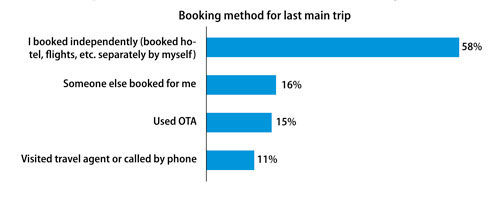
More than half of the respondents expressed a major preference for booking all aspects of their trip independently, without the need for packaging by an OTA, or the assistance of a traditional desk travel agent. This is in line with the wider consumer trend in travel which is leaning towards booking tours without the middleman, as the Internet has allowed for rapid price comparison and the ease of online booking.

For the 16% of respondents that indicated that someone else booked the trip for them, this may be attributed to parents or family members. It is also significant that a mere 11% of respondents used the services of a traditional travel agent.
12-may-booking-method

Composing an itinerary while on the go is apparently the preferred way to plan – 83% Asian millennials said they will create a basic plan of what they want to see in advance, and work out the rest of the details when they arrive at the destination.

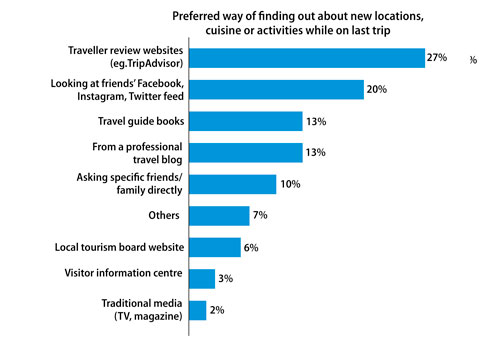
Looking at traveller review websites such as TripAdvisor was the most popular way of finding information on activities and attractions (27%), while one in five respondents said that they were inspired by what their friends posted on social media (20%).

This shows that social media is a very effective and useful tool in inspiring, informing and recommending travel options to Asian millennials. It also shows how peer groups play a part in influencing the decision of this demographic, significantly more than any official source of information such as local tourism board websites, visitor information centres, and advertisements in traditional media. It is also worth noting that the two trust sources of information for young Asian travellers were the printed guide book and professional travel blogs (both 13%).
12-may-preferred-way

Time is of the essence for young Asian travellers when visiting a foreign city. They prioritised seeing the big attractions first, seeing the city with the aid of an organised tour (taking a bus or boat where possible) or following a pre-set tour individually, as such programmes are usually organised for a pre-defined amount of time, thus enabling easy scheduling and preventing wasting valuable travel time.

Spontaneity, or the notion of ‘discovering the backstreets’ are not very popular among Asian millennials, perhaps because they are not seen as a good use of time. Letting someone else take charge of the plans was the least favoured option, indicating that young Asian travellers like to take control of what they will be doing in order to ensure that they will get the most out of the trip.

Connecting with the city through its heritage, traditions, events and locally-produced items is a major priority. Asian millennials, similar with their global counterparts, like to seek out what makes a city’s past distinctive amid a globalised world. Modern culture and ‘cool things to do’ for local youth are also a major attraction, with 85% indicating that they like to discover modern culture and fashion trends.

Food is fundamental – but in the streets and at the supermarket, rather than at the table. A significant 85% of respondents said that they love to visit a food market, and 72% liked to visit a supermarket when in a foreign city. Experiencing a city’s nightlife is not a priority for Asian millennials on the other hand. Perhaps in contrast to their counterparts in other regions of the world, going to bars and clubs is not rated so highly in terms of getting to know a new city.

This article was first published in TTG Asia, May 6, 2016 issue, on page 9. To read more, please view our digital edition or click here to subscribe

Carlson Rezidor brings Radisson Red to India

0

radisson-red

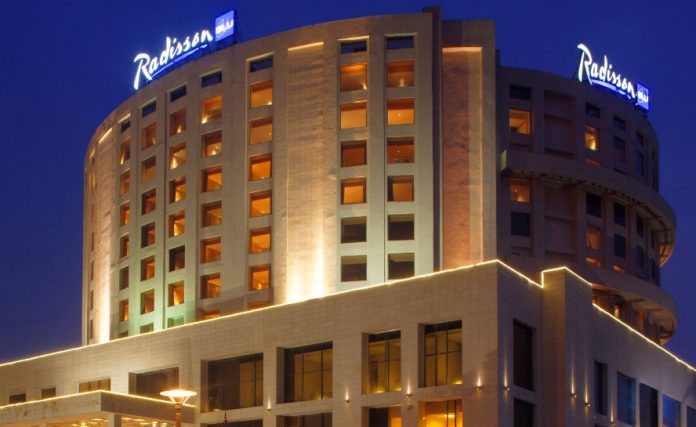
CARLSON Rezidor hotel group, in partnership with Bestech Hospitalities, is set to launch its Radisson Red lifestyle brand in India with a property in Mohali in May next year.

The property will have 160 rooms, a bar and a restaurant, and like all Radisson Red hotels, is positioned to appeal to millennials with features like using an app for room entry.

Raj Rana, CEO, South Asia, Carlson Rezidor, said: “Radisson Red is a brand that we are looking to (locate in mixed-use developments), for example in a shopping or office complex, which means a better and quicker return on investment.”

Commenting on further expansion plans, Rana said: “We would like to open 15-20 properties under the Radisson Red brand in India in the next five years near metro locations. We are also considering secondary Indian cities.”

He adds that the midscale segment will be their key focus with 50 per cent of their pipeline catering to that category.

The group is also expecting to open a second Radisson Red property in New Gurgaon and is in the process of establishing partnerships for this project.

Neighbourly love is in for Hong Kong travellers

0

ASIA is the top destination of choice for Hong Kong holidaymakers with Japan being the most popular vacation spot, according to a Visa survey.

The 2015 Survey on Hong Kong Travel Spending Pattern found that 23 per cent of respondents say Japan is their number 1 destination for a holiday, followed by Taiwan at 18 per cent, and Thailand and South Korea tied at 10 per cent.

Hong Kong residents have 20 days of annual leave on average, of which 70 per cent or about 14 days are spent on overseas travel.

The survey also found that mobile phones and credit cards are the top two items brought along on every trip.

dn20140630_hktravelhabits_visa
Click for a bigger version. Credit: Visa

Visa recently launched its Visa Explore app to give cardholders access to local and overseas offers and promotions, customised to their interests.

Asia is Singapore’s top destination for voluntourism: Zuji

0

CHARITY starts at home for Singaporeans travellers, with more than half saying they would prefer to stay within Asia when going for volunteer trips abroad, said a survey.

Zuji’s Giving Back is the New Black study polled 855 Singapore-based travellers and found that 60 per cent of respondents would travel for a cause to Asia as compared to the four per cent willing to go to South America, the least popular region likely owing to its distance from home and unfamiliarity.

Nearly half of the respondents preferred to teach underprivileged kids when volunteering overseas; 27 per cent preferred building and restoring communities; while 17 per cent were motivated by wildlife conservation and 11 per cent went overseas for mission trips.

Before volunteering abroad, 65 per cent of respondents research destinations and causes through content sites, and Zuji has observed the growth in interest in destinations like Yangon and Auckland.

For accommodation, Zuji hotel booking data revealed that 63 per cent of Singapore-based travellers opt for at least four-star accommodation. However, on volunteer trips, 86 per cent are willing to stay in budget hotels and hostels.

Thirty-seven per cent of participants felt that helping the underprivileged overseas is best enjoyed with a group of friends, while a third felt that it did not matter who they travel with as the trip serves a bigger purpose. Despite that, 60 per cent of Zuji bookings show that people are solo travellers.

Chua Hui Wan, CEO for Zuji Singapore, said: “We are witnessing more people travelling to developing countries, with Thailand, Indonesia and Philippines featuring among our top 20 booking destinations.

“With the strong number of long weekends in 2015, it’s the opportune time to jet-set for a few days, see a new place, but also give back.”

dn250616_voluntourism_zuji
Source: Zuji

Smaller seat sizes in airplanes a big concern for SEA travellers: TripAdvisor

0

EVERYBODY could do with more legroom when travelling by air and South-east Asians are now willing to pay for that extra space or a better seat, found a survey by TripAdvisor.

The annual air travel survey reported that unpredictable flight delays or cancellations were the biggest annoyance for 73 per cent of those polled, followed by uncomfortable seats/limited legroom (70 per cent), added fees (58 per cent), long security lines/custom wait times (52 per cent), and loud or crying children (50 per cent).

Although seats were only the second biggest peeve for travellers, results showed that shrinking seats were something that they felt strongly about.

Sixty-five per cent were “strongly opposed” to airlines installing narrower seats; 38 per cent “always” or “often” pay extra for a better spot; while 54 per cent said they are more likely to pay for a better seat than five years ago.

Asked what would make the air travel experience better, 28 per cent of responders said more comfortable seats, 23 per cent wanted more legroom, and 18 per cent desired more privacy by having more space between other passengers.

“With the rise of low-cost carriers, we can expect to see more growth for short-haul flights in the next few years. While air travel continues to be popular, seat comfort remains the biggest concern for flyers in the region,” said Andrew Wong, regional director of TripAdvisor Flights, APAC.

“To better serve the traveller, airlines would be wise to take note of these complaints and make some improvements, especially in the economy cabin for longhaul flights.”

He added: “Ease of online bookings and the introduction of new flight routes are the most appreciated improvements in recent years for travellers in South-east Asia.”

The others are the increased number of flight/itinerary options, the ability to compare prices on flight search sites, and comprehensive fare, flight and price information on a single site.

TripAdvisor’s air travel survey was conducted with 2,566 travellers from Malaysia, Singapore, Indonesia and Thailand, from April 24 to May 7, 2015.

550 million people visited Asia-Pacific in 2014: PATA

0

OVER half a billion international travellers visited the Asia-Pacific (APAC) region during last year to record almost six per cent year-on-year growth, according to the early edition of the PATA Annual Tourism Monitor 2015.

The report collates visitor arrivals information from 44 destinations across PATA’s defined scope of APAC, which includes countries like the US and Russia as well as regions such as South-east Asia, West Asia, South America and the Pacific islands.

Of the 550 million visitors to APAC, it was found that Asia had the lion’s share of arrivals with 73 per cent of travellers, followed by the Americas with a 23 per cent slice of the pie. The Pacific took home the remaining four per cent.

The list of top five destinations by volume saw no change from 2014. China saw the most tourists, followed by the US, Hong Kong, Turkey, and Macau.

Two-thirds of destinations in the report had foreign inbound numbers of at least one million and 12 of these posted 10 million arrivals.

PATA’s report also stated that 10 destinations had scored double-digit percentage increases in tourist arrivals in 2014. Palau (34 per cent) and Taipei (23.6 per cent) were two of these, while Bhutan, Japan and Myanmar also performed impressively.

On source markets, China, Hong Kong and Macau dominated Asian destinations in terms of absolute numbers but this varied across sub-regions. These three markets held true for North-east Asia, but China, India and the UK ruled for South Asia.

In South-east Asia, travellers from Singapore, China and Indonesia made up the bulk of arrivals, West Asia tends to play host to a completely different profile of travellers. Germans, Russians and UK citizens top the list of arrivals there by volume.

Commenting in a press release, PATA’s CEO Mario Hardy said: “Reviewing the growth patterns and distribution of visitor arrivals into Asia-Pacific over a past five-year period gives us a solid perspective on how these flows are becoming more fluid, shifting and moving between both origin and destination markets.”

Business travel demand drives APAC room rates up in 1Q

0

HOTEL room rates were mostly up across the board in Asia-Pacific as business tourism surged this quarter, according to HRS Hotel Price Radar.

Macau, Sydney and Hong Kong were found to have the highest average hotel room rates, in the Singapore dollar, from January to March.

Room rates in Macau leapt 64 per cent year-on-year to hit S$269 (US$202), likely because Macau has been very proactive in developing MICE and business events to diversify and move away from relying only on gaming and mass Chinese tourism.

Sydney was in second place at S$243 despite a negative 2.3 per cent drop in average rates compared to the same time last year. Hong Kong prices soared by 20 per cent for an average of S$242 per night.

Business capitals in the region such as Singapore, Beijing, Shanghai, Jakarta and Bangkok all saw double-digit growth, indicating increased levels of business travel.

Todd Arthur, managing director Asia-Pacific for HRS, commented in a press release: “Asia-Pacific continues to draw visitors from across the world, and as this quarter’s HRS Hotel Price Radar shows, the business tourism segment in particular is going strong.

“In comparison with other markets, Asia-Pacific has also seen the highest overall increase in hotel rates this quarter.”

Chinese Millennials more tech-reliant than other young travellers

0

TECHNOLOGY plays a crucial role in the planning and booking of trips for Chinese Millennials, says a recent study on the travel behaviours and attitudes of the Chinese millennial traveller.

According to Wyse Travel Confederation’s report Chinese Millennial Travellers – An insight into the general travel behaviours and attitudes of Chinese millennial travellers, this group of travellers is heavily dependent on online information, with 60 per cent using online sources compared to 37 per cent that use offline sources.

Travel websites (55 per cent) are the information sources trusted most, followed by online blogs and reviews (52 per cent) and social media (41 per cent).

They also use their mobiles the most to book. While 46 per cent of respondents favoured laptops as a means of booking flights, the number of bookings made with a smartphone or tablet in China (24 per cent) is three times higher than for travellers from other parts of the world (seven per cent).

China was the most-mentioned favourite destination (36 per cent) visited, followed by Hong Kong (seven per cent) and Germany (six per cent).

Germany was also their dream destination (nine per cent), followed by China (nine per cent), Japan (seven per cent), Taiwan (six per cent) and Australia (five per cent).

The average length for international travel is more than three weeks long.

Average spend on a trip abroad was over 1,200 euros (US$1,296) compared to just under 500 euros per trip within China. Chinese Millennials are particularly likely to make purchases in cash (29 per cent), but payments are also often made using debit and credit cards (27 per cent and 25 per cent respectively).

In terms of credit cards, Visa was by far the favourite brand, chosen by 66 per cent of respondents, with MasterCard coming in second at 18 per cent.

About 84 per cent of respondents reported enjoying staying in hostels, and safety (33 per cent) and the lack of personal space (29 per cent) were the biggest issues for those who did not.

The Chinese Millennial traveller is more likely to experience visa problems compared to other young travellers, with 28 per cent of respondents experiencing visa barriers as compared to 12.5 per cent of counterparts around the world.

The report was based on an online survey conducted with more than 1,600 Chinese Millennials in June 2014.

Business travel costs to hold firm for 2015: AMEX

0

HOTEL and airfare rates will remain relatively flat in 2015 as cooler economic growth in Asia-Pacific (APAC) and forces of supply and demand exert pressure on a region that has seen dynamic growth in the previous years.

The American Express Global Business Travel Forecast 2015 indicated that air and hotel prices will remain stable this year as China’s economic growth pans out, legacy airlines continue to dominate in the face of low-cost upstarts, and local companies remain cautious.

It predicts that international flights fares from APAC will grow between -1 and two per cent for business class; and between 01 and one per cent in economy. Intra-regional flights should do slightly better – one to two per cent for business class, zero to two per cent in economy.

Out of Singapore, business class flights will moderate by between -1 and one per cent, while economy class seats will increase by one per cent at most.

APAC’s hotel pipeline is bursting at the seams and keeps rates in check, and the forecast anticipated lower rate increases for 2015 as compared to 2013-2014.

Mid-range hotels in APAC will hike rates between 0.8 to 3.5 per cent, while upper range hotels will increase prices by 0.7 to 3.5 per cent, driven partially by China’s anti-graft measures that have hit the luxury hotel market hard.

Andi Budd, vice president and general manager, American Express Global Business Travel, ASEAN, commented in a press statement: “While predicted rate increases in 2015 may not be significant, travel manager are still seeking to reduce the overall cost of their managed travel programme, or at least not increase expenditure significantly.”

Companies are switching to LCCs, trimming trip lengths, booking online and in advance, and also consolidating bookings to particular hotel chains, all in an effort to cut costs, he noted.

“However, as we near the end of 1Q2015, it is clear there is still an appetite for business travel among our customers who see it as important for growth and expansion of their businesses,” said Budd.