Asia/Singapore Monday, 6th April 2026
Page 387

APAC biggest winner as Japan outbound market rises again

0

As the Japanese outbound market recovers from a 5.4 per cent year-on-year decline in January to mid-March last year to a 4.1 per cent increase in the same period this year, Asia-Pacific is seeing the largest gain in market share, according to ForwardKeys.

While Africa and the Middle East recorded most drastic growth in Japanese arrivals with over six per cent increase, Asia-Pacific, which saw an increase of 4.7 per cent, continues to hold the largest market share (60.1 per cent).


Source: ForwardKeys

Within Asia-Pacific, Australia and Hong Kong were the biggest winners, both seeing increases of more than 30 per cent. Other Northeast Asian destinations, including China, South Korea and Taiwan also saw good growth from Japan.

On the other hand, the US island territory of Guam saw a 27.6 per cent decline in Japanese travellers.

Total Japanese outbound travel was down in 2016 partly because of concerns about safety following terrorist attacks in Europe, according to ForwardKeys. However, in the year to date, Europe, with a 17.5 per cent market share, has seen a one per cent growth in Japanese arrivals, after slumping 16.4 per cent in 2016.

Meanwhile, inbound and outbound forward bookings for Australia over the next six months are both 12 per cent ahead of the same period last year, the ForwardKeys data also revealed.

Australian inbound numbers from Asia-Pacific are fuelled by growth from Indonesia (133 per cent), Hong Kong (72 per cent) and China (45 per cent). However, New Zealand, the largest feeder market for Australia, is currently lagging 11 per cent in forward bookings.

Within the Asia Pacific region, Australian travellers are booking in increasing numbers to Malaysia (ahead 64 per cent), India (48 per cent) and Indonesia (46 per cent), compared to the same six months last year.

ForwardKeys reports new damaging travel data resulting from Trump’s two travel bans

0

US president Trump’s first executive order in January to block entry for citizens of seven countries and latest revision on the travel ban on Monday has impacted travel to and from the US, found travel intelligence company ForwardKeys.

The revision announced on March 6 spares Iraq and reverses an indefinite ban on Syrian refugees, replacing it with a 120-day freeze that requires review and renewal. Travellers holding pre-existing visas would still be allowed entry, which will come into effect at midnight on March 16. US permanent residents will also not be affected by the order.

Trump sucks

The latest study, which adds to ForwardKeys’ earlier findings, found US travel bookings to the Middle East had plunged by 17 per cent four weeks following the initial ban, while bookings to South Asia (which includes Iran in ForwardKeys’ definition) fell 24 per cent.

Forward bookings for March to May were also found to have stalled from the US to the Middle East and South Asia.

Travel to the US is affected too, with ForwardKeys data showing a 6.5 per cent slump in inbound bookings in the eight days following the imposition of the first travel ban.

Forward bookings for total international arrivals in the US for the next three months, are currently slightly 0.4 per cent behind where they were at the same time last year. Inbound travel from Europe, the Middle East and Africa is significantly behind whereas travel from Asia-Pacific and the Americas is ahead. As a benchmark, on January 27, the day before the imposition of the first travel ban, three-month forward bookings were 3.4 per cent ahead.

The latest findings were submitted to White House press secretary Lindsay Walters on March 3, prior to the implementation of the revised ban on March 16.

Olivier Jager, CEO, ForwardKeys, said: “The information provided to the White House makes it clear that the travel ban has damaged the US travel industry.

“Donald Trump’s on-off travel ban has created a rollercoaster ride for the travel industry. Some passengers do not know where they stand as they await president Trump’s promised new order. It’s not at all clear when that will come. In the meantime, uncertainty reigns and the presidential rhetoric appears to be deterring visitors to the US.”

The detailed study can be found here.

Singapore more pricey for business travel, but still cheaper than HK

0

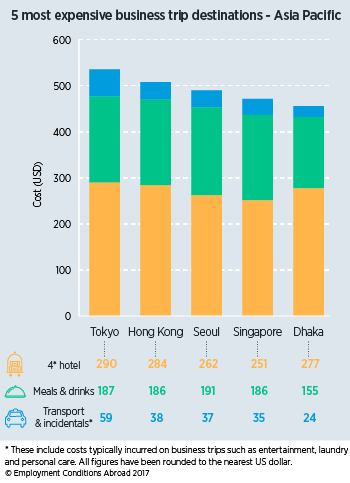
Singapore is now the fourth most expensive location in Asia-Pacific for business travel, rising one spot from last year’s regional ranking by global mobility solutions provider ECA International, although the average cost of a business trip to the Lion City is still eight per cent cheaper than Hong Kong.

The total cost of a typical business trip to Singapore, excluding travel to and from the city, is US$472 per day on average, according to ECA’s annual Daily Rates study, which considers average costs for four-star hotel accommodation, meals and drinks, laundry, transport and incidentals.

singapore

“Costs associated with accommodation for business travellers have risen in Singapore in the past year… although rates for four-star hotel accommodation are still approximately 16 per cent lower than comparable accommodation in the most expensive location, Tokyo,” said Lee Quane, regional director – Asia for ECA International.

While a typical meal out and incidentals amount to higher expenses in Singapore than in Hong Kong, this is offset by higher costs associated with hotel accommodation in Hong Kong (13 per cent higher) in the second spot. Seoul is ranked third most expensive in the region after Tokyo and Hong Kong respectively.

When leaving out hotel costs, however, Singapore falls to seventh in the regional ranking. Tokyo remains the most expensive, followed by Seoul, Yokohama, Sydney and Hong Kong.

ECA_International_-_Daily_Rates_February_2017
Source: ECA International

Shanghai, where hotel rates are 32 per cent lower than in Hong Kong, fell to 15th position. Beijing follows in 25th position with rates seven per cent lower than in Shanghai, largely due to cheaper hotel rates.

Meanwhile, ECA found Johor Bahru in Malaysia to be the cheapest business travel location in Asia-Pacific, while Kuala Lumpur is the only capital city ranked within the ten cheapest locations.

“Hotel accommodation rates have been depressed in the past 12 months owing to the impact of the fall in oil and gas prices on the Malaysian economy and subsequent reduction in business travel to and within the country,” added Quane.

“This has been further accentuated by the continued depreciation of the Malaysian ringgit versus the US dollar to (keep) business-travel costs in Malaysia low in comparison to elsewhere in the region.”

Mass tourism takes toll on Bali’s visitor spend, length of stay

0

A new C9 Hotelworks and Horwath HTL report on Bali reveals warning signs of a shift to mass market tourism, with arrivals growth accompanied by lower yield per tourist and shorter average lengths of stay.

Occupancy was up more than four per cent in 2016, with “solid occupancy” across all categories (excluding luxury) driven by increasing foreign direct arrivals, a slowing in new hotel openings and a further slashing of rates.

kuta beach bali tourists
Kuta beach, Bali

Bali’s domestic market in 2016 was up 12 per cent year-on-year to around 7.1 million while foreign arrivals increased six per cent to four million, bringing total arrivals to over 11 million for the first time.

There was a marked shift towards mainland China, which now holds second position in terms of international arrivals and is forecasted to overtake the legacy Australian segment in 2017. According to a C9 statement, this increase can be attributed to a diversion of mainland Chinese traffic to Bali after Thailand’s government banned zero-dollar tours.

A 2016 survey by the Bank of Indonesia highlights that the typical Chinese tourist’s expenditure is around one-quarter that of a typical European or Australian tourist. With the proportion of Chinese tourists increasing, the economic benefits per new tourist is reducing.

As well, the average length of stay in Bali year-to-date September 2016 fell to 3.1 days, down from 3.2 days year-on-year. Denpasar was hardest hit, seeing a fall from 4.5 to 2.7 days year-to-date September 2016.

The report concludes that mainland China is arguably a sensible target market for meeting national arrivals goals since it is only a short- to medium-haul catchment from Indonesia, plus increasing direct flights and a massive population, which gives potential for rapid-fire growth.

But taking heed from Thailand’s experience, it is essential to foster other markets simultaneously to balance quantity and quality of foreign arrivals.

Increased airlift, secondary gateway support China-led growth in Koh Samui

0

Bangkok Airways’ international expansion and the emergence of Surat Thani as a secondary gateway are important factors in the China-led growth observed in Koh Samui, according to C9 Hotelworks’ latest Samui Hotel Market Update.

Airport arrivals pushed over 1.2 million in 2016, a 22 per cent year-on-year growth last year from seven per cent the previous year, while market-wide occupancy grew from 68 per cent to 72 per cent last year.

surat thani(1)
Credit: www.suratthaniairport.com

C9 reported that mainland Chinese travellers are now filling the gaps of a once highly seasonal destination. During the first nine months of last year, arrivals from the market surged 61 per cent compared with the same period the year before.

Much of the growth momentum can be attributed to Bangkok Airways’ expansion, which has shifted its focus from South-east Asia to North Asia. In 2Q2017, the carrier will increase flights from Samui to Chengdu to a daily frequency and is expected to add Chongqing at a later date.

The increased airlift is also supported by an additional gateway into the destination, with flight arrivals into the nearby Surat Thani Airport spiking 30 per cent last year and further growth forecasted for 2017. Passengers flying from mainland China to Surat Thani made up 71 per cent of direct overseas arrivals to the provincial airport.

While the trend of ‘Chinacation’ has not driven down average hotel rates, with the resort-led destination primarily attracting individual travellers, there are signs of a shift in demand.

The growth of airlift to Surat Thani Airport is expected to bring a broader market of midscale and upscale segments to Samui, and pipeline hotels too point towards the rise of these segments.

Looking ahead, C9’s report reflects positive market sentiment and a strong balance between supply and demand in upcoming hotel developments, with the 175-key Ritz-Carlton Koh Samui being one of the most anticipated openings this year.

Travel to US hit by Trump slump

0

As American president Trump seeks to reinstate his executive order banning travel from seven Muslim-majority countries, Forwardkeys releases findings that the initial ban has deterred travel from other countries as well.

In the period of January 28 and February 4 after the executive order was signed, net bookings issued from the seven countries directly affected by the ban (Iraq, Syria, Iran, Libya, Somalia, Sudan and Yemen) were down 80 per cent on the same period last year.

donaldtrump

Notably, when looking at wider international trends in bookings to the US, Forwardkeys discovered a 6.5 per cent negative variation compared with the equivalent period the year before, suggesting the turmoil over his ruling is putting those from outside the Middle East off travelling to the US.

This analysis excludes China and Hong Kong because of the seasonal effect from Chinese New Year.

Bookings from Northern Europe (-6.6 per cent), Western Europe (-13.6 per cent), Southern Europe (-2.9 per cent), the Middle East (-37.5 per cent) and Asia-Pacific (-14 per cent) were all down. Even after benchmarking against total outbound traffic from these region, the US still lost market share in all cases.

Demand for the US from Central/Eastern Europe and the Americas were up 15.8 per cent and 2.3 per cent respectively. However, when one looks at outbound travel from those two regions of the world, total travel was up 12 per cent from Central/Eastern Europe and 4.8 per cent from the Americas, making the increase in travel to the US less impressive.

On February 3 and 4, after federal judge James Robart placed a temporary block on the travel ban, bookings to the US from Iran saw a dramatic surge, five times higher than same two days last year. Most were for arrivals on February 5 and 6 and with lengths of stay of 22 nights or more.

Iran was the only country to see such a surge following the suspension of the ban, with ForwardKeys acknowledging that those entering the US could include US citizens/residents returning home from Iran. The study monitors trip origin rather than nationality of travellers.

Looking at forward bookings over the next three months, the seven banned countries are behind 15 per cent on last year, compared with a 10 per cent decrease observed on January 27, suggesting a worsening of a negative trend resulting from the travel ban.

Total international bookings for the US for the coming three months are currently 2.3 per cent ahead of last year. Just eight days before, they were running 3.4 per cent ahead.

Russian comeback props up Phuket’s arrival growth in 2016

0

Demand indicators continue to be strong in Phuket with Russian arrivals rebounding and curbing a growth decline in Chinese arrivals, according to key findings in C9 Hotelworks’ Phuket Hotel Market Update for February 2017.

With total airport arrivals surpassing 7.5 million passengers, Phuket experienced a sharp year-on-year rise of 18 per cent compared with 13 per cent the previous year.

russia china phuket

This is largely attributed to the 51 per cent increase from the Russian source market, which C9 said was prompted by the strengthening of the rouble against the Thai baht and political volatility in the Middle East that shifted Russian tourists to the island during high season.

For mainland China, Phuket’s top source market, growth rate for 2016 plunged from 35 to 11 per cent after a national-wide government crackdown on zero-baht tourism in September of last year. This impact is expected to soften in early 2017 with more Chinese travellers arriving this Chinese New Year.

The balance between two major source markets – with China declining two per cent in market share while Russia grew to 13 per cent – saw Phuket ending 2016 on a positive note as hotel RevPAR rose by four per cent.

RevPAR was propelled by a 6.3 per cent uptick in market-wide occupancy, according to data from STR. Overall, Phuket hotels achieved slightly more than 75 per cent annualised occupancy for the year and 3,804 baht (US$108.60) in ADR.

The Phuket market continues to attract new developments, with a total of 5,584 keys across 32 new hotels expected to come online by 2020.

Meanwhile, the Department of Tourism and Sports has revised hotel supply data collection to include both registered and unregistered tourist accommodation in late 2016, and Phuket now shows a total 81,727 keys in 1,744 establishments.

This shift, according to C9’s managing director Bill Barnett, demonstrates the Thai government’s focus on addressing the widespread proliferation of unlicensed accommodation, and the provincial administration has also issued an ultimatum for illegal hotels to either register or face legal action.

Europe tops Chinese travel pecking order in Rooster Year

0

Chinese travellers are returning to Europe to usher in the Year of the Rooster, after numbers declined in 2016 likely over terror threat concerns, according to travel intelligence company ForwardKeys.

Although security concerns remain, bookings to Europe from the start of the Lunar New Year on January 28 were 68.5 per cent ahead as of December 30, 2016, compared with a 7.4 per cent fall in visitor numbers last year. However, ForwardKeys cautioned that the growth could have been due to bookings made at an earlier date than in previous years.

forwardkeys europe china travel

But when benchmarked against the equivalent period in 2015 before the impact of terrorism on European tourism, ForwardKeys found that bookings are still 56 per cent ahead.

Spain is the fastest-growing destination in Europe for Chinese travellers during the Spring Festival period (89 per cent), followed by the UK (88 per cent) and Italy (59 per cent). Despite suffering numerous terrorist attacks, France is ahead 49 per cent.

Central and Eastern Europe also see more bookings on the back of Russia’s popularity and Czech Republic’s improved connectivity. Turkey is the sole exception among top markets, lagging by 14 per cent as terrorism continues to hit the country.

ForwardKeys also revealed that overall number of Chinese outbound air travel bookings is up by 9.8 per cent for the January 18 to February 1 period. Departures are concentrated in the four days immediately before the 2017 Golden Week dates spanning January 27 to February 2, with an average length of stay of eight days.

Apart from the increase in outbound travel to Europe, bookings to South-east Asia are up 12.2 per cent, with growth led by Malaysia (46.3 per cent), Indonesia (44 per cent), Vietnam (37.8 per cent) and the Philippines (31.8 per cent).

Families of up to four people make up 51 per cent of Chinese travelling in this period. As well, travellers from first-tier cities – Shanghai, Beijing and Guangzhou – are more likely than those from smaller cities to travel beyond Asia (36 per cent) and use OTAs (26 per cent).

China’s new elite travellers

0

The Chinese Luxury Traveler Report reveals how China’s Gen Y approach travel – from what they seek in agents to their top hotels and destinations

Average young luxury traveller

jul-22-average-your-traveller

Personalised luxury, digital innovation and added value throughout the entire hospitality ecosystem are what young well-heeled travellers in China are now seeking, according to the inaugural Chinese Luxury Traveler 2016 study by Marriott International and Hurun Research Institute.

The survey focuses on 525 high-net-worth Chinese travellers between 18 to 36 years old, with an average personal wealth of RMB38.8 million (US$5.9 million) and an average of RMB420,000 in travel spending per household per year.

They are experienced travellers, having gone abroad 3.3 times in 2015 for an average of 25 days, of which leisure travel accounted for 69%.

The survey also revealed choice destinations among China’s young and wealthy. France (40%)was the most popular international destination, while Japan (39%) and Australia (38%) ranked second and third respectively. Japan was also the most visited destination over Chinese New Year 2016.

In addition, respondents have been on cruises an average of 2.4 times, and only 15% have never been on a cruise ship.

They are also seeking more diverse travel experiences, with global travel, adventure travel, polar exploration and road trips set to rise by 25%,52%, 38% and 75% respectively over the next three years.

Young luxury travellers exercise flexibility to travel whenever it fits their schedule in the next year (55%), followed by National Day Golden Week as the second most popular period (36%). Family travel, meanwhile, peaked during Chinese New Year, with 56% going abroad last year over this period. Some 90% travelled with family or friends, in a party of four people on average, and stayed abroad for 8.5 days.

In their experience with travel agencies, young luxury travellers listed personalised travel services (70%), expertise (57%) and itinerary planning (54%) as the three most important factors. They also strongly prefer personalised travel services, with 73% saying they have tried personalised travel services offered by a travel agency.

And when it comes to choosing hotels, the most important factor influencing their decision is the condition of the room, followed by friendliness of hotel staff (37%), the hotel’s location (26%), high-tech facilities (22%), and the hotel’s design and style (21%), the study showed.

The survey further found that Air China is the most subscribed (51%) frequent flyer programme, followed by China Southern Airlines and China Eastern Airlines. For international travel, Lufthansa is the top choice (19%) due to a diverse selection of European routes and convenient transit. In contrast, awareness of hotel loyalty programmes is low among young luxury travellers, with Shangri-La’s being the most popular.

Reasons for favouring travel agencies

jul-22-reason-faouring-travel-agencies

Most popular international travel destinations

jul-22-most-popular-travel-destination


This article was first published in TTG Asia, July 8, 2016 issue, on page 8. To read more, please view our digital edition or click here to subscribe

Carlson Rezidor acquires Country Inns & Suites in India

0

radisson-blu

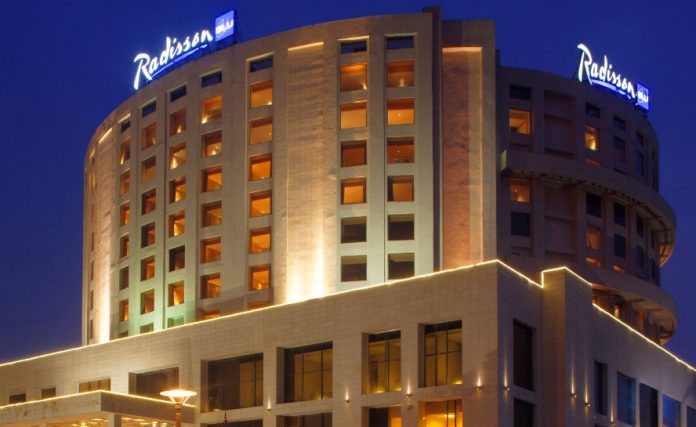
Radisson Blu Hotel New Delhi Dwarka

CARLSON Rezidor Hotel Group has acquired Country Development & Management Services (CDMS), a joint venture between Country Inns & Suites by Carlson and Chanakya Hotels that was set up to pioneer the Country Inns & Suites By Carlson brand in India.

The acquisition includes operation of four Radisson Blu hotels managed in India by CDMS.

With this deal, the Country Inns & Suites By Carlson brand in India will now be managed by Carlson Hotels (South Asia), the Indian affiliate of Carlson Rezidor Hotel Group.

Explaining the decision to acquire CDMS, Raj Rana, CEO, South Asia, Carlson Rezidor Hotel Group, said: “India is an important market for Carlson Rezidor Hotel Group, where we offer seven brands from mid-scale to luxury. Country Inns & Suites By Carlson is an integral part of our brand portfolio in the mid-scale segment. This consolidation will help us in directing our resources more efficiently to support our hotels.”

Commenting on the move, Thorsten Kirschke, president, Asia-Pacific, Carlson Rezidor Hotel Group, added: “This acquisition, resulting in the full ownership of CDMS, is a strategic move to further strengthen our position as the leading international hotel operator in India.

“We aim to have 170 hotels in operation and under development by 2020 in the country.”