Asia/Singapore Sunday, 5th April 2026
Page 386

Bangkok most visited, Singapore draws highest spending in APAC

0

Bangkok remains the most visited destination in Asia-Pacific while Singapore continues to lead in total visitor expenditure, according to the latest findings from the Mastercard Asia-Pacific Destinations Index 2017.

Overnight arrivals to the 171 Asia-Pacific destinations surveyed in 2016 stood at 339.2 million (9.8 per cent CAGR 2009-2016), led by Bangkok which tracked 19.3 million visitors.
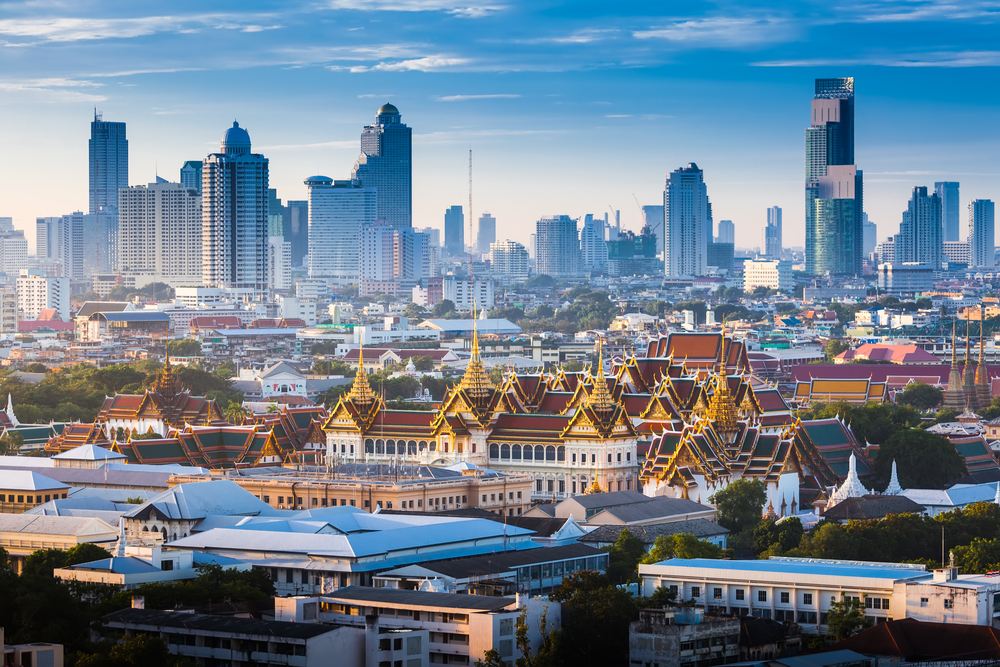

Bangkok

Singapore (13.1 million) came in second, followed by Tokyo (12.6 million), Seoul (12.4 million) and Kuala Lumpur (11.3 million). China stands as Asia-Pacific’s most avid outbound travel market, having contributed 55 million international overnight visitors to the region last year or 16.2 per cent of the total.

Overall, the report noted an “unprecedented jump” in international overnight arrivals into Asia-Pacific, with half of the region’s 20 most visited destinations seeing more than 10 per cent growth from 2015 to 2016.

Destinations that benefitted most from this growth include North-east and South-east Asian markets – Seoul (32.7 per cent), Osaka (23.8 per cent), Bali (22.5 per cent), Tokyo (22.2 per cent), Hokkaido (21.9 per cent), Chiba (21.5 per cent) and Pattaya (20.6 per cent).

Meanwhile, spurred by Asia-Pacific’s burgeoning middle class, overall tourism expenditure in the region jumped from US$141.5 billion in 2009 to US$244.9 billion in 2016, an 8.2 per cent CAGR.

Singapore attracted the highest spending visitors at US$254 per day, a 18 per cent leap, followed by Beijing (US$242), Shanghai (US$234), Hong Kong (US$211) and Taipei (US$208).

The mass of tourists from North-east Asia helped boost earnings, according to the report. China (17.7 per cent) and South Korea (8.8 per cent) were the largest contributors to tourism expenditure in Asia-Pacific. The two markets were top source markets for Singapore (China #1), Bangkok (China #1) and Tokyo (South Korea #1, China #2).
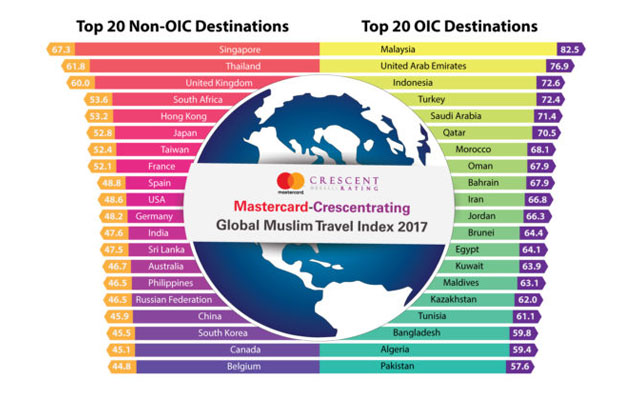
Malaysia, Singapore once again top Muslim travel index

0

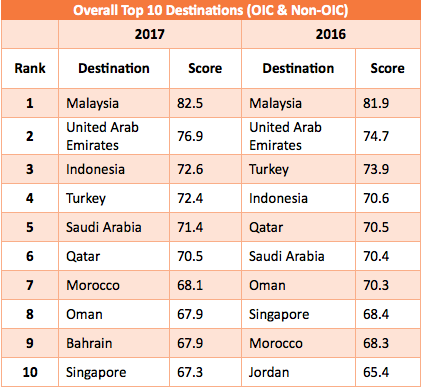
Malaysia and Singapore have topped the list of Organisation of Islamic Cooperation (OIC) and non-OIC markets respectively for the third consecutive year, according to the Mastercard-CrescentRating Global Muslim Travel Index (GMTI) 2017.

The GMTI, which covers 130 destinations, saw Malaysia keep its top spot while Indonesia moved up to third place in the overall rankings.

Meanwhile, Singapore retained its pole position for the non-OIC destinations, followed by other Asian countries in the top five: Thailand (2nd), Hong Kong (5th) and Japan (6th).

On the combined overall list, Singapore remains the only non-OIC destination in top 10. A number of non-OIC destinations in Asia also moved up the rankings, a result of their concerted efforts to adapt their services to cater to and attract the Muslim travel market.

Indonesia, Japan and Taiwan made the biggest improvements in the overall top 10 ranking.

As a whole, Asia remains the world’s most attractive region to Muslim tourists with an average GMTI score of 57.6, followed by Africa (47), Oceania (43.8), Europe (39.9) and the Americas (33.7) respectively.

As well, research also showed that the Muslim travel sector is estimated to grow to US$220 billion in 2020 and US$300 billion by 2026.

From the estimated 121 million in 2016 – up from 117 million in 2015 – Muslim visitor arrivals are forecasted to grow to 156 million visitors by 2020 to represent10 per cent of the travel segment.

Fazal Bahardeen, CEO of CrescentRating and HalalTrip, said: “We are definitely seeing the influence of a new breed of young travellers, millennials and Gen Z who are combining technology with a real desire to explore the world while still adhering to their faith-based needs. They will be the driving force for the next phase of growth.”

Safdar Khan, Mastercard’s division president, Indonesia, Malaysia & Brunei, added: “With an overall expenditure of around US$155 billion in 2016, the Muslim travel market remains a strong driver for the continued growth in travel across the world. It’s constantly evolving with major forces such as changing demographics and digitisation shaping the way the industry is progressing.”

Myanmar’s beach destinations to watch

0

Myanmar’s four key beach destinations – Ngapali, Kawthaung, Ngwe Saung and Chaungtha – are emerging as up-and-coming tropical getaway spots in Asia, each with its own distinct characteristics.

According to C9 Hotelworks’ new Ngapali Beach Tourism Market Review, the impact of more airlift to Ngapali’s main gateway of Thandwe last year pushed growth up 28 per cent, leading to a total of 71,603 passengers arriving in Ngapali via domestic flights from Yangon, Bagan, Mandalay, Heho and Sittwe. Germany, the UK, France, Switzerland and Italy were the top five international source markets.

Ngapali beach

With Thandwe Hotel Zone recording a 31 per cent increase in visitors to 72,353 in 2016, the local government now plans to extend the zone and is “in advanced discussions to add direct international flights”, according to C9 Hotelworks’ Ngapali Tourism Market Review.

Sixty nine per cent of hotel demand in Ngapali comes from overseas travellers, but domestic tourism is rising fast. C9’s managing director, Bill Barnett, said: “Local travellers in tourist accommodations grew 79 per cent compared to 11 per cent by foreigners for the same period.”

With new demand, hotel occupancy levels on an annualised basis now exceed 60 per cent. Average room rates in upscale accommodation ranges from US$150-200. One key addition to the market has been the arrival of the Hilton brand.

Crowding in the Thandwe Hotel Zone has prompted the government to work on expanding the zone south by seven kilometres. The extension will be developed in two phases and add roadways, electricity and other public service to the area.

And due to limited land with beach access, new hotel establishments are now moving inland and south of Ngapali. Overall, there are only 26 hotel establishments in Ngapali hosting a total of 878 keys; 516 keys are currently under development.

With high room rate and mounting demand, C9 foresees Myanmar’s big four beach destinations (Ngapali, Kawthaung, Ngwe Saung and Chaungtha) would attract a significant amount of attention from both domestic and international hospitality players.

Kawthaung is rapidly evolving as a tourism hub for the Mergui Archipelago and the connection to the nearby Thai market of Greater Phuket via Phang Nga and Ranong has many synergies.

Ngwe Saung and Chaungtha, given their driving access from Yangon, clearly are more attractive to surging domestic numbers and more volume driven products.

North America, Europe higher up on APAC travellers’ radar: Sojern

0

Travellers from Asia-Pacific are venturing to North American and European destinations in 2Q2017 compared to local and regional ones in 1Q2017, bucking the global trend of fewer travellers planning to visit major US cities this spring, revealed performance marketing engine Sojern in its Q2 Global Travel Insights report.

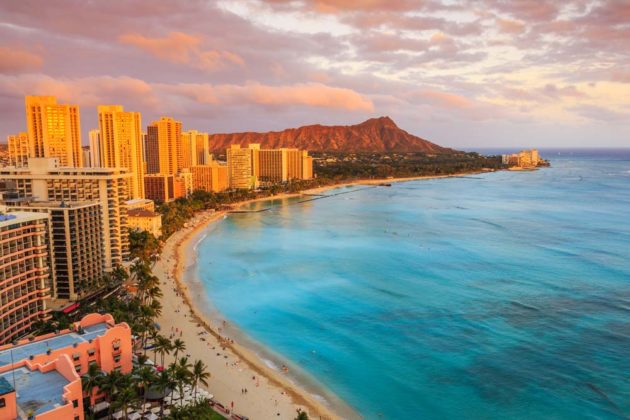
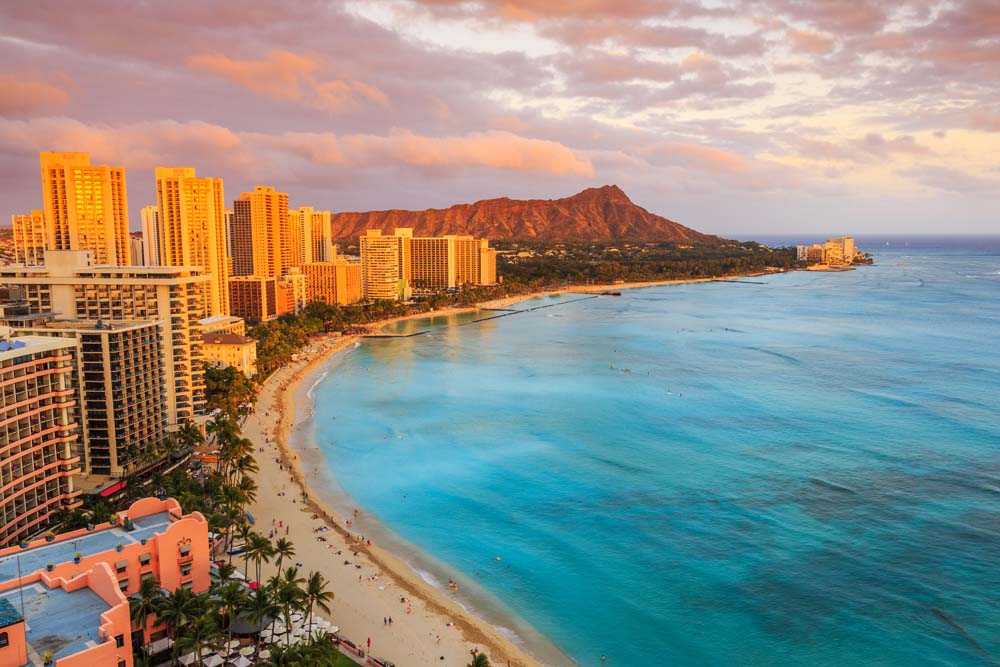
Singapore and Sydney moved out of the top five most searched beach destinations while Honolulu and Phuket entered the ranking, which according to Sojern demonstrates that early planners are open to new destinations as long as these offer the activity or sight they are looking for.


Waikiki beach, Honolulu

Retaining their placing in the top five are Barcelona, Denpasar and Melbourne.

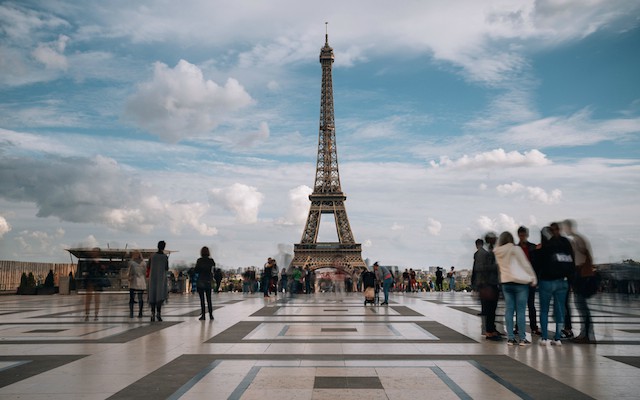
Comparing the top metropolitan destinations, the company saw Seoul and Taipei drop out of the top five, replaced by Bangkok and Paris. Tokyo, Singapore and London are the other three in the top five.

Sojern further observes that Auckland, Nagoya and Bangkok were edged out from the sightseeing/recreational top five by Okinawa, Rome and Melbourne.

Meanwhile, the company said that with June 23 topping the list of departure dates, “it is clear that Asia-Pacific travellers are looking to take a long weekend to celebrate” the end of Ramadan.

“Asian travel marketers know now that travellers are trying to decide just how long a long weekend they will take – with both the Thursday and Friday before Eid al-Fitr on the top departure dates list,” read a Sojern statement.

“This presents a prime opportunity to engage new customers and Sojern recommends targeting them with a combination of upper-funnel brand messaging to introduce them to your brand and mid-funnel engagement campaigns to nurture them through the funnel.”

World’s busiest airports revealed: ACI

0

The Airports Council International (ACI) has revealed its study of the world’s busiest airports in 2016, with Atlanta-Hartsfield-Jackson (ATL) retaining its top spot with over 104 million passengers and 2.6 per cent growth from 2015.

Beijing Capital International Airport, despite pundit expectations that it would reign supreme by 2015, held onto the second spot. Having grown five per cent to over 94 million passengers in 2016, China’s busiest airport saw subdued growth in previous years as it faced continuing capacity constraints.

In third position again is Dubai, with total passenger traffic growing 7.2 per cent in 2016. As a major connection point for longhaul international flights, the airport is also the world’s busiest in terms of international passengers ahead of London-Heathrow (seventh position).

Asian airlines continued to make inroads in the North American market on key international and trans-Pacific segments across airport pairs, particularly between North America and China. A major Chinese airports serving the trans-Pacific and other international routes is Shanghai Pudong International Airport (PVG), which moved up to ninth spot after growing 9.8 per cent in 2016 to over 66 million passengers.

The Chinese hub also serves the catchment area of Shanghai, one of the most populous city markets in the world and a major centre for trade and business. PVG, which represents over 60 per cent of Shanghai’s passenger traffic in 2016, and Hongqiao, the city’s sister airport, surpassed the 100 million passenger mark in combined passenger traffic.

Other fast-rising hubs is Seoul’s Incheon International Airport, now in 19th place, which experienced 17.1 per cent year-over-year increase in passenger traffic. Even after factoring in the effect of the outbreak of the Middle East respiratory syndrome, which depressed passenger figures during the summer of 2015, Incheon would still have achieved an estimated growth rate of at least 10 per cent.

The continued growth of LCCs on key segments and the start of A380 flight operations of longhaul routes have paved the way for traffic expansions, while another key contributor relates to the consolidating demand of Korean and Japanese international routes. Tokyo Haneda, the world’s fifth busiest airport and Japan’s largest, grew 5.5 per cent in total passenger traffic for 2016.

Tourism confidence soars to decade’s high as Europe rebounds: UNWTO

0

International tourist arrivals worldwide reached 369 million in January-April 2017, up six per cent from the same period last year, with business confidence reaching its highest levels in a decade, according to the latest UNWTO World Tourism Barometer.

Destinations that were affected by negative events in 2016 continued to rebound in the first part of 2017, with improved arrivals performance in the Middle East (+10 per cent), Africa (+eight per cent) and Europe (+six per cent).

In Europe, where security concerns impacted tourism last year, Southern Mediterranean Europe saw a nine per cent increase as compared with one per cent in 2016, while Western Europe recorded a four per cent boost compared with flat growth in 2016.

Meanwhile, Northern Europe (+nine per cent) continued to post growth, while Central and Eastern Europe was in line with results of last year with a four per cent increase.

Continued growth was seen in Asia-Pacific, where international arrivals were up six per cent through April, led by South Asia (+14 per cent) followed by Oceania (+seven per cent), South-east Asia (+six per cent) and North-east Asia (+five per cent).

International arrivals in the Americas were up four per cent with strong results in South America and Central America (both +seven per cent), while arrivals in North America grew by three per cent and in the Caribbean by two per cent.

The current strong momentum is reflected in the UNWTO Panel of Tourism Experts confidence index, which evaluated tourism performance in the first four months of 2017 with the highest score in 12 years.

Confidence levels for the current May-August period are expected to be sustained at a decade-long high, also driven by upbeat expectations in Europe.

Chinese tourists biggest spenders in 2016: UNWTO

0

Chinese outbound tourism expenditure grew 12 per cent to US$261 billion last year, continuing a trend of double-digit growth every year since 2004 and placing China first in UNWTO’s ranking of international tourism spend.

The number of outbound Chinese travellers also rose six per cent to 135 million in 2016, consolidating China’s position as the world’s top source market since 2012. Asia-Pacific benefitted especially from the growth in Chinese travel, most notably Japan, South Korea and Thailand, and also longhaul destinations such as the US and several in Europe.

Elsewhere in Asia, Hong Kong entered the top 10 spending markets following five per cent growth in expenditure (US$24 billion, while South Korea (US$27 billion) and Australia (US$27 billion) both spent eight per cent more in 2016.

Among the largest 50 source markets, there were nine apart from China that recorded double-digit growth in spending in 2016: Vietnam (+28 per cent), Argentina (+26 per cent), Egypt (+19 per cent), Spain (+17 per cent), India (+16 per cent), Israel and Ukraine (both +12 per cent), Qatar and Thailand (both +11 per cent).

Tourism spending from the US – the second largest market – increased eight per cent in 2016 to US$122 billion, up US$9 billion on 2015. For the third year in a row, strong outbound demand was fuelled by a robust US dollar and economy. The number of US residents travelling to international destinations increased eight per cent through November 2016 (74 million in 2015).

Germany (+five per cent to US$81 billion), the UK (marginal change to US$64 billion), France (+seven per cent to US$41 billion) and Italy (+one per cent to US$25 billion), the four European spenders in the global top 10, likewise reported growth in outbound demand last year.

In particular, demand from the UK remained sound despite the significant depreciation of the British pound in 2016. UK residents’ visits abroad were up by five million (+seven per cent) in 2016 to 70 million.

By contrast, outbound tourism from some commodity exporters continued to be depressed as a consequence of their weaker economies and currencies. Expenditure from Russia dropped further in 2016 to US$24 billion, while Brazil also saw declines in outbound spend.

Hilton named world’s most valuable hotel brand, Premier Inn most powerful

0

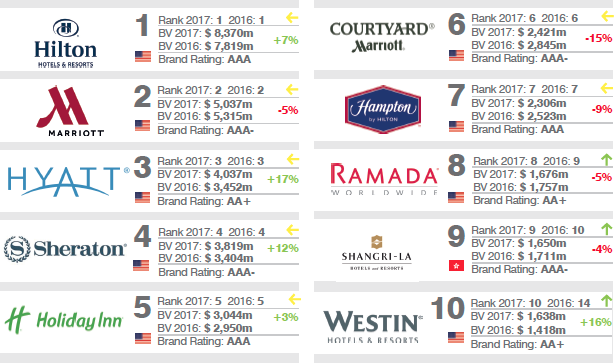
The latest annual Brand Finance Hotels 50 report by valuation and strategy consultancy Brand Finance has ranked Hilton the world’s most valuable hotel brand with a value of US$8.4 billion, up seven per cent from 2016.

Hilton remains one of the world’s most powerful brands (rated AAA) thanks to its variety of brand building initiatives, including recent CSR partnerships with Global Sustainable Solutions and ORCA to reduce food waste and improve recycling, and allowing direct bookings through Tripadvisor.

Following in the next four spots are also US-based brands Marriott, Hyatt, Sheraton and Holiday Inn respectively.

These brands have remained tops despite 2016 being a year of challenges such as the effect of US president Donald Trump’s election, Brexit as well as the rapid growth of Airbnb.

Airbnb’s brand value is growing more rapidly than any major hotel brand, increasing 52 per cent year-on-year to reach a total of US$3.7 billion, making it more valuable than all but four of the world’s biggest hotel brands.

Meanwhile, the same report puts Premier Inn as the most powerful hotel brand, owing to the mass-market, UK-focused company’s ability to live up to its name across a broad range of metrics, from marketing investment to familiarity and consideration.

Holiday Inn and Days Inn are ranked second and third most powerful hotel brands respectively by Brand Finance.

The full report can be viewed here.

For luxury travellers, it’s now experiences over dollars

0

The desire for learning and enrichment, giving something back, the rise of the ephemeral and instant as well as great service are the key trends defining luxury travel today, according to the Limited Access Luxury Travel Report, developed by MyTravelResearch.com, Executive PA magazine and the Luxperience travel show.

MyTravelResearch.com said modern luxury travel reflects wider macro-economic trends including rising levels of inequality, which make conspicuous public displays of wealth less acceptable.

In tandem with less ostentation, higher spiritual and emotional motives are now coming more into play – such as the need for inner fulfilment, creativity, self esteem, belonging and contentedness.

In short, experience transcends dollars at the higher end of luxury travel. The consequence: demand for luxury experiences seems to be growing faster than the demand for luxury goods.

The report also shows that luxury travellers are placing an even greater emphasis on service and increasingly insisting on a wider diversity of experiences, empowered by the Internet and a surplus of service providers in the luxury sector.

MyTravelResearch.com founder Carolyn Childs also singled out notable characteristics of the modern luxury travel market, including the greater number of new younger and women millionaires; the rise of wellbeing, multi-generational travel and learning; the growth of the luxury cruise market; as well as the luxury traveller’s ever-rising expectations and premium placed on value.

Tourism remains a global driving force for jobs, economy: WTTC

0

Growth in the travel and tourism industry outpaced the global economy for the sixth consecutive year in 2016, according to WTTC.

The industry grew 3.3 per cent, generating US$7.6 trillion worldwide, or 10.2 per cent of global GDP (taking into account direct, indirect and induced impacts). The sector also supported a total of 292 million jobs in 2016, one in 10 of all jobs in the world.

Additionally, money spent by foreign visitors accounted for 6.6 per cent of total world exports, and almost 30 per cent of total world services exports.

South-east Asia saw the highest growth (8.3 per cent), driven by the expanding Chinese outbound market and the region’s own growing markets.

In second place was South Asia (7.9 per cent), followed by North-east Asia (4.6 per cent), Oceania (4.4 per cent), the Caribbean (3.2 per cent), North America (3.1 per cent), the Middle East (2.7 per cent), Sub-Saharan Africa (2.4 per cent) and Europe (1.6 per cent).

Latin America (0.2 per cent) was the slowest growing region, which WTTC attributed to the Brazilian economy, which “dragged down the whole region”.

In 2017, WTTC expects the industry to generate US$7.9 trillion, a 3.8 per cent growth. This is slower than previously forecasted “as a result of a downgrade to the global economy and a dampening of consumer spending”.

Over the next decade, the sector is forecast to grow at an average of 3.9 per cent per year. By 2027 it will generate more than 11 per cent of the world’s GDP and employ a total of 380 million people. One quarter of all jobs created in the next decade will be supported by travel and tourism, according to WTTC projections.

However, David Scowsill, president & CEO, WTTC, reminded: “The future prospects for travel and tourism are good, but the sector continues to face challenges. The impact of terrorism and the rise of populism pose a severe risk to the ability of people to travel efficiently and securely.

“The sector needs urgently to address the impact of growth on destinations and its own contribution to climate change if it is to be sustainable in the long term.”