Asia/Singapore Wednesday, 8th April 2026
Page 377

New hotels: Fairmont Maldives Sirru Fen Fushi, Kyukaruizawa Kikyo and more

0

Fairmont Maldives Sirru Fen Fushi, Maldives
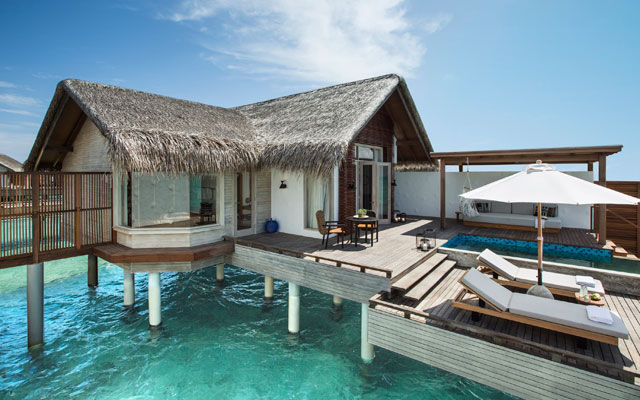
Located on the Shaviyani Atoll in North Maldives, Fairmont’s latest opening offers 120 luxury villas, each with a private pool. The villas are categorised based on the island’s topography and include Beach, Water and Tented Jungle Villas. Facilities on the island include an art studio, three restaurants, three bars and a 2,000m2 Willow Stream Spa complete with Jacuzzi. Families are also catered for with a kid’s club, toddler’s play garden and a dedicated Teen Town. Activities include snorkelling the nine kilometre-long house reef; cooking classes with a Maldivian chef; sunset dolphin tour; and turtle release programmes.

The resort is accessible by domestic flight in 50 minutes from Male International Airport followed by speedboat from Hanimaadhoo Airport to the resort. Alternatively, guests can book a 50-minute scenic seaplane flight directly to the resort.

Kyukaruizawa Kikyo, Japan
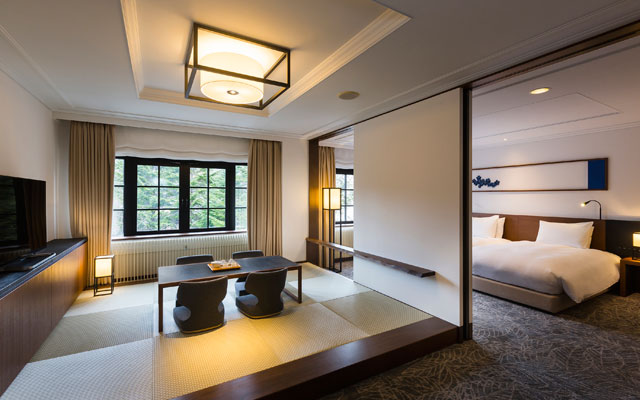
Kyukaruizawa Kikyo, the first Curio Collection by Hilton hotel in Japan, features 50 guestrooms furnished with a seating area with sofa, 50-inch HDTV and Wi-Fi, while many rooms also have a balcony. Located in Karuizawa in Nagano Prefecture, the mountain village hotel offers amenities such as a spa, traditional Japanese public bath, sauna, fitness centre and French restaurant Sonorite. Event and meeting spaces include three meeting rooms and a chapel that can accommodate between eight and 80 guests.

Hui Yue Boutique Hotel, China
Part of the Small Luxury Hotels of the World, this boutique property on top of a mountain overlooking Jinlong Lake in Xuzhou comprises five villas and 28 guestrooms. Facilities on-site include a Chinese restaurant with five smaller function rooms equipped with karaoke systems, a teppanyaki restaurant, meeting room, multifunctional hall, gym and spa. A French a la carte breakfast can also be arranged in the mornings.
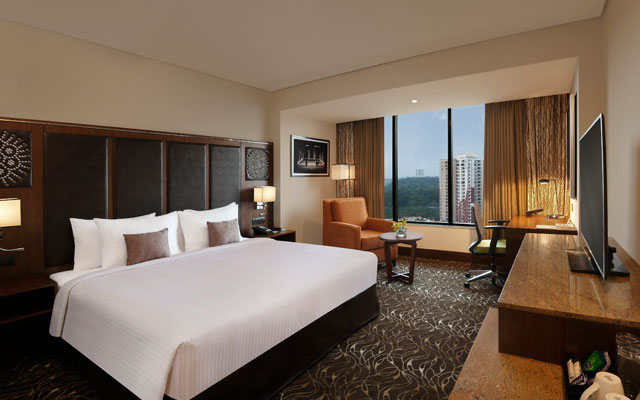

Novotel Kochi Infopark, India
Featuring 128 rooms including eight suites, the first Novotel property has made its debut in the commercial capital of Kerala. Aside from the three F&B options, recreational facilities include an infinity pool, gym and a dedicated kid’s corner. For weddings, meetings and events, the hotel boasts three meeting rooms that can accommodate up to 200 guests. The hotel is a 40-minute drive from the Kochi International Airport and 30-minute drive to the Ernakulam Railway station.
Thomas Cook India to undergo restructure into four verticals

0

Thomas Cook India (TCIL) will undertake a corporate restructuring, subject to regulatory approvals, that is aimed at streamlining its businesses into four key verticals.

The verticals include, travel (outbound, domestic, business travel and MICE), foreign exchange, destination management services and portfolio investments such as Sterling Holiday Resorts.

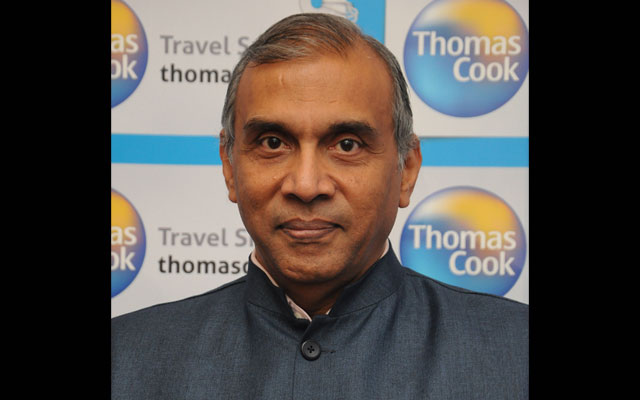
Madhavan Menon: restructure will enable TCIL and Quess to grow independently

The restructuring also involves the consolidating of the human resource services business into Quess Corp.

Madhavan Menon, chairman and managing director, TCIL, said in a statement: “This proposed restructuring with the realignment of the travel businesses of TCIL and consolidation of the human resource services business into Quess Corp will simplify the group structure, enabling both TCIL and Quess to grow independently and consolidate their positions in their segments with far greater clarity of focus from an industry and growth/opportunity point of view – for investors, management and teams.”

In its current structure, TCIL along with its subsidiaries and associate companies such as SOTC, TCI, TC Travel and Sterling Holidays are engaged in various travel and travel related financial services, vacation ownership and resorts.

Meanwhile, Quess Corp is engaged in human resource and business related services such as industrial asset management, integrated facility management, human resource services and technology solutions.

The TCIL Group’s many travel and non travel-related acquisitions in recent years, including Kuoni Hong Kong and Kuoni’s multiple destination management services entities across 21 countries, among others, as well as Quess’ several acquisitions both in India and overseas had created complex structures both at the Quess as well as the group level.

In the wake of the proposed restructuring, TCIL will be a travel-focused company, while Quess will continue its growth trajectory in the high growth opportunity space of human capital and allied services, the release said.

“We believe that the proposed restructuring will give our individual lines of business the advantages of flexibility and the integration of size, scale and financial strength to take us to the next level of growth,” added Menon.

0

UAE’s Emaar Hospitality Group has Asia on its expansion radar

0

UAE-based Emaar Hospitality Group is looking to enter key Asian markets including India and China as part of its expansion plans.

“We are looking to expand into new international markets by leveraging our brand recognition. India and China both are major source markets for us. Though there are no projects that we can announce in these markets yet, we are looking at possibilities in major cities in these two countries,” said Olivier Harnisch, Emaar Hospitality Group’s CEO, speaking on the sidelines of the Arabian Travel Mart in Dubai.

Emaar will enter India mainly though management agreements

For India and China, Harnisch sees good opportunity to develop Emaar’s three brands, namely the premium luxury Address Hotels + Resorts, upscale lifestyle Vida Hotels and Resorts; and contemporary midscale Rove Hotels.

In particular, he is excited about the prospects of Rove Hotels in the Indian market.

“We are looking to enter the Indian market through a joint venture or a management contract. In fact, a lot of hotels in our development pipeline will be managed. Our focus will be on management contracts going ahead,” shared Harnisch.

The group recently announced its foray into the Maldives with the Address Madivaru Maldives Resort, a 75,000m2 property with a dedicated spa island and water sports island, scheduled to open in 2020.

At present, Emaar Hospitality Group has 12 operational hotels in the UAE, and three serviced residences operational in Dubai. Globally, the group has 36 projects in the pipeline.

Thailand’s diversification campaign brings steady growth momentum: Expedia

0

Visitors to Thailand are seeking more diversified experiences and venturing into secondary destinations, offering hoteliers opportunities to target inbound visitors through a market segmentation approach that aligns with Tourism Authority of Thailand (TAT)’s latest Open to the New Shades of Thailand campaign.

The Expedia Group reveals some emerging trends for Thailand, garnered from its 675+ million monthly visits from across the globe in 2017:

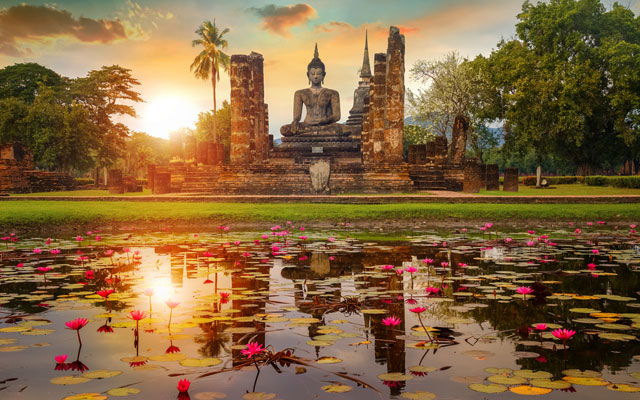
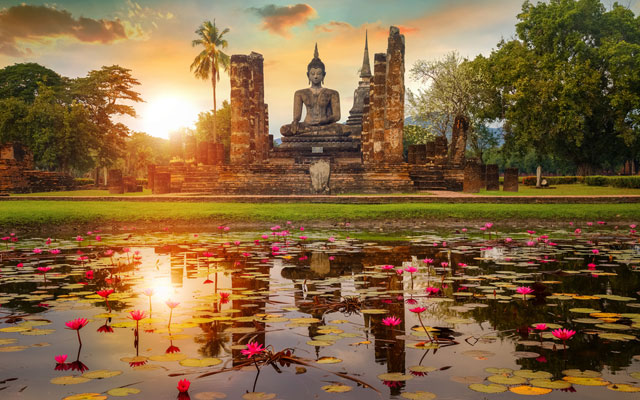
Attractions such as Wat Mahathat Temple in Sukhothai Historical Park (pictured) are on the rise

A greater demand for cultural and historic destinations
Chiang Rai in Thailand’s northern province recorded an outstanding +80% year-on-year inbound growth, thanks to local hill tribes and their distinctive customs that make for an intriguing cultural mix for intrepid travellers. Chiang Mai, on the other hand, experienced a relatively slower but healthy growth at +30%.

While Asian travellers seem more interested in experiencing local customs, European travellers from France, Germany and the UK showed greater interest in exploring Thailand’s historical ruins.

Sukhothai, known for its ruins of Thailand’s first kingdom dating back over 700 years, experienced +50% year-on-year in inbound demand, where Europeans alone attributed to more than half of this growth.

Package bookings drive higher ADRs in beach destinations
While the top five most visited beach destinations among international travellers remained the same as 2016, Pattaya led the pack with year-on-year growth at +40%, followed by Phuket and Hua Hin with a modest growth of +20%. On the other hand, Koh Samui and Krabi recorded relatively slower growth at around 10%.

In these top five destinations, Expedia Group’s package – which bundles flights and hotel accommodation – travellers paid 1.2 times more for their accommodations compared to standalone bookings.

On average, package travellers tend to stay one more day and are 50% less likely to cancel their trips due to the non-refundable flight element, as compared to standalone bookings. The US, Australia and the UK led the growth for package demand to Thailand’s key beach destinations.

While nearly seven in 10 bookings to Thailand comprise of one or more beach destinations, international visitors are also venturing beyond the beaten path. Upcoming beach destinations such as Koh Chang and Koh Lipe both recorded a healthy +30% growth.

Khao Yai National Park (pictured) was also a popular destination for South-east Asian travellers this year

Thanks to UNESCO-listed Khao Yai National Park, Khao Yai recorded an outstanding three-digit growth at +160% year-on-year. Over half of these visitors are from South-east Asia countries with Singapore topping in the first place, accounting for nearly 40% of Khao Yai’s overall inbound demand.

Gastronomy becomes Bangkok’s key attraction
Bangkok attracted the attention of foodies worldwide when it was named the world’s top street food city. Michelin then launched its first edition Michelin Guide Bangkok, featuring a total of 98 restaurants. These recent developments highlight how Bangkok embraces international dining while spotlighting its own rich culinary heritage and authentic Thai cuisine.

While Japanese travellers place the highest importance on food experience, Australian visitors ranked food as the second most important factor influencing their choice of travel destination according to a recent Asia Pacific Travel Trends research. Expedia Group’s data for Bangkok supported these findings as Japan was ranked top three inbound markets while Australia was one of the fastest-growing inbound market among Thailand’s top 10 feeder markets, injecting a healthy double-digit growth into Bangkok.

Interest in greener stays on the rise: Booking.com

0

More travellers are seeking out greener stays while showing a willingness to pay more to ensure they are travelling sustainably, according to recent findings from Booking.com‘s Sustainable Travel Report.

The report indicates that the green travel trend continues to gain momentum with a large majority of global travellers (87%) stating that they want to travel sustainably, and nearly four in 10 (39%) confirming that they often or always manage to do so.

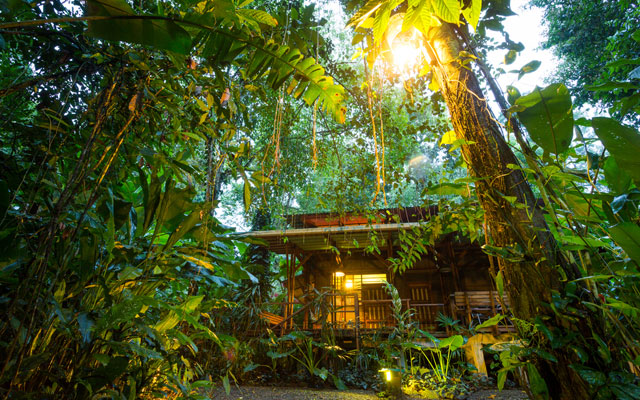
An ecolodge in Puerto Viejo de Talamanca, Costa Rica

However, 48% indicate they never, rarely or only sometimes manage to travel sustainably, suggesting that while promising strides are being made for a greener future, there is still plenty of room to turn intentions into action.

For almost half of the travellers surveyed (46%), sustainable travel means staying in eco-friendly or green accommodations, topping the list of what people think of when hearing the term. The top reasons travellers give for choosing these eco-friendly accommodations are to help reduce environmental impact (40%), to have a locally relevant experience (34%) and wanting to feel good about an accommodation choice (33%).

Looking ahead, more than two-thirds (68%) of travellers intend to stay in an eco-accommodation in 2018, up from 65% in 2017 and 62% in 2016. Additionally, the percentage of travellers who have not considered eco-friendly stays because they were unaware of their existence continues to decline, resting at 31% this year, compared to 39% and 38% in 2017 and 2016 respectively.

When it comes to what inspires people to travel more sustainably, travel itself is the biggest motivator. Six in 10 travellers indicated that they found the impressive natural sights visited on past travels as their inspiration to travel more sustainably, while more than half (54%) said seeing the visible impact that tourism can have on destinations serves as their inspiration.

While perceived extra cost remains the top barrier for travellers wanting to travel more sustainably, two thirds (67%) of travellers would be willing to spend at least five per cent more on their travel to ensure it was as low impact on the environment as possible. Indian travellers claim to be the most willing, with nearly a third (32%) declaring that they would pay 15% or more, followed by Brazilians (21%) and Chinese (18%).

The research also indicates that a lack of information and a lack of credible certification poses a significant obstacle to sustainable travel (32%), particularly in India, China and Japan where travellers cited this as even more of a barrier than extra cost.

As sustainable travel intentions grow, travellers are still looking for ways to more easily fulfil these ambitions. Some 40% said that online booking sites offering a sustainable or eco-friendly filter option would help, while 32% continue to call for an international standard for identifying eco-friendly accommodations.

The full report can be viewed here.

Hong Kong most expensive in APAC for business travel

0

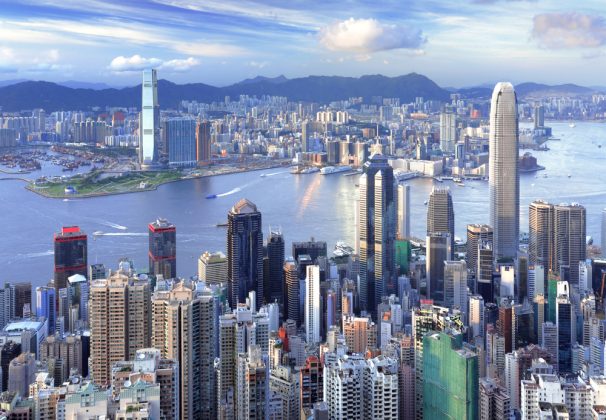
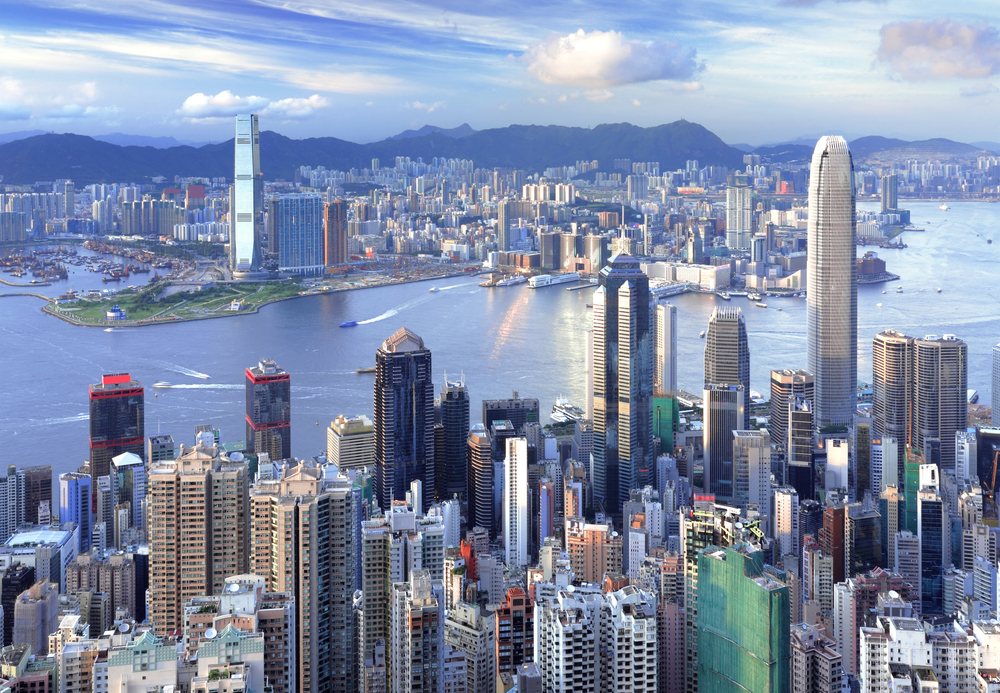
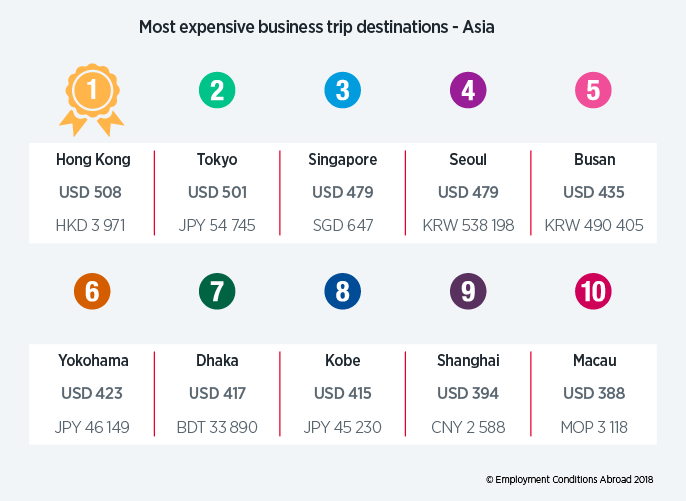
Hong Kong is now the most expensive location for business travellers, having overtaken Tokyo which drops to second spot, revealed the latest Daily Rates research published by ECA International.

Lee Quane, regional director – Asia for ECA International, said in a statement: “This change is mostly due to the overall price of business travel in Japan decreasing in dollar terms after the yen fell in value over the course of 2017. The cost of business travel in Hong Kong has remained unchanged from last year with the typical business trip now costing US$508 per day on average.”

Hong Kong is the most expensive location in APAC for business travel

However, the average cost of a business trip to Singapore has increased to US$479 per day, up from US$472 in 2016, which now puts the city state a joint third with Seoul for most expensive Asian location for business travel.

Quane said: “Hotel costs have risen slightly in the past 12 months, but the main reason for Singapore’s rise has been the increased cost of eating out in restaurants frequented by business travellers in the city over the past year.”

Meanwhile, the cheapest region for international business travel remains Malaysia, with Kuala Lumpur and Johor Bahru residing at the bottom of the rankings due to the continued weakness of the ringgit against major currencies.

“Although fellow ASEAN countries such as Indonesia, Thailand, Brunei and Cambodia have cities which rank amongst the cheapest in the region for business travel, the cost of business travel remains low in Malaysia. The cost of a business trip to Kuala Lumpur is less than half of what it is in Hong Kong,” said Quane.

Top 10 list of most expensive destinations in Asia for business travellers

The Thai cities that were included in the survey all saw a slight increase in business travel costs, with Bangkok moving into the top 50 for the first time. The average business trip to Thailand’s capital now costs US$278 a day.

Chinese cities have also seen an increase in cost for a standard business trip, with Shanghai now ranked as the ninth most expensive location for business travel in the region.

Over the past 12 months, it has become more costly for business travellers who visit Chinese cities as prices of goods and services commonly consumed by this segment has increased. Despite the increase, Shanghai is still cheaper than Hong Kong and Tokyo for business, and is over US$100 a day less expensive on average.

Agents face biggest struggle to convert browsing to booking

0

As high as 92 per cent of all bookings in Asia-Pacific are abandoned at checkout, with travel agents in the region facing the biggest struggle to convert customers, as data from Ve Global – an advertising and marketing technology company headquartered in London – shows.

The findings, taken from over 58 million customer sessions between January 2017 to April 2018, show that 95.5 per cent of them abandon their online booking with agents in the region. Although performing better, hotels (90.4 per cent), airlines (91.6 per cent) and vehicle hire companies (88.9 per cent) are also failing to convert the majority of would-be bookers at the checkout phase. The most clinical sub-sector was reserved for the more low-cost options, with coach and ferry operators converting 20.2 per cent of active traffic into bookings.

Ve data reveals that a third of APAC customers complete travel bookings via their mobile and tablet devices, more so than any other region globally

In terms of countries, Australian travel companies do the best job in turning browsers into bookers with a relatively low 82 per cent abandonment rate. Japanese customers looked to be the hardest to convert with 93.8 per cent leaving their online baskets without completing a booking.

While abandonment still plagues the travel industry, the research did find Asia-Pacific customers are far more receptive to forms of re-marketing than their global counterparts. The region’s travel companies can expect to recover one online booking for every 18 re-marketing emails sent, compared with the 23 that European companies must send out on average.

The data also reveal customers in Asia-Pacific complete more online travel bookings using their mobile devices than in any other region globally. Almost a third (30 per cent) of all travel bookings made in the region were completed using a mobile or tablet device. This compares to 29 per cent of bookings in the US, 28 per cent in Europe and just 13 per cent in Latin America.

Jamie Pierre, managing director at Ve Global Asia-Pacific, based in Hong Kong, said in a statement: “Increasingly, APAC travel companies are allocating vast sums of their marketing spend to attracting customers online, only to lose them during the booking process.

“Although the causes of customer abandonment are varied, travel companies should pay close attention to the growing use of mobile devices in completing bookings and ensure they offer a multi-channel approach that meets the growing expectations of consumers.”

Night tour projects initiative reaps footfalls, revenue for Jaipur

0

India’s Rajasthan, known for its historical monuments and rich folk culture, is embarking on night tour projects that will give its majestic attractions new life after dusk.

Kicking off in the state capital of Jaipur, projects will cover popular attractions including Amber Palace, Albert Hall, Hawa Mahal and Vidyadhar Ka Bagh.

Vidyadhar Ka Bagh

Since the monuments started operating for night viewing, the night tourism segment has attracted footfalls of 12.2 lakh rupees (US$19,000) and revenues of 12.2 crore rupees, against the total capital expenditure of 4.3 crore rupees made on the installation of lighting fixtures, according to Hridesh Sharma, director of the government’s department of archaeology and museums.

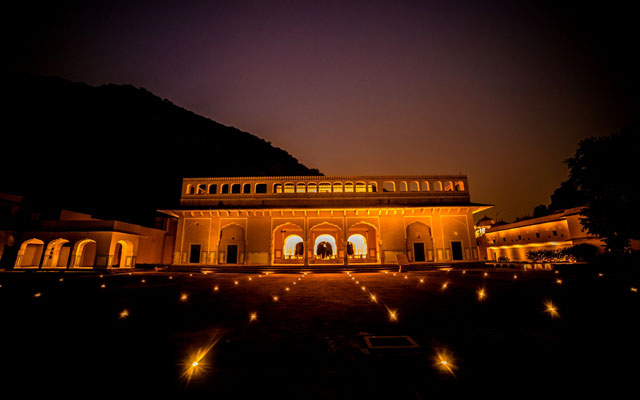
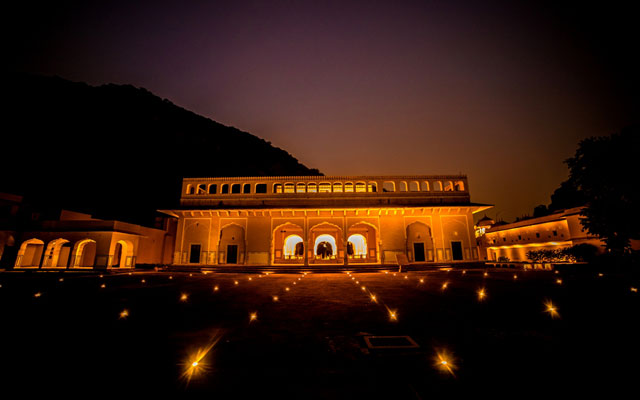
In its endeavour to boost night tourism in the city, the department has revamped Vidyadhar Park, which began opening for night viewing in 2017. Nestled in the lap of a valley and offering a panoramic view of the city, the 350-year-old Vidyadhar Ka Bagh features a lush green garden and beautiful fountains that sparkle with yellow and blue lights at night.

Similar preparations are also being made at the other places in the vicinity including the famed Ghat ki Guni tunnel and Sisodiya Garden.

And while the 16th century Amber Palace has been open to visitors at night since 2015, the department of archaeology and museum is now initiating the Amber by Night campaign to make the attraction even more enchanting beyond dusk.

Albert Hall

Open from 19.00 till 22.00, Amber by Night offers a tour of Jaleb Chowk, Diwan-e-Aam, Mansingh Mahal and Sheesh Mahal. The attraction has been enhanced with lights, fixtures, additional security and a café. A combination of LED & non-LED light fittings has also been added to create mood lighting, themed after different festivals.

Besides an upgrade of basic facilities, major additions include CCTV cameras, electric vehicles and segways.

Furthermore, the department of archaeology and museum has started holding cultural programmes at Amber Fort and Albert Hall, where renowned artistes of Rajasthan and other Indian states will stage cultural performances like kathak (on full moon nights) and other folk dances.

Jaipur’s walled city bazaars and historical gates are also set to come alive at night, with a project underway to provide façade lighting for Chaura Rasta, Tripolia Bazar and Johri Bazar, as well as Sanganeri Gate, New Gate, Ajmeri Gate, Tripolia Gate, Chandpole Gate and Hawa Mahal.

Booking trends for first-time cruisers

0

While first-time cruisers respond well to upselling by agents when it comes to cabin types, they seem to be more less willing to put down bookings for flight and cruise packages despite showing interest in fly-cruise products, a study by the Traveltek Group shows.

The study analyses 8,878 new-to-cruise enquiries made through agents worldwide in 2017, and further compares these to quotations and bookings made through Traveltek’s CRM platform.

The study also reveals that a large portion of enquires were for two adults, and the cruise market needs to attract other demographics by being more flexible

Even though fly-cruise represented a significant 26 per cent of all first-time cruiser enquiries, the number dropped to just nine per cent of travel agency quotes, suggesting bookers were reticent to package the flight and airline components together.

On the other hand, first-time cruisers have no preconception of favourite cabin or the types available, presenting savvy agents with opportunities to use their product knowledge to upsell. While thirty-two per cent enquired about inside cabins, quotes for that cabin type declined to 26 per cent, while quotes for cabins with balconies increased to 29 per cent (up from 27 per cent at point of enquiry).

The study also showed that river cruising is starting to appeal to first-time cruisers, with river cruise specialist Riviera Travel featuring in the top 10 cruise lines enquired about (seventh place), quoted (seventh place) and booked (10th). In terms of top river cruise lines booked, Riviera Travel took the top slot across all three categories, followed by Avalon Waterways in second place across the same categories.

In comparison, while Africa cruise itineraries place high on the list of top 10 destinations that first-time cruisers enquired about (sixth place), they did not feature on the top 10 list of destinations quoted. For Traveltek, this suggests either that cruise lines are yet to offer many Africa itineraries or if they do, agents are not aware of them.

Meanwhile, 81 per cent of enquiries and quotes were for two adults. Traveltek opined that this highlights the need for the cruise market to attract other demographics such as solo travellers and families by offering more flexible cabin pricing and configurations.

The analysis also revealed that itineraries of between six and nine nights dominated enquiries (35 per cent), quotes (49 per cent) and bookings (46 per cent).