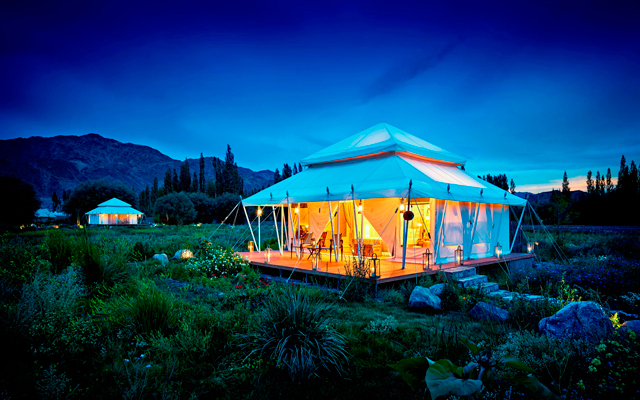
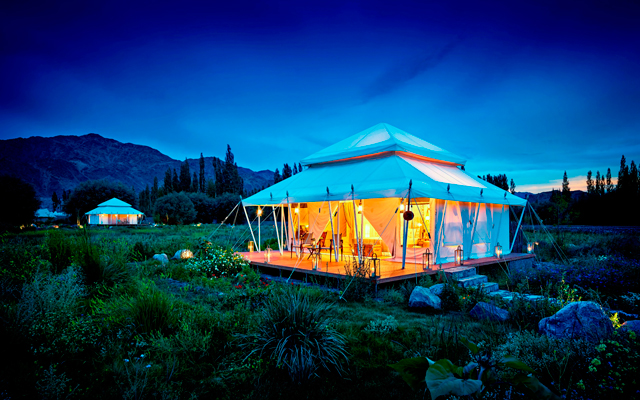
The Ultimate Travelling Camp (TUTC) is welcoming guests to a glamping experience in India’s Ladakh, with two seasonal camps up and running from today till September 30.
Through the Chamba Camp Thiksey and Chamba Camp Diskit, TUTC will introduce travellers to different aspects of the Ladakhi culture in three-, four-, five- and seven-night itineraries, or customised stays.
Tents complete with mod-cons such as en-suite bathrooms with hot shower and a safety deposit box
Apart from visits to monuments, monasteries, oral literature, art forms, fairs and festivals, guests may also choose from activities from the ancient sport of Polo, brought to Ladakh in the 17th century by the Royals, to rafting on the Indus River.
In keeping with its promise of luxury, the camps feature triple-layered tents fitted with wooden chandeliers, four poster beds, en-suite bathrooms with hot showers, safety deposit boxes, private decks and climate-controlled interiors.
Services available to guests include personal butlers, laundry, unlimited Wi-Fi at the reception, 24/7 security and on-site paramedics, while TUTC’s in-house chef prepares regional, Indian and international cuisine.
Vietnam recorded more than 5.5 million tourist arrivals from January to April 2018, a year-on-year rise of 29.5%, according to the General Statistics Office.
The strongest growth came from Asia, which climbed 36% from the same period last year, with improvements reported in most of the major markets such as South Korea (67.3%), China (39.7%), Malaysia (16.3%), Taiwan (14.3%), Thailand (9.2%), Singapore (8%) and Japan (7%).
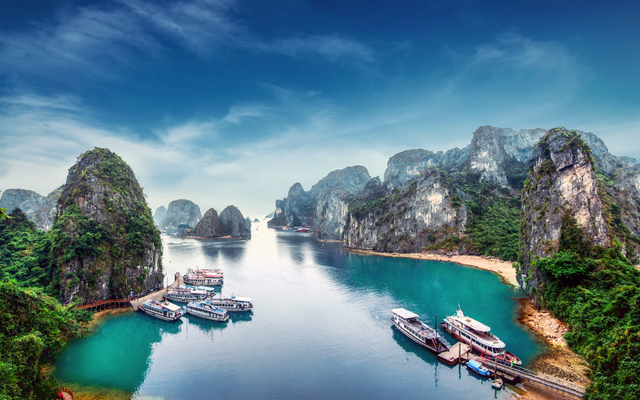
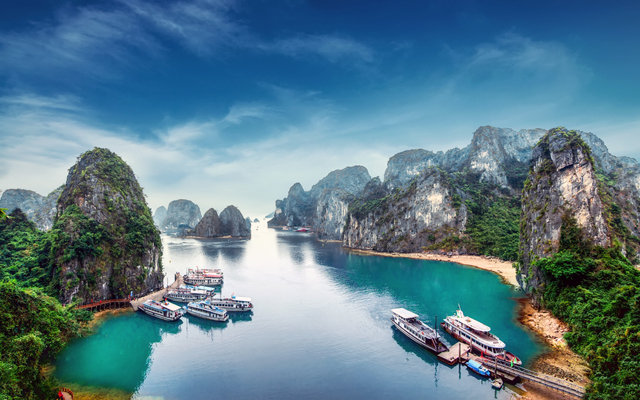
Growth seen from most major Asian markets; Halong Bay pictured
Meanwhile, the number of European visitors rose by 12.9%, with growth seen from a number of countries including in Italy (19.7%), Russia (13.4%), the UK (11.1%), France (8.6%) and Germany (8%).
Vietnam also welcomed more holidaymakers from Africa (22.5%), Americas (13.4%) and Oceania (12.6%).
In April alone, Vietnam greeted over 1.3 million international vacationers, up 25.2% due to various happenings in the country such as the Vietnam International Travel Mart and Vietnam’s Ethnic Culture Day in Hanoi, the tourism festival in Ho Chi Minh City, the Mon Asian Food Festival in Hanoi and Quang Ninh Province, and the opening ceremony of the National Tourism Year 2018 in Quang Ninh.
In 2017, Vietnam achieved a record of 12.9 million foreign visitors, a year-on-year increase of 29.1%.
The country is targeting more than 15.5 million international tourists in 2018.
Asia-Pacific received a record 636 million foreign arrivals in 2017, with the fastest-growing destinations being Vietnam, Turkey and Nepal, according to a report released yesterday by PATA.
Covering 47 destinations across the region with eight in the Americas, 15 in the Pacific and 24 across Asia, the PATA Annual Tourism Monitor 2018 Early Edition reviews foreign arrivals over the past five years.
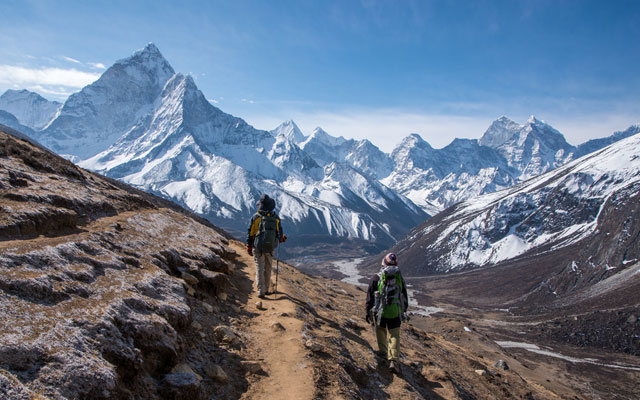
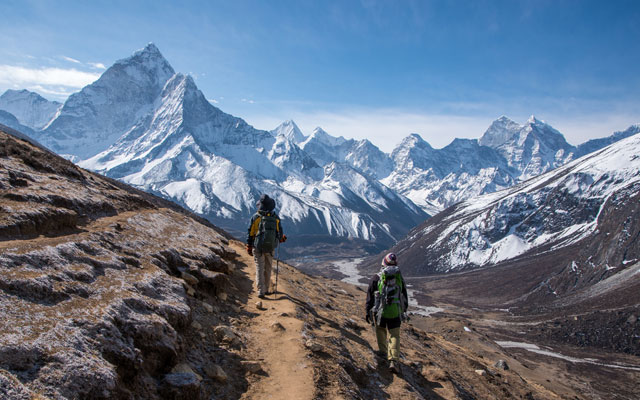
Nepal is a fast-growing destination in terms of foreign arrivals; trekkers on their way to Everest Base Camp, Nepal pictured
PATA CEO Mario Hardy noted: “2017 was yet another record year for the aggregate volume of foreign arrivals into Asia-Pacific… 30 of the 47 destinations covered in this report showing annual growth in excess of five per cent – in fact 17 of these were in the double-digit growth range, with only a few showing contractions.”
Asia received the majority of arrivals into APAC in 2017 with a 72 per cent share, followed by the Americas with 24 per cent and the Pacific with the remaining four per cent.
Overall, the region received nearly 35 million more foreign arrivals in 2017 than it did one year earlier. Only four of the 47 destinations reported declines in their inbound foreign arrival numbers, ranging from 4,000 to nearly 3.9 million.
Intra-regional travel flows remained strong for most Asia-Pacific regions in 2017, with almost 94 per cent of the foreign arrivals into Asia originating from within the region itself. For the Americas, the intra-regional proportion of international travel was 78 per cent.
The Pacific went against this trend however, with less than one-third (32 per cent) of its foreign arrivals in 2017 originating from within the Pacific region; more than half (53 per cent) of the foreign arrivals into the Pacific in that year came from Asian origin markets.
In terms of supplier markets into Asia-Pacific in 2017, the vast majority of foreign arrivals came from Asia (62 per cent), followed by the Americas (18 per cent) and then Europe (12 per cent).
The Pacific supplied a little over two per cent of the total arrivals into Asia-Pacific in 2017, followed by Africa with less than one per cent. A significant proportion of arrivals (five per cent) came from origin markets that were unspecified.
There were 14 origin markets that each generated in excess of 10 million arrivals into Asia-Pacific in 2017.
Fujino Kirameki Fuji Gotemba, Japan
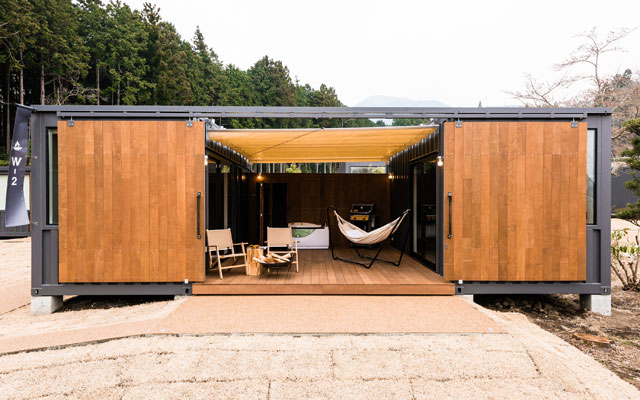
Japanese hotelier Fujita Kanko has launched its first glamping property in Gotemba in Shizuoka Prefecture, the gateway city to Mount Fuji. Located a 90-minute drive from Tokyo, the 1.6ha property offers 20 cabins across four categories ranging from 54m2 to 153m2 in size; the largest can accommodate up to six people. Each cabin is air-conditioned, and furnished with a toilet, shower, outdoor jet bath, and outdoor deck with a grill and fireplace. Facilities on the grounds include a children’s play area, dog run and event space.
Courtyard by Marriott Siem Reap, Cambodia
Marriott International’s first hotel in Cambodia, the Courtyard by Marriott Siem Reap offers 233 guestrooms and suites, all of which are furnished with modern furniture and amenities such as a 43-inch flatscreen TV, as well as have private balconies with views of the pool, city or gardens. Facilities on-site include all-day-dining restaurant Lok Lak, rooftop bar Upper Deck, Quan Spa, outdoor saltwater pool, fitness centre, kids’ club and recreation room. Corporate planners can choose from the 410m2 Grand Room or five meeting rooms to hold their events or meetings.
Wyndham Opi Hotel Palembang, Indonesia
Wyndham has opened its first property in Palembang, Indonesia, in the Jakabaring precinct just next to the OPI Mall. The hotel has a total of 257 rooms across six room categories, ranging from Superior rooms to the two-bedroom Presidential Suite. Amenities on-site include all-day dining restaurant 9 Rivers, the Lotus Lounge, a spa, infinity pool and gym. Wyndham Palembang is also home to the the city’s largest convention facility comprising two ballrooms – the larger ballroom being able to seat up to 2,500 delegates – and six meeting rooms totalling 2,260m2.
Grand Hyatt Kochi Bolgatty, India
The five-star waterfront hotel on Kochi’s Bolgatty Island covers 10.5 hectares, and features 264 luxurious guestrooms including 38 suites and four private villas with plunge pools. Aside from complimentary Wi-Fi and four F&B venues, recreational facilities include a spa, kid’s play area, 24-hour fitness centre, tennis courts and three swimming pools. Events can also be held on the property’s 3,000m2 of function space including a waterside amphitheatre and yoga lawn. The 10,000m2 Lulu Bolgatty International Convention Centre is just next door.
Vibe Hotel North Sydney, Australia
Mixed-use development Northpoint in Sydney is now home to the 187-key Vibe Hotel North Sydney. Situated on the corner of Miller Street and Pacific Highway, amenities on-site include complimentary Wi-Fi, a rooftop pool and bar, fitness facilities, four flexible meeting and conference room options. Although there are no restaurants, hotel guests will have access to Northpoint’s new eat street and casual dining atrium.
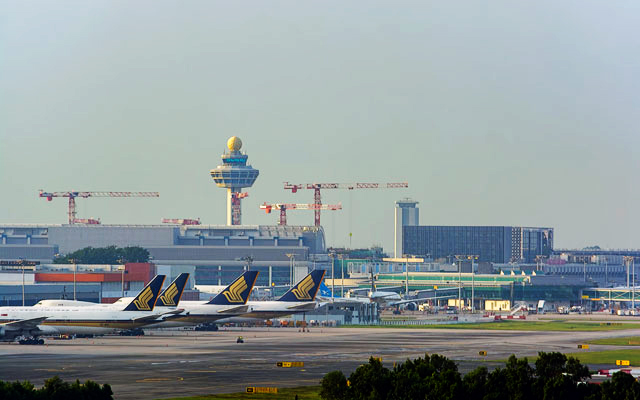
Asia has the world’s busiest skies, with Kuala Lumpur-Singapore (KUL-SIN) claiming the crown as the world’s busiest air passenger flight route and 14 of the top 20 operating to and from destinations in Asia, according to the latest annual findings by OAG.
The one-hour KUL-SIN connection between the two neighbouring capital cities in South-east Asia topped OAG’s top 20 busiest international routes rankings with 30,537 flights in the 12 months to February 2018.
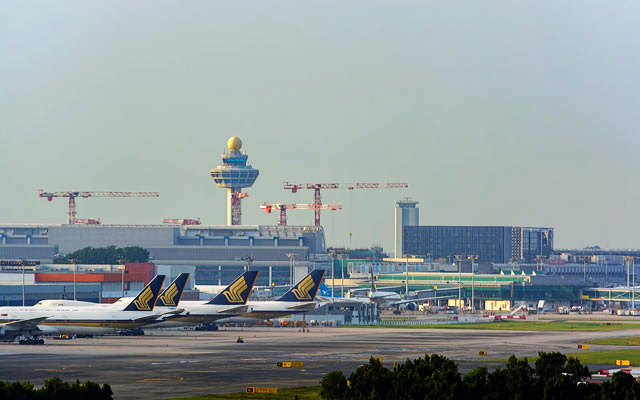
Demand for air travel across Asia is spiralling, with 14 of the world’s 20 busiest air passenger routes departing from and arriving at an Asian airport
Hong Kong-Taipei (HKG-TPE, 28,887 flights) placed second, with Jakarta-Singapore (CGK-SIN, 23,704) third, Hong Kong-Shanghai Pudong (HKG-PVG, 21,888) fourth, and Jakarta-Kuala Lumpur (CGK-KUL, 19,849) completing an all-Asian top 5.
Mayur Patel, regional sales director JAPAC for OAG, said: “Given the robust expansion of air passenger travel across Asia-Pacific and the fierce competition between carriers in the region, it is unsurprising that 14 of the world’s busiest 20 routes, including eight of the top 10 routes, are between Asian city pairs. This compares to two routes within Europe, two routes in North America, plus one route between North America and Europe and one route between destinations in the Middle East.”
Key results for Asia Pacific from the OAG’s top 20 busiest international routes include:
14 intra-Asian routes were ranked in the top 20 list, with eight being between cities in North Asia, four connecting cities in South-east Asia, and two city pairs bridging North Asia and South East Asia
Hong Kong (HKG) was the busiest Asian airport hub featuring in six of OAG’s top 20 list, with Singapore (SIG) featuring in four routes. Two airports, Kansai (KIX) and Seoul Incheon (ICN), featured in three routes.
Five Asian airports – Kuala Lumpur (KUL), Bangkok (BKK), Jakarta (CKG), Taipei (TPE) and Shanghai Pudong (PVG) – featured on two of the global top 20 routes. Beijing Capital (PEK) and Tokyo Narita (NRT) each featured on one route.
The highest on-time performance (OTP) among Asian routes in the global top 20 was KIX-TPE with 83%, followed by BKK-SIN (80%) and ICN-KIX (78%). The congested skies over mainland China, which cause frequent flight delays and cancellations, provide an explanation for the two lowest regional OTP ratings, which were for flights between Hong Kong and mainland Chinese airports: HKG-PEK (57%) and HKG-PVG (55%).
The increasingly competitive nature of Asian aviation markets is a stand-out feature of this year’s top 20 busiest international routes rankings, reflecting that some are still transitioning through a developmental stage.
All eight Asian routes in the top 10 busiest routes feature at least six competing airlines, with three routes (ICN-KIX, HKG-ICN and HKG-SIN) counting eight carriers, and nine airlines battling each other on the CKG-KUL route. The Osaka-Taipei (KIX-TPE) route, which placed 15th, tops them all with 11 airlines competing for passengers.
While this intense level of competition offers impressive flight frequencies and competitive prices for consumers, it adds pressure to the operating costs and on-time perfomance of carriers, and may prove unsustainable over time. By contrast, more mature European and North American routes, such Dublin-London Heathrow (DUB-LHR), which placed 14th, and Chicago-Toronto (ORD-YYZ), ranked 20th, each have only four competing airlines.
Another highlight feature is the relatively high ratio of LCCs on some of the busiest Asian routes. Five intra-Asian city pairs on the top 20 busiest international routes list count LCC penetration of more than 40%: KUL-SIN (43%), CGK-SIN (42%), CGL-KUL (47%), ICN-KIX (65%) and ICN-NRT (49%). Two Asian routes count between 30%-40% LCC penetration: BKK-SIN (31%) and KIX-TPE (30%). Three Asian routes, HKG-TPE, BKK-HKG and HKG-PEK, are 100% operated by mainline airlines, with zero LCC penetration, while HKG-PVG is 95% operated by mainline airlines.
OAG’s top 20 busiest international routes are calculated by analysing the jet aircraft frequencies on international flight routes in the 12 months to February 2018. These are the world’s busiest trunk routes in terms of the volume of flights that operate on them.
The full results and copy of the full report can be viewed here.
Hoteliers have managed to maintain pricing power despite slowing demand for hotel rooms in Sri Lanka, according to an analysis from STR, but growing supply especially in the upper-scale segments could begin putting pressure on rates.
Over the 12 months ending March 2018, Sri Lanka’s supply (room nights available) grew 6.2 per cent, while demand (room nights sold) increased 2.1 per cent.
While this saw occupancy fall 3.8 per cent to an annualised rate of 65.1 per cent, average daily rate (ADR) was up 7.2 per cent to 17,334 Sri Lankan rupees (US$109).
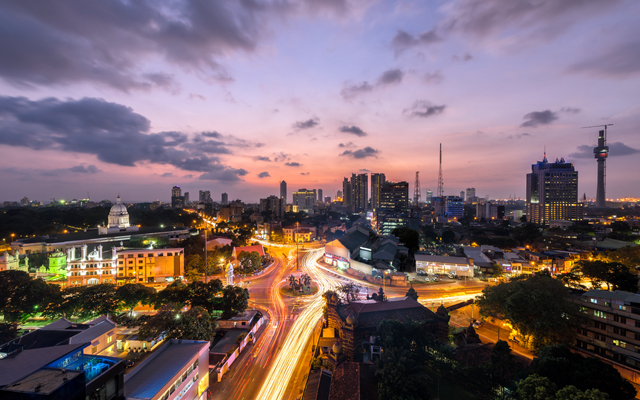
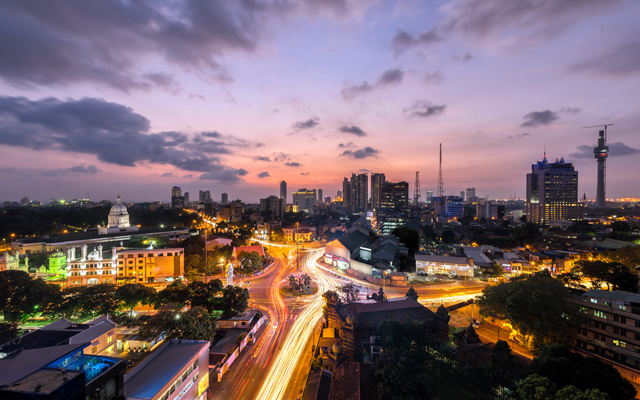
With growing supply especially in Colombo, STR says rates may come under pressure going ahead
“The last few years saw Sri Lanka become very popular with developers,” said Jesper Palmqvist, STR’s area director for the Asia-Pacific region. “Supply growth reached 6.8 per cent last year, and that came with demand basically flat year over year (+0.1 per cent). Hoteliers will need to develop impactful marketing campaigns to increase that demand and avoid a continued occupancy slide.”
Still, overall ADR has seen growth year over year for 30 consecutive months in Sri Lanka. The 1Q absolute level in the metric (19,868 rupees) was the highest for any first quarter in STR’s Sri Lanka database. Occupancy for 1Q grew one per cent after dropping 6.2 per cent for the whole of 2017.
“Hoteliers have been able to increase room costs to counter the declines in occupancy,” Palmqvist noted. “It will be key for those hoteliers to monitor the market performance in order to react prudently to more new supply.
“The Colombo skyline in particular continues to be busy with construction cranes. A lot of the new supply set to come online will be in in luxury and upper upscale segment, so we foresee interesting market dynamics ahead that will pressure occupancy and rate levels,” he cautioned.
STR’s hotel performance sample in Sri Lanka has grown to nearly 50 per cent of the 14,806 rooms in the country. Its census database shows 146 properties with another 26 across the under contract phases of the pipeline. STR’s March Pipeline Report showed 15 properties in construction comprising 3,450 rooms.
Concerns over the large supply of hotel rooms in Singapore has receded amid stronger tourist arrivals and stabilising corporate demand driven by firmer economic outlook, according to the Colliers International’s Hotel Insight 1Q2018 report.
The Singapore Tourism Board (STB) projects international visitor arrivals to Singapore to rise by up to four per cent to reach 18.1 million this year, following a record-breaking 2017 where the city-state received 17.4 million visitors.
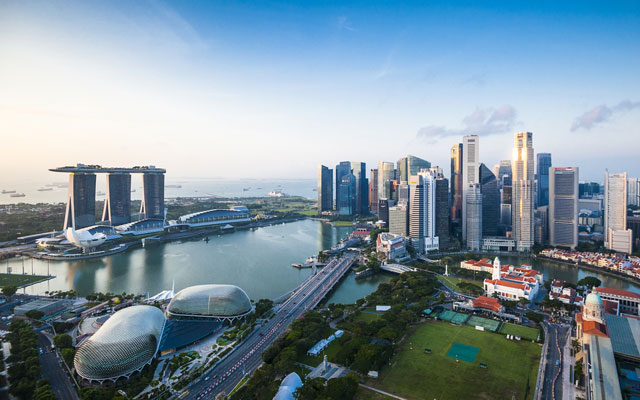
This year, Singapore’s hospitality sector looks brighter and experts think that ADR will see an improvement
This growth represents a compound annual growth rate (CAGR) of four per cent between 2011 and 2018 (forecast). The stronger tourism performance was largely underpinned by an increase in visitation from North and South Asia, and in particular China, Indonesia and India, STB figures show.
Govinda Singh, executive director of valuation & advisory, Asia, at Colliers International, said: “Hoteliers in Singapore have weathered the lean years – particularly 2015 and 2016 – admirably, and the hospitality sector outlook is decidedly brighter this year as market sentiment turns up.
“Considering the data from STB, it suggests that Singapore still requires a significant amount of hotel rooms to accommodate its visitors, with growth in visitation being tempered by the low level of room supply especially at the mid-market to lower end.”
While Singapore has in recent years seen substantial increases in room supply – by over 5,500 rooms in 2015, 2,567 in 2016, and 3,400 last year – Colliers projects that this will slow dramatically to 628 rooms in 2018, and 1,300 rooms in 2019, which would allow the recently added rooms to be absorbed into the market.
Colliers anticipates the average hotel occupancy rate in Singapore, even taking fresh inventory into consideration, to remain at more than 84 per cent. A closer look at the room stock versus demand suggest that hotels in Singapore are full almost all the time during peak periods, and especially during Mondays to Thursdays, and Saturday nights.
Singh elaborated: “Our hotel needs analysis showed that the number of overnight visitors to Singapore has consistently outstripped hotel room stock since 2011, and is projected to remain so over the next few years. It suggests that there is a high degree of existing frustrated and latent demand, whereby visitors who wish to come to Singapore either cannot find rooms or have to turn to alternative accommodation providers such as serviced apartments or, dare I say, Airbnb.”
In view of the growth potential, Colliers believes it could be an opportune time to reconsider more development and investment in the hotel sector. Given the high level of “frustrated demand”, the slight increase in room supply over 2018-2019 is unlikely to weigh on occupancy rates.
Hoteliers in Singapore should see an improvement in ADR going forward, Colliers postulates, although the increase is not expected to be significant as long as the rupiah, ringgit and yuan remains relatively weak.
Singapore, a favoured destination among many Chinese tourists, is expected to be one of the key beneficiaries of China’s rising outbound tourism, driven by growing affluence among the Chinese middle class. Outbound trips are projected to increase sharply by 47.7 per cent, from 120.1 million in 2015 to 177.4 million in 2020.
Singh noted: “The recent sabre rattling between the US and China may weigh to some degree on business and consumer confidence, thereby tempering demand growth especially if it escalates. However, intra-Asia travel and the growing domestic markets in a number of the larger destinations across Asia, is likely to continue to underpin demand.”
Travellers are developing a taste for an adventure in India, with a study conducted by India’s major experiential travel booking platform, Thrillophilia, revealing a 178 per cent increase in demand for adventure and active travel during the past three years.
Twenty-eight per cent of respondents claim that on an average they indulge in at least five adventure trips in a year and 16 per cent are comfortable travelling solo, according to the Thrillophilia study, which surveyed 10,000 travellers and 1,800 travel partners.
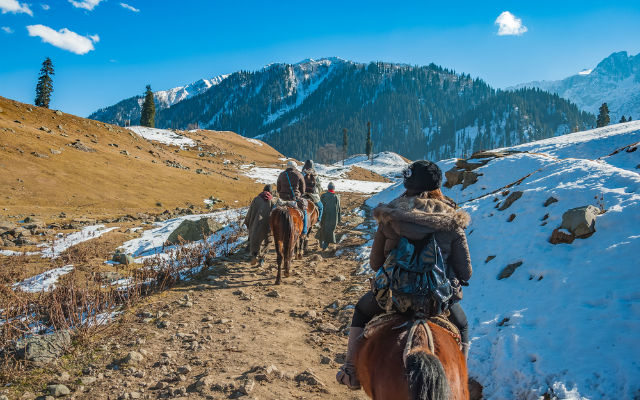
Thajiwas Glacier, Sonamarg, Jammu and Kashmir, India
Notably, the report shows that adventure tourism is gaining popularity not just with travellers in their youth, with 36 per cent of respondents aged above 35 preferring offbeat travel experiences as well.
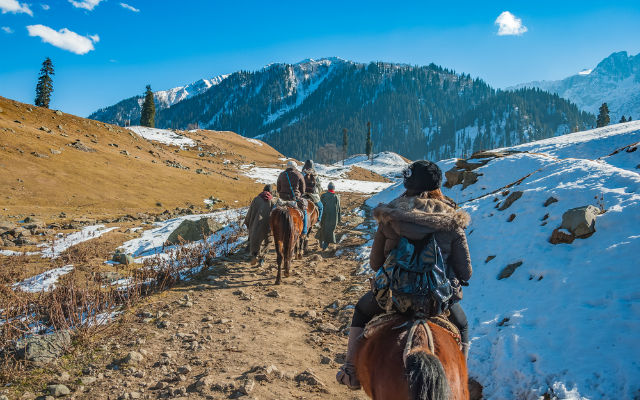
The survey further reveals that trekking has gained popularity in India, and is the most popular activity with 26 per cent preferring to take treks during their trips; while water sports was the second favourite, preferred by 25 per cent.
As for the travel region, 27 per cent believe the Himalayas to be the best for adventure activities.
Moreover, travellers are spending more on their trips, Thrillophilia says, with the average expenditure per person per trip rising 13 per cent between 2015 and 2017.
Thirty-two per cent of respondents claim that the content on social networking sites, especially Instagram, is one of the major factors that roused their interest in experiential travel.
Abhishek Daga, co-founder, Thrillophilia, added: “The increase in demand for experiential travel in India can be largely attributed to the efforts made by the government bodies like Adventure Tour Operators Association of India, Ministry of Tourism and Indian Mountaineering Foundation to promote adventure tourism in India.
“Some landmark steps have been taken by the government which include granting funds to improve infrastructure in remote areas and giving security clearance for opening of 104 additional peaks in Leh area of Jammu & Kashmir.”
Travellers are developing a taste for an adventure in India, with a study conducted by India’s major experiential travel booking platform, Thrillophilia, revealing a 178 per cent increase in demand for adventure and active travel during the past three years.
Twenty-eight per cent of respondents claim that on an average they indulge in at least five adventure trips in a year and 16 per cent are comfortable travelling solo, according to the Thrillophilia study, which surveyed 10,000 travellers and 1,800 travel partners.
Thajiwas Glacier, Sonamarg, Jammu and Kashmir, India
Notably, the report shows that adventure tourism is gaining popularity not just with travellers in their youth, with 36 per cent of respondents aged above 35 preferring offbeat travel experiences as well.
The survey further reveals that trekking has gained popularity in India, and is the most popular activity with 26 per cent preferring to take treks during their trips; while water sports was the second favourite, preferred by 25 per cent.
As for the travel region, 27 per cent believe the Himalayas to be the best for adventure activities.
Moreover, travellers are spending more on their trips, Thrillophilia says, with the average expenditure per person per trip rising 13 per cent between 2015 and 2017.
Thirty-two per cent of respondents claim that the content on social networking sites, especially Instagram, is one of the major factors that roused their interest in experiential travel.
Abhishek Daga, co-founder, Thrillophilia, added: “The increase in demand for experiential travel in India can be largely attributed to the efforts made by the government bodies like Adventure Tour Operators Association of India, Ministry of Tourism and Indian Mountaineering Foundation to promote adventure tourism in India.
“Some landmark steps have been taken by the government which include granting funds to improve infrastructure in remote areas and giving security clearance for opening of 104 additional peaks in Leh area of Jammu & Kashmir.”
The halal travel segment is proving to be an industry-shaping force, with Muslim travellers projected to spend US$157 billion by 2020, among the findings revealed at the in Dubai earlier this week.
Also released at the summit are figures that show that Muslim travel spend is driven by millennial travellers, and that Saudi Arabia remains the top performing market, set to grow 17 per cent over the next three years alone to reach US$27.9 billion.
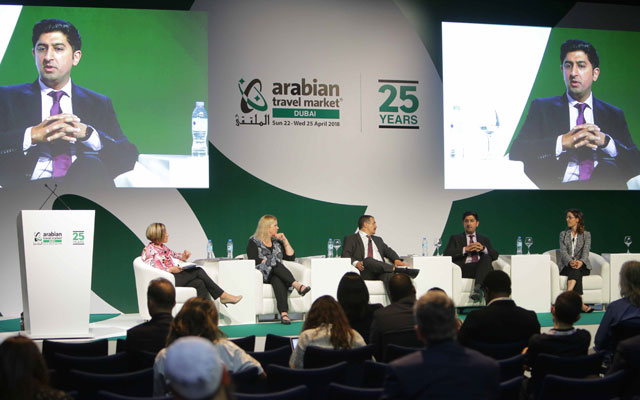
ATM’s Global Halal Tourism Summit 2018
Faeez Fadhlillah, founder and CEO of Salam Standard and Tripfez, said: “The biggest countries and some of the fastest-growing economies in the world are found in Asia and the Middle East. These regions typically have large Muslim populations which are young with prosperous middle classes.
He added that second- and third-generation Muslim communities in developed economies such as Europe and North America now have far more purchasing power, generating increased demand for faith-based travel and tourism.
Omar Ahmed, founder and CEO of Sociable Earth, shared: “Certainly, the halal travel market has graduated from its niche status to become an industry-shaping force, in its own right. It has become mainstream.”
“It is also clear that mainstream travel and tourism organisations will now have to become far more pro-active if they want to attract increasing numbers of halal travellers and tap into the potential of this massive market.”
Meanwhile, the panel agreed that halal travel has many facets and meant different things to different people depending on their own Islamic values.
Ahmed shared that Sociable Earth is focusing efforts on niche areas such as Muslim solo travel and also hijab-free holidays. “Our data shows huge potential for women travelling together in groups to enjoy hijab-free holidays and experiences, a trend that we feel will become increasingly popular.”
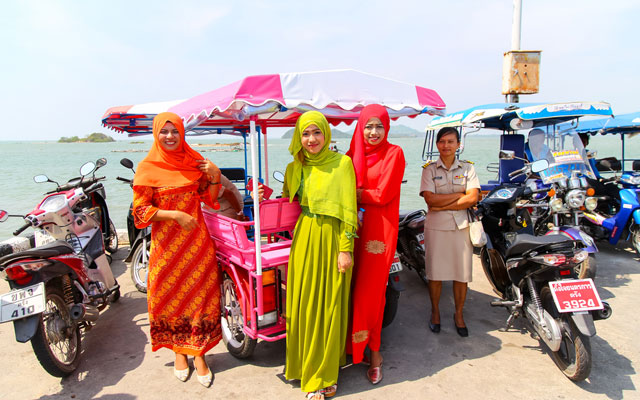
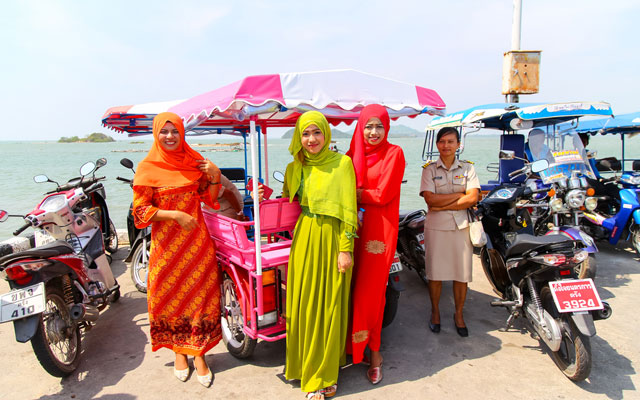
Increasing potential for groups of Muslim women travelling together; Muslim travellers in Thailand pictured
Moreover, the panel observed that often destinations were in fact halal friendly without realising it. Tamara Tawil, market manager, Geneva Tourism, said this is where many European destinations go wrong, adding that they just need to communicate more effectively.
“Muslim travellers want new experiences, so destinations should illustrate that. They certainly don’t want to see stereotypical images that remind them of home. It’s a fine line,” she said.
According to a Sociable Earth survey of 35,000 travellers, key ways non-Muslim countries can attract Muslim guests include through providing a variety of halal food in the hotel (61.3 per cent), list nearby mosques (61.1 per cent) and halal restaurants (55.2 per cent), and offer private pool villas (14 per cent).