Australia India Travel & Tourism Council (AITTC) and Northeast India Tour Operators Association (NEITO) have signed an MoU to promote tourism to the north-eastern states of India.
According to a statement from AITTC, the two main purposes of the agreement are to enhance destination knowledge among Australians and to facilitate the establishment of a suitable ‘travel & tourism connect’ between Australia and north-east India.
Elaborating, AITTC chairman Sandip Hor said: “At present, the North East frontier of India comprising of eight states is not so well known to the majority of Australians. With this MOU in place, we are aiming to utilise the knowledge and expertise of (NEITO) tour operators to update Australians with more information about the states. This will include all tourism related information like transportation, accommodation, what to see, local culture, festivals, weather, etc.
“And while doing so a relationship will be established among India focussed outbound tour operators in Australia with inbound operators in Northeast India, thus establishing a travel and tourism connection between them.”
Citing data released by the Australian Bureau of Statistics, AITTC said India is one of the most popular destinations for Australian travellers. However, travel to the eight north-eastern states – Assam, Arunachal Pradesh, Mizoram, Manipur, Meghalaya, Nagaland, Tripura and Sikkim – remains limited.
Hor said the region’s many attractions have great potential to add a new dimension to international tourism growth in India, with examples counting Assam’s Brahmaputra River Cruise, the Kaziranga National Park, Tripura’s Royal Palaces, Sikkim and its Himalayan draws and Nagaland’s Hornbill Festival.
The idea for JoinMyWedding.com, which gives travellers the unique opportunity to join an Indian wedding as a guest, came about when Orsi Parkanyi, co-founder & president of JoinMyWedding.com heard about the great experiences her friend has had.
“I was born and grew up in Hungary. When I was in my early twenties, I moved to Australia and lived there for 11 years. I missed out on all of my friends’ weddings that happened in Hungary during those years. Three years ago, I was visiting family, and got to talk with a friend who told me about all the amazing weddings she attended that summer. She also shared about a traditional Indian wedding she once attended, and which was the most amazing experience of her life,” recalled Parkanyi.
Orsi Parkanyi
“So the idea formed: what if there was a way for people to join authentic weddings around the world?”
She shared that since inception the response for JoinMyWedding.com has been overwhelming, with demand coming from around the world.
Through JoinMyWedding.com, travellers get to experience multiple aspects of an Indian wedding – meeting with local people, tasting local cuisine, dressing in Indian attire, enjoying the music, ambiance and entertainment, in addition to learning about the local customs and even admiring local architecture.
“The Indian culture is very rich, and weddings are a huge part of it. It was previously hidden from the travellers but JoinMyWedding has made it possible for travellers to experience Indian weddings. Our platform, being a global digital platform, is totally different from local experience providers.
“(Firstly) it is not an agency, it is a global marketplace. The variety and choices can be much bigger on such platforms, and there are no limitations,” said Parkanyi.
However, a major challenge faced in the business is the seasonality of Indian weddings, she admitted.
Another difficulty she faces is that weddings are “one-off experiences, and as such, hard to price”.
“But we are going strong and overcoming each challenge as we go ahead. We are focusing on Indian weddings for the moment, but would like to extend this globally over the coming years,” she concluded.
International tourist arrivals grew 6% in 2018, reaching the 1.4 billion target two years ahead of forecast, according to the latest UNWTO World Tourism Barometer, although more modest growth is expected for 2019.
UNWTO estimates that worldwide international tourist arrivals (overnight) increased 6% to 1.4 billion in 2018, surpassing the 3.7% growth registered in the global economy. The Middle East (+10%), Africa (+7%), Asia-Pacific and Europe (both at +6%) led growth in 2018, while arrivals to the Americas were below the world average (+3%).
International tourist arrivals hit 1.4 billion last year
UNWTO’s long-term forecast published in 2010 predicted the 1.4 billion mark of international tourist arrivals for 2020. Yet stronger economic growth, more affordable air travel, technological changes, new businesses models and greater visa facilitation around the word have accelerated growth in recent years.
Results by region
International tourist arrivals in Europe reached 713 million in 2018, a notable 6% increase over what UNWTO says was an exceptionally strong 2017. Growth was driven by Southern and Mediterranean Europe (+7%), Central and Eastern Europe (+6%) and Western Europe (+6%). Results in Northern Europe were flat due to the weakness of arrivals to the UK.
Asia-Pacific (+6%) recorded 343 million international tourist arrivals in 2018. Arrivals in South-east Asia grew 7%, followed by North-East Asia (+6%) and South Asia (+5%). Oceania showed more moderate growth at +3%.
The Americas (+3%) welcomed 217 million international arrivals in 2018, with mixed results across destinations. Growth was led by North America (+4%), and followed by South America (+3%), while Central America and the Caribbean (both -2%) reached very mixed results, the latter reflecting the impact of the September 2017 hurricanes Irma and Maria.
Data from Africa points to a 7% increase in 2018 (North Africa at +10% and Sub-Saharan +6%), reaching an estimated 67 million arrivals.
The Middle East (+10%) showed solid results last year consolidating its 2017 recovery, with international tourist arrivals reaching 64 million.
Growth expected to return to historical trends in 2019
Based on current trends, economic prospects and the UNWTO Confidence Index, UNWTO forecasts international arrivals to grow 3% to 4% next year, more in line with historic growth trends.
As a general backdrop, the stability of fuel prices tends to translate into affordable air travel while air connectivity continues to improve in many destinations, facilitating the diversification of source markets. Trends also show strong outbound travel from emerging markets, especially India and Russia but also from smaller Asian and Arab source markets.
At the same time, the global economic slowdown, the uncertainty related to the Brexit, as well as geopolitical and trade tensions may prompt a “wait and see” attitude among investors and travellers.
Overall, 2019 is expected to see the consolidation among consumers of emerging trends such as the quest for ‘travel to change and to show’, ‘the pursuit of healthy options’ such as walking, wellness and sports tourism, ‘multigenerational travel’ as a result of demographic changes and more responsible travel.
China’s rapid urbanisation is driving the popularity of island travel among Chinese tourists, a recent report commissioned by ITB China revealed.
Island escapes have surged in popularity over the past few years, as beaches are rather rare in China despite its long coastline and are also often overcrowded during holiday seasons.
Chinese mass tourism has given island destinations a bad name, but not for much longer, Kairos Future says, due to shifting values among travellers such as a growing penchant for privacy
Several travel companies are reporting an expected compound annual growth rate (CAGR) of 35 per cent in the next three years, while the market for island travel currently already exceeds RMB100 billion annually (approximately US$146 million).
According to interviewed experts, a main driver behind the growing interest in island travel are the visa-free policies for island destinations. The growth expectations are being fuelled especially by Chinese millennial consumers, with 30 per cent of expressing the desire to go on an island trip within the next three years.
The research further highlights that from the perspective of Chinese travellers, islands are typically associated with romance, adventure and escapism. According to Kairos Future’s text analysis of social media posts on the topic of island travel, privacy is a key trend, correlating closely with the notion of romance. Segments that stand out among island travellers include soon-to-be-wed couples engaging in destination photoshoots, newlywed couples on their honeymoons, and adventure seekers looking for activities such as scuba diving.
In the past years the perceived image of some island destinations important to the Chinese traveller had suffered due to operated ‘zero‑dollar’ tours that included unannounced mandatory shopping trips. This phenomenon might soon come to a complete end, following shifting values among Chinese consumers paired with an increased control and regulation by destination government authorities having identified and addressed this issue.
The Indonesian Tourism Association, for example, began to intensively regulate low-cost tours in 2018 and Bali, one of China’s top island destinations, has seen all tour-related shopping sites close. Since 2016, Thailand has also taken drastic action to eliminate ‘zero-dollar’ tourism.
As the purchasing power and travel knowledge of Chinese consumers continue to grow, vendors are seeing an increasing number of tourists choosing customised tours to meet their specific travel needs.
Next, travel tips is one of the largest themes in the analysed travel-related social media posts. By exploring destinations through social media, and developing preferences for activities on their itinerary, Chinese consumers are prepared to make informed decisions about their travel plans.
On top of beaches, more diversified, niche activity offerings – including hiking active volcanos, whale watching, and jungle adventures – reflect a present shift towards experiential tourism.
Over the next three years, more than 70 per cent of island tourists are expected to opt for tailored or self-guided tours. Identifying each island’s differentiators and understanding market demands will allow vendors to engage in more precisely targeted marketing and advertising campaigns, thereby attracting more customers.
Island travel demandfor the Chinese is also strongly influenced by depictions in media, with films, TV, and social media that highlight previously-unknown islands attracting the attention of new travellers.
The ITB China Travel Trends Report was created in collaboration with the international consulting and research company Kairos Future. It will be presented at ITB China, set to take place from the May 15-17, 2019 in Shanghai.
Forward bookings from China to Asia-Pacific destinations are down 2.6% for 1Q2019, while longhaul destinations are seeing significant growth, according to a Forwardkeys analysis.
Forwardkeys suggests that this could indicate that longhaul travel is typically booked more in advance, while Asia-Pacific might benefit later on from last-minute bookers.
Forward bookings for APAC growing slower than for longhaul desitnations
Overall, current forward bookings for international air travel in 1Q2019 are 4.4% ahead, and 8% ahead in December 2018.
Bookings are 2% ahead for the Chinese New Year period, defined by ForwardKeys to be from January 24 to February 16, compared to the comparable peak period in 2018.
Looking at the daily departure pattern, there will be two busy departures.
In 2019, the winter break for school children starts earlier in relation to the Chinese New Year when compared to 2018. The change in the school break dates has resulted in an early departure from January 26.
The second departure wave will happen on the weekend before the Golden Week, as many travellers probably take a few days of annual leave to make an extended holiday, Forwardkeys surmised.
Japan had been seeing good growth in Chinese visitors after declines in competing regional destinations South Korea and Thailand, until the recent hurricane and earthquake disasters disrupted its upward trend.
Since the Chinese government banned group travel to South Korea, the latter has seen clear recovery from the market from mid-2018 onwards.
Chinese FIT travellers started returning to South Korea as early as late 2017 following a ban on Chinese group travel to South Korea, however it was not until mass group travel to the destination resumed that overall year-on-year performance started improving.
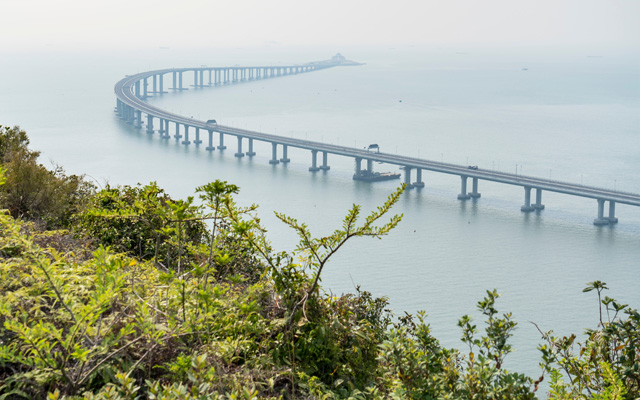
More visitors from mainland China are travelling to Hong Kong via coach or train in 2018, on the back of growing land connections thanks to the completion of the Hong Kong-Zhuhai-Macau Bridge and the Guangzhou-Shenzhen-Hong Kong Express Rail Link, Nielsen’s Mainland Tourist Study revealed.
The number of mainland tourists who visited Hong Kong in November 2018 surpassed the same period in 2017 with a 26% leap, according to Hong Kong’s Immigration Department – Visitor Arrival Statistics November 2018.
The new Hong Kong-Zhuhai-Macau Bridge
With the ongoing initiatives in the Greater Bay Area and the convenience brought by the new gateway access to Hong Kong, the visitor influx momentum is expected to continue and bring new market potentials for tourism-related industries, especially retail.
In addition, the survey found that spending has increased across all sectors, with each traveller spending HK$21,000 (US$2,678) per trip, a 3% growth versus 2017.
Shopping leads as the highest spend sector (45%), while accommodation, dining and entertainment each contribute evenly on their overall expenses. Overall, spending across all four sectors recorded positive uplifts.
Over 90% of mainland visitors said they will return to Hong Kong again within the next 12 months, with a 4% growth in planned spending for the next trip.
Though spending power is increasing year-on-year, the study found that travel appetite to Hong Kong is facing challenges in that products are perceived to be similar with other mainland cities, hence it is key that Hong Kong steer its focus beyond product offering to service, advised the Nielsen study.
“Transforming each trip from a shopping mission to an inspiring travel experience can drive repeat visitation and such experience can best be offered through the brick and mortar channel in Hong Kong,” said Michael Lee, managing director of Nielsen Hong Kong and Macau.
“Unlike other destinations with abundant cultural attractions, developing an inspired travel experience in Hong Kong would require a seamless, cross-industries (shopping, accommodation, food and entertainment) collaboration. This helps to turn our cultural similarities with Mainland visitors to an advantage for making the experiential retail a true success,” Lee suggested.
The study also reported that almost 30% of mainland visitors make online purchases in overseas e-commerce platforms. Cross-border online shopping has started showing its impact on mainland visitors’ shopping behaviour during their trips to Hong Kong, with more claiming spending in the brick and mortars shop during their trip would be lowered as a product is available online.
“An integrated omni-channel strategy can help Hong Kong retailers to address the change of traveller purchase behaviour as they convert part of their purchase to online,” said Lee.
La Seine Hotel by Burasari, Laos
The five-star property has opened on the river promenade in Vientiane, Laos’ capital city. The boutique hotel offers 37 rooms and suites, and boasts bold colour palettes and Art Deco-inspired interiors. All rooms come with bath amenities and an in-room espresso machine. The hotel has two F&B options, a rooftop bar and The Red Rose Restaurant, and offers a happy hour special on selected wines.
Fairfield by Marriott Hotel Busan, South Korea
Marriott has opened a 225-room Fairfield by Marriott-branded property in Haeundae, a beach resort destination in eastern Busan. There are 224 guestrooms, one of which is a 45m2 family room that includes a separate living room. All guestrooms are furnished with 49-inch flatscreen TVs, ergonomic desks and chairs, minibars and safety deposit boxes. Facilities include a restaurant, fitness centre, and for business travellers, workspaces in the lobby, as well as a meeting room that can hold up to 30 people.
Novotel Vijayawada Varun, India
AccorHotels is the first international hotel brand to set up shop in Vijayawada, Andhra Pradesh’s commercial centre. The property has 194 rooms, 25 apartments and 12 suites, alongside recreational facilities such as a rooftop swimming pool, fitness centre, jogging track and a spa. There are also four dining options on-site ranging from the all-day dining restaurant to the Chinese kitchen, as well as a 930m2 banquet hall.
Hyatt Regency Bali, Indonesia
Previously known as the Bali Hyatt, the nine-hectare property has opened after five years of extensive renovations. It now features 363 keys, which includes 39 one-bedroom suites that come with a private balcony, separate living room, and an additional powder room with a shower. Guests who book suites are also offered access to the Regency Club Lounge.
Amenities on-site include three F&B venues, three swimming pools, a 24-hour fitness centre, and the Shankha Spa complete with 10 spa suites. Meanwhile, the hotel’s meeting facilities comprise a 468m2 ballroom that can accommodate up to 600 guests cocktail-style, an outdoor courtyard that can hold up to 120 attendees, and four multifunctional meeting spaces ranging from 92m2 to 324m2 in size.
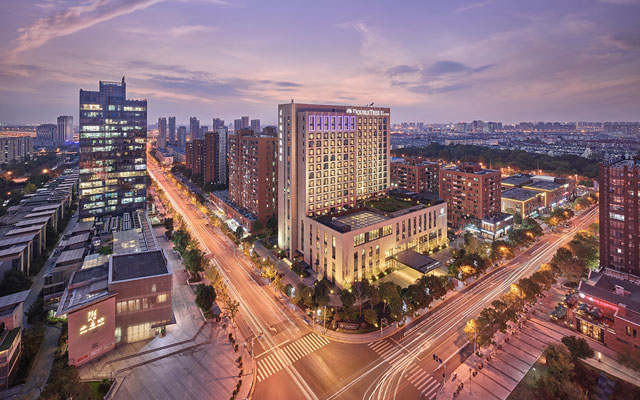
DoubleTree by Hilton Shanghai Nanxiang, China
A 313-key DoubleTree by Hilton has risen in the up-and-coming CBD in Shanghai Jiading, the only international hotel in the town of Nanxiang. Aside from the four F&B options on-site, recreational facilities include an indoor swimming pool, sauna and steam rooms, spa and 24-hour fitness centre. Meeting planners will be able to avail the hotel’s 1,300m2 of event space across 12 function rooms, among which is a 750m2 grand ballroom which can accommodate up to 850.
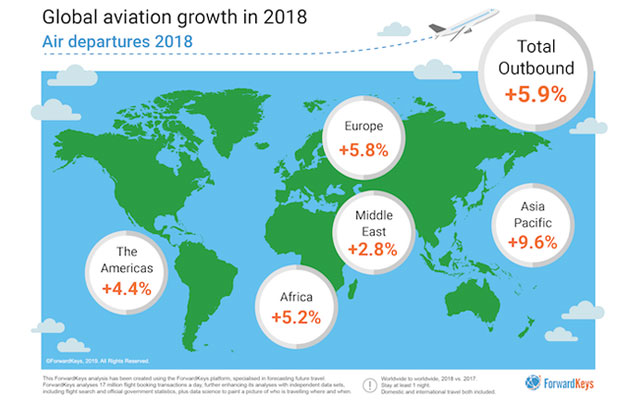
Global air travel grew by 5.9% in 2018, with Asia-Pacific seeing the strongest increase, according to data published by ForwardKeys.
While air travel grew in nearly every part of the world, there were substantial regional variations. Growth in Asia-Pacific, at 9.6%, was more than three times stronger than the weakest performer, the Middle East, where flight departures grew by 2.8%.
Overall, global air travel grew by a very healthy 5.9% in 2018
The second-best performing region was Europe, where air travel grew by 5.8%. Flight departures from Africa grew by 5.2% and from the Americas by 4.4%.
The growth in Asia-Pacific was driven primarily by increasing travel within the region. Domestic travel was up 14% and departures between Asia-Pacific countries were up 9.6%; whereas intercontinental departures were up 4.5%.
Olivier Ponti, ForwardKeys, vice president insights, said: “The growth in international air traffic within Asia-Pacific is a direct consequence of increasing disposable incomes, urbanisation and more dynamic lifestyles. As the middle classes of large urban centres – especially in China – have more money in their pockets and a growing appetite for travel, they fly more often, initially within their own continent, and then further afield. They have become a major driver of leisure and business travel worldwide.”
European air travel grew at virtually the same rate as the global average, but international travel within Europe, which was up 7%, grew faster than trips to other regions of the world, which was up 2.8% – a sign of the good shape of the European economy. The Middle East registered the highest growth of intercontinental departures from Europe, at 5.8%, helped by the easing of security concerns regarding Egypt.
ForwardKeys’ summary of aviation growth in 2018
By contrast, the trend in the Americas was in the opposite direction. There, the growth in travel to other continents, at 7.1%, outstripped the growth in domestic air travel, which grew by 4.0%, and the growth in travel between countries, which grew by 3.2%. Assisted by several new routes such as New York to Nairobi, Africa was the fastest-growing destination for travellers departing from the Americas, up 8.5%.
In Africa, growth in domestic air travel was negative, down by 0.9%, but growth in international air travel to other African countries was strong, up 6.6%, and growth in travel to other continents, where Africa’s main trading partners are located, was stronger still, up 7.8%. Highlights included departures from Africa to Europe (+9.3%), Asia-Pacific (+7.7%), and the Middle East (+6.9%).
Despite the ongoing blockade of Qatar, which started in June 2017 and continues to hamper regional international travel, the Middle East registered a 2.8% increase in air traffic. The decline of intra-regional travel was compensated by double-digit growth in domestic travel, up 10.9%, and a 2.5% increase in departures to other regions, with Europe benefitting the most from this trend, up 8.3%.
Aiming to make Goa a fully accessible destination and address different mobility issues of tourists, Cox & Kings’ Enable Travel has partnered Ezy Mov, the first wheelchair taxi service in India, to provide accessible guided tours in the state.
Ezy Mov, which has completed more than 100,000 rides, has a fleet of taxis fitted with equipment like hydraulic lifts and wheelchair restraint systems.
Touring Goa has gotten easier for persons with disability
Debolin Sen, head, Enable Travel, said: “Due to lack of transport facilities available, people with mobility issues including elderly travellers are unable to experience a destination in its broadest sense. To ensure barrier-free travel and enhance transportation within a destination, we have partnered Ezy Mov.”
Bennet D’cunha – CEO, Ezy Mov, added: “Our mission is to position India as the leading country with regards to accessible tourism. What better place to start the journey than Goa (one of the country’s top holiday destinations). Moreover, the public infrastructure in Goa currently is more accessible compared to other states.”
Smaller cities are fast rising as hot picks among Singaporean travellers, based on Expedia’s flight data.
Singaporeans are revving to explore the roads less travelled, Expedia said, highlighting the double-digit growth in demand seen for Quanzhou in China, Angeles City in the Philippines and Kuantan in Malaysia.
Overall this year, Singapore travellers booking their trips through Expedia chose to stay closer to home, with Asian cities topping the list of top 10 most visited destinations.
Top destinations among Expedia users in Singapore (source: Expedia)
Based on Expedia’s flight data, cities like Kuala Lumpur, Bangkok and Hong Kong topped the list as Singaporeans’ top favourite destinations.
Expedia also pointed out that staycations are on the up in the Lion City, with with Singaporeans taking an average of 2.4 local staycays, a significant increase over local hotel bookings made in 2017.



























Forward bookings from China to Asia-Pacific destinations are down 2.6% for 1Q2019, while longhaul destinations are seeing significant growth, according to a Forwardkeys analysis.
Forwardkeys suggests that this could indicate that longhaul travel is typically booked more in advance, while Asia-Pacific might benefit later on from last-minute bookers.
Overall, current forward bookings for international air travel in 1Q2019 are 4.4% ahead, and 8% ahead in December 2018.
Bookings are 2% ahead for the Chinese New Year period, defined by ForwardKeys to be from January 24 to February 16, compared to the comparable peak period in 2018.
Looking at the daily departure pattern, there will be two busy departures.
In 2019, the winter break for school children starts earlier in relation to the Chinese New Year when compared to 2018. The change in the school break dates has resulted in an early departure from January 26.
The second departure wave will happen on the weekend before the Golden Week, as many travellers probably take a few days of annual leave to make an extended holiday, Forwardkeys surmised.
Japan had been seeing good growth in Chinese visitors after declines in competing regional destinations South Korea and Thailand, until the recent hurricane and earthquake disasters disrupted its upward trend.
Since the Chinese government banned group travel to South Korea, the latter has seen clear recovery from the market from mid-2018 onwards.
Chinese FIT travellers started returning to South Korea as early as late 2017 following a ban on Chinese group travel to South Korea, however it was not until mass group travel to the destination resumed that overall year-on-year performance started improving.