
Contact: ttgnewsdesk@ttgasia.com

In a recent survey undertaken with other industry players, Amadeus says the fragmentation in services options is contributing to traveller frustration.
To succeed and ensure customer retention, loyalty and revenue growth, travel sellers will have to change the way they make their offerings available to both leisure and business travellers.

The use of technology, especially mobile, will play a big role in this, Amadeus stressed in a recent study. Some 45% of travellers say their mobile browser is the first place they go to discover what’s out there and 41% also use it to book their destination service.
Some 27% identify having to use multiple apps as the number one frustration when searching for ancillary destination services.
Amadeus found that around 25% of respondents book destination services the day before travel, en route or once they have arrived at their destination.
Nearly all (93%) of respondents now consider ancillary destination services to be an important part of their overall travel experience, with 40% of these believing specifically that ancillary destination services make their trips more productive and enjoyable.
Yet, a quarter of travellers say they lack the time to properly evaluate what is available or plan when and how to do things during their trip, with 17% being unable to easily access destination services upon arrival.
Businesses and leisure travellers have similar values but different priorities. The top three business traveller priorities: flight compensation, taxi transfers and airport/rail lounges. And for leisure travellers, attractions & amenities, flight compensation and dining are most important.
For those typically booking three or more ancillary destination services, 34% say they do so primarily for leisure trips, while around 10% book the same amount for a business trip.
Overall, around 72% of travellers say they are very receptive to receiving proactive suggestions about related destination services, while a third say complementary services “truly enhance their trip experience”.
Mobile may be the solution to improving destination services, but mobile solutions have to be wielded right to manoeuvre the fine line separating timely and intrusive updates.
During the “discovering” stage of their holiday planning, only 5% of travellers want push notifications.
After booking the trip, the demand for push notifications increases, peaking at 93% of survey respondents saying they would welcome receiving information about other complementary services or offers when they book an ancillary destination service.
Another point of frustration is in the area of accessibility and inclusivity.
Among adults with disabilities who travelled by air, 72% have encountered major obstacles with airlines and 65% with airports. There are three specific areas travel providers must consider improving for travellers with health conditions or impairments.
Apart from considering the different ways to communicate relevant information (such as voice services, vibration, touch and visual displays), the use of AI and analytics can also play a role in knowing travellers’ specific needs throughout the journey in advance and helping meet those needs.
Meanwhile, 18% of travellers desire better coordinated access to destination services across apps, chat, web and voice. Travellers are just beginning to open up to the possibilities of voice search with less than 5% saying that they search for destination services using voice recognition technology such as Alexa, Siri or Google.

Over half (55%) of global travellers report being more determined to make sustainable travel choices than they were a year ago, but barriers such as the lack of a recognisable standard and affordability concerns are preventing some of them from putting this into practice.
Findings from Booking.com’s annual sustainable travel report reveals that almost three quarters (72%) of travellers believe that people need to act now and make sustainable travel choices to save the planet for future generations.
While results were relatively consistent across ages, almost three-quarters (74%) of 46-55 year olds believe most strongly that this is needed, followed by millennials at 71%.

Consistent with overall intentions to make more sustainable travel choices, sustainable stays are growing in popularity, with almost three quarters (73%) of global travelers intending to stay at least once in an eco-friendly or green accommodation when looking at the year ahead.
This is the fourth consecutive year that Booking.com research has seen this figure trend up, from 62% in 2016 to 65% in 2017, and 68% in 2018. Additionally, 70% of global travellers say they would be more likely to book an accommodation knowing it was eco-friendly, whether they were looking for a sustainable stay or not.
However, when it comes to recognising a sustainable place to stay, almost three quarters (72%) of global travellers say that they are not aware of the existence of eco-labels for vacation accommodations, while well over a third (37%) affirm that an international standard for identifying eco-friendly accommodation would help encourage them to travel more sustainably, and 62% would feel better about staying in an accommodation if they knew it had an eco-label.
In addition, 37% of respondents indicate they do not know how to make their travel more sustainable. About 34% acknowledge there are sustainable options, but find other options more appealing. Moreover, 36% say they cannot afford the extra spending that comes with sustainable travel, while 34% feel constrained by their agenda.
Booking.com finds 71% of travellers think that travel companies should offer consumers more sustainable choices. On the other hand, almost half (46%) of global travelers acknowledge that they find it harder to make sustainable choices on while on vacation than in everyday life. Almost a third (31%) of global travelers admit their vacation is a special time during which they do not want to think about sustainability.
Research results also indicated that travellers would be more encouraged to travel sustainably if there were economic incentives offered, such as tax breaks, when choosing eco-friendly options (46%). This is closely followed by online booking sites offering a sustainable or eco-friendly filter option (45%).
When it comes to in-destination experiences, over half (52%) of global travellers say they now alter behaviours to be more sustainable while traveling, such as walking, riding a bike or hiking whenever possible. Plus, 68% would like the money they spend on travel to go back into the local community.
Likewise, almost three quarters (72%) of global travellers are seeking authentic experiences that are representative of the local culture, while two in five (41%) request that travel companies offer tips on how to be more sustainable while traveling and 56% of respondents say that if there was an option to offset the carbon footprint on their vacation accommodation, they would do it.
Pepijn Rijvers, senior vice president & head of accommodation at Booking.com, shared that the company is testing different ways to surface information and support customers in their sustainable travel choices, as well as providing support and investment to foster innovation in the sustainable tourism space through our Booking Booster, Cares Fund and Cares Lab start-up programmes.
“It’s important that all those in the travel ecosystem, from established companies to start-ups, destinations, accommodation, transport and attraction providers as well as travellers themselves, come together, as it’s only through collaboration that meaningful change will continue to gain momentum.”
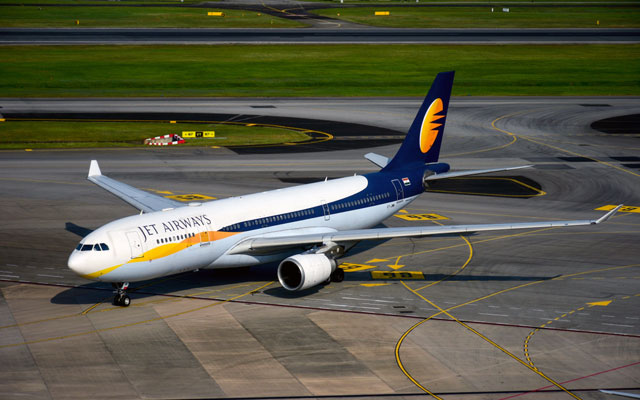
The debt-ridden Indian carrier Jet Airways has suspended flights to and from Singapore, after its founder stepped down as chairman of the board and lost majority stake to lenders in a move expected to open the company up to important investments.
Passengers will be refunded their ticket prices, Singapore’s Straits Times was told, while Changi Airport advised affected passengers to contact their booking agent or the airline to find out what options are available to them.

As it sinks deeper into debt, Jet Airways has been trimming operations down from its peak of nine services a day: three each from New Delhi and Mumbai, two from Bangalore and one from Pune. About a month ago, the number was down to two, according to The Straits Times.
Without an LCC flying India-Singapore routes, travel between the two countries could get more expensive. Compounding the reduced competition, some say there’s a limit to how many flights a Singaporean carrier can mount to India.
Indian media are reporting that Jet Airways has received an expression of interest from four companies to buy a stake in the airline. They are believed to be Etihad Airways, National Investment and Infrastructure Fund, TPG Capital and Indigo Partners.
China and India continue to be big drivers of Expedia Group’s Thailand bookings, while the UAE, Israel and South Africa are emerging as high-value markets according to the group’s data.
Thai accommodation partners are enjoying steady growth as evidenced by Expedia Group’s data, which showed the overall inbound demand to Thailand has increased by 10% year-on-year over the past 12 months.

Based on demand generated by Expedia Group’s extensive portfolio of travel brands, the US remains as the largest market to Thailand, with demand growing by 20% year-on-year.
China now is the second largest market to Thailand, surpassing Japan, Hong Kong and South Korea for the first time in the past two years.
Alongside China’s strong performance, India also upped its game, moving up three ranks to gain a place in Thailand’s top 10 international markets.
Notably, Chinese and Indian travellers show growing appetite for premium accommodation – more than 60% of the bookings made by Chinese, 55% of bookings made by Indians were for four- and five-star hotels.
This trend is in line with the Thai government’s focus to attract more high-end arrivals from China and India.
In terms of popular destinations, Bangkok, Phuket and Pattaya are the most visited cities among Chinese and Indian travellers.
Hua Hin (110%), Koh Phi Phi (100%) and Koh Lipe (100%) are rising markets with Expedia seeing triple-digit demand increase during the same period.
In particular, the data uncovered that Chinese travellers are the driving force behind the strong demand for packages into Thailand – almost one in three international package bookings were made by Chinese. China is also the fastest growing market for packages as demand skyrocketed by 200% year-on-year.
India is trending in the same direction, with package demand up by 160% . Other markets tracking triple-digit growth in package demand include Ireland (130%), South Korea (120%) and Indonesia (100%).
Diving deep into some new emerging international markets that showed impressive growth momentum, Expedia Group confirms that the UAE, South Africa and Israel are the new high-end markets that hoteliers should capitalise on.
Travellers from these markets typically spend 15% more on accommodation and stay one day longer than the average international counterparts. Moreover, a whopping 70% of the total bookings made by these nationalities were in four- and five-star hotels where travellers paid 50% more on daily accommodation.
Accommodation partners wanting to capture this new stream of high-value travellers need be aware of the peak seasons, Expedia advised. The OTA’s data showed that UAE travellers prefer travelling from June to September and December to January, while both Israeli and South Africa travellers prefer travelling from December to February.

A substantial funding injection from South Korea venture capital firm BonAngels will enable LokaLocal, a Malaysian travel technology start-up, to ramp up its product range and fuel its expansion goals.
The experienced-based travel platform currently lists more than 800 activities throughout the country, ranging from paddy harvesting and cooking classes to traditional lantern and shadow puppets making. Small tour operators can also list their day tours, or two- or three-day itineraries on LokaLocal.

With the funding boost, LokaLocal’s founder Chin Yoon Khen hopes to grow the platform’s stable of activities to 1,000 by the end of this year.
Part of the funding will also be invested into a merchant solution to enable sellers to easily track their daily and monthly sales activities, as well as to provide quicker responses to enquiries and booking confirmations. The website will also be upgraded to provide a better user experience.
LokaLocal was established by Chin in April 2016, an idea born after the documentary photographer turned photographs of local artisans into a 500-page full-coloured book titled Traditional Trades in Penang.
Chin saw a growing demand from tourists seeking unique local experiences, leading to the launch of LokaLocal with a focus on matching traditional artisans as local guides for travellers. These cultural and heritage experiences are marketed creatively on the website through professional photographs and videos.
Some of the locals featured in his book project are now experts on LokaLocal, providing workshops for tourists interested to pick up skills such as joss stick making and batik painting.
“More than 80 per cent of sales comes from the local expatriate community living and working in Malaysia, as well as tourists from the US, Australia and New Zealand,” he shared.
“Most are between the ages of 25-34, and are looking for authentic local experiences and opportunities to make new friends.”
And although LokaLocal is not the first nor the largest digital tours and activities marketplace, Chin believes there’re merits to standing on the shoulders of giants.
“These giants have helped build the ecosystem faster, helped to educate suppliers on how to be good local experts, and how to market their business,” said Chin.
“We believe we have an edge over the competition because we are homegrown, and who knows Malaysia better than a native?”
Update [April 14, 12.45]: Details on how the company intends to grow and improve the platform in paragraphs three and four were amended to reflect the company’s current plans, which were revised between the time of interview and when the article was published. Specifically, plans are now to grow the listing to 1,000 instead of 1,500, and the website will be upgraded to provide “better user experience” rather than faster loading time.

Indonesia has for the first time joined Malaysia to take up the top spot on the Mastercard-CrescentRating Global Muslim Travel Index (GMTI) 2019, while Singapore retained its premier position as the top Muslim-friendly non-Organization of Islamic Cooperation (OIC) destination for Muslim travellers.
Climbing up from number two, Indonesia now shares the pole position with Malaysia, with a score of 78 on the GMTI, a reflection of the sustained efforts by the Indonesian Ministry of Tourism to invest in its tourism and travel industry, and develop Muslim-tourist friendly infrastructure.

Other OIC countries including Turkey, Saudi Arabia, Morocco, Oman and Brunei continue to be popular with Muslim tourists. These destinations can continue to reap the benefits of their inherently Muslim-friendly environment by leveraging new technologies to strategically build services that better engage young, millennial Muslim travellers, the report stated.
Among non-OIC countries, Singapore, Thailand, the UK, Japan and Taiwan have retained their positions in the top five and have further improved their scores on the Index. In a first for South Korea and the Philippines, these countries have entered the top 10 non-OIC destinations, displacing Germany and Australia. Spain has also entered the list of top 10 non-OIC countries, emerging as a key halal-friendly European destination for Muslim travellers this year.
In an effort to attract more Muslim tourists, non-OIC destinations have been much more active, as compared with some OIC destinations, in developing their capacity and capability to attract Muslim travellers. For example, destinations such as Spain, South Korea and the Philippines have developed useful resources and travel guides that cater to Muslim preferences by listing best halal restaurants and nearby prayer facilities.
The GMTI tracks the health and growth of 130 destinations globally, within and outside the Organisation of Islamic Cooperation (OIC), in four strategic areas – access, communications, environment and services.
In 2018, there were an estimated 140 million Muslim visitors worldwide – up from 131 million in 2017 – representing 10 per cent of the global travel industry.
The Muslim travel market is one of the fastest -rowing tourism sectors in the world, but despite its huge potential, remains relatively untapped. By 2026, the halal travel sector’s contribution to the global economy is expected to jump 35 per cent to US$300 billion, up from US$220 billion in 2020. By that time, Muslim visitors globally are forecast to grow to 230 million visitors, to represent more than 10 percent of tourists worldwide.
The halal travel market has undergone significant changes in recent years. Driven by the rapid pace of digital and technological transformation, a new phase of Muslim travel is emerging, one that is defined by experience and connectivity – Halal Travel 2.0 – which leverages technologies such as artificial intelligence, augmented reality and virtual reality, to better engage Muslim travellers in the digital age.

Marriott is targeting to have 1,000 hotels open in Asia-Pacific by the end of 2020, with China, India and South-east Asia identified as key growth areas.
In 2019 alone, the company expects to add close to 100 new hotels, or close to 20,000 rooms, with several brand debuts in Australia, Hong Kong, the Philippines, Nepal and India.
Marriott’s portfolio in Asia-Pacific currently encompasses over 710 properties in 23 countries and territories, operating under 23 of the company’s 30 global brands.

China continues to be the strongest growth driver for Marriott in Asia-Pacific, with more than 300 hotels in the pipeline. The country accounts for more than 50 per cent of the company’s pipeline in Asia-Pacific. This year alone, Marriott targets to open more than 30 hotels in China, including the first JW Marriott Marquis Hotel in China, the 515-room JW Marriott Marquis Hotel Shanghai Pudong featuring six F&B outlets; and the first Renaissance Hotel in the Fujian province with the planned opening of Renaissance Xiamen Resort & Spa in 4Q2019.
Outside of mainland China, the St Regis brand is set to debut in Hong Kong in the historic Wanchai district.
India remains the company’s second fastest growth engine in the region with more than 50 properties in the pipeline. Marriott expects to achieve its goal of 30,000 rooms open in India by end 2023. Given India’s robust economy and rising middle class, the country continues to present exciting growth opportunities, with strong demand for Marriott’s select-service brands.
The hospitality giant also intends to grow the footprint of its upscale brands in India, with Port Muziris, Kochi, a Tribute Portfolio Hotel, the brand’s first in the country, in 2Q2019.
Marriott has over 140 signed hotels in its South-east Asia pipeline, with Indonesia leading growth. In the Philippines, the company expects to more than triple its hotel portfolio by 2023. Sheraton, its most global brand, recently debuted in the country with the opening of Sheraton Manila Hotel.
It is also continuing its growth momentum in the Pacific region, with 50 hotels anticipated to be open by 2020. Australia should see several brand debuts in coming years, including The Luxury Collection and The Ritz-Carlton.
The Tasman, a Luxury Collection Hotel, is scheduled to open in Hobart in late 2019, and the 205-room The Ritz-Carlton Perth in June 2019. Element Hotels, Marriott International’s eco-conscious brand, is expected to debut in Australia with the opening of Element Melbourne Richmond in 3Q this year.
With its 2020 vision, the hotel giant estimates it could contribute to the creation of 50,000 more jobs in the region.
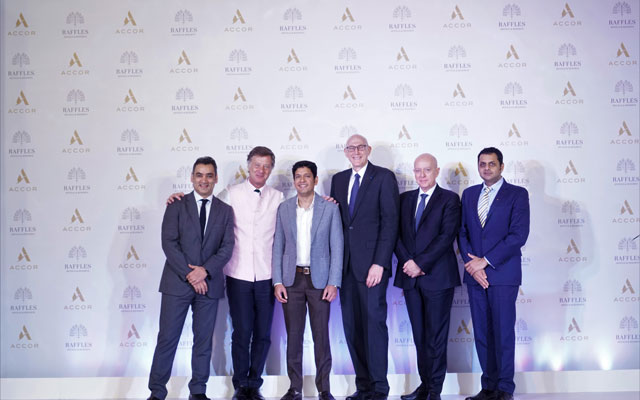
French hospitality giant Accor is expanding its foothold in India’s luxury segment by launching two new hotels under its most premium brand Raffles in Jaipur and Udaipur, announced chairman and CEO Sébastien Bazin at a signing of both hotels earlier this week.
“It is with immense pride that we announce the arrival of the Raffles brand in India, a hallmark of luxury and sublime service in a country that is famous for delivering luxury at the highest level,” Bazin declared.

Jean-Michel Cassé, Accor’s COO – India and South Asia, said: “We are seeing increasing demand for luxury travel in India and are looking forward to expanding Accor’s globally renowned portfolio of luxury brands in this incredible country. The addition of the iconic Raffles brand signals a new era for our group.”
Since its acquisition by Accor in 2015, the iconic Raffles brand has undergone a renaissance and now boasts a strong pipeline that will see the portfolio double in the next few years.
The Raffles Udaipur will be located in the historic Udaipur, set on a 8.5ha private island in the midst of Udai Sagar Lake. The 101 lake-facing rooms are surrounded by spectacular hill scenery with views of the 400-year -old temple in the background, and suites will feature their own private pools. Expected to open by mid-2020, the Raffles Udaipur will be reached after a short 15-20 minutes’ drive from the Udaipur Maharana Pratap Airport, followed by a short boat ride.
The Raffles Jaipur is being built at Kukas in the city of Jaipur as a set of secluded private residences and courtyards adjacent to the larger hotel complex that presently houses the Fairmont Jaipur. The development is planned as a discreet destination for guests to “be themselves”. The hotel is anticipated to commence operations in 2022 and is located close to key tourist destinations in Jaipur including the Amer Fort, Jaigarh Fort, Nahargarh Fort and Jal Mahal palace.


Nguyen Thi Huong Lien was in her third year at university and desperate to find ways to practise her English when she hit upon the idea of offering sightseeing tours to make extra money to fund her studies.
Harbouring a huge passion for her hometown of Hue, Nguyen decided a great way to achieve her aims could be done by offering sightseeing tours to the growing number of foreigners visiting the historic central Vietnamese city.
But she wanted to do things differently. Having taken part in many charity events when she was younger, Nguyen’s top priority was to run tours that benefited the local community, while offering employment and opportunities to other young women like herself.

With just US$100 in her pocket, at the age of 21, Nguyen started trial runs of I Love Hue Tour. The aim was to offer insightful motorbike rides throughout the city and its outskirts, which made stops at local artisans, food stalls and businesses along the way – all operated by women.
That was in late-2014, and in less than five years Nguyen has come a long way. In 2016, I Love Hue Tour had garnered so much interest that Nguyen registered her business as a legal company.
Her social-orientated business model, coupled with her spark and passion for empowering women, led to Nguyen being crowned one of four winners of MIST (Mekong Initiative Startups in Tourism) in 2017, followed by her scooping a Wise Woman Leadership Award for her work.
Her winning pitch for MIST caught the attention of Facebook’s COO Sheryl Sandberg, who asked to meet Nguyen during a visit to Vietnam. Nguyen found herself a mentor in Sandberg, who advised her to think big.
She quickly expanded her operations to Hoi An, Hanoi, Ho Chi Minh City and Danang, launching I Love Vietnam Tour. Said Nguyen: “I was so happy because I was able to connect Vietnam together, and employ so many talented young women to be the country’s ambassadors.”
In 2018, her dreams got even bigger when she decided to expand into South-east Asia, settling on Luang Prabang, where she won the Wise Woman Leadership Award. In August, 15 female students started running tours there, marking the start of a new chapter for the company – I Love Asia Tour.
But the expansion doesn’t stop there. In August 2019, I Love Asia Tour will begin operations in Siem Reap. This will bring the total number of women working for the company to more than 150 female bikers, with 12 female employees based in the Hue head office.
Nguyen, who was short-listed in the social entrepreneur category of last month’s Women of Futures Awards Southeast Asia in Singapore, plans to spend the next five years scaling up business in the three destinations, before setting her sights on her next spot.
She added: “This has been an incredible journey for me in every way, and I couldn’t have achieved it without the support and passion of all the I Love Asia Tour women.”