Asia/Singapore Wednesday, 8th April 2026
Page 361

Study finds HZMB brings in higher-spending tourists to Macau

0

The Hong Kong-Zhuhai-Macao Bridge (HZMB) has been bringing high-spending visitors to Macau, according to a recent study by Hong Kong-based marketing research firm CSG Research.

During the research period, visitors who travelled to Macau via the HZMB have spent MOP4,280 (US$530) per head on average, 32% (MOP1,038) more than those who arrived through sea ports (Macau and Taipa Ferry Terminals). In addition, visitors who arrived in Macau via the HZMB spent more than double (117%) on shopping, as well as 40% more on entertainment than those who travelled to Macau through sea ports.
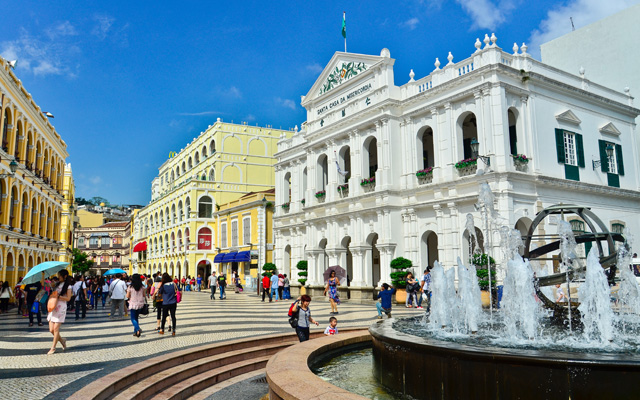
Visitors who travelled to Macau using the Hong Kong-Zhuhai-Macao Bridge have been found to spend more than those arriving at sea ports; historic centre of Macau with tourists pictured

According to the data from Macau’s Statistics and Census Service (DSEC), the total number of people who entered the HZMB daily stands at 15,836, bringing the total number of visitors to 1.5 million in 1Q2019, which was 14.1% among all Macau visitors (10.4 million). Those high-spending visitors who travel to Macau via the HZMB could potentially generate MOP 16.4 million in additional revenue.

In addition, due to easier access brought about by the HZMB since its opening in October 2018, the study also found that 78% of visitors who travelled via the bridge expressed their intention to visit Macau more frequently while only 32% who travel through sea ports would like to revisit Macau.

Moreover, while 37% of visitors who travelled via HZMB stated that they would stay longer in Macau, only 17% of those who entered Macau through sea ports stated the same intention.

Visitors who entered Macau via HZMB also travelled in larger groups, the study revealed. An average group size of 2.6 persons was recorded, much larger than the 2.2 persons per group of those arriving through sea ports. Furthermore, 38% of visitors who travelled via the bridge entered Macau in groups of three or more, compared with only 24% of those who travelled through sea ports.

Derek Yu, research director of CSG, commented: “The HZMB is yet to function to its full capacity, as it is presently limited to licensed vehicles only. But official data has already shown that visitors’ numbers surged with 21% yearly in 1Q2019. From our study, it is estimated that the potential contribution of the bridge to the Macau economy is MOP16.4 million per day.

“The increasing importance for these high-value visitors to shop and enjoy entertainment provides opportunities for Macau to establish itself as a destination which offers the best entertainment and world class shopping,” he added.
Navigation app finds its way in travel industry

0

When Yakov Slushtz lost his way during a hike with his wife, he also discovered the idea for WishTrip, a navigation app powered by user-generated trail content and recommendations.

“The seeds of WishTrip were sown when one of the founders and his wife got lost during a hike. They had tried to get reoriented by using (a navigation) app on their smartphones. But since that kind of GPS technology only works for marked roads, Waze couldn’t help them get back on track. Eventually, they found where they were going and it turned out not to be very far from where they were,” shared Uri Keren, chief revenue officer of WishTrip.

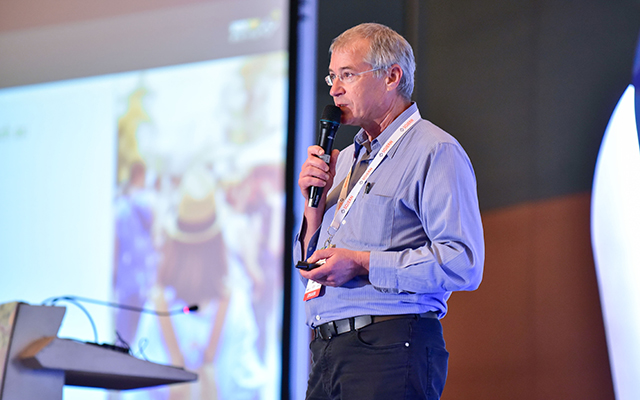
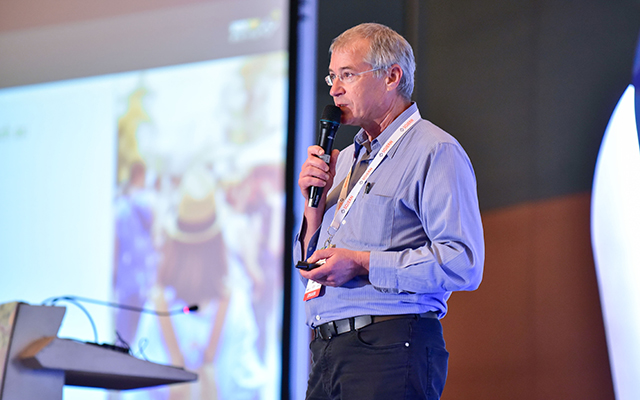
Uri Keren, CRO of WishTrip, speaking at an event

At its core, Wishtrip helps people record their travels. The startup brings content together on a single platform, enabling users to access trails and ideas shared by other travellers.

A year after it was founded, the WishTrip app now has over 500,000 users and more joining daily. Today, there are WishTrippers in over 80 countries who have created over 30,000 trails. “Part of this growth is being fuelled by the fact that WishTrip operates in 14 languages. This feature allows visitors to view content from tourists from around the world,” Keren said.

WishTrip fits right in with the habits and motivations of today’s always-connected travellers. “In an age when user-generated content on social media is having a growing influence on travel decisions (and as travellers seek brands they can trust), WishTrip’s interface allows users to instantly add images, videos and even voice narration to a trip that they are recording. The final completed album can also be shared with friends and family on social media,” Keren told TTG Asia.

While addressing the evolving needs of today’s travellers, WishTrip also hopes it can help create smart destinations that “strike a balance between positive economic, societal and environmental impact”. Indeed, more of today’s travellers are looking to deviate from well-trodden tourist paths, while destinations and local communities are also searching for solutions to alleviate crowding in popular tourist spots.

WishTrip can also help destinations with promotion and marketing in this Internet age

Despite the obvious FIT applications, Keren was quick to point out that the app’s use spans the travel ecosystem.

“For destinations, WishTrip provides a management platform to create, manage and promote their destinations, and offer interactive, explorable, multilingual information, points of interest, and tours & activities. For local tour operators, WishTrip provides a platform to create and promote self-guided city tours and treks in nature, and an app for their customers to explore these self-guided tours independently or with a local guide.”

In allowing travel businesses to promote self-guided city tours, WishTrip also offers opportunities for branded tour content.

“Once visitors arrive, WishTrip promotes its clients by branding any trails or images created by tourists while at a site with the client’s logo. This logo also appears when content is shared on social media,” said Keren.

Moreover, businesses can use the content generated by their WishTrip customers for marketing purposes. “In short, we make the experiences available to tourists in a destination more transparent and ‘real’, and help our customers promote their destination, engage with visitors, and leverage their current visitors for their marketing. “

Beyond that, the app can help tourism players enhance service delivery, including when it comes to tourists’ safety and security.

“WishTrip also makes it easier for destinations and attractions to keep their visitors safe, via navigation and communication tools that help keep tourists out of potentially dangerous areas. In addition, push notification and live chat features facilitate a constant flow of communication between visitors and the places they’re visiting.”

Having amassed a sizeable user base, WishTrip is making several enhancements to the app. Recently, its R&D team added features that now make it possible for WishTrip users to navigate to a site. And once they get to exactly where they want to be, another new feature enables WishTrippers to navigate and explore a site or on a trek.

Keren shared: “We are planning to expand our offerings to provide a shared economy module for self-guided tours and local experiences that will allow anyone to create, manage and promote self-guided tours.”

Football fans will go great lengths to watch teams in action: Expedia

0

A recent Expedia Group study revealed strong enthusiasm for football among travellers, with some even willing to lie to their travel partner or miss family occasions to catch a game overseas.

Some 68% of respondents say they have planned holidays around sporting events at least once.

Camp Nou in Barcelona

Almost half (47%) admitted to changing their holiday booking to make sure they don’t miss a football match.

Expedia Group’s own data revealed that on the day of football fixture announcements, flight and/or accommodation bookings can increase by up to three times the usual average.

Revealing the findings as official travel partner of the UEFA Champions League, Expedia Group says hosting the league final is especially beneficial to tourism. The group highlighted a 30% increase in searches of Madrid during the lead up to the 2019 Final compared to the same timeframe in 2018.

How far fans would go
The study also revealed that football fans are decisive over bookings. Over a third of respondents (40%) confirmed they book their travel for a trip as soon as their team’s fixtures are announced.

Some were even willing to lie to their other half with 32% of respondents admitting they had pretended to book a romantic break to watch a football match.

Moreover, 25% of respondents would miss a birthday, 12% would flake on parent’s evening and 11% would skip a wedding to make a game.

Meanwhile, one in 10 football fans are willing to travel over 11 hours to watch their team in action.

Top football destinations
Home of football legend Lionel Messi, Barcelona tops the list of most desired destinations to watch live football, as voted for by nearly a third (30%) of global fans.

Camp Nou in Barcelona is heralded, with 15% wanting to rally behind FC Barcelona.

The UK falls close behind with 20% of respondents around the world choosing London and Manchester. Some 11% want to visit Old Trafford, homeground of Manchester United, to watch a game.

Making a trip out of it
When booking accommodation for away games, more than 50% identified proximity to the stadium as a must-have. Other key deciding factors for accommodation include free breakfast (35%), how close it is to the city/town centre (34%) and 24 hours check in (31%).

Many see travelling for football as an opportunity to explore a new city. Aside from watching football, 62% prioritise sightseeing when visiting a new destination. Shopping is the second most popular past-time (over 50%). Nearly half (46%) search out restaurants, while 39% prefer sampling local delicacies of street food markets.

Indian Hotels Company partners Singapore’s GIC to acquire hotel assets

0

Singapore’s sovereign wealth fund GIC has partnered The Indian Hotels Company (IHCL), South Asia’s largest hospitality company, to create an investment platform to the tune of Rs4,000 crores (US$600 million) over a period of three years.

The investment platform will be used to acquire fully operational hotels in the luxury, upper upscale and upscale segments in India, looking at potential assets primarily in key lodging markets. These will also include distressed or underperforming hotels that can be turned around.

GIC’s Kishore Gotety (left) with IHCL’s Puneet Chhatwal

Through the partnership, IHCL expects to be able to pursue acquisitions in an asset light format, with the equity contribution from IHCL at 30 per cent and the balance 70 per cent contributed by GIC.

Each acquisition is intended to be in a separate SPV with its own funding.
The hotels acquired will be managed by IHCL under its various brands.

Puneet Chhatwal, managing director and CEO, IHCL, said: “This collaboration is in line with Aspiration 2022 and our vision to scale up, and create greater enterprise value. Through this platform, we expect to acquire strategic and marquee assets that need new ownership, branding and positioning.”

Kok Sun Lee, chief investment officer of GIC Real Estate, said: “As a long-term investor, we are confident in the outlook of India’s hospitality sector. We look forward to working closely with established partners such as IHCL to pursue attractive opportunities and capture the sector’s growth potential.”

While cruise passengers in Asia hit a new high in 2018, China – which makes up the lion’s share – is showing signs of a slowdown while Asian markets the likes of Singapore and India see double-digit growth. In 2018, 4.2 million people took an ocean cruise, up 4.6% year-on-year, according to data released today by Cruise Lines International Association (CLIA). [caption id="attachment_33182" align="alignnone" width="640"] Marina Bay Cruise Centre, Singapore[/caption] Asia continues to be the cruise industry’s third largest market after North America and Europe, CLIA figures show, maintaining a 14.8% share of the total global ocean passenger volume (28.5 million) for 2018. Most of the source markets in Asia saw year-on-year gains in 2018 except mainland China and Malaysia. In particular, passenger volume from Singapore, India, Indonesia, the Philippines, South Korea, Thailand and Vietnam saw double-digit growth. Mainland China retained its dominance as a source market, accounting for 55.8% of all Asian passengers, although the Chinese market has been going through a period of adjustment and saw a marginal 1.6% decline in passengers. The more measured increase in Asia’s passenger volume did not come as a surprise as cruise ship capacity dipped in 2018 after years of rapid expansion in this region. Asia’s slowdown in ship capacity is due to the strong demand for cruise ships worldwide, and reduced short cruise itinerary options, CLIA says. “In the next few years, cruising in Asia is expected to continue growing in popularity with the arrival of new ships in 2019/2020 including from Costa Cruises, Genting Cruise Lines, Royal Caribbean International and MSC Cruises,” said CLIA managing director for Australasia & Asia Joel Katz. “We also see several Asian destinations building new infrastructure to support cruise development,” he said. “Consumer interest in cruise has also been rising as Asian travellers discover the ease, relaxation and value of a cruise vacation.”

0

Chinese travellers show the highest willingness to spend on cultural travel compared to other holiday themes, according to the recently released ITB China Travel Trends Report.

The ITB China Travel Trends Report was created in collaboration with the international consulting and research company Kairos Future and will be presented at ITB China, set to take place from May 15 to 17, 2019 in Shanghai.

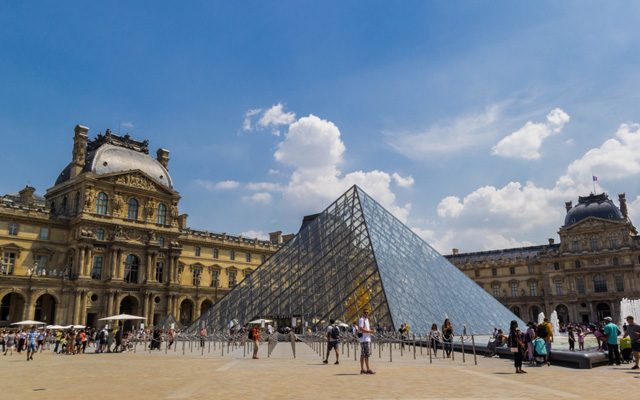
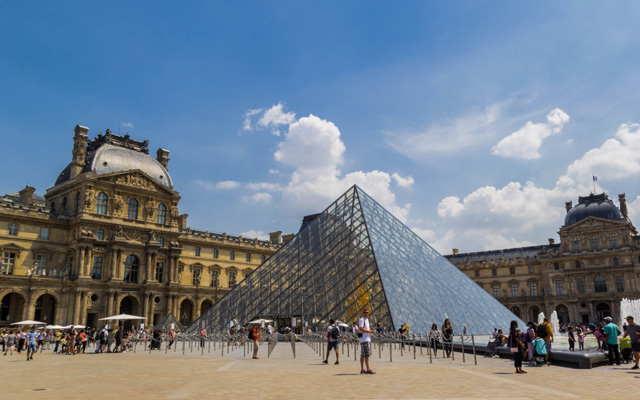
Tourists at The Louvre, Paris

Chinese travel agents surveyed see the fastest growth rate in culture travel, with 62% of the respondents reporting an expected growth of 30% or more over the next three years.

Local experience programmes and scenery are what travellers care most about when going on a culture trip, respondents expressed.

There is a strong desire to experience the local culture and to understand its history and customs. This can be either through cultural institutions such as museums, community immersions or cultural events.

Culture travel is also the theme for which travellers have the highest willingness to pay, according to survey respondents.

The stories of a place are important to inspire cultural travellers to visit a destination.

New travel products are becoming popular as demand gets increasingly diverse.

Many of today’s Chinese travellers visiting Europe, for example, are keen to experience local wine culture through visiting wineries and sampling local cuisine.

Overall, the experience offered through a culture travel product is increasingly targeting more specific demands, the report observed.

With many culture travelers – who are typically older than travellers opting for other themes – facing a language barrier when traveling abroad, Chinese-speaking guides will stay in demand and are described as an upgraded service for Chinese travellers.

Just like for sports trips, events are important for culture travel too. Three types of seasonal events are mentioned by the experts interviewed. One is art and music festivals, such as the Mozart Week in Salzburg. Another is food-and-drinks-related, for example, the Munich’s Oktoberfest. Finally, local festivals connected to local or national holidays – such as the Running of the Bulls during the San Fermín festival in Pamplona, Spain.

Asia’s cruise passengers younger than global average

0

As Asia sailed to a record 4.2 million ocean-going cruise passengers in 2018, the region’s cruise passengers are found across the age spectrum, revealed Cruise Lines International Association (CLIA) 2018 Asia Cruise Industry Ocean Source Market Report.

Asian cruise passengers are found across the age spectrum with an estimated average age of 45.4 years, lower than the global average of 47 years. Only three markets show divergence: India, a young 37-year average; Indonesia a 39-year average; and Japan an older 57 years.

“Asian cruise passengers are found across the age spectrum, suggesting different consumer segments interested in a cruise holiday and providing numerous possibilities for industry partners to develop the cruise penetration rate in this region,” noted Katz.

Multiple source cruise markets in Asia registered double-digit growths last year, making Asia is the third largest cruise region after North America and Europe.

While China continues to dominate the passenger share of Asia, cruise passengers from Taiwan and Singapore have been steadily growing in numbers.


“With nine out of 10 Asian cruise travellers choosing to cruise in Asia, it is clear that cruising will keep growing in popularity as more capacity will be deployed to Asia in the next few years,” said Joel Katz, managing director for CLIA Australasia & Asia.

In addition, Asian cruise passengers predominantly sail in Asia with more than 50% (2.2 million) cruising in mainland China, Hong Kong and Taiwan. Almost 40% (1.7 million) cruise in the rest of Asia. Asian cruise passengers also opted for shorter sailings, 89% of whom sail and average of four to six nights, with an average duration of 4.9 days.

Outside of Asia, the Mediterranean, Caribbean/South America, Baltics/Northern Europe, and Alaska were popular choices, in that order.

Sabre strengthens presence in India with appointment of MD

0

Sabre Corporation has appointed Jaya Kumar K as vice president & managing director for Sabre Global Development Center in Bangalore.

In his role, Kumar will be responsible for propelling the centre’s innovation capabilities, as well as attracting key talent to deliver cutting-edge technology solutions.

Kamar joins Sabre from Walmart, where he was managing director and vice president, global technology services, where he grew Walmart Labs India significantly, and established Centers of Excellences for analytics across e-commerce and in-store technologies.

Prior to that, Jaya also co-founded and built Neta, a pioneering data mining tool.

Established in 2005, the Global Development Center in Bangalore has been driving innovation for Sabre’s global customer base of over 425,000 travel agents, 350 airline partners and 40,000 hotel properties.

Asia cruise market sails to record 2018 numbers but faces slowdown for China

0

While cruise passengers in Asia hit a new high in 2018, China – which makes up the lion’s share – is showing signs of a slowdown while Asian markets the likes of Singapore and India see double-digit growth.

In 2018, 4.2 million people took an ocean cruise, up 4.6% year-on-year, according to data released today by Cruise Lines International Association (CLIA).

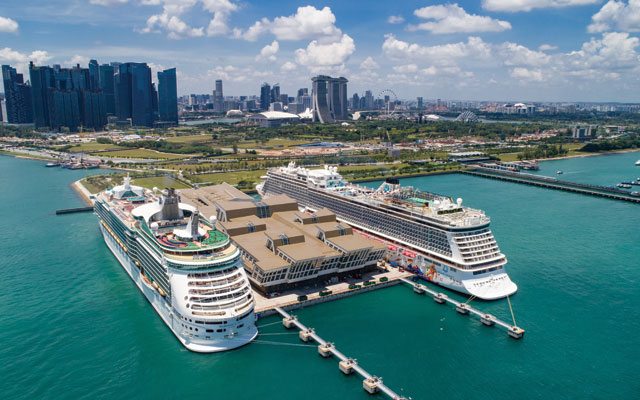
Marina Bay Cruise Centre, Singapore

Asia continues to be the cruise industry’s third largest market after North America and Europe, CLIA figures show, maintaining a 14.8% share of the total global ocean passenger volume (28.5 million) for 2018.

Most of the source markets in Asia saw year-on-year gains in 2018 except mainland China and Malaysia.

In particular, passenger volume from Singapore, India, Indonesia, the Philippines, South Korea, Thailand and Vietnam saw double-digit growth.

Mainland China retained its dominance as a source market, accounting for 55.8% of all Asian passengers, although the Chinese market has been going through a period of adjustment and saw a marginal 1.6% decline in passengers.

The more measured increase in Asia’s passenger volume did not come as a surprise as cruise ship capacity dipped in 2018 after years of rapid expansion in this region. Asia’s slowdown in ship capacity is due to the strong demand for cruise ships worldwide, and reduced short cruise itinerary options, CLIA says.

“In the next few years, cruising in Asia is expected to continue growing in popularity with the arrival of new ships in 2019/2020 including from Costa Cruises, Genting Cruise Lines, Royal Caribbean International and MSC Cruises,” said CLIA managing director for Australasia & Asia Joel Katz.

“We also see several Asian destinations building new infrastructure to support cruise development,” he said. “Consumer interest in cruise has also been rising as Asian travellers discover the ease, relaxation and value of a cruise vacation.”

New research predicts the end of standard room types

0

New research released by Amadeus and InterContinental Hotels Group (IHG) surmises standard room types with fixed inclusions are coming to an end, among the key findings published in the Drivers of Change in Hospitality report.

Study predicts the end of room types with standard inclusions, and the beginning of cult-status achievable at scale

The beginning of the end of room types
Traditional room types – single, double, twin, suite or family room – are a tried and tested format, loved by hotels and understood by guests the world over.

However, new research suggests that this will change dramatically and give way to a new trend that sees guests able to swap desks for yoga mats, stream their own content through the in-room TV, or ask for that third-floor room with their preferred view.

Hotel accommodation, which has traditionally been bought in a standard and uniform way, will need to adapt to travellers’ growing bespoke leanings. According to the study, 61% of global travellers state a preference for hotels to be priced in a way that allows them to add on bespoke options.

The study surmises will see the emergence of attribute-based booking, where guests pick and choose the individual components of their room, marking the end of traditional room types.

New selling models will become more mainstream too, with guests able to book a room for a length that suits their needs rather than a traditional overnight stay.

Achieving cult status at scale
The kind of status usually reserved for luxury or boutique hotels or consumer brands will be available for all who are able to earn loyal fans. In the competition for guest loyalty, hospitality providers need to identify how to offer value through delivering memorable, shareable experiences, the study stressed.

To do this, hotels must understand individual guest needs on each trip, and offer a host of unique and unexpected surprises. In fact, 70% of global travellers would like hotels to provide more advice and tips about unique things to do, with only 20% saying they currently get ideas from the hotel.

If done right and with the requisite technology, personal attention and personality will no be longer a characteristic of boutique brands only, the study imagines.

The rise of tech-augmented hospitality
Hospitality providers will need to serve guests in a significantly more connected way, striking the right balance between automated solutions and human interaction.

The study details how technology will be used to empower staff to deliver unprecedented levels of service at scale. It suggests that technology needs to support human interaction, not replace it, as the majority of guests (67%) say they prefer to interact with a person for the emotional interaction. For example, the deployment of real-time translation earphones and smart glasses could ensure that concierges easily interact with guests in their native tongue.

Chris K Anderson, director of Center for Hospitality Research, Cornell University, remarked: “The hospitality industry is on the cusp of a new chapter. Guests are seeking richer individual relationships and seamless experiences with their hospitality providers, and are willing to share more data and insights than ever before.”

Findings from the Drivers of Change in Hospitality were informed by over 7,500 consumers worldwide and industry experts.

China May Day holiday extension fuels demand for non-Asia destinations

0

Destinations farther afield are enjoying greater popularity among Chinese travellers for the May Day holiday this year, revealed Hotelbeds.

According to booking data from the Hotelbeds platform for this year’s four-day International Labour Day holiday period starting on Wednesday, 10 of the top 30 international destinations for Chinese travellers during International Labour Day in 2019 are non-Asian destinations, up from only three last year.

China’s outbound travellers are looking further afield this year; Arc de Triomphe and Champs-Élysées in Paris pictured

Paris and London are listed in the top 30 destinations in ninth and 15th places respectively, with Paris last year coming in at number 23 and London not ranking at all in the top 30.

Further down the top 30 ranking, Paris and London are followed by other non-Asian destinations such as Prague (22nd), Barcelona (23rd), Dubai (24th), Honolulu (26th), Madrid (27th), New York (28th), Melbourne (29th) and Rome (30th).

This year’s jump in the number of non-Asian destinations, said Hotelbeds, could in part be explained by the fact that this year Chinese citizens will enjoy an extra day of holiday during International Labour Day, taking the break to four days total.

However this year’s extra day was only announced recently by the Chinese state on March 22 when it announced a reshuffling of the non-working days for the Labour Day Holiday.

This has resulted in a surge of extra accommodation bookings – with Hotelbeds’ data showing a year-on-year increase of around 75 per cent in the weeks following the government’s surprise announcement.