Asia/Singapore Thursday, 9th April 2026
Page 356

Over one million fake reviews blocked, reveals TripAdvisor transparency report

0

Over one million fake reviews were stopped from being displayed on TripAdvisor, out of the 66 million reviews submitted to the travel platform in 2018, revealed TripAdvisor in its first-ever Review Transparency Report.

The report, which analysed a full year’s worth of data on reviews submitted by the global travel community, made public details about its review moderation processes and the extent of fake review attempts targeted at the platform in 2018.
Over one million fake reviews were prevented from being displayed on TripAdvisor in 2018, revealed the travel platform in its inaugural Review Transparency Report

It also details the multi-pronged approach TripAdvisor takes to ensure reviews posted on its pages comply with the site’s guidelines. The report also provides a detailed breakdown of the proportion of reviews that were either blocked or removed.

Becky Foley, senior director of trust & safety at TripAdvisor, said: “Ensuring that TripAdvisor is a trusted platform for our users and listed businesses is a top priority. We’ve continued to make advancements to our industry-leading fraud detection efforts in recent years, but it’s a daily battle and we are far from complacent.

“While we are winning the fight against fake reviews on TripAdvisor, we can only protect our corner of the Internet. As long as other review platforms aren’t taking aggressive action, then fraudsters will continue to exploit and extort small businesses for cash. It is time other platforms like Google and Facebook stepped up to the plate to join us in tackling this problem head-on.”

Here are the key report findings:

66 million reviews were submitted to TripAdvisor in 2018 by the global travel community. Everyone was analysed using advanced fraud detection technology, and 2.7 million were subject to additional human assessment by content moderators.

4.7 per cent of all review submissions were rejected or removed by either TripAdvisor’s analysis technology or manually by the content moderation team. There are a number of reasons why TripAdvisor rejects or removes reviews, ranging from guideline violations to instances of review fraud.

2.1 per cent of all review submissions were determined to be fraudulent, but the vast majority (73 per cent) were blocked before they were ever posted. This equated to over one million fake reviews that were prevented from being displayed on TripAdvisor.

Fewer than one per cent of reviews were flagged by users or businesses for potentially violating TripAdvisor guidelines. TripAdvisor’s content moderation team reviewed most of these community reports within six hours of them being submitted.

Some 34,643 businesses were subject to a ranking penalty, which is a reduction of a property’s position within the popularity or traveller ranking. Ranking penalties are applied when a business is caught attempting to post fake reviews.

The report also described TripAdvisor’s efforts to catch paid reviewers. Paid reviewers are individuals or companies that try to sell “user” reviews to businesses listed on the site. Since 2015, TripAdvisor has stopped the activity of more than 75 websites that were caught trying to sell reviews, including one individual who was sentenced to nine months in prison by the Criminal Court of Lecce in Italy last year.

“Consumer reviews have become essential to millions of tourism activities around the world. It is progress, provided that, as recently recommended by the World Committee on Tourism Ethics, these reviews are reliable and unbiased,” said Pascal Lamy, chairman of the World Committee on Tourism Ethics at the World Tourism Organisation.

In addition to the release of moderation data for the first time, the 2019 Review Transparency Report highlighted a number of commitments TripAdvisor is making to protect the integrity of reviews on its platform, including continuing to improve systems to identify fraud and penalise the perpetrators, further investing in training for human moderation teams, pursuing partnerships with law enforcement authorities to support their efforts to tackle fake online reviews and building on transparency efforts by sharing more insights into TripAdvisor moderation processes and fraud investigations on the TripAdvisor Insights blog.

The full report can be read here.

More travellers demand value, personalisation and digital solutions: Travelport

0

Travellers across the world are increasingly prioritising value over cost, demanding more autonomy over personalisation and using digital solutions to research and manage their trips, according to findings from Travelport’s Global Digital Traveler Research 2019.

The report, which surveyed 23,000 people from 20 countries, found that when booking a flight, value is a top priority for over four out of five (86%) travellers today with just one in five (18%) now booking solely on cost. This trend is apparent across all age groups led by baby boomers (91%) who prioritise value marginally more than younger generations.

Travellers worldwide prioritise value over cost and demand more autonomy over personalisation, finds Travelport

To find offers of value, travellers “nearly always” use a combination of travel review sites like TripAdvisor (42%), price comparison sites like Kayak.com (38%), recommendation sites like Kiwi.com (36%) and have conversations with travel consultants (31%).

But when shopping online, travellers have mounting frustrations as to knowing which companies they can trust (50%, up 6% from 2018), added the report. They are also frustrated by not knowing whether online reviews are genuine (50%) and the time required to find the right option (43%).

Travelport also found that travellers want more control and transparency when it comes to personalisation. Across all age categories, when booking a flight, travellers typically want to personalise their own experience (42%) through add-ons like extra legroom, additional baggage allowance and meal upgrades. One quarter (24%), however, prefer to receive branded offers, such as Flexi and Saver, which provide a basic level of personalisation.

When attempting to personalise their experience, however, a growing number of travellers are getting frustrated by not being able to understand what is included as standard (52%, up 12% from 2018) and not knowing what add-ons are available to them (56%).

Travellers are also increasingly frustrated by companies they regularly use not remembering their preferences (35%, up 4% from 2018). Frustration with this is most prevalent among Gen Y (39%).

Digital solutions are increasingly driving decision-making around travel bookings, Travelport also found. Nearly three quarters (71%) of travellers today consider it important whether an airline offers a good digital experience when booking a flight, up +3% from 2018. Over half (58%) also consider this when choosing accommodation, up +7% from 2018.

When researching a trip, three quarters (77%) of travellers have reviewed videos and photos posted by travel brands on social media, up 2% from 2018. One third (36%) of Gen Y travellers today “nearly always” do this in the research phase. Facebook is considered the most influential social media platform by all age groups except for Gen Z, which puts Instagram marginally ahead.

Nearly half of all travellers (48%) now believe augmented or virtual reality experiences would help them better plan their trips. Demand is greatest among Gen Y (61%) travellers, though still significant among all other age categories.

Travelport further found in its report that demand continues to rise for technologies that make travel easier to manage. Nearly half (45%) of travellers today get frustrated when they are unable to access their booking information round-the-clock on mobile devices, such as smartphones and smartwatches, up 9% from 2018. When it comes to age groups, frustration is particularly high among Gen Y (50%) and Gen Z (47%) travellers, but also maintained among others.

Nearly half (44%) of all travellers have now used voice search to help manage travel, with its use being greatest among Gen Y travellers (61%) and lowest among Baby Boomers (12%). One quarter (25%) of Gen Y travellers today “nearly always” use the technology for this use. When the technology is used by travellers, some of the most popular requests made are for information relating to the weather at their destinations (60%) and getting live traffic updates (54%).

Technology, however, can be as much a bane as a boon. Two fifths (42%) of travellers, for example, find not being able to speak to a human frustrating, up from 38% in 2018. This view was shared consistently across all age groups, though highest among baby boomers (43%).

Commenting on the research’s findings, Travelport’s chief customer and marketing officer, Fiona Shanley, said: “Travellers are consumers too and they want an experience from travel providers and travel agents that is as simple and engaging as the best retailers. Travelport’s latest global research shows that technology is key to this – from serving relevant and personalised offers to providing attractive propositions from trusted sources.”

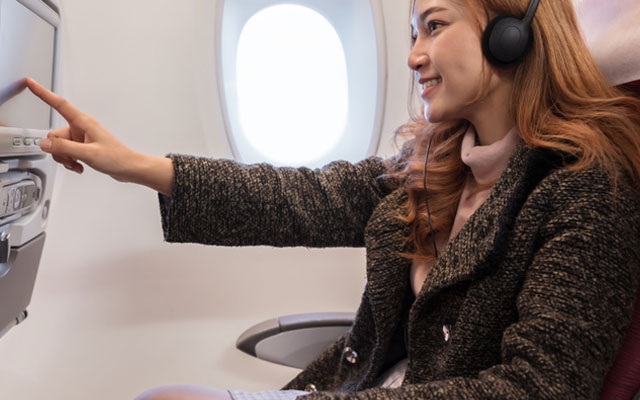
Study: US$33 billion opportunity market awaits airlines with connected cabins

0

Airlines that have successfully installed connected cabins have an immediate opportunity to win US$33 billion in market share from competitors, according to new economic modelling from the London School of Economics and Political Science (LSE) in association with Inmarsat.

“Sky High Economics – Chapter Three: Capitalising on Changing Passenger Behaviour in a Connected World” examines the global shift underway in passenger demographics, behaviours and attitudes to loyalty.

Airlines with connected cabins have a chance to win US$33 billion in market share from competitors: study

It underscores an immediate need for airlines to innovate in order to stay relevant in a competitive industry landscape, identifying US$33 billion in share shift accessible today for those developing the digital inflight experience that passengers are seeking. This opportunity equates to six per cent of the total annual commercial passenger aviation market.

Today, the airline industry is experiencing a period of exceptional change. By 2028, Generation Z is poised to become the largest group of air passengers in Asia-Pacific at over 450 million, surpassing the millennials by 41 per cent, said the report.

Paired with this demographic shift, digital disruption on the ground is driving expectations of inflight experience, and redefining attitudes to airline loyalty. According to the LSE research, millennials, which form the largest passenger group today, value loyalty less than any previous generations – a trend set to continue with younger generations.

The report utilises current IATA data and primary research including data from frequent flyer schemes, interviews with regulatory agencies, airlines and passengers.

Sky High Economics identifies a market of close to 450 million passengers worldwide, currently uncommitted to any airline loyalty programme, who would switch their allegiance in favour of an airline offering high-quality inflight Wi-Fi.

This forecast is modelled using data from frequent flyer schemes, which reveal a market split into active, engaged frequent flyers (13 per cent) and less engaged, brand-agnostic passengers (87 per cent). Less engaged travellers – many of whom are younger flyers with new expectations of travel – present the largest opportunity for airlines to take market share.

Today, 12 per cent of less engaged passengers are willing to switch allegiance to an airline that offers reliable Wi-Fi, worth US$33 billion in share shift for airlines already offering the service to take from competitors. This sum is predicted to grow to US$45 billion in the next decade, by which time Generation Z is expected to be the airline industry’s largest customer base.

Philip Balaam, president, Inmarsat Aviation, said: “Within the next two decades, Asia-Pacific will be driving most of global air passenger traffic. In a region where internet connectivity is increasingly becoming commonplace, we anticipate passengers will expect their on-the-ground habits and preferences to be replicated even when they are in the air.

“Whilst securing airline customer loyalty may seem more challenging than ever before, airlines can stay relevant and remain a preferred choice over its competitors by adapting to the needs of the vastly changing demographic of passengers. Offering high-bandwidth Wi-Fi will be key to satisfying the ‘always-on’ passengers of tomorrow,” he added.

“High-bandwidth Wi-Fi with consistent coverage is essential to meet the demands of data-hungry passengers. But adopting the technology is just the start. The real opportunity exists in making inflight Wi-Fi an enabler for tailored passenger experiences, enhancing loyalty while accessing new revenue streams.”

Tours that bind

0

Seeing the value of showing friends and families around in foreign destinations while he was studying abroad, Amornched Jinda-apiraksa saw possibilities of matching travellers keen to discover destinations through the eyes of locals.

Together with co-founder Noppon Anukunwithaya, Amornched launched their own tourism enterprise in 2012 to offer single-day travel experiences led by “local experts” – natives or locals who were keen to share about the place they have grown up or lived in.

Conceived as a peer-to-peer online activity marketplace, TakeMeTours aims to feature activities and experiences that give a different spin to conventional day tours and programmes in a destination.

However, getting the start-up off the ground in the early days were “very difficult”, although Amornched notes that the high-profile foray of Airbnb into the tours and activities sector through its Experiences arm has further “helped to raise awareness of peer-to-peer experiences”.

Not only does a new generation of travellers crave for immersive in-destination experiences, more people are opening up to hosting and guiding visitors. The peer-to-peer platform offers locals a chance to become a tour guide, much as how Airbnb invites everyone to become a hotelier.

TakeMeTour now receives 30-50 new local experts sign-ups every day, of which the company will further screen and verify to assess their suitability for the programme, Amornched said.

The online marketplace, the largest of its kind in Thailand, has amassed an interesting and unique collection of in-destination experiences.

Instead of visiting classic floating markets that are typically featured on Bangkok itineraries, Amornched shares the example of a TakeMeTour tour that visits Khlong Lat Mayom Floating Market, led by a local expert who lives nearby so that guests can pop over to his residence for a home-cooked lunch by his grandmother.

Another well-received activity on the platform, according to him, is a running tour of Bangkok’s Lumpini Park, led by a Thai fitness enthusiast who accompanies guests to enjoy a local breakfast at the park’s edge after the run.

TakeMeTour also relies on the peer-to-peer model in the promotion and marketing of its tours. For new listings, the company will usually invite its network of photographers and bloggers to tour trials and share their reviews online.

Seven years since its founding in 2012, Bangkok-based TakeMeTour has now grown to over 1,000 experiences offered by 25,000 local experts across 55 different cities in Thailand.

Regional expansion is now on the cards for TakeMeTour, which has recently branched into Cambodia, with Vietnam, Malaysia and Indonesia next on the expansion radar.

As the start-up scales up, Amornched expresses his desire to invest in more back-end technology to better leverage data insights.

“We have more than 1,000 tours right now, so we want to show the right ones to the right travellers. We own all the content, and we also do NLP (natural language processing),” said the robotics engineering graduate who was listed among Forbes’ 30 Under 30 list in 2018.

With travellers increasingly staking out their independence and seeking unique in-destination experiences, Amornched also sees traditional tour operators expressing greater interest in TakeMeTour offerings such as café hopping tours. As such, he is currently developing API options to connect TakeMeTour’s experiences with the “big players”.

TakeMeTour also recently launched a new pilot campaign, in partnership with Thailand’s leading property developer Sansiri’s subsidiary Plus Property, to introduce property tours.

Amornched explained: “Basically, it’s a tour targeting foreign property investors and expatriates who plan to relocate to Thailand. We will have a local expert – in this case, a property expert – to show them around to find the right condo/apartment to fit their needs in just one day, (looking at various factors such as) the budget, location close to their office, international school for kids, supermarket, etc.

It’s clearly an “interesting time for the sector now,” the entrepreneur stated, noting the considerable amount of interest – and investment – currently poured in the tours and activities sector.

Hong Kong hotel occupancy rates plunge to record low: STR

0

Hotels in Hong Kong are experiencing all-time low occupancy levels for the month of August amid ongoing protests in the region, according to preliminary data from STR.

In Hong Kong, occupancy decreased 4.1% to 83.4%, while average daily rate (ADR) fell 9.1% to HK$1,163.21 (US$148.29) and revenue per available room (RevPAR) plummeted 12.9% to HK$970.42.

Hong Kong’s hotel occupancy has taken a hit due to ongoing protests against the government

Based on daily data from the month, Hong Kong reported the following in year-over-year comparisons: Supply rose +1.5% while demand fell 28.8%, and occupancy plummeted 29.8% to 63.9%. Meanwhile, the average daily rate (ADR) decreased 21.0% to HK$1,086.16, and revenue per available room (RevPAR) fell 44.6% to HK$694.15.

The absolute occupancy level is the lowest for any month in STR’s Hong Kong historical database. According to financial secretary Paul Chan, tourist arrivals to the city fell nearly 40% in August, after a roughly 5% decrease in July.

After a prolonged period of overall performance growth, July was the first month that showed the protest impact on hotel performance with the key metrics down across the board: Occupancy fell 4.2%, while ADR decreased 7.9% and RevPAR dropped 11.8%.

In mid-August, STR forecasted a 19.3% RevPAR decrease for Hong Kong for 3Q2019. According to STR analysts, the market experienced 19 consecutive months of RevPAR declines following protests in 2014, and there has not been sufficient time between protest periods for the market to reach pre-2014 levels. Prolonged protests could worsen Q3 performance significantly through final August numbers and softer-than-anticipated September results.

Global tourism up 4% in 1H2019: UNWTO

0

International tourist arrivals grew 4% from January to June 2019, compared to the same period last year, according to the latest UNWTO World Tourism Barometer.

Growth was led by the Middle East (+8%) and Asia and the Pacific (+6%). International arrivals in Europe grew 4%, while Africa (+3%) and the US (+2%) enjoyed more moderate growth.

Global tourist arrivals grew 4% in 1H2019, from the same period last year, with growth led by the Middle East and APAC (Pictured: Crowds throng popular tourist spot Global Village in Dubai)

Destinations worldwide received 671 million international tourist arrivals between January and June 2019 – almost 30 million more from the same period in 2018 and a continuation of the growth recorded last year.

Growth in arrivals is returning to its historic trend and is in line with UNWTO’s forecast of 3-4% growth in international tourist arrivals for the full year of 2019, as reported in the January barometer.

So far, the drivers of these results have been a strong economy, affordable air travel, increased air connectivity and enhanced visa facilitation.

However, weaker economic indicators, prolonged uncertainty about Brexit, trade and technological tensions and rising geopolitical challenges, have started to take a toll on business and consumer confidence, as reflected in a more cautious UNWTO Confidence Index.

Regional performance

Europe grew 4% in 1H2019, with a positive first quarter followed by an above-average second quarter (April: +8% and June: +6%), reflecting a busy Easter and the start of the summer season in the world’s most-visited region. Intra-regional demand fuelled much of this growth, though performance among major European source markets was uneven, amid weakening economies. Demand from overseas markets such as the US, China, Japan and the countries of the Gulf Cooperation Council also contributed to these positive results.

Asia-Pacific (+6%) recorded above world average growth during the January to June 2019 period, largely fuelled by Chinese outbound travel. Growth was led by South Asia and North-east Asia (both +7%), followed by South-east Asia (+5%) and arrivals in Oceania increased by 1%.

In the US (+2%), results improved in the second quarter after a weak start of the year. The Caribbean (+11%) benefitted from strong US demand and continued to rebound strongly from the impact of hurricanes Irma and Maria in late 2017 – a challenge which the region unfortunately faces once again. North America recorded 2% growth, while Central America (+1%) showed mixed results. In South America, arrivals were down 5% partly due to a decline in outbound travel from Argentina which affected neighbouring destinations.

In Africa, limited available data points to a 3% increase in international arrivals. North Africa (+9%) continues to show robust results, following two years of double-digit figures, while growth in Sub-Saharan Africa was flat (+0%).

The Middle East (+8%) saw two strong quarters, reflecting a positive winter season, as well as an increase in demand during Ramadan in May and Eid Al-Fitr in June.

Source markets

The report also shows mixed results for source markets amid trade tensions and economic uncertainty, with uneven performance across major tourism outbound markets.

Chinese outbound tourism (+14% in trips abroad) continued to drive arrivals in many destinations in the region in 1H2019 though spending on international travel was 4% lower in real terms in the first quarter. Trade tensions with the US as well as the slight depreciation of the yuan may influence destination choice by Chinese travellers in the short term.

Outbound travel from the US, the world’s second largest spender, remained solid (+7%), supported by a strong dollar. In Europe, spending on international tourism by France (+8%) and Italy (+7%) was robust, though the UK (+3%) and Germany (+2%) reported more moderate figures.

Among the Asian markets, spending from Japan (+11%) was strong while South Korea spent 8% less in 1H2019, partly due to the depreciation of the Korean won. Australia spent 6% more on international tourism.

Meanwhile, Russia saw a 4% decline in spending in the first quarter, following two years of strong rebound. Spending out of Brazil and Mexico were down 5% and 13%respectively, partly reflecting the wider situation of the two largest Latin American economies.

Global air traffic growth in July slows; APAC registers lowest growth since 2013: IATA

0

The global passenger demand growth has slackened in July due to tariffs, trade tensions and uncertainty surrounding Brexit, according to the IATA.

Total revenue passenger kilometres (RPKs) rose 3.6 per cent, compared to the same month in 2018, but down from the 5.1 per cent annual growth recorded in June. All regions posted traffic increases. Monthly capacity increased by 3.2 per cent and load factor rose 0.3 percentage point to 85.7 per cent, which is a new high for any month.

IATA: Global passenger demand growth has slowed down in July, down from the 5.1 per cent annual growth recorded in June

“July’s performance marked a soft start to the peak passenger demand season. Tariffs, trade wars, and uncertainty over Brexit are contributing to a weaker demand environment than we saw in 2018. At the same time, the trend of moderate capacity increases is helping to achieve record load factors,” said Alexandre Juniac, IATA’s director general and CEO.

This July, international passenger demand rose 2.7 per cent compared to July 2018, which was a deceleration compared to the 5.3 per cent growth recorded in June. Capacity climbed 2.4 per cent, and load factor edged upward 0.2 percentage point to 85.3 per cent. All regions reported growth, led by airlines in Latin America.

Asia-Pacific airlines’ July traffic rose 2.7 per cent over the year-ago period, a slowdown compared to June growth of 3.9 per cent and their weakest performance since early 2013. Capacity increased 2.4 per cent and load factor rose 0.2 percentage point to 82.6 per cent.

US-China and Japan-South Korea trade tensions as well as political tensions in Hong Kong have all weighed on business confidence, said IATA.

European carriers registered a modest 3.3 per cent annual growth in July, down from a 5.6 per cent year-over-year increase in June. This was the slowest rate of growth since mid-2016. According to IATA, continuing uncertainty over Brexit and slowing German exports and manufacturing activity contributed to a weakening in business and consumer confidence. Capacity rose 3.2 per cent, and load factor climbed 0.1 percentage point to 89.0 per cent – highest among the regions.

Middle East carriers had a 1.6 per cent increase in demand for July, well down on the 8.3 per cent growth recorded for June, after the end of Ramadan. Weakness in global trade, volatile oil prices and heightened geopolitical tensions have been negative factors for the region, said IATA. July capacity climbed 1.0 per cent compared to a year ago and load factor rose 0.4 percentage point to 81.3 per cent.

North American airlines’ traffic climbed 1.5 per cent compared to July a year ago. This was down from 3.5 per cent growth in June, reflecting the slowdown in the US and Canadian economies and the trade disputes. July capacity rose 0.7 per cent with the result that load factor climbed 0.7 percentage point to 87.9 per cent – second highest among the regions.

Latin American airlines experienced a 4.1 per cent rise in traffic in July, which was the strongest growth among the regions but a decline from 5.8 per cent year-over-year growth in June. It occurred amid continued disruption following the demise of Avianca Brasil and more challenging business conditions in some key regional economies. Capacity rose 2.7 per cent and load factor climbed 1.1 percentage points to 85.6 per cent.

African airlines’ July traffic rose 3.6 per cent – a significant decline from the 9.8 per cent growth recorded in June, as weakening business confidence in South Africa offset solid economic conditions elsewhere on the continent. Capacity rose 6.1 per cent, and load factor slipped 1.7 percentage points to 72.9 per cent.

Domestic travel demand outperformed international growth in July, as RPKs rose 5.2 per cent in markets tracked by IATA, up from the 4.7 per cent growth in June. Domestic capacity climbed 4.7 per cent, and load factor rose 0.4 percentage point to 86.5 per cent.

China’s domestic traffic rose 11.7 per cent in July – an acceleration over the 8.9 per cent growth recorded in June and the strongest domestic performance. Growth is benefitting from lower fares and more connections.

Japan’s domestic traffic climbed 4.7 per cent in July, up from 2.6 per cent in June. Business confidence and economic growth are relatively positive at the moment.

China still dominant, as South Korea, Japan and India become bigger origin markets in APAC

0

Asia-Pacific’s five most popular destinations for international travellers – Bangkok, Singapore, Kuala Lumpur, Tokyo and Seoul – captured more than one-quarter, or 25.2 per cent, of total international travel spending in the region, based on findings from Mastercard’s 2019 Asia Pacific Destinations Index (APDI).

Primarily driven by explosive growth in outbound travel from mainland China, these five cities also accounted for one-fifth, or 22 per cent, of all overnight visitors to the region’s top 161 cities and regional centres last year.

Bangkok, Singapore, Kuala Lumpur, Tokyo and Seoul remain APAC’s most popular cities among international travellers, with Japan emerging as the region’s most visited market, according to Mastercard’s 2019 Asia Pacific Destinations Index (Pictured: Shinjuku in Tokyo, Japan)

In 2018, Asia-Pacific hosted travellers making 342.2 million business and leisure trips, up from 159.1 million in 2009, representing an 8.9 per cent compound annual growth rate (CAGR) over the nine year period. During the same period, travel spending in Asia-Pacific more than doubled, rising from US$117.6 billion to US$281.1 billion, equating to a compound annual growth rate of 10.2 per cent.

Mastercard’s 2019 APDI highlights four key trends that are shaping the future of travel in the Asia-Pacific region:

1. Mainland China continues to exert the greatest influence over travel patterns and expenditure flows. Overnight arrivals of mainland Chinese travellers in Asia-Pacific markets surged from 10.5 million in 2009 to 62.4 million in 2018 – a 21.9 per cent CAGR over the period. Notably, mainland China is amongst the top three source markets of outbound travellers for 82 cities in Asia-Pacific, or more than half of the 161 destinations in the APDI.

2. Japan is now the hottest destination in Asia. For the second year in a row, Japan is the only market in the APDI to command 25 per cent of Asia Pacific’s top 20 destinations, with Okinawa nudging out Kyoto to join the list for the first time, alongside Tokyo, Osaka, Hokkaido and Chiba. Okinawa is one of the region’s fastest-growing destinations, skyrocketing 109 places since 2009. Less-travelled cities such as Oita, Hiroshima, Fukuoka, Kyoto, Gifu and Nagano have also seen significant jumps in the rankings, all earning a spot in the list of the region’s 10 fastest-growing cities by number of visitor arrivals. This overall uptick in travel to Japan is set to grow further, with Tokyo forecasted to benefit the most from the 2019 Rugby World Cup and 2020 Olympic Games.

3. Vacation destinations prevail over the fastest-rising cities. While Japanese cultural centres top the list of the 10 fastest rising cities, the bustling industrial hub of Ludhiana in India’s northern state of Punjab claims the second spot, having jumped 78 places in the index since 2009. Dubbed the “Manchester of India” for its production of textiles and hosiery, Ludhiana is the only industrial city in this list of fast-risers. Sri Lanka’s coastal getaway Galle ranks ninth, having climbed 54 places in the rankings since 2009, while China’s panda capital Chengdu rounds out the rankings, coming in tenth after jumping 50 places in the last nine years.

4. While many Asia-Pacific destinations are basking in the growth led by mainland Chinese travellers, South Korea and Japan are also noteworthy as the next biggest Asian origin markets fuelling rising travel expenditure and overnight arrivals across the region. Top contributor mainland China accounts for 18.2 per cent of international overnight arrivals within the region, while South Korea contributes 9.1 per cent and Japan makes up six per cent. Another source market to watch is India, home to the world’s second largest population. In 2018, India waved off 14.9 million outbound travellers, of which 49.3 per cent visited destinations in Asia-Pacific. Their most favoured Asia-Pacific destinations were Singapore, Bangkok, Kuala Lumpur, Pattaya and Bali. With its growing middle class, and population of 1.3 billion people, India’s potential to shake up future APDI rankings cannot be overlooked.

Rupert Naylor, senior vice president, data & services, Asia Pacific, Mastercard, said: “While mainland China serves as a focal point for Asia-Pacific’s top destinations, there are also bright spots in South Korea, Japan and India. As travellers from these markets continue to increase by remarkable percentages year over year, it is imperative that we bring together resources from both the public and private sectors to help tourism partners better understand commerce patterns and deliver attractive experiences for eager travellers from across the region.”

India sets sight on growing leisure and business travel from Indonesia

0

Indian travel experts are firming their grip on Indonesia, a market which is viewed as a fast-rising source of leisure and business arrivals on the back of visa-free entry and a soon-to-launch direct connection between the two countries.

Ambassador of India to Indonesia Shri Pradeep Rawat, who attended the Incredible India roadshow in Jakarta last week, said connectivity between India and Indonesia would be enhanced when a direct flight service connecting Delhi, Chennai and Bali launches on October 27, although he declined to name the carrier.

From left: Indian Ambassador to Indonesia Shri Pradeep Rawat, Shri Gyan Bhushan, the economic advisor of Ministry of Tourism of India and Indonesian lawmaker Satya Widya Yudha attends the Incredible India roadshow in Jakarta.

Economic advisor to Indian Ministry of Tourism Shri Gyan Bhushan, who spearheaded the Incredible India roadshows, hopes that the upcoming service would offset the imbalance in tourist traffic currently seen between the two countries.

While tourist arrivals from Indonesia to India increased from 43,973 in 2017 to 46,867 in 2018, the number of Indians who visited Indonesia grew from 422,000 to 536,000 in the same year.

Bhushan said he was “not impressed” with the Indonesian inbound numbers, as Indian arrivals to Indonesia is “10 times more”.

Meanwhile, the soon-to-launch flight is definitely music to the ears of agents in both countries, as the lack of direct connectivity has been singled out as a key challenge for Indian tour operators in attracting more Indonesians to the country.

Amir Kumar, director of sales and marketing at Bodh Gaya-based Dharma Steps, lamented that Garuda Indonesia’s termination of Jakarta-Mumbai direct flights earlier this year has dampened Indonesian outbound demand for India.

Despite the connectivity issue, Kumar is confident that the number of Indonesian tourist arrivals in India would continue to grow. He shared that the number of Indonesian guests the company receives has increased by five per cent since last year, thanks to India’s free e-visa policy for Indonesians.

Also anticipating the direct flight to boost Indonesian arrivals is Sanyog Gupta, president of New Delhi-based Sanyog Tours, who has already created partnerships with seven Indonesian travel agents.

“We saw an eight per cent increase (in the number of Sanyog Tours’ Indonesian customers) from last year,” he said, adding that his company had been penetrating the Indonesian market since 2008.

Sanyog is also eyeing business travellers from Indonesia, given that 60 per cent of his Indonesian clients visit India for business and 40 per cent for leisure.

Similarly, South Tangerang-based Safa Tour & Transport, which is traditionally reliant on the Chinese market, has partnered New Delhi-based Magadh Travels & Tours to bring more Indonesians to India, owner Khairul Gumay said.

“We will bring groups from oil and gas company Pertamina and Saudi Arabian Embassy to visit India early next year,” Mumin said, adding that both groups are expected to stay in India for at least a week.

That India is a strong contender for business travellers from Indonesia is not unnoticed.

Kumar said that Dharma Steps targets business rather than independent travellers because India boasts not only art and culture festivals, but its hotels and resorts are ideal MICE venues that can accommodate large groups.

While India has no lack of attractive destinations, its merit is often eclipsed by perceived images of its poor sanitation and hygiene issues.

“What we sell first is tourist attractions. We then promote the country. If we mention the word ‘India’ first, what comes to mind is a bad image,” Gumay said, adding that he was aware of India’s environmental issues.

Like Gumay, Kumar thinks that the gaps in awareness of India as a destination needs to be addressed. “A lack of communication is the problem. We need to step up promotional efforts to raise awareness about (India). If we do not tell people, they will not know what we offer and they will not be interested to go there.”

Surge in global travel searches for Singapore during Grand Prix

0

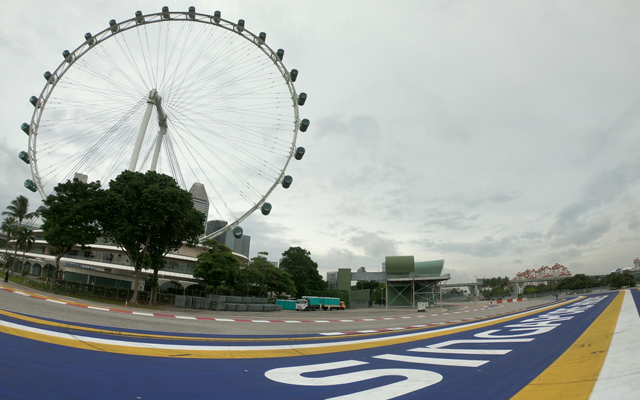
A significant increase in travel intent to Singapore during the Formula One Grand Prix has been recorded for most regions this year, according to a study by travel data marketing firm Sojern.

The study showed a 19 per cent increase in global travel searches between the week before and week of the Singapore Grand Prix (GP) – a 10 per cent rise from the same period last year.

Sojern’s study shows a 19% increase in global travel searches for Singapore during the Grand Prix

There has also been a notable uptick in travellers from Western Europe, Oceania, South-east Asia and North America searching for trips to Singapore GP as compared to previous years, said the report.

The Oceania region saw an 85 per cent increase in intent to travel during the race week as compared to the week before – a 38 per cent rise from last year and significantly higher than any other region.

However, a significant 18 per cent decline in travel intent from East Asia was recorded for the race week as compared to the week before.

The report also said that there has been far fewer East Asia travellers searching for trips to the Singapore GP this year, possibly due to the fact that public holidays fell at a more favourable time in previous years. To put this into context, in 2017, there was a 23 per cent increase; and in 2018, a 17 per cent jump in travellers’ intent to be in Singapore.

The pro-democracy protests in Hong Kong is also potentially impacting travel from that region, said the report, adding that the trend could continue to decline if the situation does not stabilise.

Here are other insights from the study:

This year, the top five origin countries for travellers searching or booking trips to the Singapore Grand Prix are from: (1) Australia, (2) the US, (3) the UK, (4) Singapore and (5) Japan.

In 2018, Australia also topped the list, followed by Singapore and the UK. Last year, Germany appeared as fourth but is missing from this year’s list of top five countries.

This year, the most popular days of arrival include Thursday and Friday in both the week prior to the race and also during race week.

In 2019, most arrivals by travellers into Singapore will occur on the Friday of race week, same as in 2018. In previous years, Saturday was also a popular day for weekend travellers to arrive.

This year, the majority of travellers are looking to stay five days or less – 68 per cent for the race week and 66 per cent for the week prior. Last year, the majority of travellers seemed to have spent more time in Singapore – 12 days or less – possibly due to regional public holidays that fell at the same time.

There has been no significant number of Singaporeans searching for or booking outbound trips out of Singapore during the race week, similar to last year.