
Asia/Singapore Thursday, 9th April 2026
Page 355

Slow travel, all-amusive escapes and ‘grand’ getaways among 2020 trends: Booking.com

0

Exploration will figure more prominently among global travellers in 2020, fuelled by technology as well as a growing sense of responsibility and deeper connection with the people and places visited, according to Booking.com’s latest predictions of travel trends for the year ahead.

Here are the top travel trends as revealed by the online travel platform, following research among more than 22,000 travellers across 29 markets:

Booking.com releases report on top travel trends for 2020

Rise of the “second city” traveller
Second-city travel, referring to the exploration of lesser-known destinations in a bid to reduce overtourism, will take a leap forward in 2020. Some 51 per cent of global travellers would swap their original destination for a lesser-known, but similar, alternative, if they knew it would leave less of an environmental impact.

Growing reliance in tech-generated recommendations
2020 will see travellers put key aspects of their decision-making process even more firmly in the hands of technology. Some 59 per cent of global travellers want technology to offer them a “wildcard” and surprise options that would introduce them to something entirely new.

The art of slow travel
Travel in 2020 will be all about taking it slow and focusing on the journey. Forty-eight per cent of travellers plan to take slower modes of transport to reduce their environmental impact and 61 per cent would prefer to take a longer route to experience more of the journey itself.

Discovering the all-amusive escape
Time-starved travellers will want to be as time-efficient as possible on vacation, so instead of settling into one theme for the entire vacation, 2020 will see a rise in travelers exploring the ‘all-amusive’, by visiting destinations that offer an array of enriching experiences and attractions, with

Pets in the priority lane
Pet-centric vacations will become more popular as travellers put the needs of their beloved pets well before their own when it comes to selecting where to go, where to stay and what to do, with 42 per cent agreeing they would choose holiday destinations based on whether they can take their pets.

Meanwhile, Booking.com is also observing a rise in the number of pet-friendly properties around the world.

Making great memories with ‘grand’ getaways
As today’s older generation is healthier, more adventurous and more keen to stay young and active than ever before, more grandparents are expected to take epic vacations with just their grandkids to enjoy ‘grand’ vacations that offer an array of active experiences for both generations to take part in.

Race to the reservation
The coming year will see travelers put culinary ambitions at the forefront of their travel decision making, in a race to snag that all important restaurant reservation. For many, where and when they travel will start with – and depend on – whether they can reserve a table to enjoy highly coveted cuisine.

Fast track to long-term travel
As retirement looks set to become less and less about reaching a certain age and leaving the workforce, 2020 will see ‘retirement years’ become surprisingly synonymous with ‘adventurous travel planning’, as travellers will shift their mindset and start to plan big for their future golden years.

Booking.com also predicts the top 10 trending destinations for 2020 to be Gzira (Malta), Ninh Binh (Vietnam), Salta (Argentina), Seogwipo (South Korea), Jodhpur (India), Swinoujscie (Poland), Takamatsu (Japan), San Juan (Puerto Rico), Zabljak (Montenegro) and Yerevan (Armenia).

The full report of Booking.com’s travel trends for 2020 can be viewed here.

Malaysian Gen Zer’s glamping venture takes root in Sabah

0

Flenny Wong Cheng, 22, was first introduced to glamping during the first year of her three-year Bachelor of Media programme at the University of Adelaide. She quickly saw glamping as a viable business opportunity in her hometown of Kota Belud, Sabah, where there were no similar offerings.

She pitched her idea to her parents who supported her decision to quit her studies and pursue her dream of setting up a glamping venture in Sabah.

Flenny Wong Cheng quit her studies to start a glamping company

“Besides, they missed me and were glad I was coming home for good,” she recalled. Her parents and siblings also provided her with financial support to kick-start this new venture.

It took months of planning and getting the ground work done before Cabana Retreat opened to the public on February 1. It is located on Rampayan Beach in Kota Belud, about 70km from Kota Kinabalu, the state capital.

While the homepage on the official website describes Cabana Retreat as the first pop-up beach resort in Malaysia, there are no plans as yet to relocate as Wong had leased the site for a five-year period from the land owner.

Cabana Retreat has been dubbed “the first pop-up beach resort in Malaysia”

She has set up 24 cotton canvas luxurious tents, custom-made in China. The tents are equipped with lighting, air-conditioning, pillows and mattresses, side tables and most basic amenities guests would expect from a hotel stay, including free Wi-Fi and daily housekeeping. While there are no TVs, movies are screened under the stars at the open cinema.

Said Wong: “We provide a luxurious way to enjoy the outdoors, while staying connected to family and friends.”

Half a year since opening, Wong describes business as being hectic, with high occupancies usually on weekends, school holidays and long public holidays.

“Our guests are mainly locals, young couples and families, and stays range from one to three nights. International guests are mostly from China and Europe. They like Kota Belud’s nature and activities like jet skiing, paddle boarding, banana boat rides, ATV rides and local tours to see the fireflies, Mantanani Island, and river cruises.”

Besides marketing through its website and social media, Wong partners inbound tour operators. She also has plans to add more tents and to entice investors to develop more activities in Kota Belud.

Europe still top longhaul destination for SE Asians

0

Europe remains the most aspirational holiday spot among longhaul destinations for South-east Asian holidaymakers, according to the latest research from the European Travel Commission (ETC).

The South-East Asian Outbound Travel Market report, which aims to provide a thorough analysis investigating the potential of this market for European tourism, is based on primary research among potential visitors to Europe, with a focus on four key markets, namely, Indonesia, Thailand, Malaysia and Singapore.

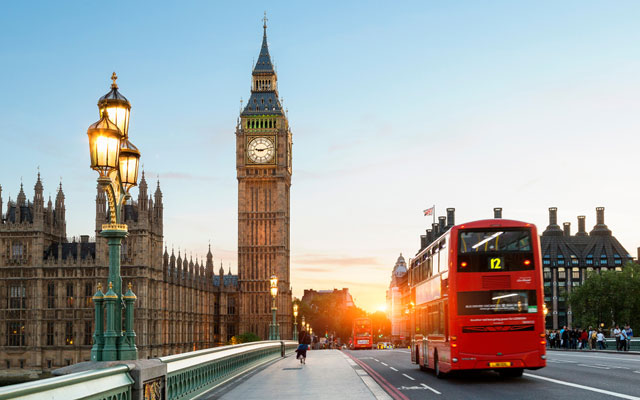
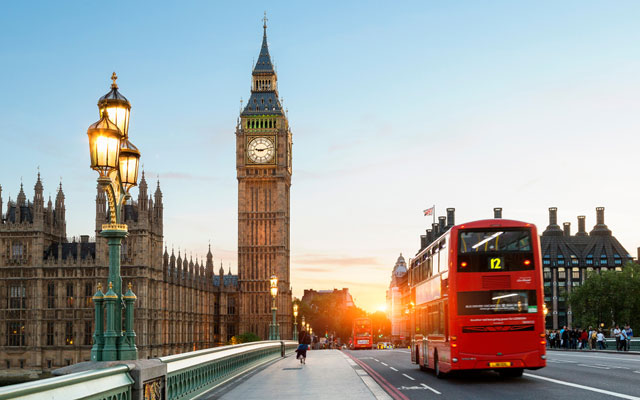
UK is a popular longhaul destination among outbound travellers hailing from Singapore and Indonesia; London’s Westminster Bridge pictured

The research found that first-time travellers who visit multiple destinations on their trip prioritise countries that are perceived to be more “prestigious”, such as France, Italy and Germany. The ease of borderless travel between countries, backed by a well-developed tourism infrastructure, adds to Europe’s appeal as a continent with “unity in diversity”.

Just as European destinations are united in diversity, so too are the tourism interests amongst the four markets. Specific exploration of passion-related or interest-based travel themes among South-east Asian travellers establishes Europe’s competitive advantage on slow adventure, culture and history, nature, city life and local gastronomy – the top five travel themes considered as the “main reason for travel”.

The report found that longhaul travellers from South-east Asia are mainly young couples and families. But evidence points to the rise of solo travellers, especially financially independent working women, in countries such as Singapore and Malaysia. Group travel with friends and/or family also remains popular in this market, with travel parties usually consisting of two to four people. This trend is larger in Malaysia and Indonesia, where multigenerational travel is more common than in Singapore and Thailand.

As for age and frequency of travel, the travelling class tends to be between 21 to 54 years old, with evidence suggesting that South-east Asians undertake an average of two to three holidays overseas, with one longhaul trip typically lasting 10 to 21 days.

In terms of accommodation preferences, family travellers prefer four-star hotels across all four key markets, with a larger proportion of Singaporeans opting for five-star hotels, and some cost-conscious Malaysian and Thai travellers choosing to stay in budget accommodation. When deciding where to stay, OTAs like Expedia, booking.com and Agoda are increasingly being used.

South-east Asian travellers are mostly city enthusiasts, therefore travel itineraries that incorporate these interests are expected to appeal to both first-time and repeat visitors to Europe.

For Singaporeans, destination choices vary significantly as they are more likely to tick one or more destinations off their bucket list each time they travel overseas, with traditional holiday destinations such as the UK, Germany, Italy, and Switzerland proving to be the most popular.

In Malaysia, preferences have undergone noticeable change over the years, with Central/Eastern destinations enjoying more travellers from this market in recent years, while demand for Turkey and the Balkans is also rising, due to their Muslim-friendly environment.

For Indonesians, the evergreen destinations in Europe are the UK, Italy, Germany, Switzerland, Netherlands and Turkey, while in Thailand, Europe commands the largest share of longhaul travel, with the traditional Western European destinations most popular.

Europe is perceived as an expensive holiday destination which appears to be the main barrier to travel to the continent for South-East Asian travellers. Limited air connectivity, especially from Malaysia and Indonesia, and the need to apply for a Schengen visa for Indonesia and Thailand citizens are mentioned as some of the key deterrents for travel to Europe from these markets.

Rugby World Cup scores tourism win for Japan

0

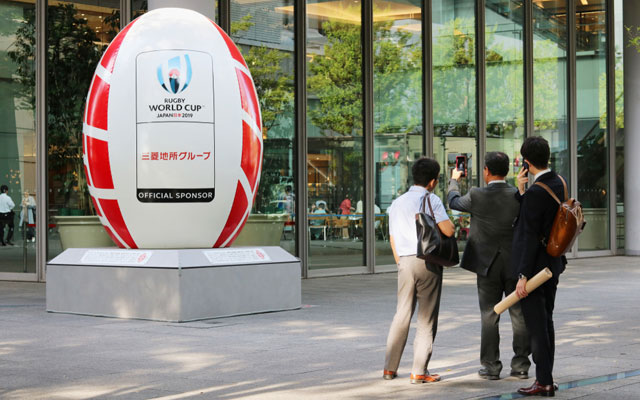
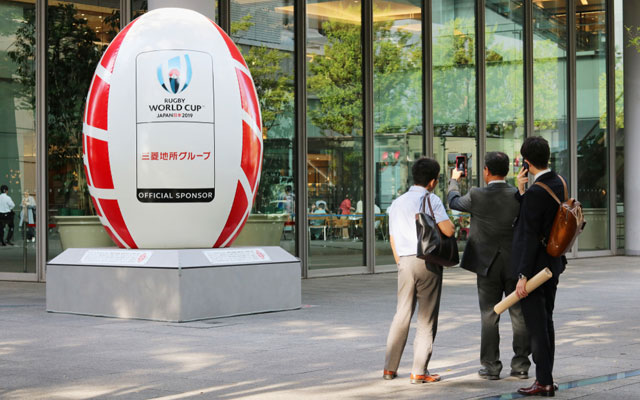
The Rugby World Cup (RWC) has fuelled a tourism boom from the competing nations, according to a study by ForwardKeys.

During the period from September 12 to November 6, which covers the tournament dates and several days before and after, flight bookings to Japan from the competing nations are currently 38.1 per cent ahead as compared to the same period last year, the study found. The highest peak is on the day before the opening ceremony, with bookings from the competing nations more than double those on the equivalent date in 2018.

Rugby World Cup has fuelled a tourism boom from the competing nations: ForwardKeys

Olivier Ponti, vice president insights, ForwardKeys, said: “When we analyse these visitors in more depth, we see that their average length of stay is 11.7 nights. That tells us that few people are coming to watch a specific game and then returning home; the majority are making a holiday of their visit.”

The RWC tourism boost is most strongly illustrated by visits from Ireland, which is not a mainstream tourism market for Japan and has no direct flight connections, according to the study.

Bookings for the period beginning September 12 to November 6 are currently 500.3 per cent ahead of where they were at this time last year. The average length of stay is 12.7 nights, which indicates that Irish visitors, having made the journey – the minimum flight time from Dublin to Tokyo is 13.5 hours – are also staying for a holiday in Japan.

There are very clear booking spikes around the dates when the Irish are playing their matches, which also happen to be the weekends.

Ponti said: “What intrigues me most is that the highest peak in bookings coincides with the quarter-finals. I’m tempted to suggest that Irish fans are confident of their team reaching that far but not necessarily any further. However, as Ireland is the world’s second ranked team, I suspect other factors are at play, such as the very limited availability of tickets for the semi-finals and final, and a strong preference of Irish rugby fans to take a two-week holiday.”

Asia accounts for six out of top 10 most visited cities in 2018: GlobalData

0

Six out of the top 10 cities in terms of international visitor arrivals in 2018 were from Asia, with tourism friendly policies, low cost connectivity and weak currencies playing a vital role in attracting international visitors to the region, according to a new study by GlobalData.

Research from the data and analytics company found that Asian countries, namely, Bangkok, Singapore, Tokyo, Hong Kong, Seoul and Shenzhen, were among the top 10 destinations by international visitors in 2018.

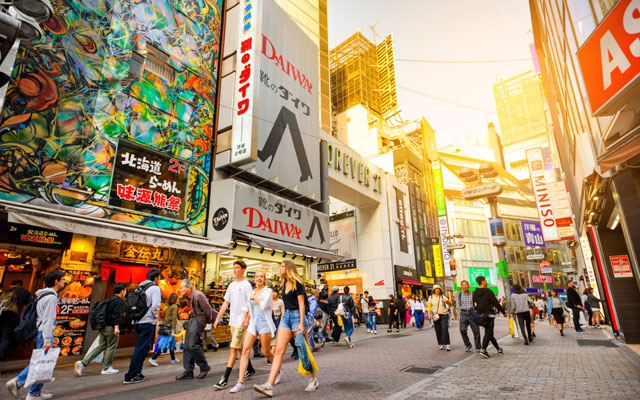
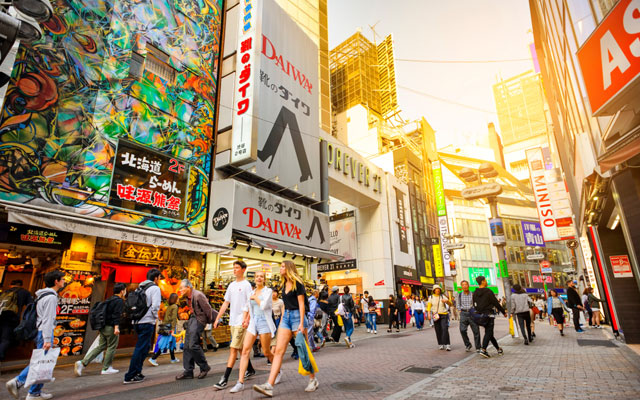
Asia accounts for six out of top 10 most visited cities in 2018, with Bangkok, Singapore, Tokyo, Hong Kong, Seoul and Shenzhen making it to the list: GlobalData (Pictured: Shibuya neighbourhood in Tokyo)

Greater London and Greater Paris from Europe, Dubai from Middle East and New York City from the US were the other cities that featured in the top 10 list.

GlobalData’s economic research analyst Aditi Dutta Chowdhury said: “Visitors from China and European countries are driving the growth of international arrivals to Asian cities. Tourism friendly visa policies of Thailand, strong promotional efforts and low cost connectivity have made Bangkok the top international destination. In addition, weak Asian currencies along with diversity of visitor interests in Asian cities played a vital role in attracting international visitors.”

Greater London was the second most preferred destination in terms of international visitor arrivals. The city being the key financial hub of the world and home to leisure tourist attractions were the main reasons for the high influx of international visitors last year.

Depreciation in the value of British pound since the Brexit referendum in 2016 has further fuelled the growth of international visitors to Greater London. Nearly 50 per cent of international visits to London in 2018 were for leisure purposes.

A total of 13.2 million foreign visitors visited Greater Paris in 2018. Cultural heritage, art, monuments and café culture were some of the main visitor attractions in the Greater Paris region.

The tourism sector accounted for approximately nine per cent of the total employment in the Greater Paris region in 2018.

Dubai led the Middle East and North Africa region in terms of visitor arrivals. Visa-on-arrival as well as 30-day and 90-day free visa policy offered to countries, including China, India, Russia, the US and the UK, have significantly contributed to the growth of visitor arrivals to Dubai city.

Among the top 10 cities, Tokyo exhibited the sharpest growth of 60.5 per cent in international visitor arrivals during the period of 2014 to 2018. The growth of international visitor arrivals in Tokyo was aided by initiatives by the public and private sector to promote Tokyo’s tourism and create a welcoming environment for visitors, along with measures taken to relax visa requirements for foreign visitors from Asia and other regions.

Global destinations witnessed a huge influx of Chinese visitors while countries such as South Korea and Japan are also named as the key source markets.

Demand for China outbound tourism grew continuously in line with rise in personal disposable income. According to the China National Tourism Administration, outbound travel grew by 262 per cent since 2008 and is expected to reach 166 million departures by 2019.

India, which has a large and increasingly affluent middle class, has huge potential as a key source market to the global destinations.

The Indian outbound visitor numbers has been growing at an average annual rate of 9.2 per cent since 2008. According to UNWTO’s estimates, 50 million Indian tourists will visit global destinations by 2020.

Growing Indian SME presence a boon for TMCs

0

Promising investment policies established by the Indian government have led to a significant growth in the local Small and Medium-sized Enterprises (SMEs), causing both local and international TMCs to do more to capture this market.

These policies include Startup India, which was launched in January 2016 to support entrepreneurs, build a robust startup ecosystem and transform India into a country of job creators instead of job seekers. Make In India, another initiative credited for helping to boost the formation of more SMEs in India, was birthed in 2014 to encourage companies to manufacture their products in India.

Indian SMEs are starting to see value in relying on TMCs for more complex travel services

Gaurav Luthra, chief operating officer, FCM Travel Solutions – Indian Subsidiary of Flight Centre Travel Group, noted that these policies have “resulted in some astonishing unicorn startup stories”.

Luthra said: “The Indian SME segment has maintained an average growth rate of over 10 per cent year-on-year. A few years back, large global customers kept global TMCs’ growth rate steady but with the entry of more players, the pace has slowed down. Hence, the focus has now shifted towards SME customers.”

Despite the trend, Luthra said domestic TMCs were to the first to identify the business potential of this huge market.

Recent studies have projected India’s US$40 billion business travel market to grow at a rate of 12 per cent in the financial year 2019/2020. SMEs are expected to play an important role in that rising demand, opined industry players.

To capture the market, both domestic and international TMCs have developed products with the Indian SME in mind.

MakeMyTrip, one of India’s leading online travel companies, launched MyBusiness for the growing corporate travel segment in the country in 2017. In that same year, CWT rolled out CWT For You, a state-of-the-art business travel solution designed for Indian SMEs.

Vishal Sinha, CEO of CWT India, said: “It is estimated that India has close to 50 million SMEs, contributing nearly 40 per cent of the country’s GDP. These SMEs are looking for cost-effective business travel solutions that can help them to grow their businesses.”

However, courting Indian SMEs is no easy task, major TMCs note, as they are used to being serviced by small agencies that have a knack for delivering personalised services. Indian SMEs are also price sensitive and are willing to move their business from one TMC to another just to score a marginal saving.

Luthra added that the Indian SMEs market is “highly unstructured with no clear regulations, policies and expectations defined”. Adding to the challenge of penetrating this market is the high risk attached to extending credit facility to SME customers.

On the bright side, Luthra said there is an increasing number of Indian SMEs starting to see value in relying on TMCs for more complex services, and there are also SMEs that have grown to a “reasonable size and look to TMCs for help in drawing up corporate travel policies, policing compliance, tracking of their internal travellers for security”.

Non-Asian destinations gain popularity among Chinese travellers during National Day holiday

0

Thailand, Japan and Singapore have topped Hotelbeds’ list of the top 10 destinations for Chinese outbound tourists during the seven-day Chinese National Day holiday period starting October 1.

According to the global bedbank’s booking data, five of the top 10 international destinations this year are Asian, but non-Asian destinations are growing in popularity too. Thailand tops the list, followed by Japan, Singapore, the US, Italy, Indonesia, Malaysia, Spain, the UK and Australia.

Non-Asian destinations such as the US is growing in popularity among Chinese travellers during National Day holiday (Pictured: Grand Teton National Park near Jackson Wyoming in the US)

In 2017, there were only two non-Asian destination countries – the US and Italy – on the list of the top 10 China outbound destinations. In 2018, the number of non-Asian destinations increased to four – the US, Italy, France, and Spain – and this year, that number has increased to five.

Chinese travellers are also travelling to a wider range of countries, with Chinese bookings through Hotelbeds totalling 113 different countries during the National Day holiday period, up from 106 in 2017 and 111 in 2018.

Hotelbeds’ managing director Carlos Muñoz said: “Every year, the Golden Week period drives a surge in hotel ADRs and increases volumes of travel bookings significantly, especially in those top destinations for Chinese travellers.”

He added: “Aside from the traditionally popular destinations for Chinese travellers such as Thailand, this year, we are thrilled to see high demand from Chinese travellers to visit non-Asian destinations, such as the US, the UK, Italy and Spain, with total booking for us via 113 different countries around the world.”

To cater to China’s fast-growing outbound tourist market, Hotelbeds recently hired a new China managing director to grow its fourth biggest source market.

China National Day holiday, also known as Golden Week, is a seven-day national holiday in China that takes place from October 1 to 7. This holiday season was introduced in the year 2000 to help boost domestic tourism and to allow families to make long journeys to visit relatives.

According to the China National Tourism Administration, a total of seven million Chinese mainland tourists travelled aboard during the seven-day National Day holiday in 2018.

APAC leads global air travel growth in 2019: ForwardKeys

0

International air travel is booming due to stable economic growth worldwide, relatively moderate oil prices and reform of visa regulations, a report by ForwardKeys found.

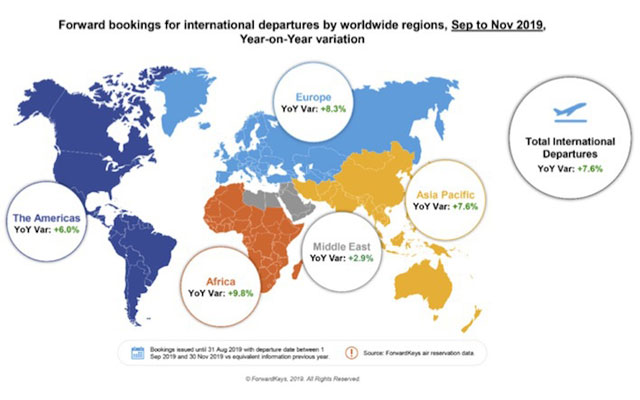
The report showed that for the first eight months of 2019 (January to August), international departures were up 4.9% from the same period last year. Even more positively, bookings for travel in the following three months (September to November) are currently 7.6% ahead of where they were at the end of August 2018.

International departures in the first eight months of 2019 were up 7.9%, with APAC leading the growth: ForwardKeys

Olivier Ponti, vice president insights, ForwardKeys, said: “2019 has been, and is set to become, another exceptionally good year for travel and tourism, worldwide. That is good news because travel and tourism is an increasingly important driver of export revenue and general prosperity globally. What I find particularly notable is the resilience of the industry in the face of several potentially adverse events such as Brexit, the China-US trade war, and political unrest in Hong Kong and the Middle East.”

ForwardKeys attributes the favourable report to stable economic growth worldwide, relatively moderate oil prices and reform of visa regulations. Throughout this year, the IMF has been forecasting that global growth in 2019 would be above 3%. Airlines have responded by increasing capacity, most notably between Africa and North America, which is up 17.9%.

Despite the recent attack on Saudi processing facilities, the oil price is still below its peak this year and well below the peak in 2018. A low oil price is helpful to the world economy as a whole, but it benefits aviation disproportionately, as oil makes up at least a fifth of the cost of a typical flight.

Also, in the last couple of years, there have been numerous relaxations in visa requirements by different countries, which have contributed to making travel easier.

From a geographical perspective, the Asia-Pacific region has been leading the way. International departures in the first eight months of 2019 were up 7.9%. In second place is Africa, with departures from the period of January to August up 6.0%. The US and Europe are in the third and fourth places, registering growth through August at 4.6% and 4.5%, respectively. The region of the world which has been struggling is the Middle East, with international departures from January to August down 1.7%.

The growth highlights in the first eight months have been from Asia-Pacific to Europe, up 10.4%; from Africa to the US, up 10.1% and from Europe to the Middle East, up 9.7%. The driving factors behind these trends have been the strong Chinese outbound market, aggressive expansion by Ethiopian Airlines which increased the frequency of its flights to New York, and a continued recovery in tourism to Egypt, which was badly damaged by terrorism incidents in 2015.

Looking ahead at the upcoming three-month period of September to November, Africa is leading the way, with forward bookings 9.8% ahead of where they were at the end of August last year. Europe is in second place, with forward bookings 8.3% ahead. It is followed by Asia-Pacific and the US, with forward bookings ahead 7.6% and 6.0%, respectively. The Middle East is the laggard, where forward bookings are ahead 2.9%.

The most promising trends in bookings for future travel over the September to November period are from the US to the Middle East, ahead 18.4%; from Europe to the Middle East, ahead 14.2%; and from Africa to the UK, ahead 15.2%. The driving factors are the recovery of Egypt and Ethiopian Airlines further developing its seating capacity.

Ponti concluded: “Looking ahead, I see two counterbalancing indicators. Forward bookings are very positive but geopolitical events remain a major concern.”

India grants e-visa to private conferences

0

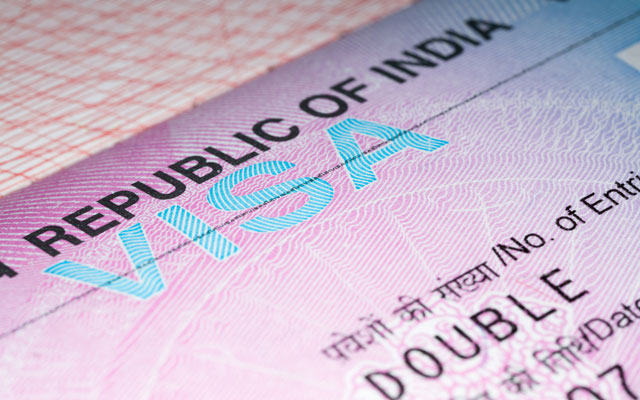
The Indian government has extended its e-conference visa programme to foreign attendees of private conferences.

Previously, the e-visa was only accessible to foreign attendees of events organised by the government or public sector undertakings (PSUs).

Stakeholders have lauded the government’s latest move in making e-visas easier to obtain

This development has been met with relief from stakeholders of India’s business events industry, who have been calling for the provision of a more welcoming e-visa arrangement for private conference attendees.

Suman Billa, joint secretary with the Ministry of Tourism of India, said: “The government has been proactive in its efforts to help the tourism industry grow.”

Amaresh Tiwari, managing director, A T Seasons and Vacations Travel, described the former conference visa requirement for private events as a “tedious process” that needed permissions and complex documentation.

“With this change, foreign delegates can apply for an e-visa from the comfort of their home,” he said.

The India Convention Promotion Bureau was among those pushing for an e-visa facility for private conferences. Chander Mansharamani, vice chairman of the bureau, opined that an e-visa facility was a critical requirement for India to be recognised as an attractive destination for global events.

“Making the e-visa available to all conferences can be a game changer (for India’s business events industry) and bring more international conferences to the country,” Chander remarked.

ICPB’s recent industry report had stressed the need for an aggressive promotion of India as a meetings and events destination in international markets.

Travelling fans drive booking surge to Japan ahead of Rugby World Cup

0

Advanced flight bookings to Japan suggest rugby fans from the UK, New Zealand and Ireland will be on the ground in force to support their teams during this year’s Rugby World Cup, according to research by Travelport.

With three teams from the UK – England, Scotland and Wales – taking part in the Rugby World Cup, it’s no surprise to see the surge in flight bookings to Japan during the tournament coming from the nation, said the travel technology company in a statement.

New Zealand’s All Blacks and South African Springboks in action at the ongoing Rugby World Cup. Photo credit: Rugby World Cup Japan 2019

With New Zealand looking to add a third win to their back-to-back victories in 2015 and 2011 respectively, the All Blacks will see good support from the stands with the number of tourists heading to Japan up 70 per cent year-on-year, it added.

Not only does the average traveller booking 134 days in advance, the study also revealed that New Zealand fans were “the most forward-thinking travel planners, keen to secure their ticket early”.

As part of its study, Travelport analysed booking data from all global distribution systems to Japan, as of September 12, 2019, arriving from September 18, 2019 to November 4, 2019. The company then ran comparable data for the same period last year to identify trends.