In celebration of International Women’s Day (IWD), Insight Vacations has launched its inaugural women-only journey, which is set to take place in India come 2021.
Inspirational India, A Wander Women Journey, which is the first itinerary in Insight’s new Wander Women journey programme, will offer immersive learning opportunities, wellness experiences and authentic dining, while highlighting the impact tourism has on women’s economic empowerment.
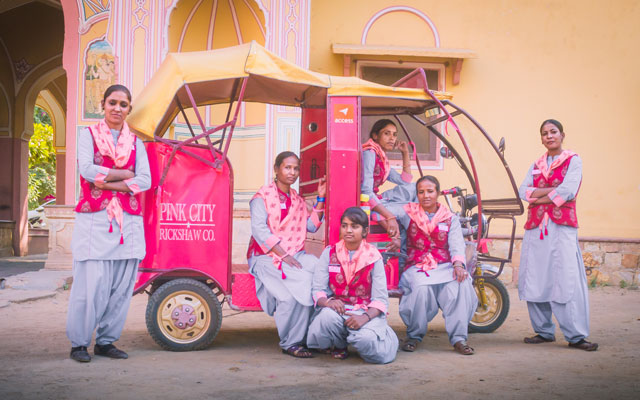
Insight guests can enjoy a ride offered by Pink City Rickshaw Company which supports economic empowerment for local women in Jaipur
With this year’s IWD theme being #EachForEqual, Insight is aligning itself with a gender equal world, showcased by launching these journeys created and led by women.
“With 57 per cent of our guests being women along with the rise of women-only travel, our new journey which is designed and run by women, is a perfect fit for those who want to get below the surface and experience India as a culturally immersive destination as well as have opportunities to give back and empower women in the local communities while learning about their day-to-day lives,” said Ulla Hefel Böhler, global CEO for Insight Vacations.
“This journey is also a great opportunity to connect and meet with other fabulous women from around the world and provides economic empowerment to local women.”
This exclusive women-only journey is only available on a limited departure date, so clients are encouraged to book early to secure their space.
The 12-day India journey, departing March 24, 2021, offers experiences such as jewellery-making, ayurvedic spa treatments, a Bollywood dance class, a henna demonstration, morning yoga with a female guru, a meeting with a local astrologer, and a visit to the Taj Mahal.
Guests will also get to visit a café solely run by acid attack survivors, which promotes social integration and economic empowerment. Other unique experiences include a rickshaw ride offered by a company which provides jobs to 200 women from low-income households in Jaipur.
On the eve of the Holi festival, guests will have the chance to visit an Indian family to join in their Holika Dehan tradition, which includes a home-hosted dinner and a bonfire that’s meant to ward off evil before the following day’s festivities where guests can don local Kurta attire and take to the streets for a colourful celebration.
In celebration of International Women’s Day (IWD), Insight Vacations has launched its inaugural women-only journey, which is set to take place in India come 2021.
Inspirational India, A Wander Women Journey, which is the first itinerary in Insight’s new Wander Women journey programme, will offer immersive learning opportunities, wellness experiences and authentic dining, while highlighting the impact tourism has on women’s economic empowerment.
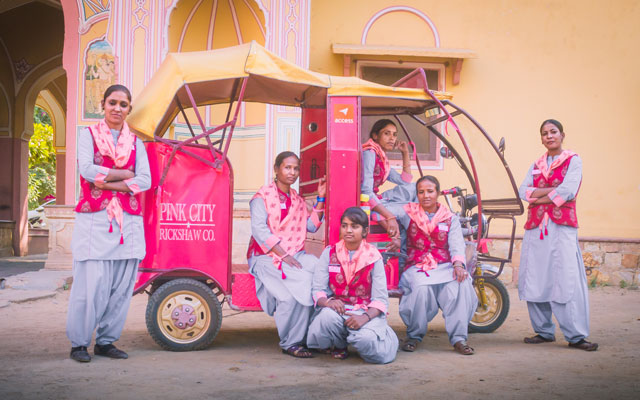
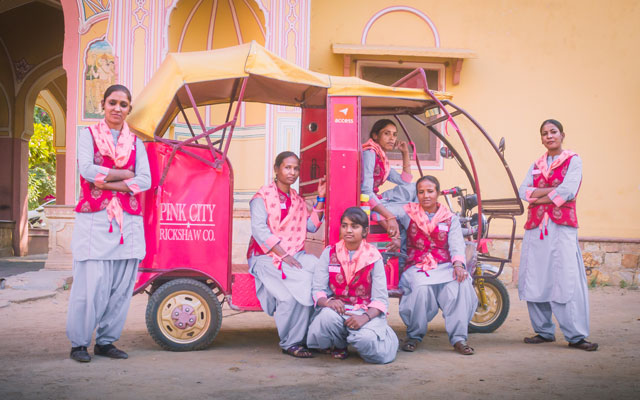
Insight guests can enjoy a ride offered by Pink City Rickshaw Company which supports economic empowerment for local women in Jaipur
With this year’s IWD theme being #EachForEqual, Insight is aligning itself with a gender equal world, showcased by launching these journeys created and led by women.
“With 57 per cent of our guests being women along with the rise of women-only travel, our new journey which is designed and run by women, is a perfect fit for those who want to get below the surface and experience India as a culturally immersive destination as well as have opportunities to give back and empower women in the local communities while learning about their day-to-day lives,” said Ulla Hefel Böhler, global CEO for Insight Vacations.
“This journey is also a great opportunity to connect and meet with other fabulous women from around the world and provides economic empowerment to local women.”
This exclusive women-only journey is only available on a limited departure date, so clients are encouraged to book early to secure their space.
The 12-day India journey, departing March 24, 2021, offers experiences such as jewellery-making, ayurvedic spa treatments, a Bollywood dance class, a henna demonstration, morning yoga with a female guru, a meeting with a local astrologer, and a visit to the Taj Mahal.
Guests will also get to visit a café solely run by acid attack survivors, which promotes social integration and economic empowerment. Other unique experiences include a rickshaw ride offered by a company which provides jobs to 200 women from low-income households in Jaipur.
On the eve of the Holi festival, guests will have the chance to visit an Indian family to join in their Holika Dehan tradition, which includes a home-hosted dinner and a bonfire that’s meant to ward off evil before the following day’s festivities where guests can don local Kurta attire and take to the streets for a colourful celebration.
Not many can claim that they are making a living out of doing what they love while fulfilling an aspiration, but Travel Wander’s Sheryl Lim is one of the few lucky ones.
Having built her career in the travel industry, with her longest stint being with The Travel Corporation for almost 12 years, Lim desired to one day run her own travel agency.
“It is not easy starting a travel agency because of the competition. I knew I must stand out from what’s out there if I wanted to be successful. I realised that I could marry my love for the outdoors with my dream business,” recalled Lim, who established the Singapore-based travel agency in 2016 with a partner.
Travel Wander takes pride in curating active holidays that allow customers to explore and experience destinations while cycling, hiking, running or walking.
The company’s most popular programmes are those that are conducted on two wheels.
Lim said: “While there are many tour products in the marketplace for cyclists, not many are leisure-focused. It is common to find cycling tours that are built for professional cyclists who want to beat their personal record in covering long distances overseas. Such programmes have little time for sightseeing and leisurely stops.”
On nifty two-wheelers, travellers get to “weave into small villages and off-the-beaten-track locations to enjoy unusual vistas and environments” – places that traditional sit-in-coach tours do not cover.
“Traditional group tours are also unlikely to include such places in the itinerary because they have little tourist value. There are no shopping or attractions to visit but for our cyclists, the outdoors and scenic rides are exactly what appeals to them,” added Lim.
Travel Wander has conducted cycling tours to a variety of destinations in Malaysia, Taiwan, South Korea, Mongolia, and more.
While the company had initially targeted travellers in their 30s and 40s, a segment Lim said had “financial means and the stamina and interest for active holidays”, it soon discovered that a different audience had come a-calling.
“Many who joined our tours were in their late-40s and 50s, whose children are grown up and no longer needed their attention. We even got retirees,” said Lim.
“The Singapore government’s recent promotion of healthy living has helped to raise awareness and interest around sports. There are many sports activities available in Singapore, but after a while, boredom sets in because Singapore is only this big. Cycling tours are a refreshing alternative,” she added.
She recalled the excitement a group of customers in their 50s felt when they were brought into a Malaysian countryside.
“It reminded them of their childhood. But even for the young ones, the rural landscape can be fascinating and refreshing, and they appreciate being away from the hustle and bustle of the big city,” she explained.
Cycling and hiking tours to remote places are also an effective technology blackout that people today desperately need, she opined.
“Once we took a group to Mongolia, where we spent two days deep in the highlands. We stayed off our phones, firstly, because there was no Internet and secondly, because there was a lack of electricity on the second day. It was more important for us to conserve our power to take photos the next day. So, we spent the evening chatting with each other under the starry sky. We all retired earlier than we normally would back home; everyone retreated into their ger (tent) at 22.30 and slept soundly until 06.00 the next day,” she said.
Travel Wander’s tours are priced mid-range, with attention paid to quality accommodation and dining because “when you have such an active holiday you need to eat and rest well”.
Customers are provided with quality bicycles in the destinations they visit, although they are advised to bring their own helmets and any safety gear. A support vehicle accompanies the group during the cycle, bringing with it water supplies, refreshments and snacks like energy bars. The vehicle also helps to carry the customers’ personal belongings and provide a welcome retreat for those who are too tired to keep riding.
Cycling groups are led by a leader in front, and a sweeper at the back to ensure no customers fall behind.
The friendship formed among participants on these intimate tours has benefitted Travel Wander.
“While they started off as strangers, they soon bonded over their shared love for cycling and the outdoors. Many have regrouped for other cycling tours with us, becoming our loyal customers,” said Lim.
Moving forward, Lim hopes to expand her business to serve other source markets, like Indonesia, and to grow the variety of destinations it offers.
The outbreak of the Covid-19 virus in Italy during the final week of February has triggered a wave of cancellations to Italy and a collapse in new bookings to Europe from intercontinental source markets, according to a report by ForwardKeys, which is commissioned by European Cities Marketing (ECM).
From the moment China imposed restrictions on outbound travel, in the week of January 20, until February 22, when the outbreak of Covid-19 cases in northern Italy began, bookings to Europe from intercontinental source markets had decreased by 23.7%.
Flight bookings to Europe plummeted by 79% in the wake of the Covid-19 outbreak in Italy
However, in the final week of February, the situation worsened considerably, as the number of new bookings to Italy was suddenly outpaced by the cancellation of existing bookings. The impact on travel was not confined to Italy; simultaneously, the overall number of new flight bookings to Europe fell by 79%.
The first Covid-19 case confirmed in Italy occurred on January 31, 2020, when two Chinese tourists tested positive in Rome. It led to an immediate dip in bookings to Italy. Bookings swiftly reverted to trend after few new cases were reported there in the following three weeks.
However, everything changed almost immediately after a cluster of cases was detected in Lombardy on February 21 – and Italy’s first deaths were reported the following day.
Since then, the number of cases in Italy has grown exponentially to over a thousand; and, as rapidly as they have increased, flight bookings to Italy have decreased. Bookings to Italy, in the final week of February, fell by 138.7%, meaning that the number of cancellations exceeded the number of new bookings.
An analysis of Europe’s various source markets showed a double-digit decline in bookings in the final week of February from every major region of the world.
Bookings from the Asia-Pacific region fell by 114.2% (cancellations exceeding new bookings), followed by the Americas which fell by 68.1%, and Africa & the Middle East, which fell by 49.9%.
Breaking the global origin markets down into sub-regions, in order of least to worst affected, revealed that bookings from North Africa decreased by 30.4%; from Sub Saharan Africa, by 33.3%; from Central America, by 63.6%; from North America, by 63.7%; from Middle East, by 66.1%; from the Caribbean, by 66.5%; from Oceania, by 81.5%; from South Asia, by 85.9%; from South America, by 87.1%; from South-east Asia by 133.2%; and from North East Asia, by 133.5%.
Whilst the analysis of bookings reveals people’s travel plans, the analysis of arrivals reveals how many have actually travelled. Looking back over the first two months of the year, from January 1 to February 29, visitor arrivals in Europe have shown a two-phased decline owing to the Covid-19 crisis.
Initially, intercontinental visits to Europe tracked collectively 1.3% above 2019 levels in the period from the start of the year to January 28. The first phase of decline in Europe began on January 29 – nine days after the beginning of the crisis in China – when European destinations started to suffer, and arrivals decreased by 17.6% from January 29 to February 23.
Phase 2 began with the sharp slump in visits which happened in tandem with the explosion of Covid-19 cases in northern Italy. In Phase 2, arrivals in Europe collapsed by 25.9% between February 24 and 29 alone, leaving the year-to-date results 10.5% below the same period last year.
Olivier Ponti, vice president insights, ForwardKeys said: “The arrival of the Covid-19 virus in Italy marks a new phase in the travel crisis in Europe. The drop-off in bookings to Italy is even worse than we have observed in the past for some of the most disruptive events such as terror attacks. The booking behaviour appears to be disproportionate, as parts of Europe other than Italy are experiencing very substantial declines in visitor interest.”
Petra Stušek, president, European Cities Marketing, concluded: “When it comes to tourism, we should bear in mind that the more people travel within Europe, the more stable the travel economy will be. It is important to stay calm, not to overreact and work to keep ourselves and our communities safe, but also functioning, until the recovery.”
The dynamic travel tech boom has proven a double-edged sword for industry players. While travel tech solutions promise higher outreach and efficient resource allocation, many of them are costly.
As such, travel agents who cannot afford them find themselves falling behind in terms of market penetration. Larger attraction operators, on the other hand, often struggle to strike a balance between traditional sales and new, dynamic distribution channels.
Filling this need for affordable and value-added solutions is GlobalTix, a Singapore-based company that leverages cloud technology, big data and analytics to disrupt traditional manual ticketing.
Globaltix CEO, Chan Chee Chong, explained: “Millennials are driving changes in the way travel is bought. They want things instantly and seek out unique experiences during their travel. In today’s connected world, operators need to be discoverable and bookable.”
Many Asian niche operators “are missing out on this digital and mobile revolution” because adopting the relevant technology is out of their budget, noted Chan.
To meet this need and match the budget of industry players, GlobalTix offers its solutions based on a subscription model starting from US$39 a month.
The affordable price means clients do not need to put money into customised solutions and expensive hardware, shared Chan.
Through unique customised B2B portals on GlobalTix, attraction operators can set agent-specific prices, capacity limits and special promotion prices.
Further down in the chain, agencies can access exclusive rates and reserve tickets, which are then digitally delivered to their customers.
Chan – a tourism pundit with 15 years of experience in the industry – co-founded GlobalTix with his brother, Chan Chee Kong, in 2013.
The company has grown its reach to more than 2,000 agents and 80,000 tours and activities in 120 cities.
Partnerships have been established with TripAdvisor, Expedia and Trip.com, as well as local DMCs such as Nam Ho and Asia Consolidated.
On top of solving ticketing woes, GlobalTix also offers other on-site solutions. For instance, it uses facial recognition so customers at attractions can buy candid photographs in which they have been tagged.
When asked about Globaltix’s strategy moving forward, Chan said: “We intend to strengthen our local presence to provide better customer service for partners here and become a partner of choice for agencies.”
The travel setback caused by the coronavirus outbreak has now hit the world’s second largest outbound travel market, after China – the US, which saw outbound flight bookings stall by 19.3%, and to Asia-Pacific, 87.7%, according to a study by ForwardKeys.
In the five weeks following the imposition of travel restrictions on outbound travel from China (w/c January 20 – w/c February 17), there was a 19.3% decline in the number of bookings made for travel from the US.
US outbound flight bookings plunge by 19.3 per cent due to Covid-19
The majority of the decline has been caused by a collapse in bookings for travel to the Asia-Pacific region, down by 87.7%. In other words, relatively few people booked a flight from the US to the Asia-Pacific region in the past five weeks.
The setback in outbound bookings from the US during that time has not just affected the Asia-Pacific region; a similar but milder trend has affected other parts of the world too.
Bookings to Europe have fallen by 3.6%, and to the Americas, have fallen by 6.1%. However, bookings to Africa & the Middle East, which has only a small (6%) share of outbound US travel, have increased by 1.3%.
Breaking the world down into 15 different regional destinations, all have seen a drop in bookings from the US in the past five weeks, with the exception of North Africa, Sub Saharan Africa and Central America, which have seen their bookings rise by 17.9%, 4.4% and 2.1%, respectively.
In the order of least to worst affected, bookings were down as follows: to Western Europe by 1.7%, to Southern Europe by 2.8%, to North America by 3.3%, to South America by 3.4%, to the Middle East by 4.2%, to Northern Europe by 5.5%, to Central/Eastern Europe by 7.7%, to the Caribbean by 12.5%, to Oceania by 21.3%, to South Asia by 23.7% and to South-east Asia by 94.1%. In the case of North-east Asia, there were more cancellations than new bookings.
While the trend of the past five weeks is not encouraging, the outlook for the coming months, judging by the current state of bookings for March, April and May, is perhaps not as bad as might have been feared because a large proportion of long-haul bookings are made several months in advance.
As of February 25, total outbound bookings from the US are 8% behind where they were at the equivalent date last year. The majority of the lag is caused by a 37% slowdown in bookings to the Asia-Pacific region. Forward bookings to Africa & Middle East are 3.9% ahead, to Europe are flat (0.1% ahead) and to the Americas are 4.1% behind.
Olivier Ponti, vice president insights, ForwardKeys, said: “Now it’s not just China but the world’s second largest and second-highest spending outbound travel market, the US, which is stalling. For destinations, businesses in the travel industry and in luxury goods retail, which rely heavily on American and Chinese tourists, it is crucial to look carefully at travel data on an almost daily basis.
“With the high volatility of the market, the success of these businesses will depend on their ability to take action the moment things start to recover.”
Global travellers are becoming increasingly conscious of the environmental impact of their travels, but may not prioritise eco-friendly holidays or be aware of how to adopt sustainable practices. Hence, the mantle falls to travel operators who need to take a proactive role to push for change.
These findings form the backbone of a study by STR’s tourism consumer insights department which surveyed more than 1,000 active travellers in January 2020 – comprising 67.4 per cent living outside the UK and the rest within – on environment issues and sustainability in the tourism industry.
The tourism industry still has a long way to go to achieving sustainable development goals
Environmentally friendly holidays are important to travellers: fact or fiction?
The majority of travellers take the issue of sustainable tourism seriously, with almost 50 per cent of respondents stating that choosing an environmentally friendly holiday option was important to them, while 40 per cent chose a neutral position. The study found that Generation Z (those born in the mid- to late-1990s) travellers placed higher importance on environmentally friendly holidays.
Despite the strong intent to undertake sustainable holidays, 37 per cent of respondents highlighted that they struggle to find the best way to be environmentally friendly. This points to the need for additional and clearer information, from the travel industry and other organisations, about the steps travellers can take to reduce their carbon footprint.
As well, a staggering 92 per cent of respondents stated that they were concerned about climate change, reinforcing the idea that sustainability is at the forefront of their destination selection and how they get there.
However, despite broad concerns about climate change, there were split views on whether travellers would avoid destinations with poor environmental credentials. Just over a third of panelists wouldn’t visit a country they perceived to show insufficient efforts to fight climate change, while the remainder (65 per cent) indicated that they would not be deterred or were undecided.
Sustainability starts at home
The study also found that many travellers have already made efforts to minimise their environmental impact. Some 50 per cent disagreed that “actions by individuals will never be enough to combat climate change”, highlighting the eagerness to make a positive difference in combating climate change.
Similarly, travellers demonstrated a high incidence of recycling, with nearly 90 per cent stating that they currently recycle their waste – far higher than the UK average of 45 per cent. Further highlighting the strong environmental conscience of active travellers, 85 per cent stated that they were minimising their use of single-use plastics, while 67 per cent claimed that they regularly buy locally grown food.
The travel industry still has plenty to do
As travellers change their lifestyle habits to minimise contributions to climate change, this affects how they view numerous industries, including tourism.
STR asked panelists how “green” they perceived key sectors of the tourism industry to be, such as accommodation providers and airlines. Some 60 per cent believed there is little or no effort to be sustainable among hotels and other accommodation providers.
While this finding highlighted generally negative perceptions of the efforts made by accommodation operators, the industry was less poorly perceived in comparison to cruises, airlines, bus tours and train operators.
What steps can tourism operators take to be more sustainable? One important move for the accommodation industry would be to minimise food waste. Again supporting the view that travellers, although eco-conscious, might not always rule out potentially environmentally harmful activities, there were mixed views that breakfast buffets should be stopped to reduce food waste. That said, a slight majority favoured the idea.
There were also mixed views as to whether travellers should pay more to stay in an environmentally friendly hotel. While some are willing to pay more, most believe this should either be the standard or seem likely to prioritise other aspects of their stay (e.g. value for money) over the hotel’s green credentials.
This might be somewhat problematic for hoteliers now, but evolving perceptions should see greater traveller engagement with sustainability. However, encouragingly, travellers believe that efforts by the accommodation sector, albeit perhaps not considered effective so far, are being taken seriously and are not a crude marketing ploy.
Of note for airlines, travellers believe that frequent flyers shouldn’t be “flight shamed” for their contribution to the climate crisis and 70 per cent were against the movement that has gained traction in Sweden. This could imply a traveller perception that sustainability efforts should be the responsibility of the airlines.
The concept of carbon offsetting has generated much debate in the airline industry, but what do travellers think of this initiative? Some 55 per cent were aware of carbon-offsetting, with 50 per cent supporting the initiative, 15 per cent not in favour, and 35 per cent unsure.
These findings highlight a degree of confusion among travellers regarding the benefits of carbon offsetting and hint that airlines may need to do more to promote and explain these initiatives.
As travellers become more aware of their effect on the environment and how our choices today will impact tomorrow, there is some way to go before both individuals and companies are in sync with their sustainability efforts.
Travellers are expecting more from the tourism sector and will continue to push for change, so the onus falls on the industry to respond and pave the way for sustainable tourism. These are the steps that will preserve tourism for the next generation.
A family of water buffalo greenkeepers, famous for tending to the rice paddies on Vietnam’s Laguna Golf Lang Co, has welcomed a new member: baby Luna.
The bovine brood – father Tu Phat, mother Chi Chi and their eldest calf Bao – came to fame last year as global media publicised their roles as “bio-mowers” on the Sir Nick Faldo Signature Design track.
Baby Luna is the latest addition to the greenkeeping team at Laguna Golf Lang Co
The trio has played a key role in maintaining the elevated status of the layout, which winds its way through tropical jungle, ocean sand dunes and rice paddies.
They help to manage the seven hectares of rice fields located in the middle of the course by eating excess weeds and crops.
Baby Luna, who was born in the fall of 2019, will provide extra assistance.
The rice-fields, though, are not just for show. Harvested twice a year, they yield up to 20 tonnes of rice that are used to support the organic farm at Laguna Lang Co, and donated to families and seniors in the area.
The utilisation of water buffalo as greenkeepers is part of a wider push by Laguna Golf Lang Co to be the most sustainable course in Vietnam, following its eradication of single-use plastics in almost all aspects of its operations.
Crossroads Maldives, an integrated entertainment destination developed and operated by S Hotels and Resorts, has appointed Audra Arul as cluster director of sales and marketing for the complex, where she will be overseeing the SAii Lagoon Maldives, a Curio Collection by Hilton; and Hard Rock Hotel Maldives.
In her new role, Arul will be responsible for the overall commercial objectives of Crossroads Maldives and the two resorts, including achieving goals in revenue generation, yield management and brand engagement.
With more than two decades of experience, Arul has served in a variety of hotel sales and marketing positions with hospitality companies such as Accor, Marriott, Hyatt, and most recently, Banyan Tree Hotels and Resorts.
Despite efforts to make the traveller journey seamless, a new study found that half of travellers spend more time than desired using digital channels to plan and book their flights and hotel accommodation.
In the Maximizing Revenue across the Traveler’s Journey report, which was undertaken in 2019 by travel consulting firm Atmosphere Research Group, and used in a new thought-leadership report, half of all airline passengers said they spent more time than desired using digital channels to plan and book flights. Forty-five per cent of hotel guests also report the same.
Airlines and hotels need to embrace the era of complete retailing to maximise revenue: study
The report highlights global customer dissatisfaction across travel digital channels, and how airlines and hotels need to embrace the era of complete retailing to distinguish their brands from their competitors, make their digital channels more compelling, and strengthen their customer experience if they want to become the Amazon of Travel.
Furthermore, the report also found that data and personalisation, driven by AI and machine learning, are key to unlocking travellers’ “second wallet” for ancillary travel purchases.
Of the global travellers surveyed, 70 per cent reported that they would like to receive personalised offers from travel sellers, while 75 per cent are comfortable sharing personal data if it will help them save money or have better journeys.
Despite this, just 20 per cent say they receive offers that reflect their interests, travel behaviours or stage in their lives. This is despite the travel sector being one of the pioneering e-commerce sectors and one of the largest digital commerce sectors globally.
Travel industry thought-leader and author of the report, Henry Harteveldt from Atmosphere Research Group, said: “The travel technology world is thriving, but poor digital experiences weaken the joy of travel and weaken the potential profitability of travel retailers. Entering the era of complete retailing is the next frontier for travel retailers, where they are dynamically creating and selling relevant, personalised, appealing offers to travellers. Cloud and machine learning technologies that deliver data driven responsive technologies will be core to this.”
He added: “Groundbreaking travel technology companies are already delivering new generations of nimble and responsive technologies that are helping travel sellers to maximise sales opportunities spanning every travellers’ journey, and enter the era of complete retailing.”
CarTrawler, for example, provides the technology for airlines to offer car rental, private airport transfers and on-demand ride hailing services at more than 50,000 locations in 174 countries. Working with more than 100 airlines, CarTrawler expands the airline’s offering to their customers.
Data is at the core of CarTrawler’s offering; the company uses data effectively to tailor offers to increase the potential of a traveller making a purchase. In CarTrawler’s first year of working with SWISS and Vueling, each airline saw its car rental conversion increase by 151 per cent and 298 per cent, respectively.
Boxever, the data and personalisation firm working with major airlines around the world, has been one of the pioneers in harnessing the strengths of data, AI and machine learning to help airlines such as Emirates, Ryanair and Volaris to use their data better and offer smart, effective personalisation to improve conversion rates and average order value.
Hostelworld helps hostels worldwide that especially cater for millennial and Gen Z guests to offer a complete retailing solution with their property management system software. As well as managing occupancy, the software is configured to sell ancillary services online, helping hostels to improve guest experience, reduce operating costs and drive ancillary sales.
The Maximizing Revenue across the Traveler’s Journey report was commissioned by Ireland’s trade and innovation agency, Enterprise Ireland.