Asia/Singapore Friday, 10th April 2026
Page 330

Trade urged to start planning as travel shows signs of strong rebound

0

Tour operators need to start laying the groundwork for travel rebound which is anticipated to come “fast and furious”, according to industry stakeholders.

At the Arabian Travel Market Virtual, Julia Randow, regional director of GetYourGuide, noted that globally, certain markets have picked up and swathes of the industry have been caught unprepared.

Dubai has been attracting visitors from new markets, and targets over 5.5 million overseas tourists this year, a family touring Dubai Zoo in February 2021 pictured

She said: “When recovery comes, it comes hard. You need to be prepared, have availability uploaded and a great inventory in place. You have to have all the opportunities for customers to make a booking.”

Ian Renton, director of sales at Atlantis, said it is essential to be “nimble and on your toes”. In preparation for the tourist influx as Dubai prepares for a strong peak season ahead, Atlantis has diversified its business and reached out to new key source markets.

“We have kept our fingers on the pulse, worked with government authorities and airlines, and shared information so that when things do come back – and they will come back quick – we’re ready,” said Renton.

Randow said Dubai experienced three to four times growth from the UK in November and December compared with 2019. This was triggered by a quarantine-free corridor between the destinations. “A strong travel sentiment is there,” she added.

Additionally, she noted the US is leading recovery, with bookings already surpassing 2019 numbers. This is a pattern that is starting to be seen in Australia and New Zealand.

Douglas Quinby, co-founder and CEO of Arival, noted a “supply constraint” in the US sparked by an unpreparedness for the “fast and furious” surge in travel demand. He said: “Operators are struggling to hire guides and there’s a labour shortage for restaurants and hotels that are trying to reopen quickly.”

A recent survey carried out by GetYourGuide in the US revealed 70 per cent of respondents plan to take a holiday within the next three months. However, only about eight per cent have booked.

Remarked Randow: “That’s very different to what we normally see but suggests many bookings are to come. This highlights the need to be on top of business in the long-term and short-term if you want to win this game.”

IATA predicts strong comeback for air travel by 2023

0

Sri Lanka will reopen to foreign tourists from June 1

0

Sri Lanka will reopen its two international airports to foreign arrivals on June 1, following a 10-day shutdown to curb a rising tide of Covid-19 infections.

The country has been placed under an islandwide lockdown since May 21 lasting till June 7, with restrictions to be lifted for three days in-between for 19 hours per day to enable Sri Lankans to secure their essential provisions.

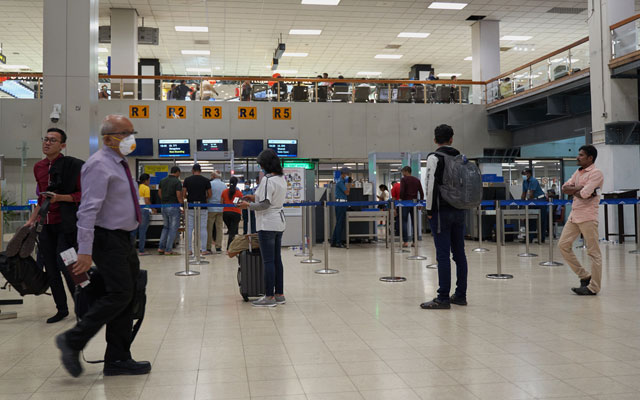
Sri Lanka will reopen borders to international tourists from June 1; Colombo Airport pictured

On Tuesday, the Department of Civil Aviation said the airports would be reopened on June 1, but noted that the ban on travellers from India, which has been engulfed by a tsunami of infections, would remain.

All foreign tourists are subject to a pre-arrival PCR test, with more testing required upon arrival. They must also stay at Covid-19 certified hotels. The pre-arrival PCR test requirement also applies to tourists who have received both doses of the vaccination.

Under new guidelines, only 75 passengers comprising both Sri Lankans and tourists will be permitted per flight. The airports are currently open only for outbound passengers.

The announcement of the airports’ reopening has been welcomed by industry officials who said even though arrivals have been merely a trickle since the airports reopened on January 21 after a prolonged pandemic shutdown last year, it means the country is back in business and open for tourism.

Arrivals totalled 9,629 from January 21 to end-April 2021 – a sharp drop compared to the 507,311 arrivals in the January-April period in 2020. Kazakhstan, Ukraine, Germany, India and China were the top five tourist generating markets during this pandemic period.

In the meantime, a former Sri Lankan ambassador in Russia and now tourism entrepreneur has announced that he would bring down 2,500 travellers from Russia as soon as the airports reopen.

Udayanga Weeratunga was quoted by the Daily Mirror newspaper as saying that discussions are ongoing with Russia’s Aeroflot airline and SriLankan Airlines for each carrier to operate at least one weekly flight between Moscow and Colombo, with at least 275 passengers arriving in Sri Lanka per week.

Weeratunga was also responsible for a pilot project bringing nearly 3,000 tourists from Ukraine to Sri Lanka between December 28, 2020 and January 19, 2021 in 12 flights operated during this period.

Ready, set, take-off

0

KC Cheah, CEO and founder of Alpha Red Services, tapped his strong background in airline distribution and insights into travel agency operations to realise a new business opportunity in airline distribution which had traditionally relied heavily on global distribution systems.

Over the years, the growth of the Internet and technology has made direct distribution more cost-effective for airlines. But while it works well in the home market, Cheah noticed that it is much more expensive in overseas markets due to marketing costs of the airline brand and the direct distribution channel.

KC Cheah

Thus was born Alpha Red Services, a B2B air travel content aggregator which Cheah set up in 2016. He described his company as “value-adding” to the air travel industry, where its cloud-based technology platform, T-Commerce Gateway (TCG), offers airlines easy access to overseas markets through OTA partners. He saw that their strong localisation features and customer stickiness were very good alternatives to distribution through the airline’s own direct channels.

At the same time, OTAs benefit by having easy access to all available airline content via a single format and connection, thus, providing them with an efficient means of accessing multiple airline content.

Cheah’s business has taken off, despite headwinds. Last year, while the pandemic led to the collapse of global air travel, TCG still managed to rake in RM7.9 million (US$1.9 million) in gross booking value transactions. Although this marked a drop compared to the RM8.7 million in 2019, Cheah is happy with the results as 2020 was largely a pandemic year.

This year, Cheah is projecting a whopping RM36.04 million in gross booking value transactions, as it anticipates the resumption of air travel in Asia-Pacific where TCG has a strong network, alongside its plans to integrate with more airlines from beyond the Asia-Pacific region.

Cheah shared: “We are currently serving 13 airlines in Asia-Pacific and two airlines in Europe – British Airways and Condor. We are looking at adding three airlines from Asia-Pacific, three from the Middle East and six airlines from Europe in the next 12 months.

He further said that from the pandemic’s onset, the company has been operating in “a lean and mean manner”, while adding more airlines into its content pool.

“To further serve anticipated demand and recovery on global air travel, we are equipped and well-positioned financially after the recent completion of a fairly successful equity crowdfunding exercise,” he added.

Cheah shared that the funds are mainly to be used as working capital as the company broadens commercial partnerships with airlines and supports the onboarding of more OTA partners.

Besides growing demand and supply for higher conversions, the company will also be working on big data and artificial intelligence (AI) to increase conversion of sales.

“We were serving more than 20 million searches a day prior to the pandemic. This has given us the big data for analysis on the demand and supply of the airline content by region, by route and by channel, among others. (Based on) the analysis, we utilise AI to make the right and prompt decisions on our offers to achieve better conversion,” said Cheah.

Alpha Red Services is among a select group of companies from across the Asia-Pacific region recently chosen to join the Highway to a 100 Unicorns, a Microsoft initiative to empower start-ups with mentoring, technology and access to enterprise clients.

UNWTO, Google scale up collaboration to drive tourism recovery

0

Malaysia travel trade calls for total lockdown as Covid surge continues

0

Tourism industry players in Malaysia are calling on authorities to impose a full lockdown, similar to the movement control order (MCO) 1.0 last year, so as to flatten the Covid-19 curve as quickly as possible.

They shared that the government’s efforts to tighten travel and mobility restrictions, starting from Tuesday (May 24), are insufficient to break the chain as daily cases continue to surge.

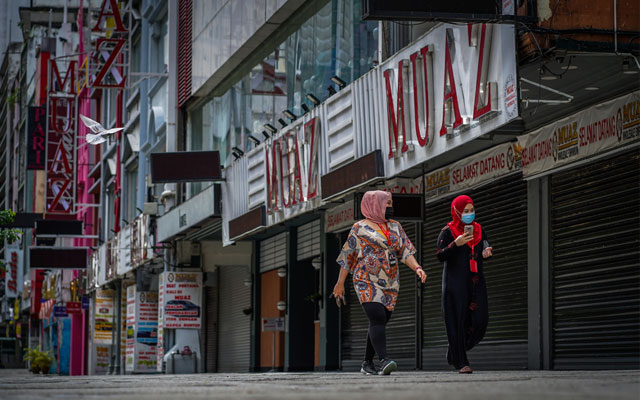
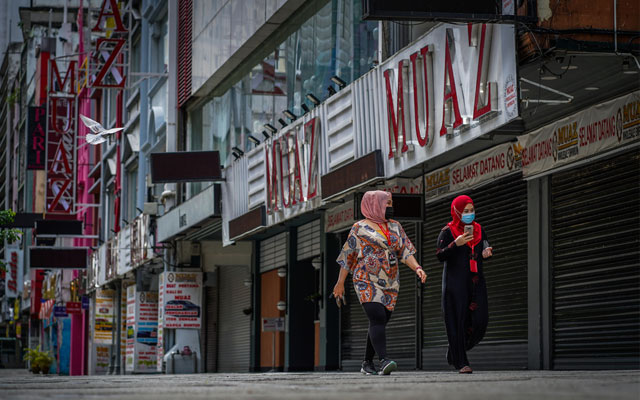
Current MCO restrictions insufficient to stem Covid spread, say tourism players; women walking past closed shops during lockdown in Kuala Lumpur pictured

On Sunday, Malaysia recorded 6,976 new cases and 49 deaths, marking the fifth consecutive day of more than 6,000 new infections. Some states, such as Kelantan and Negri Sembilan, have requested the Health Ministry for field ICUs, as many hospital ICUs have reached maximum capacity.

Malaysian Inbound Tourism Association president, Uzaidi Udanis, believed that only a fortnight-long full lockdown will help lower the infection rate.

He opined that additional restrictions to be imposed from tomorrow such as a two-hour limit for shoppers at retail premises is not very effective. “It takes only a few seconds of exposure to contract the virus. Enforcement will also not be easy,” he said.

Other new rules to curb the contagion include reducing passenger capacity on public transportation by half and restricting operating hours of businesses.

Also calling for a total lockdown is Malaysian Association of Hotels (MAH) president, N Subramaniam, citing the ineffectiveness of current MCO restrictions in stamping out the virus spread.

“The tourism and hotel industry is of the opinion that the government needs to implement stricter and more effective measures such as a total lockdown, similar to MCO 1.0, to control the spread as soon as possible,” he said. “Limiting attendance at workplaces and operation hours of economic sectors will only prolong the situation.”

He also stressed that the industry needed greater assistance from the government, to prevent the closure of more hotels in the near future.

According to MAH, the hotel industry alone recorded a loss of over RM6.53 billion (US$1.57 million) last year. For year-to-date, the loss of revenue easily adds up to RM5 billion, making it worse than last year.

Members of the public too have been calling on the government for a stricter lockdown, but the government has been reluctant to initiate one. Finance minister, Tengku Zafrul Tengku Abdul Aziz, explained that it could lead to one million job losses, with low-income earners suffering the most.

He said that the MCO 1.0 last year had contributed to a 5.3 per cent unemployment rate, with 826,000 people losing their jobs – the highest level of unemployment since the commodity crisis in the 1980s.

Prime minister, Muhyiddin Yassin, has also stressed that a total lockdown would lead to more unemployment.

“If we (imposed a total lockdown on all economic sectors), we will face bigger problems to the point where our country will be unable to get back on its feet,” New Straits Times quoted him as saying.

Instead, he is encouraging Malaysians to practice self-lockdown by staying at home and not going out unnecessarily.

Japan ponders state of emergency extension

0

Japan may be forced to endure a longer pandemic-induced state of emergency beyond May 31, as current measures fail to show sufficient decline in Covid-19 infections.

The country recorded 4,045 new cases on May 22, down from 7,521 new cases on May 12, the peak number recorded this spring. The average daily rate, however, is not significantly below that recorded before the state of emergency declaration on April 23, when 5,014 new cases were recorded.

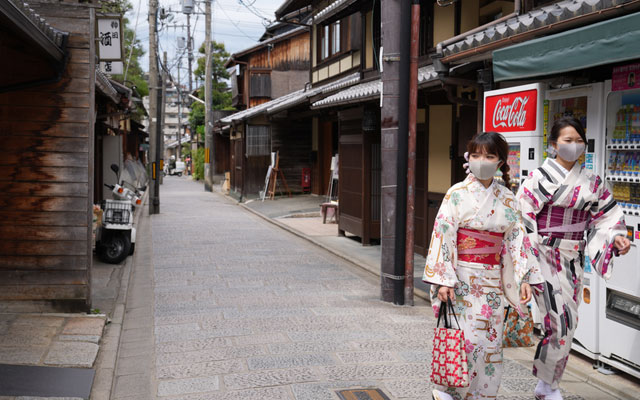
Japan’s government may extend current state of emergency from May 31 to June 20; local tourists walking along a street in Kyoto, Japan amid Covid-19 lockdown pictured

Initiated to curb a Covid-19 surge related to Golden Week, a series of consecutive national holidays in early May, the emergency measures at first covered Tokyo, Osaka, Kyoto and Hyogo: four prefectures home to one quarter of Japan’s 126 million people. Large events were banned, commercial facilities covering more than 1,000m² were asked to shut, teleworking was encouraged and eateries were required to close by 20.00.

Now, the Japanese government is considering a longer state of emergency, which has already been expanded in scale (to include seven more prefectures), accounting for 40 per cent of Japan’s prefectures and 70 per cent of its population.

According to a top government spokesperson speaking Sunday, the government is considering either extending the state of emergency from May 31 to June 20 or scaling back emergency measures in only some areas to quasi-emergency measures.

Government Covid-19 advisory panel member Keiichiro Kobayashi told NHK: “If the government hastily lifts the declarations, that would lead to a rebound (in the number of cases) and put a major brake on the economy.”

In addition to placing anti-infection measures on residents, the Japanese government has tightened its already rigorous travel bans, increasing the number of countries and regions covered by travel restrictions to 159.

In the past week, Japan banned entry to foreign nationals who have recently travelled to India, Pakistan, Nepal, Bangladesh, the Maldives, Thailand, Cambodia, Sri Lanka, the Seychelles, Saint Lucia, East Timor and Mongolia.

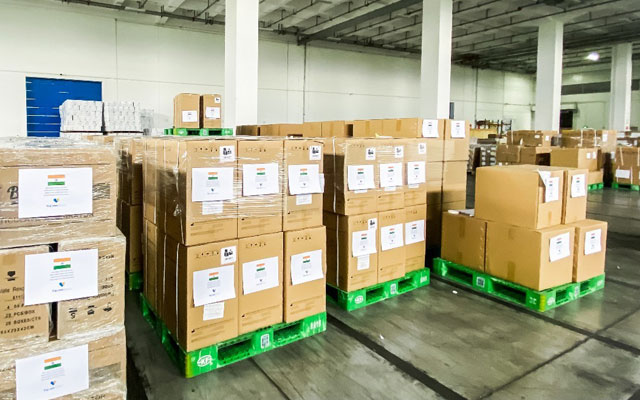
Trip.com Group launches Covid-19 medical relief initiative for India

0

Point-to-point airlines will lead industry recovery: GlobalData

0

Vaccination is only the first step in this journey towards travel resumption

0

Over the last six months, we have seen travel gain hope with gradual reopening of borders and travel bubbles which then lead to a complete shutdown once again, as the second wave of infections hit more fiercely in some regions. At the centre of all these changes has been the focus on streamlined vaccination drives on which hinges the future of a safe and healthy global community.

While vaccination is the first step towards furthering a robust system that can help bring back the lost hope in travel, it will be necessary to keep more layers of checks at every step of the travel cycle even after the world is vaccinated, with the intention of keeping safety at the heart of the travel journey. In this light, travel and health credentials could play a game-changing role if integrated effectively in cross-border journeys.

To fulfil the promise of getting travel back on track, countries have not only streamlined the vaccine rollout, but they are also preparing a robust system on how the credibility of vaccination can be embedded in helping movements across borders with the help of the right credentials.

Governments continue to assess the effectiveness of digital identification modes like vaccine passports, digital green certificates planned by the European Commission, etc. to ensure that the future of travel is not just ready, but also safe.

Going beyond robust vaccination drives
For the past year, the advancements in health and travel tech were largely limited to screening and planning of travel. However, as the virus continues to pose more challenges, the question remains as to how sustainably the industry can address the anticipated rebound.

There is no doubt that going forward, the industry as a whole will require a more holistic approach towards the revival of travel that aligns with the realities of the constantly evolving scenario. Keeping this in mind, several stakeholders have introduced initiatives that incorporate an almost futuristic approach to travel – where human interventions and physical touchpoints can be reduced to curb the spread of Covid-19.

These include cloud lockers that allow safe storage and sharing of documents, e-passports, and eVisas that enable digital alternatives to travel documents, and lastly, the need for travel health credentials and their integration in global travel processes. These changes are slowly moving beyond concept stage and becoming a reality with the industry coming together as a binding force.

An interesting example of this includes an initiative by the World Economic Forum called Known Traveller Digital Identity (KTDI) that brings together a global consortium of individuals, governments, authorities, and the travel industry to enhance security in global travel. KTDI allows people to manage their profile and collect digital ‘attestations’ of their personal data, allowing them to consent to what data to share and when. The more attestations a user shares, the better it is for authorities to process travel seamlessly and smoothly.

Awareness will take us a long way
Understanding travel processes and being mindful of Covid-19-related requirements that vary from country to country beforehand will be critical. To help manage this, the World Tourism Organization (UNWTO) and the International Air Transport Association (IATA) recently announced a Destination Tracker in preparation for the restart of international travel.

The Destination Tracker is the result of both organisations joining efforts to boost confidence and accelerate recovery of the tourism sector when borders reopen. It is a free online tool that allows governments to provide information on Covid-19 requirements for travel and the measures in place at the destination. This can allow potential travellers to have a well-researched travel plan in place beforehand, with all the information verified by trusted bodies.

While these efforts aid the travel-planning journey, another critical intervention in international travel rests in the visa application process. As we move forward, adopting solutions such as eVisas and ePassport gates that allow essential travel documents to be digitally processed with added layers of data security, will only bring us closer to a digital-first future.

Although these are shifts to be considered at a governance level, collaborating and outsourcing these credential services will only see an upward trend as governments look to best optimise safety. A recent example of the same is the collaboration that VFS Global led with the technology company Accredify to issue health certificates that allow seamless travel from Indonesia to Singapore, providing for a safe bubble transit. The hope is to extend that model to more ‘safe travel’ corridors.

Undoubtedly, the introduction of travel-health credentials and verified information channels will help restore tourism in a seamless and well-screened manner. However, the revival of tourism will need to move beyond singular efforts and adopt a holistic approach that can help streamline the entire process of international travel with minimum risks to the traveller in the new normal.