
Contactless ticketing system launched in Nami Island
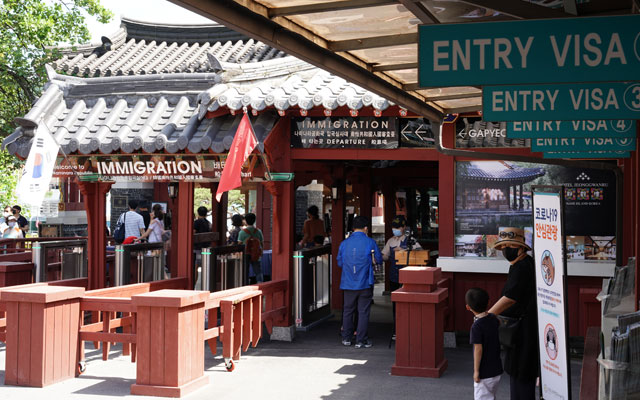
rezio, a SaaS platform that provides an all-in-one booking solution for travel operators and activity providers, has created a contactless experience for visitors to popular tourist attraction Nami Island in South Korea.
Through its online-merge-offline (OMO) cloud integration solution, rezio has successfully powered the ticketing solution for Nami Island, providing more than 100,000 visitors a safe and seamless contactless experience amid the pandemic since its launch in June.
The cloud integration solution by rezio enables customers to purchase tickets online, receive their e-tickets with QR codes and enter the attraction via the electronic turnstile by scanning their tickets, completely omitting the need for physical interactions.
Self-service ticketing e-kiosks are also available on-site, which eliminates the need for long queues and unnecessary exposure to crowds. Employees of Nami Island are also able to manage the crowd within the attraction at any one point of time through the real-time inventory notification.
IHG grows India footprint with signing of Holiday Inn Express & Suites in Jalandhar

IHG Hotels & Resorts has signed a management agreement with Samplast Resorts to develop Holiday Inn Express & Suites Jalandhar GT Road.
The new-build, 110-key hotel is expected to be operational by 1Q2024.
Located on the Grand Trunk Road, also known as NH1 which connects the country’s capital city of Delhi to Amritsar, the hotel will be a short drive from the city’s CBD as well as shopping destinations. Additionally, the hotel will have an adjoining strip mall that will offer multiple dining options for hotel guests.
On-site facilities will include a bar and lounge, fitness room, meeting rooms, 1390m² of banqueting space, as well as signature amenities.
Pandemic prompts more travellers to book directly

Covid-19 has resulted in a shift in consumer preference towards booking holidays directly, instead of going through an OTA, a recent GlobalData poll has revealed.
According to the GlobalData Live Tracker Verdict Poll of 156 respondents, some 39 per cent of respondents said they would typically book directly, followed by 17 per cent that opted for OTAs and price comparison sites. The data and analytics company attributed this shift to the flexible cancellation and straightforward refund policies offered by direct booking.

Gus Gardner, associate travel and tourism analyst at GlobalData, commented: “The pandemic has caused a significant shift in consumer booking habits.”
He noted that a previous survey in 3Q2019 showed that OTAs were the most popular booking option, followed by direct booking with a hotel or airline. The GlobalData Q3 2019 Consumer Survey, which polled 29,744 global respondents, found that 44 per cent of respondents preferred booking through an OTA, 36 per cent directly with a hotel and 34 per cent directly with an airline.
“However, some OTAs have been extremely slow to issue refunds and have received a raft of bad press as a result. This has knocked travellers’ confidence to book through intermediaries,” Gardner said.
He added: “Direct booking channels are likely to have experienced an increase in popularity due to the fragility of booking a trip in the current situation. Travellers now desire the highest level of flexibility, and it is no wonder that direct booking channels’ flexible terms, easy changes and quick refunds are winning travellers over.
“Further, the ability to make changes online places the power back into the traveller’s hands and streamlines the whole process. By booking directly, the traveller cuts out the middleman, considerably speeds up the change/refund process, and increases their satisfaction.”
Macau’s great comeback
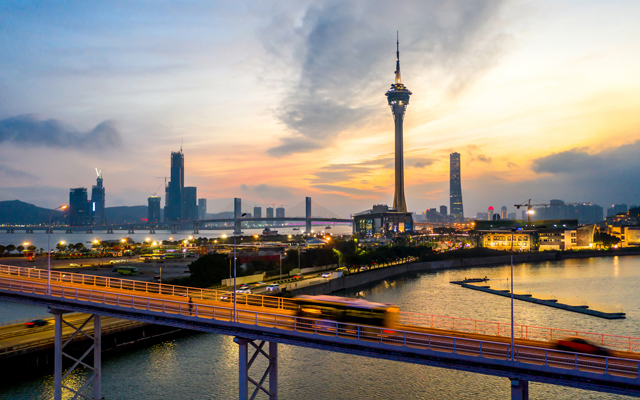
Macau’s strict Covid-19 monitoring system at her borders and across her land has resulted in zero local infections for over a year, earning the confidence of travellers from Mainland China.
Travel from the mainland was allowed to resume in mid-August 2020. Between then and April, provisional visitor arrivals have recorded month-on-month increments.
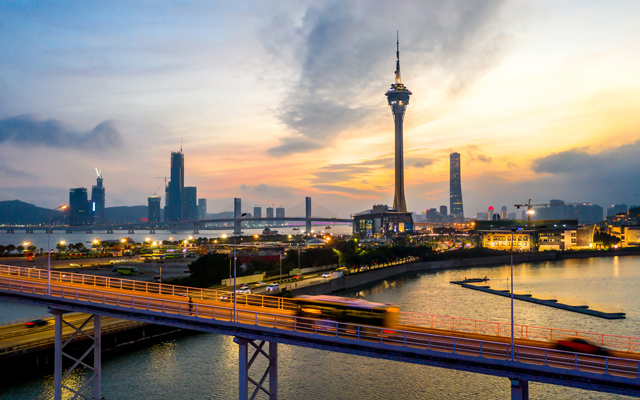
Macau welcomed 191,828 Chinese arrivals over the week of April 9 to 15, with an average daily volume of 27,404 visitors. The recent five-day Labour Day holidays also brought forth outstanding arrival numbers – Macau welcomed 167,000 visitors, of which 156,000 came from the mainland. Average daily visitor arrivals hit 33,000 during this peak period, which rose by 158.2 per cent over the Spring Festival Golden Week in 2021, and increased by 25.4 per cent compared with the figure in April.
In line with the resumption of tourism exchange, the Macao Government Tourism Office (MGTO)tune up its destination marketing efforts in China. Its messages are clear: Macau is safe and welcoming, and no quarantine is needed for the majority of Mainland Chinese visitors entering Macau.
The assurances are joined by attractively-priced packages and discounts for flight, lodging and other forms of consumption in Macau, so as to encourage Mainland visitors to visit, stay on longer and spend more.
“When conditions allow for travel restrictions to be lifted with our regional and international markets, we hope to extend similar marketing efforts to encourage visitors to come to Macau,” an MGTO spokesperson said.
For now, MGTO does not expect a strong tourism rebound. Between six and 10 million visitors are expected this year, with the majority coming from Mainland China.
Working alongside MGTO’s efforts to court returning Mainland Chinese visitors is the private sector, which has also rolled out its own health and safety promises as well as new experiences.
Sands Resorts Macao, for example, has introduced the Sands SafeStay, a comprehensive programme of cleanliness and disinfection measures to ensure the safety of guests.
Sands China, senior vice president of resort operations, Kris Kaminsky, told TTG Asia that Sands SafeStay has “provided the confidence and assurance visitors need in order to return”.
The integrated resort is enjoying weekly increments in visitorship, and its performance mirrors MGTO’s figures.
“Demand for our offerings from customers able to visit remains robust and we are confident in the eventual recovery in travel and tourism spending,” remarked Kaminsky, who revealed that business events have returned in March along with a gradual upward trend in tourist numbers, particularly leading up to the Labour Day Golden Week holidays in May.
Elsewhere, new facilities have emerged to gaurantee something new and attractive for repeat visitors.
The Londoner Macao unveiled its first phase in February while the 300-room Nüwa debuted in the City of Dreams in March. Studio City Water Park opens this month.
Coming up next is Grand Lisboa Palace Resort, which is slated to open in 1H2021. The luxury property in the Cotai district, developed by SJM Holdings, will reflect Macau’s long history of Sino-Western cultural exchange through its architecture, facilities and services.
MGTO’s vision is not limited to bringing back leisure tourists, as it has joined forces with the Macao Trade and Investment Promotion Institute as well as private sector business events suppliers to conduct a series of seminars aimed at luring Chinese corporate activities. After seminars in Guangzhou, Dongguan and Zhongshan in March, two more were held in Zhaoqing and Huizhou in April. More are scheduled to take place this year in thriving Greater Bay Area cities.
MGTO’s multi-layered approach to rebuilding Macau’s tourism industry includes a revamped Travel Simulation Program, with new assistance aimed at supporting sports travel. This is driven by MGTO’s larger endeavour to focus on deepening “tourism-plus” cross-sector integration and promoting products that answer the tourism-plus-MICE, tourism-plus-culture-and-creativity, and tourism-plus-sports needs. MGTO believes that taking this stance will steer the tourism industry towards recovery and generate greater momentum to move other industries forward.
While Macau’s tourism figures are promising, Pun Cheng Man, travel department sales and marketing manager with CTS (Macao) told TTG Asia that most of the Mainland Chinese arrivals to-date are leisure FITs, which mostly benefits hotels.
For Macau DMCs to see a return in tourism business, inbound tour groups are needed, opined Pun, who said fellow agencies are still holding their breath for this to be allowed by the authorities.
She added that MGTO also needed to step up communications on Macau’s border crossing policies to more Chinese residents. “(Many Chinese citizens) think that both Macau and Hong Kong have the same policy (for tourists),” she said.
Presently, Chinese travellers are required to serve mandatory quarantine upon their return from Hong Kong; this is not needed for Chinese returnees from Macau.
Despite her concerns, Pun expressed “cautious optimism” for Macau’s inbound tourism performance this year.
New travel training company launched to help industry upskill

A new travel training company has launched, offering a range of e-learning courses designed to help industry players upskill in preparation for the post-pandemic rebound.
Progressive Travel Training (PTT) is spearheaded by three travel professionals specialising in training and recruitment – Fi Morrison-Arnthal, Tony Macdonald and James Roberts – who also run Progressive Travel Recruitment.
Initially, PTT is offering agents a programme of 12 e-learning courses, co-authored by senior travel industry experts and PTT co-founder Fi.
Three of the modules are available for free, including a stress management course designed to support travel professionals tackling tough working conditions during the pandemic. The other two free courses are migrating to remote travel home working and blog writing to boost travel business.
Delivered in bite-sized chunks, the flexible training e-courses allow professionals to visit and return to the learning at any time.
Starting from INR3,097 (US$42), the paid courses are as follows: how to sell travel and achieve sales success, managing travel consultants to sales success, complaint resolution and great travel customer service, increase your travel enquiries using Facebook, time management (working smarter not harder), presentation skills in travel, get noticed and get the travel job, and successful corporate travel account management.
By providing training that is either free or 90 per cent cheaper than traditional one-day courses, PTT’s founding vision is that travel professionals who might now be responsible for their own learning costs after being made redundant or going self-employed during the pandemic are still able to pursue their career development, and that employers who want to invest in their teams but have faced tough trading conditions over the last 12 months can still do so, the company said in a press release.
Fi said: “It’s apparent that formal training and in-house trainers are a luxury many travel businesses and agents cannot currently afford and, while there is plenty of online training available covering destinations, product and GDS skills, travel industry employees are frustrated about the limited soft skills available. We have launched Progressive Travel Training to address that need, and to give back to the industry we love – sharing everything we know with a community that is ready to progress and come back post-Covid thriving.”
The full suite of online learning courses can be accessed here.
Cruise services startup ropes in European veteran to develop Asia’s cruise industry

Singapore-based cruise services startup NaviAsia is partnering with European Cruise Service (ECS) to drive the development of Asia as a cruise and leisure destination.
Started in January this year, NaviAsia specialises in offering cruise services such as shore excursions, ship agency, ground handling, destination management and in-house training programmes.
The organisation is helmed by two industry veterans with more than 40 years of management-level experience – managing director, Julieanne Yee and general manager, Adrian Wong.
ECS has been the main provider of cruise services for foreign cruise ships calling at Norwegian ports and fjords for over 160 years and is the market leader in shore excursion operations and ships agency services rendered to cruise ships calling upon ports in Northern Europe.
The collaboration will see NaviAsia drive the partnership’s business throughout Asia, with ECS providing support with their experience, expertise, best practices, contacts and systems for accelerating growth.
Speaking to TTG Asia, Yee said that NaviAsia is currently working on preparation for cruise resumption based on the potential requirements from each of the cruise brands and exploring potential new islets declared as “Green Zone”, which can be of interest to cruise clients in the event that borders remain closed for the key destinations.
According to Yee, cruise clients are finding it difficult to grapple with the varying protocols required in the different countries. “With the cruise resumption already started in Europe, the partnership enables us to adapt best practices across continents and prepares us for cruise journeying to Asian waters,” she said.
However, another hurdle looms – as the source markets for most international cruise brands comprise of mainly non-Asians, recovery may take longer than expected as it is challenging for them to travel longhaul to Asia to join the cruises.
Despite the concerns, Yee remains optimistic about the industry in Asia. “Singapore has been, and will continue to be, an important cruise hub for cruise liners deploying in South-east Asia. Apart from Singapore, the opening of borders within the neighbouring countries is equally important for a successful Asia cruise deployment.”
Princess Cruises ups service ante with on-demand feature
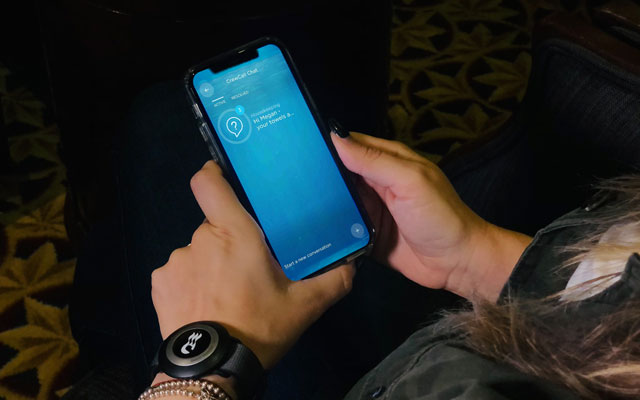
Princess Cruises is introducing a new on-demand service that allows guests to call a crew member to their exact location to make an in-person request for assistance.
CrewCall service on demand will be available on stateroom TVs as well as the MedallionClass app and leverages the OceanMedallion wearable to guide a crew member to a guest’s exact location upon request.
The corresponding CrewCall Chat feature lets guests text their specific question or request using a smart device to be answered or actioned virtually by crew.
Jan Swartz, president of Princess Cruises, said in a statement that CrewCall allows the cruise line “to deliver high-touch, personalised service” and “minimises wait time at our guest services desk while simultaneously improving our responsiveness”.
Both CrewCall features expand the OceanNow digital experience guests use to place food, beverage, retail and amenity orders for delivery directly to their location.
CrewCall will be available to guests when Princess returns to sailing starting July 25 aboard Majestic Princess in Alaska, and aboard Regal Princess and Sky Princess with “seacations” in the UK starting July 31.
Airbnb on the hunt for 12 people to live anywhere for 10 months

In light of the pandemic-induced shift to remote working, Airbnb has launched a programme that will enable 12 individuals to live exclusively in Airbnb-listed properties for 10 months.
Under the Live Anywhere on Airbnb programme, the home-sharing giant will cover the cost of accommodations and provide a transportation allowance for the duration of the programme.
In return, participants will share their experiences with Airbnb to “help inform future product upgrades and innovations on the platform to better accommodate nomadic living”, it said in a press statement.
According to the Airbnb Report on Travel & Living, the share of stays 28 days or longer on Airbnb increased 10 per cent in nights booked when comparing 2019 to 1Q2021. Some 11 per cent of Airbnb’s long-term stay bookers in 2021 reported living a nomadic lifestyle, with 74 per cent of consumers it surveyed across five countries expressing interest in living someplace other than where their employer is based post-pandemic.
Through this programme, participants could help shape the future of long-term living on Airbnb, including product changes and resources that may improve the long-term living experience, ideal types of accommodations for solo travellers or groups like families, connections to local community members and businesses, as well as better understanding of financial benefits of hosting while travelling.
Airbnb is seeking a diverse set of 12 individuals who can be part of the programme for 12 consecutive months from July 2021 to July 2022. The programme is open to participants aged 18 years and above, and each participant will be allowed to bring up to three companions with them.
The 12 participants will be selected by a panel of interviewers in July, and will begin travelling from September. Interested parties can submit their application by June 30 at www.airbnb.com/liveanywhere.
Second Covid wave batters India hotels

After an improved start to 2021, India’s hotel occupancy has been on a rapid decline amid the second Covid-19 wave in the country, according to data from STR.
India’s monthly occupancy reached a pandemic high in February (53.9 per cent), which looked to be solid progress towards recovery as the monthly level was roughly 73 per cent of the 2019 comparable. By April, however, occupancy in the country fell to 31.0 per cent, and more recently, just 21.5 per cent for the week ending May 30.
“We saw India’s resilience as an emerging market play out over the early portion of 2021,” said Vidhi Godiawala, STR’s business development manager for South and Central Asia. “Unfortunately, massive lockdowns have restricted movement and business over the last few months, thus, causing hotel performance to lose steam.
“Until March of this year, India and China were trading places for the highest intention to travel. While current travel sentiment remains clouded, recovery from the first wave gives us reason to believe there is light at the end of the tunnel for hotels in the country.”
While the country as a whole has fallen back to late-2020 levels, some markets are experiencing more promising metrics.
During the week ending May 30, Mumbai saw the country’s highest occupancy level (43.2 per cent) among STR-defined markets, which was 60 per cent of the comparable week in 2019. The market, however, is expected to experience flattened demand levels in 2022. Chennai (38.3 per cent) and Gujarat (32.2 per cent) also saw higher occupancy levels with better 2019 comparisons.








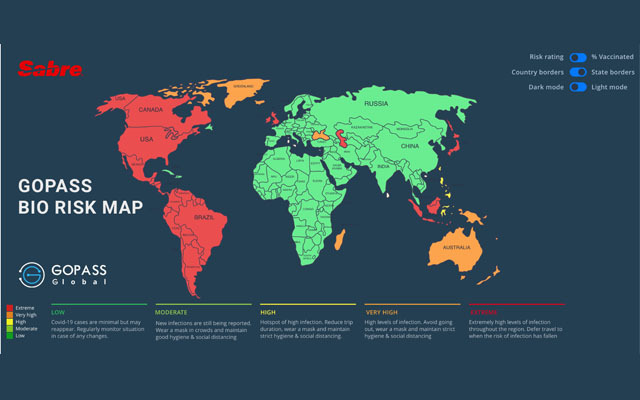
Sabre Corporation has partnered with travel risk management platform Gopass Global to help deliver its Covid-19 biosecurity risk analytics capabilities to the travel industry.
Gopass Global solutions leverages advanced analytics to deliver a single view of all of the biosecurity risk elements of a trip, thereby boosting traveller confidence.
Under the deal, travel agents across the globe now have access to Gopass travel risk management capabilities via the Sabre Developer Partner platform. By integrating with Sabre’s shopping APIs, Gopass populates a quantifiable risk score onto each travel option and displays the information to agents, who are then able to better advise their customers.
Powered by machine learning and artificial intelligence, Gopass Travel Risk Optimizer provides travellers with an end-to-end analysis of all aspects of travel and their risk exposure in the cycle of travel. Gopass Global data also looks at country conditions such as infection rates, government policies and data reliability. Putting this all together, agents can obtain a risk score out of ten per flight itinerary, enabling them to clearly identify the lowest risk rates overall.
“For the travel industry to open up, recover and grow, it is vital that we are able to reduce and mitigate the risk of travel so we can instil renewed confidence in travel for both the leisure and corporate traveller,” said Mark Radford, CEO, Gopass Global.
“It’s clear leisure travellers want to know about potential travel risks so they can avoid or mitigate them. But this is especially critical for corporate travel as we learn to live with this pandemic. Companies need to ensure they are taking their duty of care to employees seriously when it comes to travel. It’s essential, therefore, that travel agents, and ultimately travellers, have all of the critical information they need at their fingertips when planning their trip to make the decisions that are right for them.”