
Trade reacts to India’s relief package for tourism industry
The Indian government has announced a few fiscal relief measures for the tourism sector reeling under the impact of the Covid-19 pandemic. This marks the first such initiative that the government has rolled out to aid the tourism sector since the outbreak of the pandemic.
Addressing reporters in New Delhi on Monday (April 28), finance minister Sitharaman said that once the tourist visa issuance for international travel is restarted, the first five hundred thousand tourists will be issued visas free of charge. The benefit that will be available only once per tourist would be applicable till March 31, 2022. Since March last year, the Indian government has suspended issuing tourist visas.
The minister also shared that travel agents and tour guides will be eligible for loans up to Rs. 1 million (US$13,470) and Rs. 100,000 respectively, without any processing charges or collateral requirement.
“These are much-needed steps towards the revival of tourism – a sector that is a significant contributor to the (country’s) GDP, foreign exchange receipts and employment generation – with a cascading force multiplier effect on allied sectors. The 5 lakh (five hundred thousand) gratis visas will serve to catalyse much-needed inbound inflows,” said Madhavan Menon, managing director, Thomas Cook India Group.
“Without these initiatives, it will take the industry much longer to bounce back,” commented Manbeer Choudhary, chairman, Jewels Group of Hotels.
However, a section of the industry feels that the measures announced have failed to address the woes of the industry completely. A few were disappointed that loans are only being offered to around 904 travel and tourism stakeholders registered with the Ministry of Tourism.
Jyoti Mayal, president, Travel Agents Association of India (TAAI), said: “We have been recommending our members to register with the Ministry of Tourism over the years but the process is tedious and requires a lot of documentation. Most of the members engaged in domestic tourism are registered with state tourism departments. The outreach of this relief is minuscule.”
TAAI has urged the government to also consider stakeholders registered under the Ministry of Micro, Small & Medium Enterprises (MSME) to widen the eligibility of loans.
Malaysia extends MCO 3.0 for second time
Malaysia has extended its nationwide lockdown, dubbed movement control order (MCO) 3.0, for the second time to stem the spread of Covid-19.
MCO 3.0 was supposed to end on Monday (June 28).
Prime minister Muhyiddin Yassin said that the government will maintain phase one of the nationwide lockdown until the following three main threshold indicators have been met: The number of new daily Covid-19 cases dip below 4,000, the public health system returns to moderate levels, and 10 per cent of the population has been fully vaccinated.
On Saturday, Malaysia recorded 5,586 new cases and 60 deaths.
Meanwhile, the country’s vaccination programme is in full swing, with more than 7.2 million doses of vaccines having been administered nationwide. Of this, over 5.2 million have received their first dose, while the remaining have received both doses.
Earlier this month, the prime minister had announced the country’s national recovery plan, which is a four-phased exit strategy from the Covid-19 pandemic.
To transition to phase three, the number of new daily infections would have to drop below 2,000, the healthcare system would have to be at a comfortable level with enough beds available in ICUs, and about 40 per cent of the population should have received two doses of the vaccine.
In the final phase four, expected to take place in 4Q2021, the number of new daily infections should stand at less than 500 and 60 per cent of the population would have to be fully vaccinated. In this phase, all economic sectors will be allowed to operate including domestic travel, but under strict SOPs.
Uzaidi Udanis, president, Malaysian Inbound Tourism Association (MITA), stressed on the need to speed up the nationwide vaccination programme to achieve herd immunity quickly and for life to return to normalcy.
“Meanwhile, agents will have to find ways to ‘survive’ until domestic tourism is allowed to recommence,” he said.
On its part, MITA is encouraging members to sell non-travel products to their existing clients. To support struggling agents, the association recently organised a virtual tourism bazaar, which saw the participation of nineteen vendors and generated about RM3,000 (US$723) in sales.
MITA hopes to organise more of such events in future, according to Uzaidi. He said: “We realised that many vendors were selling products that were easily available on other e-commerce sites and in retail outlets. Therefore, their profit margin was small.
“We are looking at approaching the Malaysia International Digital Entrepreneurship Centre to see how we can connect (our agent members) with Malaysian suppliers and help them to market their products to a wider audience.”
Uzaidi added that the association members are also exploring how they can market local products to neighbouring countries such as Indonesia, Singapore, Thailand and even China.
Longer trips look set to boom post-Covid

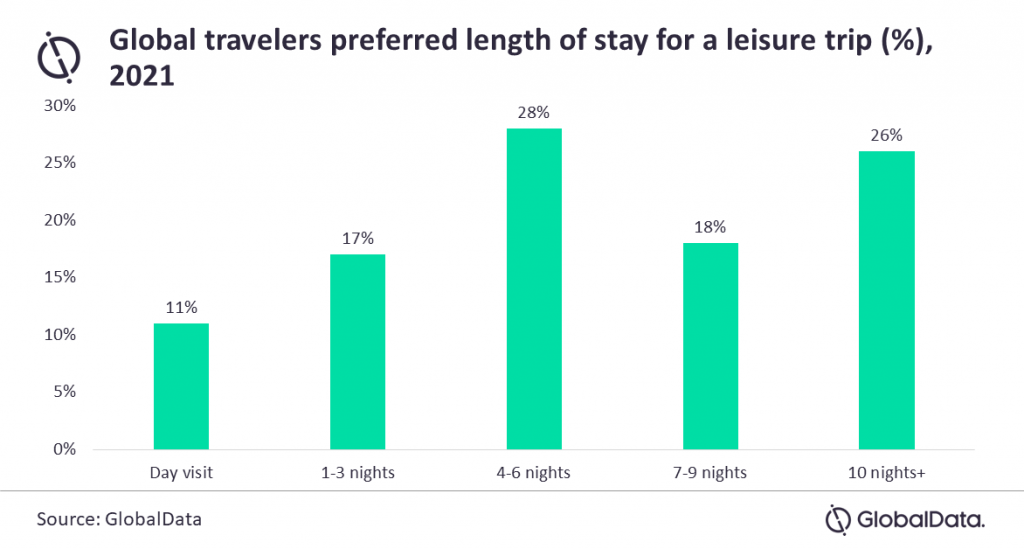
The pandemic has triggered greater demand for lengthier holidays of more than ten nights, according to a poll by GlobalData.
The data and analytics company noted that, with accidental savers on the rise and working from home making longer trips a possibility, extended vacations look set to boom post-pandemic.
A live GlobalData poll of 602 respondents revealed that over one in four (26 per cent) of respondents now prefer to take a leisure trip of ten-plus nights – the second-most popular length of trip behind stays of between four and six nights (28 per cent).
Gus Gardner, associate travel and tourism analyst at GlobalData, commented: “Many travellers are desperate to escape their lockdown locations and need a change of scenery. A lengthier trip gives the optimal amount of time to switch off and reset, which is likely to be driving the increase in demand.
“Furthermore, GlobalData analysis showed that in 2019, the average trip length was 4.45 days for domestic and 9.22 days for international trips, revealing demand for longer stays has risen considerably since the pandemic began.”
GlobalData noted that while some consumers have experienced a strain on their finances, others have become accidental savers due to less opportunity for recreational spending and reduced expenditure on commuting. These inflated funds may have contributed to the increased desire for longer stays, it added.
Gardner continued: “Travellers who have seen a considerable increase in savings are more likely to splash out on longer stays. Adding an additional night onto a trip generally results in the average cost per night decreasing, meaning the increased cost of a longer stay is minimal. Therefore, those with higher travel budgets will easily be swayed by the prospect of a longer holiday. The pandemic has fuelled the desire to travel and make up for lost time – longer stays are a great way to do this.”
The rise of remote working, which could potentially change the way people travel, has also added to the appeal of an extended holiday.
Gardner added: “The pandemic has accelerated the work from home model, and the tourism industry could benefit. Those that are working from home, especially independent remote workers on a higher salary, no longer require a fixed location and only need somewhere quiet with internet. This new working model, which seems set to stay for some time, could further increase the desire to blend a traditional holiday with a ‘workcation’.
“For those seeking a different location, they may look to book a longer holiday, utilising some annual leave, whilst working remotely for the remaining days to maximise trip length. This new type of traveller could benefit accommodation sharing providers who can offer a home away from home.”
Dubai Airport unveils in-house Covid-19 testing lab
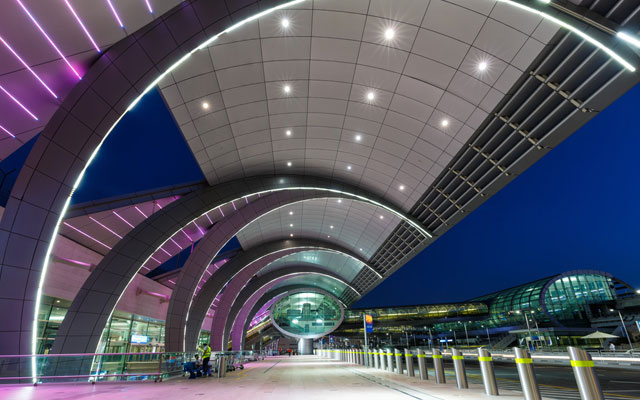
One of the world’s largest in-house airport labs for the processing of Covid-19 PCR tests has opened at Dubai International Airport (DXB).
The development is part of the country’s efforts to further enhance safe international travel, while accelerating the recovery of the travel sector, Dubai Airports said in a press release.
The result of a collaboration between Dubai Airports, the Dubai Health Authority and Pure Health, the laboratory was inaugurated by His Highness Sheikh Mansour Bin Mohammed Bin Rashid Al Maktoum and His Highness Sheikh Ahmed Bin Saeed Al Maktoum, chairman of Dubai Airports.
Located close to Terminal 2, the over 1,800m² laboratory is a dedicated facility for round-the-clock processing of RT-PCR test samples collected from passengers at DXB. Using latest WHO-standard Covid-19 RT-PCR testing equipment, the lab can process up to 100,000 samples per day and provide reliable results within a few hours.
The lab is equipped with negative and positive pressure rooms and is linked to government reporting platforms, ensuring secure and easy sharing of information between health and regulatory authorities and airlines.
The opening of the lab comes as DXB’s Terminal 1 and Concourse D resumed operations on June 24, following 15 months of suspension due to the Covid-19 pandemic.
Charting the road to recovery

Amid sustained headwinds from the Covid-19 pandemic, Malaysia’s ongoing vaccine rollout have lifted hopes among tourism players that travel recovery lies just around the corner. The government is aiming to inoculate at least 70 per cent of the population by December in order to achieve herd immunity by year-end.

Nigel Wong, honorary secretary-general, Malaysian Association of Tour & Travel Agents (MATTA), commented: “Achieving herd immunity will boost confidence among Malaysians to travel domestically. Herd immunity will also help with the reopening of our borders to international inbound travellers.”
While borders have been closed to international tourists since March 2020, the government is in ongoing talks to establish travel bubbles with neighbouring countries, including Singapore, Indonesia, Brunei, China, Japan, South Korea and Taiwan.
Wong said that travel bubbles will provide a critical lifeline to the tourism industry. “For the time being, the travel trade has to rely on domestic tourism, but this does not have long-term sustainability as Malaysia does not have the population mass required to rely solely on domestic tourism, unlike larger countries such as China,” he said.
On its part, the government has resumed a tourism fund dubbed Gamelan for tourism operators to tap on for promotions and marketing campaigns to spur recovery.
The fund, first introduced in July 2019 with an allocation of RM5 million (US$1.2 million), was postponed last year when the movement control order kicked in and the country shut its borders to foreign arrivals. The finance ministry has since approved the resumption of the remaining sum of over RM3,000,000 for the Gamelan programme, for use through this year on both domestic and international promotions.

To drive post-pandemic recovery, Tourism Malaysia is putting digitalisation at the heart of its marketing strategy. In April, the tourism board rolled out five interactive brochures and travel guides, in a rebranding of its digital travel brochures.
The new digital versions incorporate multimedia elements such as text, audio, graphics, animation and video, and is accessible via Tourism Malaysia’s recently revamped microsite, ebrochures.malaysia.travel.
Replacing static PDF brochures, the new site integrated with Google Maps helps users plan and navigate their journey. The site also has a share function which allows users to share posts on Facebook, Twitter, and Whatsapp, and via email.
As well, MATTA has been encouraging its members to embrace digitalisation by introducing digital adoption programmes for marketing and promotions, and lobbying local banks for better access to e-payment facilities and lower charges.
Wong said: “In the new norm, international travellers will plan their holidays by accessing services online. We are gearing up members to meet this new trend by providing them the know-how to promote and market their services online and increase their digital footprint.”
MATTA has also partnered with Bureau Veritas, a world leader in testing, inspection and certification, to deploy the “Travel Safe Malaysia” Hygiene Excellence and Safety Label, which is designed to support the operational restarting of activities in the travel and tour industry.

MATTA president, KL Tan, said: “Positioning Malaysia as a safe country will encourage travellers to choose Malaysia once travel resumes.”
Uzaidi Udanis, president of the Malaysia Tourism Council, said the agency will launch a B2B platform in July specialising in niche products, and targeted at both international and domestic travel trade players.
The platform, dubbed Universal Pass (UPass), will focus solely on Malaysian niche products that are not easily available to overseas wholesalers and not sold by OTAs.
It will give owners of niche products such as homestays, white water rafting, glamping and soft adventure an avenue to promote their services, and sell directly to local and foreign travel agents. The platform will have a reservation system that allows dynamic pricing and bookings to be made with instant confirmation.
Uzaidi, who is also the president of the Malaysian Inbound Tourism Association (MITA), said: “We are also working with state tourism boards in the country to hold workshops for their members in order to help them develop new tourism products in off-the-beaten destinations in Malaysia. These include places such as Sekinchan, Kuala Kubu Bharu and Lenggong Valley.”
Uzaidi believes that post-Covid, foreign travellers will look for unique and Instagrammable nature and cultural experiences in remote areas.
Hotels in Malaysia are also adopting digital solutions to enable a safe and contactless guest experience.
G Hotel, a leading business hotel in Penang, is looking at investing in Augmented Reality solutions that will provide 360-degree virtual tours and walkthroughs of guestrooms, facilities and meeting rooms to allow international guests to “experience” the hotel prior to booking, said its general manager, Michael Hanratty.
He added: “Besides our current contactless initiatives such as QR code menus and cashless payment options, we are also looking to capitalise digital ordering and payment via mobile application to further reduce contact and make food ordering a seamless process for guests.”
Eyes on the skies: how payments will power the future of travel

Covid-19 has triggered a demand shock unlike anything the airline industry has ever seen. Industry data shows that Asia-Pacific airlines’ full-year traffic plunged 80.3 per cent in 2020, which was the deepest decline for any region. To stay afloat, airlines are finding new ways to stimulate demand.
‘Travel bubble’ initiatives, such as the one between Australia and New Zealand, and ‘green lanes’ allowing essential and business travel are currently underway in the region.
While airlines opportunistically chase demand, equally important is the need to tailor their payments strategy. Integral to the travel booking experience is the payments process. The way we pay is constantly evolving, and the pandemic has further brought about a shift, accelerating the adoption of alternative payment methods such as digital wallets and buy-now-pay-later (BNPL). As planes gradually begin taking to the skies, offering the right payment types and ensuring a convenient seamless payment experience will be crucial to attract, convert and retain customers.
The right payment mix matters
At least one in four travellers (28 per cent) would drop out at the checkout and book elsewhere if their payment method wasn’t available, according to research by Worldpay from FIS. Another 18 per cent surveyed indicated that they would reluctantly use a different payment method, but they wouldn’t book with that airline again. Effectively, this means that airlines are losing a significant share of customers, sales and loyalty simply by not taking payment preferences into consideration.
So, what is driving travellers’ choice of payments for flights? The research shows credit cards continue to dominate flight payments, with 52 per cent of purchases made across credit cards globally. However, if we dig into the data a little deeper, the payment landscape has considerable variance across different markets even within Asia-Pacific alone. For instance, China bucks the credit and debit card trend with only one-fifth of total payments made on cards; digital wallets such as WeChat and Alipay own this market with 44 per cent and 33 per cent respectively.
Additionally, 44 per cent of travellers indicated they would like to pay for flights in instalments. BNPL has been steadily growing in popularity in the past few years, and it is now taking off in the travel vertical as well. Just last month, American Express launched a BNPL option for air travel for its US customers. Closer to home, in Asia-Pacific, partnerships between Air Asia and Zip, and Jetstar and Afterpay have been formed to offer BNPL to Australian consumers.
Mobile and social journeys are influencing bookings
Consumers are increasingly making purchases on their mobile devices, and travel is no exception. Across all countries surveyed, just under half (46 per cent) of respondents usually purchase flights on a desktop. This figure is even lower in India and China – the two largest countries in terms of population size – with only 23 per cent and 15 per cent of travellers respectively purchasing air travel on a desktop browser. Hence, if airlines do not nail the mobile experience, they risk alienating a huge segment of the market.
Social selling is also moving front and centre, with 43 per cent of travellers indicating that they click through via social media channel such as Facebook, Instagram or YouTube to book a flight. While almost every airline now has its own mobile app, convenience is driving the customer experience – airlines need to ensure that they are providing a seamless transition between social channels and the mobile app to drive conversions.
Trust and convenience go hand-in-hand
A frictionless payment process should not be underestimated. In fact, consumers ranked a smooth payment process as the third most important aspect of their travel booking, almost on par with customer service and a booking confirmation. Examples of “friction” in the payment process include a declined payment without explanation, an unexpected site redirect, or the requirement to populate card details at a later date. For airlines, taking steps to make the payment process as streamlined, efficient and frictionless as possible can improve the user experience and help build loyalty.
Needless to say, the checkout page is a key part of the booking experience, and providing the option to save user details could prove beneficial. 43 per cent of travellers are more likely to book if their personal details are pre-filled on the checkout page, and 40 per cent are more likely to book if they can use payment details saved in their browser.
While it’s essential to make the payments experience convenient, it’s equally important for airlines to gain the trust of their passengers. Apart from allowing a guest checkout, airlines can build trust and promote security throughout the booking process via a range of methods, for example, by offering third-party consumer protection, providing industry regulator logos and digital authentication logos (e.g. Verified by VISA, Mastercard Secure), and showing positive user ratings or reviews.
Another key factor for airlines to consider is the management of cancellations, refunds and chargebacks in these challenging times. One of the best practices for airlines to process quick refunds, should there be changes in travel restrictions, is to adopt real-time payment offerings such as Visa Direct. Being transparent about the refund processes and keeping travellers informed is key to gaining trust.
For airlines, trust and convenience together pave the way forward to repeat bookings online. It’s no longer about striking a balance between the two, nor is it about choosing increased security at the cost of convenience, or vice versa. Instead, it is about delivering an experience that supports the varying expectations of customers in Asia-Pacific and around the world.
What’s next?
The resurgence of the travel industry is not something that will be achieved overnight. Airlines, hotels, and travel companies will take some time to get back to where they were pre-Covid-19. Building trust and loyalty with customers becomes all the more important to aid with the recovery.
The pandemic also offers the industry a chance to reinvent itself. We have seen a great deal of innovation from airlines in their response to the crisis. Some have even pivoted to new segments to diversify their revenue streams, such as Air Asia moving into the food delivery sector and Singapore Airlines leaning into their online retail marketplace.
The travel sector may be changed forever, but what is clear is the role that payments can play to unlock the full potential and power the future of travel. Savvy airline operators will prioritise traveller-centric payments journeys that are secure and convenient, and tailored to the needs and expectations of tomorrow’s digital consumer.
New WTTC, UNEP report urges tourism stakeholders to rethink single-use plastics

In a bid to put the travel and tourism sector on a path towards sustainable recovery, the WTTC and the United Nations Environment Programme have launched a new report addressing the issue of single-use plastic products within the industry.
Entitled Rethinking Single-Use Plastic Products in Travel & Tourism, the report is a first step to mapping single-use plastic products across the travel and tourism value chain, identifying hotspots for environmental leakages, and providing practical and strategic recommendations for businesses and policymakers.
It is intended to help stakeholders take collective steps towards coordinated actions and policies that drive a shift towards reduce and reuse models, in line with circularity principles, as well as current and future waste infrastructures.
The report’s recommendations include redefining unnecessary single-use plastic products, giving contractual preference to suppliers of reusable products, proactively planning procedures that avoid a return to single-use plastic products in the event of disease outbreaks, supporting research and innovation in product design and service models that decrease the use of plastic items, and revising policies and quality standards with waste reduction and circularity in mind.
With around 90 per cent of ocean plastic derived from land-based sources and the annual damage of plastics to marine ecosystems amounting to US$13 billion per year, proactively addressing the challenge of plastics within the travel and tourism sector is key.
Virginia Messina, senior vice president and acting CEO, WTTC, said: “The Covid-19 pandemic has accelerated the sustainability agenda with businesses and policymakers now putting an even stronger focus on it. As a growing priority, businesses are expected to continue to reduce single-use plastic products waste for the future and drive circularity to protect not only our people, but importantly, our planet.
“It is also becoming clear that consumers are making more conscious choices, and increasingly supporting businesses with sustainability front of mind.”
WTTC noted in a press statement that single-use plastic products can pose a threat to the environment and human health, and that deliberate effort across the travel and tourism sector is needed to tackle the issue.
It also highlighted that the Covid-19 pandemic has had both negative and positive impacts on single-use plastics pollution.
The demand for single-use plastic items has increased, with safety being a high concern among tourists and take-away services being on the rise. According to the Thailand Environment Institute, plastic waste has increased from 1,500 tons to a staggering 6,300 tons per day, owing to soaring home deliveries of food.
However, the pandemic has also catalysed consumer demand for green tourism experiences around the world, with a 2019 global study finding 82 per cent of respondents are aware of plastic waste and are already taking practical actions to tackle pollution.
The report recognises that global solutions are required to address corporate concerns about the use of single-use plastic products. It aims to support informed decision-making based on the potential impacts of trade-offs and of unintended burden shifting when considering the transition to sustainable alternatives.
Qatar Airways aims to transform retail experience for trade with new platform
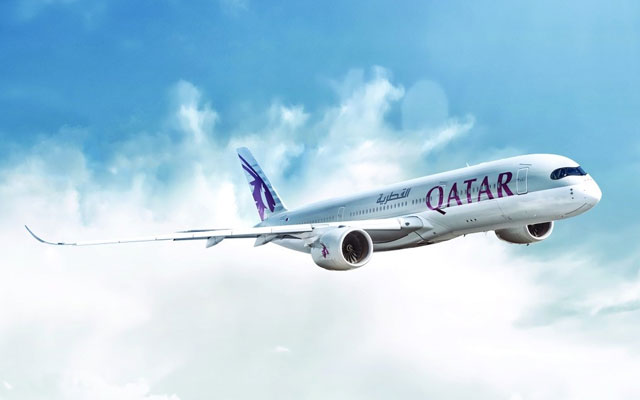
Qatar Airways is introducing a new platform for trade partners that will enable them to build tailored travel experiences for their customers.
Called Oryx Connect, it has been developed based on the New Distribution Capability (NDC) data transmission standard developed by IATA in partnership with the travel industry.
Oryx Connect will benefit travel agents through improved functionality, intuitive user experience, access to rich content and the ability to tailor travel experiences for their customers.
It provides various options to consume Qatar Airways’ NDC content. In addition to an existing web-based portal powered by Accelya Farelogix SPRK tool, agents can now access NDC content with a range of aggregators including Aarongroup, Duffel, Travelfusion, Travvise and Verteil. The Amadeus Travel Platform will be added in early 2022.
Qatar Airways Group CEO, Akbar Al-Baker, said: “Working collaboratively with trade partners is pivotal to our business success, so we are pleased to stand truly in partnership with our agents, rather than introduce artificial barriers, restrict content, add surcharges or apply complex administrative changes to the booking process.
“Oryx Connect will provide best-in-class booking and servicing capability to our agents and their customers at all levels of technological integration, and through multiple modes of connectivity, from the most familiar existing booking environments to the leading edge of flight retailing solutions.”
Travel agents will benefit from full offer and order management capabilities from booking, servicing, ticketing and payment. This includes intuitive display of Qatar Airways’ Classic, Convenience, Comfort and Elite fares, helping them deliver the most suitable product offering to customers.
They will also have access to a variety of ancillary products and service offerings. Payment options include industry-standard settlement methods, such as ARC and BSP cash and card, and IATA EasyPay.
UNWTO launches hospitality recruitment platform
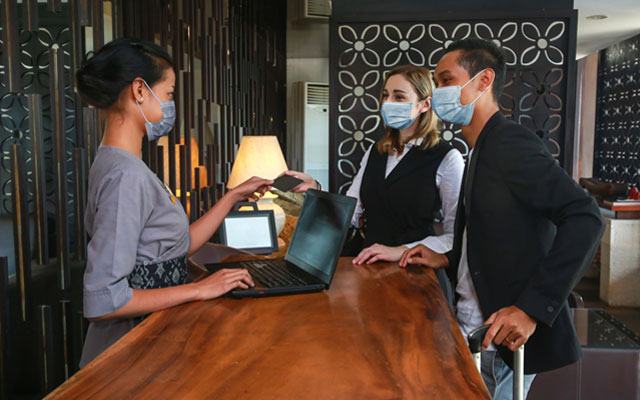
As part of efforts to kickstart tourism jobs recovery, the UNWTO has launched the Jobs Factory, an innovative platform designed to connect hospitality talent with employers across the sector.
The Jobs Factory harnesses global hospitality network Hosco’s power of machine learning, algorithms, and deep learning to match candidates with suitable positions, both locally and internationally.
Job-seekers are able to create a profile, search for positions that match their experience and skills, and set up job alerts to be informed of the latest opportunities. The platform also helps tourism businesses and organisations to find and recruit the best talent.
All of UNWTO’s 159 member states will be invited to use the Jobs Factory as their national tourism recruitment platform, as will its more than 500 affiliate members, ranging from businesses to universities and think tanks.
Additionally, through the Jobs of the Future Observatory, member states can also monitor current and future skills development to analyse trends. This will allow them to forecast and identify gaps and mismatches and make data-driven decisions.
UNWTO secretary-general Zurab Pololikashvili said: “The pandemic has hit global tourism hard. Up to 120 million jobs are at risk. However, tourism has a long history of adapting and embracing innovation. The Jobs Factory will be a great help to the millions of people who depend on tourism. It connects employers with the very best talent our sector has to offer. And it will help our member states make important decisions based on the latest, trusted data.”









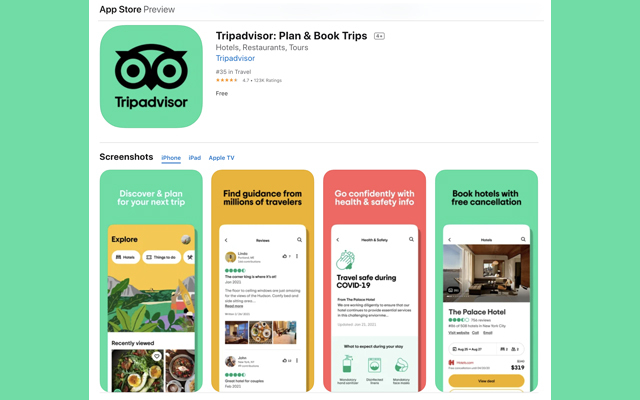
Tripadvisor has unveiled a refreshed mobile app for iOS and Android users, just in time for the travel rebound happening across the globe.
Available in the App Store and Google Play, the new app allows users to get travel guidance and tips; book all their travel plans in one place, from over 400,000 experiences and 2.3 million accommodations worldwide; and use a trip planning tool to save and organise traveller-recommended places.
The app also contains the latest Covid-19 health and safety information for hotels, restaurants, tours, and attractions. Users can also submit travel and dining reviews and post travel-related questions in the Tripadvisor forums.
The app launch coincides with the rollout of Tripadvisor’s new digital campaign, reminding travellers that “vacations miss you”. The campaign features 15- and 30-second digital videos on the travel giant’s social media channels and website to inspire wanderlust.
“We took this past year to refresh our native app to better surface timely and relevant guidance and tips from travellers who have been there before,” said Lindsay Nelson, chief experience and brand officer, Tripadvisor.
“Providing more personalised inspiration for consumers, whether they’re already at their destination looking for a hidden gem nearby or planning ahead, is exactly how we’re helping everyone become better travellers.”