
Tripfez started as a business focusing on Muslim travel in Asia back in 2016. This year, you found a new opportunity in purchasing travel companies in distress in Malaysia.
The travel industry in Malaysia experienced a significant downturn in 2020 due to the continuous lockdown and closure of both domestic and international borders to curb the spread of Covid-19. The movement control order introduced throughout most of 2020 and in 2021 has impacted the revenue of many travel companies.
While there is no way to tell exactly what the economic damage from the global Covid-19 pandemic will be, there is widespread agreement among economists that it will have severe negative impacts on the global economy at large, especially for the travel industry.
As Winston Churchill was working to form the United Nations after WWII, he once famously said: “Never let a good crisis go to waste.” With every crisis, there lies opportunity. We believe in this, too, and during this crisis, we saw an opportunity in consolidating travel companies to enable a strong position when travel rebounds. This will enable us to hit the ground running with scalability capacities, accelerating profitabilities, and maximising growth and scale as borders start to open.
We are using this opportunity on two levels: one, to consolidate travel companies via merger and acquisition (M&A); and two, to streamline operational costs and departments such as accounting, marketing, technology stack, and technology team. Streamlining the back-office ensures an increase in volume, while fixed costs remain the same.
How many companies are you currently negotiating M&A deals with?
We are finalising the terms with two travel companies with amazing track records and industry standing. Unfortunately, we are unable to reveal the names of these companies at this point in time. We are also eyeing another four companies. We are also not discounting the possibilities to extend beyond the tour business, into other verticals within the travel industry including hotels.
What is your criteria for buying a company?
What we normally eye are travel agencies that are leaders in their niche with a massive, loyal customer base. These agencies normally offer exclusive or distinctive products that are difficult to replicate and have a wide geographical, albeit niche, reach.
What are your considerations when negotiating an M&A deal?
With each M&A deal, we put a strong emphasis on two main areas: strategic fit and organisational fit. A strategic fit is important to ensure that companies are aligned both in terms of strategies as well as the roles each plays. It is equally important to stress the need to achieve an organisational fit by matching administrative systems, corporate cultures, or demographic characteristics. This ensures that several operational costs and departments can be streamlined, ensuring an increase in inefficiencies and optimising overall costs.
What challenges do you foresee after completion of an M&A deal?
The biggest challenge lies in unifying the company cultures and employee policies like benefits, compensation and holidays, among others. These must be settled prior to the M&A.
What are your plans after completing the M&A process?
Post-M&A, we are looking at placing a stronger focus on different segments of the market such as corporate travel over leisure. Several of the companies we are targeting for M&A are household brands with a strong offline presence, but with room to improve on the online space.
The online travel sector has grown dramatically over the last five years and being strong in this space, we see an opportunity to scale the business by merging the offline and online segments, and leveraging the strong market presence of these new companies.
How are you financing these M&A transactions?
We are looking at a mix of two types of financing instruments, mainly equity financing and debt financing, combined with utilising existing available cash.
A bulk of the financing comes from our cash reserves and debt financing. With any debt financing, the most important aspect to take into consideration is cash flow management and ensuring there is adequate cash to cover operational expenses before travel reopens as well as the ability to repay the debt on top of interest obligations. We do not have equity financing at the moment, but we are open to this, provided we find a strategic partner with the potential to bring added value to the company.
Any plans of expanding beyond Malaysia via M&A?
We are not limiting ourselves to geographical borders. The travel business revolves around the movement of people between two places, and as such, the businesses involved can be located in two different areas, extending beyond their original geographical boundaries.
We have seen similar exercises done with large travel companies such as TUI AG that operates in more than 30 countries as well as giant online company, Expedia.
We will be interested in overseas expansion should we find companies that are leaders in their niche with a massive, loyal customer base.
Do you think the travel industry in this region will see more consolidations in the near future if the pandemic drags on?
Consolidation among travel companies has always been a hot topic even before Covid-19. We have seen ideas such as the merger of Malaysia Airlines and AirAsia being brought up time and time again. Even within the space, we have seen a significant increase of hotels trading hands in 2019 and 2020.
With the pandemic crossing its 15-month mark, margins are stretching thin, and tight cash flows are pushing the industry to undergo M&A to strengthen its competitive position, optimise costs, and grow post-pandemic. Globally, we saw American Express Global Business Travel acquiring Egencia, the corporate travel arm of the Expedia Group.
According to Real Capital Analytics, the total value of hotel transactions across Malaysia in 2020 alone stands at RM497 (US$119.7) million. Over the next six months to a year, I expect to see more and more consolidation among travel companies as more see the value of operating under a united umbrella. Joining arms while crossing the stream makes more sense than trying to swim upstream yourself.




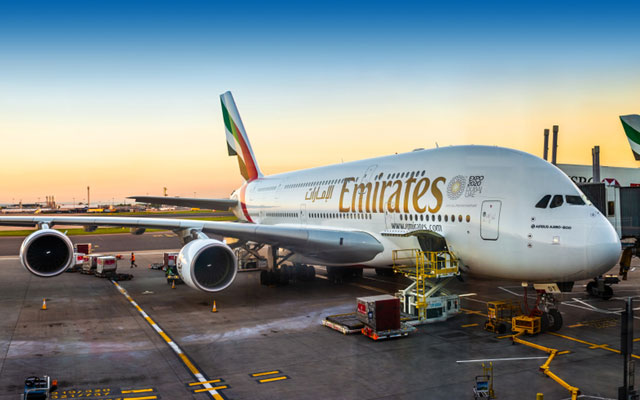










The IATA has launched a global Mobility Aids Action Group to improve the transport and handling of mobility aids, including wheelchairs, for travellers with disabilities.
The Action Group will be the first-of-its-kind aimed at tackling issues around the safe and secure transport of mobility aids. It will also provide advice and recommendations to airlines and other stakeholders concerning the establishment of policy, process and standards related to the handling and transport of mobility aids.
“Every year, thousands of wheelchairs are transported safely by air. However, damage or loss is still occurring. And when it does, it is devastating to the passenger as these devices are more than equipment – they are extensions of their body and essential to their independence. We acknowledge that we are not where we want to be on this as an industry,” said Willie Walsh, director general of IATA.
“This is why we want to do something about it on a global level, not through setting up a talking shop, but by bringing the key groups together to take practical action.”
Uniquely, the Mobility Aids Action Group will involve the full range of stakeholders impacted by this issue, including accessibility organisations (representing travellers with disabilities), airlines, ground service providers, airports and mobility aids manufacturers. It will be the first time a mobility aids manufacturer will be invited to participate in an IATA task force.
Despite the Covid-19 crisis, IATA and its member airlines have worked with the accessibility community to move the priority of accessible air travel forward through a number of efforts. These include developing new practical guidance to shape airline policy given new health and safety measures, and guidance for face mask policies for travellers with accessibility needs.
“According to World Health Organization, there are more than a billion people living with disabilities. And with aging populations in countries around the world, travellers with disabilities will be a growing customer segment for airlines,” said Walsh.
“With this action group as part of the industry’s other accessibility initiatives, we want to continue on this journey to make the freedom to fly more inclusive – while continuing to work with the accessibility community every step of the way.”