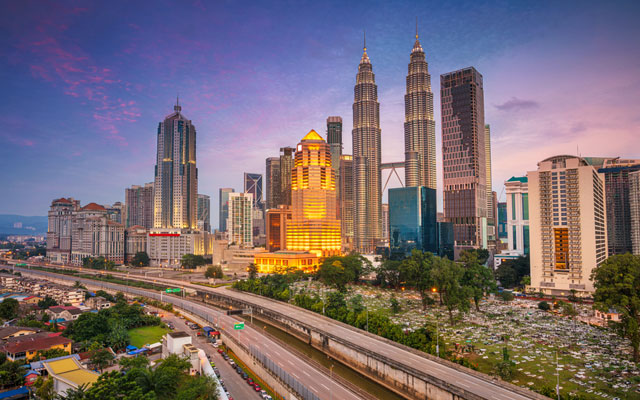
The Malaysian government is looking into relaxing restrictions on travel and dine-ins at restaurants for those who are fully vaccinated against Covid-19.
Prime minister, Muhyiddin Yassin, said he had asked for these relaxations to be considered as part of the National Recovery Plan as the country takes steps towards returning to normality, The Star reported on Saturday.
Malaysia may allow those fully vaccinated to travel and dine out at restaurants
However, it is still unknown whether relaxing restrictions on travel will mean that interstate and inter-district travel for leisure purposes will be allowed once again. The easing of restrictions will be decided at the National Recovery Council meeting this week.
On Saturday, Malaysia’s daily number of Covid-19-linked deaths rose to a record high of 138 from 115 the day before, with the country recording 12,528 new cases that day.
Nigel Wong, secretary-general at the Malaysian Association of Tour and Travel Agents, said that should the government relax restrictions and allow travel for leisure purposes for those fully vaccinated, initial take-up will be slow given the high daily Covid-19 caseload. However, it might stimulate purchase of travel products for travel at a later date.
Adam Kamal, head of contracting & domestic market at ICE Holidays, said: “I don’t expect to see a demand for interstate travel for leisure purposes until all the (hotels and attractions) are open. Currently, all hotels in the country are closed for leisure purposes. Also, with the high number of Covid-19 cases, I don’t think people will feel safe to travel despite being fully vaccinated.”
He added that the relaxation may, however, trigger a demand for business travel purposes.
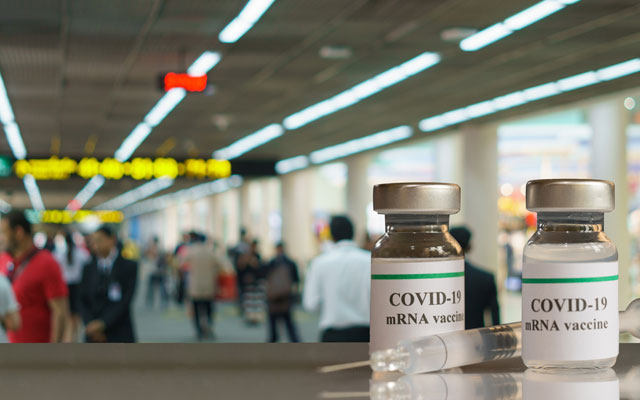
The restart of international travel could be seriously delayed without worldwide reciprocal recognition of all approved Covid-19 vaccines, warned the WTTC.
The global tourism body’s warning follows concerns tourists face being turned away at the borders because countries don’t have a common list of internationally recognised and approved Covid-19 vaccines.
WTTC issues plea for reciprocal recognition for all vaccines and vaccine batches to resume international mobility
This comes just days after a number of British holidaymakers, who had been administered the Indian Covishield batch of the Oxford/AstraZeneca vaccine, were rejected entry into Malta despite the drug being chemically identical to the UK-made vaccine.
Over the past few weeks, reports of holidaymakers facing obstacles to entry have been on the rise, with some even being prevented from boarding their flights to destinations.
WTTC believes that once again, the lack of international coordination to agree on a list of approved vaccines, is creating yet another major stumbling block for the restart of international travel.
This comes despite most vaccines having secured the approval of the World Health Organisation or Stringent Regulatory Authorities.
WTTC warned that reports of travellers being turned away because they have the ‘wrong’ vaccine batches or ‘unrecognised’ vaccines have fuelled concerns from consumers, deterring them from booking and thereby damaging the already struggling travel and tourism sector.
Virginia Messina, senior vice president of WTTC, said: “Reciprocal recognition of all vaccine types and batches is essential if we are to avoid any further unnecessary and damaging delay to restarting international travel.
“The failure of countries to agree on a common list of all approved and recognised vaccines is of huge concern to WTTC, as we know every day travel is curbed, more cash-strapped travel and tourism businesses face even greater strain, pushing ever more to the brink of bankruptcy.
“We can avoid this by having a fully recognised list of all the approved vaccines – and vaccine batches – which should be the key to unlocking international travel, not the door to preventing it.
“It will also give holidaymakers and travellers the confidence they need to book trips, flights and cruises, confident in the knowledge that their fully-vaccinated status will be internationally recognised.”
As Covid-19 continues to evolve and countries face diverse epidemiological situations with varying response capacities and access to life saving tools, the World Health Organization (WHO) has urged governments to maintain a risk-based approach to international travel resumption that respects the dignity, human rights and fundamental freedoms of travellers.
The approach, according to WHO should consider the risk posed by travel for the importation and exportation of cases in the context of the evolving epidemiology, including the emergence and circulation of virus variants of concern; the expansion of the Covid-19 vaccination roll-out; and lessons learnt while responding to the pandemic.
WHO recommends that governments prioritise a respectful and risk-based approach to international travel resumption
WHO recommends that member states no longer require proof of Covid-19 vaccination as a mandatory condition for travel; consider lifting measures for vaccinated travellers or those who had previous confirmed Covid-19 infections six months prior to travelling and are no longer infectious; offer alternatives to travel for individuals who are not vaccinated or lack proof of past infection; and consider recording proof of Covid-19 vaccination in the International Certificate of Vaccination or Prophylaxis (ICVP) or with other health certificates recognised by regional or global intergovernmental bodies.
In addition, WHO has drawn out guidelines for the testing and quarantine of international travellers. It recommends that member states avoid treating international travellers as a priority group for Covid-19 testings, as they are not suspected cases by default; only implement testing and/or quarantine measures to international travellers on a risk-based manner and review testing and quarantine policies regularly; and ensure that the dignity, human rights and fundamental freedoms of travellers are respected and any discomfort or distress minimised should quarantine be required.
WHO’s latest advisory also identifies various key considerations for travel-related measures, such as the need to prioritise essential international travel at all times; conduct regular and thorough risk assessments to update international travel-related measures as the situation evolves; publicly communicate changes to international travel-related measures and requirements; communicate to international travellers the importance of adherence to health and safety measures throughout their journey; explore bilateral, multilateral and regional agreements that will facilitate the recovery of key socioeconomic activities for which international travel plays an important role.
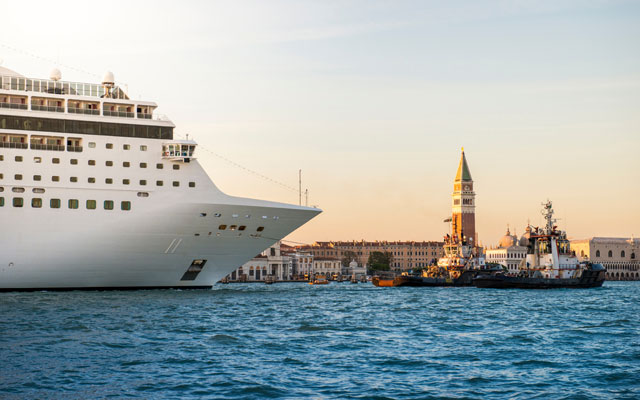
After years of hesitation, Italy will finally slap a ban on large cruise liners entering Venice’s waters, with the restriction coming into effect August 1.
News agencies reported that, according to cabinet sources, the government was forced into the move after UNESCO threatened to put Italy on a blacklist for not banning liners from the World Heritage site.
Large cruise liners will be rerouted to dock at the industrial port of Marghera for now
The ban will impact ships weighing more than 25,000 tonnes. They will no longer be allowed to enter the Giudecca Canal that leads past the landmark Piazza San Marco. Instead, they will be rerouted through the Venice lagoon to dock at the industrial port of Marghera on the mainland.
The government has committed to the construction of five berths at Marghera to accommodate cruise liners by 2022, a project that would cost 157 million euros (US$185 million). It has also promised compensation for those who lose out financially from the law, although it did not specify whether this includes any of the 4,200 local workers employed by the cruise industry, reported CNN.
Francesco Galietti, national director, Italy with the Cruise Lines International Association, hailed the decision as “a major step forward” and welcomed the alternative route for cruise ships.
According to Galietti, the use of Marghera port will be a “short to medium-term solution”, as it is still within the Venetian lagoon. Commercial vessel traffic in the lagoon is damaging the lagoon’s ecosystem. The Italian government had ruled on April 1 that a permanent port must be constructed outside the lagoon, but this would take time.
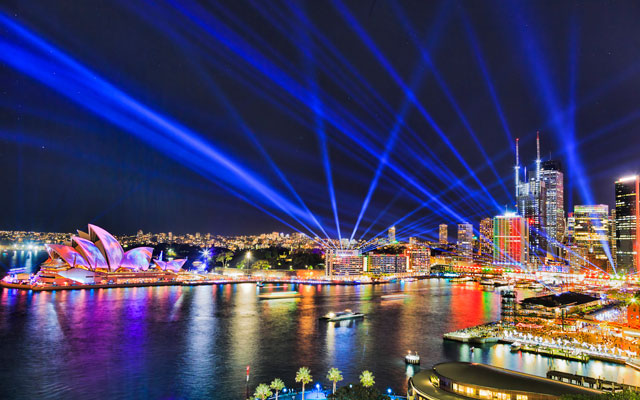
An ongoing lockdown of Greater Sydney has disrupted Vivid Sydney’s August launch plans, forcing the high profile arts and culture event to be rescheduled to September 17 through October 9.
The event, which had its 2020 edition cancelled because of the pandemic, was supposed to take place from August 6 to 28.
Vivid Sydney last took place in 2019, as the pandemic dashed 2020’s programme
Commenting on the decision to push back Vivid Sydney, tourism minister Stuart Ayres said: “We all want to see Sydney shine through the spectacular show of creativity and innovation that is Vivid Sydney in September and October this year.
“The recent outbreak has presented a new challenge for everyone, and the health and safety of our citizens and entire event community involved in Vivid Sydney is our foremost concern.”
However, Ayres has also hinted at further delays should the community’s safety continues to be a concern.
Destination NSW (New South Wales), which owns, manages and produces Vivid Sydney with the NSW Government, will continue to work with NSW Health and other agencies to deliver a Covid-safe event with support from event partners, artists, sponsors, and suppliers.
Sabre Corporation has released a white paper outlining the new methodologies it is creating to enable its airline partners to create more holistic, accurate network plans as their focus shifts from short-term planning to long-term recovery in the wake of the pandemic.
“From an aviation perspective, the latter half of 2021 is the time to change our outlook from crisis mode with a focus only on the immediate term to again taking on a more strategic view; analysing market and fleet adjustments for the seasons and years to come,” said Cem Tanyel, chief services officer, Sabre Travel Solutions.
Sabre releases new insights into how airline network planning is adapting for travel industry recovery
“However, shifting from a purely short-term scheduling focus back to a full timeline network planning view will not be easy in the current environment. In addition to difficulties caused by reduced passenger numbers and revenue, and resulting reductions in crew for some airlines, there are additional challenges given that the data airline managers could previously rely on to estimate future demand beyond the next few weeks is no longer reliable.”
As such, Sabre is developing the robust new airline network planning methodologies described in its new white paper, The Art & Science of Airline Network Planning to Ramp up for Recovery.
These new methods can leverage its GDS shopping data in conjunction with historical global demand data and industry capacity data to predict demand in a manner that works effectively even when prior year results become less representative. Using these new approaches, Sabre has developed alternative 2021 schedules and demand estimations that are more reflective of what is likely to occur.
The white paper sets out the new methodologies created by Sabre to take a more holistic view of airline network planning at a time when it is not possible to rely on previous years’ data alone.
The paper also contains latest industry data that can help airline managers in their decision-making process. As well, it highlights why airlines need to place a deeper focus on segmentation in both the leisure and business segments, the destinations and segments that are seeing above average capacity rebound, and how Covid-19 has accelerated network planning innovation.
The pandemic has exacted a toll on the hospitality industry, with more hotel owners putting their properties up for sale at below market rates, providing an opportune time for investors to make their move. Amid such a climate, hotels in Malaysia have attracted growing interest from investors.
Listings of Malaysia hotels for sale on Zerin Properties has increased by 40 per cent year-to-date, with rising interest from investors, both local and overseas.
More investors are looking to acquire hotels assets in Malaysia at below market rates amid pandemic
Zerin Properties managing director and CEO, Previndran Singhe, shared that one of the reasons for the uptick in investor interest for hotel assets in Malaysia is that asking prices for these properties have dropped between 10 to 35 per cent as compared to pre-lockdown. As well, he added, the ringgit is very competitive in comparison with Singapore and US dollars.
He said: “Our investors are also strongly looking at Vietnam and the Philippines. Ownership structures in Thailand and Indonesia make investments a bit more challenging as compared with Malaysia.”
Previndran added that Malaysian-based investors are eyeing properties and making offers on hotels in Kuala Lumpur, Penang and Langkawi. Meanwhile, foreign buyers who have always shown interest in properties in Kuala Lumpur and Langkawi are now also looking at Kota Kinabalu and Johor, especially Johor Bahru and Desaru.
He said: “Interest is driven by the strong domestic rebound after the movement control order 1.0 last year, as well as robust markets overseas that have proven travel is still in demand. In Malaysia, travel recovery might take awhile but they are prepared to wait. Once 70 to 80 per cent of the population is vaccinated, I anticipate travel bubbles will be formed within South-east Asia first before extending beyond.”
Previndran: Growing investor interest in Malaysia hotels driven by strong domestic rebound post-lockdown
The number of new Covid-19 cases has been increasing rapidly in the country to the point that the healthcare system is on the verge of collapse. This has resulted in the government imposing a ban on interstate travel nationwide since early 2021.
Insufficient assistance and support from the government coupled with harsh lockdowns that prevent hotels from accepting leisure guests, offering dine-ins at their restaurants and renting event spaces to organisers, have threatened the survival of hotel businesses this year.
Previndran shared: “We are seeing more and more hotel owners approaching us to sell their hotels over the past two months.”
Istana Hotel Kuala Lumpur had given notice to its associates last month that it would close on September 1. With the current harsh business environment, Previndran anticipates more hotel closures this year, across all locations in the country.
Malaysian Association of Hotel Owners executive director, Shaharuddin M Saaid, concurs with Previndran’s view and reveals two possibilities – hotel owners may choose to close temporarily and reopen when the business environment improves, or they may close for good and look for a buyer if the lockdown and ban on interstate travel continues indefinitely with no certainty of business recovery.
He has seen an increased number of enquiries from overseas investors seeking information on hotel properties, especially three- and four-star hotels in Kuala Lumpur.
He said: “Some property owners that have listed their properties for sale last year, but were unable to dispose of them, have lowered their asking prices. This is a good time for investors looking for a good deal.”
According to the Hotel Industry Survey Report by the Malaysian Association of Hotels (MAH), as of mid-June, out of 320 hotel respondents, two have permanently closed and 91 have shuttered temporarily. By percentage, almost 71 per cent are still operating, most of which are dependent on quarantine needs, while others are catering to guests from essential service sectors.
MAH’s CEO, Yap Lip Seng, said: “With (Covid-19) cases breaking new records these past two weeks and insufficient assistance and support from the government, I don’t see things improving anytime soon.”
He shared that the key to moving forward is highly dependent on the National Immunisation Programme, aimed at achieving herd immunity in the country.
As tourism gradually reopens, India faces a long road to regaining its share of international arrivals in the post-Covid era, said a report by HVS.
The report’s authors, Mandeep S Lamba and Dipti Mohan, called the Indian government’s recent announcement of its plan to provide free visas to the first 500,000 tourists once international travel resumes in the country as “a first step in the right direction to encourage inbound tourism”, but added that it will be a slow road to recovery for the country’s tourism.
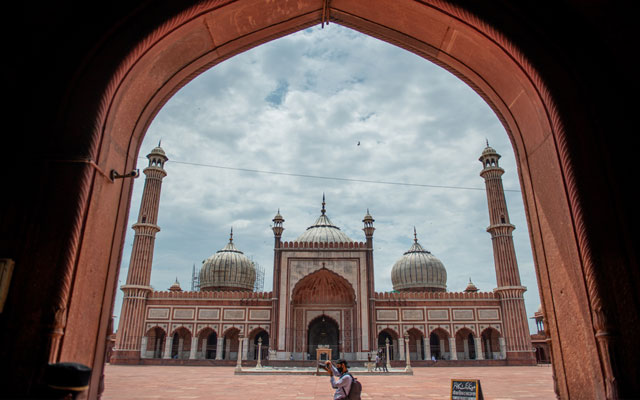
India has been among the hardest hit destinations by the pandemic; Jama Masjid in New Delhi, India pictured
Given the significant negative publicity India received in the global press during the pandemic, the country “will have to work much harder to regain its pre-Covid share and then grow beyond it”, the authors wrote.
With safety and health being of paramount importance to the post-pandemic traveller, India would have suffered a setback to its reputation as a tourist destination from its handling of the Covid-19 pandemic even after the devasting second wave in the country.
It is, therefore, critical that the entire tourism fraternity – government, public sector, private sector, and even the citizens – come together as one to rebuild traveller confidence and put India back on the global tourism map.
The report detailed four measures to help the country regain its competitive advantage:
1) Health, safety, and adherence to Covid-appropriate behaviour should be non-negotiable. Ensuring that all stakeholders, including tourists, follow the Covid-safety guidelines to the tee is of primary importance to rebuilding international tourist confidence and trust. Hotel and restaurant managers need to strictly ensure social distancing and other Covid safety measures at their premises and even refuse entry to patrons who are not following the guidelines.
2) The vaccination drive in the country has gained momentum and the government plans to vaccinate the majority of the population by the end of this year. However, the government and the private sector should collaborate to ensure that all tourism-sector employees – from hotel staff to tourist guides and cab drivers – are fully inoculated as a priority.
3) Along with creating a reboot plan, the government should introduce effective marketing campaigns, showcasing India as a ‘safe’ destination. The campaigns should communicate the Covid safety measures being implemented at tourist destinations, including the fact that all travel employees are fully inoculated.
These campaigns should also highlight that healthcare facilities, infrastructure, as well as amenities at airports and railway stations, have been augmented due to the pandemic, which will enhance the perception of India as a safe and attractive destination. It is also perhaps time for India to extend the 24×7 multilingual tourist helpline to be a ‘911’-like service.
4) Effective destination management can help reduce overcrowding. Tourists as well as the hospitality industry are eager to go back to normal, but we need to ensure that it is done in a phased manner so that we can avoid the third wave.
This is perhaps the right time for the authorities to evaluate global best practices, establish models based on international guidelines, and implement strategies for effective destination management to strike the much-needed balance between tourism and sustainability.
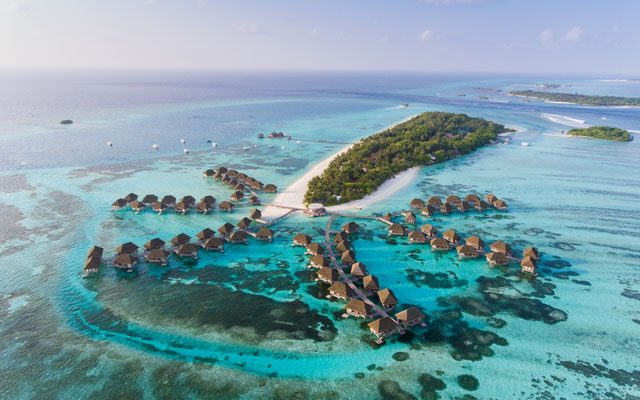
The Maldives will reopen its borders to travellers from South Asian countries including India from July 15.
International passengers will be required to present a negative PCR test result taken within 96 hours before departure, said the Ministry of Tourism in Male in a tweet last month.
The Maldives had shut its borders to Indian travellers in May due to a deadly second Covid-19 surge there
The announcement has come as a massive relief to tourism stakeholders across the island nation whose economy is heavily dependent on tourism.
The Maldives had suspended the issuance of tourist visas for visitors from South Asian countries, since May 13. Besides India, the countries included under the ban were Afghanistan, Bangladesh, Bhutan, Nepal, Pakistan, and Sri Lanka.
India has emerged the second largest source market for the Maldives this year, accounting for 21 per cent of all arrivals, according to media reports.
The island nation has welcomed more than 400,000 tourists since the start of January until end-June. Russia has been the biggest source market, followed by India, Ukraine, Germany and Kazakhstan.
Defying prediction by some travel and tourism industry observers that group tours will be a thing of the past post-pandemic, Anthony Lim, Asia president of The Travel Corporation, says escorted tours are in fact a safer and more convenient way for people to explore a destination.
In this new episode of TTG Conversations: Five Questions video series, Lim discusses changes to touring operations and itineraries in a post-pandemic world, and how technology is enhancing customer service and interaction during the journey.

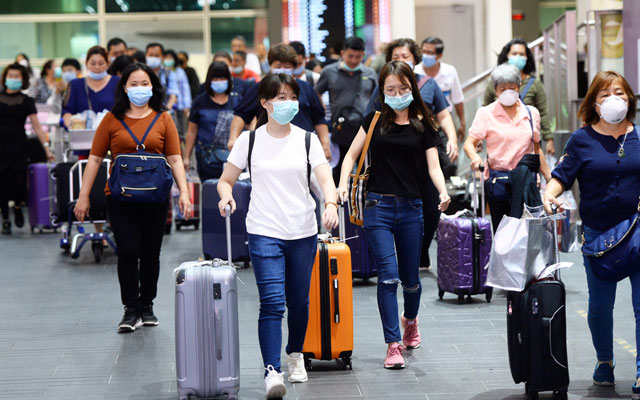
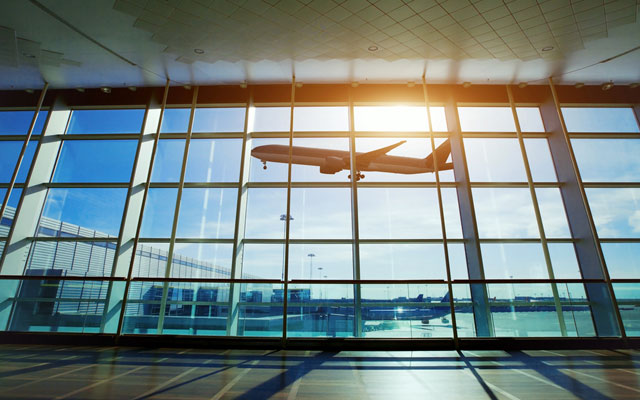










The restart of international travel could be seriously delayed without worldwide reciprocal recognition of all approved Covid-19 vaccines, warned the WTTC.
The global tourism body’s warning follows concerns tourists face being turned away at the borders because countries don’t have a common list of internationally recognised and approved Covid-19 vaccines.
This comes just days after a number of British holidaymakers, who had been administered the Indian Covishield batch of the Oxford/AstraZeneca vaccine, were rejected entry into Malta despite the drug being chemically identical to the UK-made vaccine.
Over the past few weeks, reports of holidaymakers facing obstacles to entry have been on the rise, with some even being prevented from boarding their flights to destinations.
WTTC believes that once again, the lack of international coordination to agree on a list of approved vaccines, is creating yet another major stumbling block for the restart of international travel.
This comes despite most vaccines having secured the approval of the World Health Organisation or Stringent Regulatory Authorities.
WTTC warned that reports of travellers being turned away because they have the ‘wrong’ vaccine batches or ‘unrecognised’ vaccines have fuelled concerns from consumers, deterring them from booking and thereby damaging the already struggling travel and tourism sector.
Virginia Messina, senior vice president of WTTC, said: “Reciprocal recognition of all vaccine types and batches is essential if we are to avoid any further unnecessary and damaging delay to restarting international travel.
“The failure of countries to agree on a common list of all approved and recognised vaccines is of huge concern to WTTC, as we know every day travel is curbed, more cash-strapped travel and tourism businesses face even greater strain, pushing ever more to the brink of bankruptcy.
“We can avoid this by having a fully recognised list of all the approved vaccines – and vaccine batches – which should be the key to unlocking international travel, not the door to preventing it.
“It will also give holidaymakers and travellers the confidence they need to book trips, flights and cruises, confident in the knowledge that their fully-vaccinated status will be internationally recognised.”