

An appetite for luxury

Australia
Australians are satisfying their luxury travel needs with domestic getaways that were traditionally glossed over in favour of overseas experiences.
They are also getting used to a different kind of luxury than they were accustomed to – one that is more rustic and often defined by the remoteness of the location.

“Luxury in Australia is different to staying in a magnificent hotel in the centre of Paris, for example,” said Claudia Rossi Hudson, owner of Mary Rossi Travel.
“This is because the experience or the definition of luxury that we can give in Australia includes the tyranny of distance. So, you might be staying in Lizard Island where the lodges are very comfortable but they are not gilt taps and marble floors.”
“(Instead) they are luxury on a lodge that is on an island, an hour and a half’s flight in a private aircraft from the nearest international airport. There are no local food sources and it’s expensive to stay there. And when you’re there, you realise that the luxury element is its uniqueness and remoteness, and the fact that you had that entire beach practically all to yourself and that portion of the Great Barrier Reef,” she explained.
Luxury travel agents are also finding that Australian preferences are quite different to those of the international visitor, desiring locations with dramatic landscapes over local wildlife and city experiences.
“The Kimberley in Western Australia is incredibly popular,” said Kirsty Siekmann, CEO at The Tailor. “International clients would come to Australia with a lot of boxes to tick but Australian clients are doing two weeks just exploring that region.”
“Demand is very strong as they have the dry and warmer season so along with Queensland and much of the Top End, their bookings are completely full this year,” she continued.
Also popular are five-day safari trips in the north, food and wine region visits, treks in the Flinders Ranges, and a breathtaking journey and dining experience on The Ghan.
However, the trend is expected to turn at the end of the year when the summer heat pushes domestic tourists to Australia’s cooler southern parts. Seikmann projects that travel bookings for Margaret River, Tasmania, and Victoria will skyrocket, following patterns from last year. – Adelaine Ng
India
While India’s wealthy were able to explore the world inlate-2020 and early part of 2021, their travel freedom was curtailed when a second wave of Covid-19 infections swept across the country this April.
Indian travel consultants dealt with numerous cancellations, triggered by international destinations slapping entry bans on travellers from India.

Summer 2021 was supposed to be a good travel season but with infections still raging in India, outbound travel possibilities and demand continue to be suppressed.
Prior to the latest cancellations, Luxe Escape had clients who booked a month-long stay in London and private jets to Dubai, shared founder Aditya Tyagi.
Demand for summer breaks in the Maldives hit its peak for Tour Passion, said founder Naveen Manchanda, before Covid-19 returned to wreck bookings.
“We also had good enqueries for Europe for high-end cruises and experiences like spa and (dining). However, the second pandemic wave changed the entire scenario,” said Manchanda.
Hopes are now pinned on 2022.
Tyagi said: “Most of our clients are now desperate to travel out of India. We already have a small VVIP group request to Saint Tropez, and demand for destinations like Greece, Italy, France, Spain and Nordic countries (are back).”
When outbound travel is once again possible, Tyagi said clients would be drawn to small luxury boutique hotels where mingling with other people could be avoided.
Wellness tourism would also be top of mind amond India’s well-heeled.
“Wellness retreats in Europe and South-east Asia will be high in demand in 2022. Luxury travellers will opt for longer stays in an absolutely safe environment,” said Ajay Jaipuria, founder, Travel Oyster India.
Echoing the prediction, Tyagi has crafted a week-long yoga cruise in Croatia, led by a yoga master who will also conduct other wellness programme onboard.
In fact, Tyagi is so confident in the potential of post-pandemic wellness tourism that he has launched a new brand, Well Escapes. – Rohit Kaul
Japan
Japan’s wealthy consumers are likely to spend on domestic jaunts rather than overseas trips in the coming months amid a slow Covid-19 vaccine roll-out and government advice to avoid “unnecessary and non-urgent” travel abroad.
Luxury travel providers are expecting an uptick in sales for the rest of 2021 based on consumer sentiment and behaviour since the outbreak.
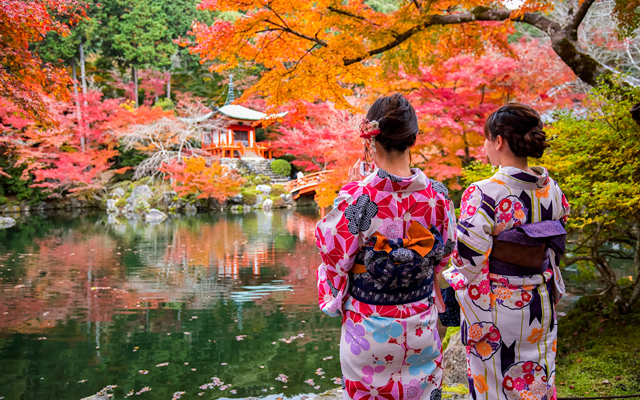
Makarim Salman, founder and lead guide of high-end private tour company Maction Planet, anticipates further growth in domestic travel “from autumn 2021, once the Olympics is over and more people have been vaccinated”.His high-end hotel partners in Kyoto are already reporting full bookings for autumn.
Private suites or remote locations that can accommodate greater social distancing are likely to be a hit.
Hoshino Resorts is also anticipating growth in micro-tourism, which involves travel within an hour’s drive from home. In 2020, the luxury hotelier enjoyed 90 per cent occupancy at its Kai Enshu in Shizuoka Prefecture, where 60 per cent of guests were locals keen to experience the renowned tea baths and tea fields.
According to credit card company Luxury Card, suite room occupancy in Japan in 2020 was more than five times higher than in 2019.
In anticipation of more business, hotels are being bullish with openings and renovations. Hotel the Mitsui Kyoto, adjacent to Nijo Castle, opened in late-2020 with a Presidential Suite costing 1.3 million yen (US$ 11,723) per pax per night. Shiroyama Hotel Kagoshima opened its 200m2 Imperial Suite, which offers stunning views of active volcano Mount Sakurajima and costs 1.1 million yen per night.
Private jet bookings are expected to soar too, as luxury domestic travel demand improves. In June 2021, Matsuzakaya Nagoya Travel Center and ANA Business Jet began offering trips from Nagoya International Airport to Niseko, Hokkaido, and Nagasaki, Kyushu, for two million yen per person for a booking for four passengers.
Takayuki Suzuki, representative of Matsuzakaya Nagoya Travel Center, told TTG Asia that “sales are strong among the wealthy at the moment” while ANA Business Jet’s president Jun Katagiri said wealthy travellers are choosing private flights because of their low infection risk.
Due to limited travel since the outbreak of the pandemic, Salman also predicts splurges by middle and upper-middle class consumers on luxury travel products, giving a further boost to Japan’s high-end sector. – Kathryn Wortley
Singapore
Bespoke itineraries and exclusive destinations that allow for privacy and space, slow travel and are family-oriented constitute luxury travel trends in 2021 and 2022 for the Singapore market, according to four specialist travel operators.
Nico Heath, co-founder and director of Lightfoot Travel, explained: “The first is a desire for private islands and private island resorts. The Maldives, where each resort is on its own island and you are whisked from airport to resort immediately after landing, has been exceptionally popular. Once airlines start running routes more regularly, there has also been an upswing in interest in more far-flung destinations such as Fiji and French Polynesia.”

An uptick in private jet holidays also arose due to the desire to reduce risk by avoiding commercial air travel.
“There’s a shift to slower travel options and more in-depth travel instead of hopping around to see as much as possible within a certain amount of time,” observed Mike Harlow, general manager for Scott Dunn Asia.
Think single destination country, or keeping inter-country travel to a minimum, according to co-founder and managing director of Quotient TravelPlanner, Javiny Lim.
Harlow noticed that East Asia remains top choice as it is still closer to home while offering a wide variety of experiences which can be done in a single location.
Heath observed the desire for road trips as they give travellers greater freedom, the ability to slow the pace of their journey, and with a lot less risk.
Rugged landscapes and the freedom to go on long driving journeys in expansive destinations, such as New Zealand and Ireland, are of interest to luxury travellers in Singapore, Lim added.
“Travellers are more willing to explore deeper at a destination and want to be wowed by extraordinary experiences on their holiday, from astounding nature to award-winning architecture to exclusive interactions with esteemed custodians.”
Locations like Antarctica and the Galapagos Islands with unsurpassed natural beauty and native wildlife continue to be a draw in 2021 and beyond.
Besides, there is also robust demand for family holidays and private villas to house the extended family in destinations such as Sri Lanka, Thailand, Italy and Greece in 2022. African safaris are popular with families with older children.
It comes as no surprise that affluent travellers are prioritising safety, and are willing to pay more for hygiene reassurances and preferring the flexibility to amend their travel plans with zero or minimum penalty.
Founder and director of Intriq Journey, Jess Yap, said: “Guests are starting to enquire and book for luxury travel for last quarter of this year and into 2022. For instance, we have a small group journey that is departing to Saudi Arabia in December 2021. We also have some bookings to Antarctica for the year-end.” – Serene Foo
Thailand
An unusual luxury travel trend is emerging in Thailand, where – despite having more complex post-pandemic travel procedures to grapple with – billionaires are choosing to skip assistance from travel agencies to achieve utmost privacy for their holidays.
Anake Srishevachart, president of UniThai Trip, said an increasing number of high net worth customers are choosing to book their own private jet and charter resorts on their own. For those who have continued to rely on travel agents to customise travel packages for family or friends, resorts that are exclusive to members are favoured.

Anake said: “The pandemic has taught well-heeled people to change their lifestyle and leisure activities. Many now value even more true exclusivity and privacy during their trips.”
However, a complete departure from travel agencies is not possible when special interest trips need to be made, such as vaccination tours.
Outbound travel specialists in Thailand that are still retaining luxury accounts say destinations close by are in favour, such as places within Thailand or Singapore and Hong Kong in South-east Asia.
Pornthip Hirankate, managing director of Destination Asia (Thailand), said Thailand’s own Phuket and Phi Phi islands are attracting many Thai residents with spending power.
Den Mahavansanandana, managing director of Inspirit Holidays, said exclusive tours to Singapore, Laos, Cambodia and Bali are selling well, while there is also demand for parts of Europe. He believes that governments will be watching how Thailand conducts her Phuket Sandbox tourism reopening. If done well, governments will gain confidence to welcome Thai residents into their own country. – Suchat Sritama
Into the woods
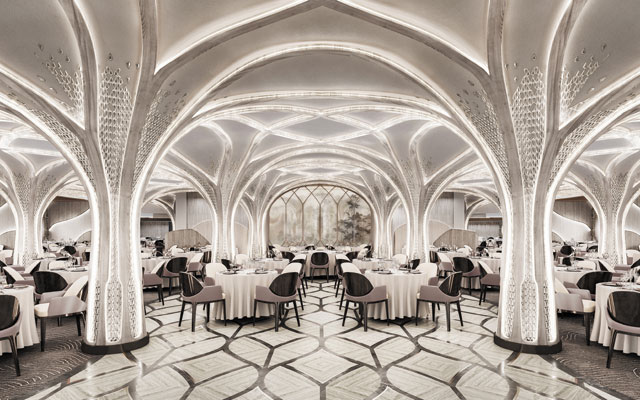
Seven Seas Grandeur, the sixth luxury cruise vessel to join Regent Seven Seas Cruises in 4Q2023, has unveiled sneak peeks of its signature specialty restaurant Compass Rose.
Multi-award-winning Studio DADO has crafted a space that is reminiscent of an enchanted forest. The journey begins with a delicate, cascading waterfall sculpture at the entrance and onwards under a canopy of interwoven crystal and wood-edge illuminated trees.
The interior features floor-to-ceiling illumination by thousands of crystal-faceted leaves which are encrusted on pillars and branches enveloping the restaurant. A star-dusted view of the ocean is provided by hundreds of twinkling lights surrounding the windows.
Adding to the atmospheric dining experience is a custom-designed mural by Confluent Studios. Crafted with gold-leaf and Verre Eglomisé, the mural will depict the flora and fauna at the forest’s edge, allowing the restaurant to appear endless.
“Restaurants on board all Regent ships are exquisite, but for Seven Seas Grandeur’s Compass Rose we wanted to create a space that was truly a feast for the eyes,” said Yohandel Ruiz, founding partner, Studio DADO.
“This new design of Compass Rose will pique guests’ curiosity and sense of wonder before they have even set foot in the restaurant, and go on to delight with a sumptuous, personalised meal in dramatic and beautiful surroundings. It’s a dining experience that they will regale friends and family with time and again.”
New hotels: Fairfield by Marriott South Binh Duong, Radisson Blu Resort Dharamshala, and more
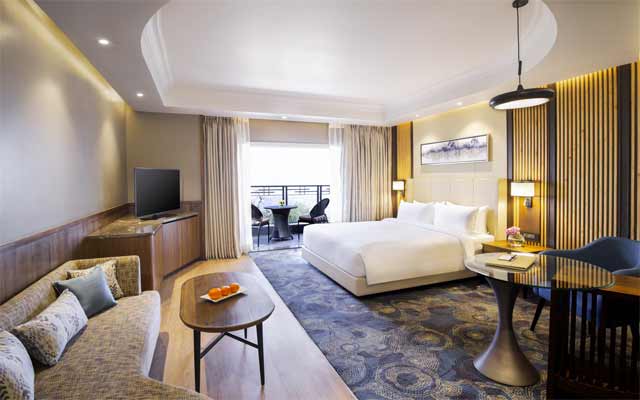

Fairfield by Marriott South Binh Duong, Vietnam
Fairfield by Marriott marks its brand debut in Vietnam with the opening of the Fairfield by Marriott South Binh Duong. Located in the Binh Duong province, the hotel features 181 rooms with separate work and rest areas. The property’s public spaces boast open layouts, multifunctional spaces and natural light.
The hotel features two signature restaurants and a poolside bar. ORYZAA, the all-day dining restaurant, presents a fresh take on local Vietnamese delicacies and Western classics, featuring an international breakfast buffet and an à la carte menu of Asian cuisine for lunch and dinner. For meetings, conferences and social events, the hotel offers 120m2 of function space. Leisure amenities include an outdoor swimming pool and open-air pool bar, 24/7 fitness centre, and The Market, a 24-hour convenience store.
Radisson Blu Resort Dharamshala, India
Located on the foothills of the Dhauladhar Range in Himachal Pradesh, Radisson Blu Resort Dharamshala features 120 rooms overlooking the Kangra Valley. Spread over 30,000m2, the resort offers rooms across standard, superior, deluxe, suite and presidential suite categories. It features three banquet halls with capacity between 80 to 100 pax; and an outdoor venue, The Banquet Deck, offering views of the Kangra Valley.
In addition to 24-hour room service, the resort houses several on-site dining options including The Edge, an all-day dining restaurant serving a range of local and western dishes; Italian Crust, a pizzeria; and All Out, a lounge bar offering a selection of wine and spirits along with small bites. Radisson Blu Resort Dharamshala will feature The Spa at Radisson Blu, a full-service branded spa. Other amenities include a meditation room, a fitness studio and a temperature-controlled infinity pool. The resort offers a range of family recreation options such as an outdoor kids’ play area, family picnic spots in the serene pine forest, and a cozy cards room.

Best Western Premier Sapphire Ha Long, Vietnam
Best Western Premier Sapphire Ha Long is a 31-storey property in the heart of Ha Long city, located on the waterfront of Hong Gai overlooking Ha Long Bay. The hotel offers 1,008 rooms and suites, all with private balconies. All rooms include complimentary Wi-Fi, IPTV channel selection, and large windows offering panoramic views of the bay or city views. A selection of two-bedroom suites are ideal for long-stays or short family breaks. Each room has two bedrooms and an on-suite bathroom, living room, and private balconies.
The hotel features heated indoor pool and seasonal outdoor swimming pool, a fitness centre, kids’ club, and a spa (opening 2022). Two restaurants and a lobby bar serve up a selection of culinary delights including Vietnamese, Asian, seafood and international cuisine. There is also an executive lounge, business centre and meeting facilities with video conferencing available.
Marriott enhances human trafficking awareness training
Marriott International will launch an updated version of its human trafficking awareness training, in line with its goal to train all its on-property associates to recognise and respond to potential human trafficking situations by 2025.
The enhanced training will be rolled out on July 30, in conjunction with the World Day Against Trafficking in Persons.
Covid-19 has ushered in more contactless and mobile hotel experiences, which can make it more difficult to spot potential indicators of trafficking, Marriott said in a press release.
The new training builds upon the original training’s foundation by featuring scenario-based modules, a mobile-friendly design, and increased guidance on how to respond to potential situations of human trafficking – critical enhancements based on hotel-level feedback to help associates turn awareness into action and continue the fight against the multinational crime.
Additionally, the new training was developed in collaboration with survivors of human trafficking, ensuring the training is victim-centered and the resources are survivor-informed.
“As an industry that cares deeply about human rights and the horrible crime of human trafficking, we have a real responsibility to address this issue in a meaningful way,” said Anthony Capuano, CEO of Marriott International. “The updated training empowers a global workforce that stands ready to recognise and respond to human trafficking and allows our company to live up to our core values.”
Through a collaboration with ECPAT-USA and with input from Polaris, two leading non-profits that specialise in combatting human trafficking, Marriott launched its original human trafficking awareness training in 2016 and made it mandatory for all on-property staff in both managed and franchised properties globally in January 2017.
So far, the training has been delivered to more than 850,000 associates, which has helped identify instances of human trafficking, protect associates and guests, and support victims and survivors.
As the company did with its original training, Marriott plans to donate this training and work with ECPAT-USA and the American Hotel and Lodging Association Foundation to make it widely available in early 2022 to help educate the entire hospitality industry.
A tale of two worlds
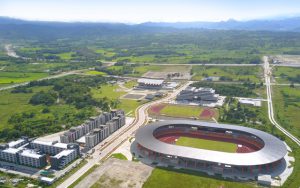
One is a high-tech smart city in the making, the other teeming with rustic, laidback charm. One is the next international commercial hub with an emerging tourism zone, the other, primarily a leisure destination that is also primed to host business events. Despite their differences, the New Clark City and the province of Bohol share the same goals for a sustainable and responsible tourism development.
New Clark City
Just a few hours’ drive from metro Manila, the New Clark City (NCC) in Tarlac raises the bar for a carefully master planned development that strikes the right balance between innovation and sustainability.
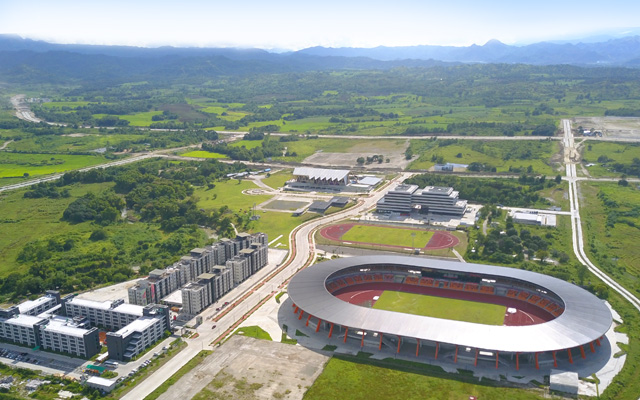
Twice the size of Manhattan, only 40 per cent of the land area of the futuristic mega-project is being developed, leaving 60 per cent for green and open spaces including forest reserves. Ecosystem-based adaptation means it is designed to withstand natural calamities like typhoons, floods and earthquakes. Air pollution and traffic congestion are minimised by banning vehicles in many areas and by offering walkways and bicycle lanes instead.
Sharing the area is the former US military base in Pampanga that is now Clark Freeport Zone Complex, the primary district Clark Global City, and Clark International Airport.
Clark is “envisioned to be the country’s next smart and sustainable metropolis. It aims to become an international hub for companies and industries, and a major growth centre outside metro Manila,” said Vince Dizon, president and COO of the Bases Conversion and Development Authority (BCDA), which has the mandate to develop Clark in tandem with the private sector.
NCC houses the National Government Administrative Center, an integrated national government hub that will function as a recovery and backup operations centre in times of disasters and emergencies, according to Dizon.
Driving investments and growth in Clark are the airport’s major expansion and other key infrastructure projects such as the Subic-Clark Railway and the Malolos-Clark Railway that will drastically reduce travel time between Subic and Manila, Dizon added.
Bi Yong Chungunco, CEO of the Luzon International Premier Airport Development Corp., operator of Clark International Airport, said: “We have a growing catchment area in Central and Northern Luzon, due to the rapid rise of Clark as a preferred hub for business, economic and leisure activities.
“With Clark’s strategic location at the crossroad of major expressways, as well as the soon-to-complete Manila-Clark Railway Project which will have a train station stopping in front of the airport terminal, the airport will be easily accessible and well-positioned to serve travellers and metro Manila residents.”
Dizon said Clark is being positioned as a destination for business events and sports tourism, and was well on its way to becoming one of the country’s top business events destinations before the pandemic.
The world-class sports complex in NCC, composed of the Athletics Stadium, Aquatics Centre and Athletes’ Village, have put the new metropolis on the map for major sporting events such as the 30th Southeast Asian Games in 2019 and the recent Fiba Asia Cup Qualifiers.
Clark and Subic have also been added to tourism circuits that once included only Pampanga and Bulacan for food mapping, farm tourism and adventure thrills.
Tourism players have welcomed the new infrastructure taking shape at Clark as “this equates to more options that we can offer our clients,” said Ritchie Tuano, general manager of Asiareps Travel Services and immediate past president of the Philippine Travel Agencies Association.
He added that these developments are also “catalysts in regaining the travel business back to 2019 (levels)”.
Bohol
Conservation, preservation and sustainability have always been integral to Bohol’s tourism development.
Permanent structures are not allowed on the 1,776 Chocolate Hills that drop over the protected area of six municipalities. When an earthquake flattened most of the province’s historic churches back in 2013, experts painstakingly restored these fragile edifices rather than build replicas.
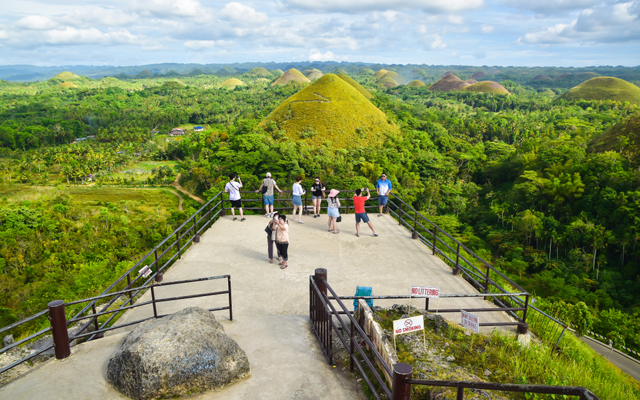
In the gradual and systematic re-opening of tourism, Bohol is leveraging its unique attractions such as the Chocolate Hills, endangered species of tarsier, and Loboc River, while honing undiscovered destinations beyond Panglao and neighbouring Dauis. Further, efforts are underway to spice up little-known attractions and activities centered on community life, arts and crafts, culture and heritage, and ecotourism.
Bohol governor Arthur Yap shared that they are working on “high value, low density” tourism, which marks a move away from mass tourism, for both the travellers’ safety and the destination’s sustainability.
Yap said in the ongoing diversification of their tourism products, the missing piece is agri-tourism which is only possible if agriculture can be modernised. With agri-tourism, Bohol has “a fighting chance” to move into culinary tourism.
Lourdes Tuyor-Sultan, president, Bohol Federation of Travel and Tour Operators, said that by focusing on responsible and sustainable tourism, “we are trying as much as we can to minimise the negative impact of tourism. (While) tourism is one of the major economic drivers of Bohol, we are also conscious of the consequences (of its unbridled growth)”.
One of Bohol’s edge, Sultan said, is the close and strong interaction between the private sector and the local government unit currently helmed by Yap who is hands-on in working closely with the Department of Tourism (DoT) and its marketing arm, the Tourism Promotions Board.
As such, Bohol became one of the first Philippine destinations to establish a travel “bubble within the bubble” to spur domestic tourism and last year, hosted the country’s first international hybrid event, the Philippine Tourism Exchange.
In the gradual reopening of DoT-accredited tourism establishments, they are required to secure the Ultimate Bohol Experience seal, which proves their compliance with the requirements on carrying capacity, proper waste management, sewage treatment, use of renewable energy, and other sustainability measures.
Bohol also has a systematic method of allowing domestic tourists so people feel safe to travel, Yap shared.
Sleepless in Asia: Destination developments keep chugging on

Producing this special co-branded TTG Asia and TTG Asia Luxury issue sparked much joy for me because every piece of content on our pages focuses on what’s moving positively in the travel and tourism industry.
We know what the tough headlines are, and we know that our challenges will take a while to resolve. So, for now, let’s focus on the developments that are still happening throughout the travel and tourism landscape.

Across Asia, fresh attractions and activities have been rolled out – with more to come throughout 2021 and 2022, much to the delight of local residents who are in desperate need for uplifting entertainment to satiate their wanderlust.
Developing a destination product to excite locals is no easy task. How do you appeal to people who believe that they have seen all there is to be seen in their backyard? And if these are well-travelled people, the bar is raised even higher – can your product be more alluring than what they had experienced overseas?
It is interesting to observe the range of new draws that have emerged. Hong Kong is set on a culture and heritage route, providing a nice contrast to its urban landscape. Japan is playing up its scenic, natural environment and wide open spaces, presenting even more points of appeal for outdoorsy folks.
City-state Singapore appears to be transforming into one big playground for the young and young at heart. In fact, Singapore Tourism Board is working to enthrall young families and children, to build their desire to visit when it is possible. It recently launched a seven-part animated mini series for children in India, where popular comic character Chhota Bheem takes his birthday party to Singapore and shows off some of the destination’s most iconic locations and experiences.
Over in Vietnam, secondary destinations have come into the limelight while in Macau efforts to reposition herself for families continue.
Some of these developments will help to push traveller traffic away from the usual popular haunts – so important in a safe-distanced, post-pandemic world – and into areas that can stand to benefit from some tourist income.
Amid the creation of all things bright and shiny, it is heartening to see that tourism authorities have not forgotten their commitment to build back tourism better and in a more responsible way that benefits the environment and local communities for generations to come. Cambodia, the Philippines, Indonesia and Thailand are setting with good examples.
Another positive development for the travel and tourism industry is the growing population of high net worth individuals across Asia-Pacific. Their travel desires have only intensified throughout the travel freeze. The luxury travel market is clearly still buzzing, with many buyers moving now to restart travel programming for their VIP clients. The strong interest to participate in July’s ILTM Asia-Pacific is proof.
As initial travel resumption would be pricey and time consuming to prepare for, the industry will need to count on luxury travellers – those with the resources to navigate the complex web of post-pandemic travel regulations – to lead recovery.
Anantara Layan Phuket Resort launches Luxury Surfing Escape package

Anantara Layan Phuket Resort is beckoning surf enthusiasts to enjoy the swells of monsoon season on Thailand’s Andaman coastline with the launch of its Luxury Surfing Escape package featuring a 90-minute surfing lesson tailored to all individual skill levels every day of the stay.
The package also includes daily transfers to and from Bangtao Beach, a gourmet surf picnic, accommodation in a suite or villa, 25 per cent off resort dining, 20 per cent off dining at the on-site Age restaurant, 40 per cent off spa treatments, and early check-in/late checkout.
From April to October every year, the west coast of Phuket experiences South-east Asia’s best breaks, with the northwest monsoon bringing excellent surfing conditions to this part of the Andaman. The top beaches on Phuket for surfing include Kata, Kalim, Surin, Nai Harn, and Bangtao, just a short drive from Anantara Layan resort.
Oakwood inks deal with Sensation Group to manage two properties in India
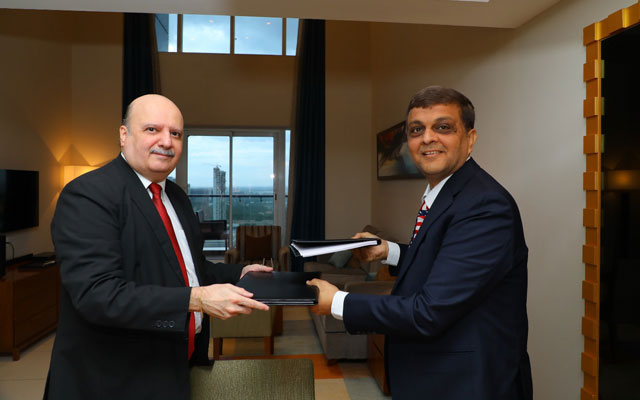
Oakwood has signed a partnership with Sensation Group to fortify its presence in India’s key cities and accelerate its goal to double its global portfolio of managed properties by 2025.
The agreement entails the management of two properties – Oakwood Hotel & Apartments Hyderabad and Sensation Apartments Bangalore, Managed by Oakwood, which is the pilot of a new soft brand, with more projects in the pipeline. The addition of the two properties will increase the group’s portfolio within India to seven properties by the end of 2024.
Located approximately 35 minutes from the Rajiv Gandhi International Airport, Oakwood Hotel & Apartments Hyderabad is slated for completion by June 2024. The property will comprise 350 rooms and serviced apartments, ranging from 38-90m² in size, featuring a swimming pool, fitness centre and a dining concept.
Sensation Apartments Bangalore, Managed by Oakwood is a 1,200-unit property that is slated to open in 4Q2024. Located in the Sadahalli Village in Bangalore North, Devanahalli, the property is within a 20-minute drive from the Kempe Gowda International Airport in Bangalore. The property will offer meeting rooms and co-working spaces, a dining room, a fitness centre, play area for children, and laundrette facilities.
Malaysia projects most states to move into final phase of National Recovery Plan in October
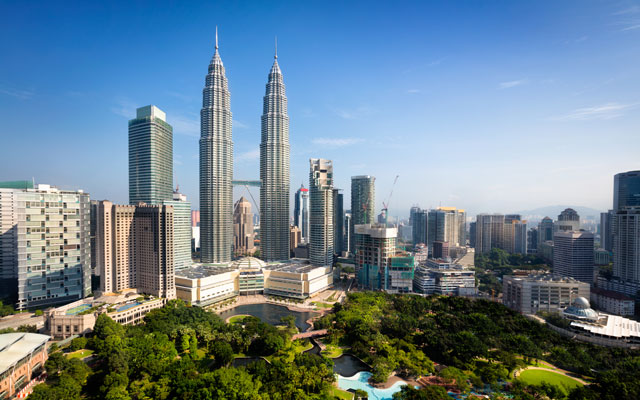
The Malaysian government anticipates that most of the country’s 13 states will move into the final phase four of the National Recovery Plan (NRP) in October.
Prime minister, Muhyiddin Yassin, said the projection is based on the smooth running of the national immunisation programme as well as the government’s efforts to implement the recovery efforts.
The three indicators to be fulfilled for transition into phase four of the NRP are that 80 per cent of the state’s adult population must have been vaccinated, the number of new cases must drop below 500, and the healthcare system is at a safe level with enough beds in ICUs.
In phase four, economic activities such as domestic tourism, performances with live audiences as well as group sporting activities will be allowed.
At the moment, eight states – Perlis, Perak, Kelantan, Terengganu, Pahang, Penang, Sabah and Sarawak – are in phase two. Interstate travel is currently banned nationwide to control the spread of Covid-19.
On Monday (July 26), the country reported 14,516 new Covid-19 cases, with a record high of 207 deaths, bringing the national death toll to 8,201.
Earlier this month, in her keynote address at the Halal in Travel Global Summit 2021, tourism, arts and culture minister Nancy Shukri said that Malaysia is exploring the idea of making Langkawi as the pioneer location for the country’s Covid-19 Free Destination Programme, with the successful rollout of vaccinations for the island’s population.
No timeline has been set yet on when domestic and international travel to Langkawi can resume.
The Ministry of Tourism, Arts and Culture has also selected Pangkor Island in Perak to be phase two of the Covid-19 Free Destination Programme, following the pilot destination in Langkawi. It is expected that 80 per cent of Pangkor’s local population of 11,500 would have been fully vaccinated by September, thus achieving herd immunity, and paving the way for the island’s reopening.
Meanwhile, Pahang is also looking at reopening in phases. Tourism areas with small local populations, such as Taman Negara National Park, Tioman Island, Kuala Gandah and Fraser’s Hill, are expected to reopen ahead of other areas with larger populations.
However, no reopening date has been set. One of the main criteria for reopening is that at least 80 per cent of the local population must have been vaccinated, and that there are clear SOPs and guidelines in place.
Pahang State Tourism Exco, Mohd Sharkar Shamsudin, said the state government is in the midst of fine-tuning SOPs and guidelines for the planned reopening, and welcomed feedback from the private sector.
The state is also looking at establishing a travel bubble between Tioman Island and Singapore.
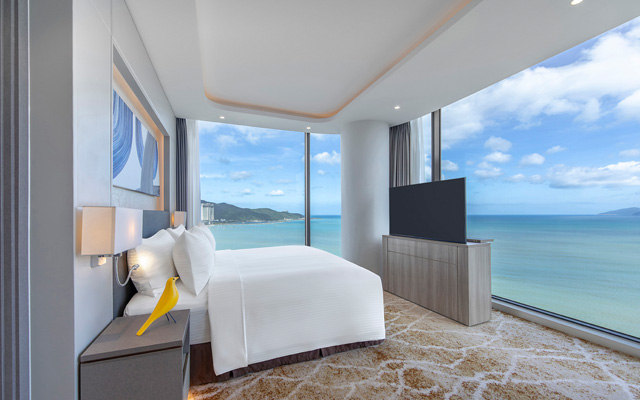








The World Travel & Tourism Council (WTTC) has released a new report which signals how the global travel and tourism sector can help eradicate human trafficking.
The report, titled Preventing Human Trafficking: An Action Framework for the Travel & Tourism Sector, is released with support from the Carlson Family Foundation, and builds on WTTC’s Human Trafficking Taskforce, which was launched in 2019 at its Global Summit in Seville, Spain.
With its report, WTTC aims to strengthen cooperation across stakeholders and share best practices to raise awareness about how the sector can, and does, make a difference, to proactively address this global crime.
The report details an action framework to tackle human trafficking, around four main pillars: Awareness, Education & Training, Advocacy, and Support.
The International Labour Organization has estimated that on any given day in 2016, more than 40 million people around the world were victims of human trafficking. With the pandemic exacerbating pre-existing inequalities, this has accelerated the urgent need for targeted actions within the travel and tourism sector, WTTC said.
The report offers solutions both within the sector and beyond, as the complexity of these transnational crimes require multi-disciplinary efforts and concerted coordinated action by stakeholders, such as states, private companies, and international organisations around the world.
For the travel and tourism sector, this means involving the expertise of all stakeholders, including survivors, as well as civil society organisations to establish joint initiatives.
Launched in conjunction with the World Day Against Trafficking in Persons, the in-depth report highlights the need to work on facilitating an approach which will enhance the understanding of the crime of human trafficking, enable better identification, prevention, and mitigation of potential and actual impacts of the sector, and further public-private collaboration to ensure that appropriate steps are taken by governments when human trafficking is detected.
Virginia Messina, senior vice president and acting CEO, WTTC, said: “Human trafficking is a global crime which preys on the vulnerable, continues to grow and affect the lives of millions around the world.
“This vital report offers a framework for the travel and tourism sector to play its part to help combat human trafficking. Given the sector’s inadvertent position in the path of human traffickers, we need to shoulder our responsibility to ensure that the travel and tourism sector offers a safe and welcoming environment for those who work within it.
“Ultimately, travel is something that brings people together, and it is critical that we proactively help address this crime. The sector needs a cohesive approach and focus its efforts on driving forward advocacy related to human trafficking by engaging all key stakeholders. We hope that this report can aid in that task.”
Read the full report here.