Hyatt Regency Phuket Resort has filled two leadership positions, the director of sales and marketing, and executive chef.
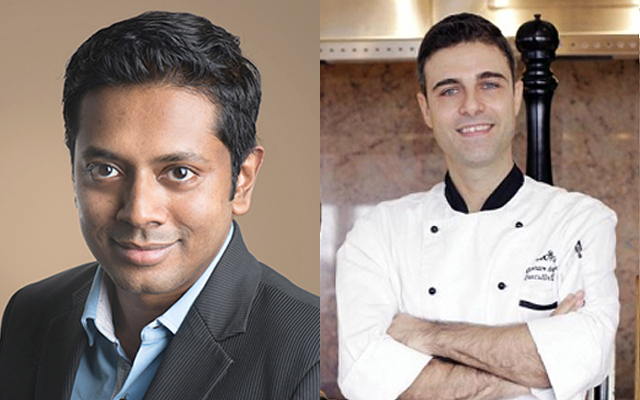
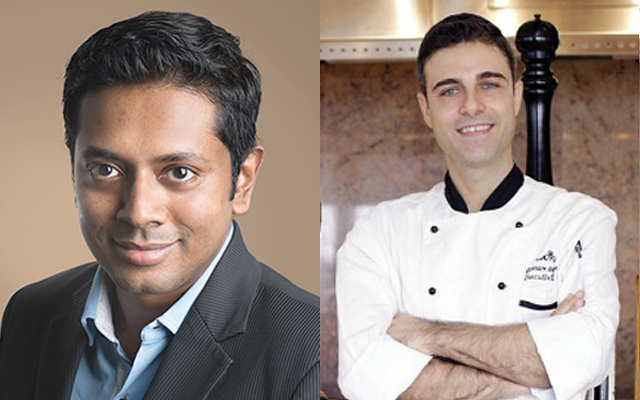
Ranjeet Viswanathan, an Indian national with more than two decades of sales and marketing experience has joined the resort as DOSM. Prior to joining Hyatt Regency Phuket Resort, Viswanathan was commercial director at Hilton Phuket Arcadia Resort & Spa, Phuket for two years.
From left: Ranjeet Viswanathan; and Gennaro Avagnale
Throughout his career, he has held many sales and marketing roles in Phuket, Thailand and overseas, including director of sales and marketing at Anantara Mai Khao Resort Phuket, director of business development at Conrad Maldives, and senior cluster revenue manager at Hilton RMCC, Shanghai.
Meanwhile, Gennaro Avagnale, an Italian national with more than two decades of culinary experience has been appointed executive chef. Prior to joining Hyatt Regency Phuket Resort, Avagnale was executive chef at ANA Crowne Plaza Osaka for more than three years where he managed six restaurants including a one-Michelin-star restaurant.
Previous tenures as executive chef include InterContinental ANA Ishigaki Resort in Okinawa, Japan, Keraton at the Plaza, The Luxury Collection, Starwood in Jakarta, Indonesia, and before that executive sous chef roles at Conrad Sanya Haitang Bay Double Tree Resort by Hilton in Hainan, China, and Savoy Resort & Spa in Mahe, Seychelles.
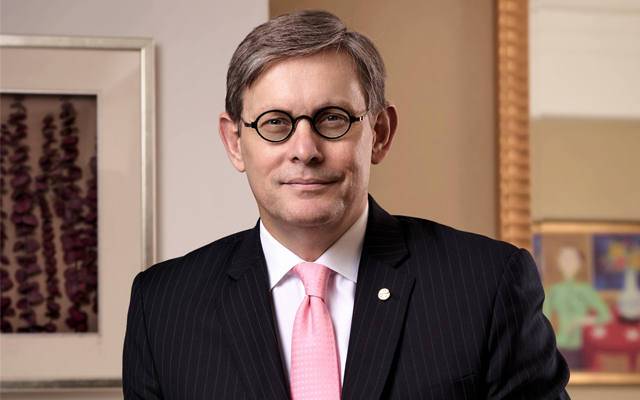
Langham Hospitality Group (LHG) has welcomed Brett Butcher back as CEO.
Butcher previously served in the same role for five years from 2009, but left the group in 2014, and returned as CEO of GE Hospitality Asset Management Limited in 2017, a position that he will continue to hold.
No stranger to LHG, Butcher will provide guidance in the operations of the group’s hotels, spearhead all hotel owner relations, and solicit new management contracts in key destinations around the world.
The Australian has grown with LHG as senior vice president of sales, marketing and brand, as well as managing director of Langham Place, Mongkok, Hong Kong (later rebranded Cordis, Hong Kong.)
Prior to LHG, Butcher served in various operational and executive roles for nearly 20 years across the Pacific, North America, and China.
Hilton India, in partnership with Wakao Foods, has put up a sustainable food showcase in the form of a food festival dubbed The Wakao Fest, featuring an exquisite menu with jackfruit as the core ingredient.
The innovative food menu, available across F&B outlets at Hilton properties in the country, is inspired by the growing appetite among consumers for sustainable and naturally available alternatives to animal-based meat.
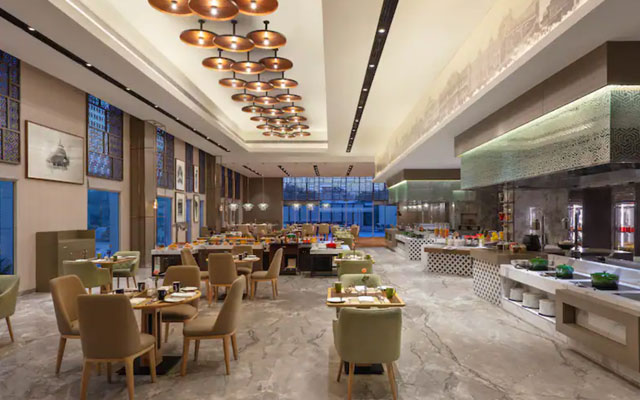
The Wakao Fest unfolds at Hilton properties across India, including The Amber Kitchen at DoubleTree by Hilton Jaipur Amer (above)
With the joint vision of placing jackfruit as a sustainably sourced plant-based meat substitute, the collaboration between Hilton and Wakao Foods aims at supporting local producers and products, as well as bringing plant-based alternatives prominently to the F&B scene in India.
Prashant Kulkarni, director F&B, India-Hilton, said: “The shift towards plant-based alternatives is the most dominant trend of 2021 triggered by the growing consciousness about mindful and healthy eating. The Wakao Fest explores unique dishes that are sustainable to serve and bring guests delight.”
Sairaj Dhond, founder & CEO Wakao Foods, added: “As the world looks at more plant-based alternatives, which are healthier and more sustainable options, there is a growing interest in meatless meals off late. The versatile and indigenously grown jackfruit is bursting onto the scene and finding itself being used more often. The pop-up therefore explores the versatility of the humble jackfruit, which is considered a superfood but needs to be more relevant across the cuisine culture of the country.”
The jackfruit-based artisanal menu at The Wakao Fest has been curated by the culinary experts at Hilton to offer multiple cuisines and gourmet delights comprising starters, main course and desserts.
During the festival held from August to November 2021, guests can sample dishes like Faux Pao, The Wakao Krapow, Parmesan Polenta, and “Bar of Bliss” across the F&B outlets at Hilton properties in India, including @SAIPE at Hilton Goa, Coriander Kitchen at Conrad Pune, The Amber Kitchen at DoubleTree by Hilton Jaipur Amer, and Terazzo at Hilton Shillim Estate Retreat & Spa.
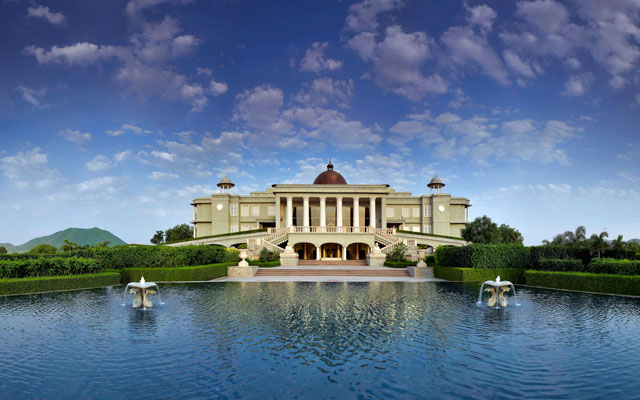
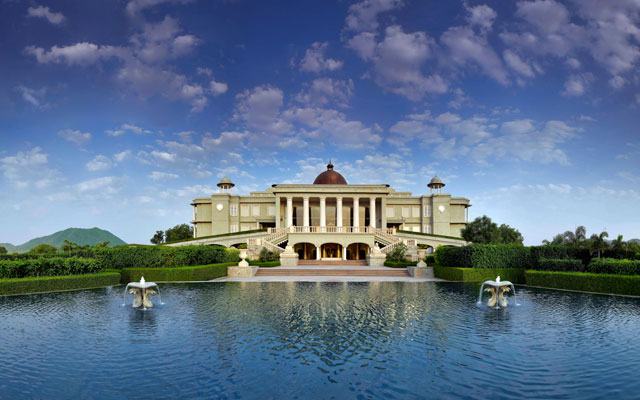
Raffles Udaipur, India
Raffles Udaipur, India’s first Raffles hotel, has opened in the city of Udaipur and region of Rajasthan. Perched on a 18.5ha private island set in the middle of the Udai Sagar lake, the property boasts panoramic views of the surrounding hills, lake and a 400-year-old temple. Guests can get to the resort via a 20-minute drive from the airport, followed by a boat ride.
The hotel is home to 101 rooms, suites and signature suites; with each boasting lake views, private gardens, balconies, and plunge pools. F&B options include Sawai Kitchen, an Indian speciality restaurant; farm-to-table concept Harvest, set to open in October; and Raffles Patisserie offering breads, French desserts, pastries, and more. Culinary enthusiasts can also enjoy a co-cooking experience at Rasoi, the cookery school.
There are also two bars, including the Long Bar which serves the signature Udaipur Sling – the Singapore classic remade with fresh produce from the island and home-made syrups. Leisure amenities include a spa, fitness centre, and swimming pool. The Grand Ballroom of 836m2, including pre-function area, multiple outdoor gathering areas and an on-site temple, stands ready to host special events and celebrations.
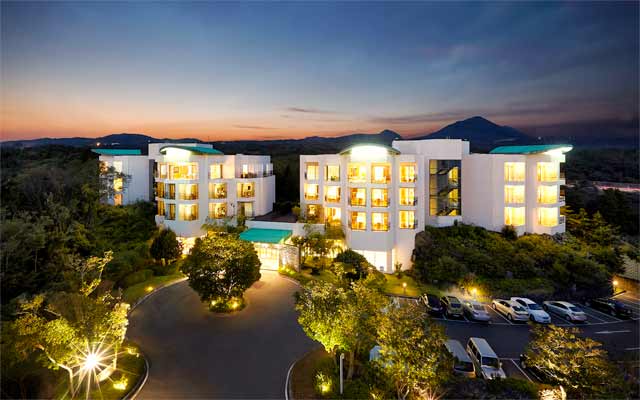
Mercure Ambassador Jeju, South Korea
Mercure Ambassador Jeju has opened as the first Accor Ambassador property in Jeju Island and marks the eighth city of Accor Ambassador’s expansion across the country. Surrounded by Gotjawal, Jeju’s unique forest created on a lava region, Mercure Ambassador Jeju overlooks the Hallasan and Sanbangsan mountain views and features a 18-hole golf course. The resort offers 71 guestrooms, an all-day-dining restaurant, meeting space, fitness centre, outdoor driving ranges, and an infinity swimming pool along with a pool bar and cabanas.
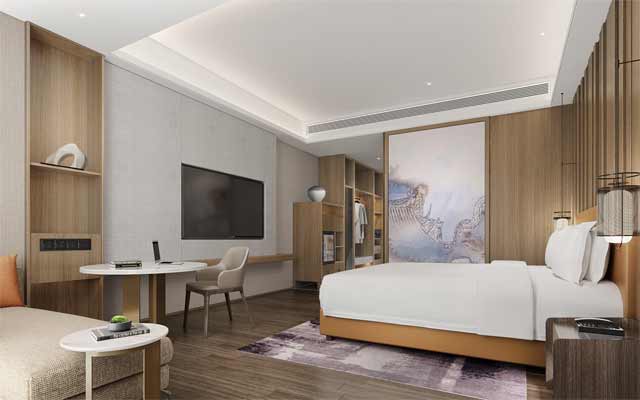
Hyatt Regency Guangzhou Zengcheng, China
Centrally located in the Zengcheng National Economic and Technological Development Zone of east Guangzhou, the Hyatt Regency Guangzhou Zengcheng offers 408 guestrooms, including 21 suites; in addition to 96 serviced apartments. All guestrooms offer smart technology, including a 65-inch LED TV with international satellite channels and JBL Bluetooth stereo speaker, while all serviced apartments are equipped with a kitchenette and washer-dryer.
F&B venues include the signature Chinese restaurant Xiang Yue; and the Market Café offering breakfast and dinner, plus an all-day a la carte menu. For a family dining experience, the hotel features two private dining rooms and a children’s play area. Meanwhile, The Lounge serves social afternoon teas and a selection of wines, spirits, and cocktails from the central bar.
The hotel offers 2,929m2 of event space, including the 850m2 Regency Ballroom featuring floor-to-ceiling windows, natural light, and a foyer suitable for large exhibitions. There are also eight multifunction rooms, and a 451m2 outdoor event garden. Leisure facilities include an indoor heated pool, a children’s pool and playground, and a 24-hour fitness centre.
Crystalbrook Vincent, Australia
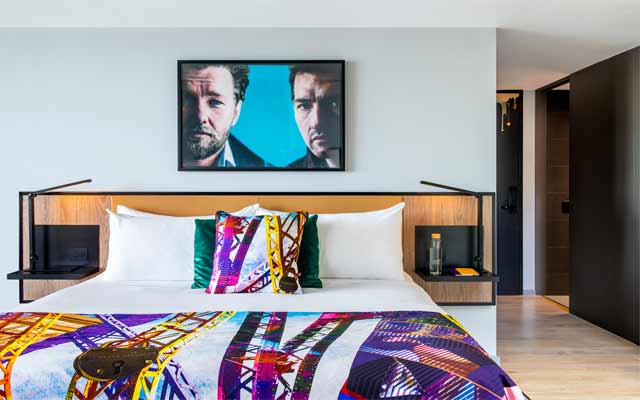
Crystalbrook Collection has unveiled Crystalbrook Vincent in the heart of Brisbane’s Howard Smith Wharves, following the group’s acquisition of the property. Set beneath the iconic Story Bridge, Crystalbrook Vincent, formerly known as The Fantauzzo, is Crystalbrook Collection’s seventh property to open in three years. The hotel will retain its partnership with namesake Vincent Fantauzzo, with more than 500 pieces of the acclaimed Australian painter’s artworks featuring throughout the six-story hotel. Crystalbrook Vincent is home to 166 rooms, Fiume rooftop bar, Polpetta restaurant, a rooftop pool, and a 24-hour fitness centre.
After a rapid decline due to a second Covid-19 wave, India’s hotel industry has seen a continued increase in occupancy due to the progressive approach to vaccinations in key markets across the country, according to preliminary data and analysis from STR.
India’s daily occupancy sat in the 20-30 per cent range in early June but improved by the end of the month with several days closer to 35 per cent and an outlier of 50.5 per cent on June 26. In July, the country took another step forward with most days in the 40-60 per cent range and a peak of 63.2 per cent on July 17.
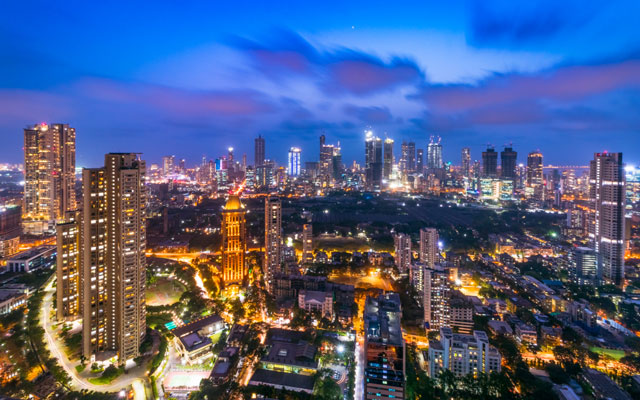
Hotels in heavily populated markets such as Mumbai have seen an occupancy upswing in this latest rebound
“The progressive approach to vaccinations has led to an increase in travellers and hotel demand – leisure demand continues to drive this growth,” said Vidhi Godiawala, STR’s business development manager for Central and South Asia.
“Beyond the noticeable improvement, we have seen a different trend in where the country is regaining occupancy. Whereas India’s first recovery earlier this year was concentrated in leisure destinations, such as Goa, heavily populated markets such as New Delhi and Mumbai have seen improvement in this latest rebound.”
Mumbai’s daily occupancy reached as high as 77.9 per cent on June 26, while New Delhi’s daily occupancy improved to as high as 79.7 per cent on July 17. Those were each market’s highest daily levels in 2021.
The Travel Corporation (TTC) has appointed Nicholas Lim as its new Asia CEO, effective August 16, 2021.
In this role, Lim will report to Gavin Tollman, TCC president, and will focus on the transformation of TTC’s distribution of key brands. He will work with each of the global brand executives to execute the brand strategies and set the direction to fuel further growth for the region, in particular, the luxury travel market for international outbound leisure travel.
Lim is no stranger to TTC having headed TTC Asia as managing director from 2018 to 2020, and before that, as president (Asia) for Trafalgar from 2011 to 2018. Prior to his appointment as CEO of TTC, Lim was general manager of Norwegian Cruise Lines in Asia.
In the first month of the Phuket Sandbox programme which launched on July 1, more than 14,000 foreign tourists visited Phuket, generating 829 million baht (US$24.8 million) in revenue for the local economy.
From July 1-31, Phuket welcomed a total of 14,055 international arrivals, with the largest source market being the US with 1,802 arrivals, according to the Tourism Authority of Thailand (TAT).
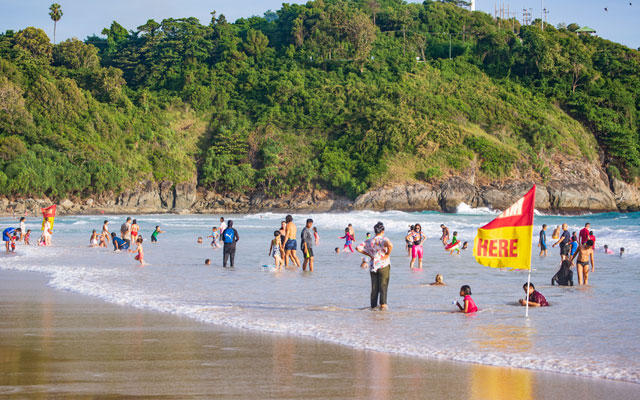
Phuket Sandbox welcomes more than 14,000 arrivals in first month; people visiting Nai Harn Beach under the Phuket Sandbox scheme in July 2021 pictured
This was followed by the UK with 1,558 arrivals, Israel with 1,455 arrivals, Germany with 847 arrivals, and France with 839 arrivals.
TAT expects 100,000 foreign tourists will visit Phuket in 3Q2021 (July-September) and inject some 8.9 billion baht in revenue into the local economy.
The Phuket Sandbox programme allows fully vaccinated international travellers to enter Phuket without the need to quarantine, as part of Thailand’s plans to gradually reopen to tourism in a bid to revive the pandemic-hit economy.
These first tourists to return to Thailand came on direct international flights operated by major airlines from points around the world. This included Thai Airways International from Copenhagen, Frankfurt, Paris, London, and Zurich; Singapore Airlines from Singapore; Etihad Airways from Abu Dhabi; Emirates from Dubai; Qatar Airways from Doha; and EL AL Israel Airlines from Tel Aviv.
Accommodation-wise, the arrivals for July saw 190,843 room nights booked at SHA Plus certified hotels. August has a further 109,694 room nights in advance bookings and September another 9,182 room nights, altogether amounting to 309,719 room nights for the July-September period.
Tourists are required to stay at SHA Plus certified hotels on Phuket for their added safety. SHA Plus certification indicates a hotel meets the safety measures to control Covid-19, and also that 70 per cent of its workforce has been fully vaccinated.
The 829 million baht in revenue for July included 282 million baht spent on accommodation, 194 million baht on the purchase of products and services, 175 million baht on food and beverage, and 124 million baht on health and medical services. Among the 14,055 tourist arrivals, the average cost of their vacation to Phuket was 58,982 baht.
Crucially, one of the key benefits of the Phuket Sandbox programme has been the creation of 210 million baht in salaries for the local employees in the accommodation, restaurant, and other sectors.
Like many social activities, corporate teambuilding programmes have been disrupted since early 2020 as governments enforced safe distancing requirements and companies began an unusual work-from-home experiment that has since become the norm in many Asian cities.
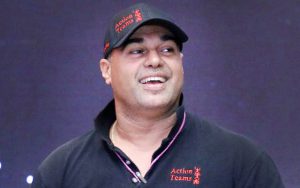
For Action Teams, a Singapore-based provider that has been in business since 1996, bookings tumbled almost 75 per cent.
Founder Raj Sandhu recalled how 2020 had started off strongly, with the whole year booked out with programmes all over the world, but spiraled into despair in February as the pandemic hit and clients either cancelled or paused their plans.
Other specialist providers, such as Asia Ability and smallWORLD Experience, saw bookings recede too. But even as governments eased restrictions and virtual teambuilding options emerged to connect remote teams, engagements throughout 2020 and 2021 are nowhere near pre-pandemic levels.
Slashed budgets due to poor corporate performance amid the global crisis, fatigue from daily online communications, and unfamiliarity with virtual teambuilding programmes are blamed for the slow pick-up.
What worries Sandhu most are companies freezing teambuilding activities because of human resource disruptions.
He explained: “Some clients have had to let people go. Hence, they feel that this isn’t a good time for teambuilding. But this is why now is a good time. If you are letting people go, the rest of the team will be worried. They will be wondering when it will be their turn.”
Sandhu said some clients also mistakenly believe that as long as teams were communicating daily via instant messaging tools, there was no need for engagement.
Lost connections
Elevated stress levels at work and remote work arrangements have presented employers with a welfare challenge, noted teambuilding specialists.
Ana Marques, general manager of Macau-based events specialist smallWORLD Experience, noted the downsides of isolation at the workplace: the growing lack of team interaction will dismantle team spirit, break down communications and eventually impact client servicing.
Remote work requires greater information sharing, as people could no longer simply walk over to a colleague for discussions, opined Marques. Teambuilding programmes can convey to participants the advantages of information sharing and identify ways to work efficiently with sharing tools.
Sandhu warned of staff burnout, especially as remote employees feel their purpose at work was just to generate results and go at it alone.
“This is the serious side of what we do,” commented David Powell, managing director of Asia Ability. “Teambuilding is often seen as being all about play. But the new work arrangements have highlighted the important values of teambuilding. Working remotely turns people’s attention to the task and away from relationships. By not conducting any team engagement now, companies risk team cohesiveness.”
Virtual uncertainty
While teambuilding specialists were able to translate their in-person teambuilding programmes for virtual use – and even craft new ones specifically for online interaction, they found themselves having to convincing clients to get onboard last year, as many companies struggled to make sense of the concept of remote work and video conferencing. This led Marques to describe the year 2020 as an “adaptation period”.
Powell: online teambuilding can be effective
“Many people were also waiting for things to get better and to return to in-person events. Different markets had different pandemic situations; some were improving and that fuelled hopes that things would return to normal soon. But as we have seen, conditions can go back and forth. Now, we are finally at a stage where people are realising that life as normal is actually some distance away and they are opening up to the idea of remote teambuilding,” said Powell.
As more clients came to accept their present situation and appreciated virtual and hybrid events, online teambuilding programmes started to see a brighter future this year, found Marques.
Teambuilding specialists were also challenged by the existence of simple and cheaper online games that competed with professional remote team engagement programmes – some of which disappointed corporate buyers and turned them off the real deal.
Sandhu said some competition came from escape room games that provided no real takeaways to achieve business goals. With prices as low as S$10 (US$7.30) per participant for these games, Sandhu said professional teambuilding providers are having a hard time competing, especially when clients are themselves unsure of what teambuilding truly means.
“For some companies, going bowling together or sharing a seafood dinner counts as teambuilding. Clients are comparing in-person experiential teambuilding programmes with (such options). To many of them, virtual teambuilding activities are perceived as just games, and therefore shouldn’t cost much.”
A real solution
Experienced teambuilding providers say clients have little to worry about the effectiveness of virtual teambuilding programmes, which are carefully designed to bring about similar results as a live engagement.
Sandhu: companies risk staff burnout
While Actions Teams had a programme matrix of 60-plus in-person activities, with each fulfilling specific team goals and serving different purposes, only 10 made the final cut for virtual conversion. Sandhu shared: “We had an intense discussion internally to determine which activities would translate well online. We have some excellent in-person activities that are not quite feasible as online versions, perhaps because it was not easy to put details on shared screens or on Google Drive.”
Actions Teams’s virtual selection attracted “great feedback”, with the company delivering five virtual and hybrid teambuilding events in November and December last year for clients in the thriving pharmaceutical industry, some of which engaged a global audience.
Powell believes that virtual teambuilding activities can be as effective as face-to-face versions – provided they are properly set up and designed to allow the same high level of energy and interaction.
“There is a lot of investment in the programme’s redesign to ensure we are doing it right,” said Powell, adding that most of Asia Ability’s virtual teambuilding programmes provide a higher facilitator-to-attendee ratio and more resources are channeled into demonstrations and rehearsals to prepare clients.
Since evolving its programmes in early-2020 to suit the online and hybrid event norm, Asia Ability has continued to innovate and today offers clients an opportunity to fulfill Corporate Social Responsibility (CSR) goals while engaging remote teams. It has also designed apps to collect live scores and other useful data for client’s real-time review.
Teambuilding specialists said virtual options offer some unique advantages, such as ease of preparations, lower logistical costs and time savings as participants do not need to travel and be far from their duties for too long.
Furthermore, a successful virtual teambuilding experience could even teach participants how to cope better with other forms of virtual engagements, added Powell.
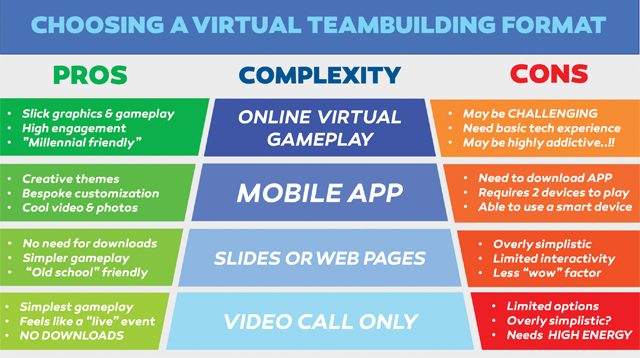
Choosing the right option will depend on factors such as corporate theme and objectives; time constraints; team’s demographic; and team’s level of technical readiness, advised David Fotheringham, director, Asia Ability. Here is a graphic to guide your selection:
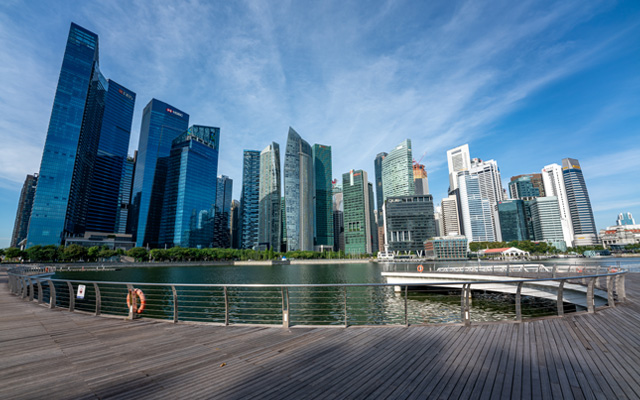
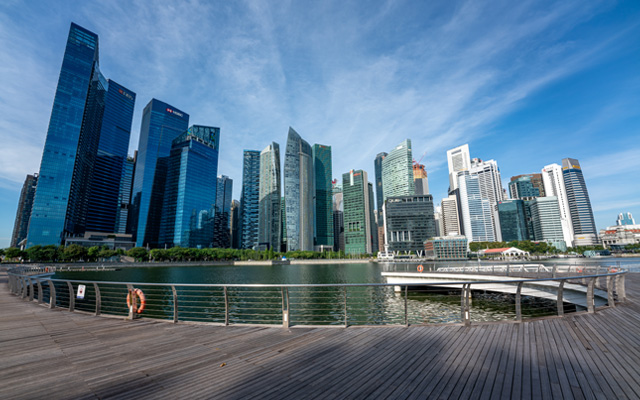
Fully-vaccinated Singapore residents will begin to enjoy greater social freedom from August 10, as the city-state moves into the first phase of her four-step transition to becoming a Covid-19-resilient nation.
Fully vaccinated individuals will be allowed to gather in groups of five, up from the current two. This applies to F&B settings. They can also take part in live performances and events, which will be allowed to host up to 500 fully vaccinated individuals.
Singapore relaxes restrictions on residents and travellers as national vaccination rate climbs
Singapore will continue to ease restrictions, with permitted event capacity expanding to 1,000 fully vaccinated individuals come August 19 if conditions remain good.
According to health minister Ong Ye Kung, who is one of the chairs of Singapore’s Covid-19 multi-ministry task force, this initial phase will run from August 10 till early-September, when 80 per cent of the Singapore population is likely to be fully vaccinated. With a higher rate of vaccination, Singapore’s economy will be further opened up, with more social activities allowed and travel made possible, he said.
The task force also announced plans to offer greater quarantine flexibility for fully vaccinated travellers from Australia, Austria, Canada, Germany, Italy, Norway, South Korea and Switzerland.
From August 20, travellers from these eight countries will be allowed to serve their 14-day stay-home notice (SHN) at their own places of residence instead of a dedicated facility.
To qualify for this scheme, travellers must have remained in the approved countries for the last 21 consecutive days before leaving for Singapore, and must either be staying alone or with other fully vaccinated household members who are under SHN for the same duration and with the same travel history.
All travellers must show proof of approval to serve SHN at their place of residence when they arrive in Singapore. They will be required to wear an electronic monitoring device to ensure compliance, and legal action will be taken against those who breach SHN requirements or make false declarations, said the Ministry.
Travellers who opt for this scheme will have to utilise and pay for specially designated transport services to and from their place of residence.
These latest measures are expanded from an ongoing allowance for travellers from New Zealand, Brunei, mainland China, Hong Kong, Macau and Taiwan to serve SHN at their place of residence.
Ong also revealed plans to establish travel lanes with selected countries, where frequent Covid-19 tests will replace quarantines.
Malaysia will relax Covid-19 restrictions for fully vaccinated people in eight states where cases have dropped and vaccination rates are higher.
The measures, which take effect from Tuesday (August 10), will allow dining-in at restaurants, outdoor individual sports and inter-district travel, said prime minister Muhyiddin Yassin in a televised address on Sunday.
Malaysia now has one of the world’s fastest vaccination rates, administering more than 500,000 doses a day
Hotels and homestays will also be allowed to receive domestic guests, but only those from within the same state, as the nationwide interstate travel ban will remain. Outdoor sports and leisure activities that do not involve physical contact and are not group activities will also be permitted.
These measures will apply to those who are fully vaccinated in states that have entered phase two and beyond. All states have moved on to phases two and three, except Selangor, Kuala Lumpur, Negri Sembilan, Kedah, Johor, Melaka and Putrajaya.
Additionally, in all states and Federal Territories, fully vaccinated citizens and non-citizens who are returning from abroad and have a residence in Malaysia will be allowed to undergo mandatory quarantine at home. Parents who are fully vaccinated will also be permitted to travel inter-district and interstate to visit their children aged 18 and below, while long-distance married couples will be allowed to travel interstate and inter-district to meet each other. Places of worship will also be allowed to reopen for those who are fully vaccinated.
Muhyiddin said the decision to relax restrictions was made after receiving feedback from the Health Ministry.
He said: “This decision was made very carefully and it is in line with data collected in the country on the effectiveness of complete vaccination as well as principles of science and public health applied around the world.”
He added that two criteria must be met in allowing privileges to fully vaccinated individuals. Firstly, the individual must have passed the 14th day of the second dose of vaccination for the two dose vaccines, namely, Pfizer, AstraZeneca and Sinovac. Secondly, recipients of single dose vaccines, namely Johnson&Johnson and CanSino, are granted the privileges 28 days after the date of injection.
Malaysian Association of Hotels (MAH) said that the relaxation announced for fully vaccinated people is a significant step forward, not just for the tourism industry but also for the country as a whole. “It bears commitment from the government to transition the country from the state of pandemic to accepting Covid-19 as endemic,” said MAH president N Subramaniam.
The tourism industry in phases two and three can prepare itself for an impending reopening. Subramaniam said: “Allowing dine-in at restaurants, for example, is expected to benefit hotels, particularly those certified Clean & Safe by Bureau Veritas Certification Malaysia (a proprietary hygiene and safety label for hotels by MAH) that had since its inception included ventilation, airflow and seating arrangements as part of its safety and health guidelines for restaurants within the hotels.
“The overall high compliance of SOPs by hotels is an added assurance to the general public that it is safe to dine and even stay, whether it is just for a short staycation or for any other travel purposes.”
Another proposal by MAH, presented to the Minister of Tourism, Arts & Culture earlier this year, is to allow fully vaccinated persons to travel inter-district and interstate, with added controls of confirmed hotel bookings and itinerary that can be counter-monitored by hotels.
Subramaniam shared: “With the current progress, this should be the next phase of relaxation, commencing for travels between states that had transitioned to phase two of the National Recovery Plan. The hotel industry is ready and will support the government in taking calculated steps towards full reopening of tourism, not just domestic but also international.”





 Founder Raj Sandhu recalled how 2020 had started off strongly, with the whole year booked out with programmes all over the world, but spiraled into despair in February as the pandemic hit and clients either cancelled or paused their plans.
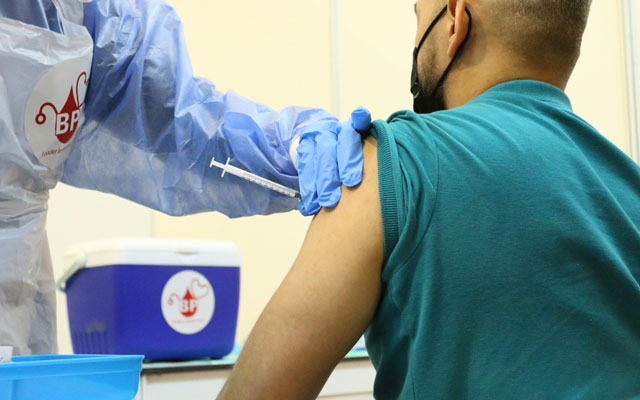








After a rapid decline due to a second Covid-19 wave, India’s hotel industry has seen a continued increase in occupancy due to the progressive approach to vaccinations in key markets across the country, according to preliminary data and analysis from STR.
India’s daily occupancy sat in the 20-30 per cent range in early June but improved by the end of the month with several days closer to 35 per cent and an outlier of 50.5 per cent on June 26. In July, the country took another step forward with most days in the 40-60 per cent range and a peak of 63.2 per cent on July 17.
“The progressive approach to vaccinations has led to an increase in travellers and hotel demand – leisure demand continues to drive this growth,” said Vidhi Godiawala, STR’s business development manager for Central and South Asia.
“Beyond the noticeable improvement, we have seen a different trend in where the country is regaining occupancy. Whereas India’s first recovery earlier this year was concentrated in leisure destinations, such as Goa, heavily populated markets such as New Delhi and Mumbai have seen improvement in this latest rebound.”
Mumbai’s daily occupancy reached as high as 77.9 per cent on June 26, while New Delhi’s daily occupancy improved to as high as 79.7 per cent on July 17. Those were each market’s highest daily levels in 2021.