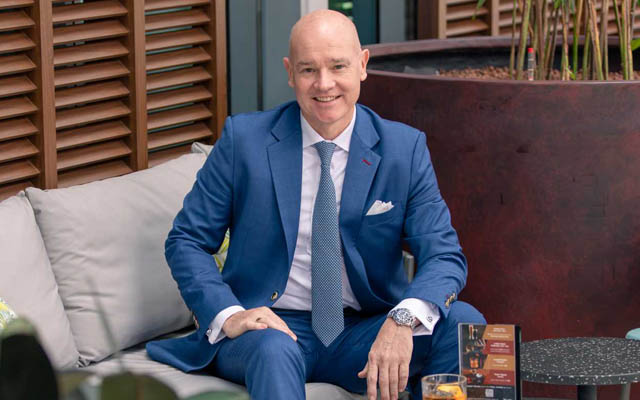
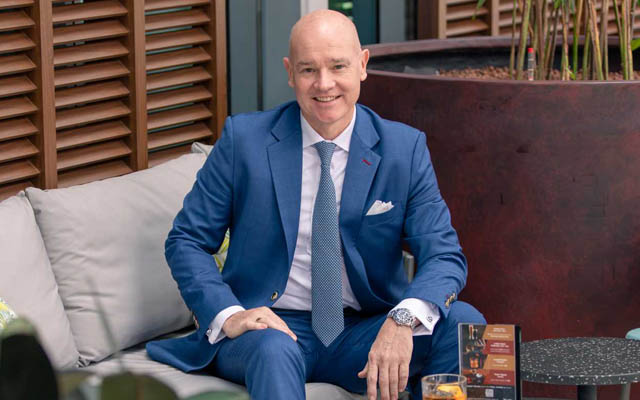
Carlton Hotel Singapore has appointed Niall Cowan as its new general manager, where he will oversee all hotel operations.
He brings over 20 years of international experience in luxury hospitality across Asia, Africa and Europe, having held senior positions at The Savoy and The Berkeley in London, Fairmont Mount Kenya Safari Club, and Fairmont Sanur Beach Bali.
Thomas Cook India and SOTC Travel have entered a partnership with Disney Cruise Line to offer sailings in Australia and New Zealand.
Cruise holidays are gaining popularity among Indian travellers. The E&Y and Economic Times Great Indian Traveller Report found that 52 per cent of respondents included cruising in their bucket list of experiences. The Thomas Cook and SOTC India Holiday Report 2025 recorded that 45 per cent of respondents showed strong interest in exploring formats such as cruises.
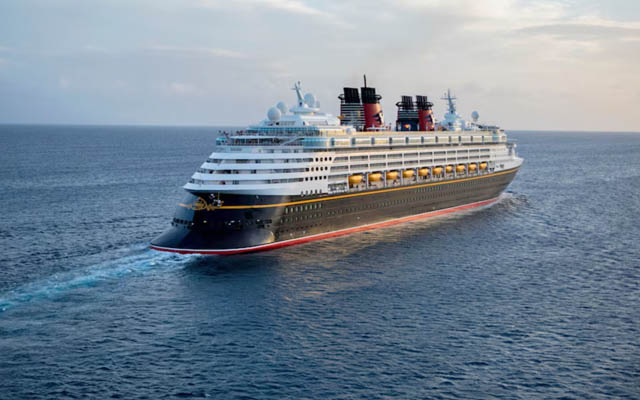
The collaboration offers Indian travellers premium Disney cruise experiences, including group and customised tours; Disney Wonder, pictured; photo by Disney Cruise Line
To meet this demand, Thomas Cook and SOTC have launched tours that include Disney Wonder sailings. The companies’ Australian Extravaganza group tour of 16 days will include a four-night sailing, with departures from India in November 2025 and January 2026.
Disney Wonder offers Broadway-style shows, deck parties, poolside movies, fireworks at sea, themed dining at Tiana’s Place and Animator’s Palate, youth clubs, fitness areas, character meet-and-greets, and multiple pools, including an adult-only Quiet Cove Pool.
The companies said the partnership will be promoted across media platforms and supported by their digital and retail network in India.
Rajeev Kale, president and country head, holidays, MICE, Visa at Thomas Cook India, said: “I am delighted with yet another first-mover from the Thomas Cook India Group, with the introduction of special Disney Cruise Line experiences into our group tours, also customised holidays for the upcoming winter season.
“Indian consumers are increasingly seeking premium, experience-rich journeys, and Disney Cruise Line delivers exactly that – with world-class entertainment, dining and immersive storytelling across segments. These special sailings are co-curated to allow our customers to bond, celebrate and create unforgettable memories – all within the magical world of Disney.”
SD Nandakumar, president and country head, holidays and corporate tours at SOTC Travel, added: “Cruising is no longer seen as niche – and is fast emerging as Indian consumers’ preferred holiday choice. My team and I are excited to launch Disney Wonder as an exciting addition to our product portfolio this winter.
“We believe that no one understands the Indian traveller better than SOTC, and with Disney’s unmatched storytelling and entertainment, these sailings promise vacations that create treasured stories that last a lifetime.”
Singapore’s boutique hotel brand, Naumi, now has a presence in Barsha Heights, Dubai. The 237-key property is owned by Naumi Group, advised by SunStar Capital, and managed by Naumi Hotels.
Naumi Hotel Dubai is steps from Dubai Internet City Metro, 10 minutes from Mall of the Emirates, and 15 minutes from The Palm. The property is set to undergo a transformation, unveiling a new visual identity with whimsical spaces, imaginative micro-experiences, and signature brand touch points.
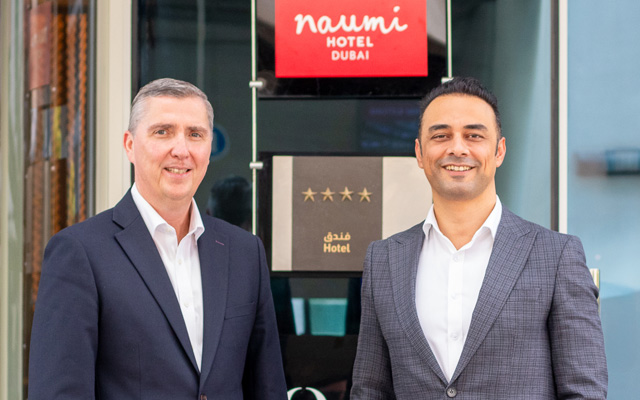
From left: Naumi Group’s Paul Stocker and Naumi Hotel Dubai’s Bassam Zakaria
Guest facilities include two restaurants, a spa, rooftop pool, fitness centre, and meeting facilities.
Gaurang Jhunjhnuwala, group CEO of Naumi Group, said: “Following Naumi Hotels’ success in the Asia-Pacific region, extending the experience to the Middle East felt like a natural next step. For us, Dubai represents the epicentre of the region’s thriving hospitality market and a symbol of innovation, where the world’s leading brands and most discerning travellers come together. We are excited to make our mark on the region and on a city that so closely mirrors our ambition, creative energy, and ever-evolving vision for hospitality.”
With the Dubai addition, Naumi Hotels’ portfolio now comprises eight properties spanning key cities in Singapore, New Zealand, Australia, and the UAE.
Paul Stocker, group chief operating officer of Naumi Group, said: “With every new property, we aim to push the boundaries of boutique hospitality. In Dubai, we’ve found the ideal canvas to express our playful sophistication and bring unexpected moments to life. The hotel will capture the spirit of the city while staying true to Naumi Hotels’ experiential, artful approach to every stay.”
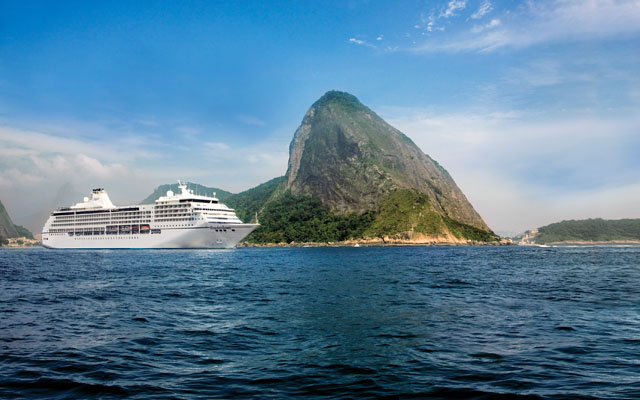
Oceania Cruises and Regent Seven Seas Cruises (RSSC) have strengthened their leadership in Asia-Pacific with a dual-role sales structure to support the brands’ growth in the region.
Lisa Pile, vice president and general manager for RSSC in Asia-Pacific, now also oversees Oceania Cruises in the region. Pile has worked with RSSC since 2016 and brings extensive experience across Asia’s luxury travel markets, having lived and worked in Beijing, Shanghai, Chengdu, Bangkok, and Singapore.
From left: Lisa Pile and Constance Seck
Constance Seck returns as director of sales, Southeast Asia, for both Oceania Cruises and RSSC. Based in Singapore, Seck has over 20 years of experience in luxury travel markets, including senior roles in hotels, consortia management, and travel agencies.
James Sitters remains director of sales, Australia and New Zealand, for Oceania Cruises.
Pile will be supported by three regional leaders: Seck for South-east Asia, Holly Kong for North Asia (excluding Japan), and Toshi Kurihara for Japan. Kong has more than seven years with the company, while Kurihara has led sales in Japan since 2023.
Global Hotel Alliance (GHA) has appointed two senior executives to expanded leadership roles.
Steve Ayalo has been promoted to vice president, IT governance, risk & compliance, and Matthew Lloyd to vice president, marketing technology & CRM.
From left: Steve Ayalo and Matthew Lloyd
Ayalo, who joined GHA in 2015, has led the development of the company’s cybersecurity and compliance frameworks, including the cybersecurity operations centre, threat intelligence services, and governance around emerging technologies such as AI. In his new role, he will oversee ISO certification, enterprise IT strategy, information security risk management, and regulatory compliance across all business units.
Lloyd joined GHA in 2018, bringing 10 years of prior travel industry experience with Hilton and Southwest Airlines. He has led global CRM initiatives, digital innovation, and customer data platform rollouts. He will take on broader responsibilities, shaping departmental culture, fostering cross-functional collaboration, and mentoring emerging talent to enhance GHA’s marketing capabilities.
The Malaysian state of Pahang held its first-ever tourism roadshow in India, with events in New Delhi on September 24 and Chennai on September 26. The initiative aimed to promote Pahang’s diverse destinations and experiences beyond the popular Genting Highlands among Indian travellers.
“Nearly 60 per cent of Indian travellers visiting Malaysia include Genting Highlands in their itineraries. With these roadshows, we want to introduce other experiences in Pahang to Indian visitors, from our beaches and islands to rainforests and heritage towns,” said Leong Yu Man, chairman, Pahang State Committee on Unity, Tourism and Culture while speaking to TTG Asia in New Delhi.
Leong shared that the roadshows aim to draw Indian travellers beyond Genting Highlands to explore Pahang’s beaches, islands, and rainforests; photo by Rohit Kaul
Pahang is looking to promote other highlands like Cameron, beaches like Cherating, Fraser’s Hill and Tioman Island in the Indian market.
“For Indian travellers who love sunshine, beautiful beaches and activities like diving, snorkelling and trekking, Tioman is the perfect place. Indian travellers can also explore the ancient rainforests of Taman Negara when visiting Pahang,” she added.
Apart from officials from the government of Pahang, 12 suppliers from the state including travel agents and hoteliers participated in the roadshows. Pahang received around 53,000 Indian overnight visitors last year.
She noted: “These numbers don’t include Indian travellers who are visiting Pahang for a day trip and going back to Kuala Lumpur. So, this makes the real figure for Indian travellers that come to Pahang much higher.”
Pahang Tourism is also looking to shortly organise a familiarisation trip for travel agents and media representatives as part of its marketing initiatives in India.
Philippine Airlines boosts domestic flights, launches new Cebu-Calbayog route
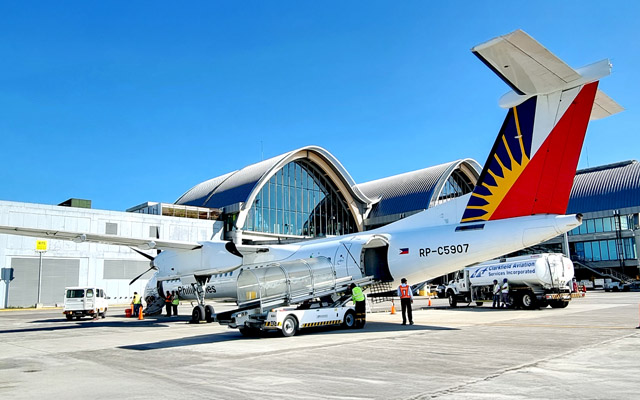
Philippine Airlines (PAL) is expanding its domestic network ahead of the peak travel season in October 2025, adding flights across key routes to meet rising demand.
Manila services to Butuan, Cagayan de Oro, Cotabato, Legazpi, Dumaguete, and Tacloban will see increased frequencies, while daily Manila-Siargao flights will operate alongside 21 weekly Cebu-Siargao services and daily Clark-Siargao flights.
Boracay will be served via 42 weekly Manila-Boracay flights and 14 weekly Cebu-Boracay flights, while Coron flights will operate from Manila (seven weekly), Clark (14 weekly) and Cebu (21 weekly). Manila-Antique flights will run three times weekly, and Manila-Catarman four times weekly.
From December 8, 2025 to March 28, 2026, five Manila-Iloilo weekly frequencies will be upgraded to Airbus A330 aircraft. Overall, PAL will operate 1,154 flights per week from Manila to destinations in Luzon, Visayas, and Mindanao, adding over 14,000 seats.
From October 26, 2025, PAL will launch a Cebu-Calbayog route with four weekly flights every Monday, Wednesday, Friday, and Sunday. Flights to Cebu’s island gateways are also expanding, with Cebu-Siargao and Cebu-Busuanga services now running thrice daily.
Other Cebu route frequencies are also increasing: Cebu-Bacolod from 14 to 18 weekly, Cebu-Butuan from seven to 11, Cebu-Cotabato from two to three, Cebu-Ozamiz from three to four, and Cebu-Tacloban from 11 to 14 weekly.
PAL also operates international flights from Cebu to Ho Chi Minh City, Seoul, Tokyo, and Osaka.
Cathay Pacific
Cathay Pacific returns to Seattle
Cathay Pacific will resume non-stop flights between Hong Kong and Seattle from March 30, 2026, operating five return flights per week.
Seattle becomes the airline’s ninth North American passenger destination, enhancing connectivity from its Hong Kong hub.
This launch follows the introduction of direct flights to Dallas-Fort Worth in April, which will increase to daily services from October 26, 2025 due to strong demand.
The Hong Kong-Seattle route will use Airbus A350-900 aircraft, offering fully flat beds in Business Class, Premium Economy seats, and Economy cabins. Services will run from March 30 to May 31, 2026, and from September 16 to October 24, 2026, subject to regulatory approval.
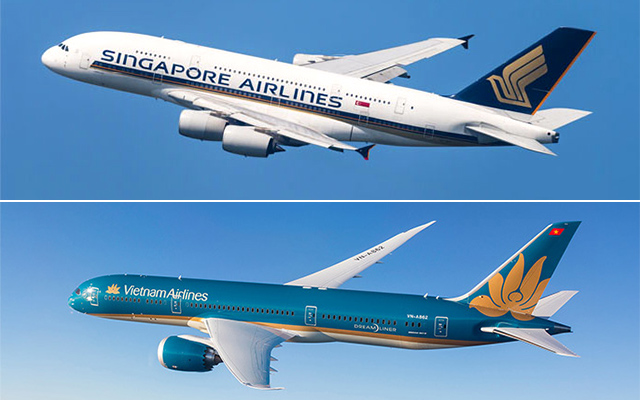
Singapore Airlines and Vietnam Airlines
Singapore Airlines, Vietnam Airlines launch codeshare services
Singapore Airlines and Vietnam Airlines will begin codeshare flights from October 26, 2025, offering more options between Singapore and Vietnam.
SIA will codeshare on Vietnam Airlines-operated flights to Hanoi and Ho Chi Minh City, while Vietnam Airlines will codeshare on SIA-operated flights to Danang, Hanoi and Ho Chi Minh City.
Tickets will be available from October 10, 2025, with plans to expand the arrangement to more destinations, subject to regulatory approval.
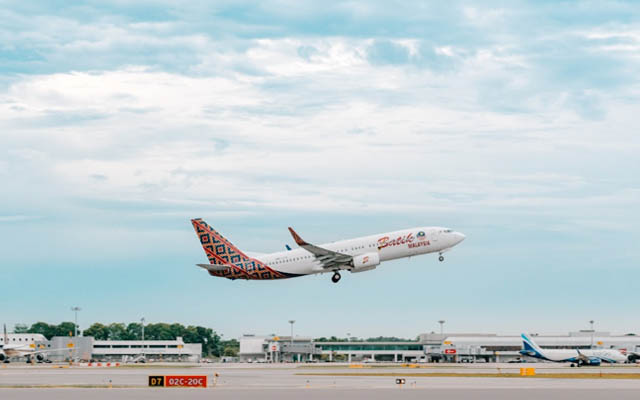
Lion Group’s Batik Air
Lion Group expands Malaysia flights, moves to Changi T4
Lion Group will strengthen its Singapore operations with Batik Air Malaysia launching new services to Ipoh, Penang and Subang from December 2025, alongside its existing Kuala Lumpur flights.
The group, which currently operates 88 weekly services linking Singapore with cities in Indonesia, Malaysia and Thailand, will relocate from Terminal 3 to Terminal 4 in November 2025 to support further growth. The move will give Lion Group access to enhanced capacity and automated facilities, with shuttle connections between terminals set to increase in frequency.
You have recently opened offline stores in markets like Chennai, Kochi and Vapi. How are these stores helping you to expand your presence in the country?
I think holidays are a very emotional purchase. Here, you don’t get a physical asset after you make a transaction. Holiday purchase is about good memories. So, one key aspect of establishing physical stores is that consumers get a sense of security when they see a store. They have the confidence that if there is an issue, they can walk up to the store.
On the other hand, we have noticed that tier-II markets in the country still rely a lot on word of mouth. So, we have an audience in tier-I cities where we are able to reach through digital platforms. However, consumers in non-metro cities are still hesitant to make a purchase decision online. Today the non-metro cities in India like Kochi, Ludhiana and Chandigarh have the right airline infrastructure in place. There are a lot of direct flights from these cities into global markets such as South-east Asia and the Middle East, making the growing demand in non-metro cities integral to our expansion plans.
Are you looking to add more offline stores into your portfolio?
We are opening more offline stores in destinations like Chandigarh and Bhubaneswar. We want to get to 15 stores by the end of this financial year. We already have eight stores across the country. I believe adding more stores is the easiest thing to do but you need to make the venture profitable for the store partner too. While you expand you have to also ensure that both the brand and the experience is not diluted. We are very sure that once we get to 15 stores, we will reach 50 at a much faster rate. I think that if stores are making money, more and more partners will reach out to us organically.
What differentiates Pickyourtrail from other holiday companies in the country?
I think one of the key differentiators is that we offer a completely tech-enabled solution. It helps our store partners to cater to customer demands in a much more seamless and quicker fashion. We focus on offering the best in the industry customer experience. This has helped us to grow our referral and repeat business. The big travel brands have been doing this business for a while. We are asking ourselves how we use technology to deliver better economies of scale, better efficiencies and therefore better return on investment for our store partners.
Are there some specific travel segments you are focusing on or travel trends being noticed? Which are the outbound destinations in high demand at present?
Our focus has been on segments like families and honeymooners. We are also seeing a big uptick in seniors travelling. Besides the outbound market, we have recently forayed into the domestic tourism segment. Corporate travel is also another priority area. In terms of destinations, Vietnam is doing really well in the last 12 to 14 months. Japan continues to be a big crowd puller over the last 15 months. Travellers who have been to the Middle East a number of times are exploring different destinations like Oman. Obviously, there are popular traditional outbound destinations like Europe and Australia.
Travellers are now booking slightly earlier to secure better value. Previously, the average booking window – the time between booking and departure – was around 30 to 32 days, but it has now extended to 40 to 43 days. This shows that people are realising the benefit of planning ahead, as early bookings often come with better price advantages. In Europe, for example, many travellers book their holidays nearly three months in advance before departure. I believe India will gradually follow this trend, with more people booking 60 to 90 days in advance. Consumers are also increasingly taking shorter breaks rather than only one long holiday.
How have global conflicts happening in the Middle East, Russia-Ukraine war and the recent India Pakistan skirmishes impacted the outbound demand from the Indian market?
Travel is known to be a very vulnerable industry, affected by everything from geopolitical changes to natural calamities. For example, during the India-Pakistan skirmishes earlier this year, travellers did put their plans on hold. However, even post-pandemic, we have seen that people may pause, but they do not stop. Demand tends to return multi-fold once the situation stabilises.
How are you seeing tourism boards in India helping to grow outbound tourist arrivals from India?
I think most tourism boards we work with have either already shifted or are in the process of shifting their focus, recognising that visas remain the biggest bottleneck for Indian travellers. Over the last 18 to 24 months, several destinations have taken steps to ease this challenge, some by offering visa-on-arrival facilities and others by introducing multi-year visas. For example, the Philippines recently introduced visa-on-arrival; Japan has simplified its visa process; Vietnam offers visa-on-arrival, Australia started issuing multi-year visas, and Dubai now provides multi-year visas too. This marks a significant shift towards making travel more accessible for Indians.
In addition, we are seeing tourism boards move away from generic global campaigns and instead invest in India-specific campaigns. They are also allocating resources to train the travel trade. Earlier, it was sufficient to promote standard itineraries, but today’s customers, empowered by the internet, are often as knowledgeable, if not more so, than the travel partners themselves.
Pantai Indah Kapuk (PIK) is a developing tourism destination in Jakarta. Located along the northern coast and extending into Tangerang in Banten Province, the 3,800-hectare area – once dominated by mangrove forests and wetlands up to the 1970s – has undergone significant transformation into a lifestyle and tourism hub.
With plans led by the newly formed PIK Tourism Board, the destination aims to attract both domestic and international visitors. PIK currently receives an average of 2.1 million visitors per month, mainly local and domestic travellers, though regional arrivals have started to increase.
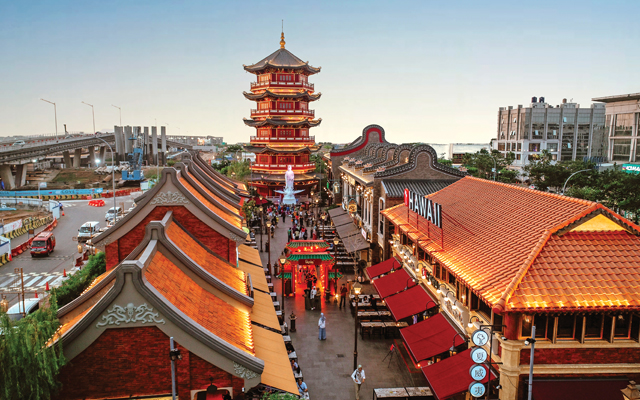
Pantjoran features a mix of arts, crafts and culinary adventures for visitors to explore
Its location, 15 minutes by car from Soekarno-Hatta International Airport and accessible via toll roads from central Jakarta and surrounding areas, makes it convenient for both general visitors and transit passengers. Travel time will further reduce to around seven minutes once the first section of the Kataraja toll road – currently under construction – is completed early next year.
Developed by Agung Sedayu Group and Salim Group, PIK consists of PIK 1 in North Jakarta and PIK 2 in Tangerang Regency, Banten. It includes residential and commercial areas as well as facilities designed to support social, business, entertainment, dining and tourism activities.
PIK comprises over 40 attractions, 1,300 F&B outlets, and 40 event venues across indoor and outdoor settings. It offers 1,126 rooms across hotels and serviced residences, two golf courses with a 27-hole course in development, a 14-kilometre man-made beach, and 655 hectares of preserved mangrove area.
Fenny Maria, head of tourism development at Agung Sedayu Group, said: “We do not want PIK to become just a transit point, but a destination. PIK is for everybody. PIK is family-friendly, kid-friendly, Muslim-friendly, senior citizen-friendly, pet-friendly, and special needs-friendly. In the development of infrastructure, we are ensuring that these (elements) are available.”
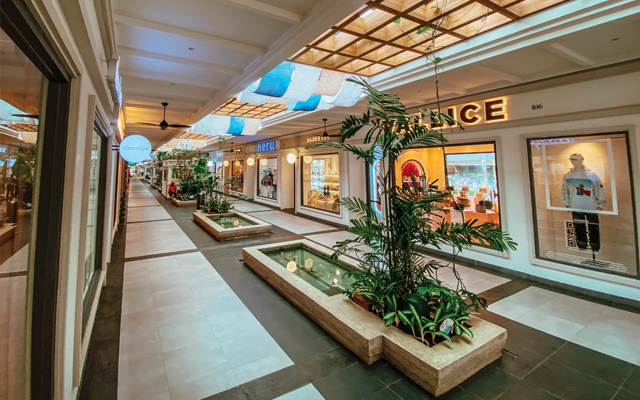
Attractions at PIK range from art, craft and food-focused areas such as Pantjoran and Batavia, to retail spaces like PIK Avenue, Tokyo Hub, Sarinah and By The Sea. Religious sites include Our Lady of Akita and Bunda Maria Prayer Parks. The area also hosts sports centres, nightlife venues like Dreamville and HW District, and spaces for events.
By The Sea offers a diverse shopping experience in a beachfront setting
The beachfront location supports seaside activities and island tours. The 14-kilometre White Sand Beach, with four kilometres currently open to the public, features attractions including Aloha, Land’s End and Ginza Beach Walk.
Fenny shared that Aloha provides a seaside experience in the PIK2 area, with various food and beverage options available. She referred to Land’s End as a peaceful coastal spot with a relaxed atmosphere, noting that its lighthouse offers scenic views.
The Ginza Beach Walk is described as the largest walkable beachfront destination in the region, offering open-air dining, retail options and beachside leisure in a pedestrian-friendly layout. A pier is also under construction.
“When ready, boats can operate and take tourists to the resort islands in Kepulauan Seribu (Thousand Islands), such as to the popular Bidadari, Kelor, Alor and the (historic) Onrust Islands, which are just about seven minutes from here,” Fenny added.
Additional developments include a planned Marina Club and PIK International Cruise Terminal. As for the mangrove forest, it provides walking trails, kayaking, birdwatching and guided nature tours.
PIK also offers more than 40 venues for MICE and social events, including weddings. The Nusantara International Convention Exhibition (NICE), said to be the largest in Indonesia, is scheduled to open its first phase in September. It will include a leasable area of 130,000m² and capacity for 70,000 attendees, with future plans for an additional exhibition building with 120,000m² of leasable space.
Spike Air Dome, a 10,000m² innovative and environmentally friendly venue at PIK 2, also recently opened.
Fenny stated: “Spike is the first venue with Air Dome technology in South-east Asia, which costs significantly less to construct compared to conventional buildings. It utilises solar energy for daytime lighting and features an insulated membrane that retains heat, reducing the need for cooling and enhancing energy efficiency. This space is perfect for music festivals, concerts and sports tourism.”
PIK currently has three hotels – Mercure Jakarta Pantai Indah Kapuk, Swissotel Jakarta PIK Avenue and Hotel Osaka PIK2 – as well as two apartment residences: Oakwood Apartment PIK and Tokyo Riverside Apartment.
“There are some hotels in the pipeline: two will be near NICE and several others along the beach, but we cannot announce them yet,” Fenny said.
On regional and international promotion, Fenny said the PIK Tourism Board has been working with the Ministry of Tourism, regional governments, tour operators, media and influencers to increase international awareness.
“We have been participating at tradeshows and sales missions, joining Jakarta Provincial Tourism Office and the Ministry of Tourism. We have also hosted various fam trips collaborating with tour operators and event organisers from other parts of Indonesia and neighbouring countries like Malaysia and Singapore,” she said.
She added that the PIK Tourism Board is also focused on improving service standards.
“To establish PIK as a premier tourism destination, we must elevate our service standards. This requires educating the local community to consistently meet hospitality service levels,” she concluded.
The 2025 Global Destination Sustainability Index (GDS-Index) has released its Top 40 rankings, marking a decade of benchmarking destination sustainability.
This year’s theme, Shifting Tides, highlights a period of global transition, with destinations showing resilience and accelerated action.
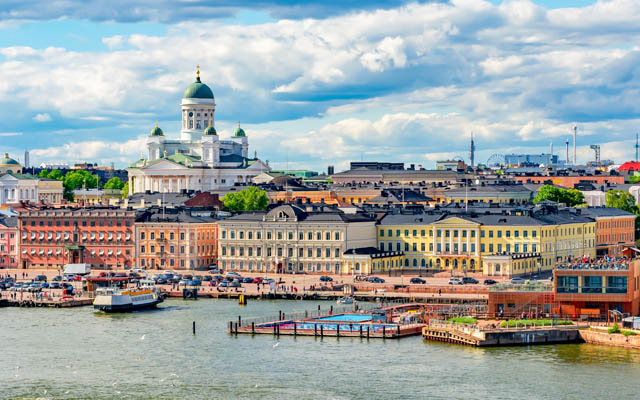
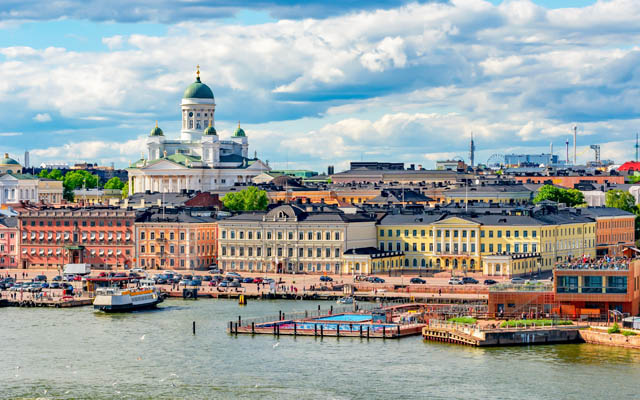
The 2025 Global Destination Sustainability Index highlights global progress in sustainable tourism, with Helsinki, pictured, leading the way
The 2025 rankings show a 31 per cent rise in average performance across all participating destinations since the programme began, with the Top 10 improving by 46 per cent. Despite ongoing economic uncertainty, destinations have maintained momentum in their sustainability initiatives.
Helsinki (Finland) leads the GDS-Index for the second consecutive year, scoring 93.52 per cent and maintaining its position as a sustainable tourism and events leader. The city has ended its coal era, earned Green Destinations certification, and ensured near-universal sustainability certification across hotels, convention centres, and top attractions. The Nordic trio of Helsinki, Gothenburg and Copenhagen continues to dominate, though the gap between the Top 10 and the overall GDS-Index average has narrowed from 23.2 per cent to 20.3 per cent, reflecting rising performance globally.
Adelaide is recognised as the most improved destination, climbing 23 places in its second year of participation. The city’s rise was driven by its Integrated Climate Strategy 2030 and sustainability roadmap, including Adelaide Airport achieving carbon neutrality for its direct emissions. Krakow and The Malverns also feature among the most improved destinations.
The 2025 GDS-Index highlights a more dynamic Top 40, with nine new destinations entering the rankings, accelerated climate action with 77 per cent of destinations reporting sector-level measures, and widespread adoption of third-party sustainability certification. In the Top 10 destinations, 81 per cent of hotels are now certified, up from 66 per cent in 2016, and 50 per cent of destination marketing organisations hold sustainability certification for their own operations. Regional leadership is also evident, with Lyon leading Central and Southern Europe, Melbourne topping Asia-Pacific, and Montreal retaining the North American lead.
Guy Bigwood, CEO and chief changemaker at GDS-Movement, said: “Every destination featured in the GDS-Index has demonstrated leadership and commitment – each one deserving recognition for its efforts to build a more regenerative future.
“As we mark the 10th year of the GDS-Index – with 626 benchmarking assessments completed across 35 countries since 2016 – one thing has remained constant: the courage of this community to lead with vision and to innovate with purpose.”
He added: “From shifting seasonality to changing governance and a pushback against sustainability, members of the movement meet each wave with intention, creativity, and a fierce resolve to do better, faster, together. It’s not just about riding the wave, it’s about learning how to read it, shape it, and surf it to make it count.”

 He brings over 20 years of international experience in luxury hospitality across Asia, Africa and Europe, having held senior positions at The Savoy and The Berkeley in London, Fairmont Mount Kenya Safari Club, and Fairmont Sanur Beach Bali.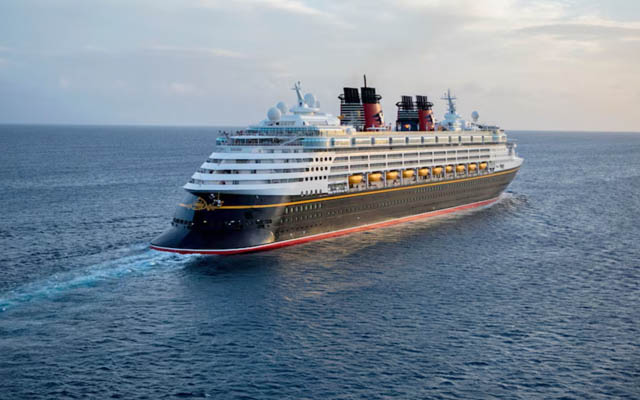








 You have recently opened offline stores in markets like Chennai, Kochi and Vapi. How are these stores helping you to expand your presence in the country?