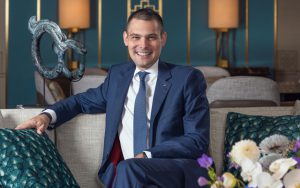
Mandarin Oriental Hotel Group has appointed Richard Langonne as general manager of Mandarin Oriental Wangfujing, Beijing.
In his new role, Langonne oversees all operations at the 73-room luxury boutique hotel in the very centre of China’s capital.
He has nearly two decades of experience in the luxury hotel industry, most recently as hotel manager of Mandarin Oriental, Hong Kong, since 2017. In that position, he supervised daily operations and played a leading role in strengthening the positioning of the group’s flagship property.
The Frenchman began his career with Hotel de Crillon in Paris before moving to South-east Asia where he has held a variety of positions in launching and managing hotels across the region, including in Krabi, Bangkok, Macau and Hanoi. Langonne is no stranger to the China market, where he previously held posts in hotels in Shanghai and Guangzhou.
The last few years have seen steady progress on New Distribution Capability (NDC). However, the onset of the pandemic raised concerns that NDC might take a backseat. Interestingly, though, despite the challenges of the past 18 months, momentum around NDC hasn’t stalled.
In fact, the drive to improve travel retailing, personalisation and simplifying processes has led to much progress. We are optimistic that this drive will continue through 2021 – a year that is shaping up to be one in which NDC deployment is scaling globally.
This optimism carries over to the Asia-Pacific region where we’ve seen a number of important milestones with carriers like Singapore Airlines late last year and Qantas this year. We’ve also partnered with some of the biggest travel agencies across the region in G.M. Tour and Travel, Riya Travel and Hana Tour. Suffice to say, Asia-Pacific has been a dynamic growth region for NDC.
The time is now for the industry to truly engage and realise the maximum benefits from investments made in NDC as we work to rebuild travel.
Technology is no longer a barrier to adoption and it’s now possible for travel sellers and buyers to consume aggregated content, including low-cost carrier (LCC) content, delivered via different technologies in a single application with an improved booking experience. Also, airlines are beginning to differentiate with NDC by offering product bundles and price points that deliver exactly what travellers want.
NDC is the present and the future
So, what role does NDC play in rebuilding travel? It’s simple. The NDC retailing process enables industry players to get creative in the digital retail space, which opens many more doors to facilitate opportunities like dynamic packaging, fare bundles and other ancillary services.
NDC allows airlines to create richer content and distribute tailored offers through travel agents and corporate booking tools in real-time. In turn, travel sellers will have the tools to efficiently build personalised offers for travellers.
Take Qantas as an example. The airline can now recognise frequent flyers that book via NDC-enabled travel sellers at the tier level and is able to present customised deals based on price, points rewards, ancillary options and bundles. There will come a time when Qantas enables payment with a combination of cash and miles via NDC for frequent travellers, opening a whole new world of retailing options.
Give travellers what they want
The technological expectations of travellers have been set by brands like Amazon, Netflix, and Spotify when it comes to ease of use and personalisation. NDC can give travellers the same smooth experience they are used to with the technology they use in other parts of their lives.
The end-to-end integration of NDC enables advanced servicing capabilities, so travellers can change, modify or cancel a booking quickly with just a few clicks. The process is smoother and faster so travellers can easily access more information and make better informed choices.
The next step in NDC
The industry has come a long way since the inception of NDC. Yes, there are still challenges to contend with, but also achievements to be celebrated. This is where things are about to get more interesting.
At Amadeus, we are working hard so that by the end of 2021, every Amadeus-connected travel seller globally will be able to access content sourced from both NDC and EDIFACT technologies through a single search query, with a simplified end-to-end booking flow, using the Amadeus NDC-enabled solution of their choice.
We understand that there are still some obstacles to overcome around servicing, integration and lack of standardisation to obtain the full benefits of NDC. However, we also recognise that NDC is a journey, and by working together as an industry, we will not only overcome these issues but unlock limitless possibilities to improve travel retailing.
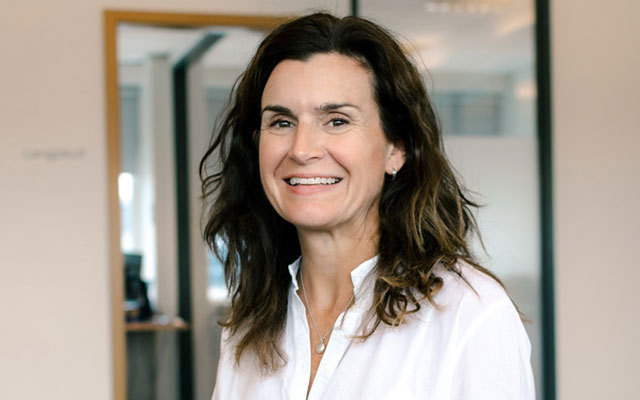
Hilton has appointed industry veteran Cedric Nubul as general manager for Hilton Singapore Orchard, which is set to open in January 2022 following an extensive refurbishment of the current Mandarin Orchard Singapore.
Nubul brings over 20 years of experience with Hilton hotels, including strong experience in conversion of hotels. He served in the role of general manager across the Caribbean and Colombia over the past eight years, and previously worked across France, Spain, Italy, the Maldives, and Malaysia.
Few would think of launching a travel business today, right in the midst of a prolonged pandemic and tourism crisis, but former architect and business entrepreneur Michiyo Kawabe sees promise in heading that way.
With other partners, Kawabe officially registered Michi & Co with the Singapore Tourism Board in June, setting the company on the path of offering curated tours around Japan’s lesser known regions, with the promise of connecting travellers with local communities.
Michiyo Kawabe (left) launches Japanese tour company and ropes in Singapore-based Japan specialist, Salamat Khamisah (right), to develop programmes
According to Kawabe, the ultimate goal of Michi & Co is to offer travellers a “learning journey” that gives them a deeper look into the local way of life and which will support the local people and their livelihood.
For a start, Michi & Co offers two- and four-night itineraries each to Hayama and Kamakura in Kanagawa prefecture and Hakuba and Togakushi in Nagano prefecture. The programmes are built around private, luxury villas, some of which Kawabe helped designed.
The Hayama villa, built a century ago, stands next to the Hayama Imperial Villa. Kawabe has preserved its original structure while bringing in modern luxuries and amenities, such as a balcony Jacuzzi with garden and ocean views, and a Western dining room and kitchen. The villa can take four guests in bed, and four more on futons.
Over at Hakuba, the villa is a classic ski cabin that is within easy reach of major ski resorts. The three-bedroom villa is good for up to six guests, but larger families can take a second villa of a similar size on the same site.
Kawabe will tap into the network of staycation.jp, an online portal of vacation rental villas all over Japan that she set up years ago, to offer other accommodation options.
Michi & Co hopes to draw international travellers deeper into Japan, where they would reside in private villas and enjoy experiences off the touristy tracks; Hayama villa pictured
Itineraries play up the Japanese countryside, and offer uniquely Japanese experiences, such as unwinding around a takibi – bonfire – with a master who will speak about the art of making a bonfire, interacting with a local fisherman, visiting farmer’s markets, dining at restaurants that are hidden gems, participating in meditation rituals and pottery crafting, and more.
As the company continues to build up its product line, Kawabe said programmes would carry on the promise of taking travellers off the beaten track to appreciate more of Japan.
Salamat Khamisah, a recognised Japan destination expert in Singapore, joins the company as tours and operations manager. She believes that Michi & Co’s direction to “have our guests learn about the local culture in less congested parts of Japan through curated journeys fits with the post-pandemic expectation that people will favour private tours instead of the usual group tours, and for destinations away from the big cities”.
“It may seem strange to start a travel agency now, especially one that focuses on Japan when there are still inbound travel restrictions, but I think this gives us time to prepare. Demand will rebound very quickly and we should not wait till borders are reopened to begin planning and marketing. By then, there will be a huge rush of travel agent activities,” reflected Khamisah.
Khamisah will be leveraging her expertise in Halal tourism to support Michi & Co’s development in this growing tourism segment. “We are able to provide Halal or Muslim-friendly F&B catering and accommodation, and I have a reliable network of Japanese suppliers who are familiar with serving Muslim travellers,” she shared, adding that the plan is to support Muslim travellers from anywhere in the world, not just those from Singapore.
To establish the Michi & Co branding and engage potential travellers, the team has been conducting Japanese tea ceremonies that give customers a taste of the destination to whet their travel appetite.
“It is encouraging to know that many who have attended our sessions have expressed interest to holiday in Japan once the borders reopen. They are all bidding their time, waiting for Japan to welcome again foreign visitors,” said Khamisah.
Besides Japanese tea ceremonies, Kawabe is looking to offer meditation or online interactions with other Japanese masters. In addition, guests will soon be able to purchase products that allow them to bring uniquely Japanese experiences home.
“We have started selling green tea products, which are a nice match with our tea ceremonies. I think handicraft make interesting products to sell as well, as there are many stories of the artisan and Japanese culture embedded within. Our introductory sessions and products will allow our guests to experience a part of Japan before their visit in the near future,” said Kawabe, adding that “a successful travel agent is one that can tell a good story of the destination and the value of local culture”.
Editor’s note: Content has been updated to reflect an amendment. The original copy states that private villas featured in the tours are built, designed and owned by Kawabe. This is not the case.
Iceland-based airline technology provider, Dohop, is working to strengthen its global presence, with a focus on the Asia-Pacific region over the next five years.
Dohop’s commercial director, Sarah Hanan, shared that Asia-Pacific’s vast population coupled with the fact that it was the fastest-growing region for air travel globally pre-Covid, presents a “significant opportunity” for the brand’s growth.
Hanan: Intermodal air-rail connections at airports in Asia-Pacific markets still under-developed
“We believe we are uniquely positioned to be able to support the aviation industry in its recovery by facilitating new route connections, thus providing opportunities for incremental revenue through partnerships with our existing network of 60 airlines,” she said.
Since its founding in 2004, Dohop has supported thousands of connections between low-cost carriers, full-service carriers and hybrids. It provides booking engines and microsites that enable carriers through API integrations to easily and seamlessly offer connecting itineraries with their partner airlines.
It also offers bespoke customisation of the platform to fully integrate with a partner’s website and booking flow. Additionally, it can also support the sale of seats with seat maps, bags, meals, inflight entertainment and additional ancillaries, along with frequent flyer programme integration.
Currently, Dohop has five airline platforms in the Asia-Pacific region. However, a few have been disabled due to Covid-19 restrictions. The company is in ongoing discussions with many airlines based in Asia-Pacific to grow its network.
Besides virtual interlining, Dohop is also helping airlines navigate the disruption to flight schedules caused by ever-changing travel restrictions owing to the current pandemic. It has responded quickly to change requests and proactively presenting new opportunities as they arise.
The Asia-Pacific region is supported by Dohop’s team based in Bangkok and Beijing. Marketing initiatives are done out of its headquarters in Reykjavik, Iceland, and supported by its regional offices.
Earlier this year, Dohop enabled intermodal connections between easyJet and Deutsche Bahn who launched combined transportation connections on Worldwide by easyJet in July.
Hanan shared: “Dohop is actively working on expanding our network of rail providers globally, which will in turn be able to facilitate an increasing number of intermodal connections, which we believe play a key role in international travel.”
While the intermodal proposition is gaining momentum in Europe as markets recover, the take-up rate in Asia-Pacific is slower. Said Hanan: “Countries such as Japan and China have extensive high-speed rail networks. However, air-to-rail connections are not yet fully developed.”
She added: “We are in talks with several airlines to expand intermodal. It is a convenience to customers, when they can pre-book their onward connection from the airport.”
Tourism leaders from across Asia-Pacific have met to plan the sector’s restart and recovery even as borders remain closed throughout the region.
The 33rd joint meeting of the World Tourism Organization’s Commission for East Asia and the Pacific and its Commission for South Asia, which took place on September 14, came on the back of a challenging year for the region.
Asia-Pacific continues to have the largest proportion of destinations closed to tourists
The first to feel the impacts of the pandemic, the tourism sector in the Asia-Pacific region has also been the hardest hit, recording a 95 per cent fall in international arrivals in the first five months of 2021.
With UNWTO data also showing that this region continues to have the largest proportion of destinations closed to tourists, the member states taking part in the virtual meetings focused on the coordination of policy measures and strategies to accelerate the recovery of tourism activities in the region. These include the phased lifting on travel restrictions and the introduction of travel corridors.
Looking ahead, the members also agreed on the importance of upgrading the skills of the tourism labour force, as well as embracing innovation and digital transformation.
UNWTO secretary-general Zurab Pololikashvili said: “The Asia and Pacific region has a proven record as a dynamic tourism destination. With the right policy measures and strong coordination, destinations can start safely welcoming back international visitors, thereby allowing tourism to deliver on its potential as a driver of recovery and inclusive growth.”
The meetings attracted around 120 participants from 25 of UNWTO’s 29 member states in the region under the chairmanship of Malaysia and the Maldives.
Tourism Malaysia has appointed Zainuddin Abdul Wahab as the new director-general, effective September 13. He replaces Zulkifly Md Said who has retired.
Zainuddin was previously the senior director of management of Tourism Malaysia and also assumed the duties of deputy director-general (planning).
Zainuddin Abdul Wahab has been in civil service for 37 years and will now lead Tourism Malaysia
No stranger to the civil service, he was the director general of the Islamic Tourism Center before being appointed director of the Production Division and senior director of the Strategic Planning Division at Tourism Malaysia.
In his new role, Zainuddin will continue to assist in the recovery efforts of the tourism industry alongside driving progress towards the digitalisation of the National Tourism Policy, said Tourism Malaysia in a press statement.
Uzaidi Udanis, president of the Malaysian Inbound Tourism Association, described Zainuddin as a dedicated and experienced person who knew the market well.
“I am confident he is the right person to help the tourism industry recover. I hope he will also have regular interactions with the industry to find best solutions for the recovery of the tourism sector,” Uzaidi said.
The Malaysian Association of Tour and Travel Agents secretary-general, Nigel Wong, commented: “We hope that Tourism Malaysia under the leadership of Zainuddin will look at fresh and innovative ways to promote Malaysia and form more intimate engagement with industry stakeholders – smart public-private relationships like these are the key to quicker tourism recovery.”
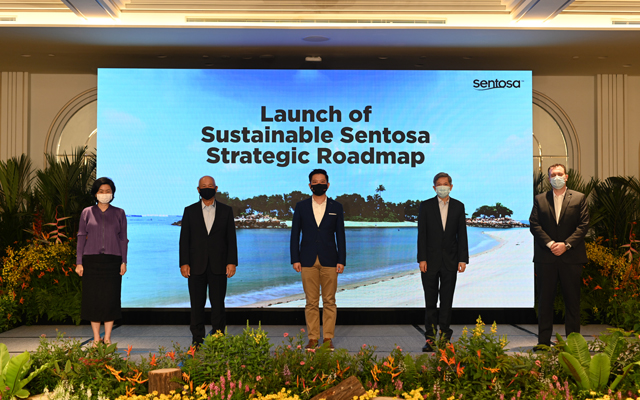
Sentosa Development Corporation (SDC) has released details of its Sustainable Sentosa strategic roadmap, following on from its March 2021 announcement of a 2030 carbon-neutral goal to support the wider Singapore Green Plan 2030.
Unveiled on September 17, the landmark roadmap, which builds on the island’s past sustainability efforts and unique value proposition, will see the Sentosa community first focusing on six key areas to achieve the island’s dual goals of achieving carbon neutrality by 2030 and becoming a globally recognised, certified sustainable tourism destination.
The launch event was graced by (from left) Sentosa Development Corporation’s Thien Kwee Eng and Bob Tan; minister for state & industry and culture, community & youth, Alvin Tan; Resorts World Sentosa’s Tan Hee Teck; and Shangri-La Rasa Sentosa, Singapore’s Gavin Weightman
Thien Kwee Eng, CEO of SDC, said: “As a prominent island destination that is home to an ecosystem of leisure experiences and businesses, Sentosa is a microcosm of Singapore, and provides a unique environment to trial and implement innovative solutions that can advance Singapore’s sustainability journey.
“This is a journey that requires collective effort, and we are proud to be launching the Sustainable Sentosa strategic roadmap with the strong support from our island businesses and partners. Through these efforts, we will strengthen Sentosa’s position as a beloved getaway for Singaporeans, and as a sustainable tourism destination.”
Various sustainability-focused initiatives and experiences will be launched, creating an important ecosystem for solutions, education, and ideas in the nation’s sustainability journey.
Initiatives that will bring Sentosa towards the first goal of achieving carbon neutrality by 2030 include the establishment of the Sentosa Carbon Neutral Network, comprising 17 founding members, to lead various carbon neutrality projects with like-minded partners across public, private, and non-profit sectors; implementation of new infrastructure solutions for carbon mitigation, with a focus on studying solutions to harness renewable energy and making Sentosa a zero-waste precinct; and developing a 100 per cent green transportation infrastructure by 2025 as well as attaining Green Mark Platinum Super Low Energy certification for all new SDC-owned buildings.
Initiatives with the second goal in mind include developing a series of sustainability-themed tours to be progressively launched from December 2021, to allow guests to better understand the importance of sustainability through an immersion into the unique heritage, biodiversity and nature in Sentosa as well as neighbouring islands; launching a new gateway to the wider Southern Islands archipelago via a new ferry jetty at Sentosa Cove Village from 2Q2021; establishing guidelines by 2022 to encourage all Sentosa businesses to strengthen their sustainability practices through green initiatives; and benchmarking the island’s offerings against international standards, such as that of the Global Sustainable Tourism Council’s (GSTC).
Sentosa also targets to be certified by GSTC as a sustainable destination by its Golden Jubilee Year in 2022.
The International Coordinating Council (ICC) of UNESCO’s Man and the Biosphere Programme has formally inducted Malaysia’s Penang Hill Biosphere Reserve into the World Network of Biosphere Reserves.
With this designation, the Penang Hill Biosphere Reserve, which comprises 12,481 hectares of marine and terrestrial ecosystems in the north-western part of Penang Island, will be counted among a distinguished global network of 714 Biosphere Reserves across 129 countries.
View of the Penang National Park and The Habitat Penang Hill from atop the Penang Hill Special Area Plan; the Langur Way Canopy Walk, the longest double span stressed ribbon bridge in the world and the only one of its kind in a rainforest, is visible
Biosphere Reserves the world over are celebrated for their exceptional biodiversity and distinct social landscapes as well as for their potential to demonstrate innovative ways of living in harmony with nature.
“This designation is a recognition of the rich natural and cultural heritage of Penang Island and an opportunity to be part of the Man and the Biosphere programme which is a unique platform for international collaboration,“ The Habitat Penang Hill and The Habitat Foundation said in a press statement.
Under the leadership of the Penang Hill Corporation, with the contribution of many state and federal government agencies involved in the preparation and eventual submission of the nomination dossier, the Penang Hill Biosphere Reserve now features not only the timeless forests of Penang Hill but also encompasses the state’s forest reserves, the historic Penang Botanical Gardens, Penang National Park, and coastal and marine ecosystems in an unbroken link from the hill to the sea.
Malaysian Inbound Tourism Association (MITA) president, Uzaidi Udanis, said: “With this latest international recognition, Penang will have a new world-class attraction which should be promoted for tourists. MITA will organise a recce for its members to see and experience the places for themselves.”
Adam Kamal, head of contracting & domestic market at Ice Holidays, told TTG Asia that the recognition would raise curiosity about the destination and boost domestic and international visitor numbers once interstate and Malaysian borders reopen.
“The internationally recognised accolade makes it easier for us to promote Penang,” Kamal commented.
Tourism leaders from across Asia-Pacific have met to plan the sector’s restart and recovery even as borders remain closed throughout the region.
The 33rd joint meeting of the World Tourism Organization’s Commission for East Asia and the Pacific and its Commission for South Asia, which took place on September 14, came on the back of a challenging year for the region.
Asia-Pacific continues to have the largest proportion of destinations closed to tourists
The first to feel the impacts of the pandemic, the tourism sector in the Asia-Pacific region has also been the hardest hit, recording a 95 per cent fall in international arrivals in the first five months of 2021.
With UNWTO data also showing that this region continues to have the largest proportion of destinations closed to tourists, the member states taking part in the virtual meetings focused on the coordination of policy measures and strategies to accelerate the recovery of tourism activities in the region. These include the phased lifting on travel restrictions and the introduction of travel corridors.
Looking ahead, the members also agreed on the importance of upgrading the skills of the tourism labour force, as well as embracing innovation and digital transformation.
UNWTO secretary-general Zurab Pololikashvili said: “The Asia and Pacific region has a proven record as a dynamic tourism destination. With the right policy measures and strong coordination, destinations can start safely welcoming back international visitors, thereby allowing tourism to deliver on its potential as a driver of recovery and inclusive growth.”
The meetings attracted around 120 participants from 25 of UNWTO’s 29 member states in the region under the chairmanship of Malaysia and the Maldives.


























Tourism leaders from across Asia-Pacific have met to plan the sector’s restart and recovery even as borders remain closed throughout the region.
The 33rd joint meeting of the World Tourism Organization’s Commission for East Asia and the Pacific and its Commission for South Asia, which took place on September 14, came on the back of a challenging year for the region.
The first to feel the impacts of the pandemic, the tourism sector in the Asia-Pacific region has also been the hardest hit, recording a 95 per cent fall in international arrivals in the first five months of 2021.
With UNWTO data also showing that this region continues to have the largest proportion of destinations closed to tourists, the member states taking part in the virtual meetings focused on the coordination of policy measures and strategies to accelerate the recovery of tourism activities in the region. These include the phased lifting on travel restrictions and the introduction of travel corridors.
Looking ahead, the members also agreed on the importance of upgrading the skills of the tourism labour force, as well as embracing innovation and digital transformation.
UNWTO secretary-general Zurab Pololikashvili said: “The Asia and Pacific region has a proven record as a dynamic tourism destination. With the right policy measures and strong coordination, destinations can start safely welcoming back international visitors, thereby allowing tourism to deliver on its potential as a driver of recovery and inclusive growth.”
The meetings attracted around 120 participants from 25 of UNWTO’s 29 member states in the region under the chairmanship of Malaysia and the Maldives.