Sabre Corporation has promoted experienced travel industry leader Nicole Regel to oversee the Sabre Travel Solutions agency business across Australia, New Zealand, and the South Pacific.
Regel, whose career in the travel business spans more than 25 years, has been promoted to Senior Director in a significantly expanded role as she takes on the leadership of the Australia and New Zealand team while also retaining her role overseeing Sabre’s ongoing partnership with the Flight Centre Travel Group. Her focus will remain on leveraging Sabre’s best-in-class technologies and unrivalled access to global markets to grow its travel business in the region.
She has experience across the wholesale, airline, TMC, and technology sectors and has held leadership roles within operations, sales, and account management. The move builds on three years as director, global accounts, at Sabre for Regeel, as well as high-level roles within other travel and airline businesses including CT Connections, Virgin Australia, and Creative Holidays.
As senior director, Regel will continue to be based in Sydney, reporting into Sabre’s regional headquarters in Singapore.
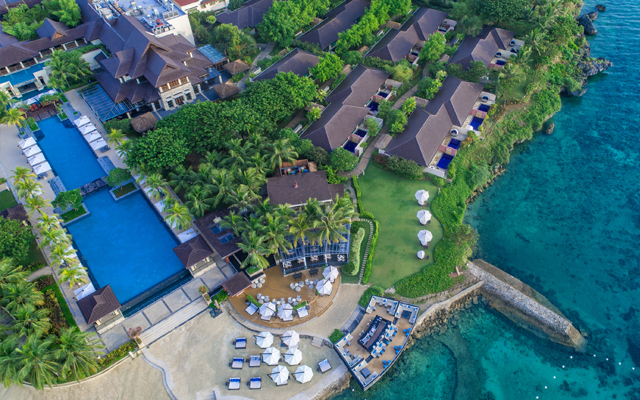
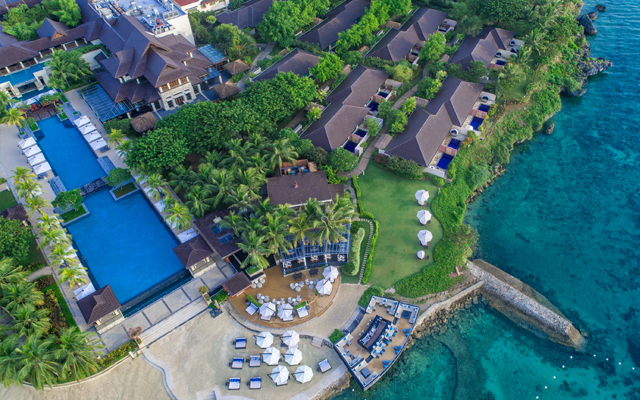
Crimson Resort and Spa Mactan offers a Travel Concierge that helps guests cope with travel paperwork
Chroma Hospitality
Chroma Hospitality has undertaken several initiatives for three of its existing hotels and resorts, with two more brands – Grafik and Quest Residences – to grace the city of Baguio.
With Philippine destinations subject to frequent lockdown changes, the Travel Concierge at Crimson Resort and Spa in Boracay and Mactan, Cebu lessens guests’ confusion by keeping them updated with the latest travel regulations and helping them complete required documents.
The two resorts have also partnered with AirTaxi.ph to fly guests directly to the resorts and back, avoiding airport queues and crowds. “Demand is picking up as private point-to-point travel is becoming the new norm,” said country head James M Montenegro, adding that guests were also choosing to keep together in bubbles while in the hotels.
Over at Quest Plus Hotel and Conference Center Clark, the next goal is to partner with other countries to create event bubbles after successfully hosting a sports bubble in Clark New City for the Philippine Basketball Association, International Basketball Federation, and the Israeli swimming team. A volleyball bubble is now in the works.
Montenegro explained that such event bubbles are a growing market, and the company is now “fast-tracking vaccination of all our colleagues” to ensure that properties can continue to support and welcome future event bubbles. As of press time, Chroma’s Mimosa Plus Estate and Quest Clark team are 90 per cent vaccinated.
“We also want to create a bubble to attract South Korean golfers as our caddies are all vaccinated. This will hopefully jumpstart international tourism for the Philippines,” he enthused.
In terms of portfolio expansion, Chroma recently signed a partnership with the Bases Conversion and Development Authority, the developer of New Clark City, to build a Grafik Hotel and Quest Residences in a 5,700m2 site in Camp John Hay in Baguio.
Geared towards millennials and young-at-heart travellers, Grafik Hotel will offer some 180 rooms, two restaurants, a grab-and-go deli, a ballroom and a wellness centre. The first Quest Residences will sit in an independent tower but connected to Grafik Hotel via a sky bridge, allowing residents to enjoy hotel facilities. – Rosa Ocampo
Club Med takes its wellness programmes to Singapore in partnership with Parkroyal Collection Marina Bay
Club Med
Although Club Med has no resorts in Singapore, it has been able to maintain engagement with target customers in the city-state during the pandemic through its Body & Soul programme.
The Body & Soul programme has its roots at Club Med Bintan, Indonesia, where it has for the past decade welcomed guests from all around the world in need of a holistic wellness escape.
This year, the programme arrived in Singapore, via a partnership with Pan Pacific Hotels Group, providing travel-starved residents with a unique wellness retreat right in the heart of the city.
Rachael Harding, CEO, East and South Asia & Pacific with Club Med, said the programme was a hit, drawing mostly individuals and couples who were interested in fitness and wellness programmes, and “wanting to have a different staycation experience in Singapore”.
The programme marries the best of Club Med’s extensive schedule of fitness classes and wellness workshops with Parkroyal Collection Marina Bay’s lifestyle offerings such as farm-to-table experiences, garden-in-a-hotel surroundings, and more. From yoga and barre, to urban farm tours and mixology sessions, the programme elevated the typical hotel staycation programme.
The company is continuing to innovate its product offering, with the creation of Worktainment, a new approach to corporate teambuilding, as well as Work Hub, which invites guest to work from some of the most beautiful vacation spots in well-equipped spaces.
For the rest of the year, Club Med is preparing for the tourism rebound. It has maintained guest engagement through curated content. For example, Thrive Again by Club Med comprises digital content that highlights never-before-seen local destination insights for keen learners, exclusive travel tips as well as special features of go-getters within the organisation and inspiring personalities.
Harding shared: “We aim to instil a new spirit of optimism in our guests, partners and local communities, helping to renew and ignite their journeys to getting back to their best selves.”
Moving forward, Club Med will continue to expand its portfolio. It launched Club Med Seychelles this March, and will add two new resorts in China later this year. Come 2024, Club Med Borneo Kota Kinabalu in Sabah, Malaysia will open with 400 rooms as well as Asia-Pacific’s first Club Med tennis academy. – S Puvaneswary
Dusit International opens dusitD2 Naseem Resort, Jabal Akhdar in Oman
Dusit International
Dusit International has adopted a technological transformation strategy throughout the pandemic, with the aim of identifying new business opportunities to meet the shifting needs of the market and pursue sustainable post pandemic growth.
The Thai hotel chain has completed the first stage of this project, which includes investments in the latest cloud-based ERP (Enterprise Resource Planning), CRM (Customer Relationship Management), and data management software. The move enables group-wide efficiency across five business units – Hotels and Resorts, Hospitality Education, Food, Property Development, and Hospitality-Related Services.
The investment also seeks to leverage big data to create exceptional consumer experiences and identify new business opportunities in line with Dusit’s three-pronged strategy for balance, expansion, and diversification.
While the technological transformation was set in motion in 2019, it is now being expedited to increase business resilience in response to the pandemic. The project is far-reaching, involving Dusit International’s 24 different entities across 17 countries.
Group CEO Suphajee Suthumpun said these investments in such uncertain times might go against the grain, but the key to post-pandemic tourism recovery would require the company to precisely read customer needs – something data and intelligence could enable.
At the same time, Dusit International has continued to grow its footprint. It entered Oman with the dusitD2 Naseem Resort, Jabal Akhdar, and opened the third property in Thailand’s Hua Hin with dusitD2 Hua Hin.
“The pandemic will be felt for some time. However, we believe that travel will come back stronger than ever when the Covid-19 situation improves,” remarked Suphajee, adding that the moves taken now will allow the company to drive short- and long-term business, extend market reach, and cement its competitive advantage globally. – Suchat Sritama
Far East Hospitality
One mission stood out for the leadership at Far East Hospitality (FEH) when the pandemic set in – the tourism downtime finally presented an opportunity for the Singapore-headquartered hotel company to slow down and focus on a long desired transformation.
Arthur Kiong, CEO of FEH, told TTG Asia: “Transformation has been brewing in my mind for a long time…but we could not (do it) because we were so busy running at marvellous occupancies and delivering very high GOPs. We were trapped in a problem of success.”
As governments around the world established travel restrictions and closed their borders, Kiong set to work a transformation task force with the mission to reinvent the local mid-tier hotel operator into a world-class manager of lifestyle brands.
He believes that as successful as FEH has been, it cannot grow any further as a local mid-tier hotel operator. “We have to reinvent ourselves to do something else and grow,” he said.
The transformation entailed six major tasks: experience creation, where different guest experiences were programmed for each brand; geographical expansion, which saw the launch of new hotels in Japan (Far East Village Hotel Ariake, July 2020; Far East Village Hotel Yokohama, June 2021) and Australia (Quincy Hotel Melbourne, May 2021); new business creation, where FEH entered the luxury hotel segment with The Barracks Hotel Sentosa and The Clan Hotel Singapore as well as launched its own spa business with Oasia Resort Sentosa; product refurbishments; job redesign to allow the company to create jobs that will attract Singaporeans; and lastly, sustainability and productivity realignment to approach processes in a more holistic way.
Kiong is particularly proud of FEH’s success so far in experience creation through hotel stays. In a post-lockdown world, he believes that unique destination experiences are needed to compel consumers to overcome cumbersome travel procedures, and that hotels with holistic offerings can contribute to the destination’s quality tourism promise – one that will attract high yielding travellers that locals will be proud to serve.
Citing The Clan Hotel Singapore as an example, Kiong said the luxury hotel in the heart of Singapore’s business district has been programmed to tell “the quintessential Singapore success story that is not borrowed from our colonial past”.
The hotel weaves stories of Singapore’s resilient migrant forefathers into its architecture and design, service, dining experiences and curated precinct tours. It also highlights homegrown businesses and artisans across various guests touchpoints.
By offering a unique guest experience that is matched by exquisite service and theatre, Kiong believes that his hotels are in a stronger position to command better rates and avoid a volume strategy. He was able to test the concept with Singapore’s domestic staycation market – recognised as a very demanding segment – throughout the travel lockdown. The outcome: The Barracks Hotel Sentosa has been ranked the top hotel on Sentosa Island on TripAdvisor while The Clan Hotel Singapore is the top hotel in Singapore City. – Karen Yue
Minor Hotels
Travel challenges notwithstanding, Thailand’s Minor Hotels has chosen to grow its brands and presence in markets around the world with an asset light model.
Dillip Rajakarier, the company’s CEO, told TTG Asia that there was no better time than now for hotel developers and investors to expand their portfolio.
In January 2021, Minor Hotels signed an MoU with China’s Funyard Hotels & Resorts to form a hotel management joint venture that will lead the entry of more Minor brands into China. This came into force in June.
“We are already reviewing a number of potential opportunities as a result of the joint venture, and we are confident that this agreement will greatly expand our presence in China over the coming years,” Dillip added.
Minor Hotel’s sights are not on China alone. It has earned a number of new hotel signings across its brands for the Middle East. It will launch Anantara World Islands Dubai Resort in 4Q2021. These openings will join additions in Europe, the Maldives and other parts of Asia. – Suchat Sritama
Ovolo Hotel’s Quarantine Concierge made compulsory isolation more comfortable and dignified
Ovolo Hotels
Hotel isolation is no bed of roses, and when it comes to helping guests beat cabin fever in quarantine, Ovolo Hotels goes above and beyond the call of duty.
T
he Quarantine Concierge package was launched to inject an element of fun into compulsory isolation for visitors and residents returning to Hong Kong, while supporting both their physical as well as mental well-being.
Available at Ovolo Southside and Ovolo Central, Quarantine Concierge was rolled out in August 2020 just as quarantine rules were enforced in Hong Kong.
“Immediately, we noticed there was a huge stigma against hotels accepting quarantine guests; it was labelled as ‘taboo’. Ovolo, being a Hong Kong company, wanted to do our fellow returning Hong Kongers right by giving them a way to quarantine with dignity and also receive the usual great service they deserve,” said acting COO – Hong Kong & Indonesia, Marc Hediger.
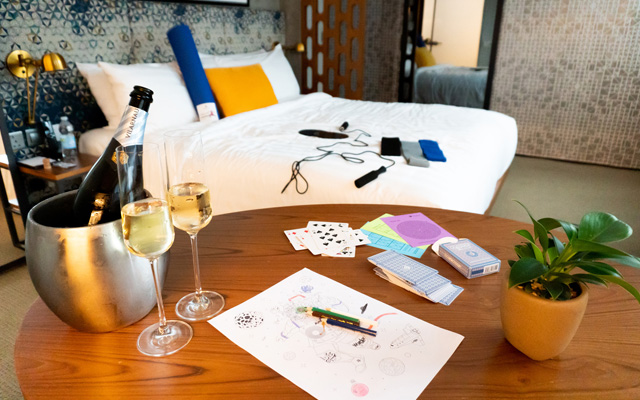
The service considered what people would want if they were stuck in a room for a long period of time. With that thought, Ovolo packed complimentary meals, unlimited premium Wi-Fi, free local calls, fitness gear, a mindfulness kit, and more into the Quarantine Concierge package. Guests get to unwind with complimentary in-room tipples and treats throughout their stay during Happy Hour. Ovolo also tied up with Foodpanda to pick up essentials or grocery items for guests, with exclusive discounts on restaurants, groceries and shops.
A year on, more than 3,500 guests have benefited from the Quarantine Concierge service, with over 20,000 room nights completed, according to Hediger. Of these, 15 guests were from ethnic minorities who had stayed at either of the group’s two Hong Kong properties for HK$1 (US$0.13) per night under Ovolo’s Homecoming Project.
Customer feedback has provided valuable insights to improve the quarantine experience. Earlier this year, Ovolo begun hosted a weekly Zoom call dubbed Social Sessions wherein guests can interact with their neighbours.
“It’s hosted during their Happy Hour as a way for our guests to connect and share a drink virtually with each other – and us – and kill some time,” said Hediger.
On their final day of quarantine, guests are treated to a Last Supper, comprising an indulgent menu item paired with a drink of their choice.
In partnership with Mindful Studios, complimentary weekly Zoom yoga sessions are conducted, while Oxford University Press provides a variety of children’s books for young ones in quarantine.
As Hong Kong authorities extended the quarantine period from seven to 14, and then 21 days in December 2020, making it the world’s longest hotel quarantine, Ovolo swiftly moved to upgrade to Wi-Fi 6, becoming the first hotel in Hong Kong to do so.
As well, Ovolo upgraded all meal options, providing guests with more choices that support a range of diets.
“In particular, a major feedback from guests was that they were craving local food, so we worked with a neighbouring local restaurant to give our guests an extra option,” shared Hediger.
Another major upgrade to the package is introducing partnerships to Social Sessions, where the hotel group invites various partners to co-host the Zoom calls, while their food or drink is given to all guests for that day’s Happy Hour. F&B enterprises Ovolo has worked with include popular pizza and donut joint Dough Bros and wellness brand Goodleaf which offers water-soluble CBD powder sachets. – Cheryl Ong
Airports Council International (ACI) World has launched comprehensive guidance to help airport executives incorporate sustainability at the core of their strategies as they work towards long-term recovery.
The ACI World Sustainable Recovery Best Practice highlights the advantages of incorporating sustainability in post-pandemic recovery plans including access to funding through government relief packages and sustainability-linked bonds, as well as further developing a more balanced business model that incorporates social, environmental, and economic sustainability.
ACI World’s best practice document helps airports initiate, maintain, or enhance sustainability commitments
The publication provides a table of best practices and examples of action under three pillars of sustainability and governance to guide airports worldwide in developing their own sustainable recovery plans. A step-by-step approach to building such a plan is also included.
ACI World director general Luis Felipe de Oliveira said: “As the industry seeks to ‘build back better,’ airports have been recognising the advantages of a sustainability-centric recovery strategy. While health and evolving passenger expectations remain central to airports and the industry’s sustained recovery, climate change and other related externalities remain the major risk we face as a sector and as humanity.
“We believe that aviation’s role in serving a post-pandemic, decarbonising global society and economy is critical, but continued efforts will require support from government and other stakeholders. Aviation and non-aviation players will need to further collaborate to identify solutions that realise the positive transformation that sustainability can bring to the sector, the overall economy, and in achieving each of the UN Sustainable Development Goals.”
In June 2021, ACI member airports at the global level committed to net zero carbon by 2050. To date, 352 airports have been accredited under the ACI Airport Carbon Accreditation programme, the only institutionally endorsed, carbon management certification standard for airports.
As a companion to the Best Practice guidance, the ACI World Sustainable Recovery Case Studies provides successful examples from six airports under the three pillars of sustainability. The case studies highlight sustainable alternatives for airports to consider while they plan for recovery in the short-, medium-, and long-term.
The month of September has brought Asia’s travel and tourism industry some improved developments – mostly stemming from governments deciding to take a positive step towards reopening their borders for tourism.
Singapore’s all-purpose Vaccinated Travel Lanes (VTL) with Germany and Brunei kicked off on September 8. The first day of applications on September 1 attracted 735 applications from Germany and 20 from Brunei – a mix of short- and long-term pass holders. More encouragingly, the VTL announcement spurred a lively revival of outbound travel plans, with leisure travel and incentive programme specialists welcoming a spike in enquiries for travel as early as 4Q2021.
Malaysia finally gets the green light for domestic tourism resumption, with Langkawi leading the way. Some 2,500 fully vaccinated tourists from Kuala Lumpur arrived on the island when it reopened on September 16.
Thailand already has Phuket and Khao Lak reopened to fully vaccinated international travellers, with Bangkok, Chiang Mai and Pattaya lined up and ready to do the same.
Indonesia and Cambodia have plans to reopen some regions to fully vaccinated international travellers before the year is over – Bali and Bintan are on the cards for Indonesia while Cambodia has yet to unveil official plans. Still, hopes are up because Cambodia will host the ASEAN Tourism Forum in January 2022, with an in-person show component, which means tourism reopening will have to begin somehow and soon.
Vietnam will pilot a vaccine passport programme for international visitors to Phu Quoc island towards the end of 2021.
As Asia inches towards tourism resumption, destination promotions are picking up. The Philippine Tourism Promotions Board, Tourism Authority of Thailand and the Japan National Tourism Organization are among the most active in the region, driving renewed communications aimed at the travelling public as well as trade buyers.
However, it is clear that the region is reopening far slower compared to other major tourism regions such as Europe and the US. This is despite Asia being the first region in the world to take Covid-19 seriously and to respond with practical and strict containment measures.
Many obstacles remain: differing pace of national vaccination, which impacts the extent of activity resumption; differing list of recognised vaccines; differing travel restrictions that continue to change with every new wave of infection and add to travellers’ confusion; and differing political stance on pandemic management, which has ruined potential travel green lanes.
Asia is one region but every nation is different in many ways, which makes a mutually agreed upon travel restart strategy challenging to achieve. In November 2020, South-east Asian leaders said they would establish an ASEAN travel corridor to facilitate essential travel within the region. Months on, that bubble is still in discussion.
While intra-Asia travel was once a critical economic driver, Asia’s slow reopening may force tourism recovery to lean towards intra-region travel instead, changing how destinations determine their post-lockdown source markets and impacting the success of many trade events here that rely heavily on the presence of Asian buyers.
Carnival Corporation expects that more than 50 per cent of its total fleet capacity will return to operations by the end of October.
To date, eight of the company’s nine brands – Carnival Cruise Line, Princess Cruises, Holland America Line, Seabourn, Costa Cruises, AIDA Cruises, P&O Cruises (UK) and Cunard – have resumed guest sailings.
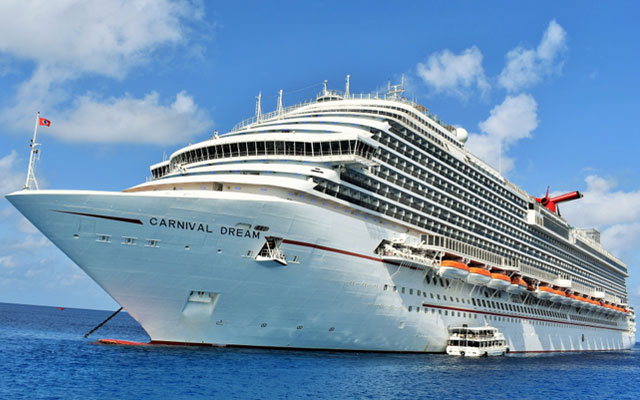
Carnival Cruise Line plans to have 13 ships sailing in October
By the end of October, those eight brands will be operating 42 ships, marking the return of over 50 per cent of the company’s global fleet capacity.
Collectively, the corporation’s brands are resuming operations using a gradual, phased approach, with sailings from major global ports in regions including the US, Mexico, Caribbean, the UK, Western Europe and the Mediterranean.
The cruise line is also planning for additional ship restarts as part of its overall goal to return nearly 65 per cent of capacity by year-end.
Carnival Cruise Line plans to have 13 ships sailing in October and a total of 17 ships by year-end; while Princess Cruises plans to have six ships sailing in October, with eight ships in operation by the end of the year.
Holland America Line plans to have four ships in operation in October, with a total of six ships in operation by year-end. Additionally, the brand has announced plans for all 11 ships in its fleet to be in service by spring 2022.
Seabourn plans to operate its full fleet by spring 2022, including a new expedition ship with its first sailing in April 2022, totalling six ships in service next year.
Meanwhile, Costa Cruises plans to have five ships in operation in October, with a total of six ships in operation by the end of the year; while AIDA Cruises plans to have eight ships in operation in October, with a total of 10 ships in operation by year-end.
P&O Cruises (UK) plans to have three ships in operation in October, with a total of four ships in operation by the end of the year. Additionally, the brand has announced plans to operate its full fleet by spring 2022.
Cunard plans to have two of the three ships in its fleet in operation by year-end. Additionally, the brand has announced plans to resume operations with its remaining ship in spring 2022.
Roger Frizzell, chief communications officer for Carnival Corporation, said that based on the company’s initial restart of cruise operations across eight brands, guests have shown “tremendous confidence” in the brands.
He added: “As the restart of cruising continues to gain momentum and create positive economic activity for people who depend on our industry to make a living, we look forward to serving our guests with more than half our fleet capacity returning in October, while delivering a great guest experience and serving the best interests of public health.”
As part of efforts to tackle the climate crisis, the World Travel & Tourism Council (WTTC) has launched a Net Zero Roadmap for the travel and tourism sector during its virtual climate week event.
During the event, it also unveiled social and environmental research data, which builds on the council’s annual Economic Impact Report. Along with the roadmap, the data is designed to support the sector’s drive towards net zero by 2050.
WTTC launches Net Zero Roadmap alongside new social and environmental indicators for travel and tourism
The initiative is being run in collaboration with the United Nations Environment Programme (UNEP) and professional services and consulting experts, Accenture. It was announced at WTTC’s virtual Net Zero Travel & Tourism – From Ambition to Action event, during annual Climate Week NYC.
Julia Simpson, WTTC president & CEO, said: “The launch of our Net Zero Roadmap for the travel and tourism sector and development of sector wide data to measure our success are major steps to show how travel and tourism is playing its part in addressing climate change.
“WTTC, alongside our partners and sponsors, looks forward to offering tangible and meaningful solutions to meet the climate change challenge.”
Simpson added that the Net Zero Roadmap for the travel and tourism sector will be launched at COP26 in Glasgow next month.
The Roadmap will include a status quo overview of climate actions in travel and tourism, direct lessons learned from the past 18 months, as well as action frameworks for specific industries to help accelerate climate commitments and emissions reduction.
This climate action inventory research will be regularly monitored and updated by the WTTC until the sector’s targets are achieved.
During the virtual event, which was sponsored by IHG, participants discussed the sustainability challenges faced by the travel and tourism sector, along with the creation of the way forward in the sector’s quest to become net zero.
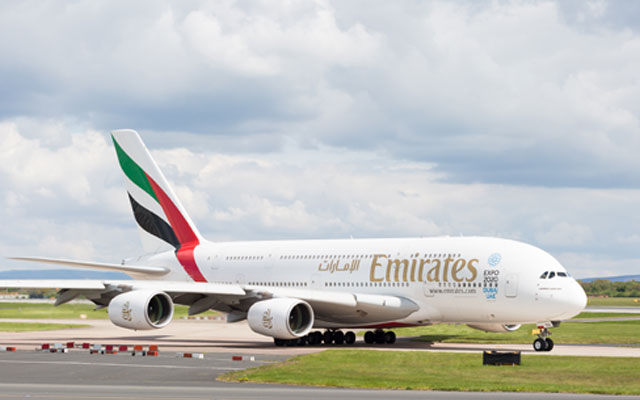
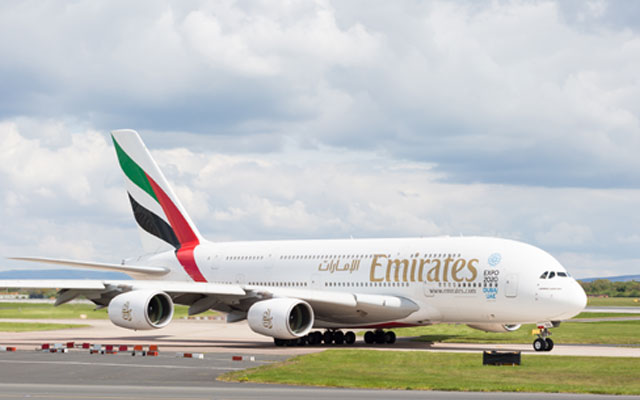
Emirates has become the first airline to implement the International Air Transport Association’s (IATA) Travel Pass on six continents as it rolls out the digital health pass to customers at all its destinations.
The IATA Travel Pass app allows passengers to manage their Covid-19 travel documentation digitally – from receiving test results and vaccination certificates directly from authorised labs and test centres, to securely sharing these documents with authorities and airlines to facilitate travel.
Following pilot trails in April, Emirates has implemented the IATA Travel Pass across its global network
Following successful trials in April on select routes from its Dubai hub, Emirates gradually expanded the IATA Travel Pass pilot to customers on 12 routes in June and the airline has now signed a contract with IATA to implement the solution across its global network.
Currently available to Emirates customers travelling from 50 cities, the rollout across all 120+ Emirates destinations is expected to be completed by October.
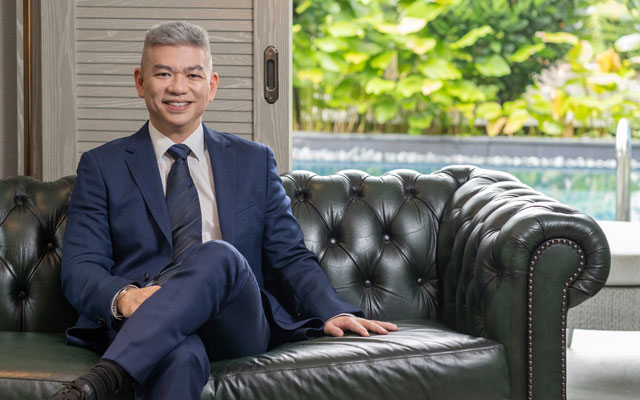
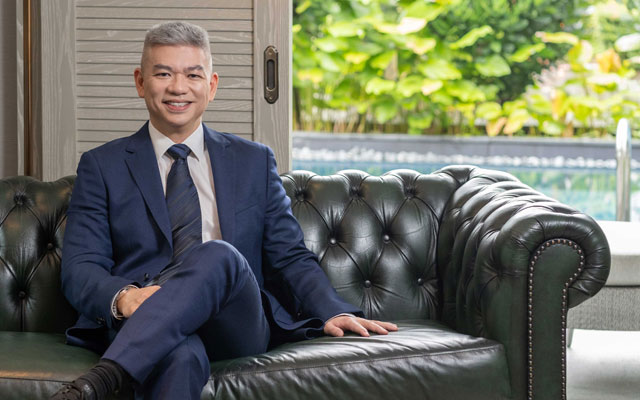
American Express Global Business Travel (GBT) has promoted Sanghamitra Bose to the role of vice president. This comes on top of her previous position as general manager for Singapore, Hong Kong and Thailand.
She is a respected and experienced thought leader, having built an outstanding reputation across the travel industry in Asia-Pacific over the past 18 years.
As a champion of diversity, she leads GBT’s internal Global Asian Inclusion Network, which seeks to build awareness of Asian heritage across the company.
As it gears up for the reopening of international borders, the Philippines is looking at the possibility of replicating Phuket’s Sandbox model, while at the same time working to ease travel protocols.
Tourism secretary Bernadette Romulo-Puyat said at the Philippine Travel Exchange (PHITEX) 2021 in Subic that as early as May this year, the government has already been working on setting up green lanes, similar to Phuket’s Sandbox scheme that allows fully vaccinated travellers from low-risk countries to enter the Thai resort island without quarantine.
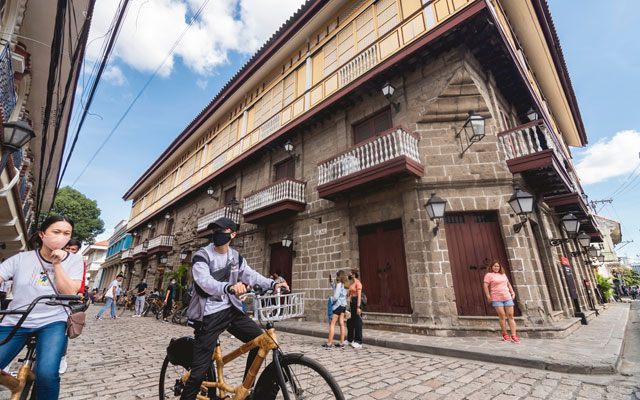
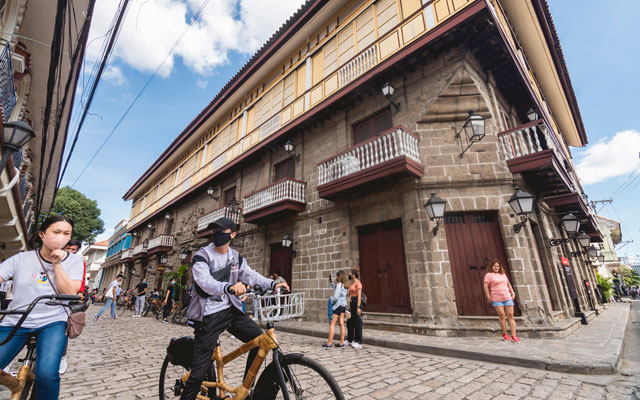
Philippines keen to replicate Thailand’s Sandbox scheme; tourists at Casa Manila in Intramuros, Manila pictured
Romulo-Puyat pointed out that as authorities wish to ease travel restrictions, especially for fully vaccinated tourists, more Filipinos are getting inoculated while all tourism workers nationwide are expected to be vaccinated before year-end.
It is “imperative” for the Philippines to return to the international stage and the sandbox model “seems to be the most viable”, given its direct air access, opined C9 Hotelworks managing director, Bill Barnett.
“Cebu is the logical choice given it’s an island and has direct international routes,” said Barnett.
Meantime, in a webinar by the British Chamber of Commerce of the Philippines and Santos Knight Frank, tourism undersecretary Verna Buensuceso said travel corridors within Asia is possible as they are looking at green lanes with say, South Korea, Taiwan and Japan going directly to specific destinations in the Philippines.
It can include specialised charters to destinations that are prepared to accept foreign visitors with specialised protocols for groups coming in, Buensuceso said.
And as the country prepares for foreign arrivals, especially for fully vaccinated individuals, Buensuceso said that authorities are “looking at offering protocols that will be a bit more relaxed compared with what we have today”.
She said the country is also looking at the “interoperability within our own system” of the EU Covid certificate and IATA travel pass, even as it is also “in the process of putting together a vaccination passport for our own needs”.
“We are exploring these avenues now to make travel a bit more convenient across destinations and markets,” Buensuceso shared.
She estimated a recovery period of two-and-a-half to four years for Philippine tourism because that is also the outlook for the international landscape as per projections by UNWTO, PATA and WTTC.
B2B bedbank WebBeds has been powering up for travel recovery, undertaking a transformation project to simplify the way it does business and provide enhanced support for partners.
As countries swiftly implemented travel restrictions to contain Covid-19, WebBeds focused on initiatives to ensure it could deliver immediate support and value to its partners globally, amid rapidly changing environments.
Lee: WebBeds’ business transformation aimed at simplifying and driving efficiencies
WebBeds CEO Daryl Lee said: “Recognising domestic markets would be the first to open, we took the strategic decision to pivot our contracting and sales efforts to focus on domestic travel, diversifying our business model, which in turn has strengthened our supplier relationships and further developed our global footprint.
“Another immediate change has been the reorganisation of our geographical management structure, moving to four regions from three (separating MEA and the Americas) and introducing regional leadership reporting into one WebBeds CEO. This reaffirms our commitment to strong local market representation within our global footprint.”
Lee added that WebBeds will be opening new offices in Saudi Arabia to capture emerging opportunities within that region and further develop its specialist brand Umrah Holidays International.
After performing a holistic review of the business, looking at overall strategy and areas where longer-term plans could be fast-tracked while demand was low, WebBeds commenced a series of transformational initiatives to prep for the reopening of global travel markets.
Lee said: “We challenged ourselves to test all assumptions about the way we worked, and pretty quickly established we could do things better for everyone concerned – suppliers, clients and our people too. The key driver has been simplification that drives efficiencies and makes it easier to do business with us.”
The simplification initiatives cover a number of key business functions and services provided within WebBeds Global Marketplace, including delivery of a new WebBeds ERP and enhancements to WebBeds contracting module and connectivity technology.
WebBeds also created a new Global Product Group that will sit within the commercial side of the business, ensuring a greater focus on stakeholder engagement to ensure it delivers products and services that best suit its supply and distribution partners’ needs.
WebBeds is also unifying its stable of trade-facing brands under a single, cohesive, global brand – WebBeds.
Lee explained: “Working with one brand simplifies our commercial proposition and streamlines our process for both our supply and distribution partners, enabling both to leverage the benefits of WebBeds Global Marketplace.”
For WebBeds clients, change in this area begins with WebBeds trade booking websites, where the DOTW, Fit Ruums, Lots of Hotels and Sunhotels booking sites will be rebadged WebBeds.
In the near future, the simplification ethos will extend to WebBeds booking sites, with the release of Single Sign-On access, enabling any client currently accessing more than one of WebBeds’ booking sites to do so from a single login page, using one set of new WebBeds user account credentials.



















She is a respected and experienced thought leader, having built an outstanding reputation across the travel industry in Asia-Pacific over the past 18 years.
As a champion of diversity, she leads GBT’s internal Global Asian Inclusion Network, which seeks to build awareness of Asian heritage across the company.