
Australia
Australia’s event planners are returning to international meetings with some anxiety, having seen border rules at home change on the fly.
This is despite the Australian government opening travel lanes with Singapore, Japan and South Korea recently, with more travel bubble arrangements planned for 2022.
Some of Australia’s most prominent event planners said they would first like to see a number of things happen domestically before they could become confident about doing events abroad.
“I think we’ve got a little way to go yet… just to show that normal business can be undertaken safely and effectively before they take that commercial risk of taking people offshore,” said Kate Smith, managing director at PCO Waldron Smith Management, and immediate past chair of Meetings & Events Australia.
“The first step is ensuring we can travel around nationally, easily and effectively to attend business events without any great risk. Then I think we’ll start to look at outbound business. That confidence piece is really crucial across the board and the ability to bring people back together in any situation is really important,” continued Smith.
Australia’s domestic borders have been a case of sliding doors, opening and closing to selected states depending on the perceived risk of visitors bringing the Covid-19 virus and its variants into their state.
Of all the states, Western Australia has the strictest border controls and has announced that the earliest date it would welcome visitors would be in February 2022, causing frustration among event planners.
“I think people are ready to travel overseas,” opined Renee Bennett, managing director of Encanta and a board director at Business Events Perth.
“But I believe domestic events will be king for a while, and I personally feel that Western Australia is going to struggle with that because the majority of the population is on the east coast. We’ve lost so much because of uncertainties, with so many events being cancelled or postponed for 2022 because the shutdowns happen very swiftly. That has made it challenging for any of our clients,” she added.
Bennett also said convention bureaus could provide more advocacy around protecting and underwriting events that are on the books at the moment.
“By just cancelling an event 48 hours beforehand when so much has been outlaid (financially), it just makes it not feasible for many to instil that confidence. We’ve got people whose livelihoods and homes are on their line when they invest in events and therefore cancelling an event where we have to refund people and absorb incurred costs isn’t good enough,” lamented Bennet.
Bennett applauded New South Wales, which has offered to underwrite events over the summer period but underscored that this was needed as a national scheme for an industry that contributes A$36 billion (US$26 million) to the economy.
On a positive note, Smith said despite the many challenges, everything is heading in the right direction, and confidence about commercial risks for events is growing quickly. – Adelaine Ng

“Corporate incentives used to mix leisure with teambuilding or motivational sessions. But with additional travel costs, itineraries will need to be simplified to offer mainly leisure (elements).”
Vidya Hermanto, Chief experience officer, Panorama, Indonesia
India
A rebound in business events in 2021 has sparked expectations for a stronger year come 2022, although industry stakeholders predict that domestic gatherings will remain dominant.
S D Nandakumar, president & country head – B2B at SOTC Travel, noted that while corporates are enquiring on international travel, ongoing Covid situation and restrictions will prompt events to stay on home ground.
Subhash Goyal, chairman of STIC Travel & Air Charter Group, agrees and explains that more international scheduled flights need to resume for international travel and events to return.
Despite the prevailing sense of caution, some overseas business events have occurred.
SOTC Travel delivered two “mega groups” to Dubai recently. More than 600 attendees were involved, and the programme featured a cricket tournament and the Expo 2020.
The company also organised a corporate gathering in the Maldives, and Nandakumar expects demand for business events in Switzerland to soar in 2022.
Thomas Cook India is attending to strong interest in overseas events from Indian companies, with destinations such as Dubai, Russia, South Africa, Switzerland and the Czech Republic all earmarked by clients for 2022.
“Outbound demand will grow significantly in 2022, considering that vaccination rates are improving in India and overseas, creating a sense of confidence among corporate event groups,” opined Naveen Manchanda, president, Indian Association of Travel & Tourism Experts.
Goyal echoed the optimism, saying that “things will start coming back to normal” in 2022, and that pre-Covid outbound MICE demand will return by 2023.
Indian PCOs applauded several active tourism boards, such as those in Singapore, South Africa and Dubai, that have continued to engage them during the travel freeze, keeping them updated on the various business events offerings in their destinations.
Going forward, Nandakumar said CVBs and MICE vendors would need to continue to assure the marketplace of hygiene and safety.
“(Valuable information) includes the implementation of health, safety and sanitisation protocols; entry/exit requirements; and optimal group sizes,” remarked Nandakumar, adding that the provision of contactless services and flexible booking options were just as important for rebuilding travel confidence. – Rohit Kaul
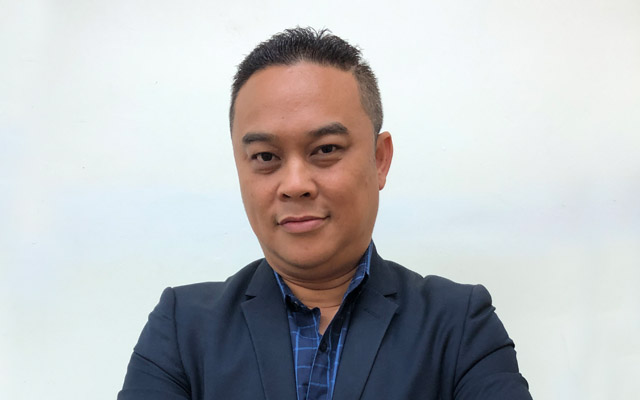
“Companies don’t feel comfortable with planning an overseas incentive trip while Covid-19 is still not tamed.”
Adam Kamal, Head of procurement & domestic market,
ICE Holidays, Malaysia
Indonesia
Interest in conducting overseas business events is growing among local companies but actual conversion in 2022 will depend on the pandemic situation, government restrictions, visa and airline policies as well as company budgets.
According to Indonesian event organisers, the government’s 10-day quarantine requirement presents the steepest obstacle.
Vidya Hermanto, chief experience officer of Panorama, said: “When the government reduced the quarantine period from eight to three days, we had incentive groups travelling to Switzerland and Turkey. When it was increased to seven days and then to 10, a number of clients decided to postpone their plans.”
Yento Chen, CEO of Destination Tour, said lengthy quarantines would make an incentive programme impractical.
“A trip to Europe usually takes up to 14 days,” Chen explained. “When (the return quarantine) is for 10 days, participants will have to be out of office for almost a month.”
Fluid government regulations are not the only issue, according to Agustinus Pake Seko, president director of Bayu Buana Travel Services. Technology companies in Indonesia that have replaced business travel with virtual meetings will continue to meet online, while multinational companies in Indonesia are still putting their overseas trips on hold.
On the bright side, he expects NGOs that have postponed their trips over the last two years to finally resume plans in 2022 – barring yet another wave of infections.
For now, corporate incentive programmes are changing as travel continues to face restrictions. Agustinus said clients have been gifting their staff Bayu Buana membership cards, which allows them to choose their individual reward trips at their own pace.
He expects small incentive group travel to also trend strongly in 2022, evidenced by recent client events for 15 to 30 top achievers at “exotic places” such as Amanwana, Nihi Sumba and Lelewatu Resort Sumba.
Budget constraints will also hamper outbound events recovery, warned Pauline Suharno, president director of Elok Tour and chairman of the Indonesian Travel Agents Association.
“Many companies are facing budget constraints. With Covid-19 tests, increased insurance coverage requirements and pricier airfares, travelling has become more expensive. As such, some companies will hold back outbound travel plans,” she said.
Another change in post-lockdown events structure, according to Vidya, is the simplification of itineraries.
“Corporate incentives used to mix leisure with teambuilding or motivational sessions. But with additional travel costs, itineraries will need to be simplified to offer mainly leisure (elements),” she said. – Mimi Hudoyo
Malaysia
The Malaysian government may have relaxed border restrictions, allowing Malaysians to travel overseas for leisure or business events, but corporate demand for overseas activities has yet to return.
Event planners blame the compulsory seven-day quarantine upon return as well as pricey airfares.
Zahira Tahir, founder and CEO of Universal Holidays, told TTGmice that reduced flight frequencies to overseas destinations have driven up airfares, making them “ridiculously expensive”.
Scant interest in resuming overseas events is also a result of reduced destination promotions by overseas CVBs in Malaysia throughout the travel freeze.
While destinations such as Thailand, Dubai and Turkey have reopened to travellers, destination promotions to lure business events from Malaysia have been dull compared to pre-pandemic times, Zahira said.
The high number of Covid-19 infections in Malaysia as well as worries over new variants are also keeping Malaysian companies from planning any overseas events, observed Mint Leong, managing director at Sunflower Holidays.
To safeguard their staff, companies are choosing to reward their top performers with cash or domestic holidays. And with the pandemic affecting many people financially over the past two years, cash rewards have risen in popularity.
Leong elaborated: “Frequent and long lockdowns in Malaysia have affected many businesses, while those employed have to accept pay cuts and reduced work hours.”
With overseas travel bookings still elusive for her company, Leong thinks that any return in events outside of Malaysia would only be possible at the end of 2022, she said.
Malaysia’s lacking outbound confidence has been further dented by Omicron worries, opined Adam Kamal, head of procurement & domestic market, ICE Holidays. The new variant has led many countries to close their borders or create new restrictions to contain potential spread. Such unpredictable government policies are causing companies to think twice about planning overseas events and sending staff of trips.
In response to travel uncertainties, Malaysian companies are choosing to take their events to domestic destinations such as Desaru, Penang and Langkawi.
Adam said: “These are destinations that are good for both leisure and business, and are easily accessible by road and air from Kuala Lumpur.
“We are also proposing to clients to consider cruising as an option for MICE, especially as Star Pisces has just started operating from Penang to Langkawi in December,” he said. – S Puvaneswary
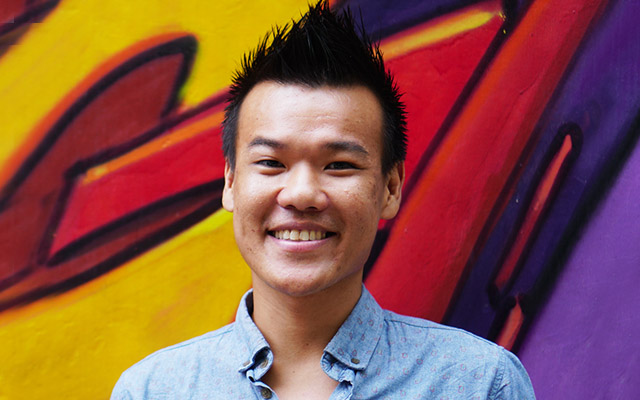
“Mass corporate event travelling will be kept to a minimum for the time being to mitigate corporate risk.”
Nelson Khoo, Head of events – Singapore & Indonesia,
CWT Meetings & Events
Singapore
Strong travel sentiments dominate Singapore companies, as borders begin to gradually open across the world, but new Covid-19 variants are again threatening confidence.
Alexis Lhoyer, co-founder & chief business officer of Chab Events, told TTGmice that travel interest hinges on companies’ travel policies and risk appetite. Some conservative clients have not allowed any resumption of corporate travel despite Singapore’s Vaccinated Travel Lane (VTL) arrangements with select countries.
On the flipside, more adventurous clients have gone ahead to Phuket for events in late December, while there has been an uptick in queries for outbound travel, in particular to European destinations with a VTL arrangement with Singapore.
With VTLs still in its “infancy stage”, Nelson Khoo, head of events – Singapore & Indonesia, CWT Meetings & Events, expects domestic events to continue to reign supreme in 2022.
“Mass corporate event travelling will be kept to a minimum for the time being to mitigate corporate risk,” he added.
Travel regulations that can change at a drop of a hat are spooking CWT clients, many of whom are in a “wait-and-see mode” when it comes to travel. Khoo added that companies have had to deal with “steep learning curves on safe management measures and planning processes”.
Khoo expects demand for overseas events to pick up when clients are able to access destinations with a repertoire of successful in-person events, and when VTLs “reach a point of stabilisation and confidence is strengthened (with) minimal changes to travel plans”.
This would likely happen in 3Q2022, he offered.
Also seeing clients taking a wait-and-see approach is Melvyn C Nonis, director of M.I.C.E Matters. He pointed to possible movements in 2H2022, albeit with smaller groups of 80 to 120 pax instead the 250 to 500 attendees seen pre-pandemic. Domestic meetings, conferences and teambuilding events will be a mainstay for 1H2022. Nonis is hopeful that Singapore’s restrictions will be further eased by then.
For outbound events to truly rebound, events specialists in the city-state say consistency in travel policies must first be established.
“We will need accurate, real-time information and updates, especially on SOPs (standard operating procedures), so that there will be minimal inconvenience to organise and manage an event, and keep costs down,” said Nonis.
Lhoyer agrees, saying: “At least a visibility of three to four months to ensure planning won’t get wiped out by new measures would be great. Right now, it is the lack of clarity and visibility that keeps projects in limbo.”
When asked about Omicron’s impact on business events’ recovery, Lhoyer said it presented just another challenge, as Delta has, and expressed confidence in overcoming it.
Meanwhile, Khoo said the new variant would extend decision-making processes and add more caution to event planning. – Rachel AJ Lee














LA-based LEDR, a deep technology company which harnesses the power of collective intelligence to aid decision-making, is planning to set up the company’s headquarters in Singapore and use the city-state as a springboard for its next development phase.
LEDR was founded to commercialise cutting-edge technology that first originated from US national intelligence agencies.
The company creates an up-to-date digital representation of the organisation that gives companies full control of their knowledge assets when collaborating around analytics. This allows companies to generate insights for decision-making without having to centralise or exchange any data.
Last year, LEDR participated in the fourth cohort of the Singapore Tourism Accelerator (STA) programme, partnering with SATS to develop a deep tech system that promotes data sharing and collaboration among businesses in the aviation sector.
The company’s participation in the programme was “to enable the transition from building up our general capabilities to applying those capabilities to solve business needs in different industries, for example, hospitality,” shared Edwin Lau, CEO, LEDR.
“The programme also served as a launchpad for us to meet with multiple hotels and F&B companies.”
Since then, the company has signed a multi-year engagement with a hotel chain to digitally transform its operations, and is currently in similar talks with other global hotel chains and F&B businesses, said Lau.
The company has also held several discussions with other prospective stakeholders to apply its technology in smart buildings, cyber security, supply chain, financial services, and healthcare.
“Our expertise and innovative solution are brought into the spotlight in cases where there are disparate sources of information,” said Lau, adding that the company’s approach “makes insight and intelligence a lot more accessible”.
He explained that with growing demand for personalised services and instant gratification among consumers, companies like aviation businesses can harness technology to enhance guest experience and automate mundane and repetitive tasks, freeing staff to focus on customer relations and value-added activities.
“Companies need technologies that not only help them understand macro trends and patterns, but also, the micro details about each of their customer. All that insight needs to be utilised at every customer touchpoint – whether it is an automated chatbot or when flight attendants serve passengers on board flights,” he said.
In explaining why data sharing and collaboration among aviation and hospitality companies is vital for the future of the industries, Lau said that “the power of analytics is driven by the diversity of information sources you have access to”.
He noted that Gartner predicted that by 2025, 70 per cent of organisations will shift their focus from big to small and wide data, providing more context for analytics and making artificial intelligence (AI) less data hungry.
“No individual company will be able to have all the information they need. A diversity of perspectives matter in our increasingly connected world,” said Lau.
“Deloitte has found that organisations with diverse ecosystems are significantly more likely to have a transformative vision for AI, enterprise-wide AI strategies, and use AI as a strategic differentiator.”
Thus, collaboration and the sharing of information are important if industries such as aviation and hospitality want to maximise the value of their data assets, said Lau, but he pointed out that the process can be “difficult, expensive and risky if a company utilises conventional approaches”.
“A key problem is that conventionally, collaboration means that one party must give up control over their data. As one of the most valuable assets to any company, why would anyone willingly give it up?” he said. “In addition, having to extract and replicate data makes it hard to keep things synchronised, and out-of-date data can often be more misleading than having no data at all.”
This is where LEDR comes into play. Unlike solutions that require businesses to centralise data or information – for example, in data warehouses, data lakes or data exchanges – LEDR’s approach minimises the movement or replication of data, while enabling ecosystems to collaborate on insights and knowledge without the need to exchange data.
LEDR has created new capabilities that conventional approaches are unable to provide customers with, particularly pertaining to intelligent systems, said Lau.
Following its participation in the STA programme, which acted as the company’s platform for a market test, Lau said it has been getting “good reception” from almost every company that it has approached across a variety of industries. With that traction, Lau is building a team and establishing the company’s headquarters in Singapore.
“We believe our technology is transformational, and we plan to use Singapore as a springboard for the next phase of our journey,” he said, adding that the company’s efforts are in alignment with Singapore’s national technology agenda.