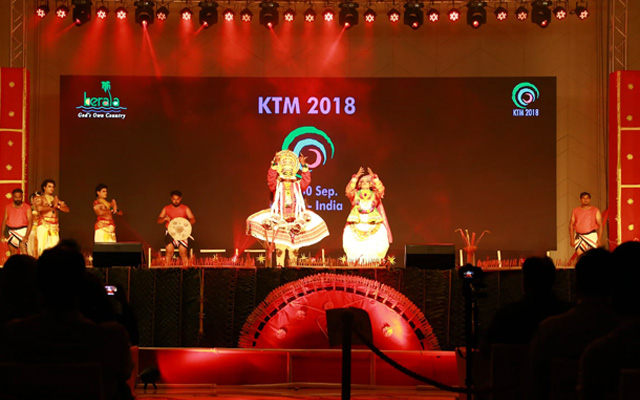
Initially scheduled for March 2022, Kerala Tourism Mart (KTM) will now take place from May 5 to 8 at Samudrika Convention Center in Kochi, India.
Recognised as one of India’s leading travel shows, KTM 2022 is postponed in consideration of rising Covid-19 cases in India and across the world.
Kerala Tourism Mart was last held in 2018; the 2022 edition is postponed from March to May
In announcing the new dates at a virtual press meeting on February 1, V Venu, principal secretary of Kerala Tourism, said: “We all know that the pandemic has yet to subside although there are signs that offer us optimism. Travel restrictions in India and beyond are still in place. We are also mindful of the fact that most airline companies are operating a curtailed service. So, considering all these challenges, KTM society has decided to postpone the event to new dates.”
Venu is also a board member of the managing committee of Kerala Society Mart, which organises the event.
Venu said interest in KTM 2022 is strong, with more than 1,100 travel partners expressed keeness to attend. “We want to make sure that interested trade partners can attend KTM 2022 physically,” he added.
KTM was last held in 2018, during which it recorded participation from 400 foreign buyers and 1,500 Indian buyers.
Baby Mathew, president, KTM Society, said that the 11th edition of KTM this year will focus on new experiences such as caravan tourism as well as showcase new destinations of the state. For the first time, it will be a plastic- and paper-free travel mart. Post-event fam trips for buyers will also organised.
India’s tourism and hospitality businesses are left high and dry by the central government’s budget for 2022-2023, which has neglected their requests for industry status, abolishment of tax collection at source (TCS) on outbound travel, and tax concessions.
The only silver lining in a largely gloomy budget for the country’s battered tourism and hospitality industry is an extension of the Emergency Credit Line Guarantee Scheme (ECLGS) until 2023, with an additional 500 billion rupees (US$6.7 billion) dedicated to hospitality and allied businesses.
Indian tourism and hospitality players had expected more financial assistance from the government’s budget 2022-2023; Gateway Of India, Mumbai pictured
Launched as a special scheme in view of the Covid-19 crisis, ECLGS provides 100 per cent guarantee coverage to banks and non-bank financial companies (NBFCs) to enable them to extend emergency credit facilities to enterprises so that their additional working capital requirements are fulfilled.
KB Kachru, vice president, Hotel Association of India (HAI), told TTG Asia that the distressed industry had expected more assistance from the government.
“The budget offered a good opportunity to the government to roll out policy changes, like announcing industry status for the sector,” the veteran hotelier said.
Jyoti Mayal, president of Travel Agents Association of India (TAAI), expressed his disappointment: “We were expecting the government to announce some measures to uplift the mood of travel trade stakeholders. No announcement was made to roll back TCS, which has made Indian travel agents less competitive in the international market. We were also expecting industry status for the tourism sector.”
However, one stakeholder has jumped to the defence of budget 2022-2023.
Naveen Kundu, managing director, EbixCash Travel Services – India, South East Asia & Middle East, explained: “We cannot just view this budget from the lens of the tourism sector. As an overall budget, there are both direct and indirect benefits to the sector.
“The direct benefit is in form of the ECGLS extension with an additional (financial injection). It is a great step in terms of creating and restructuring loans for the hospitality sector.”
Kundu added that the government’s plans to invest in various infrastructure projects, such as construction of roads, railways, airports, ports, mass transport, waterways and logistics, will help “domestic and inbound tourism to grow”.
“Just imagine the amount of capital that will flow into the capital goods industry and the manufacturing industry. Such investments in new projects will also fuel the demand for travel,” he said.
Kundu said the government could also consider declaring 2022 as a Visit India year, offering free visas to inbound tourists.
As Bali prepares to reopen to international tourists starting February 4, 2022, the Indonesian government has introduced a new Bubble Quarantine Policy to manage arrivals.
Travellers to Bali will have their quarantine period relaxed from seven to five days, with arrivals being allowed to spend their days outside their rooms, but limited to hotel premises or the cruise ship they arrived on.
All fully vaccinated travellers on direct flights are welcomed to Bali, not just those flying from 19 approved countries previously
In this initial stage, travellers must purchase a 5D/4N Bali Warm-Up Vacation package, which includes all meals and PCR tests, from the following hotels: Grand Hyatt Nusa Dua Bali; The Westin Resort Nusa Dua, Bali; Griya Santrian; Viceroy Bali; and Royal Tulip Springhill Resort. In total, there are 447 available rooms and six liveaboard Phinisi ships.
Luhut Binsar Pandjaitan, Indonesia’s coordinating minister for maritime affairs and investment, announced the reopening and revised entry policies last week, and revealed that the decision was made to reinvigorate Bali’s decimated tourism industry. This is despite the number of increasing Omicron cases in the country.
He stressed that the opening will be conducted in stages, and will happen gradually.
Apart from introducing the new Bubble Quarantine policy, the government has also opened its borders to all international tourists that will be arriving via airplane to Bali. Previously, only travellers on direct flights from 19 approved countries were allowed entry.
To gain entry, travellers must apply for a B211A Tourist Visa through a travel company, possess travel insurance with a minimum of US$2,500 medical coverage including Covid-19, be double vaccinated, pre-book a quarantine stay, and complete the rest of their stays with approved travel companies.
Garuda Indonesia’s GA881 departing from Narita to Denpasar is scheduled to be the first airline arriving on February 4, while Singapore Airlines has announced it will be commencing its daily Singapore-Denpasar services as of February 16.
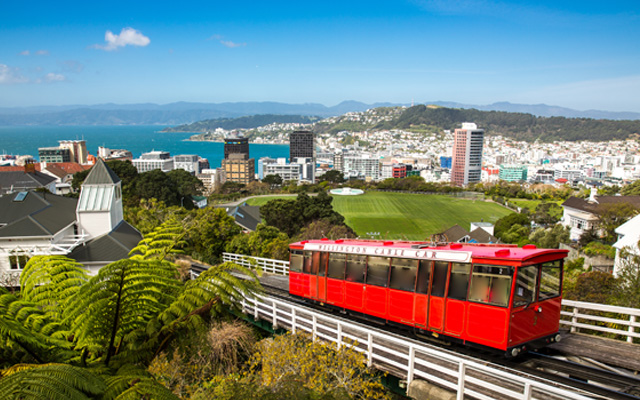
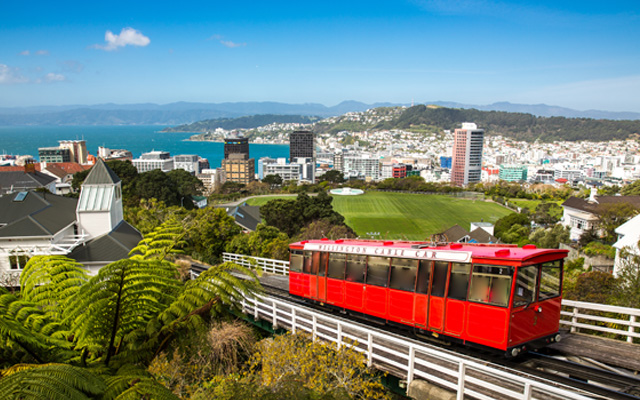
New Zealand will be reopening its borders to New Zealanders and key visa holders over the coming three months, with a full border reopening targeted for October 2022.
Starting from 23.59 on February 27, vaccinated New Zealanders and other eligible travellers from Australia will be allowed to enter without having to go through managed isolation and quarantine (MIQ).
New Zealand will begin easing border restrictions from February 28, towards a full reopening by October
Two weeks later from 23.59 on March 13, New Zealanders and other eligible travellers under the current border settings from the rest of the world will be able to enter.
This includes skilled workers earning at least 1.5 times the median wage, as well as successful Working Holiday Scheme visa applicants. This move will supply urgently needed workers for the tourism, hospitality, wine and horticultural sectors, as well as provide some visitor spending.
Next, from 23.59 on April 12, borders will be open to current offshore temporary visa holders, who can still meet the relevant visa requirements, and visas for critical workforce individuals that do not meet the 1.5 times median wage requirement.
By July 2022, the New Zealand government is planning to open its borders to anyone from Australia, as well as for countries with visa-waiver travel. The final step in the reopening plan is planned for October 2022, when borders open to travellers globally, and all visa categories made available.
Covid-19 response minister Chris Hipkins and immigration minister Kris Faafoi said in a press release: “With 94 per cent of our population fully vaccinated, and 92 per cent of those over 18 now eligible for a booster by the end of February, it’s time to shift gears in our Covid-19 response to focus on reconnection and recovery.”
“Before Covid, New Zealand was issuing over one million visitor visas per year. What’s being announced today is about gearing up in manageable steps to fully reopen as safely as possible to enable us to live with COVID but not be overwhelmed by it,” Faafoi said.
Finding a way around ongoing travel restrictions, Sabah tourist guides have taken to virtual tours to promote the East Malaysian destination.
From January 21 to February 28, the Sabah Tourist Guides Association (STGA) and the Sabah Tourism Board are hosting 20 online guided tours on its Facebook page. While the online tours on Facebook are view to view, future tours will be chargeable at US$10 through www.sabahtouristguide.com.
Sabah Tourist Guides Association and the Sabah Tourism Board are introducing the global audience to destination experiences online
STGA president Grace Leong said the online tours were developed in response to the inability to travel in 2021.
She said: “It was a challenge for our guides to learn the system and bring forth an experience virtually. However, we managed to create several tours.
“We are pleased that Sabah Tourism Board had approached us to debut these tours and we hope that from this first round of sessions, there will be more awareness of these online guided tour offerings.”
Sabah Tourism Board chief executive officer, Noredah Othman, applauded the efforts of Sabah tourist guides in upskilling themselves to conduct virtual tours.
She said in a press statement: “This is yet another avenue for us to showcase Sabah to the world. We understand the challenges during the no-travel period in Sabah and having to utilise resources at hand.
“The idea of combining pre-recorded tours and being present to interact is equally a good method of presentation. Furthermore, Sabah Tourism is glad to be able to support the industry in whatever means.”
Noredah noted that the the first two sessions attracted more than 6,000 views in all.
In anticipation of Sabah re-opening to international tourists, the Sabah Tourism Board will continue to raise destination awareness and feed the public with information and messages about Sabah tourism.
As the Philippines reopens to foreign tourists next week, its NTO is working overtime to smoothen confusing travel protocols that vary and change frequently among destinations.
The Department of Tourism is meeting with the Department of the Interior and Local Government (DILG) and local government units (LGUs) of tourist destinations to address the issue, said Howard Lance Uyking, tourism assistant secretary for branding and marketing communication.
Streamlining travel procedures is top priority now as the Philippines approaches Feb 10 border reopening to fully-vaccinated international tourists from 157 visa-free countries; Guyam Island, Siargao pictured
They have “to streamline the (travel) process and make it more convenient, especially for foreign tourists,” Uyking said in a Tourism Promotions Board (TPB) media briefing on January 31.
A bane even for domestic tourists, the absence of uniform travel protocols in the Philippines means that every destination has its own requirements and processes for accepting tourists, often changing as every destination’s Covid-19 infection level is reviewed every now and then.
Those interviewed by TTG Asia, including Ritchie Tuano, former president of Philippine Travel Agencies Association, see a glimmer of hope that the borders’ reopening “will start travel revival”.
Tuano said the removal of quarantine requirements and multiple PCR tests for fully vaccinated travellers from over 150 visa-free required countries “reopen the opportunities for people to consider travelling again”.
Bernadette de Leon, general manager of Amiable Intertours, said the reopening announcement has yet to bring in any inbound enquiries, but “as this pandemic is being controlled, managed and carefully researched, the second quarter of 2022 is more promising”.
While travel budget “is a great consideration” for upcoming travel plans, De Leon remains optimistic “that travel movements will spin again”.
Tuano, one of eight members of Good Morning Tourismo consortium of travel agencies formed to stimulate safe travels, said the group have started receiving enquiries about local and international destinations.
Good Morning Tourismo also noted “the increased numbers of enquiries and requests for passport and visa applications and renewal, a hint that people are getting ready to travel as well”.
Tuano expects initial recovery to come from a surge primarily of balikbayans or Filipinos residing abroad who held back their homecoming for the last two years as well as foreigners from South-east Asia and other countries that do not have restrictions on traveling from the Philippines.
De Leon and Tuano both said it is important to observe safety protocols and have travellers constantly reminded of this to ensure that inbound can be sustained and avoid careless rise of infections and reinstatement of restrictions.
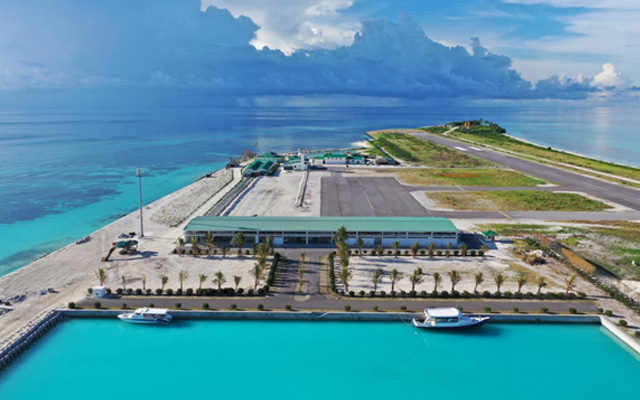
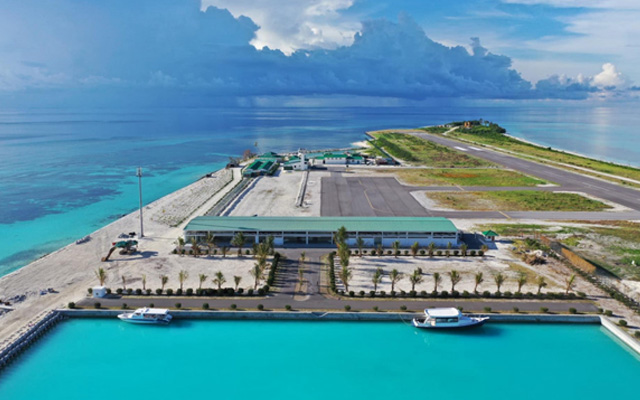
Accessibility to resorts in the Maldives’ Lhaviyani Atoll will be significantly improved with the opening of Madivaru Airport this month.
Flights to and from Male’s Velana International Airport will take only 25 minutes and operate throughout the night, overcoming previous service limitations to only seaplanes operating in daylight.
Madivaru Airport opens, improving access to Lhaviyani Atoll
Operations at Madivaru Airport will commence with three flights per day, scheduled according to arrivals and departures of international flights to minimise wait times for travellers. At press time, Madivaru Airport will connect travellers arriving in the Maldives on SriLankan Airline, Condor Airline, Lufthansa, Aeroflot, British Airways, Qatar Airways, Emirates, Austrian Airlines, Singapore Airlines and Turkish Airlines.
The facility is developed by Kuredu Holdings and managed by national airline Maldivian, following a management agreement signed by Mohamed Moosa, chairman of Champa Brothers Maldives and co-owner of Crown & Champa Resorts, one of the owners of luxury resorts Kudadoo Maldives Private Island and Hurawalhi Island Resort, as well as Kuredu, Komandoo and Innahura (Crown & Champa Resorts). The properties are all located a 10- to 25-minute speedboat ride away from Madivaru Airport.
Kudadoo Maldives Private Island is an exclusive private island comprising 15 expansive, over water ocean residences. Guests are attended to by personal butlers.
Hurawalhi Island Resort Maldives is an adults-only paradise famous for its 5.8 Underwater Restaurant. There are more than 50 plentiful dive sites within easy reach, and numerous underwater experiences to try.
Tickets for Maldivian flights from Velena International Airport to Madivaru Airport can be purchased directly from both resorts, as well as Kuredu, Komandoo and Innahura (Crown & Champa Resorts).
Malaysia’s industry players are hopeful that the days of lengthy lockdowns and travel restrictions are behind them, since the government allowed business events to resume on October 18 last year.
Stakeholders are also hopeful that this year will see the resumption of business events at full venue capacity, and when the borders eventually open to international travellers, it would see the resumption of in-person events with international participation in 2H2022.
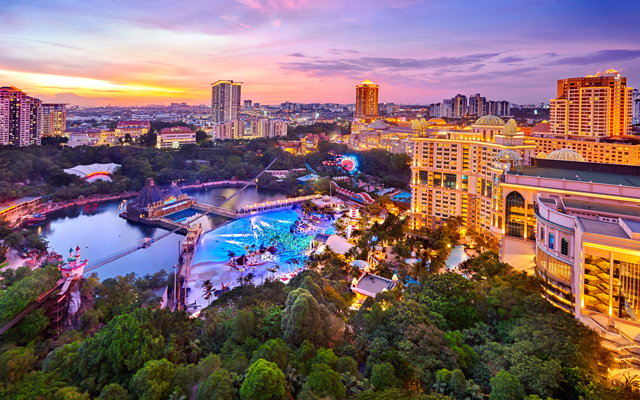
Sunway City is working towards becoming Malaysia’s premier hospitality and events destination
To help build confidence among overseas delegates, Francis Teo, president of the Malaysian Association of Convention and Exhibition Organisers and Suppliers (MACEOS), shared that the association was discussing with Bank Negara Malaysia to introduce a Covid-19 insurance for foreign travellers visiting Malaysia for business or leisure purposes. The insurance would cover hospitalisation and medical treatment at private healthcare facilities.
MACEOS is also in talks with a few insurance brokers to provide insurance coverage to event organisers to help cover pandemic related business interruption losses.
Teo explained: “Business interruption insurance against pandemic risk is vital as it will provide confidence to event organisers to plan and hold their events during the pandemic, even though are still a lot of uncertainties.”
Teo, who is also the head of Setia Convention Centres in Penang and Selangor, shared that business has gradually returned to both centres since October. However, event organisers prefer hybrid formats over in-person events due to current national guidelines which limits venue capacity. For instance, current standard operating procedures impose a two-metre safe distance for seating arrangement and limit banquet events at 50 per cent of venue capacity.
Events that have returned, Teo shared, include award recognition events from multi-level marketing and insurance companies, as well as local consumer exhibitions.
He remains hopeful that 2H2022 will bring corporate events, meetings and exhibitions with attendees that number in the thousands, from the region and beyond.
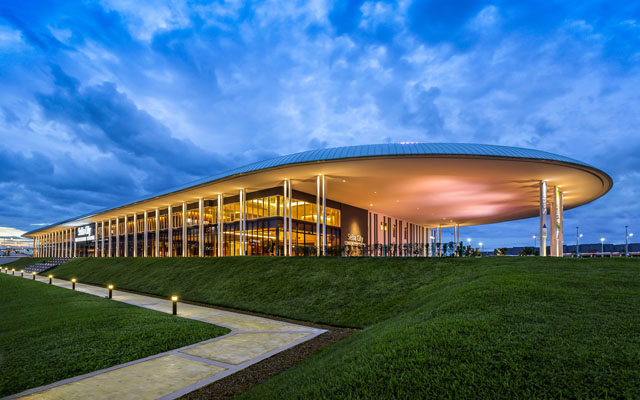
This hope is buoyed by two new hotel openings – the 453-key Amari SPICE Penang (opening September 2022) which will be connected to Setia SPICE Convention Centre; and the 225-key Courtyard by Marriott Setia Alam, which will be located adjacent to Setia City Convention Centre.
Setia City Convention Centre will soon get an adjoining hotel, making it easier for delegates
Recently, the two convention centres have also introduced all-in-one packages for exhibitions, inclusive of rental, booth set-up, cleaners and security. This is in addition to early bird discounts for event organisers who confirm their events early.
Teo stated: “We realise event organisers may not have the capital to restart their exhibitions. So, instead of committing to pay for the entire hall, organisers can pay just for the number of booths sold.”
Elsewhere in Selangor, near capital city Kuala Lumpur, integrated resort destination Sunway City, has grand ambitions to become Malaysia’s premier hospitality and events destination.
From March 2022, its flagship property Sunway Resort, will reopen in stages after a US$60 million transformation. The resort will be feature 477 keys, which includes dedicated family rooms with direct access to a brand-new outdoor water playland, perfect for delegates with their families in tow.
In addition, event planners can look forward to hosting functions featuring Gordon Ramsay’s signature dishes at the new Gordon Ramsay Bar & Grill, shared Alex Castaldi, senior general manager of Sunway City Kuala Lumpur Hotels.
He also hinted at two more premium restaurants opening by end-2022, which will provide more culinary experiences for corporate groups.
Comprising a theme park, three hotels, a convention centre, mall and Sunway Medical Centre, Castaldi is confident Sunway City holds an advantage as event organisers are more inclined to hold events in an all-inclusive destination post-pandemic.
Aside from offering 360,000m2 of event space, having Sunway Medical Centre, a world-class medical facility close by is all the more important.
Castaldi said: “It gives assurances to organisers, especially those holding large events. As the medical centre is also under our group, organisers can rest assured that delegates will be well taken care of.”
Sunway Hotels & Resorts is working out an insurance package to be built into the room rate or as a separate opt-in, which will cover hospital bills and quarantine fees for those who test positive for Covid-19 during their stay.
While the hotels in Sunway City Kuala Lumpur are currently welcoming small- and medium-sized bookings of up to 800 delegates, Castaldi is optimistic that larger events of more than 1,000 will materialise in 2H2022.
Over at Kuala Lumpur Convention Centre, general manager Alan Pryor shared that forward bookings for 1Q2022 are looking “positive”, and is 40 per cent of the venue’s overall target for the new year.
“We currently have about 60 events – primarily conventions and exhibitions – confirmed. As for meetings and corporate functions, they are still (planned on a) short-lead basis and will trickle in the new year onwards within the same event month.
“After having undergone a cycle of reopening and closures, organisers are treading the waters very carefully to avoid further cancellations and postponements.”
Elaborating on the centre’s strategies to drive more bookings, Pryor shared: “We are amplifying our customisation, where no two organisers would be advised with the same solution. Based on the event format and its requirements and after considering budgets and costs, we are tailoring every package to suit an organiser’s need.”
He pointed out that this new business model of “risk-sharing joint event partnerships” was developed during the pandemic, and has helped kickstart and stimulate the overall business events industry.
“We will continue with this strategy to bolster confidence in our stakeholders until we surpass the recovery phase and enter the growth period.”
The term hybrid has been more than a helpful catch-all, as it conveys an idea full of hope and holds the promise of an in-person future in whatever better state of events came next, opined Anna Patterson, vice president & managing director at George P Johnson (Singapore) Experience Marketing, in her presentation at ITB Asia Virtual 2021.
She noted that “offline things moved online (while) outside things moved in”, thus blurring the boundaries of interaction.
“While many things about the future remain elusive and uncertain, one thing is for sure: the new world will not play by the old rules anymore,” she said.
“So, how do you plan for the future when the future is up in the air? A solid and down to earth approach is a great place to start.”
Identify the big picture
Patterson suggested that event planners and producers take a fundamental approach that puts human experience at the core.
She said: “Clients are coming to us, whether in the events or travel industry, to ensure that they can understand more how humans make the difference. As industry professionals, it is up to us to show clients how digital and physical realities do not just coexist, but combine together to create otherwise impossible things.”
To see the big picture, Patterson said one has to understand where their brand stands in the “grand scheme of things” – something which will provide “essential context to make better decisions and take smarter actions” in their events.
“Once you have found your place, you are ready to move on to your why,” she said.
Set sights on event purpose
In explaining the need for brands, businesses and events to stay rooted in their purpose, Patterson related how figure skaters find their balance.
“Figure skaters were taught to find a spot to set their sights on while they were spinning. As long as their focus remained locked in, the skater could keep from getting dizzy no matter how ‘spinny’ things got. For brands, businesses and events, a good reason can have similar grounding effects. If you find your purpose, you can move on and out from there,” she said.
However, in defining the event’s purpose, event planners and producers must put their audience first.
“Of all the channels to consider, your attendee really is the only one that matters. Great experiences use human centricity to connect every what with every why,” she said.
Unify event models
Patterson noted common structures between physical and digital event models, and added that there were many ways that a hybrid event could come together.
She added: “Not all events are hybrid, some of the old things will not be coming back from their online homes. Conversely, when face-to-face returns, there will be plenty of demand for in-person-only events. How do you make that relationship work depends on your brand, your audience and the purpose of your event.”
She suggested that event models could be unified through design and delivery, and reminded her session attendees that the event platform “does not equal the experience; it enables it”.
She recommended that events be imagined from the perspectives of both the in-person and remote audiences, and have experiences designed for a different time and space.
Anna Patterson
“When we use tools like green screen, motion graphics, broadcast techniques and scripting, these are for the individuals. These experiences will feel very much singular as technology and reality coalesce. For the audience near and far, the distance between in-person and remote will gradually disappear,” she remarked.
She pointed to award shows and professional broadcasts in sports as great sources of inspiration for hybrid events.
Maximise both mediums
Patterson urged events planners and producers to understand the different characteristics of physical and digital media.
For example, the digital medium enables scale, has breadth and reach, allows for passive absorption and personalisation, among other attributes. On the other hand, a physical medium enables engagement, has depth and resonance, allows for active participation and social exchanges, among other attributes.
She said usage should overlap and play up the advantages of both media.
She said: “When we connect, we have to connect with the intentional moments. So when you consider both perspectives and experiences, bring the journeys together to provide an amazing moment of unity.
“We are moving to a new generation of events. Digital and physical realities will not just coexist, but combine to create otherwise impossible things. The new world of experiential is more social, more personal, more local and yet more global, more ambient and yet more in the moment than ever before.
“Without limitation, imagination will be the only constraint.”
An ongoing journey
Patterson emphasised that “connectivity is imperative”, and underlined how “digital and physical experiences will be more interconnected”.
“Audience and journeys will be woven together in-person and remote. Data is the common golden thread, and stitching it all together will require new roles and new skillsets,” she said.
She also highlighted the need for organisations to recognise that “life-cycle marketing is here to stay” and that companies and brands must be “omnipresent” by prioritising big technology that enables continuous audience engagement.
“I believe we are at the precipice of a new generation of hybrid events. As upside-down as this may feel to all of us, standing still is not an option,” she concluded.
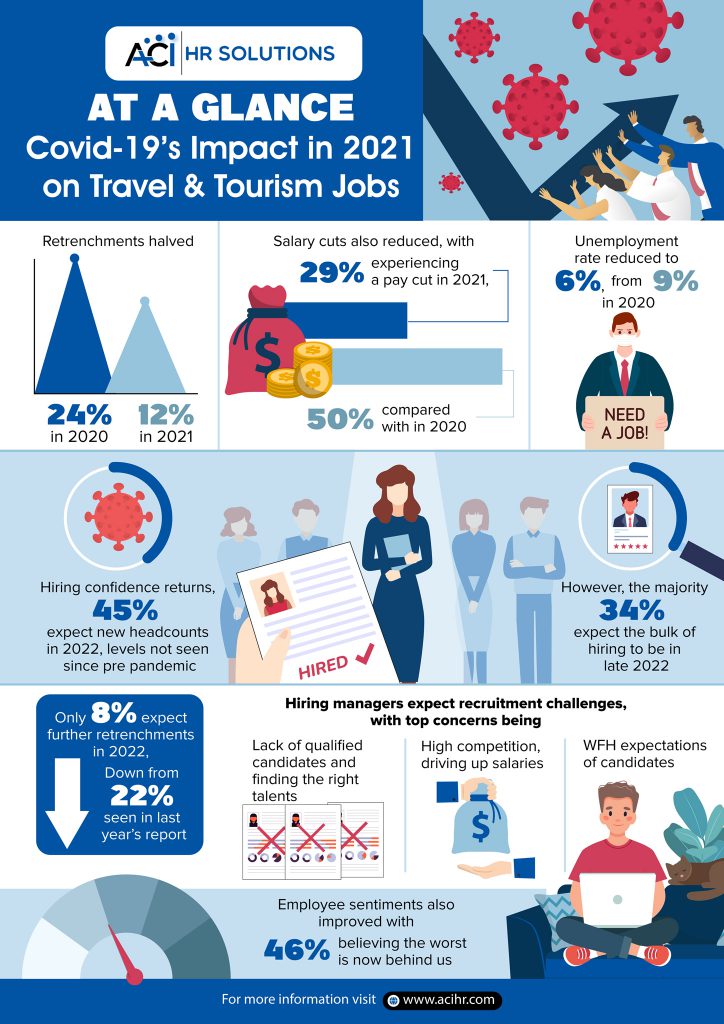
Emerging recovery across travel, tourism and hospitality businesses has facilitated improvements in employee sentiments and hiring confidence in the Asia-Pacific region, found the ACI Report 2022 which was released on January 31 this year.
The annual report, conducted with 820 travel, tourism, hospitality and lifestyle personnel across the region, has identified a reduction in retrenchments in 2021 – 12 per cent compared to 24 per cent in 2020. Employee sentiments have also improved, with 46 per cent believing the worst is now behind them.
Similar optimism is seen among HR and hiring managers, with 45 per cent of such respondents expecting new headcount in 2022 – levels not seen since pre-pandemic.
However, hiring managers expect a tougher time when they eventually recruit. They are most concerned with a lack of qualified candidates and challenges in finding the right talents; high competition for talents, thus driving up salaries and increasing their budgets; and work-from-home expectations of candidates that may not align with their company’s return-to-office policies.
In terms of salary satisfaction, only 26 per cent of respondents received a pay increment in 2021 – a slight drop from 2020’s 28 per cent and far behind pre-pandemic levels of 65 per cent. Thirty-seven per cent enjoyed a bonus in 2021, similar to 2020’s 39 per cent, although the majority (36 per cent) was given less than one-month’s bonus while 35 per cent received one to two months’ bonus.
Career development continues to be valued by respondents, with 68 per cent indicating that this was either “extremely important” or “very important” to them. Thirty-five per cent of respondents say that their current employer offered “excellent” or “good” opportunities for career progression, slightly higher than 2020’s 32 per cent.
At the same time, 38 per cent said career prospects with their current employer were “poor” or “zero”, up from 34 per cent.
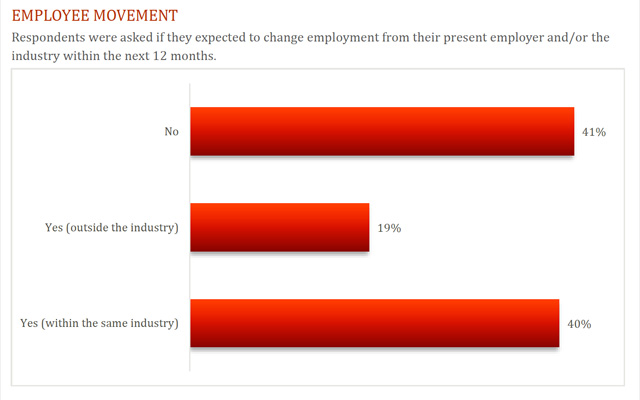
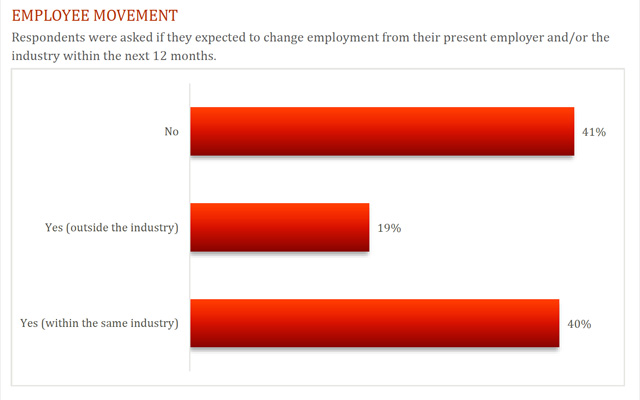
Respondents’ desire to exit their current job or industry appears less intense compared to last year’s findings. Fifty-nine per cent of respondents expressed plans to change employers and/or industry over the next 12 months, with 19 per cent of them keen to explore opportunities in other industries. In the ACI Report 2021 report, the exit desire was stronger – 68 per cent wanted to leave their jobs, with 27 per cent of them looking to switch industries.
While salaries fluctuated across different surveyed countries, there was a noticeable drop in salary for certain positions, particularly senior leadership positions such as the CEO. The UAE recorded the highest average salaries (US$146,142) and which also rose sharply from the previous year with a 34 per cent jump – signifying that the region is well into recovery phase.
Hong Kong (US$104,921), Thailand (US$94,649) and Singapore (US$91,895) were the next highest averages from the survey. Indonesia (US$42,512) again posted the survey’s lowest average salary and an additional 10 per cent slide against last year’s figures, highlighting the country’s dire tourism situation.
A detailed copy of the ACI Report 2022 can be downloaded here. It includes a special Covid-19 supplement to help both employers and employees alike of travel, tourism and hospitality industries make sense of such challenging times.












 Similar optimism is seen among HR and hiring managers, with 45 per cent of such respondents expecting new headcount in 2022 – levels not seen since pre-pandemic.
 A detailed copy of the ACI Report 2022 can be








India’s tourism and hospitality businesses are left high and dry by the central government’s budget for 2022-2023, which has neglected their requests for industry status, abolishment of tax collection at source (TCS) on outbound travel, and tax concessions.
The only silver lining in a largely gloomy budget for the country’s battered tourism and hospitality industry is an extension of the Emergency Credit Line Guarantee Scheme (ECLGS) until 2023, with an additional 500 billion rupees (US$6.7 billion) dedicated to hospitality and allied businesses.
Launched as a special scheme in view of the Covid-19 crisis, ECLGS provides 100 per cent guarantee coverage to banks and non-bank financial companies (NBFCs) to enable them to extend emergency credit facilities to enterprises so that their additional working capital requirements are fulfilled.
KB Kachru, vice president, Hotel Association of India (HAI), told TTG Asia that the distressed industry had expected more assistance from the government.
“The budget offered a good opportunity to the government to roll out policy changes, like announcing industry status for the sector,” the veteran hotelier said.
Jyoti Mayal, president of Travel Agents Association of India (TAAI), expressed his disappointment: “We were expecting the government to announce some measures to uplift the mood of travel trade stakeholders. No announcement was made to roll back TCS, which has made Indian travel agents less competitive in the international market. We were also expecting industry status for the tourism sector.”
However, one stakeholder has jumped to the defence of budget 2022-2023.
Naveen Kundu, managing director, EbixCash Travel Services – India, South East Asia & Middle East, explained: “We cannot just view this budget from the lens of the tourism sector. As an overall budget, there are both direct and indirect benefits to the sector.
“The direct benefit is in form of the ECGLS extension with an additional (financial injection). It is a great step in terms of creating and restructuring loans for the hospitality sector.”
Kundu added that the government’s plans to invest in various infrastructure projects, such as construction of roads, railways, airports, ports, mass transport, waterways and logistics, will help “domestic and inbound tourism to grow”.
“Just imagine the amount of capital that will flow into the capital goods industry and the manufacturing industry. Such investments in new projects will also fuel the demand for travel,” he said.
Kundu said the government could also consider declaring 2022 as a Visit India year, offering free visas to inbound tourists.