Vietnam will remove pandemic restrictions on international passenger flights from all markets starting February 15, with the intention to restore flight frequency to pre-pandemic levels.
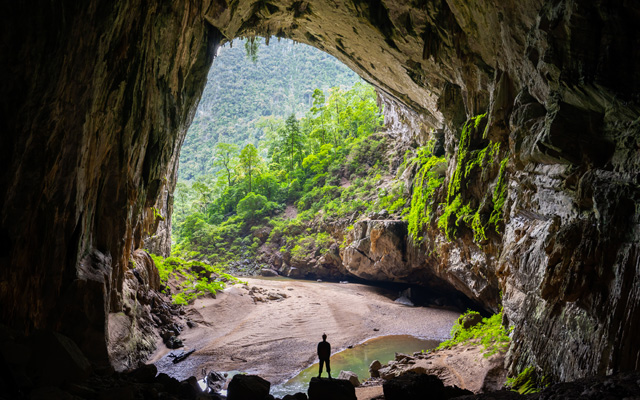
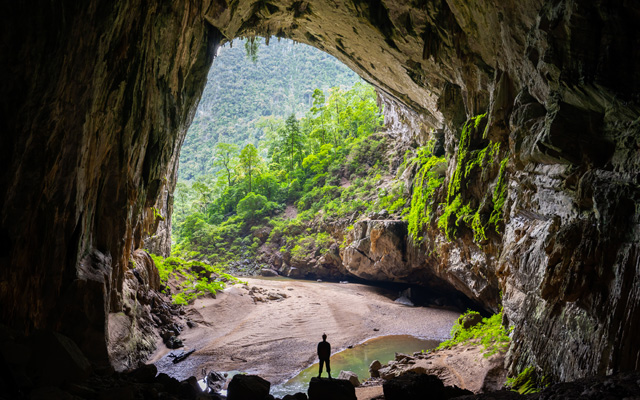
Vietnam will lift all Covid-19 restrictions on international flights to aid the country’s tourism recovery; Hang En cave pictured
According to state-run Tuoi Tre newspaper, Dinh Viet Son, deputy director of the Civil Aviation Administration of Vietnam, said Vietnam has informed her partners about the new policy and only China has yet to agree on commercial flight resumption with Vietnam.
Vietnam has begun her travel and tourism restart, with gradual international flight resumption with 15 markets from the start of 2022 as well as an intended full border reopening to international tourists by April 30.
Air India in Hong Kong has withdrawn its January 11 verbal instruction to ticketing agents that only the American Express credit card will be accepted as the Form of Payment (FOP).
This follows Hong Kong’s Society of IATA Passenger Agents (SIPA) seeking “formal notice” and clarification from the airline on January 17.
Hong Kong’s Society of IATA Passenger Agents expressed disappointment in Air India’s remedial efforts
Air India replied on February 4 that “the concerns are appreciated and escalated to the highest level” and that “it is pertinent to note that due to an urgent development, certain decisions were taken at appropriate level to safeguard Air India’s interest”.
Air India also expressed “regret” for inconveniences and assured ticketing agents of a “continuous and mutual beneficial relationship with us”.
While SIPA acknowledged Air India’s position, association chairman Tommy Tam said the unprecedented action and “very poor handling of the communications surrounding this dramatic halt of the IATA BSP reporting/remitting process” had frustrated members.
Tam also pointed out that “no effort was made to seek the understanding of agents” or “any hint given that this was a temporary measure pending a resolution”.
SIPA also expressed disappointment that Air India delegated the serious matter to subordinates “who gave no assurances or comfort to agents, implying “Air India has scant regard for its IATA agency customers and places little or no value on our members’ support”.
A senior SIPA member commented: “Given Air India’s transition to new owners, this unprecedented action should have been better managed. Tata’s biggest challenge is the indifferent staff culture both in India and abroad.”
He continued: “Air India needs to reach out to IATA agents, sincerely apologise for this nonsense and build bridges especially, in the face of stiff competition from IndiGo, Spice Jet, Vistara and Cathay Pacific plus sooner or later, Greater Bay Airlines.”
Come February 14, India will toss out mandatory quarantine and pre-arrival Covid PCR tests for all international travellers coming into the country.
In place of a pre-arrival negative PCR test result, the new requirement only calls for international travellers to submit their primary vaccination schedule completion certificate. This exemption is available to vaccinated travellers from 82 countries that also extend quarantine-free access to Indian nations. Such countries include Australia, Malaysia, Hong Kong, Philippines, the US and the UK.
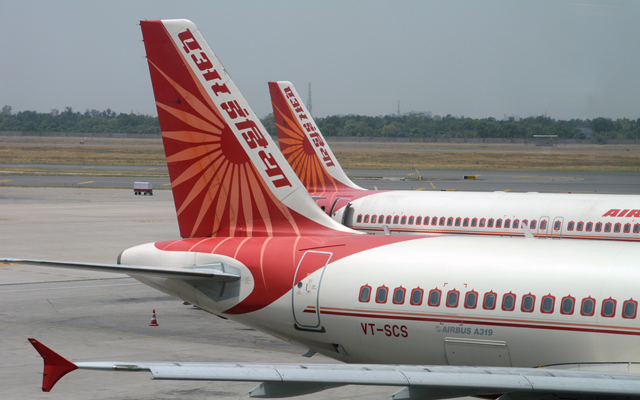
India removes more barriers for international travel into the country; Indira Gandhi International Airport pictured
The announcement, made yesterday on February 10, is met with jubilation across India’s tourism and hospitality industry, with stakeholders confident that the move will send a positive signal in international travel markets.
Gaurav Bhatia, executive director, Bird Group, told TTG Asia that he was glad to see the exit of mandatory quarantine, as the requirement had “resulted in many international travellers avoiding India”.
He now hopes that the government would resume scheduled international flights “as soon as possible to make the most of the relaxation of earlier curbs”, adding that “a significant improvement in inbound tourist arrivals this year” could be expected with both ease of entry and air accessibility in place.
Vishal Lonkar, general manager, brand development, Renest Hotels & Resorts, expects the new waivers to spur international business and leisure travel to India.
“We hope that our properties in Bangalore and Kolkata, which are near the international airport, will gain (business) momentum,” he added.
India’s easing of border restrictions would see the return of travellers from shorthaul markets first, opined Lally Mathews, managing director, Divine Voyages, as “travellers in Covid times have reservations about travelling long distances”. He added that inbound recovery would be more prominent in the next inbound season, starting October.
How does recovery look like for the exhibitions sector for 2022 and how will Asia factor into this recovery?
Overall, we estimate that Asia recorded an unprecedented 63 per cent drop in net space sold in 2020 compared to 2019. Net space sold fell from the 24.5 million suqare metres recorded in 2019 down to 9.1 million suqare metres in 2020. Without China’s comparatively strong performance (down 53 per cent to 6.8 million suqare metres), the regional average would have been much worse.
Across the region, 2021 turned out to be a repeat of 2020 – a damaging year with limited attempts to return to the business of organising events. While 2022 will be a year of recovery for Asia, the path forward will be an uneven one.
It’s a good thing that the outlook for face-to-face events in Asia, and globally, is still very positive. This can be seen in markets that have allowed in-person events to resume. For example, from July 2020 to June 2021, domestic events in China roared back to life. We can expect the same all across the world as the pandemic recedes.
In general, factors affecting trade fair recovery in each Asian market will include the government approach to managing Covid (living with Covid versus Covid-zero), the geo-political landscape, the size of the domestic economy and domestic trade fair industry, the importance of international participation, and others.
Larger, more domestically-focused markets such as China, Japan and South Korea will be in a better position to rebound, when compared to internationally-driven markets such as Hong Kong, Singapore and to a lesser extent Thailand, Taiwan and Malaysia.
How has the pandemic changed a customer’s value and expectations of exhibitions?
In many ways, the pandemic has reinforced the value of in-person events. Few purely-digital events, if any, have satisfied stakeholders. Of course, event organisers will have to continue to innovate, improve and add value through events, but we are highly confident that business events of all kinds – will continue to meet and surpass the expectations of visitors and exhibitors in the post-pandemic years.
What trends do you foresee for exhibitions?
We expect to see the virus fade as a threat in the coming months as vaccine rates rise and treatments improve.
This will be followed by a strong bounce back for events in 2022 and even more so in 2023. Event organisers will focus on the getting the basics right, and making use of innovative digital tools to deliver value at in-person events. Companies will also be more willing to heighten their investment in people, as people help make events happen. We need good people with strong business events skills more than ever before.
We see a future full of change, potential and growth.
What bothers you most currently about the pandemic?
There are a few things. The slow rollout of vaccinations, travel restrictions, and perhaps most importantly, governments failing to understand that exhibitions are different from other mass gatherings and that we are key driver of economic recovery and growth. So at UFI, we are committed to mitigating these risks in everything we do.
What is UFI doing to get the exhibitions engine roaring once again?
A lot! That has been our core focus for the past 18 months. We are deeply involved in advocacy work – educating governments around the world on how and when to allow events to proceed.
We track the status of exhibition markets as they open worldwide. We share industry guidelines and best practices, and case studies and details of government support for exhibitions on a market-by-market basis. Our wide range of resources is available on UFI’s Coronavirus Resource Page, which is also available to the public.
New research by Australia-based Compare the Market has identified Hong Kong as the destination most affected by pandemic-induced border closures, quarantine rules and the threat of infection, with a 75 per cent decline in tourism industry performance from 2019 to 2020.
Hong Kong travel and tourism sector contributed just three per cent of GDP in 2020, compared to 12 per cent – or US$45 billion – in 2019.
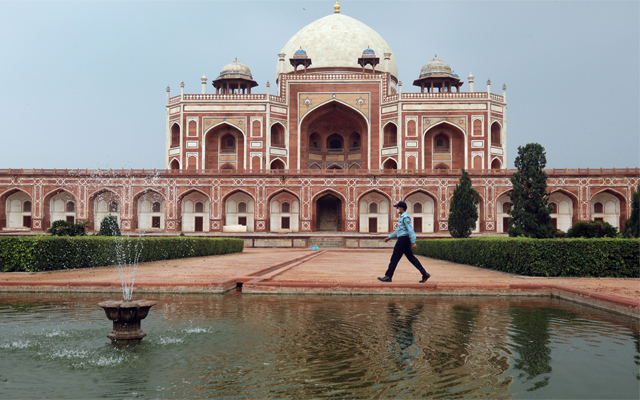
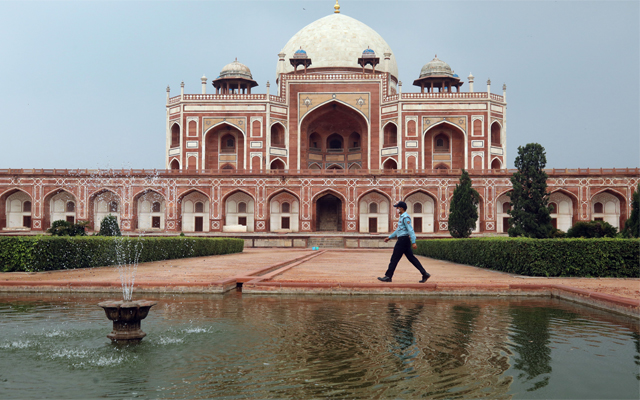
India’s tourism industry held up best among other Asian destinations; Humayun’s Tomb pictured
In the study’s ranking of the best and worst tourism performers, Ireland came off second worst with a 71.4 per cent decline in tourism year-on-year, while Fiji rounded out the top three with a decrease of 65.9 per cent in domestic and international travel.
Of the 45 countries observed, 23 saw their travel industry’s contribution to the national GDP cut in half in a single year, if not more.
Most island nations analysed, such as Fiji, the Bahamas, the Maldives and the Philippines, were able to keep their industry contributions to the national GDP above 10 per cent despite a slide in tourism performance.
On the other end of the scale, Brazil’s tourism industry was the least affected, going from 7.7 per cent in 2019 to 5.5 per cent in 2020.
India emerged second-best with a total decline of 31.9 per cent year-on-year, while Chile’s tourism industry went from being worth 9.9 per cent of the national GDP in 2019 to 6.6 per cent in 2020.
New Zealand, the US and Australia were among those that were able to minimise the damage of the pandemic and keep the decline under 50 per cent. Compare the Market acknowledges the surprising outcome of these countries, as they were among the first to implement restrictions on global air travel by early February 2020.
Domestic tourism might have helped to dampen the effects of suppressed international travel traffic, although domestic campaigns were also hampered by interior border closures, explained Compare the Market.
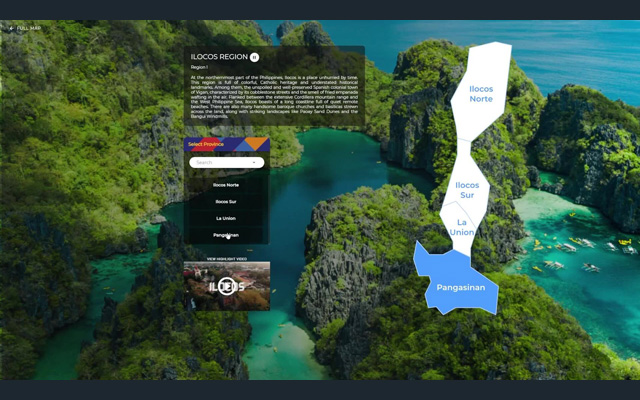
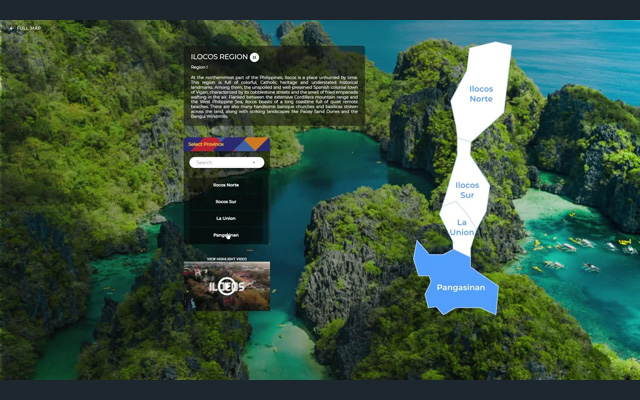
The Department of Tourism (DoT) and the Tourism Promotions Board (TPB) Philippines have launched Virtual Destination Videos and 360° VR Experiential Tours, as part of their SmarTourism initiative.
TPB’s chief operating officer Maria Anthonette C Velasco-Allones said the digitalisation push is a product of their drive “to do better amid the trying times”.
The new Virtual Destination Videos and 360° VR Experiential Tours allow viewers to travel vicariously to the country’s tourist spots and activities
“It’s not only a teaser for our foreign guests so they can get a good glimpse of our country in the new normal; it’s also a gift to our kababayans and OFWs who have been wanting to come home. And it’s a way to experience the Philippines vicariously and a guide to making every minute of your travel experience count,” she said.
The Virtual Destination Videos series is spearheaded by the DoT and supports TPB’s It’s More Fun With You campaign, which welcomes both domestic and international travellers back to Philippines. Content invites the audience to look forward to travelling safely in the country after the long hiatus.
The virtual videos showcase the best-of-the-best in Boracay, Palawan, Baguio/Cordillera, Manila, Pampanga/Zambales, Pangasinan/La Union, Ilocos Norte/Ilocos Sur, Bohol, Cebu, Bukidnon/Camiguin/Cagayan de Oro, Iloilo/Guimaras, Davao, Batangas, Tarlac/ Bataan, and various UNESCO World Heritage Sites.
Besides allowing viewers to travel vicariously to the country’s tourist spots and activities, the web-based 360° virtual reality tour serves as a marketing tool for travel agents, helping them to promote Philippines digitally, as well as improve their destination knowledge.
The virtual reality tour is accessible via www.tpb.pcitech.com.ph/map, where the regions of Ilocos and Calabarzon can be viewed currently.
“Technology plays an essential role in promoting destinations, attractions, and activities here in our country. By leveraging on it, we have found new opportunities amid the crisis and new ways to tell the world that, hey, the Philippines is alive and well, worthy to see and explore, and remains as beautiful and fun as ever,” said DoT secretary Bernadette Romulo-Puyat during the launch event.
Marriott International expects to open nearly 100 properties in Asia Pacific this year, with the greater aim of opening its 1,000th property in the region by late 2022.
With leisure demand expected to outpace business travel, Marriott will be strengthening its presence in several leisure destinations such as Jeju with the opening of JW Marriott Jeju Resort & Spa in May 2022, while W Sydney is expected to open in late 2022.
A rendering of a Ritz-Carlton Reserve that will open in China’s Jiuzhaigou this year
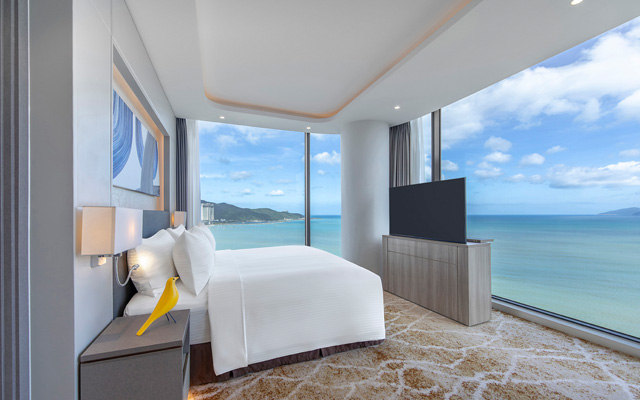
With wellness and well-being another key traveller trend, the company’s wellness brand, Westin Hotels & Resorts, is expected to celebrate two new debuts in Yokohama and Cam Ranh in 2022.
Meanwhile, luxury demand will boom in Greater China, a key market for the company’s growth, accounting for more than half of the company’s luxury openings in Asia-Pacific this year. Ritz-Carlton Reserve will be debuting its first rare estate in Jiuzhaigou valley, while other slated luxury openings include JW Marriott Hotel Changsha and W Macau – Studio City.
Also in Greater China, Four Points by Sheraton expects to continue its growth with five openings this year, while Moxy Hotels anticipates making landfall Suzhou and Xi’an.
Outside of Greater China, the company expects to debut its AC Hotels brand in South Korea with AC Hotel Seoul Gangnam, and in Australia with AC Hotel Melbourne Southbank. In Japan, Fairfield by Marriott has six new properties in locations such as Nara, Hokkaido and Hyogo, in the pieline.
The lights are back on for live business events in Sydney, although many in the industry are under no illusion that business will return immediately.
Sydney’s events industry has been filled with fresh confidence, as more than 90 per cent of its population has been double-vaccinated. International borders also reopened for the first time since the pandemic started, to gradually welcome overseas visitors and students at the end of 2021.
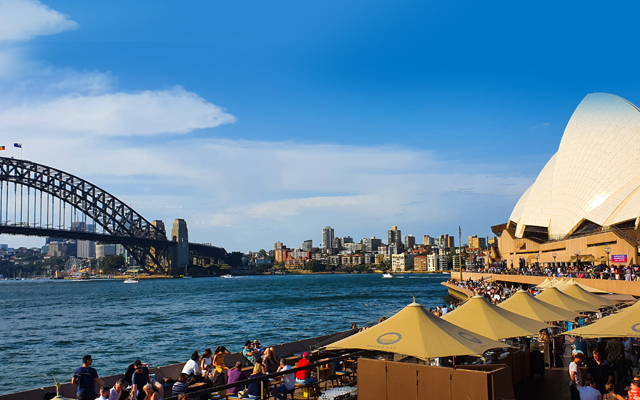
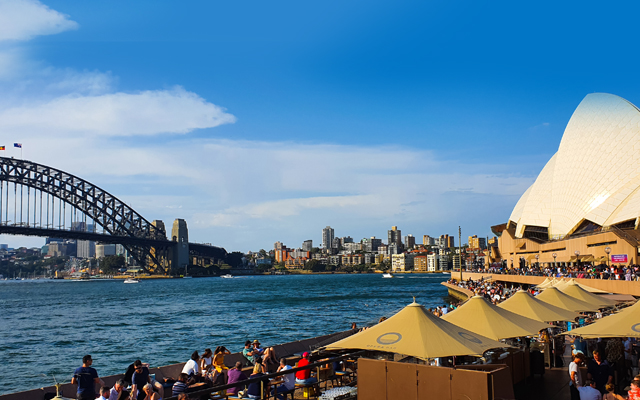
Sydney has in place a long-term recovery strategy for business events; a busy Sydney Harbour Bridge precinct in pre-pandemic times pictured
The doors were first thrown open to Singapore, Japan and South Korea for fully vaccinated visitors, with more destinations planned for travel bubble arrangements in the new year.
After months of lockdowns and travel restrictions, Sydney is expecting “a big year” and a key role in rebuilding the country’s A$36 billion (US$26 billion) business events sector.
“Sentiment is starting to be very positive for the future,” said BESydney’s director global corporates & incentives, Sinead Yeo.
“Australia’s global city is opening up again – firstly for citizens and their families who have been kept apart, and very soon we will be excited to welcome our international visitors back to show them all of the exciting things that we have been doing while they have been gone,” she continued.
While the pandemic has been playing out in full drama on the world stage and shutting down many gatherings, Sydney announced in September 2020 it would be a 24-hour city featuring late night transport, longer opening hours for cultural institutions, fewer restrictions on live music and reclaimed spaces for activities like outdoor dining and concerts.
Sydney also launched its newest major large-scale function centre in December 2021, offering two floors of state-of-the-art conference and exhibition space.
The new WINX Stand at Royal Randwick, named after the legendary mare who captivated Australia, stands just 10 minutes from Sydney’s CBD and is accessible by Sydney’s new dedicated light-rail service.
A number of new hotels have opened too while borders were closed, such as the Crown Sydney at Barangaroo and M Gallery by Sofitel Porter House.
However, industry frontliners expect business will return in small and measured ways.
“We’re watching the trends in the Northern Hemisphere, and we know it is most likely that smaller groups will return first,” said Yeo.
“Our sense from talking with our clients is that those with larger groups will be a little more cautious to start and pace their return. It is very clear that companies will be looking to destinations like Australia that have handled the pandemic and put strong protocols in place for their first point of travel,” she continued.
ICC Sydney, the city’s flagship convention centre has also been working hard to prepare for the return of live events, and will start the new year with more than 90 international events in the pipeline out to 2031.
“We never closed (during the pandemic),” said ICC Sydney CEO Geoff Donaghy.
“There were times when we couldn’t do face-to-face meetings but we were ready to spring back and snap back as soon as circumstances allowed, and that’s the circumstances we’re in now. We’re looking forward to being in Asia in early 2022 in conjunction with Business Events Australia,” he added.
ICC Sydney has also been proactively engaging with the city’s activation programmes that will take place across the summer to get Sydney-siders back into the city and promote Sydney again to the international market. The convention centre itself is hosting an experiential exhibition called Neighbourhood Earth, inviting an expected 150,000 visitors into an interactive, science-inspired space.
“We’re showing to the city community that it’s perfectly safe and advisable to come to events at the centre, and it’s a matter of starting that snowballing effect of momentum, creating confidence that events are safe. It’s safe to come to Sydney and to ICC Sydney,” he stressed.
Meantime, although one of Sydney’s most significant source markets for business events visitors, China, is still closed, decisions are being made within corporate circles that could see Chinese tourists returning from 2023.
“There is a general feeling among corporates that they will be pushing ahead with overseas trips even if it means they need to quarantine upon their return,” said Shanghai-based managing director of PTC Express Travel, Christopher Zhang.
“And I think in general, the bureau in Australia is doing a fantastic job because over the last 18 months, a lot of bureaus pulled out of China, especially from smaller destinations.
“But Tourism Australia and some of the state bureaus have stayed active in the marketplace, which may have been the right thing to do because pre-pandemic, there were over a hundred destinations promoting in China and it was very difficult to get your voice heard – you had to spend big to stand out,” he elaborated.
Zhang also said Australia was likely to be preferred to other Asian destinations because the Chinese found the greater cultural contrast more attractive.
As the Philippines reopens her borders tomorrow to fully-vaccinated tourists from non-visa required countries, tourism leaders expect arrivals to be gradual and anticipate hitches with possible solutions built into reopening guidelines.
Indicative figures from Philippine Airlines (PAL) showed that inbound demand is still led by returning overseas Filipino workers (OFWs), OFWs leaving for abroad, and a considerable number of Filipinos residing abroad (balikbayans) visiting with their spouses and children.
Inbound demand is expected to return gradually, with possible hiccups in reopening procedures, say industry stakeholders; Coron, Philippines pictured
The flag carrier has started flying to 23 international and 28 domestic destinations, with the total daily flights just 40 per cent of the 300 daily flights pre-pandemic, said PAL spokesperson Cielo Villaluna at a virtual forum, Kapihan sa Manila Bay, on February 9.
Tourism Congress of the Philippines president, Jojo Clemente, said his organisation is taking a “conservative approach” in the “gradual restart” of foreign arrivals. A big influx is not expected until towards the end of the year.
Clemente added that inbound interests are coming more from longhaul markets like Europe “since they are a bit more liberal in travel restrictions” compared to Asia, which has the “toughest set of protocols for inbound and outbound”. Preferred destinations are the major ones: Boracay, Palawan, Cebu and Bohol.
Since mandatory quarantine is no longer required for fully-vaccinated foreign tourists and Filipinos coming from abroad, 76 quarantine hotels in Metro Manila have already applied to convert into regular hotels – more are expected to follow suit – and 14 of them have been approved, revealed tourism secretary Bernadette Romulo-Puyat.
Former tourism undersecretary Benito Bengzon Jr, now executive director of 303-member Philippine Hotel Owners Association (PHOA), is asking for financial lifeline for many of its hotels recording a single-digit occupancy and reduced revenue stream as quarantine guests have halted.
“What we would like is some kind of financial assistance coming from the government to help tide us over the next six to 12 months, which we see will be difficult,” Bengzon said.
It is understood that the government has not given hotels the stimulus package that they have been asking for during the pandemic.
Romulo-Puyat said the tourism authority is pushing for the “healthy rebound of tourism,” noting that the country has “moved past the worrying wave” with the Omicron variant under control and high vaccination rate of tourism workers.
Ready for the hitches and challenges that may crop up during the tourism restart, Romulo-Puyat said: “We are ready as we can be with health and safety protocols, rafted as early as May 2020 and implemented in June 2020. These protocols will continue to be changed according to the need of the times.”
As to the lack of unified travel protocols among destinations, Romulo-Puyat said that since it is the destinations’ local government units (LGUs) who are lobbying for foreigners to be allowed entry, “I would like to think that….they will make it easier for foreigners to come to the country and make it as easy as possible”.
Sri Lanka’s tourism players are urging the tourism authority to fast-track a global promotional campaign that will position the country as a much sought after destination, so as to fulfill the tourism ministry’s ambition to welcome 1.2 million tourists this year.
A global campaign to promote Sri Lanka has eluded the country for many years, and roll-outs have been further disrupted by the pandemic.
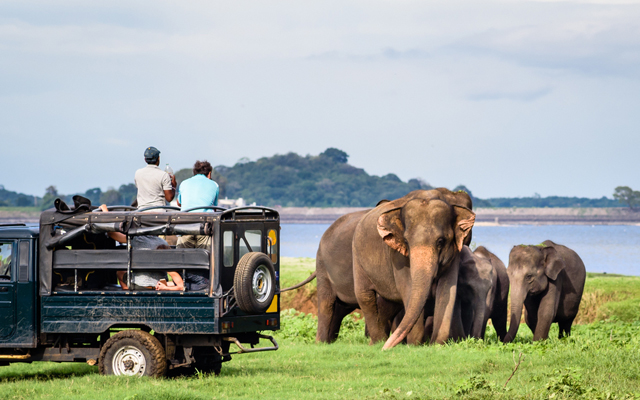
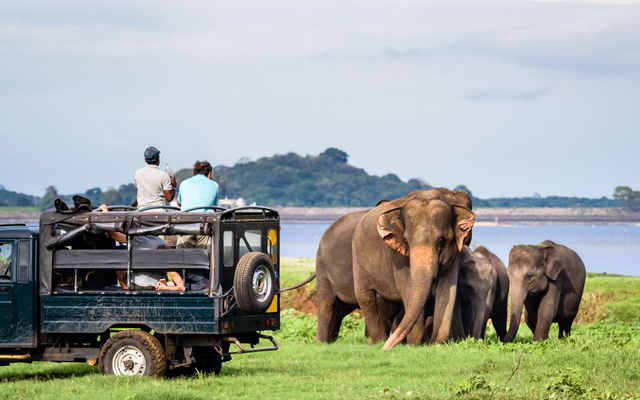
Sri Lanka tourism players call for a global destination marketing campaign to support tourism recovery
“We need an urgent promotional campaign to promote Sri Lanka as an all-round destination. We also need to convince foreign tour operators that Sri Lanka is a safe destination,” said Devindre Senaratne, managing director at JourneyScapes and a former president of the Sri Lanka Association of Inbound Tour Operators.
Senaratne added that incentives to motivate foreign tour operators to market Sri Lanka are also necessary, as the same is offered by other competing destinations.
Sri Lanka is hoping to attract 1.2 million tourists this year, against a low 194,495 in 2021 and 507,704 in 2020 – both years hit by travel restrictions due to the pandemic. The destination welcomed 2.3 million arrivals in 2018.
The 2022 tourism target was mired in confusion. Initially, the state-run Sri Lanka Tourism said the target was half the 2018 figure, but that was replaced by the tourism minister declaring a goal of 2.3 million tourists. The target was eventually retained at 1.2 million.
“The 1.2 million target is a reasonable one. However, the government and the private sector-driven industry should speak with one voice and project one target. There shouldn’t be any confusion,” remarked Trevor Rajaratnam, an industry veteran and former president of the Travel Agents Association of Sri Lanka.
Hiran Cooray, chairman of Jetwing Symphony Hotels, believes the government is firm in its focus on getting tourism back on track.
“We are one of the most relaxed countries in Asia – just like the Maldives, in terms of entry rules vis-à-vis the pandemic. We are also relatively well managed with Covid-19 guidelines,” he said, adding that given these scenarios people from Europe would want to travel and look at Sri Lanka favourably.
“2022 should be considered a Year of Recovery for tourism in Sri Lanka,” he opined.
Sanath Ukwatte, former president of the Hotels Association of Sri Lanka, said that while Sri Lanka’s traditional source markets – India and China – have not performed to expectations due to pandemic constraints, an improvement can be expected once restrictions are relaxed.
Last year, Sri Lanka’s top five source markets were India, Russia, the UK, Germany and Ukraine.
Meanwhile, Sri Lanka’s tourism recovery may be hampered by shortages in food, cooking gas and other essentials owing to a foreign exchange crisis. However, Rajaratnam said Sri Lanka would overcome the foreign exchange crisis once tourism thrives and more dollars flow into the country.















Come February 14, India will toss out mandatory quarantine and pre-arrival Covid PCR tests for all international travellers coming into the country.
In place of a pre-arrival negative PCR test result, the new requirement only calls for international travellers to submit their primary vaccination schedule completion certificate. This exemption is available to vaccinated travellers from 82 countries that also extend quarantine-free access to Indian nations. Such countries include Australia, Malaysia, Hong Kong, Philippines, the US and the UK.
The announcement, made yesterday on February 10, is met with jubilation across India’s tourism and hospitality industry, with stakeholders confident that the move will send a positive signal in international travel markets.
Gaurav Bhatia, executive director, Bird Group, told TTG Asia that he was glad to see the exit of mandatory quarantine, as the requirement had “resulted in many international travellers avoiding India”.
He now hopes that the government would resume scheduled international flights “as soon as possible to make the most of the relaxation of earlier curbs”, adding that “a significant improvement in inbound tourist arrivals this year” could be expected with both ease of entry and air accessibility in place.
Vishal Lonkar, general manager, brand development, Renest Hotels & Resorts, expects the new waivers to spur international business and leisure travel to India.
“We hope that our properties in Bangalore and Kolkata, which are near the international airport, will gain (business) momentum,” he added.
India’s easing of border restrictions would see the return of travellers from shorthaul markets first, opined Lally Mathews, managing director, Divine Voyages, as “travellers in Covid times have reservations about travelling long distances”. He added that inbound recovery would be more prominent in the next inbound season, starting October.