
New hotels: Fullerton Ocean Park Hotel Hong Kong, Selina Serenity Rawai Phuket and more
Fullerton Ocean Park Hotel Hong Kong, Hong Kong
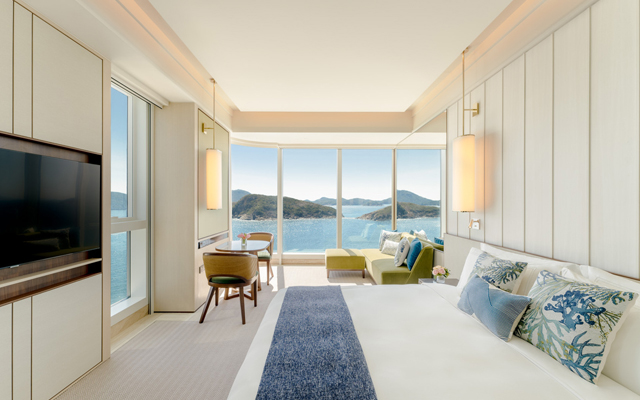
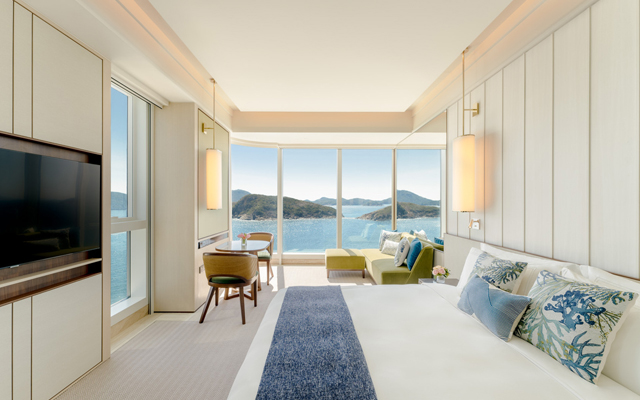
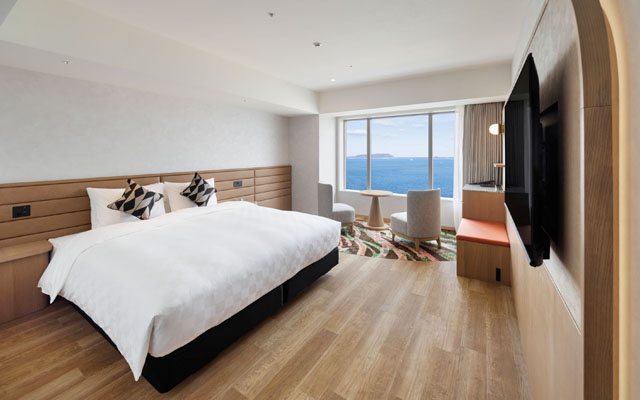
The 425-key Fullerton Ocean Park Hotel Hong Kong sits adjacent to Water World Ocean Park, offering rooms with sea views, nine kids-themed rooms for families, and two top-level signature suites with a private pool and expansive outdoor terrace.
There are five dining concepts within the property – signature Chinese restaurant Jade, Lighthouse Lounge, Lighthouse Café, Satay Inn; Giardino, an oceanfront Italian restaurant, will open later this year.
Facilities include a gym, spa, infinity pool, indoor kids zone, kids lagoon, and event spaces.
Upon request, the hotel’s F.U.N. Desk will curate a range of Fun, Unique, Neigbourhood and Nature-immersive programmes for all guests. There are opportunities for children to learn about marine life and sustainability.

Selina Serenity Rawai Phuket, Thailand
Located on the coastline of Rawai, a village in south-east Phuket, Selina Serenity Rawai Phuket offers guests direct beach access and views of the Andaman Sea.
The 52-key hotel features a 24-hour waterfront coworking facility with a private pool, stunning rooftop yoga and wellness centre, beach club, and café HOWM Beach Bar and Kitchen that serves a Latin Thai fusion concept.
Accommodation choices range from ocean view suites to one- and two-bedroom apartments, as well as private cabanas with outdoor seating.

Admiral Hotel Manila – MGallery, the Philippines
Admiral Hotel Manila – MGallery is set along Roxas Boulevard and is a portal to the city’s golden era of the early 1940s.
A 20-minute drive from Ninoy Aquino International Airport, the hotel features 123 rooms, including seven suites. Leisure facilities include a spa, rooftop pool, gym, and meeting venues. Pets are also welcomed at the hotel.
There are four dining options: Admiral Club Manila Bay rooftop restaurant; Coconut Grove rooftop bar; El Atrio for high tea with freshly baked pastries and beverages; and Ruby Wong’s Godown, a hand-pulled noodle joint.
Guests can explore places in the city as well as attractions like the Manila Cathedral, San Agustin Church, Ruins of San Ignacio church, Barrio San Luis, and the historic walled city, Intramuros.

Ace Hotel Sydney, Australia
The 257-room Ace Hotel Sydney is situated in the inner city neighbourhood of Surry Hills in New South Wales.
Rooms range from 22m² to 78 m², and feature double and king beds.
The hotel offers dining options from cocktails and wines at The Lobby, to daily meals at Loam restaurant. A café will open at a later date.
Ace Hotel Sydney also offers event spaces and private suites.
Moove, Uber to launch ride-hailing fleet in India

Mobility fintech firm Moove has partnered with Uber to launch in India as a part of its global expansion, a move that is set to improve ride-hailing options and contribute to job creation in the destination.
Moove will work closely with the Uber India team to roll out 5,000 compressed natural gas (CNG) and electric vehicles within the first year, starting in Mumbai, Hyderabad and Bangalore. This will scale up to 30,000 vehicles in other cities over the next five years.
In addition to creating jobs in India, Moove is also committed to ensuring that 60 per cent of the vehicles it finances globally are hybrid or electric. This is in line with India’s goal to improve renewable energy uptake and reduce harmful emissions by 2030.
According to the press release, there are over 600,000 drivers on Uber in India.
Abhilekh Kumar, director, business development, Uber India South Asia, added: “We are excited to partner with Moove and work together to unlock growth as we witness a resurgent post-pandemic demand in India. The addition of new cars will help provide superior customer experience to riders while creating sustainable earning opportunities for drivers on the Uber platform.”
NSW government lands SIA through Aviation Attraction Fund
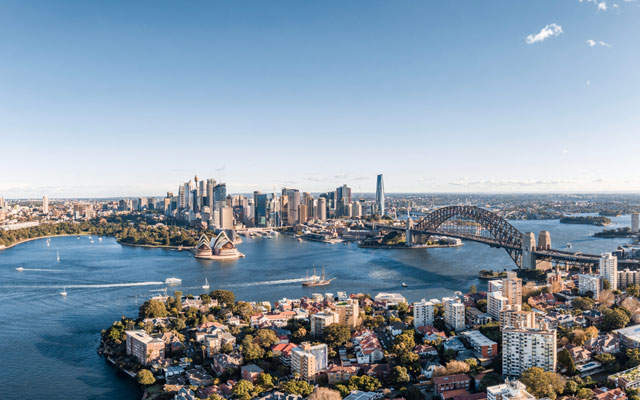
The New South Wales (NSW) government and Singapore Airlines (SIA) have signed a Memorandum of Understanding (MoU) to rebuild visitation to Sydney and NSW.
The new agreement, which was sealed through the NSW government’s A$60 million (US$41.8 million) Aviation Attraction Fund, will facilitate marketing activities across Singapore, India, Indonesia, Malaysia, UK, Germany and France to stimulate demand and drive visitation to NSW.
The NSW government, through its tourism and major events agency Destination NSW, will collaborate with SIA on initiatives including advertising, marketing campaigns and fam programmes.
Minister for enterprise, investment and trade, minister for tourism and sport and minister for Western Sydney Stuart Ayres said the agreement with Singapore Airlines was critical to reigniting the NSW visitor economy and helping to restore visitation to pre-pandemic levels.
SIA currently operates four daily flights to Sydney, and this MoU is estimated to deliver over A$231 in visitor expenditure to NSW until July 2023 and support some 1,200 jobs.
“In 2019, NSW welcomed more than 126,000 Singaporean visitors, who stayed more than one million nights and added A$232 million to the NSW visitor economy. Singapore is also a high-traffic hub for passengers from around the globe travelling to NSW,” added Ayres.
The Aviation Attraction Fund forms part of the NSW government’s Covid-19 Economic Recovery Plan. It aims to build aviation capacity across NSW by supporting airlines to return to the state’s airports.
Applications for the Aviation Attraction Fund are open until June 30, 2023, and are being managed by Destination NSW on behalf of the NSW government.
Fancy feasts


As Covid-related restrictions recede around the world, event caterers, restaurant operators and large venues are seeing event dining returning in full force, and has become an important component among corporates eager to reconnect in-person.
Although social distancing and individual food servings were the norm during events that resumed earlier on post-lockdown, event F&B specialists have noticed a spirited return to live stations, controlled buffet lines, and grazing tables.
Melbourne and Olympic Park’s head of F&B, Rachel Dolan, shared: “We’re seeing a move away from traditional buffet-style services to interactive food experiences.”
For example, during the AIME 2022 Welcome Event, guests were treated to 10 live food stations where they could watch chefs whip up dishes in real-time, while at the inaugural SportNXT leadership summit in April, guests were treated to live-oyster shucking.
A spokesperson from 1-Host – part of Singapore-based F&B, lifestyle & hospitality company 1-Group – shared similar observations: “We are now able to showcase more culinary specialties like live paella stations, live grills and even dessert counters. This has also reduced the pressure of having enough manpower.”
Meanwhile, Craig Squire, director of Cairns-headquartered Ochre Restaurant and Catering, told TTGmice: “Grazing tables are back in vogue for private events, and corporate are mixing up menus; for example, share platters for a course, extended canapes or dessert stations.”
To provide peace of mind and ensure hygiene, Showtime Event Group’s (SEG) director of experience Brad Dabbs shared that “all live stations are manned by chefs who serve guests (directly)”. During the Guinness World Record attempt at the world’s longest grazing table at AIME 2022, individual tongs and sanitiser bottles were also provided.
Over at CWT Meeting & Events, the company actively encourages clients to make use of the food station concept where possible, to lower the chances of cross contamination.
Localised menus are also rising in popularity among organisers, as international delegates return.
Squire noted: “There has also been more interest in native ingredients, which we’ve incorporated into menus. We’ve noticed renewed interested in bush food tasting and cooking demo lunches for partner programmes and are working with two indigenous start-ups to provide a bush food experience before the main meal.”
Alan Pryor, general manager, Kuala Lumpur Convention Centre (KLCC), commented he has noticed a “continuity in localising experiences”, which the venue can provide through its “Malaysia-inspired culinary offerings”.
CWT’s director, Australia & New Zealand, Michelle Sargent, shared: “For a recent incentive group in Fiji, we visited a village and had a local catering company – that specialises in barbecue – assist with lunch. This was a great success due to the locally-sourced produce and our caterers’ familiarity with local cuisine.”
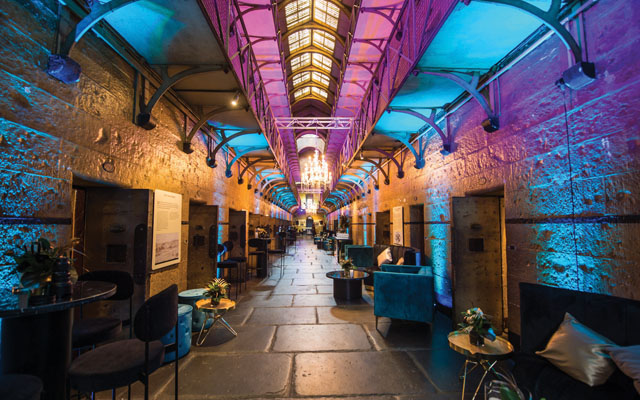
Sustainability status
It is no surprise that sustainability concerns have seeped into event F&B. These days, this movement has expanded beyond food miles and sourcing, to encompass biodegradable items and waste management efforts.
In Singapore, Cedric Nubul, general manager of Hilton Singapore Orchard, makes the effort to “source locally whenever possible, and make sustainable seafood choices with MSC- and ASC-certified produce”.
The hotel also has a waste management programme in place, and utilises compostable and biodegradable, plant-based packaging and reusable bags during events. It also plans to partner with local farming organisations and cultivate an herb garden onsite.
Over in New Zealand, Te Pae Christchurch’s director of culinary service Darren Tait shared that sustainable sourcing has been their “philosophy from day one”, with over “80 per cent of our produce sourced locally”, even though the supplier may not commercially be the cheapest.
Melbourne-headquartered SEG, meanwhile, combats item wastage by using biodegradable products for single-serve options and bamboo utensils, as well as on the food wastage front.
“This includes in-house composting, multiple production kitchens to reduce travel emissions, and an Electrolysis System which creates food grade cleaning supplies that degrade back into water after seven days,” revealed Dabbs.
KLCC partners with Food Aid Foundation to donate extra food that is not served and safe to consume.
“We begin the conversation around food waste management with clients and organisers at an early stage in their event planning to ensure we are well-prepared, and that food wastage is properly managed in a timely manner,” shared Pryor.
Going a step further, KLCC has installed an AI-powered system to track type and quantity of food waste. Currently deployed for small meetings, Pryor plans to implement these for large conventions and banqueting functions.
“This data will enable our chefs to better understand delegates’ food consumption behaviour and engineer menus accordingly, resulting in not only lesser food waste, but also more efficient management of food and production costs.
“For larger functions, we aim to provide this data in a post-event sustainability report to help our clients’ with forward planning of their events,” Pryor added.
Dietary, space and budget trends
Hotels with event venues and offsite catering services are spotting an increased appetite for wellness-focused and plant-based menus.
Nubul shared: “Guests are more health conscious and are requesting for healthier meal options, including locally-sourced produce and menu items that cater to a variety of diets like gluten intolerance.”
He cited the recent HSBC Women’s World Championship as an example, where the hotel’s culinary team conceptualised a plant-based menu that incorporated the use of Tindle meat.
Ramesh Daryanani, vice president, global sales, Marriott International, Asia Pacific, has also noticed an increase in demand for plant-based options at events.
“Covid-19 has left a lasting impact on our mindsets, especially in the way we make decisions around travel and dining,” he opined.
With the rise in wellness focus comes the challenge of having to cater to varied dietary requirements.
Tait said: “Approximately 15 per cent of guests now have dietary requirements, and this makes service challenging especially for larger events where seating placement isn’t confirmed.”
To reduce the number of changes at events, Te Pae is “creating more menus that include gluten-free and dairy-free options”.
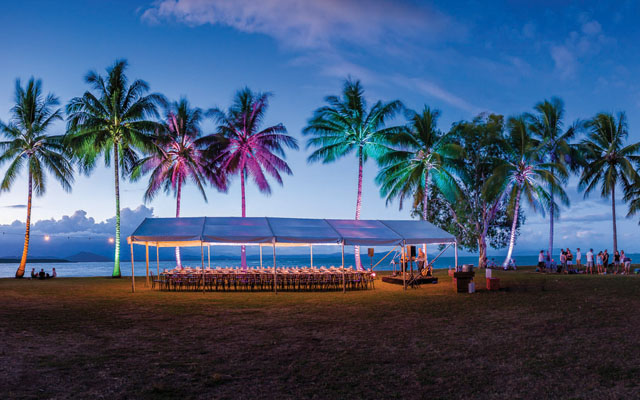
The great outdoors are also highly sought after by organisers, noticed Australian planners.
Dolan shared: “We are seeing a growing desire from clients and event planners for venues with multiple, connected spaces that offer indoor and outdoor experiences.”
She related how CENTREPIECE’s outdoor terraces are “popular locations for dessert and cocktail bars”, while the venue’s central terrace has also hosted pre-function gatherings that allow for outdoor networking.
For Squire, unique experiences offsite have proven to be popular. “Sugar cane farms are hot this year, and we’ve put some time into assisting a farm we work with to develop the shed into a ready-to-go venue.”
Sargent advised venues to “think outside of the box and consider how outdoor areas can be utilised”, such as an unused carpark to incorporate food trucks.
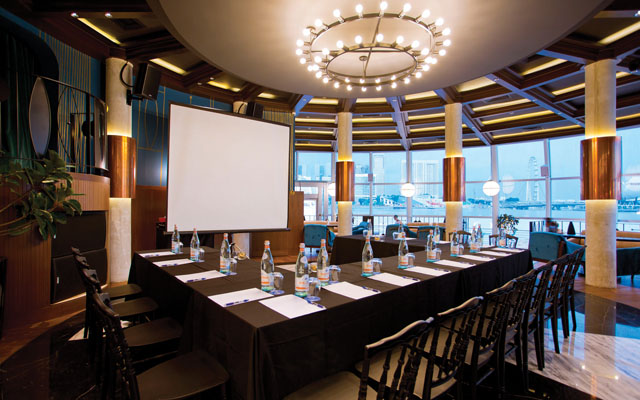
This would provide guests with a casual and fun ambience, along with some fresh air, help venues overcome labour shortages, and work with local vendors who have familiarity with local cuisine, she elaborated.
When asked about corporates’ budgets for dining functions, Sargent said clients are setting aside good money, with some “even (more) than pre-Covid days” as companies seek to reunite staff in a memorable fashion.
Nubul has also not observed “any restrictions on budgets”, because the priority now is on “celebrating being back together and creating memorable experiences.”
“Everyone is appreciating the need to bring people together, so budgets have not been severely impacted,” observed Dabbs for SEG events.
However, when it comes to decision-making, Squire hopes that event organisers will have more respect for suppliers.
“As suppliers, we do our best to supply quotes as soon as possible, but when clients take their time to decide, venues become unavailable. We also take time to host potential clients at venues, talk through the possibilities and provide quotes, but we never hear back from them.
It would be nice to get back to us with a yay or nay,” Squire lamented.
The spirit of adventure
Whether it is handling a giant crayfish on a perfect beach or getting lost in a forest of super tall trees, Australia has long evoked a sense of natural wonder and inspired many an adventurous traveller.
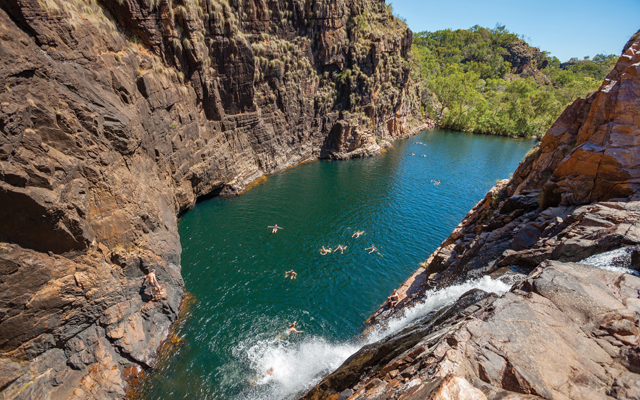
And now, it is that adventurous traveller that Australia needs, to help lead the tourism recovery charge.
“We’ve missed you”, declares the first line in Tourism Australia’s marketing collateral as efforts ramp up to encourage visitors to come back, after borders reopened in February this year.
What Australia has also missed is an adventure tourism market valued at US$22,370 million in 2019 before the pandemic hit. It was further estimated to grow at a compound annual growth rate of 21 per cent from 2021 to 2027, to reach US$33,519 million by the end of that period, according to Allied Market Research.
The numbers are unsurprising when you consider that the adventure sector is expanding rapidly around the world. Market Data Forecast predicts the industry will reach US$1.6 billion by 2026. But what’s impressive about Australia’s growth is that the rate significantly exceeds the research firm’s predicted global growth rate of 13.3 per cent.
So, what is driving the demand that many believe will play a key role in Australia’s tourism recovery?

Homecoming
“The youth and adventure sector is getting a lot of attention right now,” confirmed Alex Hill, president of Adventure Tourism Victoria.
“Many government and tourism organisations are putting a lot of effort into attracting these travellers back to Australia. They’re just pumping money and investment into adventure tourism,” he said.
One of the campaigns Hill is talking about comes from South Australia, which recently made headlines in the UK for offering return flights from London to Adelaine at just 10 pounds (US$11.97). The scheme targeted the younger people who would take up working holiday visas to fill job gaps in a bid to support the hospitality industry’s recovery.
But there’s a lot more going on than just filling a few job gaps.
“Pre-Covid, we would have as many as 275,000 working holiday visa holders in Australia at any given time. In March 2020, they were asked to leave Australia when the pandemic hit. We’ve lost 20 to 30 per cent of our workforce in some industries, and for the last six months we’re seeing the implications of those decisions as the economy opened up,” said Hill.
Hill explained that these working holiday visa workers are also typically Australia’s biggest adventure tourists.
“As soon as the borders were open, these were the guys that got on the planes to head south (for) Australia to have their holiday or working holiday that they have missed out on for the last two years. They’re happy to bungee jump, do the hikes and jump out of an airplane,” he added.
Going back to Tourism Australia’s marketing collateral, however, its call for visitors to return not only reclaims missed opportunities, but also points out that everything from food to fashion has had a fresh makeover, with new tourism experiences and accommodation opening in hidden corners of the country as reasons to visit.
These include a new underwater stay in the Great Barrier Reef, a walk-the-plank challenge 140m above sea level in tropical north Queensland or a zipline from the top of Matagarup Bridge in Perth.
New adventures do not always have to involve physical risk. Tourism Australia’s marketing also targets what it calls adventure experiences for the soul, such as astro tourism or an iconic rail journey, or even a tiny-home stay.
“If you think about Tourism Australia’s marketing overseas, there was always a picture of Kakadu National Park or similar,” said Hill. “But I think we’ve gone a bit deeper than that.”
He explained: “With the many government grants that have been available, places like Victoria have been developing tourism products that link back to our first nations people and understanding that these are our true strengths, and it’s what we want to grow.”

Age is no limit
Tourism observers have noticed a newer market developing at the other end of the age demographic for the sector, and technology has played a role in meeting that market.
“Travellers in the older age bracket of over 50 and 60 are now starting to engage in adventure activities, and I think it’s partly to do with the popularity of e-bikes,” said Stephen Wearing, adjunct professor of eco-tourism studies at the University of Technology Sydney.
“There’s something like 35 rail trails being developed, which are a gentler ride on old railway lines that older people can access without worrying as much about their bodies breaking down.
“They’re looking for activities on this side of Covid and communities are developing their tourism to attract this market.
“So we’re seeing the convalescing of technology, development and communities wanting tourists, and the availability of rail trails and infrastructure funding to develop those,” he shared.
Wearing also noted larger businesses have been buying out smaller adventure tourism companies that have struggled through the pandemic. The net result is seeing their more isolated offerings now marketed to a much broader audience, including to those in the older age groups.
One example is the multi-award winning Maria Island Walk in Tasmania, which features a four-day glamping walk popular with older tourists. It was sold to leading Australasian adventure company Experience Co in 2021 and is perpetually fully booked, benefitting from Experience Co’s wider market reach.
As for what lies in store for adventure tourism in Australia, it is a case of ‘watch this space’.
Wearing believes the e-bike will revolutionise the way Australia does tourism internationally. The rise of man-made wave pools and increasing number of high ropes courses built during the pandemic also echo a healthy future for adventure tourism.
“Right now, it’s (already) great but in a couple of years’ time, it’s going to be fantastic,” said Hill.
“There’s been a lot of ideas over the last two years and a number of really exciting projects will hit the ground very soon. A world-class mountain bike facility in Warburton, 90 minutes east of Melbourne, is going to mesh seamlessly within a natural, cool temperate forest, alongside other offerings that complement that facility.”
“Projects like that are happening around the country because there’s a real need and desire for all levels of government, developers and tourism operators to come together to create these nature-based tourism experiences,” he concluded.
Three Asian passports are most powerful in the world

Japan, Singapore and South Korea possess the most powerful passports in the world, according to the latest results from the Henley Passport Index, which is based on exclusive and official data from IATA.
Japan holds the number one spot on the index, with a record-high visa-free or visa-on-arrival score of 193, while Singapore and South Korea come in joint-second place, with a score of 192.

Despite the unmatched and unprecedented worldwide access afforded to the citizens of these three nations over the index’s 17-year history, international passenger demand in the Asia-Pacific region has only reached 17 per cent of pre-Covid levels, according to IATA’s latest statistics, having hovered below 10 per cent for most of the past two years.
This figure is far behind the global trend where markets in Europe and North America have recovered to around 60 per cent of pre-crisis travel mobility levels.
EU member states dominate the rest of the top ten spots on the latest ranking, with Germany and Spain in joint-third place, with access to 190 destinations visa-free.
Finland, Italy, and Luxembourg follow closely behind in joint-fourth place with 189 destinations; while Denmark, Netherlands, and Sweden share fifth place with visa-free access to 188 destinations worldwide.
Both the UK and US have dropped down a rank, to sixth and seventh position, respectively.
The UAE passport, which now sits at 15th place on the ranking, with a visa-free or visa-on-arrival score of 176, has been the biggest climber on the index over the past decade. In 2012, it sat at 64th place on the rankings, with a score of just 106.
According to the latest Henley Private Wealth Migration Dashboard, the UAE has also become the focus of intense interest among affluent investors and is expected to see the highest net influx of HNWIs globally in 2022, with a forecast net increase of 4,000 – a dramatic increase of 208 per cent versus 2019’s net inflow of 1,300 and one of its largest on record.
Exclusive research conducted by Henley & Partners reveals that top-ranking passports have almost regained pre-pandemic levels of access. By comparing the current level of travel freedom with the most severe Covid-related restrictions imposed over the past few years, results show that UK and US passport holders now have unrestricted access to 158 destinations around the world – as opposed to just 74 and 56 destinations, respectively, at the height of the pandemic in 2020. Japanese passport holders enjoy unrestricted access to 161 destinations, as opposed to only 76 in 2020.
The study also determined a strong correlation between a nation’s passport power and its peacefulness.
Henley & Partners noted that all of the nations occupying the top 10 spots on the Henley Passport Index can also be found in the Global Peace Index’s top 10 ranking. Likewise, for the bottom ranking nations.
India’s A Travel Quest debuts transformational journeys

India-based travel specialist, A Travel Quest, is rolling out a series of private transformational journeys for small groups, beginning with a gastronomy trip to Peru and an adventure excursion to the Arctic.
The curated journeys will centred around five key focus areas – Art & Culture, Wildlife, Gastronomy, Adventure and Offbeat. Each pillar will offer two or three fixed departures every year led by an expert, influencer, or celebrity in that space. Travellers can choose to join these curated journeys, which take in 10 to 12 participants, or request for a customised option.

For a start, the series in 2022 to 2023 will feature a 10-night Peru with Chef Prateek Sadhu journey and a seven-night Arctic Expedition – Lofoten & Svalbard Islands programme.
Scheduled from November 2 to 12, 2022, the Peru with Chef Prateek Sadhu journey will take travellers through the culinary wonders of Peru, calling at destinations such as Lima, Paracas and Sacred Valley, and Cusco.
The Arctic Expedition – Lofoten & Svalbard Islands will comprise two departures – March 15 to 22 and April 7 to 14, 2023. The intimate polar expedition will dive into the untouched Arctic wilderness of Svalbard and Lofoten, and cross the Arctic Ocean to the last few islands before the North Pole.
Pritish Shah, founder and CEO of A Travel Quest, said: “The experience economy has boomed over the recent years and today’s luxury consumers are seeking out transcending experiences.”
Besides these intimate group trips, the company will launch a 2023 series built upon various upcoming festivals and events.
Trip.com’s summer bookings show resurgence of traveller confidence

As consumers around the world plan a summer of revenge travel in the wake of easing restrictions, Trip.com data reflects the global travel recovery trend with data from its booking sites across Europe and Asia and the results showing the rise of summer holiday bookings as travellers become more confident in a post-pandemic world.
Wednesdays are the most popular days
For summer 2022, the data shows Tuesday through Thursday are the peak days for browsing flights and hotels, with Wednesday as the most popular day overall for flight searches, and Saturday being the quietest.

From June to September, Japan, South Korea, Thailand and the UK markets saw July 1 as the most popular day for flight departures. It was also the most popular hotel check-in date that users searched for on Trip.com’s sites in the UK and Thailand.
Hotel booking window extended by up to a week
During the pandemic, the booking window for hotel stays had fallen from 20.3 days (June 2019 data) to 6.1 days in Asia. Flights saw a similar trend, with the booking window on Trip.com’s European sites falling from 22.2 (in 2019) to 13.4 days in June 2021.
For 2022, Trip.com’s data signals a return to pre-pandemic trends, with booking windows once again rising. In Europe, the window for hotel reservations in June 2022 matched pre-Covid levels at 14.2 days; booking windows for flights extended to 14.2 days from 6.4 days of June 2021. Similar trends are evident across Asia, with booking windows for flights rising to 16.4 days in June 2022 from 6.1 days in June 2020.
However, booking windows still remain shorter than pre-pandemic in the region, as restrictions remain across many nations and districts.
City-centric European summer holidays high on the agenda
Airlines and hotel chains have reported bookings and occupancy levels rising to pre-pandemic numbers for the first time this spring, with Trip.com’s European sites seeing an average monthly growth in traffic of around 10% between April and July, further underlining the increased demand for summer getaways.
While many choose beach holidays over city breaks this year, data shows that city-centric summer holidays are still high on the agenda for Europeans wanting to visit attractions, culture, food and new experiences in Europe’s most enticing cities.
Trip.com’s European data also reflects the vast increase in short-haul travel demand for June 1 to 31 August 2022 versus the same period in 2021, and that short-haul trips are 27 times more popular than longhaul and proves that most travellers still prefer to stay closer to home.
Customers book longer trips post-pandemic
European customers travelled for longer during 2020 than they did previously, with the average trip length in June 2019 being 6.2 days, rising to 8.8 days in 2020 and back down to 6.6 days in June 2022.
Asian travellers, on the other hand, are travelling for an average of 7.6 days in 2022, an increase on the average of 6.6 days in June 2019, but a decrease on 2021’s average of 8.7 days.
Local travel rebounds well in Asia
In Asia, countries and regions that have relaxed their travel restrictions have seen an impressive market performance, particularly those in South-east Asia. Overall in the APAC region, bookings increased by 21% in May and by a further 7.8% in June.
The most popular destination among APAC users was Singapore, where it saw a 42% year-on-year increase in hotel bookings in June.
Thailand saw a slight dip in April but following the Songkran Festival, overall bookings have tripled when compared to June 2021, with a 17% rise in bookings compared to May 2022.
While Thailand continues to attract customers from the UK and Asia-Pacific, the country’s recovery has mainly been driven by domestic travel, with domestic flights in June increasing 2.6 times year-on-year.
Japan and South Korea saw sharp growth in 2Q2022, with South Korean outbound flights increasing by 16 times year-on-year and June outbound flight bookings up 31% compared to May. South Korea eased travel restrictions in early June, so an upward trajectory in bookings is expected.
Japan also eased its border restrictions in June, with a large spike in bookings following the news. In May, flight searches to Japan on Trip.com’s global sites were 7.5 times as popular when compared to the same period in 2021.
Asian dance festival makes Singapore comeback this December

ZoukOut dance festival will emerge from its three-year hiatus for a December comeback at Singapore’s Siloso Beach Sentosa, this time partnering with Coachella producers AEG to elevate the event’s experience.
Positioned as Asia’s only dusk-to-dawn dance festival, ZoukOut 2022 will be themed as Futuristic City of Dreams and “take party-goers on a journey that transcends time into a future of make-believe”.
Organisers said the event on December 2 and 3 will bring in leading local, regional and global acts across a festival ground with a food village, experience booths, custom installations, roving acts and spectacular stage designs.
Launched in 2000, ZoukOut was named twice by the Singapore Tourism Board as the Best Leisure Event Experience in the city-state.
ZoukOut’s last edition in 2018 attracted 20,000 people in attendance.
Ticket prices and programme details have yet to be released at press time.


IHG Hotels & Resorts signs off two management contracts this week that will see it bring the first Crowne Plaza brand to Penang, Malaysia and a fifth hotel to Rajasthan, India.
In Malaysia, the partnership between IHG and STC Property Management will result in the 343-room Crowne Plaza Penang Butterworth Straits City, set within a sustainable high-end mixed-use development on the waterfront.
Rajit Sukumaran, managing director, South East Asia and Korea, IHG said: “This signing underscores IHG’s commitment to further expand its footprint across Malaysia and grow its portfolio in strategic destinations.”
Crowne Plaza Penang Butterworth Straits City adds to an already impressive list of IHG properties scheduled to open in Malaysia in the next few years, most notably, Crowne Plaza Kota Kinabalu, Crowne Plaza Kuala Lumpur City Centre, Hotel Indigo Kuala Lumpur on the Park, and Kimpton Kuala Lumpur.
Over in India, Crowne Plaza Resort Pushkar will join four other IHG properties – two in operation and two under development – in Rajasthan.
Crowne Plaza Resort Pushkar will be a new-built property featuring 125 rooms and is expected to be operational by early 2026.
Located on the outskirts of Pushkar, the hotel will be well-connected to one of the most significant highways in India passing through Delhi, Mumbai and Jaipur. Set in a serene locale, the hotel will be an ideal choice for leisure travel and destination weddings.
Sudeep Jain, managing director, South West Asia, IHG Hotels & Resorts said: “We are thrilled to announce the signing of a new Crowne Plaza Resort in Pushkar which has become a hotspot for leisure and spiritual tourists visiting Rajasthan. The city’s growing popularity as a weekend and wedding destination also presents a great opportunity for us, and bringing our premium brand, Crowne Plaza to the city will help us cater to this increasing demand.”
He added that there is growing tourism potential in secondary Indian destinations, and the company is committed to “fill the need gap for quality branded accommodation in these cities”.