Tourist profiles to the Philippines have changed, dominated by longhaul source markets and balikbayans (returning Filipino residents) since the country reopened her borders six months ago – a change from pre-pandemic years when Asians comprised at least half of all arrivals.
Numbers from the Department of Tourism showed that from February 10 to July 31, out of the 1,109,794 arrivals, 35.2 per cent were from longhaul markets in North America and Europe, and 34.9 per cent balikbayans.
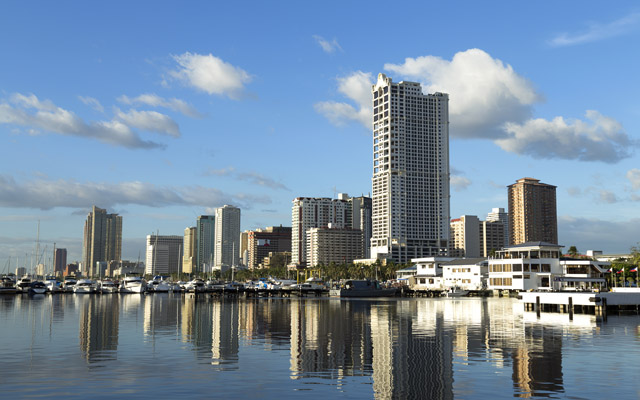
Philippine arrivals are mostly from longhaul source markets and returning Filipino residents; Manila Bay pictured
Asian tourists have dipped to 21 per cent as Chinese citizens – the country’s second biggest source market in the past – are not yet travelling while travel restrictions in top Asian source markets like Japan and Hong Kong have limited their foreign trips.
The top five arriving nationalities are now Americans (216,917), Canadians (42,852), British (42,852), Australians (48,211), and South Korean (112,603).
Having been cooped up for so long, tourists no longer mind longhaul trips, explained Charles Aames Bautista, deputy chief operating officer of the Tourism Promotions Board (TPB), on the side of the recent general membership meeting of the Philippine Tour Operators Association (Philtoa).
As the country awaits the return of Chinese travellers, Bautista said: “The number one thing we learnt during the pandemic was we can survive with our domestic market alone because Filipinos, specifically the middle- and upper-class markets, will spend to travel. Now that they are travelling in the Philippines, domestic tourism will sustain the industry.”
He also said the destination is “diversifying and making sure it is tapping other markets like the Middle East, which is doing well” as the industry initiates halal-certification and kosher-certification for restaurants and other tourism facilities.
Recognising that travellers’ stress levels are highest at the security and immigration process and at baggage pick-up, SITA has advanced its technology solutions to make these two areas as hassle-free as possible.
The company, which specialises in IT solutions for airlines, airports, aircraft and governments, launched on July 28 the new SITA eVisa and SITA Electronic Travel Authorization (SITA ETA) to enable governments to rebuild inbound tourism quicker, more smoothly, and with greater emphasis on security.
SITA has advanced its technology solutions to make the immigration process and the baggage pick-up as hassle-free as possible for travellers
The mobile capability of SITA eVisa and SITA ETA allows travellers to make applications and provide their biometric information using their personal devices before they travel.
In an interview with TTG Asia, Sumesh Patel, president – Asia Pacific with SITA, said moving these pre-trip processes online helps governments better manage their immigration procedures under current reopening challenges, which can range from safe distancing needs to labour shortage.
“Pre-pandemic, there were a lot of countries that offer visa-on-arrival, and there are many that still do so today. However, the pandemic has forced airports to avoid large crowds on facility, which can happen when incoming travellers are waiting in line for their visas. At the same time, people expect safe distancing, which puts pressure on airports having to process VOAs in limited space. There are also concerns about having to touch things at the airport,” Patel explained.
Both SITA ETA and SITA eVisa can also alleviate the manpower pressure faced by many airports and embassies today, opined Patel.
“We have a user case study where one of the countries using SITA eVisa was able to increase its inflow of travellers by 20 per cent. Travellers found it much easier to get their visas online. That increased the satisfaction of the traveller, improved tourism inflow and earnings, and in turn created 800 new tourism and hospitality jobs in the country,” shared Patel.
In terms of baggage processes, Patel highlighted the immense pressure on airports, airlines and travellers today.
“The number of lost baggage rose by 20 per cent between 2020 to 2021. As travel started picking up this year, 1Q2022 saw three times more lost baggage compared to 1Q2021. When we went into 2Q2022, that volume expanded by five times. This is mainly due to the shortage of staff that are needed to manage the transfer of baggage,” said Patel.
“The solution to this is technology,” he added, pointing to SITA Bag Manager, a system that helps airlines, airports and ground handlers reconcile, track and manage baggage, as well as SITA WorldTracer.
Patel said the latter is the world’s only fully global baggage tracing and matching system that works irrespective of airport or airline. To further ease travellers’ stress in the event of lost luggage, SITA recently debuted a self-service module for SITA WorldTracer. Passengers are able to track their bags and file a lost luggage report on their personal device, without having to seek help from an airport agent. Once the bag is found, they can track its transfer and know when they can expect to receive it.
Patel believes that reducing travellers’ stress and cutting down processing time at airports will create an impressive start to the journey and shape travellers’ perception of the country.
He noted that most Asian airports are learning from the operational challenges seen at some European airports; they are hiring a lot faster as well as deploying technology sooner than initially planned.
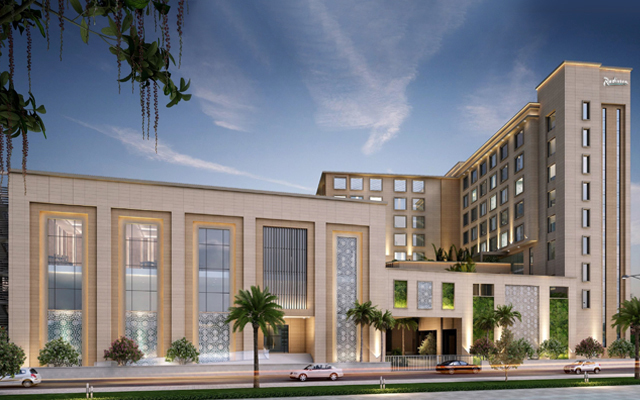
Radisson Hotel Group has partnered The Centurion Hotel to launch Radisson Biratnagar in Nepal, slated to open in 3Q2024.
This is part of Radisson Hotel Group’s plan to double its footprint across the South Asia region, with 148 hotels and resorts to be added by 2025.
Radisson Biratnagar will open in 3Q2024
As the fastest-growing provincial capital of Nepal, Biratnagar’s infrastructure development will position it as an upcoming destination.
Located 10 minutes from Biratnagar Airport, 15 minutes from the India border, and Jogbani Railway Station in Bihar, Radisson Biratnagar will provide ease of connectivity for guests travelling for business or leisure.
The 145-room hotel will feature a pool, fitness centre, spa, restaurants and event spaces.
Zubin Saxena, managing director and vice president, operations, South Asia, Radisson Hotel Group, said: “Being a tourist hub for travellers globally, Nepal is poised to emerge as a strong economic and investment hub for multiple sectors in the years to come.”
The Centurion Hotel’s chairman, Moti Lal Dugar, expressed intentions “to leveraging the brand’s strong recognition and the team’s deep expertise in the South Asian market to drive the success of the Radisson Biratnagar”.
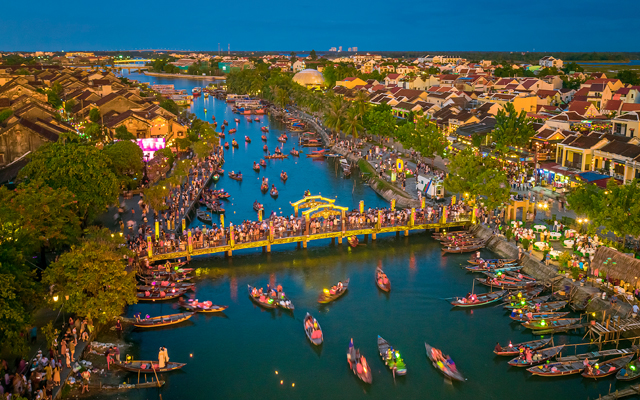
The Mekong Tourism Forum 2022 will return as a face-to-face event from October 12-13 at Hoiana Resort & Golf in Quang Nam province in Vietnam.
With the theme Rebuild Tourism, Rebound with Resilience, it will be the first in-person gathering of the six Greater Mekong Sub-region (GMS) destinations since 2019, comprising public- and private-sector tourism leaders and experts.
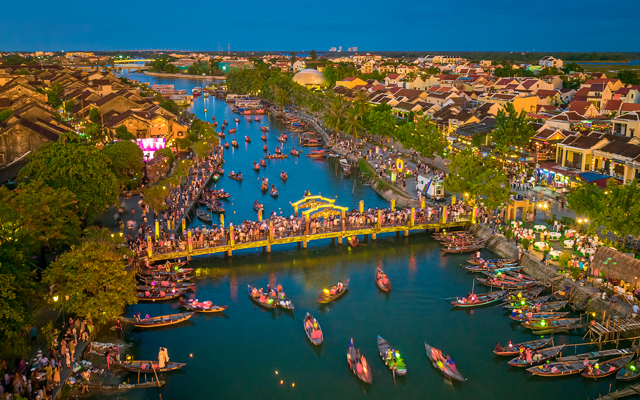
The Mekong Tourism Forum returns this year as a face-to-face event and will be hosted in Quang Nam province
“With a lot of rebuilding and catching up to do, the Mekong Tourism Forum 2022 aims to drive real action and create a more resilient, inclusive, sustainable and successful tourism industry,” said Nguyen Trung Khanh, chairman of the Vietnam National Administration of Tourism.
Discussions will focus on tourism recovery, digital transformation, supply chain localisation, social enterprise business models, and best practices for a resilient travel sector rebound, including the use of new technologies and megatrends that affect tourism recovery.
Specific panels will address social enterprises, connecting sustainable tourism suppliers and buyers, and unlocking green tourism opportunities.
Speakers will include leaders from the Vietnam National Administration of Tourism, representatives from other GMS national tourism organisations, the Asian Development Bank, Destination Mekong, Agoda, the Pacific Asia Travel Association, OAG, YAANA Ventures, EXO Travel, Travelife and the ASEAN Tourism Association, among others.
Complimentary transfers to Da Nang international airport, which is 40 minutes from the conference venue, will be provided on October 11 and 14.
There will also be post-event delegate tours in the Quang Nam area on October 13.
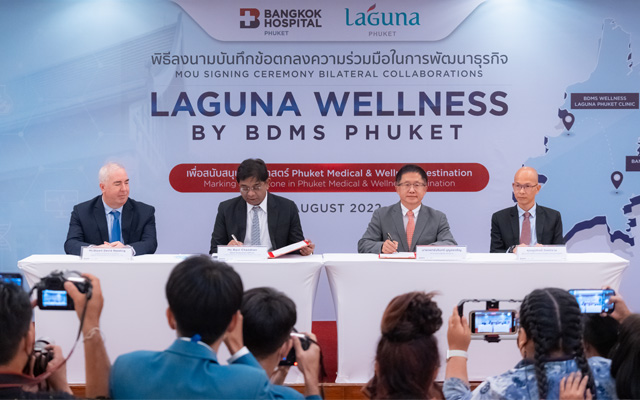
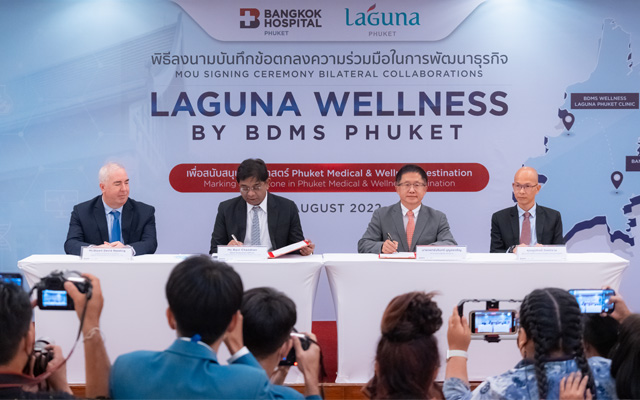
Laguna Phuket and Bangkok Dusit Medical Services (BDMS) have signed an MoU to develop a world-class medical and wellness centre within the Thai integrated resort.
Scheduled to open early-2023, Laguna Wellness by BDMS Phuket will sit within the Canal Village, the integrated resort’s retail and community services hub, and offer healthcare and wellness support, including regenerative medicine, rehabilitation and preventive cardiology services.
The collaboration was marked by (from left) Banyan Tree Group’s Stuart Reading and Ravi Chandran; BDMS Group 6’s Narinatara Boonjongcharoen; and BDMS Group’s Bhummikitti Ruktaengam
Medical tourists visiting the facility will be able to enjoy Laguna Phuket’s variety of accommodation and recreational facilities.
Laguna Wellness by BDMS Phuket is expected to position Laguna Phuket as a premium medical tourism hub in the region, as well as give resort residents access to the latest medical technology and the expertise of world-class medical professionals.
Ravi Chandran, CEO of Laguna Resorts & Hotels, said: “This development will be a game-changer and further cement Laguna Phuket’s reputation as Thailand’s leading integrated destination for tourism and residential lifestyle offerings.”
Narinatara Boonjongcharoen, CEO of BDMS Group 6, which operates hospitals in Hat Yai, Suratthani, Koh Samui and Phuket, said the project would align with Phuket’s strategy as a medical and wellness destination.
“We will also collaborate with BDMS Wellness Clinic, our pioneer model based in Bangkok, for their wellness and regenerative expertise,” added Narinatara.
Careful efforts to bring back large-scale events safely amid a pandemic have earned Singapore a vote of confidence from many an event owner, paving the way for a strong return of international business gatherings.
High-profile pilot events that put Singapore’s Covid-safe protocols to the test were instrumental in the city’s success story, and they include Bloomberg New Economy Forum, Milken Institute Asia Summit, and the 50th St Gallen Symposium.
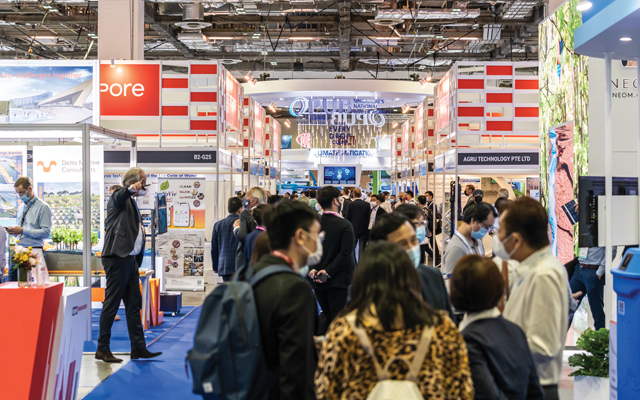
Singapore International Water Week 2022 enjoyed busy show grounds
That sterling track record, along with several positive factors, such as streamlined Covid-19 safe measures for travel and events as well as returning flight capacity, has led Poh Chi Chuan, executive director, exhibitions & conferences with the Singapore Tourism Board (STB), to find recovery swifter than expected.
In fact, Poh expects a full recovery of Singapore’s business events performance in two to three years.
“We have had an encouraging start to 2022, welcoming more than 150 events attended by over 37,000 event delegates in the first three months. To date, at least 66 international events have been lined up for the rest of 2022, with many more event organisers in the advanced stages of confirming Singapore as a destination for their events.
“This is a clear reflection of event organisers’ trust in our vibrant business culture, stable governance, and excellent infrastructure,” remarked Poh.
Notable events held so far include the Singapore Airshow 2022 in February; Singapore International Water Week and CleanEnviro Summit Singapore in April; Tax Free World Association Asia Pacific Exhibition & Conference in May; and Global Health Security Conference 2022 in June. Coming up in the remaining months are Milken Institute Asia Summit 2022 in September and Singapore Fintech Festival in November.
At Constellar, which develops its own events and manages Singapore Expo and Max Atria, confirmed venue bookings are at 60 per cent of pre-Covid levels in 2019 for 2H2022 alone.
Sands Expo and Convention Centre is also seeing busy months this year, carrying on from an active 2021 when it hosted over 870 events.
It is not just the mega venues that are celebrating the business rebound; business hotels with function spaces are singing too.
Since opening in February this year, Hilton Singapore Orchard, which boasts 16 event venues, has hosted many residential meetings and corporate socials. General manager Cedric Nubul revealed that these are performing 60 per cent above expectations.
“We expect to continue seeing a ramp up of large events almost every month with the easing of social distancing and travel restrictions,” he said.
Indeed, Singapore is on a roll, evident in the “huge increase in requests for site inspections by event organisers to visit Singapore to prepare for upcoming events,” revealed Poh.
As large events make a comeback, STB’s chief executive Keith Tan emphasised that the value of these gatherings be appreciated based on thought leadership, breadth and range of the companies represented, and their outcome, instead of the attendee count.
“Business events, especially high-quality ones, bring companies from around the world to Singapore, creating a marketplace for Singapore’s own companies that would not exist otherwise. Our MICE strategies do not just serve tourism outcomes, but also larger economic outcomes, placing Singapore at the heart of business flows. (These would be) flow of ideas and talents,” he detailed.
For example, the Singapore Airshow brings world aviation leaders and players together, providing a platform for the exchange of ideas and strategies to advance the interests of the global aerospace and defence industry. It also reinforces the city-state’s stature as a trusted aerospace and aviation hub.
Similarly, the Singapore FinTech Festival, which draws fintech innovators, technopreneurs, policymakers, financial industry leaders, investors and academics from around the world, enables an exchange of ideas for a more financially inclusive and sustainable world and boosts Singapore’s reputation as a global fintech hub.
Tan told TTGmice that attention is on events that complement Singapore’s strengths and are aligned with economic strategies and critical sectors, such as sustainability, urban solutions, food security, energy security, fintech and advanced manufacturing.
To do that, STB works with various government agencies to attract relevant industry associations to be headquartered in the city-state. The presence of these professional headquarters “creates critical mass and ideas in these areas”.
Amid bullish business sentiments lie recognition of obstacles in the city-state’s road to recovery. These include an absent market giant China, labour crunch, and short booking lead times.
When asked how big of a shadow does an absent China cast over Singapore, which is looking to grow her position as the global-Asia node for business tourism, Richard Ireland, CEO of Clarion Events Asia, said: “China and Hong Kong are in the top 10 source markets for MICE in Singapore, so any absence will be felt. However, there are also very strong source markets that are fully open, be they in South-east Asia, India, Australia, Europe or the US. And these markets (are eager) to come to Singapore (to do business).”
In response to the same question, Poh said Singapore attracts event attendees that are keen to do business with the whole of Asia and the rest of the world.
While STB does not expect a major uptick in Chinese business travel arrivals in the immediate term, Poh said China remains an important visitor source market for Singapore.
“To prepare for the eventual resumption of travel from China, we have continued with our MICE marketing efforts to build affinity for Singapore and maintain destination mindshare among Chinese event organisers and potential event attendees,” he added.
Meanwhile, the labour intensive nature of the events industry presents a talent challenge as business gains pace. Cognisant of this long-standing issue that has only intensified during the pandemic, STB has programmes with partners like the National Trades Union Congress to facilitate job matching for job seekers to get them back into the industry.
Ong Wee Min, vice president of sales and MICE, Marina Bay Sands (MBS), said: “The imbalance between market demand and supply for the same pool of workers, especially in F&B, and changing mindsets (of talents) due to Covid-19 have all contributed to the manpower issue.
“We have been actively hiring even before the pandemic, and we continue to do so today, especially for our key service departments such as hotel operations, F&B and security, as well as functions under corporate, meetings and attractions. We also continue to invest in our team members through upskilling so that they have the relevant skillsets for our industry today and in the future.”
MBS’ business events team is now armed with a Digital Event Strategist certification, allowing them to cope with an increasingly digital workplace.
Short lead times and a very cautious booking stance are other common laments among Singapore venue operators.
Ang Chee Chiang, general manager (centre management), Constellar, elaborated: “We’ve seen a significant increase in enquiries and demand for venue space since restrictions were lifted in April 2022, (but) event organisers and exhibitors are still taking a cautious approach for the rest of 2022 as they have a shorter runway to organise and increase event take-up rate while (considering) resource challenges such as inventory and manpower.”
With changes to travel and health regulations still a possibility, event organisers targeting an international audience have chosen to commit only to minimal space requirements in their venue bookings, with additional space on standby to enable capacity adjustments closer to the event, shared Ang.
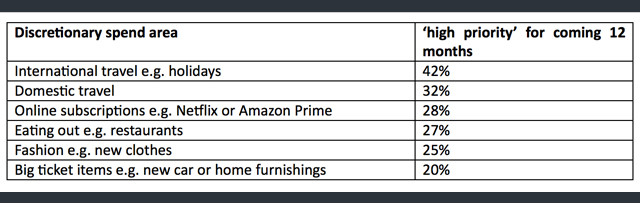
The new Consumer Travel Spend Priorities study, published by Amadeus, indicates a strong desire among respondents to travel despite the economic uncertainty, with ‘international travel’ ranked as the highest priority from a selection of six discretionary spend categories.
The study, which involved 4,500 consumers from France, Germany, Singapore, the UK and the US, aims to understand consumer’s expected spending habits for the year ahead.
The study by Amadeus shows that international travel is a high priority spend for respondents in the coming year (Photo: Amadeus)
Forty-two per cent of respondents said international travel is a high priority spend area for the coming year, far higher than fashion, eating out and big-ticket items like home improvements.
On average, consumers estimate they will spend US$2,670 on international travel over the next 12 months, broadly in line with how much they spent in 2019 (US$2,780 average).
Many travellers plan to spread the cost across instalments, reducing exposure to costly Foreign Exchange (FX) transactions and by dipping into loyalty points previously collected.
David Doctor, executive vice president, payments, Amadeus, said: “This research clearly shows consumers are prepared to forego spending in other areas of their lives to accommodate travel this year. But that’s not the end of the story. The industry will need to look for ways that fintech can make travel costs more transparent as well as help travellers manage their spend.”
Faced with economic uncertainty, travellers are adopting fintech to reduce the expense of paying internationally and to flexibly fund their trips.
Three quarters of respondents (75%) said they are more likely to choose a pay-by-instalment option like Buy Now Pay Later to fund travel over the coming year. This compared to 44% who are more likely to use a credit card, and 26% who are more likely to turn to ‘payday loans’, where short-term borrowing typically incurs high interest rates. 47% of travellers said they are planning to spend previously-earned loyalty points to pay for trips.
Travellers are also embracing new fintech options with 48% more likely to try pre-paid debit cards that hold multiple currencies to avoid FX fees when paying abroad, and 49% saying they are now interested in co-branded cards that yield loyalty points.
In the current environment, 73% of travellers say they are more likely to pay attention to FX fees and costs associated with international travel and 56% are more likely to choose a travel provider that lets them pay in their own currency, with transparent FX fees.
Doctor added: “The demand for flexible payment options like Buy Now Pay Later in travel is extraordinarily high. The industry is eager to meet this demand, but it should do so responsibly, with thorough risk management in place. Savvy travellers are adapting to limit costs involved in travel. We see in our own data that more travellers are choosing to pay in their local currency across the airlines using our FX Box technology.”
Turkish Airlines has launched a new programme, Co2mission, on August 1 to offset the carbon emissions caused by flights – from business trips by the company’s personnel, to allowing the environmentally-conscious customers to fly with peace of mind.
With numerous portfolio options for carbon offset such as renewable energy and forestation, passengers can choose to balance out the emissions of their flight by contributing their desired amount to the project portfolio of their choice and purchasing an emission reduction certification accredited by United Nations.
Turkish Airlines’ new Co2mission programme provides carbon offset options like renewable energy and forestation
The passenger contributions will be used to support the projects accredited by Verified Carbon Standard (VCS) and Gold Standard.
Passengers are able to complete their carbon offset process, regardless of which airline they travelled with – all they require is their flight date information along with arrival-departure stations.
Using the platform, the carbon offset amount is calculated with the International Civil Aviation Organization (ICAO) methodology, which considers route length, aircraft type, fuel consumption and numerous other factors.
Ahmet Bolat, chairman of the board and executive committee, Turkish Airlines, stated: “We are continuing to take the initiative to combat climate change, which stands at the forefront of today’s global problems.
“The projects supported by the carbon offset programme will also show our heartfelt commitment to United Nations Sustainable Development Goals. The decision to implement this programme is the result of our desire to conduct all our operations responsibly.”
The platform is available through Turkish Airlines’ website or directly through the Co2mission website.
Strategically located in the heart of Europe, Monaco works brilliantly as a base destination for travellers in Asia looking to pack three countries into one European itinerary.
There is no better way to explore the exciting French Riviera or Cote d’Azur – the southeastern coast of France dotted with some of the world’s most celebrated beaches and destinations, including Nice, Cannes and Saint Tropez – from the world’s second smallest country.
Monaco is only a little less than 40 minutes away by ground transport to Italy. A helicopter ride will only require seven minutes to Nice.
From Nice Cote d’Azur International Airport, visitors can reach Monaco within 35 minutes by ground transport too.
Benoit Badufle, regional director for the Promotion Bureau of the Principality of Monaco in Asia, told TTG Asia: “It is normal that many first time visitors travelling from Asia to Monaco will seek to optimise their trip by discovering tourist attractions that are easily accessible, and those abound in that amazing region of Southern Europe graced by an excellent climate, and tucked between the blue Mediterranean sea and the Alps mountain chain.”
Monaco’s highlights To kickstart the three-country journey, travellers can begin with Monaco’s attractions.
Whether it is a romantic retreat, family getaway, wellness escape or gastronomical sojourn, the Principality dazzles with its dynamic mix of exhilarating offerings from glamorous shopping destinations; cool cultural events; exquisite spa and wellness spaces; Michelin-starred restaurants; chic beach clubs to glitzy casinos.
Tourists can stay at the Fairmont Monte-Carlo or Le Meridien Beach Plaza hotel for stunning views over the Mediterranean Sea or at the summer highlight, the Monte-Carlo Beach Hotel.
Those who want to arrive in style can hop on a helicopter and check into the grand and luxurious Prince Rainier III Suite or Princess Grace Suite at Hotel de Paris Monte-Carlo.
While there, dine at three-Michelin-starred restaurant, Le Louis XV – Alain Ducasse and visit one of the exclusive hidden gems of Monaco, the underground wine cellars, which are rarely open to the public except during special events.
For an authentic taste of Monaco, head to the Condamine Market to discover regional and local products, and mingle with the locals while savouring barbajuans, socca and fougasse.
Indulge in invigorating massages and ancestral beauty rituals at Monte-Carlo Bay Hotel & Resort and get pampered with seawater-based treatments at Thermes Marins Monte-Carlo too.
Tourists can also snag great buys at well-known shopping belts such as the One Monte-Carlo and the Metropole Shopping Center housing 80 boutiques.
For more unforgettable experiences, they can also watch a performance at the historical Opera de Monte-Carlo; tour the old town, Monaco-Ville; visit the well-loved Oceanographic Museum, the Cathedral and the Prince’s Palace; and try their luck at the majestic Casino de Monte-Carlo, built in 1863.
France’s appeal From Monaco, travellers can journey to other coastal cities along the Mediterranean – easily accessible by train, bus, or within a one-hour drive.
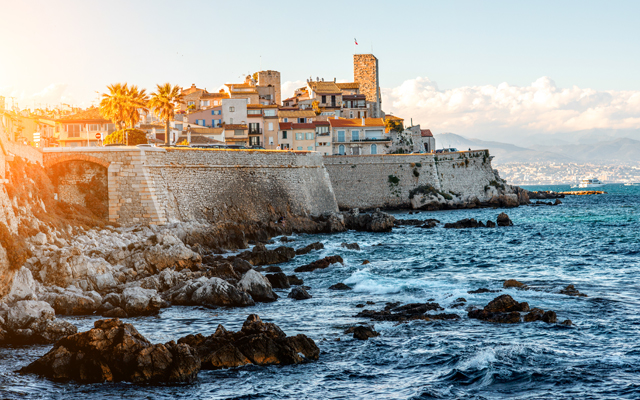
Trek through scenic village, Antibes, along the Mediterranean
After arriving in Nice, the fifth-largest French city well-known for its unique art and culture on the riviera, visitors looking to lap up all the lux and glamour can venture towards iconic beach towns nearby such as Saint Jean Cap Ferrat and Beaulieu-sur-Mer or to artsy Cannes in the opposite direction.
Travellers keen to up their quotient on the sightseeing ante can trek through scenic villages like Antibes, Eze, Villefranche-sur-Mer, Vence and Grasse instead.
Resort town, Antibes, overlooks luxury yachts moored at the Port Vauban marina. The medieval city of Eze sits atop a hill crop with a Mediterranean Sea vantage point.
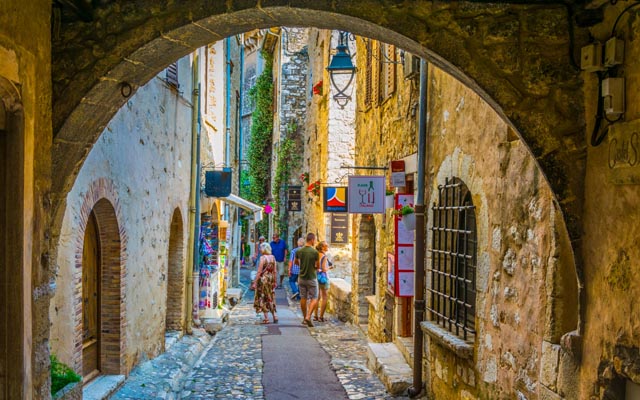
One of the most colourful and charming seaside towns in South France is Villefranche-sur-Mer, which citadelle and old city date from the 17th century, while Vence is a laidback, charming off-the-tourist-radar town. Its small neighbour, Saint Paul de Vence, is an artistic hotspot on the French Riviera, complete with contemporary art museums and galleries.
Curious travellers can go on a perfumery tour in Grasse, the world’s mecca of the perfume industry. Closer to Monaco, they can personalise their own bottled scent at Fragonard and Gallimard perfumeries branches in Eze-sur-Mer.
All these locations are easily accessible from Monaco, making day-trips a very convenient option.
For those who want to follow the road made famous by Grace Kelly and Cary Grant in Hitchcock’s To Catch a Thief, as they picnic while admiring the view over Monaco, they can access it from the village of La Turbie, France – here they can admire the 2,000-year-old tower, Trophy of Augustus, which once marked one of the frontiers of the Roman Empire.
Located nearby La Turbie is the Monte-Carlo Golf Club. Managed by the Monte-Carlo SBM group, the golf course sits 900 metres above sea level, boasting vantage views over the Mediterranean Sea, and the Alps in the background.
Italy’s attractions Within an hour of a scenic drive along the coast, travellers can also easily head east to border cities – Ventimiglia, Bordighera, and San Remo in Italy – from Monaco too.
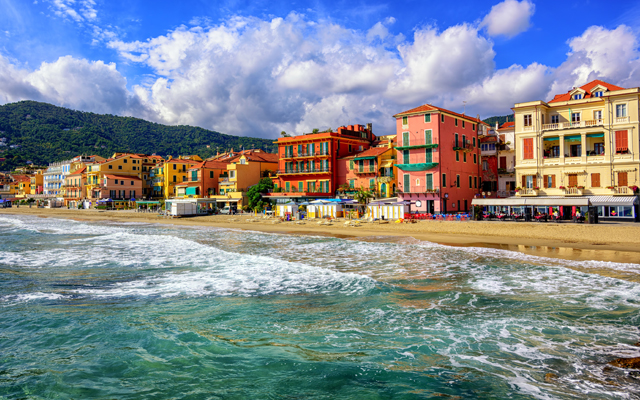
Tourists can cycle along the coast on the 26-km cycle path through the Liguria region to explore San Remo
Walk around Ventimiglia wet market to appreciate the seasonal produce, Italian cheese, cold cuts and wide selection of aquatic offerings.
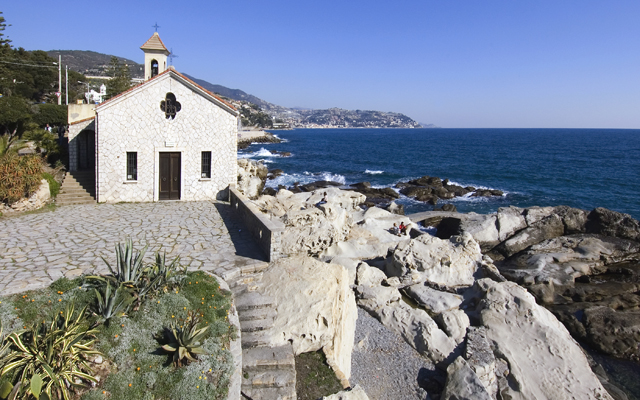
Drop by lovely Bordighera – stop at the giant ficus-trees-adorned parking space flanking the old village and check out this authentic gem with its original post office on the Church’s square.
While there, make a beeline for one of the several trattorie – well-loved by locals – serving scrumptious fare and explore Villa Garnier, historic home of architect Charles Garnier of Paris Opera House fame.
San Remo, is an old resort city, well-known as a tourist destination on the Italian Riviera for 150 years.
A host city of cultural events and a shopping hotspot, San Remo is one hour’s drive away from Monaco. Shopaholics can also stretch their dollars at its outlet store, The Mall, selling discounted past collections of Italian designers.
Badufle shared: “Experiential tourism, a type that we endeavour to promote in Monaco, is all about that. It is not about ticking boxes – it is about enriching oneself, discovering other cultures, being charmed by the ways of the locals, and taking away some of it back home.”
For those who are set on sightseeing
Sightseeing itinerary
1 of 4
Visit Monaco's well-loved attraction, Oceanographic Museum (Credit: Oceanographic Museum)
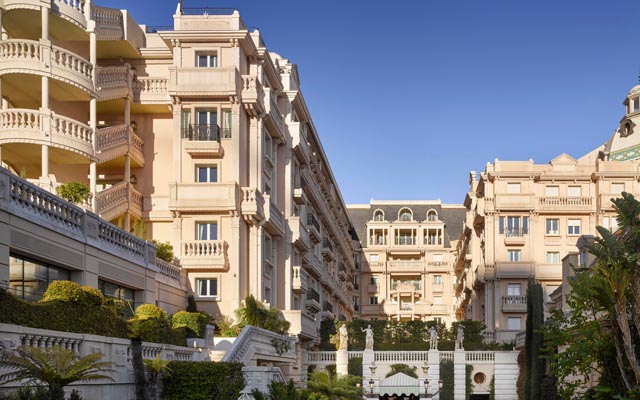
Stay at Hotel Metropole Monte-Carlo (Credit: W. Pryce)
Explore Nice on the French Riviera
Tour border city, Bordighera, Italy
Stay at boutique hotel, Hotel Metropole Monte-Carlo
Head to the Condamine Market to discover local produce
Shop at One Monte-Carlo and the Metropole Shopping Center
Tour Monaco-Ville; Oceanographic Museum, the Cathedral and the Prince’s Palace
Visit French Riviera – explore coastal villages, Villefranche-sur-Mer, Eze and Nice
Head to border cities Ventimiglia, Bordighera and San Remo in Italy
Visit Ventimiglia wet market and drop by Bordighera Park
At San Remo, rent a bike and go for ride along the coast on the 26-km cycle path through the Liguria region
For those who want to live the high life
High life itinerary
1 of 4
Try your luck at Casino de Monte-Carlo (Credit: Monte-Carlo SBM)
Visit Saint Paul de Vence, the artistic mecca on the French Riviera
Watch a performaance at Opera de Monte-Carlo (Credit: Monte-Carlo SBM)
Hop on a helicopter to check into Hotel de Paris Monte-Carlo
Hop on a helicopter and check into Hotel de Paris Monte-Carlo
Dine at three-Michelin-starred Le Louis XV – Alain Ducasse and visit the underground wine cellars
Visit Monte-Carlo Bay Hotel & Resort for massages and beauty rituals
Attend a show at Opera de Monte-Carlo and try your luck at Casino de Monte-Carlo
Explore French Riviera – focus on Antibes, Cannes and Saint Paul de Vence
Go on a perfumery tour in Grasse
Visit San Remo, Italy for its music festival and annual road cycling race
With the removal of Covid-19 red tapes, the Indonesian travel industry is going full swing to entice international travellers back to the country with new and attractive products.
A number of hotels and tour operators have developed personalised and localised experiences for smaller groups, and have chosen to scale up Indonesia’s biggest assets of nature, cultural and heritage values in new and innovative ways.
Four Seasons Resort Bali At Jimbaran Bay brings arak into its cocktails
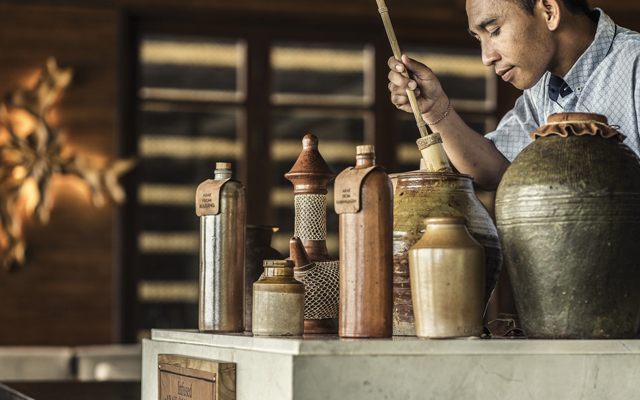
Four Seasons Resort Bali At Jimbaran Bay has taken a unique culinary approach to mixology by highlighting arak, Balinese rice wine, at its newly-opened Telu, an aromatic herb and cocktail garden. The standalone venue showcases Bali’s age-old traditions and natural resources.
Telu’s open-air design features 100 per cent repurposed and upcycled materials, and an Arak Cellar. Guests learn about the traditional uses and medicinal benefits of arak, and forage with head bartender Sufian Mahmoud in the garden to pick their favourite spices and herbs before getting behind the stove with him.
“It’s a journey back in time that unlocks another layer of Balinese culture, as well as a vision of the future through the lens of sustainable bartending,” said Nicolas Senes, food and beverage director at the hotel.
At Adiwana Resort Jembawan, Ubud, the Herb Library offers the contemporary healthy dining that features plant-based ingredients and responsibly-sourced fish and chicken.
Made Adiguna Kusuma, CEO of Jeevawasa, the holding company of Adiwana Hotels & Resorts, hopes that the plant-based concept will inspire both health-conscious guests as well as gourmands to appreciate rich and flavourful recipes that the Herb Library has to offer.
Alila Villas Uluwatu’s Journeys by Alila takes guests to nearby islands for a deeper destination experience. The four-hour Fly Me to Nusa Penida and Sky Ride to Nusa Lembongan present birds’ eye views of the natural attractions around the islands while the Sail me to Nusa Penida is a one-day luxury cruise inclusive of a butler, barbecue lunch, and activities like snorkelling, paddling or fishing.
Weddings in Bali are also given a creative spin, and this is one that satisfies sustainability needs. The Apurva Kempinski Bali has joined forces with like-minded suppliers to offer a Sustainable Wedding Package, which sees the use of recycled paper, wooden chairs and potted plants in venue decoration, as well as locally handmade crafts for wedding favours.
Creative stays extend beyond leisure island Bali. In big city Jakarta, The Hermitage, a Tribute Portfolio Hotel has curated a number of heritage, arts and sports programmes for guests. The Menteng Historic Tour, for instance, takes history buffs around the prestigious Menteng neighbourhood on foot. This used to be the residential area for upper-class Indo-Dutch in the early 1920s.
Butlers – known as guardians at The Hermitage, a Tribute Portfolio Hotel – also lead guided visits to galleries and art exhibitions.
Over in Surabaya, Aneka Kartika Tours and Travel Services has introduced Tour the Kampung, a four-hour walking tour where travellers stroll down small lanes and meet the locals residing in villages within the city. Travellers will experience the Arab quarter and explore a housing complex tucked behind a 150-year-old Confucian temple.
“Every spot has its own unique characteristics with ample opportunities to meet and chat with friendly locals and children to discover real hospitality,” said Adjie Wahjono, operations manager of Aneka Kartika Tours and Travel Services.
Guests can also choose to indulge in a culinary experience that features famous local dishes such as rawon beef black soup, sate kelopo coconut beef satay, and bebek goreng deep fried duck with sambal sauce. Guides will craft the route and dining spots according to the choice and dietary requirements of guests.