Veteran hotelier Christian Metzner is the new general manager of W Singapore – Sentosa Cove. He was previously general manager with W Kuala Lumpur, Malaysia.
With an extensive background in sales, marketing and revenue management, Metzner brings with him close to three decades of luxury hospitality experience and a fresh strategic vision for the property.
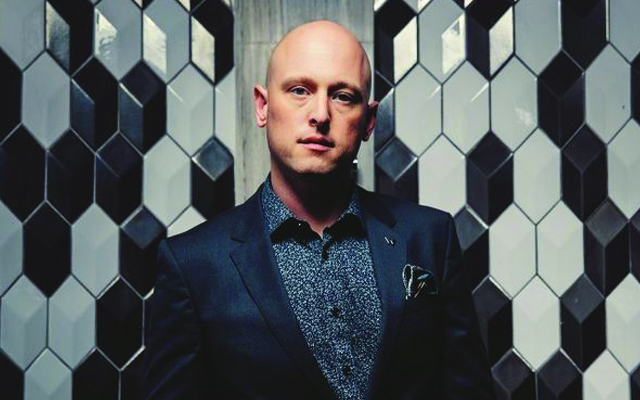
Hailing from Germany, Metzner’s career with Marriott International began in 1996 at the Arabella Sheraton Complex South Germany in Munich, and since then he has held numerous positions within the company.
Travellers with mobility impairment will now discover greater ease in planning their trip to Tropical North Queensland, now that an Accessibility Hub has been added to the Cairns & Great Barrier Reef destination website.
The Accessibility Hub lists experiences and accommodation that are accessible to all travellers.
Skyrail Rainforest Cableway is an accessible tourism experience (photo by Dane Cross, Spinal Life Australia)
Tourism Tropical North Queensland CEO Mark Olsen said the team had worked closely with Spinal Life Australia and Out There Travel Care to put together content showcasing accessible products, such as wheelchair-friendly beaches and rainforest boardwalks that are wheelchair-friendly.
“People needing to consider accessibility can now easily find accommodation options from specialised providers like Spinal Life’s Healthy Living Centre which has personal support workers, to traditional hotels with accessible rooms such as the Cairns Novotel Oasis Resort,” Olsen added.
Disabled Mission Beach journalist Imogen Kars has trialled a selection of accessible accommodation and tours, and has produced a series of blogs on travel options in Cairns, Palm Cove, the Cassowary Coast, Port Douglas and the Atherton Tablelands.
The launch of the Accessibility Hub coincided with a Making Tourism More Accessible Workshop at the Spinal Life Healthy Living Centre. The event was attended by operators keen on learning about opportunities in the accessible tourism market, accessing business case studies, and hearing from people with physical disabilities about what they are looking for in a destination
Senior advisor access and advocacy for Spinal Life Australia, Dane Cross, said the accessible tourism market represented a largely untapped opportunity for tourism operators.
‘It’s been great to work with Tourism Tropical North Queensland on this project – and in our view, this is the best accessibility information available for any region in Australia,” said Cross.
‘Often, tourism operators don’t know where to begin on their journey towards better accessibility – this workshop enables people to ask simple questions and find out more about where to begin. We’d love to help tourism operators understand how to be more accessible and to secure a larger part of this market.”
Olsen said accessible tourism had enormous potential and could be woven into many existing tourism offerings.
“Research by Tourism Australia has shown that accessible tourism can be a game changer for destinations that will assist with post-pandemic recovery by building industry resilience,” Olsen stated.
“Treating accessibility as a competitive advantage that improves customer service and enhances quality of life for all is the key to tapping into the ageing, but still adventurous, Baby Boomers who have the time and resources to travel.”
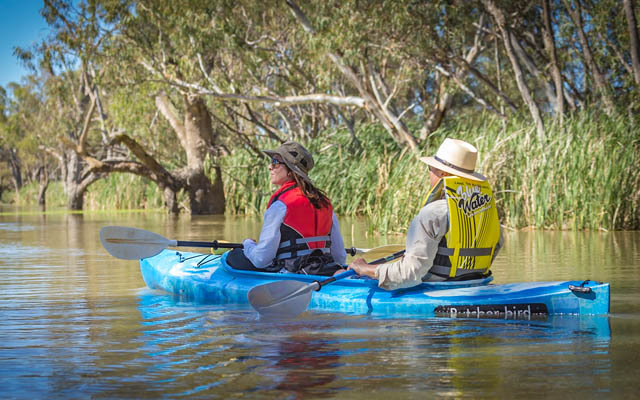
South Australia’s Murray River Trails has rolled out an immersive five-day/four-night Safari to River’s End, a tour that showcases the region’s Riverland all the way to the Coorong and Murray Mouth.
From the redgum and red cliff lined meandering Murray River to the spectacular white sands and dunes of the Coorong and the Murray Mouth, guests will learn the stories of these regions, their wildlife, their history, and their cultures.
The new Safari to River’s End is a showcase of wildlife, history and culture; photo by John Daw
Nature enthusiasts are rewarded with two Wetlands of International Importance integrated into the programme – The Riverland Ramsar Wetland and the Coorong and Lower Lakes Ramsar Wetland. These support rich and diverse wildlife including migratory waterbirds from the Northern Hemisphere.
Host Jamie Bishop has been key in the development of this tour and provides a wealth of local history based in the Little Scotland precinct of Goolwa. Teaming up with founder of Canoe the Coorong – Brenton Carle and his passionate guides, guests will spend a day exploring the Murray River mouth region including a special cooked fish lunch in the dunes. Local foods including Murray Cod, Coorong Mullet and Mulloway and local wines add to the authenticity of this tour.
After experiencing a steady growth in tourist arrivals from India in pre-Covid years, Visit Iceland is once again ready to enhance its visibility in the country.
To tap the burgeoning Indian outbound tourism market, Visit Iceland recently hosted a roadshow in Mumbai, as well as a media conference and networking evening in New Delhi.
Jonsson: 15,000 Indian tourists expected by the end of 2022
Thorleifur Thor Jonsson, senior area manager, Asia, CEE and Nordics, Visit Iceland said: “At present, we are working closely with major travel companies like Thomas Cook, Veena World and MakeMyTrip who have a presence pan India to promote Iceland as a tourist destination.
“We are looking to tap FITs and group travellers who are well travelled and are looking to explore a new niche destination. We also see a lot of opportunity in promoting Iceland as a MICE destination in India.”
Apart from reaching out to the Indian market through travel agents, the tourism board is creating awareness about its various tourism products and experiences through digital marketing and motion pictures.
Jonsson shared that they are in discussion with major production houses in India to promote Iceland for film shoots, and will offer a refund of 35 per cent of production cost for film and television shoots if certain criteria are met.
The criteria include the minimum production spend to be approximately US$2.66 million; creates at least 50 local jobs for Icelanders; and the production must last for at least 30 working days in Iceland.
In 2019, 19,852 Indians visited Iceland, which was a steady increase from 10,944 in 2017. However, these numbers came down drastically due to the pandemic breakout.
He said: “We expect to welcome 15,000 Indian tourists by the end of 2022 and are targeting 25,000 visitors from India in 2023.”
Apart from its already popular products like Northern Lights and glaciers, Visit Iceland is looking to promote its wellness experiences like spas and sighting of volcano eruptions in India.
Apart from Jonsson, participants at the roadshow included Arsaell Hardarson, regional manager, GSA Asia, Middle East & South America, Icelandair; Kristín Björnsdóttir and Erling Aspelund, owners, Iceland Encounter; and Bjarni Hrafn Ingólfsson, managing director, Terra Nova.
Takashi Hoshino is the new general manager of Hotel Nikko Bali Benoa Beach, bringing with him over two decades of experience in the hospitality industry.
He has rich experience in launching new hotels with Okura Nikko Hotels, having joined several pre-opening offices where he set up a sales channel and IT system for Room Division such as OTA, wholesaler, metasearch, PMS, and more.
Anjali Masih is the new director of human resources at Kuramathi Maldives. She brings over two decades of experience in several hospitality brands and owning companies in the United Arab Emirates.
Prior to joining Kuramathi, she was the director of human resources & training in The Chedi Al Bait, Sharjah.
In her new role, she will champion an inclusive culture of growth and create a sustainable workforce by emphasising team building, colleague development, succession planning and improving overall employee welfare.
Luxury travel appetite has never been as huge and meaningful as it is now, as people exit the pandemic lockdowns with an intention to lead a more “optimised and amplified” life, observes Serge Dive, CEO and founder of This Is Beyond, the company behind the annual Further East luxury travel tradeshow.
In this episode, Dive discusses how the growing desire for life-changing moments in travel as well as reconnection with loved ones is accelerating luxury travel recovery; the intense appeal for Asia, which has been able to retain its authenticity to satisfy current demand for meaningful travel; and the value of seclusion.
Dive also sheds light on how This Is Beyond has been able to build a community of luxury travel specialists and provide a platform for members to engage all year-round.
Mass affluent travellers are a growing market across the globe after two years of amassing more wealth and not being able to spend it in a way meaningful to them. They are classified as those who possess substantial savings, can afford to fly premium economy or business class, and are willing to spend more on travel experiences.
Although this has opened up a new market for the tourism industry, whether these individuals will revert to their regular spending habits, or move up the spectrum to become luxury travellers, remains a contending point.
Kiely: people will prioritise luxury travel and put money aside for it
Tom Kiely, president & CEO, West Hollywood Travel + Tourism Board, told TTG Asia at ILTM Asia-Pacific: “I think we’re going to see a fair amount of mass affluent travellers stay in the luxury travel market. The pandemic has taught us that we don’t know when we will get locked down again, so a lot of these people are spending money on travel.”
Kiely shared that West Hollywood has been positioned, even before the pandemic, as “new luxury”. He defines new luxury as travellers staying at a three-star hotel but paying more for personal experiences not easily obtainable, such as a VIP experience at Universal Studios, dining at a Michelin-star restaurant, or skydiving.
“There will also be those that never spent on luxury travel before the pandemic, and will now stay in that category because they love it so much. My neighbour is a nurse at a big hospital in Los Angeles, and last summer, I encouraged him to buy a business class ticket to Europe as prices were cheap then. When he came home, he thanked me and told me he’s never flying in economy again,” Kiely shared.
He added: “There will be a certain number of people that will get their first taste of luxury travel, and realise that that is what they want from now on. They will then prioritise that and put money aside for it.”
Another exhibitor, Switzerland Tourism’s director for South-east Asia, Batiste Pilet, agreed that there are those who have “tasted luxury travel, and will want to do it again”.
Similarly, he agreed with Kiely that unforgettable experiences are what these mass affluent travellers are looking for. “They will save up, and reward themselves with luxury travel for an anniversary or birthday,” Pilet said.
Queiroz: mass affluent travel is closely related to revenge travel
Meanwhile, Ines Queiroz, Visit Portgual’s tourism director, Japan and South Korea, opined that mass affluent travel is closely related to revenge travel.
“These travellers have some money and are not rich, but they are tired of being stuck in their own countries, and are willing to spend more. But I’m not sure if this behaviour will be repeated (in the long run),” she added.
Sherona Shng, regional vice president, operations Asia, and managing director at The Langham Hong Kong, believes that it is up to hotels, and the tourism industry at large, to retain this market.
“I personally believe that if we make every experience memorable, they will come back to us. For instance, these travellers might previously not have stayed in a luxury hotel, but once they do and they see the value in the additional money they are forking out for the high level of service and hassle-free travel, I think they will come back to us,” Shng elaborated.
She noted: “The value proposition is very important because value proposition is not necessarily always based on price – it is based on the experience.”
In order to jumpstart tourism recovery in the Philippines, Philippine tourism secretary Christina Garcia Frasco has emphasised the urgent need for the government to adapt to prevailing global health practices – and is backing the Inter-Agency Task Force for the Management of Emerging Infectious Diseases’s (IATF-EID) recommendation to make mask-wearing optional for outdoors.
The IATF-EID has recommended that mask-wearing outdoors is made voluntary across the country, while senior citizens and immunocompromised individuals are highly encouraged to continue wearing masks.
The removal of the outdoor mask mandate could help jumpstart tourism recovery in the Philippines
“With the recent improvement of the global tourism landscape as a result of immunisation, countries around the world have been instituting various measures such as the reopening of international borders, and relaxation of health and safety protocols and requirements, resulting in an immediate positive economic impact of these countries and faster recovery of their respective portfolios,” she said in a statement.
She noted that based on a comparative analysis of mask mandates, Covid-19 incidence, and tourist arrivals of the Top 5 ASEAN countries comprising Singapore, Thailand, Malaysia, Vietnam, and Indonesia, more liberal mask mandates did not appear to cause an uptick in Covid-19 cases.
She added that aside from ASEAN countries, the Philippines’ key markets in Asia and other parts of the world (Japan, South Korea and Hong Kong) have also started to lift mask mandates.
Citing the province of Cebu as a model in liberalising mask mandates since June 8, she stated that the province has maintained its risk classification at low levels.
Expressing optimism for the country’s tourism industry, Frasco said lifting the mask mandate “will give the Philippine Tourism Industry a better chance to regain its vibrant and booming operations”.
Hilton’s collection of luxury hotels and resorts across Asia-Pacific has resumed 100 per cent of operations, a progress facilitated by a strong headcount of talents across roles and ranks.
Nils-Arne Schroeder, vice president luxury and lifestyle, Asia-Pacific, who spearheads Hilton’s top-end brands, including Waldorf Astoria Hotels & Resorts, LXR Hotels & Resorts and Conrad Hotels & Resorts, said the group has been successful in retaining talents throughout the pandemic and in building back the necessary manpower to support the “swift return” in travel.
Hilton’s positive work culture has earned it staff loyalty and greater hiring ease
“The hospitality industry was hit very hard during Covid but a lot of our team members actually chose to stay on and continue to work for our luxury properties even in the toughest times. Just as heartening, during my recent travels across Asia-Pacific, I see that a majority of our team members have returned to our luxury hotels after taking a break or leaving to work somewhere else during the business disruption,” shared Schroeder.
Schroeder believes that Hilton’s nurturing corporate culture has a big part to play in the company’s ability to rebuild its manpower quickly.
“Recently Hilton was voted again as one of the best places in hospitality to work. Clearly, that has helped us to attract and retain great talents,” he said, adding that he is himself a loyal Hilton team member for over 20 years.
Hilton was named the top hospitality company to work for in Great Place to Work’s Best Workplaces in Asia for the sixth year running – and third in the top 100 companies across all industries in the multinational category.
The win comes off the back of a number of individual country accolades awarded by Great Place to Work this year, including rankings among the Best Workplaces in Australia, Greater China, the Philippines, and Sri Lanka as well as certifications as a Great Place to Work in six countries including Fiji, Malaysia, the Maldives, New Zealand, Papua New Guinea, and Thailand. In March this year, Hilton was also named the Best Workplace for Women in Greater China for the third consecutive year.
When asked what was the secret sauce for a great corporate culture, Schroeder pointed to an environment that facilitates career growth for team members, “as that encourages young talents to join and stay on”.
He said people desire respect on the job, learning opportunities, and the ability to see the purpose and value of the organisation they are working for, which can be conveyed through the organisation’s support for the community and environment.
He put particular emphasis on training, saying that it is “very important in retaining and motivating staff”.
He elaborated: “Throughout the pandemic we continued to bring in trainers specialising in guest experience and service to conduct courses online for our team members. Doing so also made sure our team members are able to service excellently as soon as travel returns. And now, as you can see, travel has returned so swiftly, beyond most expectations. And we are all ready to serve that wave of returning guests.”
Having team members who are ready to deliver top service as soon as business resumes is especially critical for luxury properties.
“There is no compromise for service experience and quality here. If we do not have enough team members, we will not run on full capacity. Fortunately, this is not the case now, and we are fully back in operation in Asia-Pacific,” he said, adding that casual workers are not a solution for Hilton’s luxury portfolio.

 Hailing from Germany, Metzner’s career with Marriott International began in 1996 at the Arabella Sheraton Complex South Germany in Munich, and since then he has held numerous positions within the company.


 He has rich experience in launching new hotels with Okura Nikko Hotels, having joined several pre-opening offices where he set up a sales channel and IT system for Room Division such as OTA, wholesaler, metasearch, PMS, and more.
 In her new role, she will champion an inclusive culture of growth and create a sustainable workforce by emphasising team building, colleague development, succession planning and improving overall employee welfare.




South Australia’s Murray River Trails has rolled out an immersive five-day/four-night Safari to River’s End, a tour that showcases the region’s Riverland all the way to the Coorong and Murray Mouth.
From the redgum and red cliff lined meandering Murray River to the spectacular white sands and dunes of the Coorong and the Murray Mouth, guests will learn the stories of these regions, their wildlife, their history, and their cultures.
Nature enthusiasts are rewarded with two Wetlands of International Importance integrated into the programme – The Riverland Ramsar Wetland and the Coorong and Lower Lakes Ramsar Wetland. These support rich and diverse wildlife including migratory waterbirds from the Northern Hemisphere.
Host Jamie Bishop has been key in the development of this tour and provides a wealth of local history based in the Little Scotland precinct of Goolwa. Teaming up with founder of Canoe the Coorong – Brenton Carle and his passionate guides, guests will spend a day exploring the Murray River mouth region including a special cooked fish lunch in the dunes. Local foods including Murray Cod, Coorong Mullet and Mulloway and local wines add to the authenticity of this tour.