Laguna Phuket integrated resort will host the 28th edition of Laguna Phuket Triathlon on November 20 following the event’s two-year pandemic disruption.
The race features a combination of a 1.8km swim, 50km bike and 12km run through the grounds of Laguna Phuket and local communities in the northern part of the Thai resort Island.
Participants will enjoy a unique swim taking in both the Andaman Sea and fresh water lagoon, while being treated to a challenging yet scenic bike course through the Phuket countryside and local villages, including a climax of overcoming the imposing Naithon hills. With a scenic run course that takes in the entire Laguna Phuket destination, the competition boasts a nice-sized race in a beautiful setting for seasoned racers or recreational groups alike.
Over the past 28 years, the race has attracted thousands of elite athletes as well as triathlon legends such as Imogen Simmonds, Belinda Granger and Jan Frodeno.
As tour agencies big and small bet on a sharp recovery in leisure travel bookings to drive profitability, one Singapore-based operator is shifting gear to cater to travellers who seek to give back or practise their faith while on holidays.
From life liberation daytrips which would see marine life put back into the sea to trips to Batam, Indonesia to offer the less-privileged villagers some daily necessities, Ik Chin Travel prides itself as being a progressive enterprise that’s adaptable to the evolving needs of their customers.
Kok: at times of need, people will lend a helping hand to support each other
The Covid-19 pandemic has given us an opportunity to stop and “see” compassion for what it is – a driver of change in an otherwise (mostly) apathetic world. According to Kok Jin Dao, general manager at Ik Chin Travel, there has been a mindset shift among customers before 2020 and now.
“There are so many stories of kindness during the pandemic; at times of need, people will lend a helping hand to support each other,” Kok said. “When we first started, we faced difficulties gathering groups due to the fear of the pandemic but as time passed, we saw more people signing up for our tours.”
Kok credits the travel agency’s change in business focus to the founders’ faith in Buddhism. Their arranged trips include annual visits to make offerings to the Buddhist Sangha community in Malacca. Ik Chin also organises Buddhism-related visits to India.
“One main difference about our travel agency is that there is some Buddhism influence in many of the tours we arrange,” he said. “For example, our life liberation tours will include a Buddhism ritual before the lives (marine or wild life) are released back to their communities.”
By arranging such tours to enable others to accumulate merits, Ik Chin’s founders and employees also hope to be able to contribute to the good deeds themselves.
“We realised that there are many people who want to do good but have not been able to find the opportunity to do so – by presenting our services to them, they’re willing to sign up for such trips to do good deeds with other like-minded tour members,” he explained.
Ik Chin Travel organises trips to provide daily necessities to the less-privileged; charity trip to Batam pictured
While these trips are unlikely to alter the lives of the less privileged overnight, Kok believes in the virtuous cycle of care and compassion. He shared: “As interpersonal relations become more transactional, we hope that through these trips, people are able to open their hearts more to care for and love others.”
Indeed, vacations need not be grand to be significant, and travellers can also find it rewarding to treat themselves to a trip of helping others. With more destinations and themes coming up at Ik Chin, travellers seeking to get a boost of endorphins from helping others will have more choices to select from.
Ik Chin has plans to organise tours to support the less fortunate students in Malacca and host visits to a village in Chiang Mai where customers will spend time interacting with and providing support for local villagers and students – from cooking them a meal to offering daily or school necessities.
“During a holiday, we are able to put away our troubles and enjoy, unwind and recharge. It is the perfect time to do good – not only can we do it more wholeheartedly, we can also share genuine joy and love with others,” Kok said.
The days are getting hectic for business hotels in Asia-Pacific, as easing travel restrictions globally pave the way for returning corporate gatherings.
This is a happy problem, representatives of hotel companies told TTGmice. Strong pent-up demand for face-to-face meetings is helping to lift business after two rather quiet years during the pandemic.
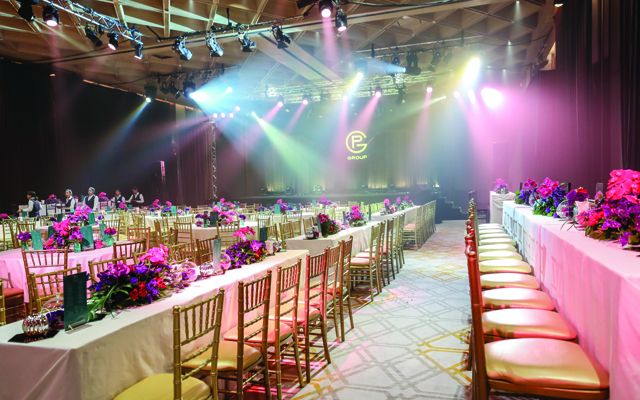
Most of the business events returning to Asia are regional gatherings; Hyatt Regency Bangkok Sukhumvit pictured
Antony Meguerdijian, vice president sales, South-east Asia, Japan & South Korea for Accor, revealed that there is “strong demand” for hotel venues in Bangkok, Malaysia and Singapore, and enquiries are most intense for Phuket in Thailand; Danang and Hanoi in Vietnam; and Seoul, Jeju and Busan in South Korea.
“We had anticipated strong pent-up demand and this has certainly been released as gathering restrictions were eased across the region,” he remarked.
For now, Meguerdijian said bookings are mainly from regional groups, although there are some from the Pacific and Europe. The strong rebound is expected to continue into 2023, with demand driven by insurance, multi-level marketing and fast moving consumer goods companies.
Hyatt Hotels Corporation, too, is seeing strong returning demand for its properties across South-east Asia this year, and the momentum is expected to sustain through 2023.
Frederick Wong, Hyatt’s vice-president for revenue, sales and distribution in Asia-Pacific, said business recovery is driven by “a really strong desire (among companies) to reconnect as local pandemic restrictions have eased in the region”.
The majority of business events taking place at Hyatt properties in South-east Asia are regional gatherings, but Wong said enquiries from Australia and South Korea are on the rise, with some interest coming in from Hong Kong too.
He added that business events from Europe into South-east Asia are beginning to surface, with most coming from companies in IT, multi-level marketing and pharmaceutical sectors.
At press time in August, Marriott Bonvoy’s portfolio of hotels in Singapore and Malaysia has recovered 25 per cent of 2019’s business, stated Marriott International’s area vice president for Malaysia, Singapore and Maldives, Rivero Delgado.
Sunway City Kuala Lumpur Hotels, whose properties were a favourite among event planners pre-pandemic, has also reported strong bookings since Malaysia reopened borders and permitted in-person gatherings from April 1. Sunway properties are welcoming a mix of government, corporate and association meetings, as well as religious events, with most international gatherings drawing attendees from Asia-Pacific.
Sunway City Kuala Lumpur Hotels, director of commercial, Jeanne Chan said forward bookings, as well as leads in the process of materialisation, are indicating greater prosperity in 2023 compared to 2022.
“We had anticipated strong pent-up demand and this has certainly been released as gathering restrictions were eased across the region.” Antony Meguerdijian Vice president sales, South-east Asia, Japan & South Korea, Accor
Meet differently
Returning events are showing some changes in the way they are planned and delivered, observed hotel representatives.
Accor’s Meguerdijian said Covid-19 fears still linger, prompting organisers of large events to either split the group across several hotels as a precaution, or stretch programmes across two to three weeks to facilitate staggered and smaller arrivals. Interestingly, while infection concerns remain, organisers are showing a preference for resort destinations – particularly luxury properties – with relaxed Covid-19 restrictions.
Organisers are also gravitating towards outdoor venues, drawn by ease of social distancing and supply of fresh air, as well as properties that can charm their guests with new and authentic destination experiences. In response to the latter, Accor has launched local discovery, wellness and dining experiences at its South-east Asian hotels and resorts.
For Hyatt’s Wong, business events are stretching out, from one to two nights previously to three to four nights as the current average. At times, some events even run beyond seven nights.
Meanwhile, event technology adoption continues to remain important, even as in-person meetings resume.
Wong explained that hybrid event formats enable attendance flexibility, especially when some level of travel restrictions remain and can hamper participation by overseas guests, such as those from China.
Maintaining its support for clients who require virtual and hybrid event arrangements, Hyatt partnered with Swapcard to introduce an end-to-end virtual and hybrid events platform. The technology gives organisers access to a bespoke programme that unifies on-site and virtual experiences, with Swapcard’s Artificial Intelligence helping to enhance remote attendees’ experience.
Accor too, is all hands on the event technology deck. It collaborated with Microsoft to introduce All Connect, a hybrid meetings concept supported by Microsoft Teams. With this, Accor hotels can provide an enriched hybrid experience for meetings, conferences and events, allowing organisers to combine physical in-hotel meetings with virtual interactions across multiple locations simultaneously.
For hotels keen to snag that new piece of event business, swift action is needed. Marriott’s Delgado said organisers are now expecting immediate responses to requests and enquiries, as short lead times become the norm.
“Planning events in the new normal has taught industry leaders to keep testing, thinking, assessing and learning, so they can be nimble and change what is not working,” he reflected.
Challenges abound
Like travel and tourism in general, business hotels are seeing strong demand restrained by limited air capacity and flight frequencies.
Meguerdijian said the impact on event bookings is significant.
“Many routes have not resumed and flight frequencies have been drastically reduced. This makes it very challenging to move large groups of people around the region,” he told TTGmice.
Technology, too, is a double-edged sword for the events industry. Companies that turned to online meetings during the travel disruption are choosing to retain some of that remote activity to reduce their cost of business travel. Meguerdijian warned that in the long term, this could dent business travel and hurt hotels.
Another hurdle is the manpower crunch that is prevalent across Asia. Wong said many hotels had lost staff through retrenchment during the government-imposed lockdowns and border closures.
While hotels have turned to hiring agencies to plug the labour shortage, Wong said the solution was not perfect, as agencies themselves are short on candidates.
Hyatt has implemented several initiatives to mitigate manpower challenges, including better use of clustered resources, insourcing functions previously supported by contractors while outsourcing other roles where it made sense, and training and recruiting multi-hire roles to work across different hotels and different functions.
“We have also introduced greater flexibility for employees in their hours, and ensured transparent communication with customers and clients about the challenges we face in this area,” said Wong. “Through efficiencies and continual recruitment, we have been able to address these factors and make the most of this travel resurgence.”
Global inflation is a worrying issue too, but Sunway’s Chan is optimistic that Malaysia’s favourable foreign exchange rate, complemented by the country’s diverse cultures, multilingual society and favourable weather year-round, will position the destination as a desirable option.
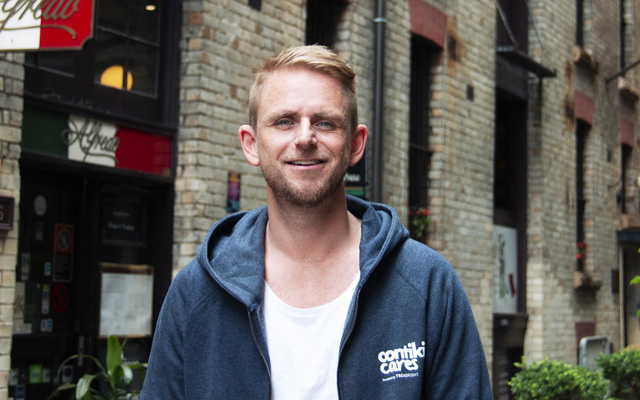
Contiki is positioned for a young travelling community but the brand is 60 years old this year. How does a grand old dame ensure she is always connected with the 18-35 year-olds?
Well, I’ve never heard of Contiki being called a grand old dame before (laughs). She is 60 years young.
We have quite a young team and that connects us to what the 18-35 year-olds are doing, what holidays they are searching for, and how they are consuming media.
We also ask travellers themselves (via) surveys. We get excellent feedback from our travellers through our trip managers, and research from internal and external sources.
We created the Contiki Travel Lounge on Facebook during the pandemic. The idea is for it to be a departure lounge, where people would wait before they could fly and trade travel stories.
All these information help our teams to shape our new itineraries as well as our sustainability journey.
Can you walk me down memory lane and tell me how travel motivations of this age group have changed through the decades?
That’s going to be quite a walk! Back in 1962, our founder John Anderson took a group of 16 around in a minibus, and they camped every night on their long journey which was advertised on a poster in a university bar.
The motivations remain the same – travellers want an unforgettable journey, see many destinations, discover culture, and they want to do this with like-minded people and make some lifelong connections.
What has changed is the demographic – our customers today are more educated. Social media did not exist back in the 60s. Now, travellers can get a lot of information on the destination through social media, and that sets their expectations high.
In previous generations, travellers want to go to all the marquee destinations, go for a drink at night, and do it all again the next few days. Trips had more of a party atmosphere.
Today, it is less about the party and more about getting under the skin of the destination. A lot of our travellers now do not drink alcohol and have different dietary requirements. They also have a genuine interest to get beyond the stereotypical marquee destinations. That means a desire to meet local people and eat in local restaurants, rather than just being on the tourist trail. But, at the same time, they still enjoy having their photo taken in front of the Eiffel Tower.
Contiki has learnt to be really good at getting that mix right between the big tourist sights and off-the-beaten-track experiences.
Another demographic change is the global mix of travellers. Contiki’s clientele was initially predominantly Aussies and Kiwis. Now, we are far more likely to see North Americans, Asians, Europeans and Africans together in a group.
How have your programmes evolved then?
On all our trips of more than seven days, which is the majority, we will fit in one Make Travel Matter experience. That is developed by our Contiki Cares initiative, which is part of The TreadRight Foundation, a non-profit organisation established by our parent company, The Travel Corporation (TTC). These experiences get our groups to interact with people, planet and wildlife.
We run an included walking tour in Berlin that is led by a Syrian refugee, so our travellers get to see the city sights but also hear a different narrative from someone who has come to live in Germany.
Our product has moved away from camping as an accommodation style, and onwards to hostels and hotels. We still do glamping in some locations, though. We have added new destinations, like Africa. One of our goals is to take people to more of the off-the-beaten-track, developing areas. We have also retired destinations that are no longer safe to go. We have created shorter itineraries, even weekend trips, and introduced rail journeys.
I guess the biggest change for us is making 100 per cent of our trips carbon-neutral this year.
How do travellers in your target age bracket regard responsible tourism, and how do their environmental expectations impact their travel choices with Contiki?
Going carbon neutral is just the latest in our long journey to sustainability. There is a lot of data about the growing importance of sustainability. Most Gen Zs choose brands based on their sustainability credentials. Going carbon neutral is therefore good for the environment and for the business.
It has been an interesting experience for us in shaping our carbon neutral messaging. I thought that Contiki going 100 per cent carbon neutral is a great message, and we should talk about it loud and proud. But the engagement we got has been muted. So, my conclusion is that people expect it and don’t need you to be banging on drums to talk about it. To the 18, 19-year-olds today, it is great that you are responsible, but they want to get back to the fundamentals of the product.
What else is being done to ensure that every trip is hugely meaningful with the smallest environment impact?
We have food waste reduction programmes in the two hotels that Contiki owns, and expect the same of our hotel and restaurant partners; we use renewable and clean energy for our offices and coaches; we have eliminated single-use plastics, etc.
Our journey to carbon neutrality requires a lot of work. First, we have to measure. Then, there is a load of initiatives around reducing emissions. After that, we offset what we cannot reduce and invest in carbon capture initiatives.
The Chateau Big Weekender is Contiki’s big anniversary party – why is this special?
The Château by Contiki is very special to us. It is one of only two properties that are exclusive to Contiki. We had a big round of renovation just before Covid, but it remained empty for two years. It will be the first time we are getting people into it with the party.
We will have good food and wine, great DJs spinning, pool parties, painting classes, yoga sessions, wine tasting, and more. Activities will be powered by 100 per cent renewable energy, and food will be sourced locally within France.
Most of the people attending the party will be paying travellers – the lifeblood of Contiki.
What’s next after this milestone?
Celebrations are spread across a 12-month calendar, starting in April.
For the rest of the year, we will continue to focus on returning to normal operations; bringing on destinations that we wanted to launch before the pandemic; building the next stage towards net zero; finding new customers, especially from Asia; and re-engaging travel agents, as many have left the industry during the pandemic.
Travel is experiencing accessibility challenges. How do these obstacles impact Contiki’s ability to engage the young adults and get them to explore the world?
It is a challenging year. On one hand you have immense pent-up travel demand, and on the other hand great difficulties to travel – or so says the mainstream media.
I have been travelling the last couple of months. It isn’t as straightforward as it used to be but it is doable.
In terms of airlift, there are pricing and capacity issues but our customers will fly complex routes if the price is right. Flight limitations have not impacted us much.
In terms of political impact on travel, I see the volatile global environment deterring some customers in our target age group. This demographic is very aware of world events. For example, bookings from our European and Australian guests for the US have not been quite the same as the past. The situation in Ukraine has also led demand for Europe to shift slightly towards the Western region and away from the East.
Here’s one thing that is important – the younger end of our target market has been badly impacted by the pandemic. They are starting their career, and are most affected by redundancies and furloughs. They are most impacted by virtual living. They are therefore desperate to travel but lack the money to do so. They will have to delay their travels, or stay closer to home.
Despite these challenges, we are having a fairly good year.
With new Covid-19 infections falling to an all-time low over the last two months, the South Korean government has fully lifted outdoor mask mandates today.
Mask-wearing in outdoor public spaces is no longer required in South Korea
Prior to this, mask-wearing was still required at outdoor gatherings involving 50 or more people.
According to news reports, the government has expressed intentions to progressively ease low-risk restrictions, subject to the guidance of experts.
For now, the country’s mask mandate will remain for indoor environment, due to possible risks of seasonal influenza and other infectious diseases, said officials.
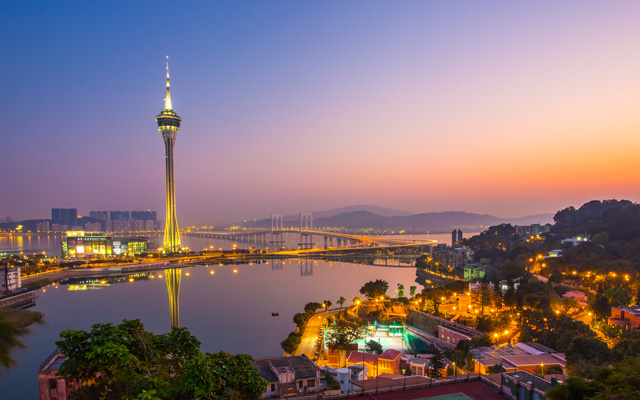
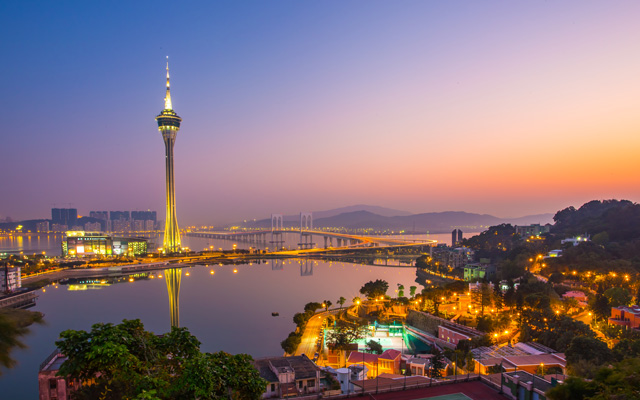
China may soon resume e-visas to allow individual Chinese residents to visit Macau and permit the sale of package tours to Macau, announced Macau’s chief executive, Ho Iat Seng, on September 24.
Ho told reporters that preparation would take at least a month, so the resumption of e-visas and package tours could be expected in late October or early November.
China will resume e-visas and packaged tours for Chinese residents to Macau
For a start, the package tours would be accessible to residents from Guangdong, Zhejiang, Jiangsu and Fujian provinces, and Shanghai. These markets represented almost 60 per cent of mainland visits to Macau in 2019.
The reopening scheme is expected to bring some 40,000 daily visitors to Macau on average.
Currently, Chinese tourists to Macau have to complete a week-long approval process.
Travellers from Hong Kong and overseas will continue to face a seven-day quarantine at a designated hotel, plus an additional three days of health monitoring.
Tourism Malaysia’s arts and culture ambassador and renowned chef Ismail Ahmad is leading a series of culinary presentations through Europe as part of the country’s To Know Malaysia is To Love Malaysia campaign.
It is in line with the Ministry of Tourism, Arts and Culture and its agency, Tourism Malaysia’s efforts to promote Malaysia via its diverse gastronomy.
The campaign touched down on Serbia from September 18 to 25, sharing Malaysia’s arts, culture and culinary with the public. It will continue to Bulgaria and Germany.
The presentations showcase authentic favourites such as sate, nasi lemak, nasi ayam, mee goreng and teh tarik.
ASEAN has issued a statement ahead of World Tourism Day to emphasise the region’s tourism recovery, with hotel searches, occupancy rates and travel confidence rising.
According to ASEAN, tourism growth is already “on the incline” in 4Q2022. Quoting UNWTO’s Tourism Recovery Tracker, ASEAN also pointed to a 28 per cent year-to-date increase in South-east Asia hotel searches as well as a 57 per cent increase in occupancy rates.
The World’s 50 Most Beautiful Countries by Forbes finds Wayag Island, Raja Ampat in Indonesia the most beautiful place on earth
Overall travel sentiment has also risen by an impressive 40 per cent year-to-date, and it is expected to increase as more Covid-19 vaccines become available across the globe and variants of Covid-19 become milder. ASEAN noted that this progression has led to easing of the regions’ pandemic-related border restrictions.
ASEAN said “the pandemic should serve as an impetus and opportunity for the sector to…build forward better – by designing and building a more sustainable tourism sector that would underpin its resilience, which should no longer be taken for granted”.
“The vision is for tourism in ASEAN to emerge more sustainable and resilient following the crisis induced by Covid-19, with more focus on environmental conservation and climate friendly policies, as well as on the critical socio-cultural impacts of the tourism sector in the region,” noted ASEAN in its statement.
The association also spotlights the region’s tourism tagline, A Destination for Every Dream, as it recalls South-east Asia’s blend of “perfect experiences”.
It said: “No other tourism region offers a unified destination so close in the distance and rich in culture, historical sites, varying cuisines, natural landscapes, ecotourism, modern metropolises, and adventure activities.”
Five of the ASEAN member states were listed in Forbes’s recent article, The World’s 50 Most Beautiful Countries, based on their inherent natural beauty and the availability of nature-based activities for guests and natives.
The article listed Indonesia first out of 50 destinations, and Raja Ampat Island in particular as the most beautiful place on earth.
The Philippines ranked 17th on the list; Malaysia at 24th; Thailand at 38th; and Myanmar at 41st.
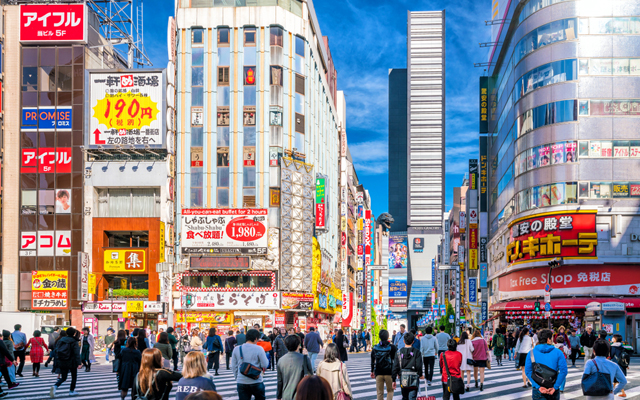
Japan will resume visa-free entry for individual travellers from October 11, announced prime minister Fumio Kishida yesterday in New York. This brings the country’s border rules close to pre-pandemic norms for the first time after nearly two and a half years of strict Covid-19 restrictions.
Japan’s border rules are returning to pre-pandemic norms
Kishida was in New York for the United Nations General Assembly when he made the long-awaited announcement.
In addition, Japan will remove the cap on the number of people entering the country, which is currently capped at 50,000.
The government also hopes to boost the economy through inbound tourism by launching a nationwide travel discount programme starting from October 11.
Kishida hopes that people will utilise the programme to “support the travel, entertainment and other industries that have been struggling during the coronavirus pandemic”.
To date, there are no updates made on vaccine or testing requirements.


 Participants will enjoy a unique swim taking in both the Andaman Sea and fresh water lagoon, while being treated to a challenging yet scenic bike course through the Phuket countryside and local villages, including a climax of overcoming the imposing Naithon hills. With a scenic run course that takes in the entire Laguna Phuket destination, the competition boasts a nice-sized race in a beautiful setting for seasoned racers or recreational groups alike.


 She is currently the group chief customer officer at Qantas. Her role at the national carrier will be replaced by Markus Svensson.


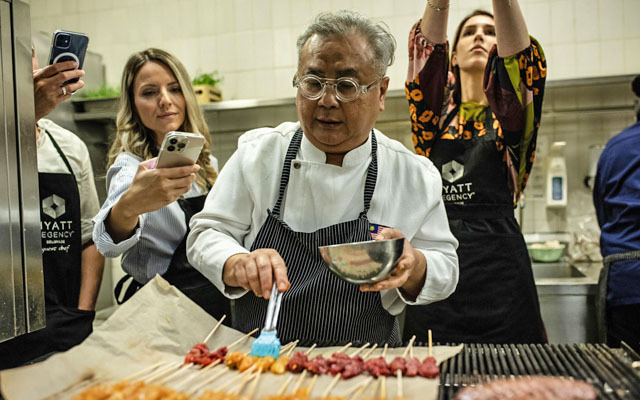
 Tourism Malaysia’s arts and culture ambassador and renowned chef Ismail Ahmad is leading a series of culinary presentations through Europe as part of the country’s To Know Malaysia is To Love Malaysia campaign.




With new Covid-19 infections falling to an all-time low over the last two months, the South Korean government has fully lifted outdoor mask mandates today.
Prior to this, mask-wearing was still required at outdoor gatherings involving 50 or more people.
According to news reports, the government has expressed intentions to progressively ease low-risk restrictions, subject to the guidance of experts.
For now, the country’s mask mandate will remain for indoor environment, due to possible risks of seasonal influenza and other infectious diseases, said officials.