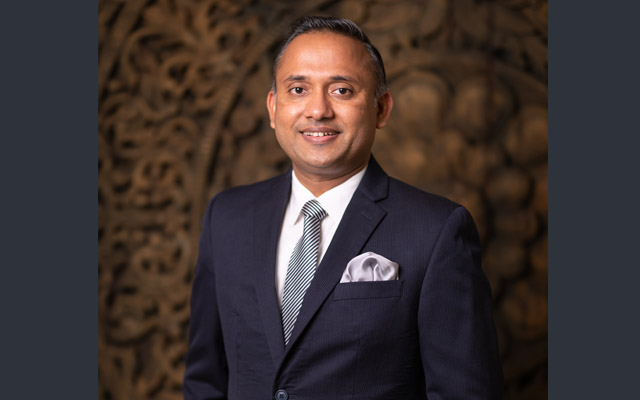
The St Regis Goa Resort has appointed Satish Kumar as general manager.
Kumar was previously general manager at The Leela Goa and Conrad Pune.
He has over two decades of experience in luxury hospitality, having led hotel operations with The Oberoi Hotels & Resorts, The Taj Group of Hotels, and overseas properties like The Marriott Marquis Doha, The Westin & Le Méridien City Centre Bahrain, and JW Marriott Jakarta.
Making responsible travel choices is getting easier, now that many leading tourism suppliers are providing prominent labels that identify sustainable options.
Back in November 2021, Booking.com debuted what it said was a first-of-its-kind Travel Sustainable badge to help travellers identify properties that have implemented a combination of sustainable practices that meet the requisite impact threshold for their destination.
Amilla Maldives Resort, located in the Baa Atoll UNESCO Biosphere Reserve, has 31 ongoing sustainability projects
A study by the OTA found that 81 per cent of global travellers wanted to stay in a sustainable accommodation when they resumed their travel in 2022, while 73 per cent would more likely choose a specific accommodation if they knew it was implementing sustainable practices. The Travel Sustainable badge serves to support that desire, and a filter on Booking.com’s search function helps travellers to more easily identify responsible options.
Sharing that foresight is Small Luxury Hotels of the World (SLH), whose Considerate Collection of responsible and sustainable hotels has just celebrated its first anniversary. When it launched in October 2021, the Considerate Collection had 26 hotels in 16 countries. At press time in November, the network has expanded to 43 qualified properties.
Mark Wong, senior vice president, Asia Pacific of SLH, said the creation of the Considerate Collection has allowed the company to identify many attractive and responsible hotels that “were not on our radar”.
He noted that there are many responsible hotels around the world – particularly in Thailand, Indonesia and the Maldives here in Asia – and SLH can use its global reach to bring such properties to the attention of many conscious travellers and travel trade buyers worldwide.
The Considerate Collection is set for continued growth, evident in the number of hotels approaching SLH at an early stage of development for suggestions on incorporating sustainable features and experiences into their property, to ensure they qualify for induction into the programme once they launch.
Getting the green star
A stringent and scientific approach has been employed by these travel companies to determine who gets the coveted sustainable label.
For Booking.com’s Travel Sustainable badge, qualifying attributes are determined and validated by the Travalyst Independent Advisory Group, and the OTA takes a step further by working with other industry experts to identify a set of the most impactful practices for a property to consider in five key areas: waste, energy and greenhouse gases, water, supporting local communities, and protecting nature.
Keemala has a strict anti-animal exploitation policy while its guests activities foster a strong sense of community spirit among guests
This foundational framework is further broken down into 32 specific sustainability measures or practices that properties can implement, including everything from eliminating single-use plastic toiletries or switching to LED light fixtures to running on 100 per cent renewable energy sources or investing a certain percentage of profits into local community and conservation projects.
For SLH’s Considerate Collection, properties looking to be inducted must do more than just end their reliance on single-use plastics. SLH partners reputable organisations like Greenview and Global Sustainable Tourism Council as well as subject experts and travel agents specialising in this field to provide it with guidance and ensure SLH is not “just greenwashing our approach”, Wong told TTG Asia.
All Considerate Collection hotels undergo strict assessment across three levels – Environmentally Conscious, Cultural Custodians, and Community Minded.
“Our members have to take these pillars into their operational consideration to qualify and ensure that these are achieved both behind the scenes and in guest-facing experiences,” shared Wong.
For instance, Amilla Maldives Resort, one of the newly-inducted Considerate Collection properties, boasts 31 ongoing sustainability projects since its debut three years ago in the Baa Atoll UNESCO Biosphere Reserve. One of its projects utilises 2,500 coconut trees on the island to produce coconut oil, vinegar, milk and cream, as well as turn the resulting waste into nutritious coco peat for its gardens and crafting needs.
The property continually comes up with creative ways to celebrate island culture, from founding the country’s first and only Maldives Cultural Week in 2021 which promotes local musical, artistic and fashion talents, to holding weekly Maldivian dinners and cooking classes for guests to get an authentic taste of Baa Atoll and beyond.
It also takes pride in operating with a team made up mostly of Maldivians, many of whom hold management positions, as well as sourcing from local producers and engaging local vendors.
Low impact experiences
Contiki Tours, which runs 350 trips across six continents, is contributing to the movement too, by putting up programmes that enable conscious travellers to explore guilt-free and with minimal carbon footprint.
It has made 100 per of its trips carbon-neutral this year. It is a momentous decision, but also just one of the many milestones in the company’s “long journey to sustainability”, said global CEO Adam Armstrong.
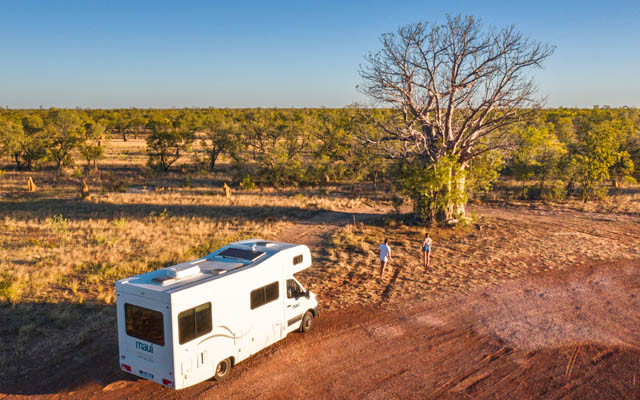
All Contiki tours are carbon neutral now
“Our journey to carbon neutrality requires a lot of work. First, we have to measure, and that’s a task in itself. For every trip we have to work out how much carbon we are emitting through transport, accommodation, dining and experiences. Then, there is a load of initiatives around reducing emissions and getting third parties to work with us. After that, we offset what we cannot reduce and invest in carbon capture initiatives,” detailed Armstrong.
All initiatives are included in the ticket and there is no opt-in required. Contiki has chosen to keep its carbon neutrality offering simple and accessible, as the young generation views such features as a basic consumer right, reflected Armstrong.
SLH’s Wong said spotlighting responsible travel options is now basic business and no longer just a post-lockdown travel trend.
“It won’t go away any time soon and will become a requirement among conscious travellers. In fact, our corporate RFPs now come with a request for our hotels to submit details on their sustainability policy and programmes,” he said.
Contiki’s Armstrong agrees, saying that data points to the growing importance of sustainable travel.
“Most Gen Zs prioritise sustainability and choose brands based on their sustainability credentials. They avoid brands with poor sustainability credentials. Going carbon neutral is therefore good for the environment and for the business,” he said.
Conversations at trade events for our industry have been gravitating most towards three areas – digitalisation, manpower pains, and sustainability. Naturally, these three topics were top of my mind when it came to planning the theme for our year-end special issue.
It is sustainability that I chose to eventually build our content on because the topic is divisive. There remain opinions that the travel and tourism industry isn’t as responsible as it claims to be; that travel buyers actually still care more about pricing and value than their emissions, and consumer intention studies showing strong desires for responsible travel are skewed by response bias.
Despite these dampers, it is clear that our industry is shifting towards more responsible actions. Travel and tourism suppliers are making responsible travel options more visible, to serve conscious travellers as well as to educate fence sitters about better options. They are scrutinising their internal processes as well as that of their partners to ensure goals are aligned.
They are broadening their sustainability view to consider more than just energy usage and waste reduction; they are paying attention to matters like community support and development, gender parity, and culture preservation.
At a higher level, governments are making clear their sustainability plans and establishing nation-wide roadmaps to get both the public and private sectors moving in the same direction. Such roadmaps will guide tourism developments too, benefiting the society and the environment.
The accusation that the very act of travel is detrimental to the environment remains loud. Yet, putting an end to travel is an extreme solution. The disruption of global travel for more than two years lays bare the important contribution it brings to economic and social activities.
Travel must continue, it must be done responsibly, and it is already happening.
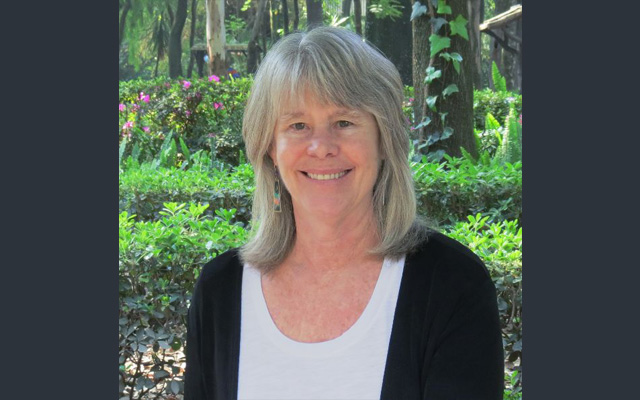
The Pacific Asia Travel Association (PATA) has appointed Megan Epler Wood as its special advisor on sustainable tourism development for destinations, business, and civil society.
Wood’s knowledge and expertise will be invaluable to driving progress towards a more resilient and sustainable Asia-Pacific travel ecosystem. She has dedicated over 30 years towards the creation of professional guidelines, tools, policies, and educational resources focusing on sustainable tourism development. In 1990, she founded the first sustainable tourism NGO, The International Ecotourism Society.
She is currently the managing director of the Sustainable Tourism Asset Management Program (STAMP) at Cornell University’s Center for Sustainable Global Enterprise and the SC Johnson College of Business, a role she has held since 2017.
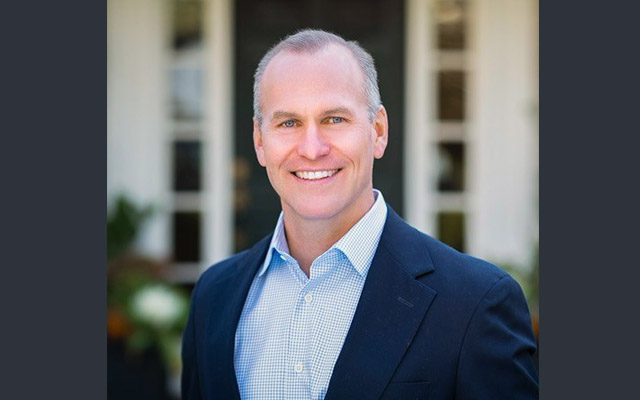
Tripadvisor has appointed Mike Noonan as chief financial officer and senior vice president, effective October 31.
He succeeds the current chief financial officer, Ernst Teunissen, who is entering retirement.
Noonan has a deep knowledge of the travel industry, and brings a dynamic set of experiences across consumer brands and digital business models. His background includes over 30 years of experience in various corporate finance and capital markets roles.
He joins Tripadvisor from Noom, a consumer-focused digital health company, where he served as chief financial officer since October 2020.
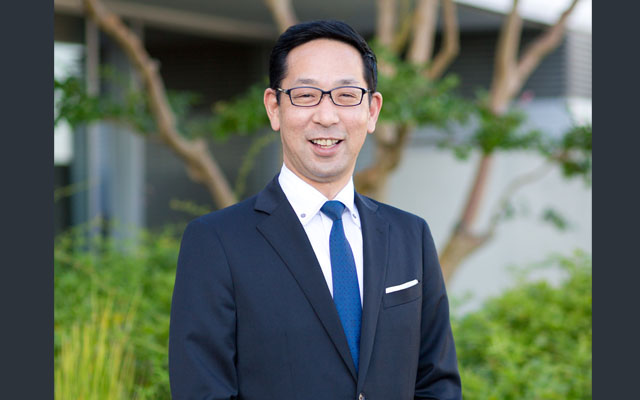
Centara Hotels & Resorts has appointed Shigeki Nakagawa as the opening general manager for Centara Grand Hotel Osaka, which will open in July 2023.
He brings with him over 20 years of hospitality experience, having first started his career in 1999 as assistant F&B manager at Hilton Osaka. He then move to St Regis Osaka as director of F&B in 2010, before taking his first general manager assignment at Moxy Osaka.
Before joining Centara, he was executive assistant manager at ANA Crowne Plaza Hotel in Kobe.
What was your first taste of exhibitions?
I was in high school when my mother joined an exhibitions organiser and I used to go with her to exhibitions, most of them for tourism.
How did you end up being in this business?
My uncle Sudirman Zakaria, founder of the Adhouse Indonesia Cipta, asked me to join the growing company in 1996. With a degree in information management and no work experience in exhibitions, I had to learn from scratch.
However, the timing was perfect. Indonesia’s economy was booming then, so was the exhibition industry. Property and furniture exhibitions were particularly popular. We held four exhibitions annually, and each time sellers’ interest surpassed capacity.
Was that how you discovered your calling?
Not really. It was actually overcoming the challenges of the 1997 economic crisis and Indonesia’s political upheaval in 1998 that led me to discover my passion for this industry.
The economic downfall impacted all sectors severely, and for four years we could not hold any exhibition. When we finally restarted in 2002, it was not easy. We offered very special rates, free space and shared revenue to get the exhibitions going again. This strategy worked and many of our clients became our loyal customers.
It is so rewarding to see the satisfaction of our clients and customers.
What do you dream of doing next?
I am thinking of going into music promotion (where I would bring) international musical performances here. However, it is a business that I will need to (study carefully).
Tell us one thing that people do not know about you
My long-time dream was to become a pilot. I first enrolled in flying school when I was 30, but failed to take the test because I was sick. I tried again five years later, but failed to fulfil the physical requirements..
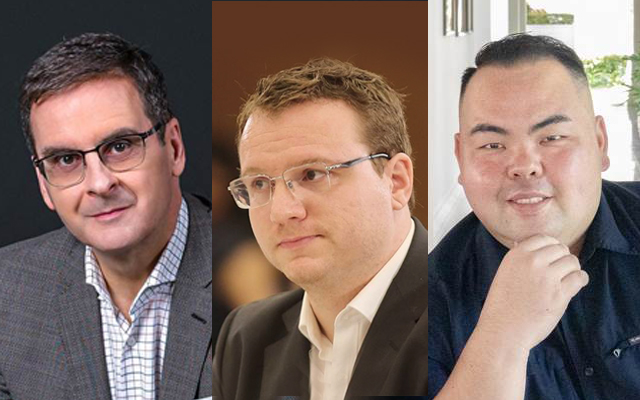
The Anam Group has appointed Laurent Myter as group general manager to lead and oversee the company’s growing number of properties.
From left: Laurent Myter, Martin Koerner and Ye Chang Sheng
Myter has almost three decades’ experience managing luxury hotels and resorts, and joins the group after working at YTL Hotels for 26 years. He has also been an executive director and the president of Small Luxury Hotels of the World’s International Advisory Board of Hoteliers for three years and two years respectively.
Martin Koerner is the group commercial director and returns to the Anam Group after previously working for about four years as the group’s director of sales, marketing and distribution.
Ye Chang Sheng has been promoted to resort manager of the group’s second property, Anam Mui Ne after having worked for the group’s first resort Anam Cam Ranh since its 2017 debut.
Radisson Hotel Group has appointed Lachlan Hoswell as managing director, Australasia.
With over 20 years of hospitality experience, Hoswell will be supporting his team and driving the growth of the group’s portfolio across major towns, cities and upcoming destinations across Australia and New Zealand. He will also lead operations and be responsible for all strategic initiatives in the region, working closely with key business partners to strengthen Radisson Hotel Group’s branding in-market.
Prior to joining the group, Hoswell held the position of company director, general counsel and commercial officer of Minor Hotels Australia and New Zealand.
Monaco’s main markets may currently be North America and Europe due to the proximity, but that does not stop the principality in looking towards Asia Pacific with keen interest and concrete plans to further develop the inbound business events sector.
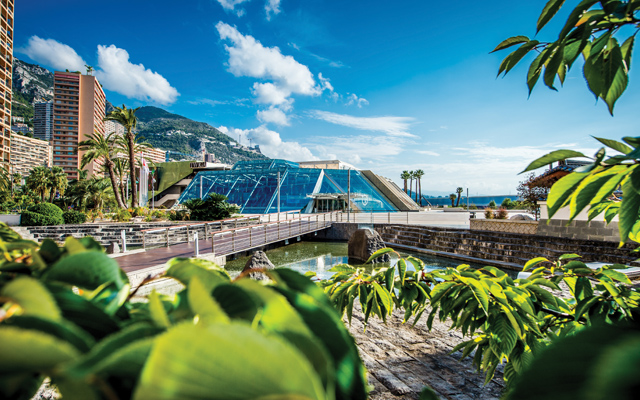
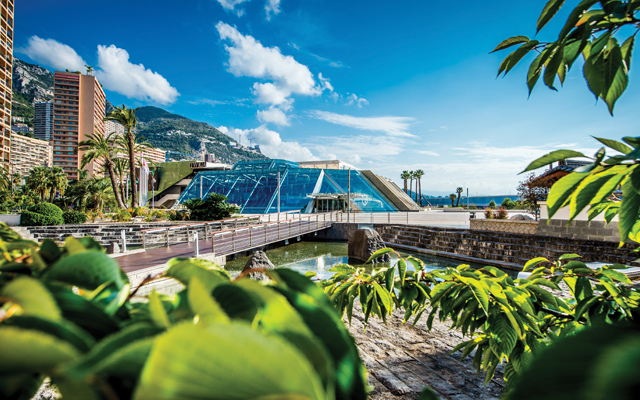
The Grimaldi Forum Monaco is the largest convention centre in the French Riviera
Christine Barrabino, head of Monaco Convention Bureau, told TTGmice: “The Asia-Pacific region is an important market for Monaco, particularly for incentives. Main sectors that contribute to incentives programmes from the region are automotive, insurance, banking, electronics, and MLM companies.
“Many countries in South-east Asia are represented, such as Singapore, Malaysia, Indonesia and Thailand. Thanks to our representative based in Singapore, we have been increasing our market share in these markets, and look forward to more business events to come. We also hope that China will follow soon.”
To this tune, the Monaco Convention Bureau launched a campaign called ReEvent in 2021, which revolves around six themes – safety, medical, green and sustainability, mobility and connectivity, value, and service. The campaign is a rallying cry and invitation to industry professionals to organise events again in Monaco.
Benoit Badufle, the Singapore-based regional director of the promotion bureau of the Principality of Monaco, told TTGmice: “We are preparing for a very ambitious multi-market fam trip for the MICE segment for end 2022, in partnership with an airline and a major tour operator active in the region.
“We have also started to reconnect in-person with key travel partners in the Asia-Pacific region, and will participate in several major tradeshows such as ILTM Asia, ITB Asia, and IT&CM Asia.”
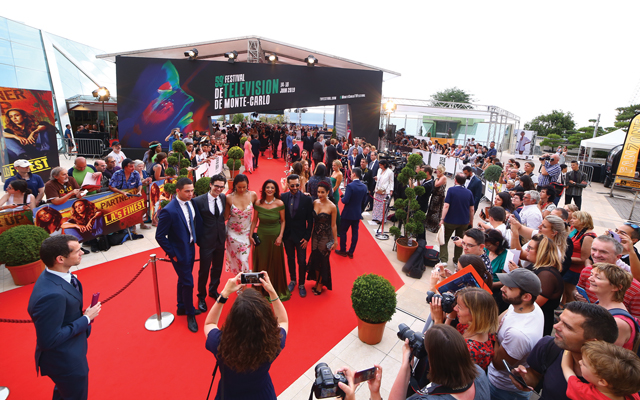
A red-carpet event organised by Monaco Mediax Events at the Grimaldi Forum
Aside from the software, Monaco’s events hardware is also being expanded.
For example, a new 60,000m2 district was carved out in between the Hôtel Hermitage Monte-Carlo and Place du Casino. Named One Monte-Carlo, a reference to its prime address, it includes a new 1,445m2 conference centre. The largest space is the 301m2 plenary room – an identical reproduction of the legendary Salle des Arts in the former Palais des Beaux-Arts – which can host up to 300 people. There is also a 154m2 amphitheatre with 80 seats.
This new conference centre doubles the space dedicated to business tourism around the Casino square, previously made up of Hotel de Paris, Monte-Carlo and Hotel Hermitage.
These recent additions build onto Monaco’s existing range of extensive meeting facilities comprising hotels like the Le Meridien Beach Plaza Hotel, Fairmont Monte-Carlo, Novotel Monte-Carlo, as well as unique venues like the Oceanographic Museum of Monaco.
Meanwhile, the Grimaldi Forum, Monaco’s flagship convention and cultural centre, is currently undergoing an expansion from 35,000m2 to 41,000m2.
Communications director of the Grimaldi Forum Monaco, Dany Rubrecht, posits that with this expansion, the venue will be “more attractive than ever” as it can host “larger events”, helping to build on Monaco’s appeal.
The new spaces include the 1,031m2 Galerie Diaghilev that can accommodate around 40 exhibition stands; the Carré and Salles du Patio which can be divided into eight meeting rooms; and the 3,980m2 Hall Pinède that can hold 1,650 pax for a sit-down dinner.
In order to take advantage Monaco’s 300 days of sunshine per year, 2,000m2 of outdoor space will also be created. These include the 100m2 Indigo terrace; the 585m2 Ravel terrace with a view of the open sea; and the 610m2 Parvis Émeraude, where the extension’s independent entrance will be located.
This massive undertaking sits within Mareterra, Monaco’s newest district currently under construction.
The six-hectare eco-district will offer housing, facilities, an entertainment harbour with pedestrian quays, a park, and a shaded coastal promenade. The eco-district will be powered by 1,500 solar modules that were installed on the Grimaldi Forum’s roof in 2019.
And though other international tradeshows and exhibitions have picked up, Rubrecht said: “We are fully open to Asian markets, but we don’t have recurring clients from this region yet. We once worked with a major IT company from South Korea, and hope to work with them again in the near future.”
Pierre Oudine of Raising Stones Monaco, has set his sights on the Asian market, stating that it has “great potential”.
Oudine elaborated: “Asia remains a focal point. We have just rehired some new collaborators, and we are investing again. In terms of development, Asia will once again become a priority next year.
But first, Oudine shared that DMCs like themselves have to “ride on the current wave of American, French, English and German markets” to rebuild their cash flow. The supply chain also has to be rebuilt, for “many operators have disappeared”.
Overall, Monaco’s image has not been dampened by the pandemic, as the destination handled the Covid situation well and only experienced one lockdown from March to July 2020.
For 2022, Rubrecht said that the year “got off to a good start”, as Grimaldi’s calendar is filled with more than 50 business events that will take place by end-2022.
“Monaco remains a unique destination for MICE. Our know-how, balanced with Monaco’s assets, gives us a real advantage,” opined Rubrecht.

 He has over two decades of experience in luxury hospitality, having led hotel operations with The Oberoi Hotels & Resorts, The Taj Group of Hotels, and overseas properties like The Marriott Marquis Doha, The Westin & Le Méridien City Centre Bahrain, and JW Marriott Jakarta.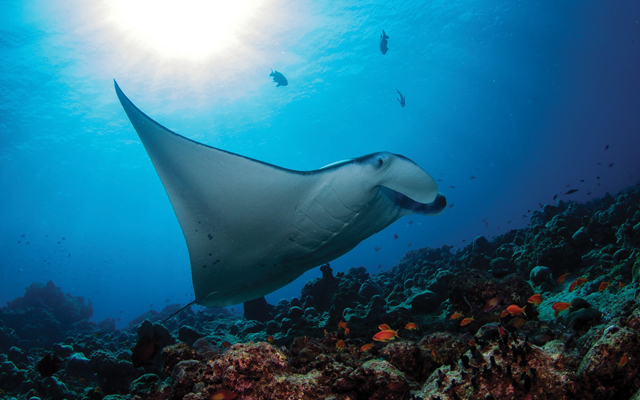



 She is currently the managing director of the Sustainable Tourism Asset Management Program (STAMP) at Cornell University’s Center for Sustainable Global Enterprise and the SC Johnson College of Business, a role she has held since 2017.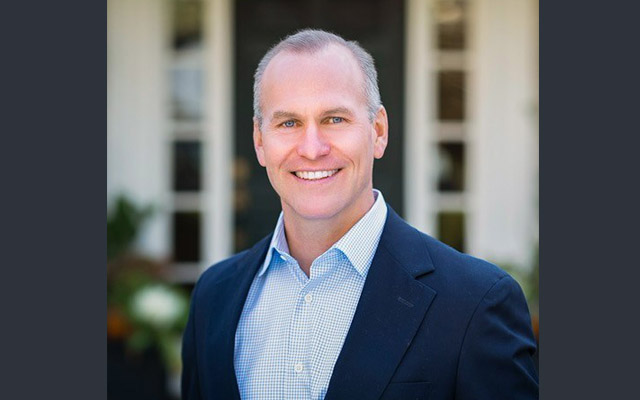
 Noonan has a deep knowledge of the travel industry, and brings a dynamic set of experiences across consumer brands and digital business models. His background includes over 30 years of experience in various corporate finance and capital markets roles.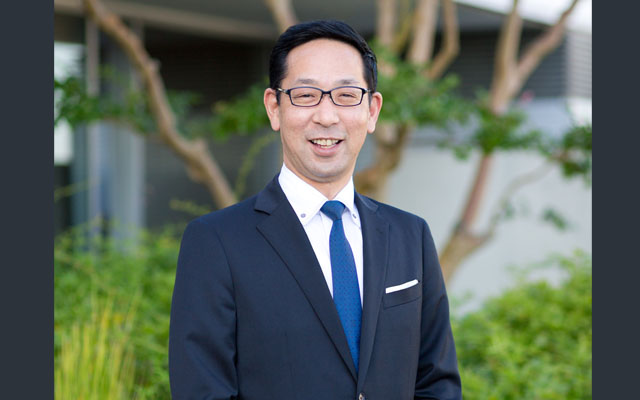
 Before joining Centara, he was executive assistant manager at ANA Crowne Plaza Hotel in Kobe.

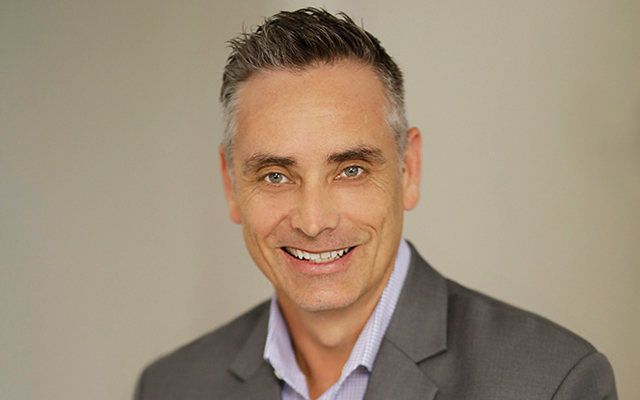
 Prior to joining the group, Hoswell held the position of company director, general counsel and commercial officer of Minor Hotels Australia and New Zealand.