Crystalbrook Collection is offering couples the chance to enjoy a honeymoon experience without a wedding with its No Rings Attached Un-Honeymoon.
Available across seven properties in Cairns, Brisbane, Byron Bay, Newcastle, and Sydney from November 2025 to March 2026, packages start from A$625 (US$420) per night.
Crystalbrook Collection’s Un-Honeymoon lets couples enjoy the indulgence of a honeymoon without the wedding
Guests stay in dedicated Un-Honeymoon Suites and receive a champagne and charcuterie welcome, on-arrival cocktails, after-dark dessert delivery, in-room curated Un-Honeymoon favours, daily breakfast, and late checkout.
The experience can be enhanced through the Crystalbrook Un-Registry, allowing friends or family to gift indulgent upgrades such as spa treatments, champagne and caviar pairings, or private dinners. Additional local experiences, including reef heli-tours, seaplane flights, wine tastings, and fragrance masterclasses, are available to personalise each stay.
The Un-Honeymoon package is offered at all seven Crystalbrook Collection hotels and resorts, including Crystalbrook Byron, Crystalbrook Riley, Crystalbrook Flynn, Crystalbrook Bailey, Crystalbrook Kingsley, Crystalbrook Albion, and Crystalbrook Vincent.
Qantas has appointed John Simeone to the newly created role of executive manager, offshore sales and alliances, reporting to CEO International Cam Wallace.
Simeone returns to Australia after nearly two years as CEO of Jetstar Asia, where he oversaw regional operations. With over 30 years in global aviation, he has extensive commercial experience across the Qantas Group, including a key role in restarting Qantas International sales post-Covid and a previous tenure as regional general manager, Asia, based in Singapore from 2019.
He will lead Qantas’ offshore sales teams and alliance partnerships, with regional general managers across the UK, Europe and South Africa, the Americas, and Asia, as well as the Alliances team, reporting to him. He will commence on December 1, 2025, with Nick McGlynn, Qantas Executive Vice President Asia, reporting to him.
Scoot adds new Indonesian routes and boosts regional flights
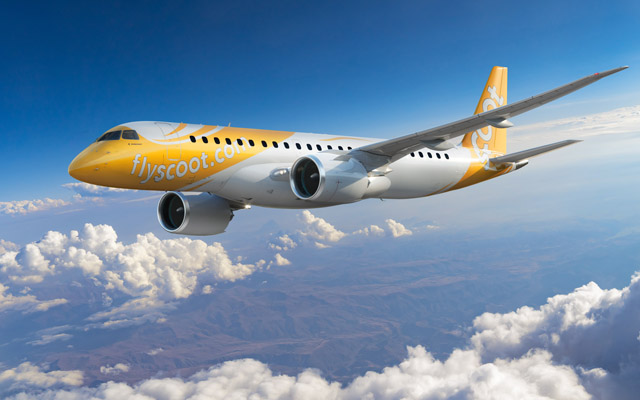
Scoot will launch new services to Labuan Bajo, Medan, Palembang and Semarang, commencing progressively between December 2025 and February 2026.
Flights to Labuan Bajo, the gateway to Komodo National Park, will operate twice weekly from December 21, 2025, using the Embraer E190-E2. Daily services to Medan on the Airbus A320 family will begin from February 1, 2026. Flights to Palembang will run four times weekly from January 15, 2026, on the Embraer E190-E2, while services to Semarang will start three times weekly from December 23, 2025, increasing to four times weekly from January 1, 2026, on the Airbus A320 family.
Scoot is also increasing frequency on existing Indonesian routes. From November 2025, Jakarta flights will operate 28 times weekly, Manado services will rise from four to six weekly, Surabaya flights will increase from 10 to 12 weekly from January 2026, Bali from 21 to 28 weekly, and Yogyakarta from seven to 10 weekly.
In Thailand, flights to Bangkok will increase from 39 to 42 weekly from October 2025, while services to Koh Samui will rise to 28 weekly by December 2025.
In Malaysia, Penang flights will increase from 21 to 28 weekly from November 2025, and services to Kota Kinabalu and Kuching will each increase from seven to 10 weekly from February 2026.
Scoot will also increase flights to Vientiane in Laos from five to seven weekly from December 2025.
Jetstar Japan
Jetstar Japan resumes flights between Manila and Osaka
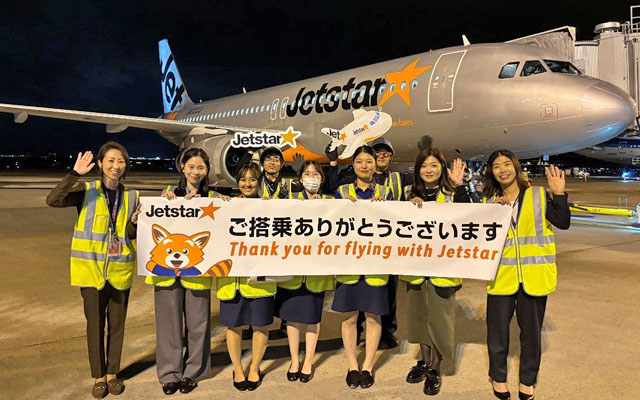
Jetstar Japan has resumed its Manila-Osaka (Kansai) route for the first time in nearly six years. During the winter schedule from October 26, 2025, to March 28, 2026, the airline will operate up to seven return flights per week using Airbus A320 aircraft.
Jetstar Japan is the only Japanese carrier offering direct service between Kansai and Manila.
With the resumed Manila-Kansai route, the airline now operates two international services to and from Kansai during the winter period, alongside its existing Kansai-Taipei (Taoyuan) flights. Combined, Jetstar Japan will offer up to 21 return trips per week from Kansai, expanding travel options and connectivity for passengers.
Vietjet
Vietjet commences daily Danang-Kuala Lumpur service
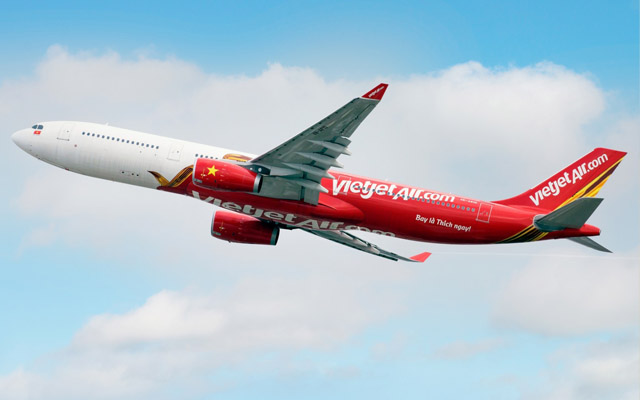
Vietjet has started direct flights between Danang and Kuala Lumpur, its third route connecting Vietnam and Malaysia. The daily service increases total weekly flights between the two countries to 42, complementing Vietjet’s existing Hanoi-Kuala Lumpur and Ho Chi Minh City-Kuala Lumpur routes and enhancing regional connectivity.
Philippine Airlines
Philippine Airlines launches Cebu-Calbayog route, expands international flights for holiday season
Philippine Airlines (PAL) has introduced a new Cebu-Calbayog service, operating four times weekly, while also expanding its international network and capacity to meet holiday travel demand.
In the Philippines-Australia market, Manila-Perth flights will increase from three to six weekly services, and Manila-Melbourne will move from five weekly flights to daily. Select Manila-Brisbane services will be upgraded from Airbus A321neo to tri-class A330 aircraft, with Perth continuing on the A321neo and Melbourne served by the larger A330-300.
In South-east Asia, Manila-Danang will operate daily from October 26, 2025, to March 28, 2026, up from three times weekly, while Manila-Busan flights will rise from seven to eleven per week.
PAL is also boosting its Japan network for the holiday season. Seasonal non-stop Manila-Sapporo flights will operate thrice weekly from November 24 to March 27. Manila-Narita and Manila-Osaka routes will receive 12 additional roundtrips each over the peak period, supplementing existing daily services, and Manila-Nagoya will gain three extra round trips on select dates.
Cebu operations are expanding with five additional roundtrips to Osaka and four to Narita during peak periods. From December 16, thrice-weekly non-stop flights will begin between Cebu and Guam.
In the US, Manila-Seattle services will increase from three to five weekly flights, complementing daily services to San Francisco and Guam, twice-daily flights to Los Angeles, thrice-weekly flights to New York, and five weekly flights to Honolulu.
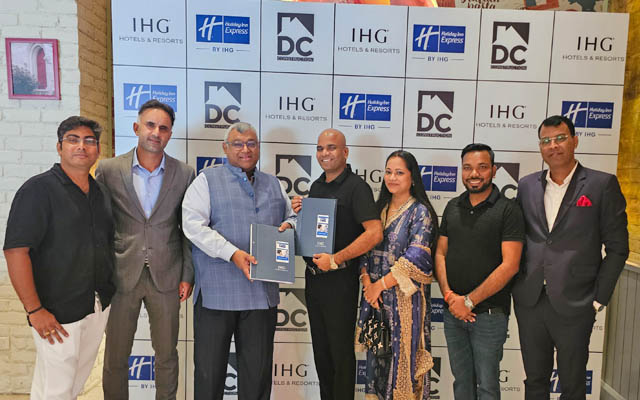
IHG Hotels & Resorts has signed a management agreement with DC Constructions, the construction arm of Urban Oasis Hospitality, to develop Holiday Inn Express Siliguri Bagdogra Airport.
The 100-room greenfield hotel is scheduled to open in 2028, expanding IHG’s presence in eastern India and strengthening the brand’s reach across key travel routes.
The new Holiday Inn Express near Bagdogra Airport will strengthen IHG’s presence across key travel routes in eastern India
Located near Bagdogra International Airport, the hotel will cater to business and transit travellers in Siliguri. The city serves as a commercial hub in West Bengal and a gateway to the Eastern Himalayas, northeast India, and the borders of Nepal, Bangladesh, and Bhutan.
Holiday Inn Express Siliguri Bagdogra Airport joins 17 hotels already open in India, with another 21 under development.
“This signing exemplifies the growth momentum of our Holiday Inn Express brand in India, which continues to be a top choice for guests seeking consistent, modern comfort and for owners looking for a proven, high-return investment,” said Sudeep Jain, managing director, South West Asia, IHG Hotels & Resorts.
“Siliguri’s growing importance as both a travel hub and commercial destination makes this project particularly exciting for us. This collaboration will not only elevate the city’s hospitality landscape with international standards but also support the local economy by attracting both business and leisure travellers to the region,” added Avinash Tiwari, managing director, DC Constructions.
IHG currently operates 51 hotels across six brands in India — Six Senses, InterContinental Hotels and Resorts, Crowne Plaza, voco Hotels, Holiday Inn Resort, and Holiday Inn Express — and has 72 more in the pipeline, expected to open within the next three to five years.
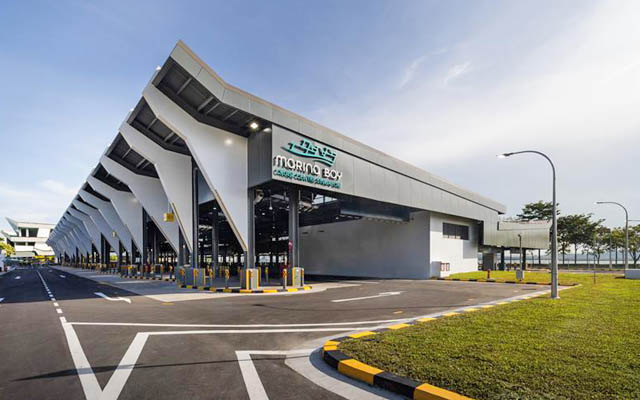
Marina Bay Cruise Centre Singapore (MBCCS), managed by SATS-Creuers Cruise Services (SCCS), has completed a S$40 million (US$29 million) upgrade to improve passenger experience and accommodate growing cruise demand in Asia.
The terminal has reorganised passenger flows to manage simultaneous dual mega ship calls across its two berths. A new Level 1 check-in hall with 70 counters and over 500 seats will serve Pier 2, while the existing Level 2 check-in hall will continue serving Pier 1. Both halls include VIP lounges for premium travellers.
The upgraded facilities at MBCCS aim to improve efficiency and comfort for cruise passengers
Other upgrades include a new Ground Transport Area with widened roadways, additional coach bays, early baggage drop-off, and more than doubled ride-hailing lots. A looped shuttle links Marina South Pier MRT station to the terminal, and an Advanced Carpark Reservation System allows parking to be booked up to 60 days in advance. Buggy services are available for passengers with reduced mobility.
MBCCS has introduced baggage transfer services to hotels and Changi Airport, shuttle services to attractions such as Gardens by the Bay and Chinatown, and reintroduced the Cruise-Fly Service for international passengers, allowing them to check in and tag baggage for same-day connecting flights.
Behind the scenes, a Vehicle Slot Management System coordinates deliveries of supplies to ensure efficient operations during dual ship calls. The terminal has also launched PortDeck, a convertible bench-table system designed to optimise space and passenger comfort during peak periods.
Mehmet Kutman, chairman and CEO of Global Ports Holding, parent company of Creuers, said: “As cruise travel continues to expand across the region, this upgraded facility will enhance the passenger journey and exemplify Singapore’s continued leadership in shaping the future of cruise travel across Asia.”
Ong Huey Hong, assistant chief executive, industry development group, Singapore Tourism Board, added: “Through our partnership with SATS-Creuers, we are future-proofing our tourism landscape by delivering world-class infrastructure that meets the needs of evolving traveller expectations while reinforcing Singapore’s position as a leading cruise destination in the region. As we chart the next chapter for tourism, these enhancements underscore cruise tourism’s vital role in our broader ecosystem of quality, sustainable growth.”
InterContinental Halong Bay Resort, Vietnam
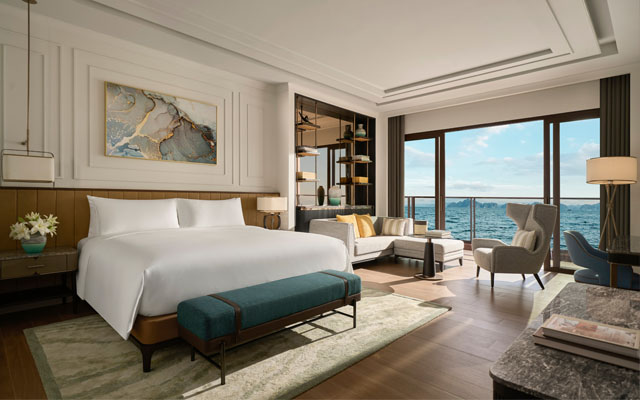
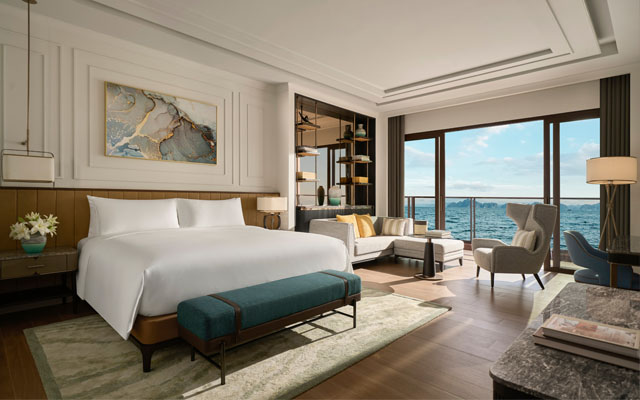
InterContinental Halong Bay Resort has opened in Quang Ninh Province within the UNESCO World Heritage Site of Halong Bay. The resort has 275 rooms, suites, and villas, six dining venues, and a spa in collaboration with Margaret Dabbs London and Sodashi.
Facilities include three pools, beach volleyball, and a kids’ club. Event spaces such as the Tonkin and Cat Ba Ballrooms cater to meetings and weddings.
Situated in the Ha Long Marina Urban Area near Bai Chay, the resort is about two hours from Hanoi and close to Bai Tho Mountain, Sung Sot Cave, and Fighting Cocks Islet.
JW Marriott Hotel Tokyo
JW Marriott Hotel Tokyo, Japan
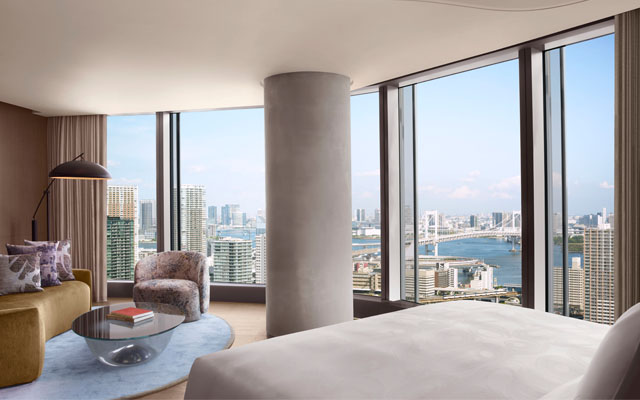
JW Marriott Hotel Tokyo boasts 200 rooms and suites with views of the Tokyo skyline. Located above Takanawa Gateway Station and about 20 minutes from Haneda Airport, the hotel provides easy access to Shinagawa Station and future Shinkansen links to Nagoya and Osaka.
Facilities include several dining venues such as Kakō for washoku cuisine, Sefino for Mediterranean dishes, and Le Cres for Japanese-style croissants. Other features include a spa, a fitness centre, a pool with city views, and over 1,140m² of event space.
Model J Hotel Jakarta Central Park
Model J Hotel Jakarta Central Park, Indonesia
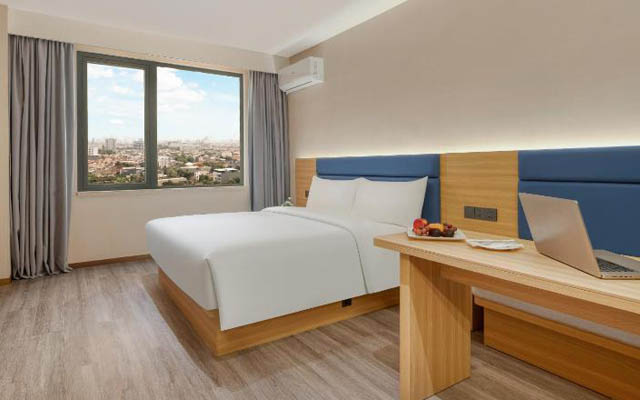
Model J Hotel Jakarta Central Park introduces 107 rooms in one of the city’s busiest commercial areas. Located 30 minutes from Soekarno-Hatta International Airport and 10 minutes from the Sudirman Central Business District, the hotel offers easy access to offices, retail, and entertainment.
Rooms feature high-speed Wi-Fi, 50-inch smart TVs with Netflix, and sustainable amenities. Supported by a Smart In-Stay System and an efficient operating model, the hotel focuses on reliability, consistency, and a streamlined guest experience
Alino New Manila
Alino New Manila, the Philippines
Alino New Manila is a 20-storey lifestyle hotel featuring 128 rooms, including suites, and a Healthcare Room with HEPA air purifiers and hospital-grade cleaning for families of patients.
Facilities include an all-day Filipino restaurant, outdoor pool, gym, laundrette, and function rooms.
The hotel sits on E Rodriguez Sr Avenue in Quezon City, across from St Luke’s Medical Center, with access to Ortigas, Makati, Bonifacio Global City, and the Skyway, serving medical travellers, business guests, and long-stay visitors.
Onyx Hospitality Group has unveiled its 2025 holiday campaign, Beyond the Festivities, across its Amari, Ozo, Shama, and Oriental Residence brands, blending seasonal celebrations with local culture to create memorable experiences for guests and communities across Asia-Pacific.
Amari marks its 60th anniversary with hands-on experiences, from artisanal workshops and traditional boat decorations to toy donations and support for local charities in Thailand, Malaysia, Laos, and Sri Lanka.
Onyx hotels across Asia bring festive cheer with curated experiences, local traditions, and seasonal celebrations; Amari Pattaya, pictured
Oriental Residence Bangkok presents White & Gold seasonal elegance with festive dining, curated hampers featuring sustainable and locally crafted gifts, and a Christmas tree lighting ceremony.
Shama celebrates the season by recreating a “home away from home”, with intimate events, local excursions, and activities that strengthen bonds between guests and communities, while Ozo adds a lively, playful twist, with bold décor, interactive programming, and vibrant communal spaces designed for shared celebrations and joyful gatherings.
Demand for independent hotels that offer creative guest experiences is on the rise, as well-travelled individuals turn away from accommodation that feels generic and indistinguishable.
Sharing his observations with TTG Asia, Philipp Weghmann, chief development officer of Preferred Travel Group (PTG), said: “Demand for independent luxury accommodation is more pronounced than ever because people are always after unique hotels and experiences.”
Three Camel Lodge in Mongolia, a member of the Beyond Green Collection, invites travellers to experience the destination in a sustainable manner
He noted findings from the Luxury Travel Report, published in May 2025 by Preferred Hotels & Resorts in partnership with The Harris Poll, that identifies travellers’ dislike for “sameness in design, service, and experience”.
Seventy per cent of surveyed luxury travellers find that modern luxury hotels have lost their soul to standardisation.
The report describes the rise of “dupe culture and algorithm-driven itineraries” that has led cities and stays to “feel indistinguishable” as the “beige-ification of travel”.
Today’s affluent traveller, according to the report, craves the unrepeatable: places that excite, environments that surprise, and experiences rooted in individuality. Nearly three-quarters of respondents say they will not pay for luxury accommodation that feels generic.
“Consumers, especially the high end consumers, do not like the ‘beige-ification’ of travel,” said Weghmann, adding that independent hotels are able to avoid predictable experiences since they have the flexibility to “deliver unique experiences that are not tied to signature programming that comes with being part of a global hardware”.
Creative guest experiences, he noted, could be delivered through architecture and design, culinary, and wellness.
In the Luxury Travel Report, 89 per cent of respondents express interest in seeing local charm reflected in hotels.
While independent hotels have the advantage of creative expression, they may lack access to global distribution. Weghmann said a membership with Preferred Hotels & Resorts would pave the way for independent hotels to “tap into a global infrastructure that has offices with salespeople in over 20 locations all over the world” as well as benefit from “co-op marketing”.
Preferred Hotels & Resorts now has more than 600 distinctive hotels, resorts, residences, and unique hotel groups across 80 countries – and Weghmann’s team has an appetite for more.
“Asia is one of our greatest markets of opportunity,” he said, adding that PTG would like to add more member hotels in secondary destinations across the Asia-Pacific.
He also recognised the rise of interesting destinations in countries such as Thailand, Vietnam, and Indonesia.
When asked if travel and tourism companies like his could help distribute tourist footfalls away from over-crowded popular cities, Weghmann said PTG has already been working to make travel a vehicle for good.
He explained: “First of all, we’re not only in the primary cities. We have hotels in secondary destinations, which creates visibility for hotels and their destinations. Our iPrefer Hotel Rewards loyalty programme members are very seasoned travellers who want to discover new places. Our loyalty programme and hotel network work together to take our customers deeper into countries.
“Second, Preferred Travel Group’s Beyond Green collection features many properties that sit in remote locations. We have Three Camel Lodge in Mongolia and andBeyond Punakha River Lodge in Bhutan, for example. Both destinations are beautiful and untouched by overtourism. Having properties in these destinations allows us to promote inbound tourism, create employment opportunities for the locals, and make tourism a real force for good.”
Finally, through PTG Consulting, the company offers a division that works on behalf of destinations to promote tourism in a sensible and responsible way.
Kindly share new developments happening in your agency.
It has been a transformative year for us. DMCBazaar powered by One Above has evolved into a marketplace where Indian travel agents have the access to live and bookable content from across 80 plus countries. Our biggest leap has been launching our white label solutions and APIs which lets OTAs and travel companies to go live with the best itinerary builder for their clients direct bookings and APIs which directly integrate verified DMC activity content in real time. We have also strengthened our network in Europe, Africa, and South-east Asia, and are now working on bringing Latin America to our portfolio by early 2026.
How do you see the current outbound demand from India? Can you share some of the most popular experiences or itineraries your DMC offers?
The outbound story from India is stronger than ever. Travellers are upgrading, moving from sightseeing to immersive experiences. Europe continues to lead, followed by the Middle East and Africa. Some of our top-performing and unique itineraries this year include South Africa on a river cruise with immersive wildlife experience, Kenya and Tanzania safaris with luxury stays, Morocco desert adventures with city experiences, and Vietnam and Hong Kong family getaways. We are also seeing more multi-country trips and slow-travel experiences especially from the 25-40 age group.
What sets your company apart from other DMCs? What kind of growth are you seeing in your B2B business?
What makes us different is that we are not just a DMC – we are a technology-driven network. Every booking is backed by verified content, owned operations and transparent pricing. Through DMCBazaar, agents can plan, price and confirm itineraries instantly with real DMCs. We have seen 35 per cent year-on-year growth in our B2B segment, with major traction coming from India, the Middle East and Africa. The trust factor and speed we offer have really changed how agents book with us.
You also have a presence in the destination wedding market. What kind of trends are you noticing in the Indian destination wedding segment?
Destination weddings are becoming smaller but more meaningful. Couples today want intimate, experience-driven celebrations instead of large traditional gatherings. We are seeing strong demand for venues in Europe, Bali, Vietnam and Africa – destinations that combine luxury, culture and natural beauty. Sustainability is another key trend; people want their weddings to be eco-friendly and authentic.
How do you balance between showcasing iconic landmarks and promoting off-the-beaten-path adventures?
It is all about balance. Everyone wants to see the icons like Eiffel Tower, Table Mountain and Mount Fuji but we make sure our itineraries include local, lesser-known experiences that bring a destination to life. Our DMC teams on the ground are experts at curating those hidden gems, whether it is a cooking session with locals in Tuscany or a night safari in Kenya’s private reserves. Such experiences make travel memorable.
How has technology influenced the way you design and deliver travel experiences?
Technology is at the core of everything we do. Through DMCBazaar, travel agents can now access live rates, instant quotes, AI itinerary builders and CRM tools all under one roof. This has reduced turnaround times from days to minutes. We are also using AI to personalise itineraries based on traveller preferences, making customisation far more efficient and data driven.
What’s next for your DMC in terms of expansion or innovation?
Our next focus is Latin America and Eastern Europe, where we are setting up new partnerships. On the innovation side, we are building tools that allow instant white-label websites and custom APIs for agents, helping them go digital faster. We are also developing a dynamic pricing engine along with a QuoteBot to bring more transparency and speed to B2B travel contracting.
Are there any upcoming projects, events or collaborations you are particularly excited about?
We are gearing up for WTM London 2025 where we will showcase our latest technology. Back home, we are hosting a five-city India roadshow connecting our global DMC partners with 10,000 plus Indian travel agents in the months of February and March. On the collaboration front, we are working closely with tourism boards from Peru and South Africa to develop new markets. The goal is simple: to make DMCBazaar powered by One Above the most trusted global bridge between Indian agents and world DMCs.
As India’s peak inbound tourism season (October to March) gets underway, early signs indicate a promising year ahead for the sector with traditional source markets such as North America and the UK showing robust growth.
Industry stakeholders say international arrivals have picked up strongly driven by renewed travel confidence and demand for experiential and wellness travel.
D’Souza: India is witnessing a good resurgence in international arrivals
“With the start of the inbound season, India is witnessing a good resurgence in international arrivals. We have seen a 25 per cent growth as compared to last year. Our source markets such as the UK, the US, Canada and the Middle East continue to perform robustly,” said Louis D’Souza, managing partner, Tamarind Global.
For most inbound operators, this period marks the most crucial half of the year, as it attracts leisure travellers especially from longhaul markets.
“Last year was the best inbound season for our company and we are hoping this season will perform even better. There were concerns because of geopolitical situations like the war in the Middle East but people are now confirming their bookings. After the UK, the US market has come up very strong for us,” shared Michael Dominic, managing director, CGH Earth.
Industry players note that the nature of demand is also evolving.
“The demand this year feels less about volume and more about meaningful experiences. Travellers are veering away from the usual circuits and exploring spiritual towns, wellness retreats and culturally rich destinations that offer depth and authenticity,” observed Neha Kapoor, general manager, Hyatt Place Gurgaon
According to D’Souza, while the Golden Triangle (Delhi-Agra-Jaipur) continues to be a staple for first-time visitors, newer patterns are emerging.
“Destinations such as Kerala, Rishikesh, Coorg and the Andaman Islands are gaining popularity among travellers seeking sustainability and mindfulness-based experiences. The numbers are also rising for adventure-led regions like Ladakh and the North East, while the luxury and slow travel segment continues to grow as high-value visitors opt for boutique stays, palace hotels, heritage walks and curated experiences over standard sightseeing,” he added.
However, not everyone in the industry is equally optimistic.
“Enquiries are just a trickle. India has become very expensive. However, the good news is the resumption of flights from China. Let’s hope there will be an influx of Chinese tourists,” said Lally Mathews, managing director, Divine Voyages.
Direct air connectivity between India and China is set to resume after more than five years with IndiGo launching a daily non-stop flight between Kolkata and Guangzhou starting October 26. The flights were suspended following border tensions between the two nations.




 He will lead Qantas’ offshore sales teams and alliance partnerships, with regional general managers across the UK, Europe and South Africa, the Americas, and Asia, as well as the Alliances team, reporting to him. He will commence on December 1, 2025, with Nick McGlynn, Qantas Executive Vice President Asia, reporting to him.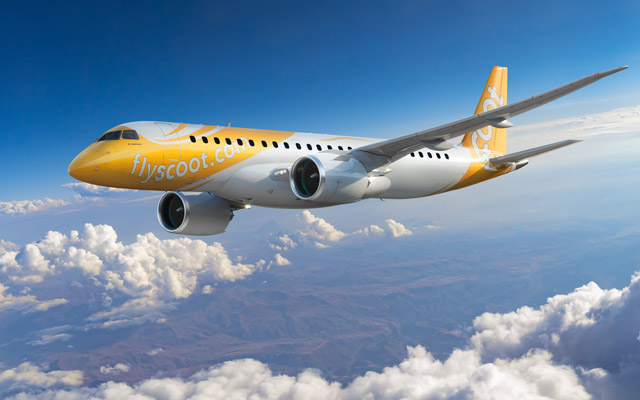




 Kindly share new developments happening in your agency.