The Ministry of Trade and Industry has named Melissa Ow as the new chief executive of Singapore Tourism Board (STB) effective from June 1. She will take over the role from Keith Tan.
Currently the executive vice president for customer experience, marketing & investment facilitation group at the Economic Development Board (EDB), Ow played a key role in transforming the organisation’s B2B sales and marketing model.
Ow has held several positions in STB, with the last being deputy chief executive. She also headed the Experience Development Group and the Corporate Group as well as oversaw STB’s corporate functions such as legal, procurement and corporate administration, finance, and human resources.
Qantas Airways has named finance chief Vanessa Hudson as its next chief executive officer.
Hudson joined Qantas 28 years ago and has held several senior roles there, including chief financial officer, chief customer officer and senior vice president for the Americas and New Zealand.
She will officially take over from Alan Joyce, whose has held the role for 15 years, at the 2023 annual general meeting in November.
Community Projects build bonds between travellers and the locals; Christie’s old friend, Etchan, pictured left
While it is common to hear of travel and tourism companies embarking on sustainable initiatives in response to growing awareness of responsible operations and the United Nations Sustainable Development Goals, Walk Japan’s first steps into its community engagements were borne out of its CEO’s longing to live out his countryside dream.
Paul Christie’s love for the countryside first bloomed in his teenage years, when he used to visit his grandfather in Southern England and would take walks together through the surrounding apple orchards and botany of hops.
“My grandfather also kept honey bees and geese, and grew lots of vegetables. I loved walking with him through the area, and determined then that I would one day live in the countryside,” Christie recalled in a conversation with TTG Asia.
At the age of 40 in 2002, he decided it was time to get started on fulfilling that dream. With that, he gave up his life in London to settle in Kyushu, Japan, where he found joy in building his own house, growing some vegetables, helping the local farmers with their tasks, “pottering around”, and leading tours for Walk Japan “to earn some pocket money”.
“Essentially, I got to lead the good life in the countryside. But as the tour business picked up, I got taken away from the other things I wanted to do in the countryside. So, I started Walk Japan’s Community Projects some time in 2007, and my initial plan was to do things related to farming and looking after the forests,” he said.
“But these projects developed into things far more than that.”
One of the first initiatives of Walk Japan’s Community Projects was to buy over houses in Kunisaki, a small coastal town in Kyushu, that have long been abandoned. A team renovated and converted the houses into offices and places for customers – and eventually volunteers – to stay.
Christie now has seven properties in the area, five of which have been renovated. Two are used as offices, two as accommodation for guests, and a beach house that is currently being rented.
Another aspect of the Community Projects is taking care of communal parks that local councils are unable to care for due to budget issues. One initiative involves regenerating forests that have just one or two types of cedar trees grown very densely together, resulting in poor sun access and barren forest floor with little variation of flora and fauna. Christie hopes to turn these plots into ecologically vibrant areas, but acknowledges that this will be an initiative lasting for decades.
Christie: Walk Japan’s Community Projects are helping to revitalise rural areas
Coming up, Walk Japan’s Community Projects will embark on English classes for Kunisaki children. It will work with local schools that are unable to provide English enrichment classes due to limited skillsets.
“We hope that in doing so, we will encourage people to move to Kunisaki because they see opportunities in getting English education not available in other rural areas,” said Christie.
Christie believes that Walk Japan’s Community Projects are helping to revitalise rural areas.
As the projects are “integral to our walking tours”, Walk Japan’s customers have the opportunity to be part of initiatives and interact with the local people. Some customers have chosen to visit Kunisaki again and again, and to eventually stay for weeks or months to volunteer for Walk Japan’s Community Projects in the area.
“For example, we have an Australian, who is retired now but used to work with the national parks, who came for six weeks to help us on our projects. He started off as a customer who booked a tour with us later in the year, but learnt about our projects and decided to come ahead of time to join us.”
There are also others who have relocated from the big cities to work at Walk Japan’s office in Kunisaki. The company has a multinational team, comprising Japanese, Italians, French, a Hong Kong Chinese, a Lithuanian and many more.
Christie said: “The main population in Kunisaki is getting old and will not be producing youngsters. So, our community projects also look at ways to make Kunisaki a more vibrant place to live in, not just a place to farm rice for example, so that people elsewhere will be enticed to move here and live.”
He noted that fresh relocations to Kunisaki were few prior to the pandemic.
“There were a few Japanese who moved here and nearly no foreigners. That has since changed. I think two major reasons are at play, besides us being here to create jobs.
“One reason is the Fukushima nuclear incident, which forced many people in East Japan to relocate elsewhere. Second, the pandemic: some people living in the Tokyo region looked to move into the countryside where pandemic restrictions were fewer and it was easier and cheaper to move around. There were also people who could not travel overseas during the last three years and considered domestic destinations, like Beppu (a popular hot springs town), not too far away from Kunisaki. They came, fell in love after realising Kunisaki is more than just a beautiful coastal town, and moved in.”
It is not just Kunisaki that is benefiting from revitalisation through Walk Japan’s work.
Community Projects takes care of communal parks that local councils are unable to care for due to budget issues
Christie cited villages on the Nakasendo trail as an example. Walk Japan is recognised as pioneers of walking tours through Nakasendo, an ancient route that connected Edo (Tokyo today) to Kyoto. Its tours prioritised support for local businesses – small inns, local transport operators, restaurants, and more.
“That placed money in the hands of locals. When I did economics in university a long time ago, I learnt that when you put a dollar into a local business, that value grows six-fold because local businesses often go on to support other local businesses,” he said.
And as word spread that tourism brought improved financial independence to the local community, people were inspired to stay put and set up tourism-related businesses, instead of leaving for the big city.
“I’m not saying that Walk Japan alone can inspire that sort of change. We are the vanguard of walking tours. Many other travel companies that have seen what we do went on to design similar experiences with their own flavour. When more travel companies do that, they bring more people into a destination, which then supports local businesses,” he said.
In assessing the outcomes of his Community Projects, Christie said the initiatives are also good for the heart.
“Sure, our customers support the local communities as they participate in our walks, but they also gain so much from being part of the communities,” he said, pointing to the intangible value of spending time with a host family and transcending language barriers to share genuine conversations.
In Kunisaki, Walk Japan tours sometimes call on Etchan, an old friend of Christie who just turned 80, at her house.
“She cannot speak a word of English but is a master communicator. During Covid, she was so desperate for foreigners to return. So, I think, in a way, our Community Projects are also about building bonds between travellers and the locals, and among travellers,” he reflected.
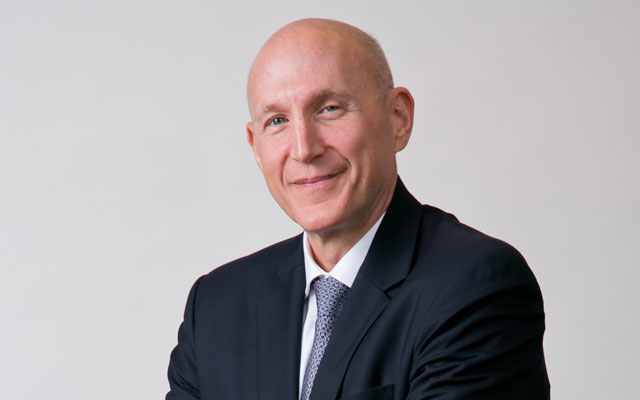
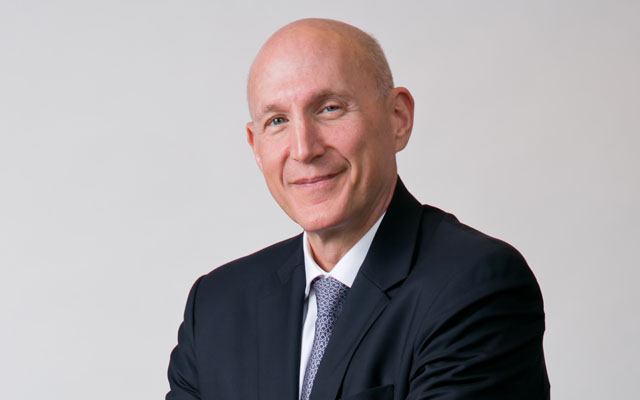
Hotelier Michael Issenberg has joined the Board of TFE Hotels, where he will assist the company with the next stage of its growth and evolution.
A 26-year veteran of Accor, where he helms as chairman and CEO of Accor Asia Pacific, Issenberg brings more than 42 years of international experience at executive management and Board level in the travel and hospitality industry to the table.
He is also the current chair of Tourism Australia and a director of the Star Entertainment Group.
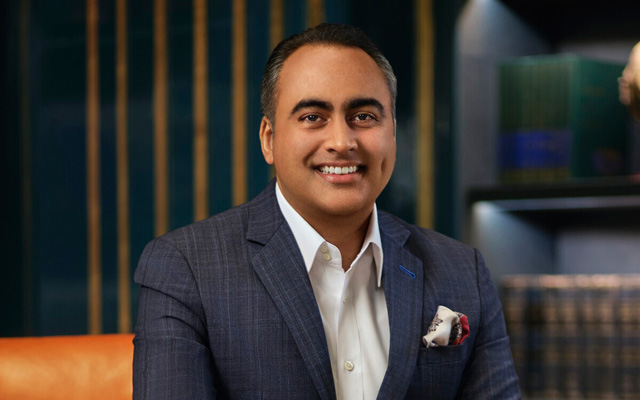
Vishal Sanadhya has been named the new hotel manager for Four Seasons Hotel Jakarta.
With more than 16 years of experience with Four Seasons, he will take charge of day-to-day hotel operations.
He was previously part of the pre-opening team at Four Seasons Hotel Bangkok at Chao Phraya River, and has supported several Four Seasons properties in other locations, including Beijing, Maldives, Singapore and Mumbai.
I most certainly sit in the laggard category within the technology sphere. Most tech innovations do not send a shiver of excitement through me, and I remain contented with my trusty circa-2015 MacBook Pro and Samsung Galaxy S21 FE (for context, the S23 was launched this February).
But when ChatGPT made the headlines last November, my ears twitched. It was a big reaction from someone like me, and the world responded even more wildly. Within two months, ChatGPT gained 100 million monthly active users, while its developer, OpenAI, became one of the 50 most visited websites in the world.
By mid-February, there were some 200 e-books on Amazon’s Kindle store that listed ChatGPT as the author or co-author. And according to a Reuters report, that number is climbing steadily. There was even a commentary on how ChatGPT was challenged to write a film – and it churned out 50 scripts in an hour.
How intriguing.
So, I went onto OpenAI to poke around. First, I asked ChatGPT to write me a family trip for Osaka, and then an off-the-beaten-path travel plan for the same destination. The first enquiry spat out all the usual tourist landsmarks. The second recommended Shinseikai District, Abeno Harukas Observatory and Dotonbori – not quite hidden gems – but it did point out a hike up Mount Koya and a temple stay as well as a bike tour and traditional tea ceremony. For first-timers to Osaka, ChatGPT could provide a useful starting point in their travel research.
Can ChatGPT take on more serious prompts? I asked for a news update on Singapore’s business events industry. Within seconds, it churned out content that mirrored latest news reports on Singapore’s busy calendar of events and pace of recovery.
For another test of accuracy, I asked it for a background of myself. It claimed I have been with the company since 1995 – which would have made me a 15-year-old worker.
Next up, can ChatGPT mimic a human writer and create content that tugs at heartstrings? I asked for a Singapore love story. That tale was bland, but Singapore Tourism Board would have been proud because the lovers found romance around the city-state’s top tourist landmarks.
My verdict is this: ChatGPT is great as a starting point for travel and tourism content, which makes it a great customer engagement tool for companies keen to build travel interest and then reel the customer towards conversion. It can help with first drafts of trend reports, destination backgrounders, ad copy and the likes. But it is not so evolved yet to be able to understand and convey the emotions that are part of travel and tourism. Nor can it be relied on for factual content without a human fact-checker.
That said, ChatGPT is still learning and developing. With the speed of tech advancement these days, who knows, it might just close those gaps and more by the time this page is printed and put in your hands.
It has been challenging trying to pin down Lauretta Alabons. Since pandemic restrictions were relaxed, the co-founder of LAMC Productions, who is also known as “Singapore’s First Lady of Entertainment”, has been working around the clock to populate her events calendar with live music and comedy acts.
Case in point: at the start of June, she will host renowned South African funny man Masood Boomgaard for a one-night-only performance at the Victoria Theatre. But this is just the tip of Alabons’ iceberg.
Anirudh Ravichander performs to a full house (picture by Maestro Productions)
“Performers and artists have been impacted by the pandemic and are ready to come out and see their fans,” she said, adding that there is also pent-up demand for shows.
Alabons is not alone in her sentiment about the thriving live entertainment industry in Singapore. These include concerts, musicals, theatre, sporting events, performances and exhibitions.
In the process, this has led to a mini boom in tourism, as many of these events – some of which are large-scale – attract foreigners to the city-state.
Destination entertainment
Earlier this year, Maestro Productions organised a one-night concert for Indian music producer and singer Anirudh Ravichander. All 12,000 tickets sold out in two days, with more than 20 per cent bought by foreign visitors.
“This underscores the popularity of Anirudh’s performances as well as the strong pent-up demand for good quality concerts here from foreigners who want to come to Singapore not just for the usual sightseeing tours,” said Parthiban Murugaiyan, who is the chairman and managing director of Maestro.
Recent acts brought in by LAMC have also seen similar breakdowns. It organised The Singapore Rockfest and hosted The Piano Guys, both of which saw 25 per cent of ticket buyers from overseas markets.
“The Singapore Rockfest was an opportunity to draw fans from Malaysia, India, Vietnam, Hong Kong and Manila. Our first market is Malaysia, as many of the rock bands are not able to perform there,” Alabons told TTG Asia.
Some concertgoers even arrived on cruise ships, prompting Alabons to consider reaching out to cruise lines to package such unique local experiences for their passengers.
Parthiban attributes the lifting of pandemic travel restrictions and the love for globetrotting as among the key factors contributing to the spike in popularity of live performances.
He said: “Singapore’s trusted tourism brand name has attracted visitors to come here for events.
“I think it’s also the mindset of the people where balancing a good lifestyle has become a priority.”
Spotlight on Rain at the Marquee Anniversary celebrations on April 8, 2023 (picture by MARQUEE Singapore)
A continuous encore
The industry is certainly rising to the occasion. Over at Marina Bay Sands, its vice president of regional entertainment, David Baxley, said the integrated resort is looking to grow its entertainment tourism segment from Singapore, South-east Asia and beyond.
“We set our eye on attracting entertainment seekers with the emphasis on providing a premium luxury experience. We expanded our scope beyond a traditional 90-minute performance to include pre- and post-event experiences,” he shared.
It seems to have worked, given how it repeatedly hosts sell-out shows. These include JJ Lin’s After the Rain concert in November 2021; South Korean hip-hop group Epik High’s concert in July 2022; and more recently, Hong Kong star Joey Yung’s concert in March 2023, which saw over 6,000 fans in attendance.
Additionally, in a reflection of the surging demand for great entertainment, Baxley said there were more than double the number of concerts, musicals and performances staged at Sands Theatre and Sands Expo & Convention Centre, from just 13 events in 2021 to 34 in 2022.
“Building on the momentum, we grew our entertainment repertoire by expanding our Sands Live concert series in 2023, which aims to showcase the biggest stars from Asia and beyond, across different venues and presentation styles,” he added.
At press time, veteran Taiwanese singer Zhao Chuan and South Korean megastars Rain and PSY are set to perform in April.
“The current entertainment landscape is highly competitive and the challenge lies in not just trying to secure the best international acts for Singapore, but also ensuring that the experience is unique and compelling enough to draw tourists,” Baxley pointed out.
And when these stars descend on Singapore, they bring a revenue boom to the country’s travel, hospitality and related businesses.
Maestro’s Parthiban said: “The multiplier effect on jobs and the Singapore’s economy can be substantial. By having more blockbuster shows here, we can also boost Singapore’s brand name and expand its range of offerings to lift tourism numbers and revenue.”
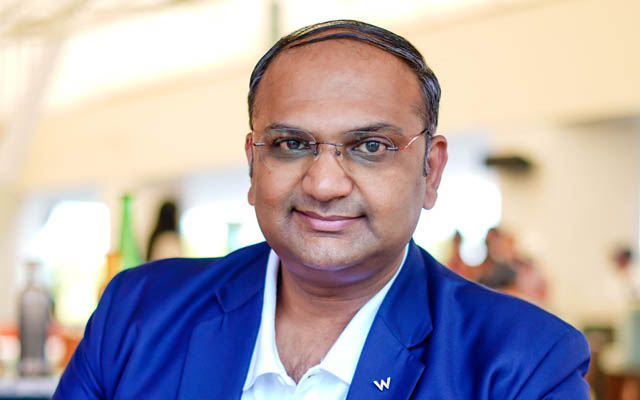
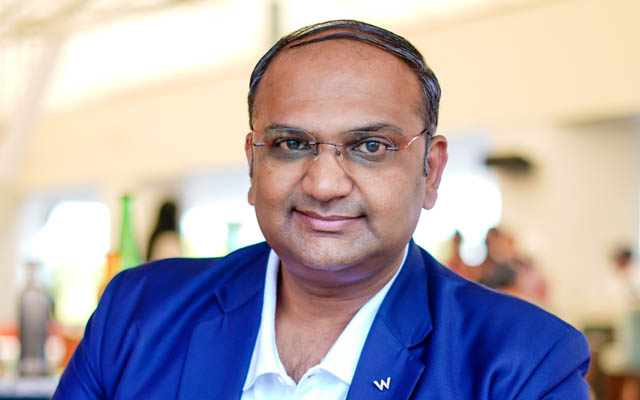
W Goa has named Siddharth Joshi as its new director of sales & marketing.
With over 20 years of experience in the hospitality industry, Joshi’s in-depth knowledge of the market and his strategic approach to sales and marketing will help him develop and implement sales and marketing strategies to drive revenue growth, enhance the hotel’s brand positioning, and foster strategic partnerships.
Joshi joins the W Goa team from The Leela Palaces, Hotels and Resorts where he was also director of sales & marketing.
S Hotels and Resorts has appointed Ludovic Gallerne as its new vice president of global commerce.
Gallerne brings over 25 years of experience to the role, and will be responsible for all commercial activities at the group’s extensive global portfolio of hotels and resorts in Thailand, the Maldives, Fiji, Mauritius and the UK.
He was most recently the vice president of sales & marketing for Asia & Middle East at The Standard Hotels.
Arrangements are underway to lift Japan’s Covid-19 border control measures this Saturday, ahead of initial plans to do so on May 8.
According to Japanese news reports, the decision is made in anticipation of an increase in overseas travellers during the Golden Week holidays.
Japan will lift its Covid-19 restrictions ahead of May 8; Fushimi Inari Taisha in Kyoto pictured
The move will mean that all people entering Japan will no longer need to present certification of at least three Covid-19 vaccination doses or a negative coronavirus test taken within 72 hours of departure.
However, the government is looking to deploy a voluntary testing system at five airports, targeting travellers with symptoms such as fever, with the aim of detecting new infectious diseases.
Japan will maintain its plans to downgrade the classification of Covid-19 under the infectious disease law to Category V, the same as for seasonal flu, on May 8.


 Currently the executive vice president for customer experience, marketing & investment facilitation group at the Economic Development Board (EDB), Ow played a key role in transforming the organisation’s B2B sales and marketing model.
 She will officially take over from Alan Joyce, whose has held the role for 15 years, at the 2023 annual general meeting in November.


 He is also the current chair of Tourism Australia and a director of the Star Entertainment Group.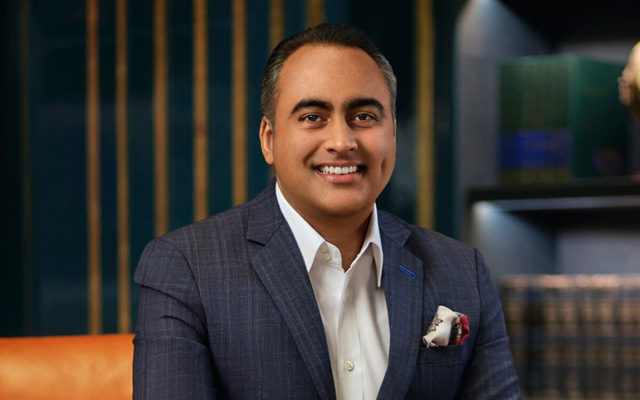
 He was previously part of the pre-opening team at Four Seasons Hotel Bangkok at Chao Phraya River, and has supported several Four Seasons properties in other locations, including Beijing, Maldives, Singapore and Mumbai.




 Joshi joins the W Goa team from The Leela Palaces, Hotels and Resorts where he was also director of sales & marketing.
 He was most recently the vice president of sales & marketing for Asia & Middle East at The Standard Hotels.