

TRENZ gets underway in Christchurch; directs attention to international markets
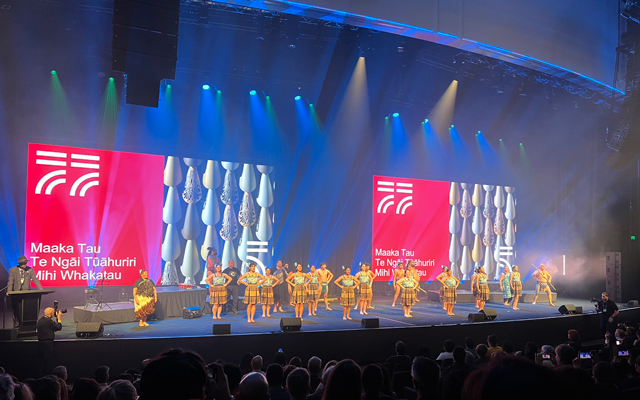
After a pandemic-induced hiatus, TRENZ 2023 is back in-person this year, where 1,500 international buyers and New Zealand-based sellers will be able to reconnect and rebuild connections over the next three days (May 9-11, 2023).
“With TRENZ to be held in person this year, and a ramping up of our online TRENZConnect online showcase, international buyers will be able to develop and renew relationships with top quality New Aotearoa Zealand tourism operators. We have 40 new sellers and new products to showcase this year,” shared Tourism Industry Aotearoa’s (TIA) chief executive Rebecca Ingram.

Held in Ōtautahi Christchurch at the Te Pae Christchurch Convention Centre, this also marks the return of New Zealand’s most significant international B2B travel trade event to the compact city after 17 years. This excludes TRENZ HUI 2021 and 2022, where both events then focused on bringing the New Zealand tourism industry together to prepare for the return of international visitors.
Post-lockdown, Tourism New Zealand’s trade strategy has shifted back to international markets, as domestic tourism has reached 2019 levels – worth NZ$17.7 billion (US$11.2 billion) – since December 2022.
The strategy for the Asian market will focus on encouraging visitation outside of the popular summer season.
“We are working closely with local trade partners and media advocates on joint campaigns and content collaborations to promote the off-shoulder autumn season and encourage Asian visitors to come during this time,” she elaborated.
Tailored fam trip opportunities for travel agents will also be a “key platform to engage and showcase products to buyers”, noted Ingram.
For instance, as part of the If You Seek fam trip, travel agents from countries such as Singapore, India, South Korea and Japan were brought around the North Island to explore Waiheke Island, Maungatautari (Sanctuary Mountain), Redwoods Treewalk, and Waitangi Treaty Grounds.
The If You Seek brand campaign, which was launched in August 2022, was Tourism New Zealand’s first global campaign post-lockdown. It recently went live in China.
“We’re now focused on embedding the campaign in all international markets and continuing to evolve it with new content,” Ingram added.
BCD creates podcast that dissects business travel trends

Global TMC BCD Travel is presenting a new podcast, Connections with BCD Travel, that looks into business travel trends and offers practical advice on how its digital products and solutions can solve issues faced by travel buyers.
Every episode, running for 20 minutes, is co-hosted by Chad Lemon, senior manager of product marketing operations, and Miriam Moscovici, vice president, partnerships & research.
The podcast is available on the BCD Travel website as well as major podcast platforms. New episodes are aired every couple of weeks.
There are currently a number of episodes available, such as the debut episode, Business travel: Trends you should be taking advantage of; Travel data: Debunking the myths; and Hotel content: The best rates are a click away.
Very Local Trip founder flips bleisure on its head

With requests for commercial networking opportunities to be included in Very Local Trip’s personalised tour itineraries becoming more popular, Maxime Besnier launched My Local Fixer, a bleisure-focused platform for customers who want to add value to their vacation time.
For nearly a decade, Very Local Trip has provided individual tour experiences, initially in Bangkok but now in other cities throughout South-east Asia and beyond. The concept is simple: the company’s team (Local Friends) creates a day of activities based on the client’s profile and list of interest.

The Local Friend is the company’s upgrade of a traditional tour guide, a term the founder has erased from his vocabulary.
Besnier shared: “Our Local Friend backgrounds are all highly varied. We have journalists, bloggers, photographers, artists, artisans, and expatriate wives and husbands working for us. But what they have in common is that they are all passionate about their interests, enthusiastic communicators, and hyper-curious urban explorers.”
By matching a client with a Local Friend who shares the same interests, it turns the average holiday into an enriching field trip researching how the individual’s hobbies and interests are represented in a new location.
“The guests (don’t) have to change their plans to suit us; we fit the tour around them,” he explained.
The itinerary is also completely flexible, so, for example, if a guest needs to run an errand, which can be overwhelming in an unfamiliar city, the Local Friend, can use their local knowledge to turn a mundane task, like mending a zip or fixing a shoe heel, into a fascinating peek into a different culture.
The evolution of Besnier’s core concept of providing curated cultural experiences, such as shopping, meeting local artists, or discovering the best local street food, by the company’s Local Friends after a one-on-one consultation was an organic process.
He said: “The line between business and leisure travel has been blurring for a while; and with the pandemic causing more people to work from home than ever before, the blur between work and social spaces became even more significant.
“I’d noticed an increase in agency requests and customer interviews, and realised that Very Local Trip was already creating bleisure experiences for clients. For one client, we organised a two-day itinerary; one half devoted to cultural pursuits, and the other was a full day visiting textile factories we had selected that matched their commercial interests. They went home with five new contacts, exactly in their core business – so it was a great added value for them.”
He added: “For most of our customers, rest and relaxation is the reason for travelling, but while they are there, why not take the opportunity to do a little business?
He leverages on his business connections in Thailand to find the right people to organise these experiences, something which DMCs may not be able to provide due to not having the right networks or resources.
The next few years will be busy for Besnier as My Local Fixer builds a footing in Thailand. At the same time, Very Local Trip continues to expand its presence in Asia, with operations in India, Japan, Cambodia, and Malaysia gaining velocity after Covid-19 stalled travel.
The company’s new launches in Australia and New Zealand are also proving successful.
Yet, Besnier is never content, and has eyes on another territory – the Philippines.
“From a logistical perspective, it’s not the easiest place to navigate, and it’s hard to find a good DMC in the Philippines, so there is plenty of potential for success there. (Most) crucially, my wife and my son are from Pawan in the Philippines, and it would mean a lot to them if we develop more experiences there and spend more time in their home country,” he explained.
Wellington to host BEIA’s MEETINGS for first time ever
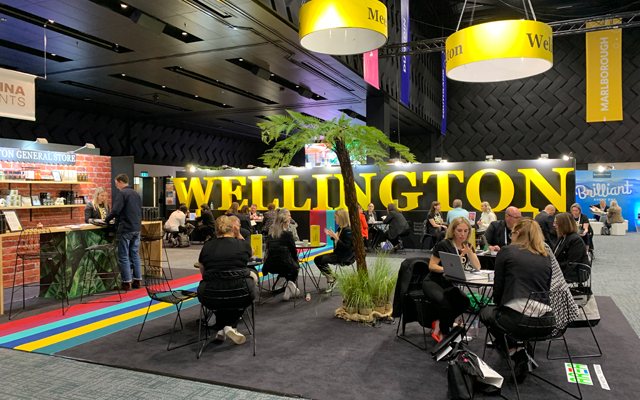
The business events industry will converge on New Zealand’s vibrant capital in June for the first time in MEETINGS’s 27-year history.
Organised by Business Events Industry Aotearoa (BEIA), the tradeshow will be attended by important buyers from across the world as well as from New Zealand.
Adding to the excitement is the event’s venue – the new Tākina convention and exhibition centre.
Irette Ferreira, manager of Business Events Wellington, said: “We’re super excited to show Tākina off to our industry, and to highlight how we can support organisations to successfully bring their business events here.”
“Our stand will showcase all that Wellington has to offer as we enter into a new era of business events and strive to position our city as New Zealand’s events capital.”
The Wellington regional stand, hosted by Business Events Wellington, will see representation from 20 stand partners – its largest ever. It will also offer an exciting line-up of activities to engage buyers.
Buyers will get to meet specialist suppliers such as Wellington Zoo, Public Trust Hall, Red Pebble, Moy Hall Vineyard and Destination Wairarapa.
“Buyers and visitors can earn vouchers or points to redeem at our Made in Wellington store (that is) lined with tasty goodies from our region, along with a few extra surprises,” said Ferreira.
Business Events Wellington will take more than 160 buyers beyond MEETINGS for a day of city exploration. The programme will showcase the capital city’s hospitality, hidden gems, and event possibilities.
Marriott Bonvoy to spark business connections with new campaign

Marriott Bonvoy has launched a new campaign, Spark This
Moment, that is themed around connections between business travellers.
To empower and meet the evolving needs of meeting planners and corporate travellers, the new campaign highlights how guests can best maximise their meeting experience when booking with its hotels.

The campaign highlights five connection aspects: Success, Passion, Appreciation, Relationships, and Kindness.
To facilitate the successful flow of new ideas, Marriott Bonvoy properties offer innovative and high-tech event spaces as well as the support of on-site event experts.
To help guests spark passion in their corporate gatherings, hotel and resorts build unique local heritage and culture of the destination into the stay experience.
To bring people together through a shared appreciation of delicacies and good times, Marriott Bonvoy properties offer a portfolio of world-class restaurants and bars, and boast 26 Michelin stars in 21 restaurants in Asia-Pacific.
To build relationships, the company’s wide array of offsite meetings and corporate retreats help meeting planners and business travellers cultivate purposeful experiences.
And finally, to make the world a better place, Good Travel with Marriott Bonvoy is available in almost 100 hotels in Asia-Pacific to deliver purpose-driven travel that will enable corporate goups to create a positive impact and form deeper connections with the local communities.
Ramesh Daryanani, vice president of global sales, Asia Pacific, said: “We’ve seen a strong uptake in MICE bookings, indicating a deepened desire for human connection and face-to-face meetings since the easing of pandemic restrictions.
“With our diverse portfolio of hotels and resorts across the region, we’re able to deliver a wide range of offerings to meeting planners
and corporate travellers to suit their needs, inspiring more meaningful connections and memorable moments”.
Spark This Moment campaign comes with limited-time offers. Eligible bookings of meeting or events with Marriott Bonvoy’s portfolio of participating properties in Asia-Pacific can earn rewards including Double Marriott Bonvoy Points and Group Perks.
Discovering New South Wales

Sparkling Sydney and its scenic surroundings were central in a recent familiarisation trip designed for a select group of Indian business event planners who journeyed to Australia for the Business Events Australia (BEA) Asia Mega Famil Showcase in March 2023.
The Indian contingent was part of the first group of 50 international planners that were involved in the pre-show familiarisation trip led by host city partner Business Events Sydney (BESydney).
Planners were introduced to Port Stephens and the Hunter Valley, where they went around on quad bikes and helicopters and explored the destinations’ natural landscapes, adventure options as well as wine and culinary draws.
Participant Sajin Nawshad, director, Akbar Holidays, said the countryside of New South Wales, which these destinations are part of, can feature well in an incentive programme that is paired with state capital Sydney.
Nawshad was especially impressed with the quad bike ride in Port Stephens, which took participants over sand dunes, through bushes and down a beach.
“Besides the beautiful route, the safety measures in place were impressive. In some of the markets, you are handed ATV bikes without supervision and safety equipment like a helmet,” he explained.
He added that the scenic helicopter flight over Hunter Valley is ideal for top achievers, due to the breathtaking views it affords.
Nirav Desai, head – domestic and international MICE business, WE Events, also sees promise in Port Stephens’ wildlife encounters, such as dolphin sightings and learning about koalas at the Port Stephens Koala Sanctuary.
“The glamping facility within the sanctuary can also be a unique accommodation option for incentive groups,” said Desai.

Indian planners called at Brokenwood Wines and Hope Estate in the Hunter Valley, where they had wine tasting sessions. Both venues offer vast open spaces that are ideal for group lunches.
From the countryside, the group journeyed back to Sydney, where they had an adrenaline rush from Harley Davidson bike rides to Bondi beach.
A highlight in the city was the visit to Sydney Cricket Ground (SCG), where the group got to meet and greet Australian cricket legend, Michael Bevan.
“SCG has a special place in (the hearts of Indians), as it has been a venue of many great sporting events. Such private tours where top achievers get to meet famed cricketers are always going to be in demand,” remarked Bindeshwari Prasad, associate vice president, FCM Travel Solutions.
Prasad sees potential in planning a lunch event with a private SCG tour and cricketer meet-and-greet for his Indian groups, utilising the stadium’s event venues.

The BEA Asia Mega Famil Showcase was designed to play up Sydney’s best and newest event options. A welcome event was hosted at Taronga Zoo’s Gili Rooftop, from which participants observed the zoo’s residents, while a welcome dinner was held at the Harbourfront Seafood Restaurant, set against a backdrop of the iconic Sydney Harbour.
Even more of Sydney’s unique venues were showcased in the following days of the trade event, when B2B meetings were underway. The Jackson, Sydney’s newest luxury yacht venue, hosted a gala dinner for attendees; the Art Gallery of NSW presented its newly-opened North Building wing venues; while the Royal Randwick Racecourse showed off its new Winx Stand and entertainment potential.
Puccini’s Madama Butterfly on Sydney Harbour outdoor opera provided a stunning finale for the BEA Asia Mega Famil Showcase.
Aboard the ChatGPT train

While still in its early stages of development, having launched only in November 2022, the artificial-intelligence chatbot ChatGPT has lured major OTAs with its use potential.
Developed by OpenAI, ChatGPT is able to take prompts – or questions – from human users and sweep through vast data on the Internet to generate a human-like and comprehensive response. Its capability is regarded as a major step up from the chatbots the world has been relying on, which are only able to respond with structured answers to a limited set of keywords and instructions.

So appealing is ChatGPT that, according to Similarweb, it gained 100 million monthly active users in January, just two months after its launch. Its developer, OpenAI, also became one of the 50 most visited websites in the world, found Digital-adoption.com.
Making sense of what that adoption rate meant, Time magazine wrote that Instagram took 2.5 years to reach 100 million users while TikTok got there in nine months.
Among the companies that are riding the ChatGPT wave are Trip.com and Expedia Group.
In February, Trip.com unveiled TripGen, a chatbot that is integrated with the OpenAI API and designed to provide travellers with live assistance through artificial intelligence (AI) technology, enabling users to receive tailored travel routes, itineraries and booking advice in real time on the Trip.com platform.
TripGen supports English, Japanese, Korean and traditional Chinese, with more languages to be added in the future. Work is also being done to allow users to book directly with Trip.com after TripGen searches, and to integrate with the new WhisperAPI for speech-to-text transcription and translation.
Amy Wei, senior product director at Trip.com Group, told TTG Asia: “Users can make more complex requests, such as suggestions for a romantic holiday. Business travellers (with packed schedules) can easily enquire about one- or two-day tours. This is an efficient way of finding out and narrowing down information for time-starved travellers.”
So far, response to TripGen has been good, according to Wei. User numbers have been doubling every day since it launched, with users asking four to five questions during their searches.
In March, Expedia Group introduced a plugin for ChatGPT users to bring their travel conversations to life. Powered by Expedia Group’s 70 petabytes of travel data, the Expedia pluggin allows ChatGPT users to get real recommendations on how to get to a desired destination, where to stay, and what to see and do.
Barely a month later, Expedia Group deepened its ChatGPT use by bringing a ChatGPT trip planning capability into its app. The new function allows Expedia members to have an open-ended conversation in the Expedia app for recommendations on destination activities and tourism products, and have hotels discussed in the conversation saved for future booking. Expedia members can choose dates, check availability, and add on other trip components, such as flights, cars, or activities.
The conversational trip planning beta experience is rolling out globally in English on the Expedia iOS app.
Kurt Weinsheimer, chief solutions officer at Sojern, a marketing specialist for hotels, attractions, and destinations, said these ChatGPT integrations are “exciting and inevitable”.
“Travel experts (right away) saw the potential of ChatGPT to offer an end-to-end user experience. It can help in the (travel) planning stage… and also tell that story when (travellers) are done with their trip,” he told TTG Asia.
“ChatGPT, Natural Language Processing (NPL) and AI require… content. The algorithms that power them need a ton of data in order to maximise their potential. Hence, having ChatGPT partner with a travel company like Kayak Group or Expedia Group makes a ton of sense. Now, a travel enquiry on ChatGPT will not just give you broad information and ideas, but very specific options that can be pulled from Kayak’s data and lead the customer to real-time rates, availability and a booking function,” he explained.
A boost for marketing
The conversational nature of ChatGPT’s output has not escaped the eyes of travel and tourism marketers.
Weinsheimer said: “In the history of tech, we know that innovations have taken away some roles only to replace them with new ones. Calculators did not take away math jobs; they allowed mathematicians to advance to higher levels of computing and engineering. So, we see NLP providing an opportunity to enhance content creation. It will be good for good writers and make marketers even better at their job.”
Ewan Cluckie, founder of Thailand-based travel operator and distributor, Tripseed, has “done some quite extensive testing with ChatGPT”.
Cluckie sees potential use cases for it within the travel industry, particularly in content creation. “It can speed up copywriting tasks and rewrites, and help to lay basic structure,” he remarked.
“I have also found it can be surprisingly competent at the localisation of existing content for different language markets,” he added.
Joleena Seah, managing director – Southeast Asia with leading regional publicity agency, GHC Asia, told TTG Asia that her company has been experimenting with the possible uses of ChatGPT and alternatives, like YouChat and Bing. Her team recently chose ChatGPT to trial a questionnaire that sought to draw media representatives’ opinion on a hospitality brand.
Seah said: “ChatGPT and the likes can be useful for our line of work. We could use it to start a draft for itinerary suggestions, drafting general factsheets and FAQs for our clients (destinations, hotels or brands), researching ideas to promote destinations, and understanding guest sentiments, and more, before we embellish the content. Basically, ChatGPT can help us to reduce time spent on research so that we can add more value to our clients’ press materials.”
However, Weinsheimer emphasised that travel and tourism companies should not limit their vision to just ChatGPT. Rather, they need to think about their investment in big data and AI in general.
He said: “It is a challenging time for marketers today. A recent study shows that over 70 per cent of consumers want a personalised experience, and almost the same percentage expressed concerns about how their data is being used.”
Balancing personalised experience in a permission-based world can be attained through AI, he opined. Sojern uses AI to predict the likelihood of travellers acting in a certain way or wanting certain experiences.
“You need models to go through billions of data points to come up with the right matches. You also need to understand that within those billions of travellers, there will be those that don’t want to get advertisements,” he said.
With AI, Sojern is able to fine-tune the audience, and provide the opt-in audience with the right messages at the right time for the maximum impact.
“The same way that we see ChatGPT is leveraging conversational data to write personalised experiences, big data and AI can be used to create personalised marketing and advertising. AI is here to stay, and it is up to companies to leverage it to minimise the number of monotonous tasks they have to deal with, and free them up to do more interesting, revenue-generating work,”said Weinsheimer.

Limitations
As promising as ChatGPT is, corporate users are clear about the chatbot’s limitations – the system relies on data on the Internet and, for now, its knowledge is limited to 2021 content. And with it accessing an assortment of published data online, there is also the possibility of it pulling inaccurate information.
People with subject matter expertise continue to remain important even as ChatGPT comes into the picture, asserted Weinsheimer.
“ChatGPT is sometimes accurate and other times not quite, but it is always 100 per cent confident. And that’s where you need human experts to ascertain accuracy,” he said.
Seah said: “There are also limitations when a job requires senior leadership’s personal insights, brand messages and new announcements. Most of our work involve hotel launches and new brand initiatives, which render AI chatbots ineffective because these information are not yet available on the Internet.”
Thiam Wei Toh, founder and chief storyteller of Indie Singapore Tours, has trialled chatbots for customer service and the creation of itineraries, but found that “even (OpenAI’s latest) GPT-4 is still a bit off from being able to be properly harnessed”.
Thiam is looking into other AI tools like Midjourney, Stable Diffusion and Copy.ai to to help with content generation and productivity.
Cluckie agrees that ChatGPT and the likes “will not be replacing any jobs anytime soon”.
“We’ve being doing more extensive testing on the localisation of content for different markets but even this still requires a human editor. The inaccuracies in content produced by ChatGPT, and the generic blandness of its responses, are still far too prevalent for it to be used as much more than a writing aid,” said Cluckie.
He added that the system’s reliance on training data prevents it from generating original thought.
“Innovation and originality is, for now at least, still safely within the biological domain. In the context of travel, this limitation means that tools like ChatGPT inherently perpetuate issues such as overtourism unless specifically prompted otherwise, and even then, they are fundamentally limited to what is already provided to them in their training data,” he said.
To address potential inaccuracies, Trip.com is working to embed booking links into TripGen, so that the existence of system-recommended products can be verified, shared Wei.
On Expedia’s part, its collaboration with OpenAI is currently in the beta testing phase, allowing it to rapidly evolve the experience based on members’ interaction.
“It’s also important to remember that while many measures have been taken to limit inaccurate results and inappropriate responses, at times the experience may not work exactly as expected. Feedback from both our employees and all those using the experience will be continually evaluated to make sure responses meet our standards,” commented Rathi Murthy, CTO, Expedia Group.
To travel companies eager to weave ChatGPT and similar AI functions into their system, Murthy has a word of advice: “Travel is a complex industry with lots of tech debt, so before companies can integrate with technologies like ChatGPT, they need to make sure the technological fundamentals of their platform are sound, and their data quality is high.”
It would be a long-term investment. She said: “For AI to truly deliver on its potential, including commercially, it requires large quantities of high-quality data and a highly skilled team; it must be viewed as an essential part of the infrastructure to run a business, and it needs time. AI is not productive or efficient on day one – it takes time to get the data, train, evolve and scale up the models. It’s an ongoing capability and there’s not really an end in terms of value that it can bring to a business.”
Katie McAlister helms as president of Cunard

Cunard has appointed Katie McAlister as its president effective from August.
She will bring to Cunard her commercial and operational experience as well as digital transformation expertise and strategic oversight.
 She currently serves as TUI as chief marketing officer, UK & Ireland, where she has worked for 20 years.
Sunlight Hotels and Resorts appoints new director of sales
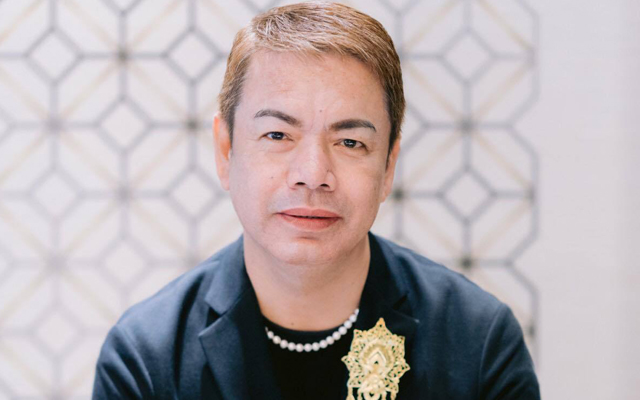
Teody Espallardo recently joined Sunlight Hotels and Resorts as director of sales of its three properties in Palawan: Sunlight Ecotourism Island in Culion and Sunlight Hotel in Coron and in Puerto Princesa.
 Prior to that, he was director of sales and marketing of Altabriza Resort Boracay for nearly six years.
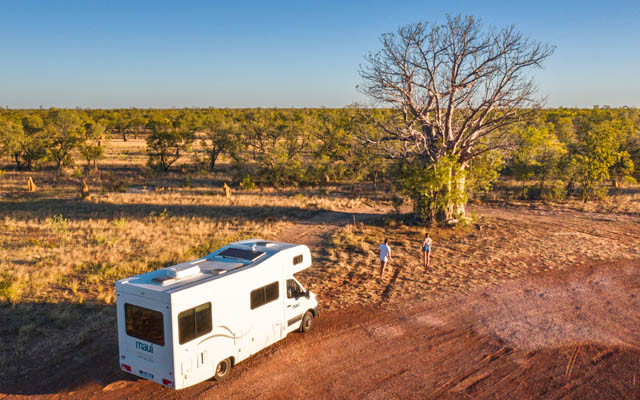


The Sri Lankan government is pursuing the sale of state-owned national carrier SriLankan Airlines and its subsidiaries, as years of government handouts have failed to stem losses.
While SriLankan Airlines has been reporting operating profits in recent months, its net loss remains high, running into billions of Sri Lankan rupees.
SriLankan Airlines CEO Richard Nuttall said on May 7 that the airline has an operating profit of US$103 million, but US$100 million is channelled into servicing past debts.
“If the airline can find a solution for its debt, SriLankan can become truly profitable,” he told local media.
The government has announced its intention to privatise the airline, but calls for expressions of interest from interested parties have yet to be made.
Minister of ports, naval and aviation services Nimal Siripala de Silva, who confirmed this decision, said it would be wise to divest SriLankan Airlines and its subsidiaries SriLankan Catering and Ground Handling services at once to a single investor, instead of opting to bring in multiple investors.
The government is looking at offering a 49 per cent stake to private investors in this process with expectations to raise US$ 500 million to 600 million from the sale of the two subsidiaries, and more from the sale of the airline.
Local media reported that an Indian operator has shown interest in investing.
This is the third time in the national carrier’s history that the government is seeking external help to improve the airline’s fortune. In 1979 Singapore Airlines offered its expertise to run the national carrier, which had then changed its name from Air Ceylon to Air Lanka. In 1998, a 40 per cent stake of the airline was sold to Emirates, which later withdrew in March 2008 when the partnership agreement was up for renewal.