

Asia/Singapore Monday, 27th April 2026
Page 224

WATG reveals five trends shaping the hospitality landscape in 2024

0

With the return of travel, consumer preferences and expectations have evolved as indicated by the increased demand for all things responsible yet purposeful. This heightened sense of self-awareness and personal lifestyle has triggered changes in the way hospitality stakeholders personify their brand promise.

Integrated luxury hospitality designer WATG reveals five emerging trends that will shape Asia-Pacific’s hospitality industry in shape the hospitality industry in the months ahead.

Rissai Valley, a Ritz-Carlton Reserve nestled in Jiuzhaigou, China, was the host venue for a high jewellery exhibition curated for high-net-worth travellers

Luxury brand collaborations fuelled by the experience economy
WATG observed a growing prominence of luxury fashion and lifestyle brands within the hospitality space as they seek to capture growth in the ‘experience’ economy by aligning their brands with aspirational High-Net-Worth Individuals’ (HNWIs) recreation and way of life. Some examples include the emergence of pop-up beach clubs like Fendi Puente Romano and Dior Bali, exclusive suites within famed hotels such as the Bentley Suite and Dior Suite at St Regis NYC, entire luxury hotels like Bulgari, Armani, and Baccarat, and the proliferation of branded residences by such brands.

WATG’s collaborations with Bulgari and the newly-opened JW Marriott Jeju Hotel & Resort in Jeju, South Korea, showcase the timeless glamour and heritage of the renowned Italian watch and jewellery maker, as well as the Louis Vuitton Deep Time luxury jewellery exhibition held at Rissai Valley, a Ritz-Carlton Reserve nestled in Jiuzhaigou, China – Ritz-Carlton’s first all-villa resort.

Private members clubs targeting daycations sector
Growth in concept with the line blurring between hotel and club is observed as hotels now turn to the local community for patronage. An array of amenities is activated to create club-like concepts for these daycations. The subscription model these clubs are based on offers hotels more diversified and stable revenue streams than from transient trade. Rosewood, Six Senses and Aman are all opening private clubs for local residents integrated within urban hotels. At the same time, there is growth and innovation from the traditional private members club space targeting specific market segments with increasingly curated offering comprising a guestroom component or offering retreat concepts away from the city.

Branded ecosystems
Hotel operators are extending their services and brands beyond traditional hotels into other adjacent lifestyle concepts. This includes the branding and operation of a range of synergistic components within an urban mixed-use development including residences, wellness hubs, serviced offices and private members clubs. Accor, for example, has launched a dedicated service line Accor One Living to focus on the development, operation and branding of these mixed-use spaces with a focus on creating complementary experiences under a single brand for a range of users from guests, onsite residents to the local population. Hotel operators are also continuing to expand their presence into non-hotel leisure experiences through the branding and management of standalone vacation rentals, superyachts and private jets.

Scaled-up accommodation
The post-lockdown trend for multi-generational and blended travel is having a demonstrable impact on the demand and supply for larger accommodation typologies within a resort setting. Hotels are being designed today with a greater consideration for this market. Larger villas are making up a greater proportion of total inventory. Family-friendly in-villa amenity is being bolstered while flexibility to cater to the different needs of a travel group is being designed into the product. This growing transient multi-generational demand dovetails neatly with the growth of branded residences, creating an all-round beneficial scenario from a cashflow and end user demand perspective.

Amenity innovation to go against the conventional
As the experience economy enters a new phase, there is an arms race underway in the hospitality sector for amenity programming that helps destinations to stand out from the crowd. Developers are going to extra lengths, investing in wow-factor concepts that capture the imagination and place the destination on the map. Leveraging the unique context of each destination, including natural assets and local cultural themes, is central to anchoring amenities and providing one-of-a-kind experiences that cater to growing expectations for authenticity. Partnerships with third party specialist operators, brands and celebrity endorsed concepts are also adding a new dynamic and visibility to the destination offering that speaks directly to the targeted guests. Be it kids’ clubs, sports and fitness facilities, wellness programming, cultural experiences and translating through into the F&B offering and poolside experience, each new resort requires a new layer of thinking in terms of experience curation through the guest stay.

“As the hospitality landscape evolves in Asia-Pacific, we must rethink what this means to us, to our clients, their guests and to the planet. It is imperative that we continue to innovate as we strive to respond quickly to market needs, to elevate guest experiences and recapture revenue to optimise returns for our clients. Backed by a thorough research-led framework, our deep understanding of what today’s travellers seek allows us to set new standards for what guests can expect in a new era. We believe that these trends don’t just guide our clients to build a more resilient business model but also shape our industry to ensure we can keep on thriving in 2023 and beyond,” said Guy Cooke, associate principal and studio director of advisory services, WATG Singapore.
Expedia expands features, products to aid travel planning

0

Expedia’s Autumn Release 2023 highlights a collection of new features and products that reinvents how travellers discover new places, collaborate with friends and family, and get quick AI-generated answers to common travel questions.

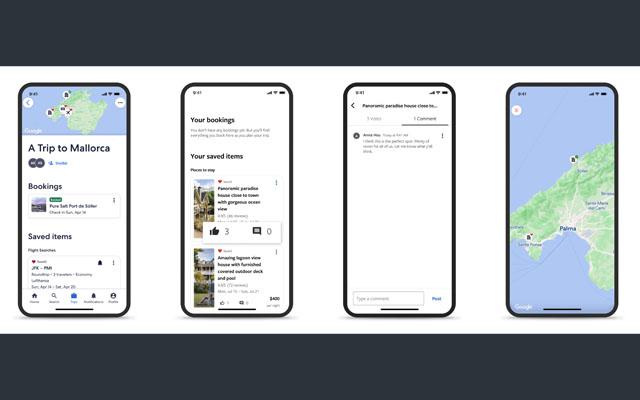
Travellers can now discover new places and ways to plan on the Expedia app with new features and products. For example, the Trip Planner enables travellers to collaborate and engage with friends and family on a trip where both saved options and booked items are shared across the group; and dynamic travel guides that provide insights into hotel prices, weather conditions, and crowd levels for the most visited cities in the world.

The Expedia app has new features and products that will reinvent how travellers plan their trips

Others include amenity answers, which uses generative AI to sift through guest reviews to share their experience of the amenities at a hotel or vacation rental, as well as answer property queries. Both of these features are currently available on the Expedia app in English language only.

There is also a flexible date search which gives travellers the ability to find the best accommodation options by length of stay and time of year.

In addition, self-service features have been simplified: travellers can add their hotel booking information to Apple Wallet and Google Wallet; they can also add breakfast to a hotel reservation when available, any time up to a day before check-in.

“Expedia Group invented online travel more than 25 years ago with the goal of using technology to empower travellers around the world. In the past few years, we’ve doubled down and invested massively in the latest tech capabilities using AI and machine learning to accelerate our innovation to better serve the millions of travellers who come to us every day,” said Peter Kern, vice chairman and CEO, Expedia Group.

“Our new intelligent discovery and planning features are designed to address traveller pain points, allowing our members to easily plan, book and enjoy travel across our apps.”

All features and products included in Autumn Release 2023 will roll out on the Expedia app by the end of 2023 globally.

Make way for wellness

0

Wellness has become a big aspect of travel for people, with expectations ranging from the simpler outdoor walks in nature to more scientific approaches to rejuvenation.

This has inspired NTOs and stakeholders in the travel and health space to come up with innovative offerings to win over travellers.

The Singapore Tourism Board’s (STB) Wellness Tourism Roadmap identifies key strategies and initiatives to develop the city-state’s wellness offerings.

In its effort to become a leading urban wellness haven, STB partners with global fitness and wellness aggregator ClassPass to promote Singapore’s wellness offerings on the platform.

Wellness Festival Singapore (WFS) was launched last year and the second edition hosted this year, to promote and increase the accessibility of Singapore’s wellness repertoire. WFS is organised by STB in collaboration with Enterprise Singapore, Health Promotion Board, National Arts Council, Sentosa Development Corporation, and Sport Singapore.

Held at Marina Bay Sands (MBS) from June 17 to July 9, this year’s event was bigger than the last. There were altogether more than 180 wellness activities across Singapore, focusing on fitness, mental and emotional health, as well as lifestyle offerings. In 2022, the event offered 130 activities.

The second edition of Glow Festival also materialised in February. It debuted in 2019, drawing a crowd of 15,000 active participants to Sentosa, but was disrupted by the pandemic in the subsequent years.

The home-grown festival, supported by STB and MBS, focuses on wellness activities, with the 2023 programme comprising workshops designed and conducted by wellness experts, in-person and digital experiences, and a line-up of international celebrity fitness instructors.

Among the highlights were a multi-sensory studio space by Kingsmen, which spans the size of four tennis courts; and The Glow app, which gamified fitness challenges island-wide.

Martin Capstick, chief executive of Exceed Sports & Entertainment and founder of Glow Festival, said: “Mental, physical, and emotional well-being are at the core of Glow Festival 2023’s messaging. We want to inspire festival goers to adopt new practices to live happier and healthier lives and present them with a truly unique opportunity to unwind.”

Over in Thailand, wellness tourism takes on a unique angle. The country became the first in South-east Asia to legalise the production, import, and export of cannabis for medical purposes in 2018. The plant is said to help relieve stress, reduce fatigue, increase appetite, encourage deeper sleep, stimulate the intestines, and soothe inflamed skin.

This led to a rise in cannabis treatments available at various hospitality businesses. For example, Panpuri Wellness, a luxury spa in Bangkok, offers Holistic Cannabis Wellness Experiences while spas within Anantara hotels utilise cannabidiol oil – the second most active ingredient in cannabis – in some of its treatments. Anantara Chiang Mai Resort even serves up “healthy and nutrition-rich” cannabis-infused dishes at its Service 1921 restaurant.

AWMI hopes to strengthen Indonesia’s reputation in herbal medicine and make it more accessible to tourists

In an earlier interview with TTG Asia, Chunxia Gao, group director of spa & wellness at MSpa International for the Asia region, opined: “There is growing interest in the therapeutic benefits of CBD (cannabidiol oil). With CBD safety guidelines ensuring the quality of the products, we can only foresee great success in CBD-infused products, superfood choices, and CBD spa and wellness experiences.”

On a broader scale, Tourism Authority of Thailand (TAT) initiated the Amazing Thailand, Amazing New Chapters: Thailand Meaningful Wellness project to raise the profile of Thailand’s vast selection of health and wellness travel products and services. Within this broad project is the Discover the New You campaign, launched in July this year with the support of more than 130 leading health, wellness business operators, hotels, wellness resorts and spas, as well as hospitals and specialised clinics. A range of products, from wellness stays at resorts to health check-ups, is created for this.

TAT expects the campaign to attract more than 3,000 new tourists to Thailand and generate over 18 million baht (US$528,859) by this September.

These developments are expected to power up Thailand’s wellness tourism advantage. According to the Global Wellness Institute’s The Global Wellness Economy: Thailand report, published in September 2022, Thailand is the fourth largest wellness tourism market in Asia, after China, Japan, and India. Its wellness economy in 2020 was worth US$29 billion. Thailand also ranks 17th globally for Traditional & Complementary Medicine.

In Malaysia, more than 10 million travellers from around the world have visited the country for healthcare purposes in the last decade, contributing over 9.2 billion ringgit (US$2 billion), according to Malaysia Healthcare Travel Council (MHTC).

Healthcare travellers visiting Malaysia peaked at 1.22 million in 2019, contributing 1.7 billion ringgit in earnings. As the country recovers from the impact of Covid-19, healthcare arrivals are back up to 850,000 in 2022, while revenue was 1.3 billion ringgit.

Explaining Malaysia’s allure for healthcare services, Musa bin Yusof, deputy director general, promotion, Tourism Malaysia, said: “Our facilities are world-class (and) easily accessible. We are multicultural and multilingual, so there is no language barrier, and services are value for money as we charge in Malaysian ringgit.”

He added that healthcare visitors are well supported with customs clearance via a dedicated immigration lane, airport meet-and-greet, and access to a special lounge for arranged transport to their hospital.

Anantara Chiang Mai Resort serves up cannabis-infused dishes

To advance the country’s healthcare tourism sector, MHTC launched the Malaysia Healthcare Travel Blueprint 2021-2025. It aims to sharpen the travel ecosystem and the Malaysia healthcare brand, and deepen market reach. A revenue target of 1.7 billion ringgit is set for 2025.

As part of the blueprint, Malaysia introduced its flagship Medical Tourism Hospital Programme, which is expected to play an important role in transforming the healthcare environment. Four hospitals have been appointed for this – National Heart Institute, Island Hospital, Mahkota Medical Centre, and Subang Jaya Medical Centre.

Indonesia is, too, deepening its development of health and wellness tourism. While Balinese and Javanese massage often come to mind among travellers in search of a relaxing holiday in the country, Indonesia has far more to offer.

The Ministry of Tourism and Creative Economy (MoTCE) and the Ministry of Health are collaborating to expand the country’s health and wellness offerings.

Aligned with the government’s direction, the Indonesia Medical Tourism Association (AWMI) is now developing medical tourism in rural areas.

Taufik Jamaan, chairman of AWMI, said the association’s work had started in late-2022, and ongoing efforts include collaborating with food processing trainers to ensure hygienic food processing.

AWMI is also embracing digitalisation through the implementation of the Community Telehealth Pavilion (ATM Health). This solution, linked to the Ministry of Health, allows travellers to conveniently check their blood pressure, cholesterol levels, blood sugar, and oxygen saturation.

“For instance, before embarking on a mountain climb, individuals can assess their health condition using ATM Health,” Taufik explained.

The portable nature of ATM Health, which resembles a suitcase, gives it mobility and ease of use in tourism villages.

Taufik explained that AWMI’s role extends beyond medical tourism promotion, as it also actively develops businesses avenues, educates the public, and conducts research on herbal resources across the country. It recently welcomed the Association of Indonesian Herbal Medicine Doctors as a partner in its medical endeavours.

Looking ahead, AWMI aims to establish downstream processes to ensure that the community can benefit from research findings. By leveraging research outcomes, it plans to develop various products, such as supplements, powders, herbs, and beverages, which will strengthen Indonesia’s reputation in herbal medicine.

At present, it is collaborating with pharmaceutical companies on the verification of herbal medicine by the National Agency of Drug and Food Control and to make herbal medicine more easily accessible to tourists.

Niccolo & MAQO Changsha welcomes new area GM

0

Wharf Hotels Group of Hong Kong has appointed Henrik Iversen as area general manager of Niccolo & MAQO Changsha.

He spent 12 years working for Hyatt Hotels, seven years for Rosewood Hotel Group, and five years for Conran Restaurants working across multiple locations including Spain, Australia, Vietnam, Malaysia and China before accepting his present role.

His most recent role was as general manager at Grand Millennium Beijing Hotel.

Four Points by Sheraton Palawan appoints GM and DOSM

0

The 168-key Four Points by Sheraton Palawan, to debut in Puerto Princesa in 4Q2023, has appointed Dietmar Platz as the general manager and Amie Villena as director of sales and marketing.

Platz has extensive experience with Marriott International and was previously manager of Amman Marriott in Jordan, director of operations at JW Marriott Cairo, director of F&B at Doha Marriott in Qatar and cluster director of F&B at Marriott Hotel and Courtyard by Marriott in Tbilisi, Georgia.

Villena’s extensive background in hotel sales, marketing and event management included her stint as group DOSM of The Bellevue Hotels and Resorts, director of sales at The Bellevue Resort Bohol, and pre-opening DOSM at City Garden Grand Hotel.

Former STB marketing chief joins Resorts World Sentosa

0

Resorts World Sentosa (RWS) has named Chang Chee Pey as its new senior vice president and chief experience officer.

Chang joins from the Singapore Tourism Board, where he had an illustrious 26-year career. He was integral to the growth and development of Singapore’s tourism sector, and was last assistant chief executive (marketing) at the organisation.

Manish Nambiar takes up dual role at Kempinski Hotels

0

Manish Nambiar has been appointed as the new managing director of Siam Kempinski Hotel Bangkok and vice president operations, South-east Asia.

Manish will be responsible for the execution of operations, including service, operational brand standard delivery and the quality of all Kempinski hotels in the region. He will be based at Siam Kempinski Hotel Bangkok and will lead four other properties in South-east Asia.

A veteran hotelier with almost 20 years of experience with Kempinski, he joins from his executive role as area general manager of Africa since 2021. In his previous position, he oversaw the operations of all Kempinski properties in the Africa region and was based at Kempinski Hotel Gold Coast City Accra, in Ghana.

Manish started his career path with Kempinski S.A. as an F&B specialist in Tanzania, East Africa in 2004 and enhanced his expertise by opening various Kempinski properties in the Middle East and Africa.

JNTO welcomes new executive director for Singapore

0

The Japan National Tourism Organization (JNTO) has appointed Takuya Shiraishi as executive director for the Singapore market.

In this role, he will be responsible for leading the development and implementation of strategies to promote Japan as a preferred tourist destination among Singaporean travellers.

Noor Ahmad Hamid lands new role at PATA

0

The Pacific Asia Travel Association (PATA) has appointed Noor Ahmad Hamid as CEO, commencing October 1, 2023.

Noor’s illustrious track record began at the Malaysia Tourism Promotion Board, where he served for more than 16 years in various departments. He was also based in their Los Angeles, US office for four years.

Following this, Noor ventured into the corporate world, joining an events management company specialising in international sporting events. He later joined a government-affiliated company focused on hospitality and tourism investment.

In 2009, Noor joined the International Congress and Convention Association (ICCA) as the regional director of Asia Pacific where he served for 11 years. During his tenure, membership in Asia Pacific grew substantially, resulting in the region being ICCA’s largest.

During the Covid-19 pandemic, Noor worked with the Malaysia Convention and Exhibition Bureau as chief operating officer, and played a key role in the recovery of Malaysia’s business events industry.

In 2022, he was inducted into the Events Industry Council Hall of Leaders, the most prestigious award in the global business events industry. In 2018, he received the China MICE Leaders Award from Meetings and Conventions China for his contributions to the Asia Pacific region.

Summer global air recovery on the rise, but patchy: ForwardKeys

0

Travel analytics firm ForwardKeys has identified six major trends in global air travel this summer, with US dominance, a patchy post-pandemic recovery, improvements in the Far East, resilience of classic beach destinations, and limited impact of heatwave being among them.

Worldwide, summer (July 1 – August 31) flight bookings were 23% behind pre-pandemic (2019) levels and 31% ahead of last year.

Source: ForwardKeys actual air tickets

US dominates the ranking
In the ranking of the most visited country destinations by share of scheduled flight bookings, the US was top of the list by a substantial margin, attracting 11% of all international visitors this summer. It was followed by Spain, the UK, Italy, Japan, France, Mexico, Germany, Canada and Türkiye.

The US was even more dominant in outbound travel. In the ranking of source markets, the US was top with an 18% share of scheduled flight bookings. It was followed by Germany, the UK, Canada, France, South Korea, China, Japan, Spain and Italy.

Patchy recovery
For most countries, travel was up on last year by a double-digit figure, but volumes have yet to reach pre-pandemic levels. A closer look at the world’s traditionally largest outbound travel markets reveals the patchy nature of the recovery. The US, 17% up on last year, was just 1% down on 2019 volumes. However, other traditionally large source markets were much further off the pace – Germany, 21% down on pre-pandemic levels; the UK 20% down; France, 17% down; South Korea, 28% down; China, 67% down; Japan, 53% down; and Italy, 24% down.

The Far East revs up
Striking are the differences in travel volumes compared to last year, which reveal how much the Far East was still in lockdown but is now revving up, with all three Asian countries in the top 10 source markets, namely South Korea, China and Japan, showing at least a triple-digit growth rate compared to 2022. While the Chinese outbound travel market has been among the slowest in the world to recover, it still manages to hit seventh place thanks to its sheer size.

Countries famous for their beaches and warm waters did very well this summer

Classic beach destinations are most resilient
Looking at the destinations which have done best against 2019 levels, the list is dominated by countries famous for their beaches and warm waters. The top 10 all exceeded the summer of 2019 and most showed strong growth from last year. Top of the list is Costa Rica, 19% up on 2019 and 15% up on 2022. It is followed by the Dominican Republic, Columbia, Jamaica, Puerto Rico, Argentina, Greece, Tanzania, the Bahamas and Mexico. Throughout the pandemic, leisure travel to beach destinations proved to be the most resilient, with many highly tourism dependent economies in the Caribbean and Gulf of Mexico working hard to keep their borders open and the tourists coming; and their efforts have certainly paid off. The same has also been true of Greece, Portugal, and the UAE.

Limited impact of the heatwave
While the unusually high temperatures and the outbreak of wildfires in Greece and Portugal made a very substantial impact on television screens, they made only a limited impact on tourism, as most holidaymakers had already booked. A spate of cancellations affected Rhodes, but flight bookings recovered to normal levels in a matter of weeks. While bookings for Northern Europe and the Nordic region were 16% and 17% behind 2019, they demonstrated better performance in the late bookings market, probably influenced by the heatwave.

.sister-sites .sites a { padding: 14px; }