Asia/Singapore Monday, 27th April 2026
Page 223

Boom time for India’s hotel sector

0

After dusting off its pandemic-induced woes, hotel chains have stepped up their expansion plans in India with 93 hotels opened as well as 157 signings, according to a HVS Anarock Hotels & Hospitality Overview for January to July 2023.

International hotel chains are leading the charge – Radisson Hotel Group (RHG) signed 11 new hotels in Hyderabad, Bengaluru, Ujjain, Raipur, Sonamarg, Manali, Kerala, and Visakhapatnam between January and April 2023, all scheduled to open between 2023 to 2026.
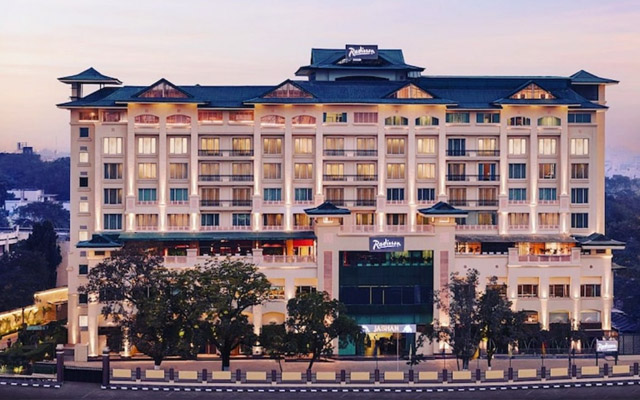
Radisson Hotel Group has signed 11 new hotels in India; Radisson Hotel Jaipur City Center, pictured

Ramzy Fenianos, chief development officer Asia-Pacific, RHG said: “India is an important market and solidifying our footprint here is our long-term goal. Strong wins in 2022 established a robust path for growth this year. We are focused on doubling our footprint by 2025 and remain invested in identifying the right partners for signing and opening brand-defining hotels.”

Similarly, for Marriott International, a total of 10 properties were launched in India between January and August 2023, such as the Coorg Marriott Resort & Spa, Fairfield by Marriott Jaipur, and Westin Hyderabad Hitec City. Another two hotels, The Artiste Kochi – A Tribute Portfolio Hotel, and Courtyard by Marriott Gorakhpur, are also on track to open by end 2023.

In 1Q2024, there are plans to introduce the Moxy brand to gateway cities such as Mumbai, Chennai, and Bengaluru, shared Ranju Alex, area vice president South Asia, Marriott International.

She told TTG Asia: “Marriott currently operates 145 hotels in over 40 cities in India. We plan to expand to at least 10 new cities with over 100 properties in the country by 2025. This is also part of our target to have 250 hotels in India by 2025, including those already open and in the pipeline.”

Domestic hotel companies like Cygnett Hotels & Resorts have also opened new properties in Haryana, Rajasthan, Uttarakhand, and Odisha.

“We hope to add about 15 hotels to our portfolio by the end of the current financial year. Our expansion plans are focused on serving markets where there is a lack of branded hotels in the mid-segment hospitality space,” said Sarbendra Sarkar, managing director of Cygnett Hotels and Resorts.

Other local hospitality chains like ITC Hotels, and Renest Hotels & Resorts, have also strengthened their presence in the mid-segment space in 2023 with openings in non-metro cities like Hoshiarpur, Amritsar and Goa.
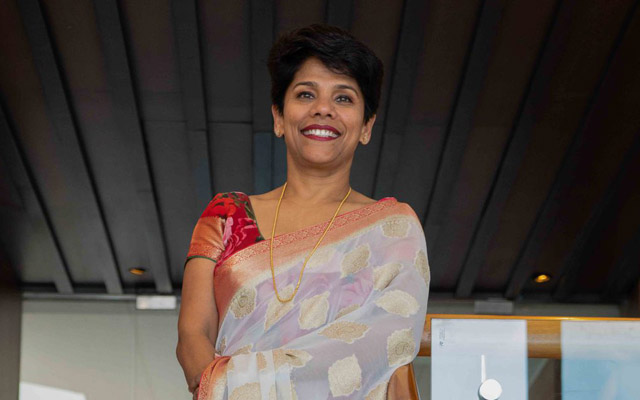
Alex: we plan to expand to at least 10 new cities with over 100 properties in the country by 2025

These expansions seem to be fuelled by exceptionally strong demand from the domestic market.

Alex said: “Our guest profile exhibits a composition of 70 per cent domestic patrons. The domestic segment has transcended the benchmarks set before the pandemic, and the forthcoming years are projected to witness a two-fold surge in international travel.”

Jyotsna Suri, chairperson and managing director, Lalit Suri Hospitality, agreed: “Domestic tourism has helped hotels to bounce back after the slowdown caused by the pandemic. G20 has also been a huge boost for the hospitality industry because we had an influx of visitors from all over the world. The high growth in the hospitality sector has created a demand for new properties to be opened across the segments.”

“We have also witnessed an increase in both average occupancies and average room rate in 2023. The future looks promising for the Indian hospitality industry,” added Sarkar. – Additional reporting by Rachel AJ Lee
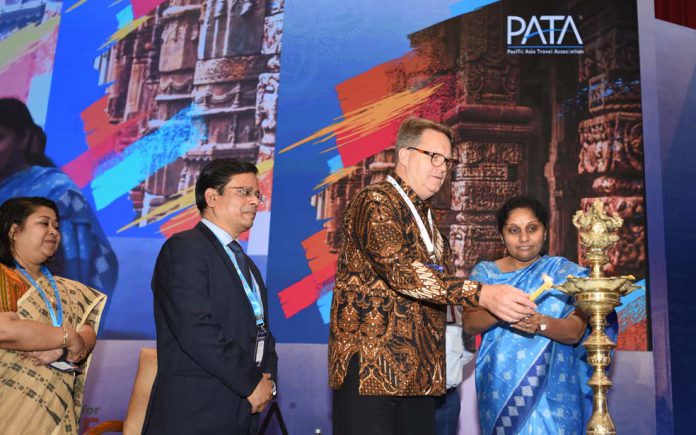
Lighting an auspicious path for tourism

0

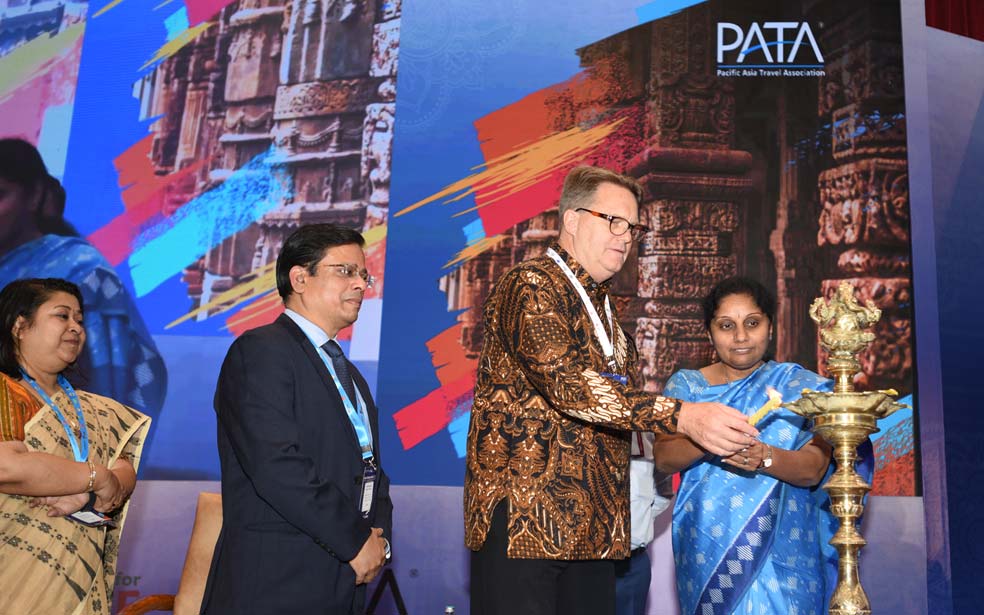
Leadership officials from India’s Ministry of Tourism and PATA chair Peter Semone (second from right) light a ceremonial lamp together to mark the opening of this year’s PATA Travel Mart, an annual gathering of Asia-Pacific’s travel and tourism industry leaders, business owners and media. The celebration dinner was hosted at The Ashok in New Delhi on October 4.

PATA Travel Mart 2023 comprises a full-day conference, PTM Forum, on October 4 as well as a B2B meeting and exhibition on October 5 and 6.

Hotel revenues in Asia-Pacific set to continue rising in 2024: JLL

0

Hotel occupancy levels in Asia-Pacific continue to rise steadily following the reopening of all key markets, the ramping up of air capacity, and a strong pick up in conferences and events around the region.

According to JLL’s Hotel Operators’ Sentiment Survey 2023, conducted with over 360 hotel operators across Asia-Pacific to gather the sentiment of hotel owners and operators, there remains an industry disconnect and uncertainty amid strong tourism demand and macro-economic headwinds.

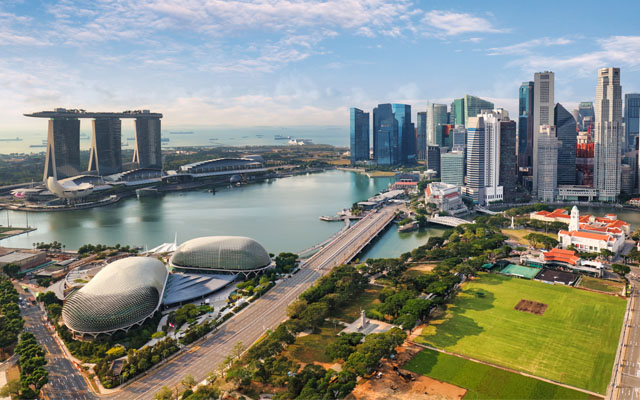
Singapore’s average daily rates have surpassed pre-pandemic levels by over 20 per cent

In markets such as Bali, Phuket, and Singapore, average daily rates (ADR) have surpassed pre-pandemic levels by over 20%, primarily driven by leisure tourists. The survey indicates that 77% of hotels in Asia-Pacific anticipate a further rise in occupancy levels in 2024, particularly in the upper upscale and luxury segments. Furthermore, 73% of hotels in the Asia-Pacific region expect ADR to rise. Among the sub-regions, South-east Asia exhibits the most optimistic outlook, attributed to strong tourist arrival growth momentum in most countries.

Most respondents (66%) are optimistic about total revenue exceeding pre-pandemic levels in 2024, while sentiment in the economy segment remains lower (33%). Economy hotels are less optimistic due to reliance on tourist groups and the increased cost of travel. However, the recent expansion of group tours destinations from China from August 2023, including Australia, South Korea, and Japan, is expected to bring positive prospects for economy hotels in the next six to 12 months.

“Leisure travel continued to drive demand in Asia-Pacific in 1H2023. Concurrently, corporate spending has been under pressure, but we’re witnessing a steady increase in bookings from both leisure and business, supported by a growing number of major sporting and business events,” said Nihat Ercan, CEO, Asia Pacific, JLL Hotels & Hospitality Group.

The labour shortage in the region has led to increasing associated costs since 2022, and by 2024, labour costs are expected to have increased by 10% to 20% compared to 2019. In many cases, this has been somewhat mitigated by redefining job roles, reducing service standards, and reducing maximum occupancy.

While adoption of technological advancements such as mobile check-in, cleaning robots, and guest request tools, could help mitigate some of this labour constraint, the hospitality sector, known for its higher level of service touch points, has been relatively slower in adopting technology.

Energy prices in the region have also been rising due to ongoing political unrest and post-lockdown challenges. Looking forward to 2024, 32% of the respondents expect to see energy costs increase by more than 10%, which is down significantly from the 51% currently experiencing 10% or more in 2023 compared to 2022. This indicates that energy costs will be a reduced concern for hotels in 2024 compared to this year, attributed to energy-saving measures implemented by hotels who have adopted sustainability initiatives, positively impacting their cost base.

Stakeholders in the hotel sector are becoming increasingly aware of the need to embrace sustainability and broader Environmental, Social, and Governance (ESG) principals. Some 65% of respondents have now implemented a carbon emission reduction plan. Notably, a higher proportion of hotels in the higher-end segments have embraced this initiative.

As investors and guests favour ESG supportive hotels, the inclusion of green terms and incentives into hotel management agreements may align the interest between owners and operators around sustainability measures. However, hotels in the region continue to face challenges in their sustainability journey, including the lack of funds, lack of in-house expertise and technology.

In 2022, the main challenge faced by hotel operators was the difficulty in measuring sustainability goals. To spur positive change in the region, the Uniform System of Accounts for the Lodging Industry (USALI) will be updated by early 2025 to incorporate sustainability metrics and various reporting guidelines.

By obtaining a sustainability rating, hotels can demonstrate their commitment to environmental standards, energy efficiency, waste management, water conservation, and other sustainable initiatives. The majority of hotels in Asia-Pacific intend to get their ratings by 2024, an increase from the 38% who are already rated.

“The hotel sector has seen a remarkable comeback after the pandemic, yet there are headwinds which need to be navigated in the medium term and continued profit growth will take more active management. With changing guest preferences and increased competition, owners should take the opportunity to critically look at their concept and positioning, rethink their market segmentation, evolve their approach to attracting and retaining talent, and commit to a clear sustainability pathway,” says Xander Nijnens, head of advisory & asset management, Asia-Pacific, JLL.

TBO.com, WebEngage join hands to deliver hyper-personalised services to customers

0

Global travel distribution platform TBO.com has partnered with WebEngage, a leading marketing automation company, to empower travel agents to serve their customers effectively.

TBO.com’s Business to Agents (B2A) global travel distribution platform will harness WebEngage’s marketing automation stack to consolidate data, derive valuable insights, and enable travel agents to hyper-personalise customer engagement.

The partnership will benefit travellers returning to agents for customised, hassle-free, and convenience-oriented tourism services

Known for its B2A strategy in the tourism industry, this strategy aims to meaningfully cater to travellers returning to agents for customised, hassle-free, and convenience-oriented tourism services. Such B2B strategies, coupled with round-the-clock agent support and acceptance of over 55 currencies, have enabled TBO to expand its purview to over a million hotels and 120 countries globally.

Gaurav Bhatnagar, co-founder and managing director, TBO.com, shared: “Travel distribution platforms such as ours are ripe for technological adoption aimed at higher conversions and insights-led engagement. The partnership will enable us to deliver personalised services to our agents and partners and, through them, a multitude of travellers across the glove.”

Reiterating the need for marketing automation in tourism distribution, Hetarth Patel, vice president, MEA and managing director – UAE of WebEngage, remarked that business-facing companies must engage like they are dealing directly with customers.

“The next phase of B2B growth will hinge on superior customer experiences. Therefore, in tourism distribution, a unified view of agents, dynamic segmentation, and the ability to automate and orchestrate cross-channel communications at scale will constitute a competitive edge. Our partnership with TBO is built on that objective,” said Patel.

Sticking to the familiar: YouGov

0

The latest international YouGov survey showed that tourists are less likely to consider exploring unfamiliar tourist destinations, opting to travel to locations that they are more familiar with.

The survey of over 17,500 people, commissioned by the Saudi Tourism Authority and published ahead of this year’s World Tourism Day in Riyadh, was carried out in 15 countries across Asia, Africa, America, Europe and the Middle East. While results vary between geographies, the study reveals that 66% of tourists prefer traveling to countries that provide familiarity, while 67% tend to travel to destinations that they have previously visited or have heard about through their network, such as family and friends.

YouGov’s survey showed that more tourists are opting to travel to locations that they are familiar with

There are some global differences in the findings with 90% of tourists from Middle Eastern countries seeing familiarity with the destination as a key factor in making travel decisions, while British (62%), French (75%), Chinese (68%) and Japanese (74%) tourists feel more comfortable travelling to places that they know less about.

The implication for those destinations that have a developing tourism sector with less spending power for international promotional efforts is that they lack the ability to generate the familiarity which is clearly an important factor for people when choosing where to travel. On the other hand, the challenge for more mature tourism destinations is to encourage tourists away from the hotspot locations and into their lesser-known regions.

Resonating with previous studies which found that 80% of tourists visit just 10% of the world’s tourism destinations, the stark findings of this survey not only emphasise tourists’ preference for familiar destinations but also shed light on the need for more sustainable tourism practices worldwide.

Fahd Hamidaddin, CEO and board member of Saudi Tourism Authority, said: “The findings of this international survey give us great insight into the trends and habits of global tourists and how important a sense of familiarity is to them when choosing destinations.

“However, familiarity does not mean that destinations need to compromise their authenticity as the research also supports the notion that visiting new places deepens our appreciation of diverse cultures and fosters mutual understanding. When we travel, we are agents of good – we export our own cultures and return home with new discoveries, new ideas and new perspectives.”

The results support recent news reports from nations, such as Croatia and France, who have implemented measures to better control high volumes of tourists in their most popular destinations. The city of Dubrovnik, Croatia, has implemented a Respect the City campaign to manage tourism and minimise its impacts, while French Tourism Minister Olivia Gregoire asserted that France needed to better manage influxes during peak season that threatened “the environment, the quality of life for locals, and the experiences of its visitors”.

Of tourists that have ventured to new destinations, 83% report that the experience changed or broadened their perspective providing compelling evidence of the profound impact of tourism in connecting people and enhancing mutual understanding.

Sabre’s new AI-powered retailing solution to optimise airlines’ premium cabin inventory

0

Sabre Corporation has launched its newest AI-powered retailing solution for airlines – Sabre Upgrade IQ – which can help airlines generate incremental and diversified revenue by optimising the available inventory in their premium cabins, while elevating and streamlining the customer experience.

Upgrade IQ is a PSS-agnostic solution which allows airlines to give travellers the opportunity to bid for a seat upgrade at any stage during the pre-travel timeframe – throughout the booking flow, at check-in, in the airline’s mobile app or via email communication.

Sabre’s Upgrade IQ allows airlines to give travellers the opportunity to bid for a seat upgrade at any stage during the pre-travel timeframe

Using the advanced AI and machine-learning models powered by Sabre Travel AI, Upgrade IQ streamlines the management of seat upgrades for airlines with an intuitive and automated interface that can automatically accept traveller bids, change the flight itinerary cabins, re-issue and revalidate the tickets, process payments and send receipts and confirmation information to the traveller. It also supports instant upgrades, where the traveller chooses to pay full price for a guaranteed upgrade.

During beta testing, Upgrade IQ demonstrated the ability to deliver up to 20 per cent uplift in incremental upgrade revenue by filling empty seats in premium cabins.

In addition to leveraging AI capabilities from Google, Sabre integrated with Hopper’s platform to create a frictionless and streamlined customer experience. The new Sabre solution incorporates Hopper’s advanced bidding platform which facilitates the bidding process and enables airlines to communicate with travellers in multiple languages and in-real time.

“By collaborating with Google and Hopper on some of the core technical capabilities, we have delivered a modern retailing solution to help airlines better manage seat upgrades and create differentiated customer experiences,” said Garry Wiseman, chief product officer, Sabre Travel Solutions.

Enriching experiences, deepening connections

0

The eagerness and confidence to traverse the globe among luxury travellers is palpable, as many have moved away from material extravagance to seeking more emotional fulfilment through the creation of cherished memories with loved ones through quality travel time.

Mark Wong, senior vice president, Asia Pacific, Small Luxury Hotels of the World (SLH), told TTG Asia at the recent ILTM Asia Pacific 2023 that the appetite for travel among the region’s luxury travellers is “voracious”. This is reflected in the group’s average daily rate (ADR) performance – while worldwide ADR has climbed 35 per cent against 2019, that figure in Asia-Pacific is 71 per cent.

Luxury travellers see spending time with family or friends as an essential part of a fulfilled life

Reflecting on the altered approach to travel, Michelle L Woodley, president, Preferred Hotels & Resorts, said: “The world has changed significantly in recent years, and the importance we now attach to our well-being and the well-being of our families is reflected in our travel decisions. Leisure breaks are no longer about pure escapism or a time to switch off, but rather, an opportunity for travellers to reconnect with loved ones, culture, and themselves.”

Booking behaviours are also reflecting a greater demand from luxury travellers for more meaningful, community-led experiences and wellness-centric programming, she added.

Additionally, Preferred has noticed an increase in length of stay – now up to 4.5 nights instead of three – which Woodley said has “positively impacted its Asia-Pacific properties in India, Thailand, Indonesia and Japan”.

This desire for reconnecting with the outdoors and quest for quality travel experiences have also been noticed by Wong, who shared that luxury travellers are “pursuing restorative and recuperative benefits more than ever, and searching for a greater connection to themselves, their families and the world around them, leading to a rise in multi-generational holidays”.

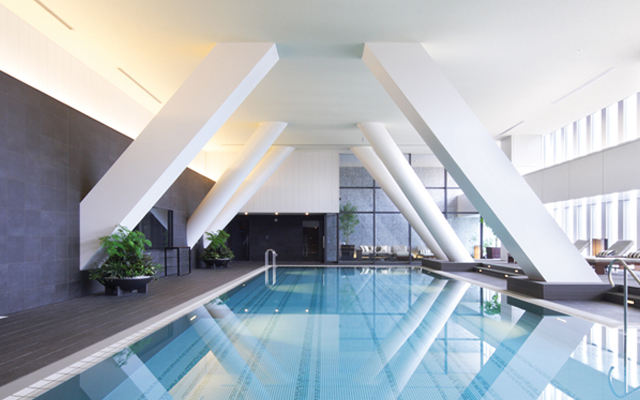
The Capitol Hotel Tokyu in Tokyo is a member of Preferred Hotels & Resorts

That is why SLH’s portfolio of private islands like Raiwasa Private Island in Fiji; the remote Wa Ale Resort which boasts barefoot luxury and a stellar sustainability programme; and Chalets at Blackheath, tucked away in Australia’s UNESCO-listed Blue Mountains among one million hectares of national parkland, have risen in popularity.

Similarly, Paul Jeffels, luxury travel consultant of Thailand-based 360 Private Travel – who handles the Singaporean and Hong Kong luxury outbound market – noticed that reconnecting with family all over the world and combining that with a multi-generational side trip is currently a “huge market”.

There has also been a marked shift back towards the reliance on travel agents.

“Time wasted doing nothing during the pandemic has made luxury travellers focused on maximising enjoying and reducing hassle, which is why our guests are going back to travel agents to plan their itinerary. SLH’s voice reservations division has seen a two-fold increase in calls,” Wong said.

Linda Law, general manager Hong Kong, 360 Private Travel, agreed: “Our clients in Asia are all eager to travel, are now willing – more than ever – to work with a professional travel advisor. Many of them are also open to trying out different (destinations or itineraries) as advised by us.”

As to countries luxury travellers are gravitating towards this year, travel agents provided a mixed bag of responses.

For Elgin Xiao, private designer with Singapore-based Intriq Journey, exotic Egypt has “picked up very fast this year”, while stalwarts Japan and Italy remain favourites.


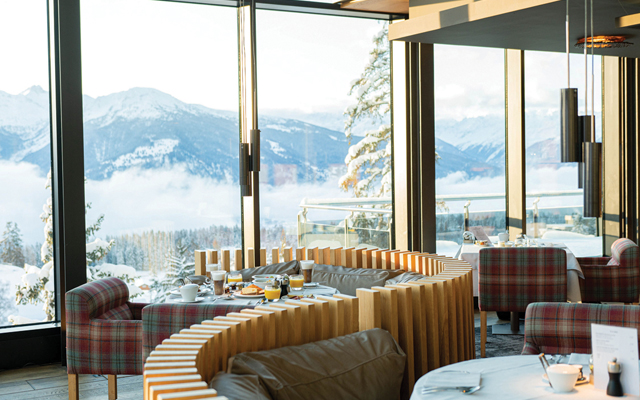
Crans Ambassador, a luxury ski hotel in Switzerland, is a member of the Small Luxury Hotels Group

Law’s Asia-Pacific clients are also opting for Japan and Italy, along with other European destinations like Switzerland, France, and Spain. This observation reflects Heaven’s Portfolio’s summer bookings, with Italy, France, Switzerland, and the UK looking strong, noted Christine Galle-Luczak, founder and managing director of the company, which represents various properties in sales and marketing.

Meanwhile, Jeffels’ Singaporean clients are opting for adventurous destinations like South America, while those from Hong Kong prefer “familiar” options like Japan and Thailand – specifically Phuket and Bangkok.

As for SLH, the group sees Croatia, Norway and Morocco entering its 2023 top destinations list, alongside the top three perennially favourites Italy, Japan, and the Maldives.

This shift towards less popular destinations could be attributed to luxury travellers eagerly wanting to check items off their bucket list.

Preferred’s customers are planning and booking aspirational or bucket list trips to destinations or destination hotels that focus on exclusivity, insider knowledge, and personalised itineraries.

Galle-Luczak is also seeing the younger affluents (ages 18-34) prioritising bucket list adventures, with 30 per cent having done so in the past year. The pandemic has “emboldened the philosophy of ‘you only live once’, so many affluents are moving their bucket list items forward”, she reasoned.

Pushing boundaries

0

Macau is looking to further enhance its international image as a tourist destination through high-profile events and activities.

Some of these include the Macao International Travel (Industry) Expo in late June and the Global Tourism Economy Forum in September. While these will no doubt attract business leaders, a whole set of fun events is also ready to charm fun seekers. The Macao Government Tourism Office (MGTO) has also lined up Art Macao: Macao International Art Biennale; the Macao International Fireworks Display Contest which returns this September and October for its 31st edition after a hiatus of three years due to the pandemic; the Macau Grand Prix, which celebrates its 70th edition in November; and Light Up Macao at the end of the year.

South Korean boy band Super Junior performs at Galaxy Macau

According to MGTO, high-profile concerts, along with spike in non-gaming entertainment hosted by the six integrated resorts (IR) and leisure enterprises, will continue to provide visitors with new impetus to take a vacation in Macau. These non-gaming investment commitments are a requirement that comes with the gaming concession contracts announced in December, all to support the government’s objectives in promoting Macau’s economic and industrial diversification.

In line with this, Sands China has defined its vision and strategy for the next decade. It has set aside 30.2 billion patacas (US$3.7 million) worth of financial commitment through 2032, with 27.8 billion patacas going to non-gaming projects.

President and executive director of Sands China, Wilfred Wong, said at the recent Asian IR Summit: “As IR operators, it is crucial that we continually push boundaries and enhance guest experiences through innovation. We must evolve and reinvent ourselves to stay ahead of the curve and set the benchmark for best-in-class IR offerings.”

Sands China’s focus will include investments in Macau’s dining scene, with an additional 10 outlets set to open. Coming right up is The Gordon Ramsay Pub & Grill and The Mews, which will open later this year.

Over at Studio City, phase two developments have launched. Macau’s all-new, all-weather 10,000m2 water park is welcoming guests now, while what is said to be Asia’s first-ever residency concert series is currently underway at Studio City Event Center. The latter kicked off with Hong Kong superstar Joey Yung concerts in April.
Even more will emerge across Macau.

Event specialist, smallWORLD Experience, which has pivoted its focus to the local market following the Covid disruption, is now doing brisk business with entertainment concerts.

Rua de Nossa Senhora do Amparo

Its executive director and partner, Bruno Simões, said: “Large concerts playing at The Venetian Macao and Galaxy Arena (part of Galaxy Macau) have a crucial role in Macau’s destination marketing. They elevate Macau’s status as a destination. This is particularly true in the Greater Bay Area, where most of Macau’s visitors come from. These events not only enhance visitor experiences, but they also ignite retail and casino businesses.”

Simões told TTG Asia that his company was supposed to produce 45 concerts in 10 months in the destination, following a successful bid with the Cultural Affairs Bureau.

“But, because of the pandemic, we ended up doing 25 different concerts and 75 different performances from November 2022 to April 2023,” he said, adding that the events were successful in drawing visitors to Taipa Houses, as well as highlighting the local music scene, fostering local talent, and stimulating local economy.

With community tourism as one of the drawcards, MGTO has approved subsidies for 42 special projects slated to kick off between April and December this year.

These projects encompass themes of enhancing community-based tourism, celebrating gastronomic culture, and promoting maritime tourism. They aim to consolidate the unique characteristics of different districts, incorporate fresh tourist attractions in Macau, and introduce a diverse range of tourism products and experiences by merging various tourism elements.

MGTO has also made it a requirement for event organisers to work with local SMEs.

Ultimately, these efforts will revitalise the community economy.

In terms of access, Macau is seeing improving air services with key international visitor source markets, such as South Korea, Japan and Thailand.

Tiger Air resumed services from Taipei and Kaohsiung from July 1, while Air Macau boosted its services from Singapore from four a week to seven since July 12.

Travellers from Asia, Latin America lead in intent, bleisure, digitisation: SiteMinder

0

SiteMinder’s Changing Traveller Report 2023 reveals that the global intent to travel over the next 12 months is highest among travellers from Asia and Latin America.

In comparison to the global average of 57%, travellers from India (78%), China (76%), Indonesia (65%) and Mexico (64%) all intend to spend more time travelling over the coming year.

Travellers from Asia top the list for intent to travel as well as working during their trip

The proportion of travellers intending to work during their next trip is also highest among Asian and Latin American travellers, at 60% in India, 57% in Thailand, 53% in Indonesia, 47% in China, and 41% in Mexico. These figures drop to 31% in the US, an average of 25% in Europe, and 22% in Australia.

The findings in SiteMinder’s report is an analysis of more than 10,000 travellers surveyed across 12 of the world’s largest travel source markets, including Australia, China, France, Germany, India, Indonesia, Italy, Mexico, Spain, Thailand, the UK and the US. They form part of the four key characteristics underpinning the travel plans and motivations that will impact the global accommodation industry over the coming year:

  1. The enduring explorer: Committed to travelling, regardless of living costs
  2. The digital dependent: Reliant on new technologies and bound to devices
  3. The memory maker: Investing in experiences, in a roaring ‘20s rerun
  4. The conscious collaborator: An open ally to accommodations and the community.

Globally, accommodation is being sought out as a destination unto itself with one-in-two travellers – notably international travellers – looking to spend either ‘most of the time’ or ‘considerable time’ at their accommodation on their next trip. This figure is again highest among travellers from Asia and Latin America, at 81% in India, 77% in Thailand, 72% in Indonesia and 62% in Mexico – a finding that perhaps correlates to the bleisure travel intent within these markets.

Above travel intent and bleisure plans, however, the report shows that the biggest area of leadership within Asia and Latin America is in digitisation. While many travellers globally believe that their booking experience and stay onsite could be better if accommodation businesses were more tech-savvy, this belief is strongest in China and Thailand (95%), Indonesia (92%), India (91%) and Mexico (85%).

In parallel, Asia and Latin America also top the list in:

Social media influence – when it comes to discovering their accommodation, travellers from within the two regions are the most heavily influenced by social media. While 70% of travellers globally say that social media influences how they discover accommodation options, the figure rises to 97% in Indonesia, 95% in both Thailand and China, 92% in India and 87% in Mexico. By contrast, only 46% of British and 42% of Germans say the same.

Likelihood to use AI – at least 60% of travellers in the two regions say they are likely to use AI to generate accommodation recommendations. In China, the proportion is highest at 88%, followed by Thailand at 86%. Within the UK and Germany, the proportion is as low as 24% and 23%, respectively.

Preference for communication through a device – if given the choice between in-person or device communication when at their accommodation, travellers in the two regions prefer communication via a device more than in any other part of the world. China tops the list at 51%, followed by Indonesia at 46%. This preference is lowest among travellers from France (19%) and Germany (18%).

SiteMinder’s chief growth officer, Trent Innes, commented that the research affirms the deep penetration of smartphones within Asia and Latin America, and highlights the urgency among accommodation providers to embrace modern technology.

He said: “All accommodation businesses should be encouraged by the strength of travel intent globally, but especially in the high-growth markets we surveyed – in Asia and Latin America. However, that strong intent comes with expectations for workspaces and, in particular, digitised experiences.

“As these travellers grow in numbers internationally, accommodation providers would do well to review each touchpoint throughout their customers’ journeys, from the planning and booking phases right through to experiencing and beyond. Today’s traveller is a digital dependent and that is truer in Asia and Latin America than in any part of the world. It is therefore important that accommodation providers seeking to attract travellers from within these high-growth regions are able to meet their expectations when it comes to a fully-digitised guest experience.”

‌SiteMinder’s Changing Traveller Report 2023 is available here.

Satair names new CEO and head of Airbus Material Services

0

Satair has appointed Richard Stoddart as its new chief executive officer and head of Airbus Material Services, effective October 1, 2023.

Richard joins Satair with a wealth of experience from the Airbus Defence and Space and Commercial Aircraft divisions, where he has led various customer-oriented programmes. He most recently headed Airbus’ transformation towards a decarbonised future.

.sister-sites .sites a { padding: 14px; }