Asia/Singapore Monday, 27th April 2026
Page 218

Sunshine Coast Airport installs navigation app to improve passenger accessibility

0

Sunshine Coast Airport (SCA) has become Australia’s first airport to install digital accessible wayfinding solution BindiMaps in a bid to help its 1.62 million annual passengers seamlessly navigate its facilities.

The BindiMaps technology was designed with input from hundreds of users who are blind or vision-impaired to ensure the highest possible levels of accessibility and inclusivity, making its installation by SCA an important step on the airport’s journey to become more accessible.
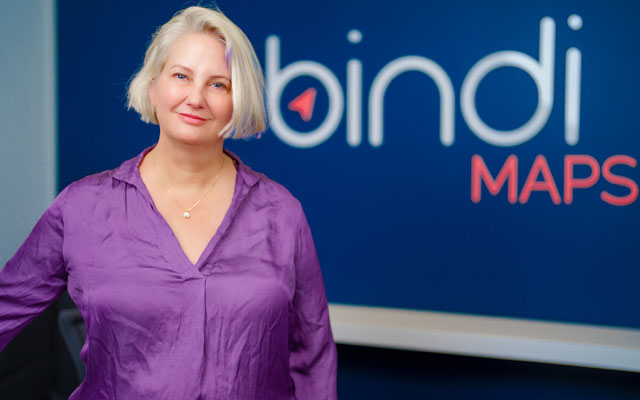
Wright: BindiMaps will help passengers navigate to boarding gates and security

The BindiMaps app uses a network of Bluetooth beacons and smartphone sensors to offer users a choice of text, map view, or audio directions that guide users through the airport using accurate, real-time, and step-by-step directions to any destination.

SCA general manager operations Kate McCreery-Carr said BindiMaps would empower all passengers, staff and visitors to feel confident when navigating the terminal, helping remove barriers while also laying the foundation for future growth.

She said: “Our goal is to create a more accessible airport for our community, where all passengers feel welcome, included, and confident when travelling.

“While the technology can be used by anyone, the benefits it will provide to passengers and visitors who are blind or visually impaired will be significant, allowing them to precisely navigate our terminal with greater ease and accuracy from the moment they enter, to the moment they leave.”

She pointed out that BindiMaps can be adapted as needed, and maps, routes and other relevant passenger information can be updated.

The installation of BindiMaps coincides with Queensland’s Year of Accessible Tourism, a campaign aimed at recognising the importance of accessible tourism experiences and creating opportunities for business.

McCreery-Carr said SCA was the gateway to the region, and the partnership with BindiMaps would help better cater to visitors of all abilities, and would “lay the foundation for a more accessible and inclusive future” for the entire aviation industry.

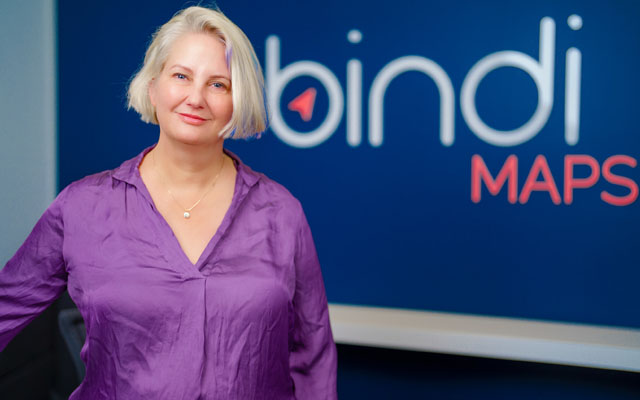
BindiMaps CEO and founder Anna Wright said: “BindiMaps will not only help passengers navigate to obvious places like boarding gates and security, it will also minimise the staffing burden of personalised assistance, manage congestion, and reduce late arrivals at the gates.”

She further explained: “BindiMaps functions a bit like Google Maps, but with 10 to 20 times greater accuracy than the Google satellites and GPS, which can only pinpoint location to around 20 metres compared to one-to-two metres indoors for BindiMaps.”

In addition, the company also won a worldwide tender with Budapest Airport to offer digital accessible wayfinding services to its 12+ million passengers annually as part of Europe’s Danova project providing audio navigation solutions for people with low vision and blindness.

Evolving global traveller attitudes and preferences: Skyscanner

0

Skyscanner has published a new report exploring the latest trends in global travel. Titled Skyscanner Horizons: 2023/4 destination and booking insights, the report unpacks and explores a combination of consumer survey and proprietary search and booking data to provide a unique view of how travellers are thinking about their plans for the next 12 months.

Survey data from 18,000 consumers in 15 markets reveals insights about key indicators such as travel propensity, spend, trip type, mobile device actions and the trip planning process, including the top sources of destination inspiration.

The report showed that 42% of travellers plan to travel more in 2024

For travel planning, the report showed a positive outlook for 2024 in terms of travel demand, with 42% of travellers planning to travel more and 39% planning to spend more. Tops flight ancillary requests include insurance, seat selection, food, baggage, and lounge, where 20% of travellers surveyed indicated a willingness to upgrade to business or first class.

Airfares (30%) and hotel (21%) costs are the biggest decision-making factors in travel, and it was found that travellers highly engaged on mobile devices in the travel planning and booking process – researching destinations (48%), comparing flight and hotel options (47%), booking (40%), and a fifth (22%) having used an AI chatbot.

Cultural experiences top the 2024 agenda, with destination choice influenced not by just the weather (60%), food (58%) and culture (54%), but the overall vibe (41%). Globally, YouTube is the top source of travel inspiration, followed by word-of-mouth recommendations (35%) and Instagram (33%), as well as guidebooks (27%) and TikTok (21%).

In addition, Skyscanner has identified seven travel vibes and trip types that travellers are seeking in 2024 – gig tripping, main character energy, budget bougie foodie, destination zzz, analogue adventurers, celebration vacationers and lux-for-less seekers.

As for booking, Europe, the Middle East and Africa (EMEA) travellers are booking flights further in advance, with most booking over 90 days ahead for both shorthaul and longhaul trips; meanwhile, Asia-Pacific travellers show greater volatility in shorthaul booking windows compared to other regions. For longhaul flights, there’s been a surge in last-minute bookings.

Trending destinations for EMEA travellers include Rayong (Thailand), Ouarzazate (Morocco), Pristina (Kosovo), and Klagenfurt (Austria), while for Asia-Pacific travellers, six destinations in Japan dominate the top 10 list.

The report also features commentary from industry thought leaders such as Hugh Aitken from Skyscanner, and Nick Hall of Digital Tourism Think Tank.

“Airlines continue to restore and re-orientate their global networks to meet traveller demand. At the same time, travellers in many markets are signalling a willingness to upgrade their fares and build customised itineraries that provide them with the best value,” said Hugh Aitken, vice president, strategic relations and development, Skyscanner.

Nick Hall, CEO of Digital Tourism Think Tank commented: “High travel propensity means destinations must focus on values and experiences. With travel spend a key priority for consumers globally, destinations, along with their industry partners, must focus on value proposition more than ever. Honing in on what sits at the very core of the destination’s brand values is key to winning travellers’ hearts. Yet, driving demand, with timely product proposition, is key to shaping decisions.”

The Skyscanner Horizons: 2023/4 report can be viewed here.

Mohegan Inspire on track for 4Q opening

0

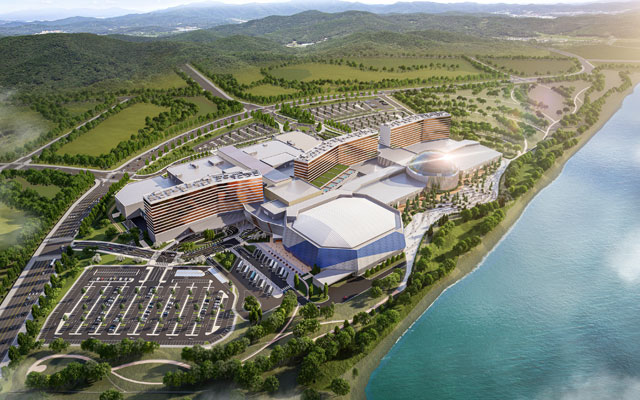
Phase 1A of Mohegan Inspire Entertainment Resort in Yeongjong Island, South Korea, is inching closer to its completion date, and is on track to open by 4Q2023.

This phase includes three five-star hotels with more than 1,200 keys; a 15,000-seat indoor multipurpose arena; a variety of business events spaces, including a banquet hall for 4,000 guests; a shopping, dining and entertainment complex; an indoor water park that will operate year-round; and an outdoor family theme park. The foreigner-only gaming facility is expected to be ready early 2024 upon the acquisition of licenses for operation.

A rendering of the massive Mohegan Inspire

When asked why Mohegan looked to South Korea for its first international expansion, Michael Jensen, chief marketing officer, shared: “Korean culture is currently resonating around the world, and there was a great opportunity that (surfaced) in South Korea. The local government and community are supportive of, and promote tourism. There is also high tourism demand in Asia.”

Mohegan, the parent company of Mohegan Inspire Entertainment Resort, currently owns and operates seven integrated resorts in the US and Canada.

The new multi-billion-dollar project stands next to Incheon International Airport, providing corporates from neighbouring countries a new event destination, noted Jensen. Those familiar with Mohegan’s properties in the US will also be part of the initial targets.

To market its extensive business events facilities, Jensen shared that the “all-in-one destination” has partnered with major platforms such as Cvent and 1000Meetings to make it easier for planners to look up the integrated resort’s facilities and attractions.

And, as the opening approaches, Jensen shared that branding and marketing campaigns, as well as other promotional offerings for stays and dining opportunities, will be released over the course of the next few months.

Event planners who choose Mohegan Inspire Entertainment Resort will also see that Incheon has a lot to offer, added Jensen.

Within a 30-minute radius, additional attractions and teambuilding activities include a yacht tour, or cycling around Yeongjong island. Seoul is also merely an hour away, and can be easily accessed.

Mohegan Inspire Entertainment Resort, which will have four phases of business expansion, is being billed as the largest resort in north-east Asia.

Details of the expansion plans and timelines are not available at press time, according to Jensen.

Bhutan lowers tourist levy to draw more international visitors

0

The Himalayan kingdom of Bhutan is actively working to increase international tourist arrivals, aiming to boost the tourism sector while maintaining a strong commitment to environmental conservation.

Bhutan’s director general of Department of Tourism (DoT), Dorji Dhradhul, shared with TTG Asia that Bhutan had, since August, halved its Sustainable Development Fee (SDF) to US$100 per person, per night, and that this new, lower levy will be in effect until September 2027.

Dhradhul: a fantastic opportunity for more people to experience the beauty of our kingdom in the future

Dhradhul stated: “The change was made in recognition of the vital role of the tourism sector in job creation, economic growth, and foreign exchange earnings. The lower SDF presents a fantastic opportunity for more people to experience the beauty of our kingdom in the future, benefitting our citizens and supporting various projects funded by the SDF.”

It is important to note that a portion of the revenue generated from the SDF is allocated to various sustainability initiatives including the conservation of the pristine natural environment, upskilling workers in the tourism industry, reducing the country’s reliance on fossil fuels and electrifying Bhutan’s transportation sector, among other projects.

Abhishek Bajgai, a sales manager at Bhutan Peaceful Tours & Treks, expressed support for the government’s decision to lower the SDF fee from the US$200 imposed when Bhutan reopened its doors to tourists on September 23 last year. He noted that before the Covid-19 pandemic, the SDF was US$65 per person, per night, making the current SDF slightly higher in comparison.

In addition to the SDF reduction, the Bhutanese government has implemented various initiatives to attract more international visitors and achieve the goal of having tourism make a greater contribution to the country’s economy. The DoT is collaborating with travel partners in Bhutan to create diverse itineraries to attract a more varied group of tourists.

Since reopening in September 2022, Bhutan has also made it easier for tourists to access the country by allowing them to independently book all aspects of their journey. In the past, all visitors were required to book their travel to and within Bhutan through an accredited tour operator.

Furthermore, significant investments have been made at the national level to enhance the skills of workers in the tourism and hospitality sectors, re-certify guides and accommodation providers, improve tourism infrastructure, and create new and unique tourism experiences. These efforts collectively aim to enhance Bhutan’s appeal as a tourist destination while preserving its natural beauty and cultural heritage.

The Claridges New Delhi appoints new GM

0

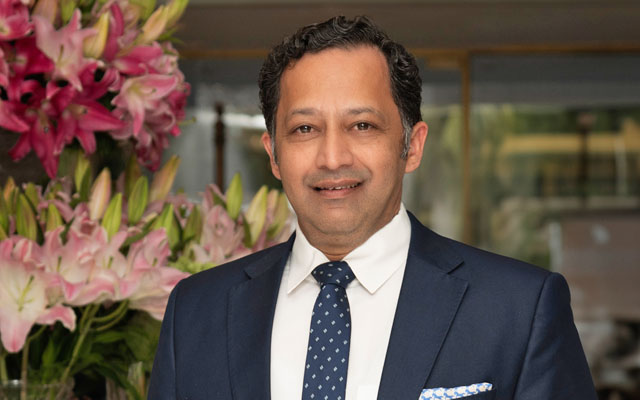
The Claridges New Delhi welcomed Hemendra Singh Kushalgarh as the newly-appointed general manager.

Kushalgarh brings over two decades’ experience and expertise to this role. He also plays a senior role at Claridges Collection, designated as the vice president – operations for the entity.

He was hotel manager at Amanbagh prior to joining The Claridges New Delhi.
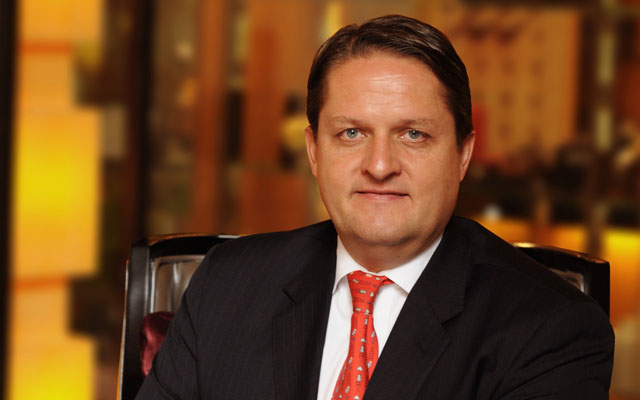
Adrian Rudin helms as MD of Dusit’s two Thai properties

0

Dusit International has appointed Adrian Rudin as managing director of its flagship Dusit Thani Bangkok hotel, and Dusit Residences, which will launch in mid-2024 and early 2026, respectively.

The Swiss national brings with him over three decades of experience in leading luxury hotels. He served as general manager of Sindhorn Bangkok Kempinski and vice president of Operations for China and Southeast Asia at Kempinski Hotels before joining Dusit.

In his new role, he will be in charge of shaping the success of both upcoming properties, including securing future MICE business ahead of the hotel’s grand opening next year.


Hotel companies step up their HR game to win intense talent war

0

Hotel companies eager to rebuild a strong team to support revived operations and intensified portfolio expansion post-lockdown are coming up with new and improved ways to recruit, retain and upskill talents.

Hilton, which was recognised as one of the World’s Best Workplaces by Fortune magazine and Great Place to Work in Asia Pacific for the seventh consecutive year in 2023, has developed a recruitment procedure that allows candidates to use their smartphones to book interview slots and record a pre-screening presentation as well as implemented an AI-driven assessment tool that screens candidates who are a better fit for the job traits, Hilton culture, and the hospitality environment.

Hotel companies are coming up with new and improved ways to recruit, retain and upskill talents

Patsy Ng, vice president for human resources – Asia-Pacific, Hilton, said: “To attract talents to join us, we need to focus on delivering a great candidate experience and will leverage recruitment technology to achieve that. We have reduced the number of touchpoints for candidates’ online applications and introduced new tools such as HireVue and Traitify to enable same-day hires, which for high volume jobs has become a critical competitive advantage.”

Once talents are in, they are embraced by the company’s “environment of inclusion”, shared Ng.

Hilton has several Team Member Resource Groups (TMRGs) to support staff at work and at home. The Women’s TMRG, for instance, is a community of allyship where female team members can tap on different leaders for support and counsel.

Soon to come in early 2024 are Abilities TMRG and Generations TMRG, built to facilitate Hilton’s move to hire differently-abled individuals and retirees/matured workers, respectively.

Recognising that the talent war is a battle that involves every hotelier, not just Hilton’s leadership, the company has initiated two global recruitment campaigns to build brand equity for the hospitality industry.

In May this year, Hilton launched Every Job Makes The Stay, a campaign that “conveys the message that behind every magical moment a guest experiences in the hotel are hundreds of exceptional people working together to make that happen”, detailed Ng.

Supporting this campaign is Find Your Thing, launched in 2022 to inform talents that “hospitality is the place where you can have a global career, working in iconic places”.

Over at Onyx Hospitality Group, compulsory training will come into effect in 2024. All staff must complete 60 hours of training every year in order to advance on their personal career track in the organisation. This requirement is part of the new Onyx Academy, which will launch with instructor-led as well as online courses that are jointly developed with a range of partners such as eCornell and Harvard Business School Online.

There will also be cross-training opportunities, where staff may be assigned to work and learn at other properties.

Yuthachai Charanachitta, owner and CEO of Onyx Hospitality Group, said: “At the end of it all, they will be better ready to move forward on their career track.”

Completion of courses will earn participants certification with reputable institutions.

He believes the programme will appeal to the younger generation, as they “want to learn and rise up quickly in the company, and the academy provides such career development opportunities”.

Meanwhile, Pan Pacific Hotels Group (PPHG) has its eyes on the future of hotel work. It has engaged human resources consulting firm Mercer to study how work processes could be redesigned with practicality, staff well-being and resource considerations in mind. The project involves three beta-testing hotels and scrutinises all processes across departments, from front office to kitchens.

Choe Peng Sum, CEO of PPHG, emphasised that while innovation can help to create a better workplace, a strong work culture remains critical.

“To have a strong workplace culture, every team member needs to feel like they own the business,” Choe told TTG Asia.

Performance incentive schemes come in handy to encourage staff buy-ins. Across PPHG’s hotel operated restaurants, for instance, team members enjoy profit sharing.

“Some individuals can make up to 40 per cent more of their monthly income,” said Choe, who added that team members have become very motivated to come up with innovative ideas to excite and impress guests.

“We have 6,000 staff all over the world. If everyone feels that they own the business, I can sleep well at night,” remarked Choe.

Hong Kong’s updated attractions a big plus for cruise development

0

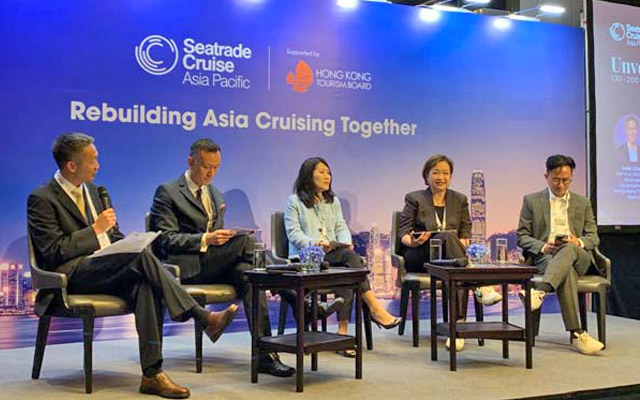
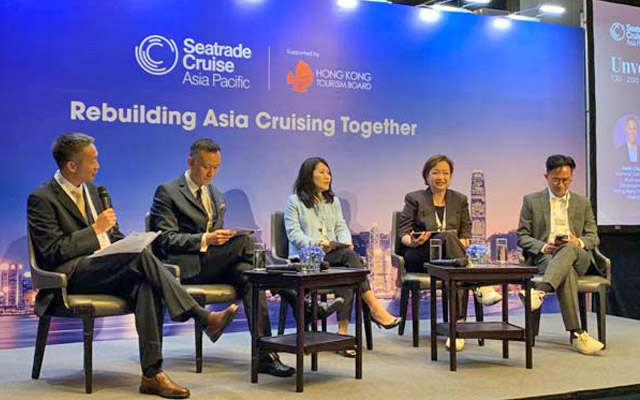
Tourism stakeholders speaking at Seatrade Cruise Asia Pacific 2023 say Hong Kong’s continued investments in events and activities for tourists are helping to position the destination in a positive light among cruise travellers.

Felix Chan, general manager, business development, Hong Kong Tourism Board (HKTB), said Hong Kong’s ramp up of its event calendar is helping to “maintain our competitiveness”.

From left: moderator Dickson Chin, HKTB’s Felix Chan, WKCDA’s Christine Chow, HKDL’s Anita Lai, and Ocean Park’s Johnny So

“For instance, the four-day Hong Kong Wine & Dine Festival on Thursday at Central HarbourFront is set to feature more than 300 exhibitors (food and wine) from around the world. Moreover, we are working closely with travel trade partners on (developing) green tours and authentic neighbourhood (Old Central Town/Sham Shui Po and Yau Tsim Mong) experiences,” Chan said.

As one of the largest cultural projects in the world, the West Kowloon Cultural District Authority (WKCDA) is constantly diversifying its offerings to attract travellers arriving on cruise ships. WKCDA’s general manager of marketing and customer experience, Christine Chow, believes that cruise travellers prefer heading to a one-stop destination.

She said: “Our harbour-side location is made up of different cultural and performing centres, with museums like M+ and Palace Museum, open-air art park, retail facilities, as well as more than 30 restaurants and food trucks, all under one roof. There is also a line-up of international exhibitions, like the astounding new archaeological discoveries from China’s Sanxingdui, currently (on display) at Palace Museum. Additionally, we envisage to offer various themes of products, (such as) nature tours since our cultural cluster is home to more than 100 kinds of trees and more.”

The Southern Landing Facility is set to open in 2025 in the West Kowloon Cultural District, which will elevate accessibility, allowing water taxi services.

WKCDA has already secured an eventful March/April 2024 line-up, which will include the International Cultural Summit in March 2024, an Art Basel event, and Rugby Sevens.

Theme parks in Hong Kong are also investing in new draws. Ocean Park has crafted new programmes, like hiking along the Cable Car Rescue Trail, the ecological Island South Discovery Tour, a night tour on stargazing to learn about light pollution, and well-being activities like yoga.

Over at Hong Kong Disneyland (HKDL), Sleeping Beauty Castle has been transformed while night-time fireworks and soon-to-launch World of Frozen await. Its vice president, communications and public affairs, Anita Lai, shared: “There is a big push on culture and we have been working with the Hong Kong Philharmonic Orchestra for an orchestral performance at the castle stage. Recently (we had a) crossover with Hong Kong Ballet.”

Lai believes that collaboration with different stakeholders will lead to creative ideas “that will bring excitement and surprises to attract visitors back”.

Arival reveals top five trends for experiences tourism

0

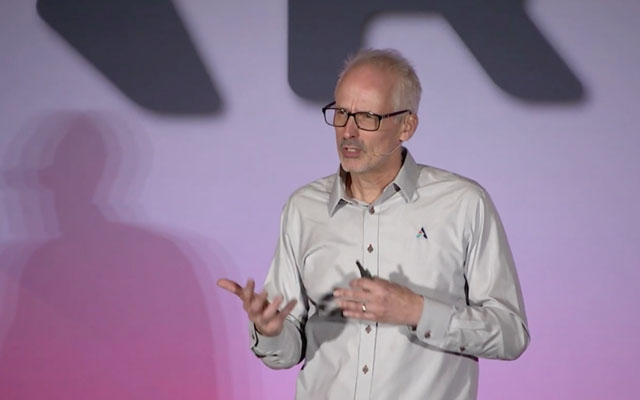
Arival co-founder and CEO, Douglas Quinby, shared the main trends impacting the tours, activities and experiences sector, during his opening keynote at this month’s Arival 360 Conference in Orlando.

Recent Arival research presented by Quinby during the keynote showed that the average number of activities people take on each trip is now seven.

Douglas Quinby sharing the top five trends during his opening keynote

Quinby remarked: “There has never been a better time to be in travel experiences – there are more high-quality trips now, and people are spending more on those trips.”

He shared five major trends that the experiences sector should take note of:

The affluent traveller: there is a need to understand the audience as they are now more diverse than ever. The affluent traveller – those with incomes of US$150k and up – account for a fifth of all travellers, yet are responsible for nearly half of experiences spend.

TikTok as a booking channel: it was predicted last year that TikTok may surpass Instagram and Facebook as an experiences inspiration and booking channel for 18-34 year olds. This year, it has surpassed those channels and is now only second to Google for this age group.

Future of weather: this will certainly impact businesses and personal lives. The weather conditions happening now will only get more extreme. So, it is crucial to ask how this will impact travel, where people will go, how to adapt tours, and how this will impact cancellations.

Future of tech: according to Arival’s research, as many as half of all tour and activities operators are still not using modern software that connects them to the global ecosystem. It is clear where growth is going to come from – OTAs. OTA’s have experienced more than 250 per cent growth between 2019 and 2025. So, the experiences industry will need to adopt the right technology to reach the right people.

Future of experiences: while older travellers plan and book experiences when at the destination itself, younger travellers think about experiences early and plan their trips around these experiences. Nearly half of Gen Z and Gen Y travellers say experiences are influencing where they go.

Onyx sharpens wellness, sustainability features

0

Recognising a significant surge in traveller interest in wellness travel and sustainable tourism, Onyx Hospitality Group has developed a new upscale spa brand as well as comprehensive environmental-focused programmes for its portfolio of properties.

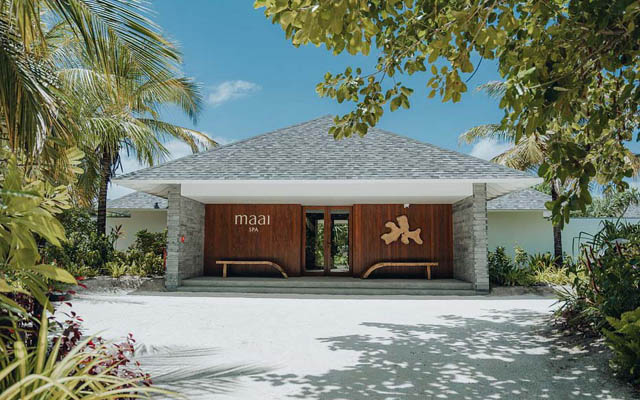
Maai Spa, which debuted in August at two properties, Amari Raaya Maldives and Amari Pattaya, is now gearing up for expansion into more locations. Maai Spa caters to the luxury lifestyle segment, offering a wide range of treatments, including Swedish and sports massages, Indian head massages, Chinese reflexology, and a unique jade stone massage designed to improve blood circulation and reduce stress.

Maai Spa first debuted at Amari Raaya Maldives

Onyx’s CEO Yuthachai Charanachitta told TTG Asia that Maai Spa will be introduced to Amari Bangkok and Amari Phuket by 2025.

The company’s existing spa brand, Breeze Spa, will be phased out over the next three to four years and be replaced by the Maai Spa, in line with Onyx’s strategic shift toward a higher price positioning. Currently, Breeze Spa is offered in seven Amari properties, including Amari Johor Bahru and Amari Koh Samui.

Furthermore, in response to the growing attention on responsible tourism among travellers, Onyx has implemented comprehensive programmes that work to reduce environmental impact, support local communities, and promote eco-conscious practices. The programmes are rolled out across all Onyx properties.

Onyx will sign a Memorandum of Understanding with UNESCO Asia-Pacific in the coming year, which will make the hotel firm UNESCO’s first Cultural Sustainability partner in Asia-Pacific. The goal is to safeguard and promote cultural and natural heritage. Onyx will co-develop and implement projects that support local communities and suppliers.

This initiative joins other sustainability-driven projects undertaken by Onyx. One of them is a partnership with Youth Wildlife Guardian, Environmental and Social Foundation, and World Wildlife Fund in Thailand to launch the Environmental Education Tour, aimed at raising environmental awareness among youths in the country.

The tour runs from June this year to February 2024.

.sister-sites .sites a { padding: 14px; }