Asia/Singapore Sunday, 26th April 2026
Page 216

Everything at once

0

You were one of my first few in-person interviewees when Singapore eased restrictions on group gatherings in 2020. I remember our conversation then was a lot about how the Pan Pacific Hotels Group (PPHG) leadership had to focus on rallying the team. What is the leadership’s focus these days?
Our focus is now on going forward with growth, repositioning, and culture-building.

First, portfolio growth. Efforts started at the tail-end of 2021, when we opened in London (with Pan Pacific London) and then onwards to Kuala Lumpur (with Parkroyal Collection Kuala Lumpur and Pan Pacific Serviced Suites Kuala Lumpur), Singapore (with Pan Pacific Orchard), and Japan (with Bellustar Tokyo, A Pan Pacific Hotel, and Hotel Groove Shinjuku, A Parkroyal Hotel). We are going into Kyoto and Sapporo soon.

It has so far been a great, great time for the company.

Second, repositioning. We are moving the Pan Pacific brand into version two. This started with the opening of Pan Pacific London and the new positioning is carried through the other Pan Pacific hotels and serviced suites that followed. All the older Pan Pacific properties are also being renovated so they become version two as well.

We are working to reposition our Parkroyal brand too, sharpening its sustainability advantage and placing it in the 4.5-star category with a strong social-local offering. The newly-renovated Parkroyal on Beach Road (in Singapore), is one example, as celebrates the cultural vibrancy of nearby Haji Lane (a trendy enclave within a neighbourhood steeped in Muslim heritage).

Next, we are committing a lot more to nurturing a positive service culture. Any hotel can compete on hardware, but it is service that sets one apart from the others.

Studies on consumer travel intentions post-lockdown are showing continued appetite for travel. What trends in travel are most impressive for you, and how is PPHG responding to these opportunities?
Travellers now want to experience everything – the hotel as well as the destination. People have also become super aware of the environment and have a greater appreciation of the environment, nature, and the outdoors. Furthermore, there is heightened attention to personalisation and loyalty, which relates to the importance people now place on experiences.

I will elaborate. Let’s start with experience – the hotel and hotel room have to be very good because competition has given people so many options. When they leave their room, the hotel lounge, restaurants and bars must also deliver a great experience and service journey, beyond the food or drink that is served.

Next, sustainability. This is more than just removing straws and replacing plastic bottles or single use plastic. It’s very, very expensive to be a sustainable hotel. Look at these sets of double-glazed glass walls (that envelope the Club Lounge at Parkroyal Collection Marina Bay). We did not need to replace the original glass façade of this building when we took over and rebranded it, but we did and spent millions of dollars in the process. Why? These double-glazed glass walls keep the cold air from leaking out and hot air from coming in. That saves us so much in electricity from air-conditioning.

Behind the scenes, we have heat exchangers in all our properties. They draw hot air from our chillers and use it to boil our water to 60 degrees Celsius, so that our boiler systems only need to kick in from mid-way to take our water up to boiling point. Imagine how much energy that saves.

We keep up our sustainability commitment even though our guests do not see these features in action.

However, there are opportunities for our guests to learn about what we do. Here at Parkroyal Collection Marina Bay is an extensive food sustainability movement. The team has done a brilliant job conducting sustainability tours and talks for hotel guests and other organisations. These tours are fully booked all the time.

Now, about guest loyalty – we need to know why guests are coming back and what we need to do to make them feel like they are returning home whenever they do. For this, we need to understand our guests, track their behaviours and build their experience. Our digital unit is committed to data mining and testing out all the different ways of communicating with our guests.

The new properties that have come out in recent years boast some form of biophilic features. Are your brands and PPHG’s reputation now associated with being green and sustainable?
Yes, we are indeed capturing the attention of the sustainability-focused traveller market.

We want to push our boundaries. We could very well just do a square-box hotel, but why should we? We want to be a hotel that isn’t quite a hotel. I wouldn’t use the word blue ocean but (we should not do) the usual things that hotels typically do.

I’ve been telling the team ad nauseam that PPHG is different.

Let’s talk more about the Pan Pacific brand. I used to see it as a luxury brand belonging to my parents’ generation, where luxury is defined by suits and sombre service, and everyone is prim and proper. But, Pan Pacific Orchard changed that for me – the architecture, the interior aesthetics, all that greenery, and the stylish dining concepts within speak to the young generation that values quality without too much stuffiness. How do you personally see the Pan Pacific brand evolving, and what lies ahead?
I totally agree with what you say.

A few years ago, when I joined the company, I saw Pan Pacific Singapore, with 800 rooms and two ballrooms, as the typical convention hotel. But, I thought, why should it be? Now, after an extensive renovation, the hotel feels almost like a boutique hotel – it does not feel huge like your typical convention hotel, although it is; instead, there are many private spots where you could enjoy time alone.

Over at the newly-opened Pan Pacific Orchard, the architecture recreates a verdant sanctuary with four themes – Forest, Beach, Garden and Cloud – and within each you can find plenty of personal spaces.

So, it was with a sense of space that we developed our future portfolio of Pan Pacific properties.

Your branding team recently defined Pan Pacific Hotels and Resorts’ new ambition as Graceful Luxury. What does this mean?
We are not a luxury brand that is represented by having the best marble, although we do have some very nice ones, or the largest crystal chandeliers. We want to highlight a luxury that is graceful and from the heart.

We are able to convey this promise through Pan Pacific London, where we showed what attentive Asian graceful luxury is to the UK and European markets.

In London, we compete with brands like Rosewood, and the city has all the luxury hospitality that you could possibly find. And yet, with our Asian style of graceful luxury service, we earned the Forbes Travel Guide’s Five Star Award within five months of opening. We did not win just because we have a beautiful building and stunning interiors – although we did get the best – Yabu Pushelberg and PLP Architecture from New York – to design and build it. Forbes judges saw our people first, offering a welcome at the door, at the restaurant, etc.

There is, however, a challenge to delivering (such high service standards) in some places due to labour shortages and cost concerns. Singapore is an example. Although average room rates have risen and occupancy has been good, costs have gone up substantially.

So, how do we still deliver on our promise of graceful luxury here in Singapore? Let me give you an example of how it can be done – Melvin Lim, general manager of Parkroyal Collection Marina Bay, Singapore (he has since taken over the helm at Pan Pacific Singapore). He has one of the best staff retention rates in the hotel industry here. Does that mean he is a very soft leader? Not at all. He’s got very high standards, yet his team loves to work with him. You need a nurturing work environment for staff to present genuine hospitality to their guests.

Well, there is still a lot of things that we can do better. I’d like the welcome at Pan Pacific Singapore to be a lot warmer, for instance. So, I spot the best people and move them around. Melvin will lead Pan Pacific Singapore and work his magic there, while Phil (Smith) who has done a splendid job at Parkroyal Collection Pickering, will move to Parkroyal Collection Marina Bay to take it even further.

Quality hospitality requires a certain culture – one that welcomes everyone’s feedback and open interaction, one that is lively and fun.

To build that sort of culture you need leaders who share the same vision and who can inspire fellowship. How do you identify such leaders?
Leaders are indeed so important, Karen, but we don’t always get it right. We may hire people with immaculate CVs, but after a while we may realise that they crack the whip a little too much and too often. That drives immediate performance, but affects staff motivation in the longer term.

We are very clear about our vision, and about building a good work culture alongside very high business standards.

If the leader does not fit our vision and culture, we have to make tough decisions.

With a view towards even better business performance while doing right by our people, we are making some massive leadership changes. We are rotating our property leaders, like Melvin and Phil as mentioned earlier.

When we came out of the pandemic in 2022, we were S$120 million (US$88 million) above budget. I believe it was largely due to our staff feeling that they own the business.

All our restaurants across all our properties offer profit sharing and team incentives. They can make 40 per cent above their income. Because of this structure, our staff take pride in knowing how well daily business is and are very enthusiastic about doing their best to impress their guests. They get worried when the day is slow.

Other departments have their own incentives.

When we first introduced this practice of profit sharing, some warned that we were starting something dangerous, something we might regret later. The F&B industry has a very high staff turnover, yet we have one of the lowest rates.

I have 6,000 staff across the world. If every one of them feel that they own the business, I can sleep well at night.

Let’s get back to your point about managing costs and manpower while delivering quality guest experiences. Besides having leaders with foresight, what else must be in place?
We have recently engaged human resource experts, Mercer, to work with us on developing a vision of the hotel of the future. This is a million-dollar exercise that will look deeply into how things can be done better at hotels through practical multitasking.

Through three beta-test hotels, Mercer will investigate all work processes across various departments, from housekeeping to front office, and take into considerations factors like available resources.

Let’s take housekeeping as an example. It is a job that Singaporeans shun, and labour is scarce. It is not unusual to have one housekeeper handling 14 to 15 guestrooms. The mistake hotels tend to make is forcing one housekeeper to do 20 rooms due to cost-cutting measures. It is highly impossible, and the outcome is a rushed job. The hotel may achieve its objectives of clearing more rooms with fewer staff, but guests are affected.

So, Mercer, through its study of our housekeeping operations, discovered that cleaning the beds and bathroom take up the most time, require the most strength, and pose most health risks to the housekeepers. A possible change in this process is to have two different teams to clear rooms – one in hygiene suits just to strip the beds and bathroom linens, and another to clean and put everything nicely together. The linens will be RFID-tagged and tossed down the laundry chute for washing and later separation by automation – this saves time.

We are also looking into more advanced vacuum cleaners, better cleaning cloths that can get the job done in half the time, and mechanised housekeeper trolleys that are less strenuous to move and can be linked to a software that sequences and prioritises rooms that must be cleared first.

So many possible improvements to just one department!

Philippines unveils updated travel app for visitors

0

The Department of Tourism (DoT) and the Tourism Promotions Board (TPB) Philippines have released the upgraded Travel Philippines app.

This enhanced digital platform aims to provide a more convenient way travellers can experience the beauty, culture, and adventures that the destination has to offer.

The upgraded app will provide a more convenient way for travellers to experience all that the Philippines has to offer; Boracay Island, pictured

The Travel Philippines app is a handy resource of travel information, where travellers can use it to plan their journeys across the country, access travel deals and promotions, and manage digital travel documents. Real-time chat support will also be available.

The app will provide a wealth of information and multimedia assets for their respective regions and provinces – this includes hundreds of accommodation options, attractions, immersive experiences, and essential services. It will also be updated every month.

“The Travel Philippines app is a milestone for Philippine tourism as the whole country has come together to create and promote its enhanced version,” said TPB’s chief operating officer Margarita Montemayor Nograles.

DoT’s secretary Christina Garcia Frasco commented that the travel app will help “spur tourism activities across all spheres of the industry recognising its massive contribution to our economy” and ensure that “the benefits of tourism spread to the farthest reaches of our country, and create more opportunities for employment and livelihood for our fellow Filipinos”.

Qatar Airways resumes services to Phnom Penh and Ras Al Khaimah

0

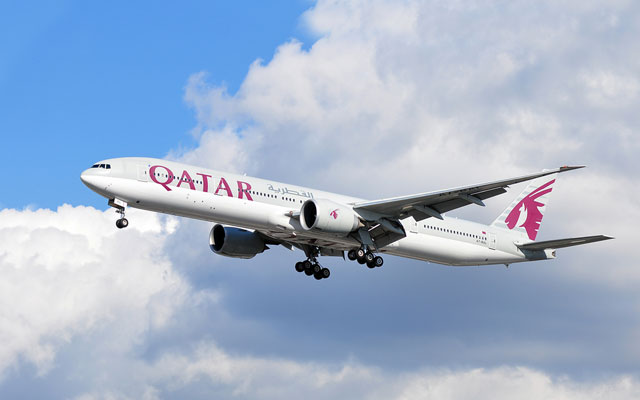
Qatar Airways has resumed daily services to Cambodia’s capital city, Phnom Penh on October 29.

The daily services will fly via Ho Chi Minh City, Vietnam.

Qatar Airways has resumed its Phnom Penh and Ras Al Khaimah services

The airline has also restarted services to Ras Al Khaimah on November 1.

NDC: Bridging the gap between buyers and sellers

0

The industry’s been talking about New Distribution Capability (NDC) for more than a decade; and, despite the recent focus and headlines about it, there hasn’t been nearly enough progress towards making NDC truly consumable by mainstream travellers.
Sure, that may be an unpopular opinion. There are a few carriers out there that are actively live with NDC and making a lot of noise about it – but with that noise, many in the industry are forgetting why NDC was created in the first place.

Just another source of content
NDC was created to give airlines the opportunity to create distinctive and unique air offers that are personalised and customised for the individual traveller. This is essential to modern retailing as we know it, because as consumers, we want to be able to easily find and purchase the products we want. With so many options available to travellers today, from extra legroom and early boarding privileges to pre-ordered meals and lounge access, agents need to be able to easily consume the plethora of data at their fingertips and quickly search and compare options. Despite all the expectations and opportunities to modernise travel retailing, we must not forget that at the end of the day, NDC is, at its core, an opportunity to deliver truly differentiated content to travellers – in a way customised to their unique needs.

Even though NDC was created as an industry standard for distributing air content, the industry’s obsession with NDC is morphing it into anything but a “standard” ­ and it’s getting increasingly complicated. Having access to NDC content and being able to book an NDC offer is not enough for our modern travel retailers of today. There’s a servicing aspect for NDC-sourced content that seems to be de-prioritised or overlooked entirely, despite the growing need for agents to be able to easily manage a return or exchange when the unexpected happens. The only alternative to easy servicing is time-consuming and inefficient calls to airline systems – something no consumer wants or understands.

The importance of normalisation and standardisation
Let’s talk about another elephant in the room: widespread adoption of NDC makes content aggregation more important than it ever has been. Over the last two years, the volume of trip searches has grown five times – and we expect to see trip search volumes double their pre-pandemic peaks next year. Very few retailers or agencies can deal with the complexity of dozens (or even hundreds) of simultaneous connections to assemble the best possible itinerary.

Aggregators are critical to quickly (we’re talking milliseconds) and economically (lower cost per transaction) sort through an increasing volume of supplier options that are extremely similar, deciphering these incredibly nuanced options to curate and elevate those that are most relevant. Where we are seeing the aggregation role evolve even more from a “dumb” content pipe to a fully dedicated travel retailing platform (like Travelport+), is the use of artificial intelligence (AI) and machine-learning (ML) to eliminate manual tasks and provide faster search responses, more relevant results, and greater accuracy.

Suppliers will benefit from intelligent content aggregators as well. Think about it: airlines are able to expand their reach to travel retailers all over the world through a single system that also normalises and enriches their content for those retailers that are selling on their behalf. Airlines cannot take on this tremendous feat themselves. Travel retailing platforms today are now needed to manage the infinite options from suppliers, making sense of those options and making them retail-ready for agencies and travellers. And, with its tremendous growth in the number of offers, NDC has only amplified the need to help simplify and manage these complexities for retailers.

Without seamless servicing, NDC is stuck on the tarmac
In a multi-source content world, what’s equally as important as connecting to new content sources is how that content is aggregated and presented. Supplier content should be normalised and enriched for travel retailers in a way that simplifies the ability to compare, sell and service – because travellers themselves will not necessarily know (or care) if their flight was an NDC-sourced booking or from another content source. They will, however, want to be able to make changes quickly and easily when needed – even if it means switching from an NDC-sourced ticket to an EDIFACT-sourced ticket. Unfortunately, NDC-obsessed companies are focusing so heavily on being the first to deliver access to NDC content that they are forgetting the crucial post-booking servicing aspect that agents and travellers need.

A modern retailing experience in travel will only work when an agent or traveller can easily search, compare, book and service an offer from any source of content, anywhere, and at any time. Business travellers expect the same seamless experience as leisure travellers, and delivering content that agents can book, but not service, can ultimately create more of the frustration that NDC was intended to eliminate. Agents are the true retailers for travel, which – among many things – means they need to be able to quickly process a refund or exchange without having to point customers to the airline to manage changes. Effective NDC solutions need to be built for agencies, and not just the airline community. That is why at Travelport, we’re laser focused on delivering complete, end-to-end retailing solutions, rather than interim NDC solutions that restrict agents from being able to fully service their travellers post-booking.

Rather than obsessing about ‘being the first’ in the NDC race, the industry needs to focus on making all types of content retail ready. Our role at Travelport is to integrate and normalise content from any source, including NDC, so that agencies can easily consume, sell and service that content in a modern way. By putting the agency channel first when it comes to NDC solutions or making any source of content accessible, we make it easy for travel retailers to deliver modern, seamless experiences.

Live in the moment with JW Marriott

0

JW Marriott Hotel New Delhi Aerocity has launched the Stay in the Moment package which has been designed for guests to be mindful and present in the moment. It also aims to nourish guests mentally, physically and spiritually.

The package is part of JW Marriott’s Stay in the Moment campaign in Asia-Pacific, which invites and empowers guests to embrace fleeting yet profoundly meaningful moments in life with inspiring surroundings, mindful experiences, culinary artistry and inspired service.

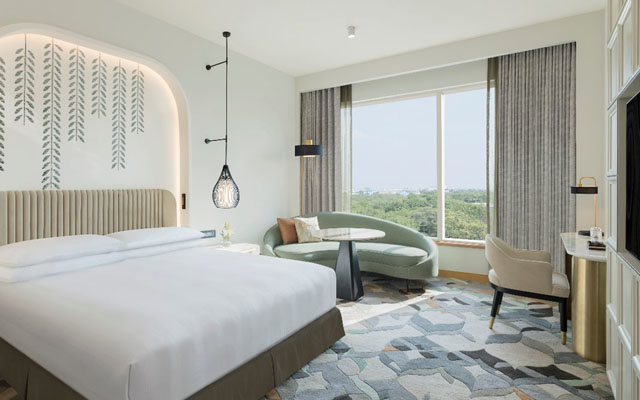
Guests can enjoy breakfast at K3, the all-day dining restaurant featuring three live kitchens

Available for booking till December 31, the package comprises one night’s stay in a Luxury Suite, daily buffet breakfast at K3 for two, three-course dinner at JW Tranquility, and 15 per cent discount on any spa treatment.

For more information, visit JW Marriott Hotel New Delhi Aerocity.

Thailand gets closer to legalised gambling

0

Thailand’s long-standing resistance to the legalisation of gambling and casinos looks like it will be consigned to the past after a proposal to create a review committee to look into reforming existing policy passed with no objections from Members of Parliament.

Currently, Thailand legislation prohibits ‘land-based’ casinos under the Gambling Act 1935, limiting betting to horse racing and government-sanctioned lotteries.

Gambling may soon be legalised in Thailand

The 60-strong committee will investigate existing policies and evaluate the potential of entertainment complexes with integrated casinos to boost the economy and tourism with a suggested 30 per cent tax on licensed premises, which could raise up to 100 billion baht (US$3 billion) per year.

The new legislation would also permit sports betting, online gambling and speculation on the Stock Exchange of Thailand.

According to the Bangkok Post, the complexes would be located in five possible spots drawing from either Pattaya and Bangkok in central Thailand; Chiang Mai and Chiang Rai in the north; Udon Thani, Ubon Ratchathani or Khon Kaen in north-east Thailand; and Krabi or Phuket in southern Thailand.

However, there has been some pushback from the travel and tourism industry.

Association of Thai Travel Agents president, Sisdivachr Cheewarattanaporn, through the Bangkok Post, expressed his concerns about the corruption that often comes with legalising gambling and that the entertainment complexes would be the preserve of only small groups of operators.

Bhummikitti Ruktaengam, the Phuket Tourist Association’s advisory chairman, also commented that the island does not need to add casinos to its infrastructure because it is already well-positioned as a popular destination for international tourists, with plenty of unique selling points.

Bhummikitti, instead, suggested that entertainment complexes should be limited to second-tier cities to drive up tourism for the rest of the country.

The development shows the urgency of Thailand’s need to rebuild its economy as it flip-flops between the goal of becoming a high-end luxury destination for affluent travellers and focusing away from backpackers and economy tourists – and comes hot on the heels of last year’s controversial relaxation of cannabis laws and the recent announcement of permanently extended opening hours for bars and clubs.

Move aside revenge travel, it’s all about passion now

0

As 2024 rolls around, the concept of revenge travel that emerged as a result of the lockdowns and the pandemic has given way to a more meaningful and purpose-driven approach when it comes to exploring the world.

Jarrod Kris, head of partnerships APAC, Skyscanner, told TTG Asia: “Travellers are no longer just searching for the cheapest flights; they are seeking meaningful experiences, cultural immersion, and personal fulfilment through their journeys.”

Kris: travellers are seeking meaningful experiences, cultural immersion, and personal fulfilment through their journeys

He shared an example of how several individuals he knew were unable to obtain Taylor Swift tickets for the concert in Singapore in March 2024. Instead, these individuals purchased flights tickets to Canada to watch her live, combining it with a holiday at the same time.

“For them, travel needs to align with their interests and passion points (Taylor Swift). Aside from immersive experiences allowing travellers to connect with locals, celebratory vacations, centred around milestones and significant life events, are gaining traction,” Kris added.

To no one’s surprise, Japan is leading the way as the hot favourite destination for travellers in 2024, thanks to its blend of tradition and modernity.

Kris stated: “But with many people comes overtourism. (We help spread tourists out) by promoting secondary or regional destinations in Japan. There are many regional tourism operators that need support, be it hotel or experience operators; they too, need to be included in the marketing plan. We then work with DMOs to encourage education of diversification of interests within those destinations.”

On the flipside, Skyscanner also partnered with Tourism Australia to drive outbound Japanese travellers to consider Australia, in particular Sydney. Kris shared that the campaign was a “big success”, which involved the creation of “bespoke content” by Destination New South Wales and Tourism Australia to cater specifically to the interests of Japanese travellers.

As to how Skyscanner works with DMOs to target potential travellers, Kris said: “The campaign started with placements on social media like Facebook and Instagram, which in turn led users to the Skyscanner homepage, which redirected them to a Sydney City Guide with tailored content (that we developed specifically for the campaign).”

He pointed out that over 90 days, the data points and study of user interactions with the campaign and their subsequent bookings, helped to shape marketing strategies for the Tourism Australia partnership.

“We work with DMOs because we can influence from the start, as flights are the first thing that travellers research,” said Kris.

This comes as Kris noted that the OTA wants to be more than a flight aggregator, and instead as a “platform for inspiring and aiding travellers in making informed decisions about their trips”.

Recently, Skyscanner rolled out an AI tool utilising ChatGPT, to offer personalised recommendations based on a traveller’s interest and desires.

“We also have an ‘Everywhere’ search, which allows travellers to explore potential destinations based on their departure location, budgets, and travel period, encouraging travellers to explore lesser-known places,” he said.

Overall, Kris is optimistic about travel, with 2024 shaping up to a “really good year”, despite inflation and economic uncertainty as travellers “want to get out there now that everything is open”.

Vistara launches Delhi-Hong Kong direct service

0

Vistara has introduced daily, non-stop flights between Delhi and Hong Kong.

The inaugural service, operated on Vistara’s A321neo aircraft, took off from Indira Gandhi International Airport, Delhi in the night on October 29, and arrived at Hong Kong International Airport in the early morning on October 30.

Vistara has commenced direct Delhi-Hong Kong services

The Delhi-Hong Kong route will depart from Delhi at 21.05 and arrive Hong Kong at 05.55, while the return service will depart Hong Kong at 08.55 and reach Delhi at 13.10. Timings are in local time zones.

New hotels: Hilton Yokohama, Garrya Bianti Yogyakarta and more

0
Hilton Yokohama

Hilton Yokohama, Japan
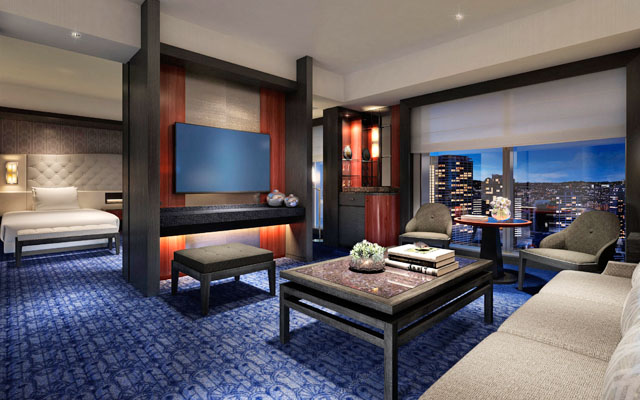
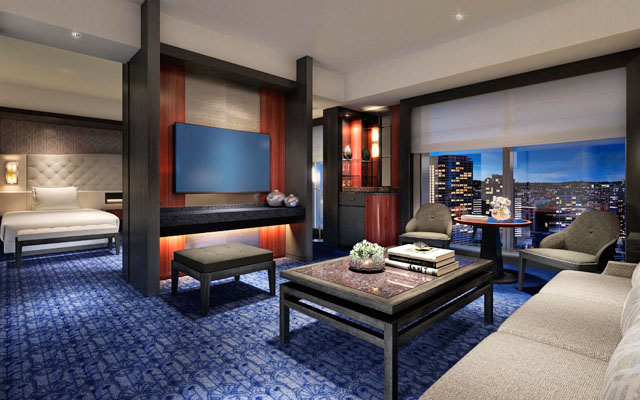
Hilton Yokohama boasts 339 guestrooms offering views of the city, and guests staying in suites and executive rooms can enjoy access to the hotel’s executive lounge which offers exclusive check-in, personalised service during breakfast and cocktail hours, and a library area with scenic views.

The hotel has three dining options: a bar and lounge, fine-dining restaurant, and an all-day dining restaurant. There are also meeting venues available.

Located just 20km away from Haneda airport, Hilton Yokohama can be easily accessed via a 30-minute train ride to Yokohama Station and an 11-minute walk from the station’s East Exit. The hotel is also just five minutes from Shin-Takashima train station, providing easy access to the city’s attractions.

Garrya Bianti Yogyakarta

Garrya Bianti Yogyakarta, Indonesia
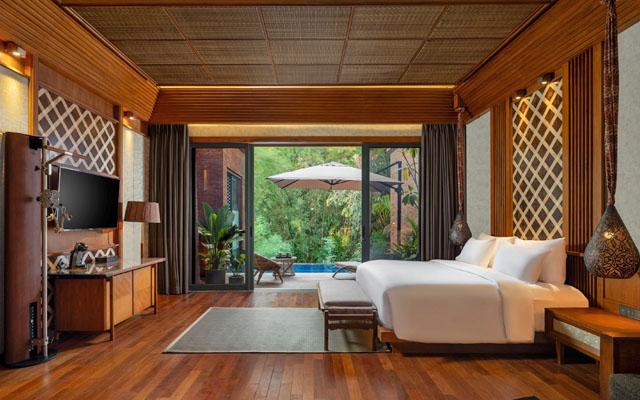
Located on the banks of Denggung River in Gabugan Village, a serene village located in Yogyakarta’s Sleman Region, Garrya Bianti Yogyakarta features 24 villas, a two-bedroom villa with a pool, gazebo, jacuzzi and living room, as well as a signature Wellbeing Sanctuary Villa.

Its 8lements Spa specialises in indigenous wellness therapies rooted in Asian wisdom, and guests can join group wellbeing activities ranging from poolside yoga to dance workshops or workouts in the gym.

Onsite, there is an all-day dining venue, lounge and bar, private dining room, arts and crafts shop, and a dedicated event space.

InterContinental Jaipur Tonk Road

InterContinental Jaipur Tonk Road, India
InterContinental Jaipur Tonk Road, previously Crowne Plaza, has undergone transformation and boasts 218 guestrooms and 20 bespoke suites.

The property has a diverse array of restaurants, lounge, spa, pool, fitness centre and kids’ play areas. It also features banquet spaces as well as open-air venues and extensive lawns with the capacity to cater to up to 2,000 guests at a time.

During their stay, guests can approach the hotel concierge for personalised recommendations and assistance, such as organising champagne breakfasts with a hot air balloon to picnics at Jhalana Leopard Safari.

Sheraton Kuching Hotel

Sheraton Kuching Hotel, Malaysia
Just 15 minutes’ drive from Kuching International Airport, Sheraton Hotels & Resorts offers easy access to the CBD, public transport, and cultural and leisure attractions in this UNESCO City of Gastronomy.

‌Sheraton Kuching features 378 guestrooms and 38 suites, comprising a Presidential Suite, as well as Executive, Club and Junior Suites.

The hotel offers several F&B options, fitness centre, kids’ club, infinity pool, ballroom and meeting venues.

Indian outbound on a roll

0

The Indian outbound market has grown strongly since international borders have reopened. How do you view the present growth of the market and are there any interesting trends?

We have noticed revenge travel. Indians are looking for opportunities to travel, be it shorthaul or longhaul destinations. So, the demand has been overwhelming.

In fact, there is a tremendous increase in demand compared to pre-pandemic times. Outbound is at an all-time high and can go further up if there is sufficient air capacity.

Indian travellers are looking at visa availability, airline capacity as well as the ability of the destination to handle the needs of Indian tourists when deciding where to go.

Demand is not restricted to a few destinations – if someone is looking to travel longhaul, Europe is not the only considered region.

Also, when it comes to longhaul trips, Indian travellers are not just looking to cover one or two destinations as part of a short holiday. There’s a very clear change where they now want holidays that span eight to 10 nights. They want to make the most of the high airfares they are paying and the pain they are going through to obtain visas.

Airfares are at an all-time high, a hike of 40 to 60 per cent compared to pre-pandemic levels. So, when they are paying a premium for a holiday in destinations like London, Barcelona or Munich, they are not looking at a short holiday of four to six nights.

We are also noticing a demand for immersive experiences, be it culture, cuisine or art. Gone are the days when we could prepare plain vanilla products for a few nights and get them sold. It is no longer a half-day guided city tour and lunch or dinner in a restaurant.

Indian travellers want the option of experiencing different things across various segments.

Millennial travel is on the rise, and this segment wants to do many things on their own. In terms of accommodation, many millennials opt for B&Bs and hostels.

Family travel is another segment growing big time. Senior citizens and solo female travellers are some other segments generating demand for outbound travel.

Earlier, some of the longhaul destinations had visa processing challenges, resulting in Indian travellers opting for more accessible destinations in South-east Asia. What’s the scenario now?
As far as European visas are concerned, nothing has changed. We have been told by the foreign missions that they are trying to rope in more manpower, and it is likely that next year the visa situation will be far better compared to 2022 and 2023.

So, destinations that are open (and coping well with) air connectivity and visa processes are finding many takers in the Indian outbound market. Asian destinations like Vietnam and Indonesia are getting popular because of new flights. Similarly, CIS (Commonwealth of Independent States) countries like Azerbaijan and Georgia have also become good options because of new flights.

How is Thomas Cook India coping with these visa challenges then?
In summer 2023, we managed the situation by encouraging our customers to plan their travel in advance. Many Indian travellers make their travel plans at the last minute, so we keep them informed about the visa situation. In addition, we launched our products in advance.

We also suggested alternative destinations like Egypt and Turkey. In fact, we witnessed a great season for Turkey where we noticed Indian travellers initially keen on a short three- to four-night itinerary opting for 10 to 11 nights covering different parts of Turkey.

People are also showing interest in cruises across the Mediterranean and the Far East.

I think India’s G20 Presidency has dramatically changed the outlook of foreign countries towards India, and I expect that we will become visa-free for many markets in the months to come. This will further boost India’s outbound tourism market.

Has the slow Chinese outbound recovery allowed the importance of the Indian outbound market to shine?
The entire world is now looking at India. Tourism boards that were previously not present in India are now trying many ways to lure Indian travellers.

We are witnessing aggressive stances by overseas NTOs keen to attract more Indian tourists.

What do you think destination marketers and other suppliers need to do to attract quality Indian outbound travellers?
It is not just about marketing a destination. An entire ecosystem comprising aspects like consulates, airline connectivity, and visa centres across the country are required to create a demand. These things need time to come about.

You also require products that can cater to the needs of Indian travellers, like Indian restaurants.

A strong social media presence can help a long way in attracting Indian travellers. Destination marketers and other suppliers need to tell their stories on Instagram.

Shopping is another aspect that Indians are keeping in mind when finalising a destination. On average, every Indian traveller has a specific shopping agenda.

How do you view the present scenario in terms of international flight connectivity?
I expect more connections out of India. Indian carriers like Vistara and IndiGo are expanding their presence. Even Air India is stepping up its international operations.

International carriers, too, are improving their connectivity to India.

I think the entire flight network to and from India will be much improved in the next one year.

.sister-sites .sites a { padding: 14px; }