Asia/Singapore Sunday, 26th April 2026
Page 211

RateHawk casts confident eye on Asia

0

Along with its recent rebranding, B2B online booking engine RateHawk is now poised to enter the Asian market.

The company now has a core group of people in the region, and aims to expand its headcount to 30 in 1Q2024 and 60 by the end of the year. The company will launch as a legal entity in Singapore, with a target to begin operation by the end of this year.

Shpilman: establish local operations with local support, local commercial teams, local bank accounts

RateHawk is available in 21 languages, including Chinese. As it grows in this region, it will add Thai and Korean in 1Q2024, Vietnamese in 2Q2024, and Japanese by the end of 2024.

Felix Shpilman, RateHawk’s CEO and president, said the company would establish local operations, with “local support, local commercial teams, local bank accounts” among other things. He also plans to contract locally, as RateHawk has been in other regions like Dubai in the Middle East, Europe and CIS nations.

Shpilman is bullish about competition, and remains confident that his company stands out in terms of supply quality, web and mobile user experience convenience, support quality, and level of automation and machine learning.

“Nobody has anything like us, and I believe we’re unmatched globally. Expedia, Bedsonline, TPL Holidays, etc are all formidable competitors, but combining all of those things? Nobody does that at the global scale like we do,” he remarked.

Hilton Singapore Orchard names new GM

0

Hilton has appointed Rupert Hallam as general manager for Hilton Singapore Orchard, Hilton’s largest hotel in Asia-Pacific.

With over three decades of hospitality experience, of which 21 years were spent with Hilton, Hallam will oversee day-to-day operations of the hotel, including guests services, culinary concepts, as well as business and wedding offerings in his new role.

He previously served as the general manager of Hilton Adelaide for nearly five years.

Korean Air appoints Cambodia country manager

0

Korean Air has named Hoyeon (Chris) Chang as country manager for Cambodia.

Having been with the SkyTeam Alliance carrier for 17 years, Chang will move to Phnom Penh for his new role. He was previously based at the airline’s headquarters in Seoul where he was in charge of marketing for Europe and South-east Asia.

Rajesh Chakraborty helms as GM of Taj Hotel and Convention Centre Agra

0

Taj Hotel and Convention Centre Agra has named Rajesh Chakraborty as its new general manager.

With over 26 years of dedicated service within the Indian Hotels Company Limited, Chakraborty has held pivotal positions across various hotels in India and internationally, with his most recent title as general manager of Vivanta By Taj Aurangabad Maharashtra.

In his new role, he will leverage his extensive experience to further enhance guest experiences and elevate the hotel’s reputation.

Ascott makes key appointments to South-east Asia leadership team

0

The Ascott Limited has appointed David Cumming as regional general manager for Vietnam, Cambodia and Myanmar, and Kanit Sangmookda as country general manager for Thailand and Laos.

Cumming will oversee a portfolio of over 40 properties, where more than half are slated to open over the next three years. He joins Ascott with over two decades of global hospitality industry experience across the UK, Egypt, the UAE, Oman, and most recently Thailand.

As for Sangmookda, he will manage a portfolio of over 30 properties where over a third are expected to open over the next three years. With over two decades of experience in Malaysia, Indonesia and Thailand, he brings with him strong operational and commercial expertise from the past management of large hotel portfolios under leading hotel chains such as Marriott International, Minor Hotels and the former Starwood Hotels & Resorts.

Further East 2023 wins more hearts

0

Further East 2023, an annual invited-only luxury travel trade event, has seen a 30 per cent growth in attendance as the Australasian travel market rebounds.

Now into its fourth year, the event in Bali’s Seminyak, Indonesia, welcomed 165 exhibitor stands, 75 per cent of which were repeat, and 185 international buyers, 40 per cent of which were new.

Further East 2023 in action

Serge Dive, founder and CEO of event owner This is Beyond, said: “It is a good demonstration of the resurgence of the Australasian market. In many ways 2023 (has been) the year the world finally opened and there is a huge desire to travel. There is also a huge desire among travel industry players to shape up.”

Dive noted that the industry has been “rebooting” themselves by evaluating the way they do business, and Further East has been able to provide a platform for them to elevate their brands and to see what the future holds for the luxury travel industry.

Participation interest in the exclusive event is up, but the organising team maintains high standards in the qualifying process, according to Dive.

Sophia Asghar, project manager of Further East, said she had received a lot more interest from industry members to join the event this year, thanks to the success of last year’s event, which was held just after borders started to reopen.

Dive said: “We need to make sure that Sophia and the team are finding only the very best buyers and sellers, and that we bring some new buyers and sellers to the show.”

Building on the success of last year’s edition, Further East 2023 birthed a new element – the Further East Leadership Summit together with NIHI Sumba. The three-day summit from November 10 to 13 brought together just 10 people, of which eight were Asia-Pacific’s most influential travel leaders. Behind closed doors, they discussed ideas to shape the future of travel in the region. Ideas generated will be shared with the wider Further Easy community early 2024.

Dive was confident that Further East will rise along with the uptrend in Asia-Pacific’s luxury travel, with participation likely to cross the 500 mark in the next five to six years.

Further East 2024 will return to Alila Seminyak on November 4 to 7.

Commenting on the Further East 2024 commitment, Christiane Ferger, general manager of Alila Seminyak, said: “(The hotel) has been home to Further East since its beginnings in 2018, and we are very grateful to be chosen. The show brings exhibitors, buyers and media together, and allows for open minds to exchange ideas.

“The event not only benefits our hotel and Seminyak as a global destination but also extends its impact by fostering exposure among exhibitors, buyers, media worldwide, beyond the event itself.”

Sabreena Jacob, general manager of Ta’aktana, a Luxury Collection Resort and Spa, which is set to open 1Q2024 in Labuan Bajo, said the event provided a timely platform for her to “start the conversation about our unique resort”.

First-timer Romy Strang, director of The Resort Villa, Rayong Thailand, added that the event helped her to connect with international buyers, allowing her to expand her sources beyond her dominant Scandinavian market.

Christmas is coming to Universal Studios Singapore

0

Christmas is coming to Universal Studios Singapore (USS) at Resorts World Sentosa from December 2 to January 1, 2024. A Universal Christmas will present all-new live shows, festive encounters with popular characters, including Illumination’s Minions and DreamWorks’ Trolls, and snowfall.

DreamWorks’ Trolls will bring holiday cheer to the Hollywood zone, along with the Trolls Tree Trimming Party show that comes with a meet-and-greet with Poppy and Branch.

The New York zone will be transformed into Santa’s North Pole Headquarters. Expect to encounter snowfall here multiple times a day.

Every evening, Santa’s North Pole Headquarters plays host to a night-time performance – the W.I.S.H show, which packs in live singing, dancing and an enchanting snowfall at the end.

Christmas vibes will continue throughout the theme park – spot Santa’s Present Party delivery route, join regular characters like Bumblebee from Transformers and DreamWorks’ Shrek and Fiona in spreading festive cheer, and enjoy Christmas hits at Mel’s Stage.

A Universal Christmas is included with regular admission to USS.

More information is available here.

From tourist spot to green plot

0

What is your background like, and what led you to this role? Were you always so passionate about tourism?
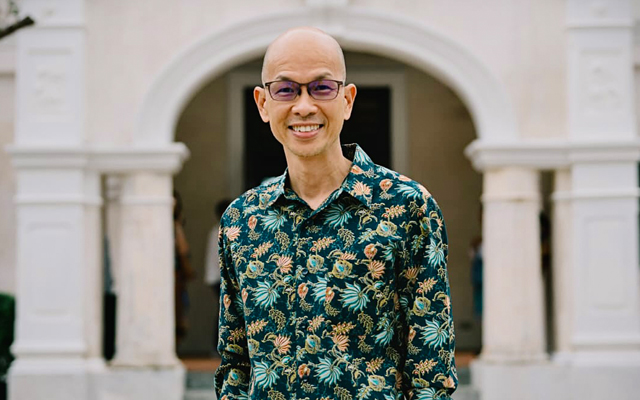
As a native of Phuket, I have held diverse roles within the travel industry, including managing resorts and property businesses. My involvement with the Phuket Tourism Association began at a young age, starting when I was 27. I have served in multiple capacities, ranging from committee member to vice president and finally president of the association. During my tenure as president – which coincided with Covid – I spearheaded initiatives like the Phuket Sandbox and had the opportunity to present plans for the Expo 2028 Phuket event in France. Close to the end of my four-year term, I convened with some associates to discuss the intersections of tourism and sustainability.

Recognising the intricate relationship between these two facets, we established the Sustainable Tourism Development Foundation (STDF) in 2022, with support from various partners, including the Phuket Hotels Association, Phuket Tourism Foundation, Phuket Chamber of Commerce, and Phuket City Development Co. Limited.

The foundation’s strategic focus for the next two to three years encompasses four key initiatives: Food (Before) Waste, the Phuket Tourism Carbon Learning Center, the Phuket Big Trees initiative, and the provision of green financing tailored for SMEs, particularly small hospitality businesses, through a pivotal fund that is the first of its kind.

Currently, I hold the position of president within the foundation and serve as an advisor to the Phuket Tourism Association.

What experiences have been pivotal in shaping your views on sustainability?
Having worked in tourism means I’ve worked closely with natural elements, including sun, sea and sand – all tourism products that are very big drivers in Phuket. Even though it seems like Phuket has experienced diminished impact when it comes to climate change, there have been notable consequences, including sudden, significant flooding last October. We’ve experienced how the tourism sector grapples with the repercussions of climate change from many dimensions. For example, increased rainfall affects tour boat operators, limiting their ability to operate. Additionally, rising sea temperatures lead to coral degradation, diminishing the appeal for divers.

In a world wrestling with “global boiling”, climate change exerts adverse effects on every facet of tourism, all the way from the supply chain to consumer demand.

My generation recognises that our livelihoods have long been intertwined with nature. Failing to address these environmental challenges leaves a grim legacy for our children. Our aspiration is to create a Better Phuket for future generations, shaped by climate demands.

Although our vision extends beyond Phuket, we currently lack the requisite resources to fully realise such broader objectives.

Over the past few years, Phuket has witnessed immense changes in its tourism landscape. What has changed the most from 2019 till now?
We’ve experienced both successes and setbacks. Success in the Phuket Sandbox occurred from strong partnership between the Public, People and Private sectors. If we didn’t have these, we couldn’t have succeeded. We had a very understanding public & support from the people and private sectors.

Our key takeaways encompass the three D’s: Digital, Data, and Deregulation.

Digitalisation is pivotal in every aspect of our work, encompassing communication, workflow, and platform utilisation.

The Phuket Sandbox initiative also underscored the fragmented state of Thai data. However, it was during the Sandbox that we encountered the Big Data Institute – an excellent government agency that tracks information such as visitor arrivals, number of vaccinations, and more. All this data, once synchronised, offered us a very comprehensive strategic overview.

The deregulation aspect involves urging the government to eliminate outdated legislation while modernising long-unreviewed regulations.

Another excellent takeaway is the exceptional spirit of Phuket. During the Sandbox there was so much unity among the people of Phuket – their forward-thinking approach showed that Phuket always accompanies problems with solutions.

One of the notable setbacks was our failed bid for the Expo 2028 Phuket, which surpassed our capabilities. Nevertheless, this experience afforded us a broader international perspective, enabling us to gain insights into global feedback mechanisms and operational standards.

As president of the Sustainable Tourism Development Foundation, what are the most significant challenges you’ve faced so far, and which achievements are you most proud of?
The primary challenge lies in the vast scope of sustainability, which demands the collective responsibility of all stakeholders.

Another issue is that even though more and more people are working in sustainability, they’re not necessarily talking or collaborating – this exacerbates redundancy and creates overlap.

In terms of achievements, we have successfully implemented organic waste composting.

Recently, we also conducted training on underground water banks in anticipation of potential water shortages. Although we have existing dams, inadequacy of rainfall in the coming year could pose challenges. To address this, we are exploring the establishment of additional reservoirs and expanding the water pipe network.

It is imperative that we continually seek new sources of freshwater through governmental efforts. Simultaneously, private initiatives, such as the creation of underground water banks, are tapping into local wisdom by considering the natural flow of underground water. This approach is characterised by its simplicity and reliance on local know-how.

Furthermore, the recycling of water, particularly at the individual level, is another avenue that warrants attention in our sustainability efforts.

With the rapid advancement of technology in recent years, in what ways do you believe technology can further aid the goals of sustainable tourism?
It’s simple; every agency and institution has useful data, if they can all talk.

Technology plays a pivotal role in data integration. If every agency can share and consolidate their data, it will really streamline our sustainability initiatives.

Do you believe that Southern Thailand – particularly the Andaman side – can evolve into a tourism hub like greater Honolulu over the next decade?
Today, Phuket serves as a vital gateway to neighbouring destinations like Krabi and Phang Nga. Travellers arriving in Phuket often explore beyond the island, and two key factors are crucial for managing tourist flow.

The first revolves around diversity of transportation options. Currently, road transport is the sole means of reaching Krabi, Phang Nga, or Khao Lak from Phuket, which requires a three hours’ drive. The absence of a comprehensive rail network underscores the urgent need for improved land transport options. Furthermore, sea routes to nearby islands primarily rely on boats.

Diversifying transportation modes, such as introducing a land-based rail system and seaplanes, can significantly enhance connectivity among popular tourist destinations.

I’m confident that Phuket will welcome around eight million visitors this year, achieving at least 80 per cent of its 2019 tourism figures, despite geopolitical challenges. Additionally, I anticipate a full recovery to 100 per cent of pre-pandemic tourism levels by 2024.

The future course of Phuket relies on government policies. Follow through with promises on the Phang Nga Airport and substantial enhancements to the region’s transportation infrastructure have the potential to accelerate Phuket’s growth.

Currently, Phuket still has a lot of pain points in terms of connectivity and transportation, which demand government attention. Addressing these concerns, especially those pertaining to transportation, is imperative to unlock Phuket’s true potential.

Another issue is the limitations of Phuket International Airport, which is already operating at maximum capacity. One major factor that contributes to flight delays is the lack of available runways.

The airport has only one runway. With only one runway, no matter how many terminals you add, it doesn’t make a difference. The runway issue needs to be resolved first.

One challenge for travellers in Phuket is getting around the island, as things are quite spread out. Can you comment briefly on the Phuket light rail project?
The monorail has been postponed several times by the current government, so this brings me back to my original question: How committed is the government to ensuring Phuket’s successful future? If the government lends its unwavering support, Phuket can easily take off.

Amadeus unveils travellers’ expectations for 2024

0

Amadeus has released its Travel Trends research for 2024, which explores what might be in store next year and identifies five developments that aim to create more meaningful travel experiences for the planet, economy, and the traveller.

Daniel Batchelor, vice president, global corporate marketing & communications, Amadeus, remarked: “After a period of recalibration and reassessment over the past few years, we are beginning to see a host of new ideas bear fruit across our industry.

The trend for music tourism is expected to accelerate in 2024

“Generative Artificial Intelligence (GAI) will continue to exert a growing influence across the sector during 2024, while electric taxis are finally poised for take-off. Doing what we love, be it travelling to see our favourite music acts or using new tools to follow in the footsteps of digital influencers, will also drive bookings next year, while airlines continue to reshape their offering to respond to changing tastes.”

Music tourism
After the social isolation of the pandemic, when bands and musical artists were grounded for months, a boom in concerts and festivals has this year tapped into a desire for connection. The trend is expected to accelerate in 2024.

With Taylor Swift touring Asia-Pacific next year, Amadeus research suggests Taylor Swift concert dates in Australia, Singapore, and Japan for 2024 had a significant impact on travel searches and booking volumes to the countries.

During the week of the concert dates announcement, flight searches to Melbourne and Sydney saw a significant week-over-week growth of 44%, while bookings for these cities surged impressively by 446%. The concert announcement also had a striking impact on searches from New Zealand to both cities, resulting in a 240% week-over-week increase during the same period.

Flight searches to Singapore likewise showed an 18% week-over-week growth shortly after both Taylor Swift and Coldplay concert announcements were made.

There was a notable 32% week-over-week surge in international searches from neighbouring countries to Tokyo. Inbound travellers from Asia-Pacific countries such as Australia, Indonesia, South Korea, Malaysia, and Thailand demonstrated a strong preference for both short and long trips in a desire to enjoy the concert experience while also making room for leisurely exploration during their visit.

Agents of influence
Social media has become a powerful force during the inspiration phase of a trip, but a new shift is happening. Instead of influencers solely being the source of vacation inspiration for their communities, they are now facilitators of direct bookings through their varying channels – with influencers designing and hosting their own group trips.

The rise of so-called “Agents of Influence” is being facilitated by e-commerce marketplaces. This technology allows influencers using Instagram, YouTube and TikTok, for example, to share a booking link directly on their profile page and process payments.

Electric skyways
As cities are more congested and air pollution is more prevalent, a potential solution to fossil-fuel-powered transportation will be the emergence of skyways that allow flying taxis, electric vertical take-off, and landing (eVTOL) aircraft and other kinds of electric aircraft to provide lower emission air travel options, both within urban areas, to satellite airports, cross-country and between islands.

It may seem very futuristic but German aircraft manufacturer Volocopter is planning to provide a fleet of electric VoloCity eVTOL for the Paris Olympics in 2024, making it one of the first electric air taxi networks. At the same time, Volocopter is expanding its reach to Asia, with plans to launch electric air taxis in Singapore by 2024, beginning with services in Marina Bay and Sentosa.

The potential expansion of these services includes cross-border air taxi trips to destinations in Malaysia and Indonesia, potentially connecting terminals in areas like Seletar and Changi to cities such as Melaka, Batam and Bintan.

Toff Mobility, the first electric air company in Asia, is working toward debuting electric aircraft in 2024 in South Korea, while Surcar Airlines has selected Zeroavia to provide hydrogen-electric engines for its seaplanes in the Canary Islands.

Intelligent concierge
GAI is adding tremendous value to the online travel planning experience for consumers, as search and advice become hyper personalised and more intuitive. Instead of selecting filters to finetune a search on a metasearch site or OTA, travellers can simply provide a brief to a chatbot in the same way you would a human advisor.

For example, a new ChatGPT plug-in from Expedia acts like a virtual travel assistant, listening to customer needs and delivering instant hotel and itinerary recommendations, with links to book.

The next generation of GAI-powered customer service will be delivered with greater patience and empathy, reducing the workload of employees to deal with the bulk of after-sales servicing and customer review management, giving them the bandwidth to provide the human touch on more specialist issues.

Business luxe-lite
With ever-more travellers wanting to fly at the front of the plane, there is an opportunity to offer more affordable and accessible “unbundled” business class fares.

In 2019, Emirates was one of the first airlines to launch “special” business class tickets, with no lounge access, restricted seat selection and no upgrade abilities. Qatar Airways followed, unveiling a Business Class Lite fare, with passengers asked to pay extra for lounge access and date or route changes, while they also earn fewer Avios/Qmiles.

With the trend gathering momentum, Zipair of Japan and Finnair began offering basic business tickets in 2021, while Air France and KLM added Business Class Light fares in 2023.

At the other end of the scale, airlines in Asia-Pacific are enhancing the exclusivity of their business class offerings. This evolving trend caters to the preferences of travellers who seek a premium level of comfort and luxury during their air travel. Notable examples include Japan Airlines’ A350 business class, Air India’s business class, and Cathay Pacific ‘Aria’ business class. The upgrade from various airlines features a 1-2-1 seating layout, sliding privacy doors, wireless charging apparatus, large 4K screens, and advanced Bluetooth audio streaming options.

Evidence of this trend continuing through 2024 includes news from Air New Zealand, which will be adding either four or eight rows along with sliding privacy doors, a storage cabinet, vanity mirror, and a spacious side shelf as a debut Business Premier Luxe product. Also, passengers can look forward to the integration of advanced entertainment features as part of this premium experience.

Kochi and Osaka team up for promotion

0

Kochi Prefecture in southern Shikoku has teamed up with Osaka Convention & Visitors Bureau to encourage inbound visitors travelling in Osaka to make a short trip to Kochi and other parts of Shikoku.

Kochi welcomed a mere 60,000 international visitors in 2019, compared to Osaka’s 12.31 million, prompting the prefecture to try new ways to attract arrivals amid Japan’s rapid tourism recovery.

The website hopes to encourage inbound visitors travelling in Osaka to also visit Kochi and other parts of Shikoku

The partnership’s primary promotion tool is a website with the tagline Japan’s Best Kept Secret: From Osaka to Kochi, the Heart of Shikoku, designed to “showcase ideas for side trips off the beaten track from the popular Kansai region”.

The platform outlines four types of routes that travellers can take to make the most of the area based on their interests and mode of transport.

The adventure expedition suggests travellers use Kochi as a base for rafting, canyoning, canoeing and SUP experiences on three of the main rivers on Shikoku: the Niyodo, Yoshino and Shimanto. The rural expedition introduces Shikoku’s famous Iya Valley and Shimanto River Valley, while the blue route outlines how visitors might explore the wider region, including the sights of Okayama on Honshu and the famous whirlpools of the Naruto Strait.

The fourth expedition, for drivers, provides tips on renting a car and exploring remoter spots such as Ashizuri-Uwakai National Park and Kashiwajima island, as well as hot springs, temples and local markets.

“Getting here from cities like Osaka and Kyoto is actually quite easy,” said a Kochi Prefecture spokesperson. “There are frequent bullet and express train links, which also happen to cross some of the most scenic parts of Shikoku, such as the Oboke and Koboke gorges, and visitors can easily explore by renting a car and driving across the mighty bridges that connect Shikoku to the mainland.

“Kochi Prefecture looks forward to welcoming a growing number of visitors in search of a more peaceful and natural experience on the country’s smallest main island,” the spokesperson added.

.sister-sites .sites a { padding: 14px; }