
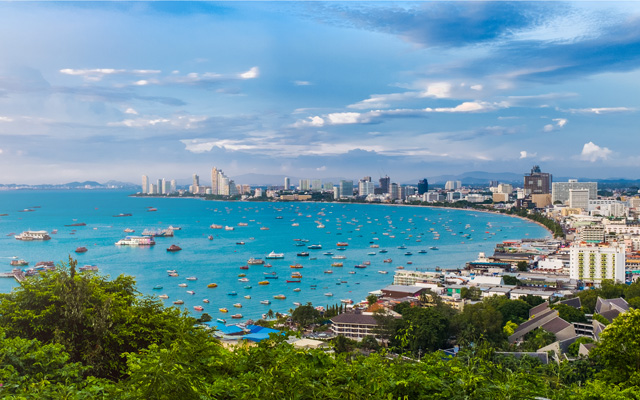
The travel industry in Pattaya received a boost this week with the announcement that a new organisation, the Association of Chonburi Tourism Federation (ACTF), has been established to help lead the resurgence of the region’s economy.
Chonburi has had a strong 2023 – recording 17.2 million arrivals in September 2023 – to become the most popular destination in the country after Phuket.
However, despite these relatively decent numbers, the yield from travel and tourism is still below the peak levels of 2019, and the occupancy rate so far, in November, is just 60 per cent. This is due to a lower number of arrivals than forecast by government economists, a shortfall that has been blamed on the failure of recent campaigns to attract tourists, such as the slashing of visa requirements for Chinese, Indian and Russian tourists.
Speaking to reporters, the newly-elected president of the ACTF, Thanes Supornsaharungsri, explained that the objective of the newly-formed federation is to bring together tourism partners in Chonburi province, which includes Pattaya, to address the challenges currently faced by the tourism industry and enhance the competitiveness of the private sector.
Comprising more than 20 travel and tourism associations and professional groups, including Sriracha Koh Si Chang Tourism and the Thai Hotels Association (eastern chapter), the concept for the ACTF grew out of collaborative efforts from stakeholders created during the pandemic to help power innovation and unite the local industry under one united banner.
Additionally, the federation will empower small businesses with the voice and standing to contribute to discussions about the future of the region’s infrastructure and development plans.
The ACTF has already planned several initiatives to promote tourism in the province. These include the development of new tourist attractions, improved connectivity, and the promotion of eco-tourism activities that will be beneficial to the environment and local communities.



 He was most recently managing director of La Vie Hotels & Resorts.

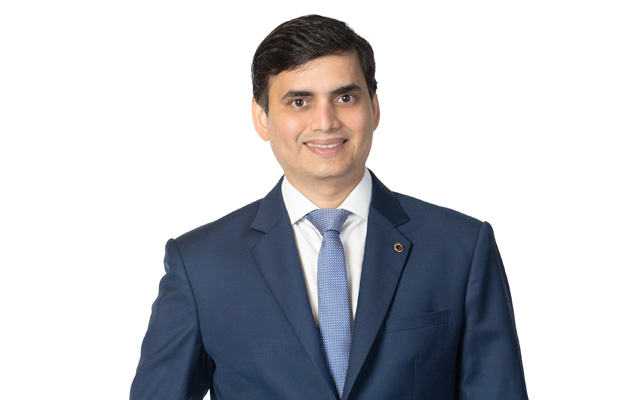
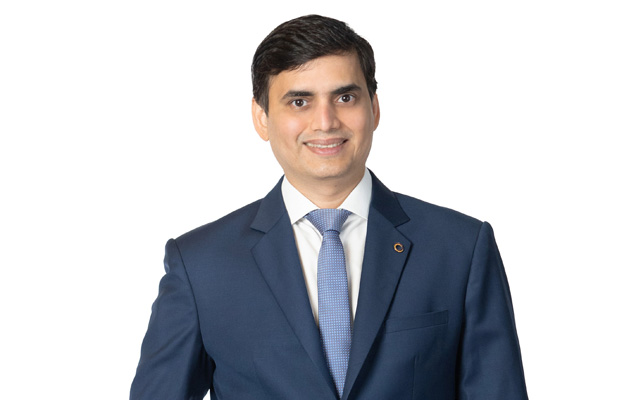





 He has previously worked at InterContinental Danang Sun Peninsula in Vietnam, InterContinental Hong Kong, Bulgari Hotel London, Peninsula Hotels Brand, to name some.


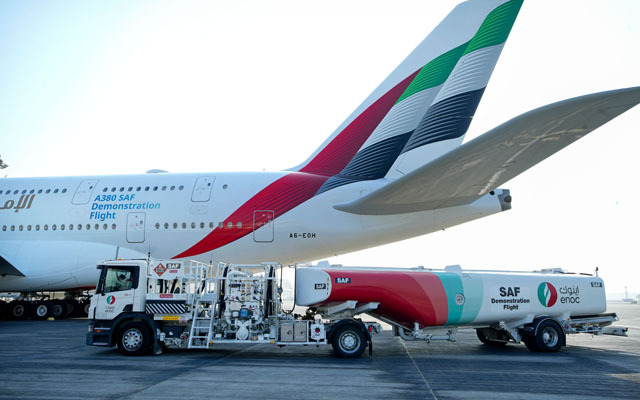
Emirates has become the world’s first airline to operate an A380 demonstration flight using 100 per cent Sustainable Aviation Fuel (SAF). The flight took off from Dubai International Airport with one of four engines powered on 100 per cent SAF, helping to demonstrate its potential as a drop-in replacement that matches jet fuel’s technical and chemical requirements, while being a more sustainable alternative.
The A380 demonstration flight underlines the performance and compatibility of SAF, and contributes to the growing body of research carried out by the industry to evaluate the beneficial effects of 100 per cent SAF on aircraft performance. SAF is currently capped at a 50 per cent blend limit in engines for commercial flights.
The 100 per cent drop-in SAF used on the demonstration flight includes renewable aromatics and closely mimics the characteristics of conventional jet fuel. This is the first time that drop-in SAF has been used on an A380 aircraft, with the expectation of full compatibility across the aircraft’s existing systems.
Last week, robust engine testing for one A380 Engine Alliance GP7200 engine using 100 per cent SAF was carried out, with the objective of validating the engine’s capability to run on the specially blended 100 per cent drop-in SAF without affecting its performance or requiring any modifications. Ground engine testing took place at the Emirates Engineering Centre in Dubai.
Earlier this year, Emirates successfully completed the first 100 per cent SAF-powered demonstration flight in the region on a GE90-powered Boeing 777-300ER. Last month, the first Emirates flights operating with SAF provided by Shell Aviation took off from Dubai International Airport (DXB). Shell supplied 315,000 gallons of blended SAF for use at the airline’s hub in Dubai.
Adel Al Redha, chief operating officer, Emirates Airline, said: “The growing global demand for lower-emission jet fuel alternatives is there, and the work of producers and suppliers to commercialise SAF and make it available will be critical in the coming years to help Emirates and the wider industry advance our path to lower carbon emissions.”
“Seeing Emirates flying an A380, the world’s largest airliner, powered by an engine running on 100 per cent SAF is a symbolic moment. These fuels are the most effective way to address CO2 emissions in the aviation industry today and that they are supported increasingly by the world’s leading airlines. SAF is vital to meeting the sector’s target of net-zero emissions in 2050, but needs the backing of the whole industry,” commented Julie Kitcher, executive vice president communications and corporate affairs, Airbus.
The airline also recently expanded its partnership with Neste for the supply of over three million gallons of blended SAF in 2024 and 2025 for flights departing from Amsterdam Schiphol and Singapore Changi airports.
In addition, Emirates currently uplifts SAF in Norway and France and the airline continues to seek opportunities to use SAF at various airports as supply becomes available.