Custom Travel Solutions (CTS) has introduced a platform designed to enable AI assistants to access live travel inventory and complete bookings within a single interaction.
The service, known as RouteStack, allows users of tools such as ChatGPT and Perplexity to search for hotels and be directed to a pre-filled checkout page with selected dates and pricing, where bookings can be completed.
AI assistants can connect directly to live travel data, allowing users to move from search to booking within a single conversation
The platform provides real-time availability and pricing data to large language model agents, addressing a limitation where AI systems have been unable to access live travel inventory. Until now, users searching for travel through AI assistants were typically redirected to external websites to complete bookings.
RouteStack connects AI applications to live supply, starting with hotel inventory. Additional services, including flights, car hire, holiday rentals and activities, are expected to be added from April. Cruises, rail and transfers are also planned.
The system is built using Model Context Protocol servers designed for AI environments. It enables AI tools to query inventory and return structured results within conversational interfaces.
A key feature is the use of deep links that direct users to pre-populated booking pages, allowing transactions to be completed without restarting the search process on another platform.
CTS said the platform is intended to support travel companies and developers seeking to integrate booking capabilities into AI applications. It allows suppliers to connect inventory while retaining control over pricing, customer data and fulfilment.
The launch comes as AI tools become more widely used in travel search and planning, while booking processes remain largely tied to existing distribution systems.
“This isn’t about building another chatbot,” said Mike Putman, CEO of CTS. “We’ve built the commerce layer AI agents were missing. The APIs, the deep links, the checkout infrastructure – those pieces already existed inside our broader ecosystem. We’ve now assembled them specifically for AI. This is the moment where conversational discovery becomes transactional.”
Kuda Villingili Resort Maldives has promoted Krisztina Vaszjunyina to resort manager.
She has been with the resort since 2021, joining as director of rooms and later serving as director of operations, where she oversaw daily operations and multiple departments.
She has more than 15 years of experience, including roles at Cheval Blanc Randheli and Anassa Hotel.
Airlines across Asia are adjusting fuel surcharges and fares as jet fuel prices rise sharply following the escalation of conflict in the Middle East, increasing cost pressure across the sector.
Singapore Airlines and its low-cost subsidiary Scoot have raised fares across their networks, while Cathay Pacific will increase fuel surcharges by 34 per cent from April 1 and review them every two weeks. The Hong Kong carrier said fuel accounted for about 30 per cent of operating costs in 2025 and warned that “if the steep increase of fuel costs cannot be effectively mitigated, we would not be able to sustain the effective operations of our network”.
Airlines in Asia are raising fuel surcharges and fares as jet fuel prices approach US$200 per barrel following disruptions to oil supply routes
The rise in surcharges reflects a wider industry response. According to IATA data, jet fuel prices reached US$197 per barrel in the week ending March 20, 2026, up from below US$100 a month earlier. Analysts note that aviation fuel has risen faster than crude oil due to tighter refining capacity and limited storage flexibility.
Budget carriers have also adjusted pricing. Cebu Pacific has increased fares by 20 to 26 per cent through May, while AirAsia X described its fare changes as temporary. Thai Airways has implemented increases of 10 to 15 per cent.
Airlines typically use fuel surcharges as an initial measure to recover costs before adjusting base fares.
The Indonesian National Air Carriers Association has called for a 15 per cent increase in fuel surcharges and a revision of domestic fare caps, citing higher fuel prices and currency weakness, reported The Jakarta Post today. Secretary general Bayu Sutanto said the situation has “significantly (contributed) to rising operational costs for national airlines”, with around 70 per cent of expenses denominated in US dollars.
The reliance on Middle East oil supplies has left Asia-Pacific carriers exposed. The Strait of Hormuz, which carries around 20 per cent of global oil supply, remains a key risk point, with most shipments bound for Asia.
While some airlines continue to hedge fuel costs, these programmes only partially offset price increases and often exclude refining costs. As a result, carriers are relying more heavily on surcharges to manage volatility while maintaining network operations, with further adjustments dependent on how fuel prices and supply conditions evolve.
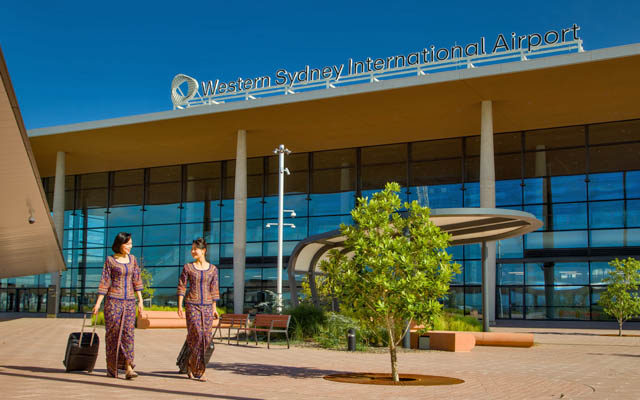
Singapore Airlines will commence operations from Western Sydney International Airport from November 23, 2026
Singapore Airlinesexpands network with new Australia and China routes
Singapore Airlines will commence new routes to Western Sydney and Hangzhou, expanding its network in Australia and China.
Daily flights between Singapore and Western Sydney International Airport will begin on November 23, 2026, marking the airline’s entry into the new airport. This will bring its total operations to Sydney to five daily services, including four flights to Sydney Kingsford Smith Airport. With the addition, Singapore Airlines will serve eight destinations in Australia.
The airline will also launch daily flights between Singapore and Hangzhou from June 1, 2026. The new route becomes its ninth destination in mainland China and will complement existing services by Scoot on the same sector.
Both routes will be operated using Airbus A350-900 aircraft configured with 303 seats in Business and Economy cabins.
Air Canada
Air Canada adds second daily Delhi-Toronto frequency
Air Canada has expanded its Delhi–Toronto service to twice daily through April 2026, responding to demand on routes between India and North America.
The increase comes as airspace restrictions across parts of the Middle East continue to affect capacity on alternative routings. The additional frequencies are intended to support passenger demand between India and Canada.
Vietjet
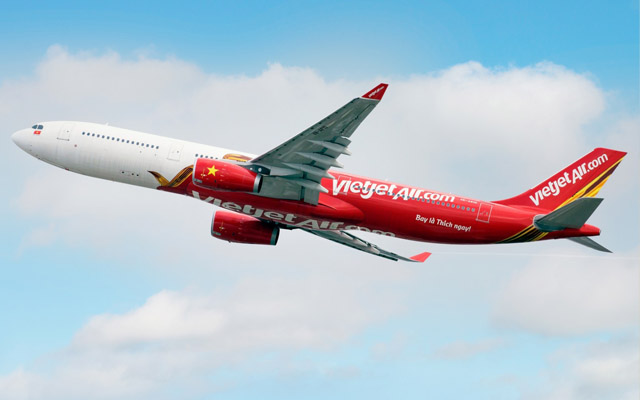
Vietjet broadens regional network with Indonesia and Singapore links
Vietjet will introduce two new international routes connecting Danang with Jakarta and Nha Trang with Singapore, expanding its South-east Asia network.
The Danang-Jakarta service will start on April 29, 2026, operating five times per week. This will be the only non-stop connection between the two cities and brings Vietjet’s total routes between Vietnam and Indonesia to five.
The Nha Trang-Singapore route will launch on June 1, 2026, with four weekly frequencies. The addition increases Vietjet’s network between Vietnam and Singapore to five routes, alongside existing services from Ho Chi Minh City, Hanoi, Phu Quoc and Danang.
TransNusa
TransNusa boosts Singapore frequencies from Jakarta and Bali
TransNusa will add flights between Jakarta and Singapore and between Bali and Singapore, expanding capacity on key regional routes.
An additional Jakarta-Singapore frequency will begin on April 17, 2026, bringing the airline’s operations on the route to three daily flights. A new Bali-Singapore service will follow from May 2, 2026, adding further capacity between Indonesia and Singapore.
Both routes will be operated using Airbus A320 aircraft. The increase in frequencies supports demand on high traffic corridors linking Indonesia and Singapore.
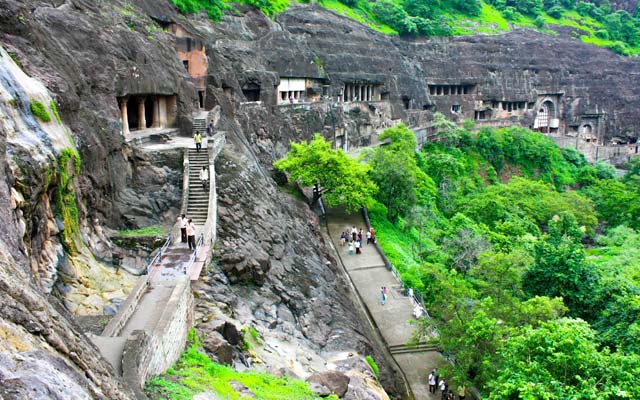
Ajanta Caves remains one of the key draws as Maharashtra expands tourism beyond seasonal travel into new circuits and destinations; photo by MisterStock
The state of Maharashtra, home to India’s financial capital Mumbai, is moving away from seasonal tourism towards “all-season circuits”. By developing 50 specialised tourism hubs, the government of Maharashtra is ensuring that economic benefits reach every district, from the Konkan coast to the hinterlands of Vidarbha.
“Our five-year strategy is aligned with the Vikasit Maharashtra (developed Maharashtra) vision, focusing on eight key themes including forts and heritage, flora and fauna, aqua (coastal and inland), experiential, growth hubs and MICE, island tourism, religious and spiritual, and global destinations,” said Sanjay Khandare, principal secretary, tourism department, government of Maharashtra.
The Maharashtra Tourism Policy 2024 sets a target of attracting 1 lakh crore rupees (US$10.6 billion) in private investment and creating 1.8 million jobs by 2034. Over the next five years, its immediate focus is on building resilient, high-quality infrastructure to support a US$1 trillion state economy.
“Maharashtra’s tourism sector is currently witnessing a period of growth, serving as a primary engine for our economic aspirations. If we look at the trajectory over the last few years, the momentum is clear. In 2022, the state recorded approximately 11.13 million domestic visits and 1.51 million international visits, and by 2024 our estimates show approximately 18.84 million domestic tourist visits and 3.71 million foreign tourist visits,” added Khandare.
UNESCO sites such as Ajanta Caves and Ellora Caves are among the most visited heritage sites in the state. Recently, Maharashtra’s tourism department organised a fam trip for more than 100 foreign tour operators and influencers to showcase these flagship caves.
Maharashtra holds the highest share of Buddhist caves in the country, with more than 850 rock-cut caves. The state also has the highest number of forts in India and is looking to provide immersive experiences that position Maharashtra as the “Heritage Capital of India”.
“In recent years, driven by improved connectivity, growing domestic travel demand and the state’s diverse tourism offerings, Maharashtra has progressed. From the hospitality industry’s perspective, the state today presents a more balanced tourism ecosystem that caters to leisure, heritage, religious, adventure and business travel alike,” said Rishi Mehra, area nominee – Nashik, Hotel and Restaurant Association (Western India).
According to Mehra, destinations including Mumbai, Nagpur, Nashik and Pune continue to remain strong hubs for business and MICE travel, while leisure destinations such as Mahabaleshwar, Matheran and Alibaug are seeing rising demand for weekend tourism.
“At the same time, heritage and religious circuits including Ajanta Caves and Ellora Caves, as well as pilgrimage destinations such as Nashik, Shirdi and Kolhapur, among others, are attracting a steady flow of visitors. Newer and less explored destinations like Igatpuri and Sindhudurg, with improved connectivity, are expected to grow in the coming years,” stated Mehra.
Khandare: Maharashtra’s tourism sector is currently witnessing a period of growth, serving as a primary engine for our economic aspirations
Industry stakeholders note a shift towards experiential tourism, including eco-tourism, agro-tourism, culinary tourism and adventure activities such as trekking, fort trails and water sports.
Mahindra Holidays & Resorts India recently launched a new 96-key resort in Amba Ghat, a mountain pass on the Ratnagiri-Kolhapur road in Maharashtra. Vacation home brand EkoStay has, over the past two months, added eight new villas to its portfolio in the state, including three in Panchgani, one in Igatpuri, one in Dahanu and three in Alibaug.
Varun Arora, CEO and co-founder of EkoStay, said: “Our expansion strategy reflects a dual focus on strengthening established markets such as Alibaug while entering emerging lifestyle-driven destinations including Dahanu and Palghar, which are seeing increasing interest from urban travellers seeking short-drive getaways.”
Maharashtra is the first state in the country to form a State Convention Bureau. Mumbai already hosts many global events and is home to MICE facilities such as the Jio World Convention Centre.
“The establishment of a dedicated MICE Bureau was essential for strategic planning, promotion and positioning of the state in the global events market. The tourism department will facilitate the development of large MICE centres across Maharashtra,” said Khandare.
Infrastructure developments in the state, including the Mumbai Metro, Mumbai International Airport, Atal Setu or Mumbai Trans Harbour Link, India’s longest sea bridge connecting Mumbai to Navi Mumbai, and the Samruddhi Highway connecting Mumbai to Nagpur, have strengthened connectivity.
The tourism department is also focusing on curated events for wildlife and nature enthusiasts and slow travel concepts that emphasise longer stays. The state’s five Blue Flag beaches are being developed to attract inbound tourists interested in coastal and water sports activities.
“Our immediate key inbound tourism markets are France, Germany, Russia, the UK, Canada, Japan, South Korea, Sri Lanka, China and Central Asia. Our focus this year is targeted marketing to key markets and demographics for our varied offerings,” shared Khandare.
The year 2026 has begun strongly for the hospitality sector in the state, with both business and tourist hubs recording occupancies of more than 80 per cent during January and February.
“However, evolving geopolitical tensions in the Middle East and resulting flight disruptions to and from the region are expected to moderate tourism footfall in March and April. With international travel facing challenges, India is increasingly reliant on domestic tourists to drive both business and leisure travel,” said Mehra.
Meanwhile, the government of Maharashtra is encouraging community-based models such as homestays, eco-resorts and village tourism programmes to ensure direct income for local households.
“We also plan to launch state-wide campaigns on ‘Responsible Traveller Guidelines’ through signage, digital media and brochures, and partner with schools and colleges to promote responsible tourism values among youth,” concluded Khandare.
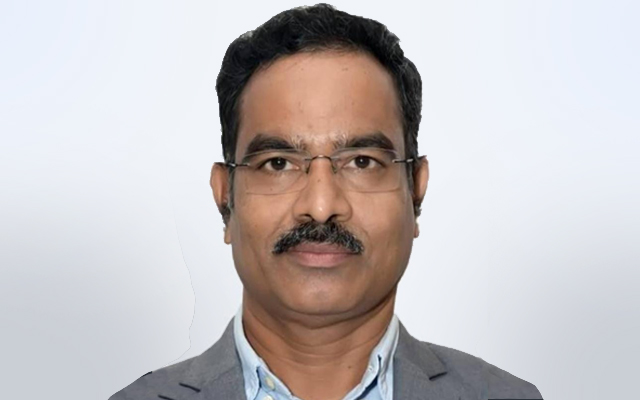
What are the key challenges being faced by inbound tour operators in the country today?
The ongoing geopolitical tensions in the Middle East are affecting both travel sentiment and flight connectivity. Additionally, global economic uncertainties in key source markets such as the UK is impacting longhaul travel demand to India. Moreover, rising operational costs and higher airfares are putting pressure on our margins too. Another major concern is the shortage of trained manpower. During the pandemic, many professionals in the tourism and hospitality sector moved to other industries and the gap in skilled talent continues to persist even today.
Has the US-Iran conflict resulted in cancellations too?
Yes, the conflict has had a significant impact on inbound business. Many tour operators are witnessing cancellations from key markets such as Europe and North America. If the situation continues for an extended period, it could adversely affect the outlook for the upcoming inbound season as well. Additionally, the rise in international airfares due to the US-Iran conflict is further dampening demand. We are remaining hopeful that the situation stabilises soon and that normalcy returns.
Direct flights between India and China have recently resumed. What prospects do you see in China as an inbound source market for India?
China obviously is a major source market for outbound travel globally. Though direct connectivity between the two countries is a good move, a lot needs to be done to grow Chinese inbound tourist arrivals in India. There is a need to look into the current visa process for Chinese travellers and make it more seamless. Visa processes for Chinese nationals have become more stringent in recent years. We also need more trained Mandarin speaking guides, hotel staff and signages to cater to the Chinese travellers. Bilateral relations between the two countries need to improve to position India as a preferred leisure destination for Chinese tourists.
What does India need to do to compete with neighbouring markets in attracting inbound travellers?
High hotel rates, abrupt increase in entrance fees at the monuments and high transport rates are some of the areas that need to be addressed when competing with our neighbouring destinations. It becomes difficult to attract business to India when foreign tour operators are able to secure more competitive deals from other countries. A coordinated effort between the government and industry stakeholders is essential to identify strengths and address gaps in order to compete effectively with our neighbouring markets.
Are there specific segments such as luxury travel, wellness tourism, adventure or spiritual tourism that should be prioritised to strengthen India’s position as an inbound tourism destination?
India is a diverse tourism destination with a wide range of offerings for different types of travellers. Post-pandemic, there has been a noticeable increase in demand for wellness tourism. As the birthplace of Ayurveda and Yoga, India is uniquely positioned in this segment and our wellness centres and properties across the country need to be promoted more effectively among international travellers. There is significant potential to attract far more wellness tourists than we currently do.
Buddhist tourism is another segment with immense growth potential. The footprints of Buddhism are spread across multiple states, allowing for the development of diverse circuits that showcase India’s rich Buddhist heritage rather than focusing on just a few destinations. Given the large global Buddhist population, this represents a high-potential market for India.
What measures from the government could help India attract more international tourists?
Earlier, India’s overseas tourism offices actively promoted the country through seminars, roadshows and participation in trade fairs in their respective markets. However, with the closure of these offices, a gap has emerged in effectively promoting Indian destinations. These offices should be re-established to strengthen international outreach. The government also needs to invest in consistent global marketing campaigns. At the same time, addressing perception-related issues is equally important to enhance India’s appeal as a tourism destination.
What is your outlook for inbound tourism to India over the next two to three years?
I believe inbound tourism in India will grow in the coming years. With ongoing infrastructure developments, economic growth and the country’s diverse range of tourism experiences, India is well positioned to attract more international visitors. However, it is essential to remain competitive with other countries in the region and address the challenges that are currently hindering the growth of inbound tourism.
A massive spike in travel searches followed hot on the heels of the announcement of South Korean boy band BTS’s world tour destinations and dates, with Booking.com noting a 7,000 per cent increase in searches for Kaohsiung, Taiwan alone.
In this episode of TTG Conversations: Five Questions, Laura Houldsworth, managing director for Asia Pacific at Booking.com, details the impact big-name musicians, music festivals and regional acts have on travel and tourism, the factors needed for concerts to truly contribute significantly to the host destination, and what Booking.com has been doing with industry partners to stimulate fan travel.
AI-powered travel marketing platform, Sojern, has appointed Sylvia Weiler as president and general manager of its global destinations business.
Weiler returns to the company after previously helping build its destinations segment. She most recently served as chief revenue officer at Zartico and has held senior roles at Tripadvisor and Airbnb.
The escalating US-Israel-Iran war, which has impacted Middle Eastern energy infrastructure and choked oil exports bound for Asia via the Straits of Hormuz, is bruising Asia’s tourism businesses.
Before the US and Israel’s attacks on Iran on February 28, Brent crude was priced around US$71 a barrel. The price crossed US$112 a barrel on March 23.
Rising fuel prices driven by Middle East tensions are increasing transport costs and disrupting tourism operations across Asia
International Energy Agency chief Fatih Birol said on March 23 at the National Press Club in Canberra, Australia that the ongoing crisis is worse than a combination of the 1970s oil shocks and Russia-Ukraine war.
Birol remarked in his speech that the “global economy is facing a major, major threat today” and noted that Asia-Pacific is facing the brunt of the oil crisis, given its reliance on oil and other crucial products like fertiliser and helium transiting the Strait of Hormuz.
Impact on Thailand
A primary concern is the direct impact on Thai tourism through increased airfares and operating costs, and indirectly through reduced purchasing power, particularly for longhaul and high-income tourists.
The Airlines Association of Thailand (AAT) is now preparing to propose a temporary reduction in the excise tax on jet fuel to help stabilise airfares amid volatile global energy prices. The measure aims to lower airlines’ operating costs and ease the impact on passengers.
The Bangkok Post has observed disrupted taxi services at Thailand’s Suvarnabhumi Airport, where large SUV taxis are reportedly gradually suspending operations, leaving only 2,500 vehicles – out of more than 5,000 – in active service.
Panlop Chayinthu, president of the Suvarnabhumi Taxi Coordination Association, also told the Bangkok Post that drivers are increasingly reluctant to accept long-distance fares, fearing they may run out of fuel en route with no guarantee of being able to refuel.
The Tourism Authority of Thailand on March 20 convened an urgent summit at the Tourism Crisis Monitoring Center to assess the short, medium, and long-term impacts of the ongoing unrest in the Middle East. It emphasised that any relief measures must be carefully calibrated to strike a sustainable balance between the needs of the general public and the service sector. To mitigate the current energy crisis, the agency is prioritising energy-efficient strategies. These include the vigorous promotion of domestic tourism, local conferences, and group travel to reduce energy consumption, alongside campaigns encouraging travellers to explore nearby destinations and discover Thailand’s “hidden gems”. – Anne Somanas
Impact on Cambodia
A shock spike in fuel prices, from 30 to 35 per cent for regular petrol and more than 60 per cent for diesel, coupled with LPG (liquefied petroleum gas) shortages, have led to a surge in service and transportation costs that are impossible for tourism industry players to absorb.
Tourism specialist Nick Ray said: “The fuel spike immediately pushed transport costs up. As DMCs, we have to see if we can raise our prices. If we absorb it all, we will take a big hit. If we pass it onto our partners, they will not be happy as they cannot put that onto the customer at such short notice. So, we have to discuss how to divide the losses. It’s a big shock.”
He added that Cambodia’s tourism landscape is already suffering set-backs due to the closure of the land border with Thailand since mid-2025.
“This is another issue Cambodia did not need,” Ray told TTG Asia, adding that while the situation is difficult to predict, it poses a threat in the medium-term, with longhaul travellers possibly nervous to fly.
Cambodia was heavily impacted by the sudden halt of Qatar, Emirates and Etihad flights, which carry the bulk of the country’s Western markets. According to the country’s State Secretariat of Civil Aviation, Gulf hubs account for approximately 12,960 travellers to Cambodia a week.
“There was a huge problem of cancellations and postponements, and Cambodia is more vulnerable than neighbouring countries, as we just lost three major carriers through the Middle East,” Ray added.
On March 23, the government unveiled measures to conserve fuel, including encouraging non-essential and long-distance travel, switching meetings from offline to online and encouraging energy efficiency. However, it named transport as a fuel priority, among other sectors.
Sinan Thourn, chairman of PATA Cambodia Chapter, said the fuel crisis has had a major impact on travel costs and itinerary planning. “Cost pressures are evident in multiple service areas. Accommodation, food and beverage, guided tours and transport services are experiencing upward pressure from energy, maintenance and supply chain costs.”
He added that transport has been majorly impacted, from domestic flights and intercity buses to van services and road transport for tours.
“This can influence travellers to shorten itineraries or trim optional activities, especially for budget-conscious visitors,” he said.
Sinan said tuk-tuks, taxis, shuttles and tour operators have faced tighter margins as fuel bills rise. “In some cases, operators adjust fares, impose fuel surcharges or reprice popular day trips, which can affect demand, particularly for last-minute bookings,” he said.
“If cost increases outpace what visitors are willing to pay, operators face tighter margins or the need to boost value through quality, unique experiences or differentiated service.” – Marissa Carruthers
Impact on Singapore
The impact on Singapore’s energy access appears to be less severe when compared against its Asian neighbours. Minister-in-charge of energy and science & technology Tan See Leng stated on March 20 that the country does not need to dip into its energy stockpiles of LNG and diesel yet, and assured that supplies are enough to last for months..
However, energy prices are rising. Electricity tariff are expected to hike by 11 per cent in the coming months, prompting Tan to urge prudent use of energy among households and businesses.
In Singapore, fuel prices at the pump have risen from S$2.88 (US$2.25) per litre on February 23 to S$3.47 on March 21, making land transfers pricier.
Local taxi networks ComfortDelGro and GrabCab have both risen fares to help their drivers tide through these challenging times.
ComfortDelGro’s temporary driver fee for online app bookings go straight to its drivers. The driver fee will be S$0.50 for fares below S$15 and S$0.80 for fares of S$15 and above. ComfortDelGro has also committed to absorbing a portion of fuel costs at its pumps.
GrabCab in Singapore will temporarily raise metered taxi fares from March 30 to May 31. The unit fare for GrabCab rides will be raised to S$0.27 from S$0.26. The change would mean an additional S$0.80 on fares for long-distance trips, such as a 30km journey from Woodlands to Changi Airport. The fare increment follows a move to support its drivers with fuel vouchers last week.
Soon-Hwa Wong, chairman of the PATA Singapore Chapter, said: “The fuel crisis is adding immediate cost pressures across Asian tourism. For Singapore as a regional hub, we’re seeing airlines adjust routes and tour operators struggle with pricing stability.”
Wong underscored the severe impact rising fuel prices and energy supply have on the global economy, warning that when “recession sets in, discretionary consumption such as leisure travel will be the first to be curtailed”.
Ryan Low, director at The Traveller DMC, which has operations in both Singapore and Malaysia, said the full impact of fuel cost pressures has yet to filter through to ground operations.
“Some of our transport partners have already adjusted their rates, while others are holding for now but the direction is clear. Rather than wait for the full impact to hit, we’re taking a proactive approach, reviewing our transport cost structures across Singapore and Malaysia, engaging our partner network to understand their forward pricing, and testing our margins so we can make measured adjustments (in time),” Low told TTG Asia.
The Traveller DMC has chosen to keep rates steady for confirmed bookings in the immediate term.
Low added that “appropriate provisions” are built into new contracts to ensure “realistic and sustainable” pricing, so that visitors to Singapore will continue to enjoy a quality destination experience.
PATA’s Wong said near-term support from the government – whether through fuel subsidies or targeted relief for SMEs – will be critical.



 He joins from senior roles with IHG, Wyndham and Rosewood, where he led hotel openings, repositioning and operational performance.
 She has more than 15 years of experience, including roles at Cheval Blanc Randheli and Anassa Hotel.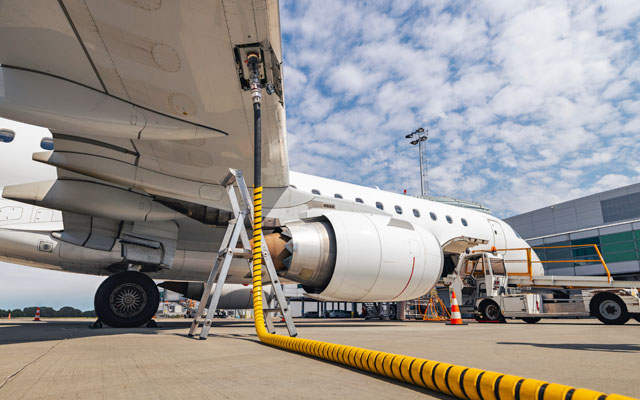



 What are the key challenges being faced by inbound tour operators in the country today?

 Weiler returns to the company after previously helping build its destinations segment. She most recently served as chief revenue officer at Zartico and has held senior roles at Tripadvisor and Airbnb.