Asia/Singapore Saturday, 25th April 2026
Page 184

Sustainable Hospitality Alliance names Daniella Foster as vice chair

0

Daniella Foster has been appointed as vice chair of the Sustainable Hospitality Alliance (SHA).

The executive board member and global senior vice president of public affairs, market access and sustainability for Bayer’s Consumer Health Division joined the board as a trustee in May last year, and will now work alongside Wolfgang Neumann as vice chair, supporting SHA as it works towards implementing its new five-year strategy.

She has a background working across private and public sectors, from Hilton and Mars to the White House in the US, as well as experience in embedding sustainability into business models across the private and public sectors.

The way ahead

0


Annette Gregg
CEO, SITE & SITE Foundation

The incentive travel sector made a dramatic recovery following the pandemic, with some regions – although not Asia – getting back to 2019 levels by the end of 2022.

In many regions, 2023 produced record revenues for agencies, DMC, hotels and venues; but supply chain challenges rained on the parade. These supply chain issues are expected to last well into 2024 and are among the headwinds the industry faces in the Incentive Travel Index (ITI), SITE and the Incentive Research Foundation’s annual global survey of the industry.

Other headwinds for 2024 are rising costs, inflation and short-term planning that cause uncertainty.

In terms of destination selection, the 2023 ITI reveals a robust preference among buyers for “destinations not used before”; good news for second- and third-tier destinations that can now expect to enter the consideration set.

Urban destinations, eschewed during the pandemic, continue to rank low for incentive travel buyers, while demand for resorts, particularly all-inclusive resorts, is at an all-time high.

While transcontinental travel has resumed, it is decisively risk-averse and cautious and is consolidated around tried-and-tested destinations. And despite the prominence of “new” destinations in the consideration set, these are nearby, local, national or regional locations, as opposed to longhaul.

In terms of programme design, buyers are increasingly relying on elements such as group meals and teambuilding to reinforce company culture and foster relationships between participants and the C-suite.

Sustainability is also increasing in importance as a key programme inclusion, but more among European than North American planners.

As we enter 2024, corporate buyers are that incentive travel is acquiring a more strategic role and purpose within their organisations. It is increasingly more than a mere company trip in fulfilment of a sales campaign, and more an annual opportunity to focus on company culture and values.

Technology will continue to insinuate itself into the daily routine of incentive travel professionals in 2024 and beyond, although the 2023 index shows little appetite among incentive travel professionals for artificial intelligence (AI), with only seven per cent expecting platforms like ChatGPT to disrupt marketing and communications.

The spend per head on incentive travel will increase over the next three years, with 58 per cent of ITI respondents predicting levels above, or significantly above, 2022 by 2025, versus nine per cent who forecast that spend will be below or significantly below 2022 levels.

Still on budget, 64 per cent of ITI respondents are predicting an increase, or a large increase, in airfares by 2025. Production levels for incentive events and gala dinners may also fall, with six per cent of respondents forecasting a large decrease versus four per cent who see an increase.

Geoff Dickinson
President 2023-2024, UFI

Until the end of 2019, the Asian exhibition industry enjoyed more than 20 years of uninterrupted growth. In early 2020, Covid-19 unleashed a global health crisis and an unprecedented challenge to our industry.

According to the latest research from UFI, net space sold at trade fairs in Asia fell from 24.5 million square metres in 2019 to just 3.3 million square metres in 2022.

In 2022, while most of the exhibition industry in Europe and the US was back to the business of organising events, China was shut down for the entire year as it stuck with its Covid-zero policies. The rest of the region made a cautious restart in 2022, but many of those markets still had some Covid restrictions in place for at least part of the year.

As a result, net space sold in most Asian markets was down between 60 and 70 per cent compared to 2019. The markets with the most restrictive approach to managing Covid-19 – China, Hong Kong, Macau and Taiwan – recorded a drop of between 80 and 100 per cent.

Thankfully, all of the key exhibition markets have recorded a remarkable recovery in 2023. UFI’s latest barometer shows that India will exceed its pre-pandemic revenues again in 2023.

Looking at venue space sold, China, Japan, India, South Korea and Hong Kong are expected to match or surpass net space sold this year when compared to 2019. Together, these markets make up more than four-fifths of the regional market size.

With the new UFI barometer data coming out in a few weeks (at press time), I am expecting more positive news, and more growth being forecast for 2024.

But there remain many critical issues: a shortage of qualified staff, the need to make events more sustainable, higher travel and hotel costs, as well as the impact of war and geopolitical tensions. UFI’s five trends to watch describe these in more detail, and these issues will remain top of mind throughout the year.
Despite these substantial challenges, it is encouraging to see Asia’s exhibition industry return so rapidly to a position of strength and growth, but the next test of our industry will be to address these challenges head-on.

Peter Koh
Chair, APAC Advisory Board, GBTA

Business travel is anticipated to return to pre-pandemic spending levels in 2024, a finding outlined in GBTA’s 2023 Business Travel Index.

In the same report, GBTA found that the global business travel industry rebounded in 2022 at a more accelerated rate than expected, and is now expected to surpass the 2019 spending level of US$1.4 trillion in 2024.

The three main reasons for this conclusion were varied, with respondents citing pent-up demand especially for groups and meetings after the Covid-19 pandemic, more favourable global economic conditions in 2022 and 2023, and recession risks that have yet to happen.

The industry also reports general optimism in terms of outlook. GBTA’s most recent Business Travel Outlook Poll (October 2023) found that 67 per cent of travel buyers surveyed expect their travel budgets to increase or remain about the same in 2024.

Moreover, only one in 10 buyers report they are currently implementing a plan to limit business travel because of economic concerns. So, despite rising costs and economic uncertainty, companies see value in face-to-face business interactions and are eager to get back on the road.

However, risks and threats for the year ahead include geo-political circumstances, persistent inflation in certain areas, much tighter global financial conditions, and deterioration in the manufacturing sector.

Another topic we see gaining even more traction in 2024 is emerging technology. It is increasingly clear that technology – from tools such as AI to the implementation of new industry technologies related to New Distribution Capability – is going to play a larger role in the future of business travel.

How large of a role remains to be seen. While nearly half of the respondents in the October poll feel new industry technologies will pose the most significant technological challenges in the year ahead, only about a third of all stakeholders are excited about AI, and another third feel it is too early to predict its full impact. Lastly, GBTA expects sustainability and conversations around people and planet will gain momentum in the coming year with the goal of producing real industry action. For example, the GBTA Foundation is starting with the collective procurement process to produce the industry’s first Sustainable Procurement Criteria, beginning with education through an academy course centred on business travel management sustainability and tools. The industry has a long way to go before a business trip will be entirely net zero, but it is eager to progress with the planning, collaboration and collective innovation.

Moving forward, we will see continued interest in blended ‘bleisure’ travel. Almost half of Asia Pacific-based business travellers – 45 per cent – extended a work trip for leisure time last year. This is higher than the share of travellers who took a blended trip in any other region.

Business travellers also continue to view travel as key to achieving their goals, where 70 per cent say they are now travelling the same or more than they did in 2019, with 81 per cent reporting business travel is worthwhile to achieve business objectives.

Senthil Gopinath
CEO, ICCA

Asia-Pacific is ready and geared for business. For our members and our associations, we believe the practical solutions to make things happen, and the cultural richness of Asia-Pacific – so mesmerising, so unique, so varied – is placing venues, cities, and communities near the very top of a global wishlist.

It is ICCA’s role to share the good news stories and advocate why our industry has a home in this region. We of course champion sustainability, legacy, DEI, and innovation… and we believe this will all influence where business goes.

ICCA is proud of our history, but we are more excited by the future, especially as we face it stronger than ever. Asia-Pacific has genuine capacity for growth and everyone at ICCA will do all that we can to enable it through engagement, action, and collaboration.

The recent 62nd ICCA Congress in Bangkok is a testament to the wonderful relationship we have with the Asia-Pacific region. The numbers were excellent: over 1,120 attendees from over 80 countries and territories, over 80 associations, over 100 speakers, and 360 minutes of member-led co-creation content. It was the most successful ICCA Congress in the region and the third-largest ICCA Congress of all.

Asia-Pacific is blessed with countless great venues, amazing staff, dedicated support teams, a desire to promote our industry at the highest social and political level and great work being undertaken.

Initiatives are afoot, such as the Bangkok Pledge on Gastronomy Sustainability by ICCA, as well as a ICCASkills educational programme making landfall in Beijing and Christchurch. BE Sarawak will also be supporting the Association Impact Masterclass this coming April.

One last memory from the ICCA Congress in Bangkok is a group of very happy Thai university students, thrilled to be guests at the congress.

We hope they, and many other students and young professionals, will get to enjoy plenty of opportunities to be involved in our business meetings, gatherings, and events in 2024.

By bringing them into our community and showing them what is possible, we do not just dream of the future… we start building it.

Hong Kong government steps up mega event drive

0

The Hong Kong Government is intensifying efforts to boost its mega event economy by establishing an inter-departmental coordination group chaired by deputy financial secretary, Michael Wong.

Working alongside the secretary for culture, sports, and tourism, this initiative aims to actively attract world-class mega events to Hong Kong, with key players such as the Hong Kong Tourism Board (HKTB), the Hong Kong Trade Development Council (HKTDC), and the Economic and Trade Offices (ETOs) collaborating in the scouting process.

Chubby Hearts Hong Kong is one of the upcoming mega event happening in the the country

Wong emphasises a proactive approach will be taken to engage potential event organisers globally. This means that HKTB, HKTDC, and ETOs will play a vital role in discussions with organisers, assessing an event’s feasibility, and ensuring necessary support arrangements. The trio will also serve as the primary point of contact, facilitating discussions, and submitting recommendations to the government.

Pang Yiu-kai, chairman of HKTB, emphasised the importance of coordination and response speed, stating that efficient collaboration and a friendly approach could influence mega events to choose Hong Kong over other cities.

Currently, over 80 mega events are anticipated to happen in 1H2024, spanning cultural and arts, sports, finance and economy, innovation and technology, and conferences and exhibitions. Notable events include Inter Miami CF’s visit on February 4; Cathay International Chinese New Year Night Parade on the first day of the Lunar New Year; the inaugural LIV Golf; Art March; Hong Kong Sevens Pop Culture Festival; and the UIM E1 World Championship Grand Prix.

In response to this government’s initiative, the Mega Arts and Cultural Events Committee – established by the Culture, Sports and Tourism Bureau last year – will host several upcoming events. Supported by the Mega Events Committee Fund, upcoming events include Chubby Hearts Hong Kong created by renowned British designer Anya Hindmarch (February 14 to 24); A Path To Glory – Jin Yong’s Centennial Memorial, a large-scale sculpture showcase at Edinburgh Place (March 15 to July 2); and ComplexCon Hong Kong 2024 at AsiaWorld-Expo, the first time the international pop culture event will be held outside the US (March 22 to 24).

Nina Hospitality’s managing director, Simon Manning, believes that the government’s strategy to lure and host more major international events will stimulate economic growth and showcase Hong Kong’s vibrant cultural scene, creating a “win-win situation” for visitors and the economy.

ATF 2024 keeps it small, but impactful

0

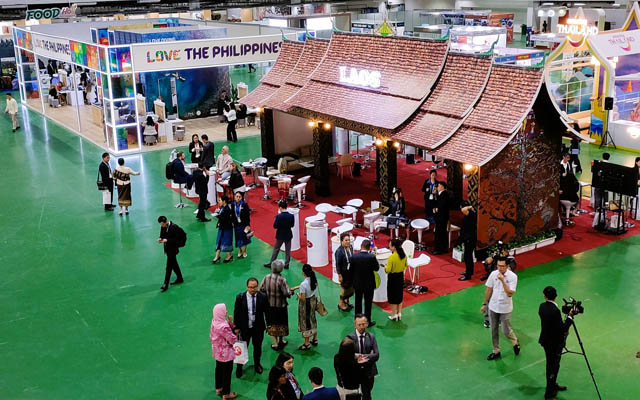
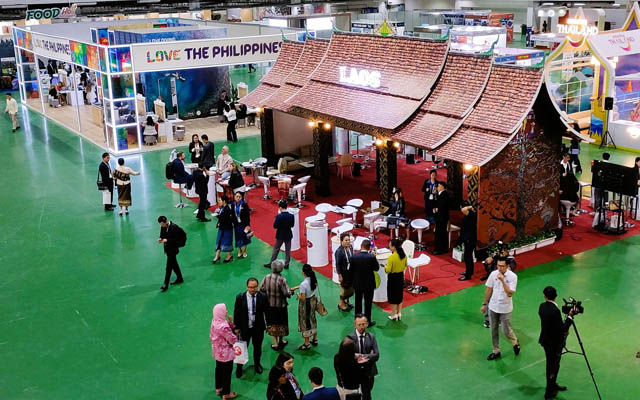
The recently-concluded TRAVEX B2B exhibition, an integral component of the annual ASEAN Tourism Forum (ATF), attracted what attendees felt was a small turnout this year, gathering just 34 booths with 208 sellers from 105 companies along with 70 hosted buyers from regional and longhaul markets, 130 trade visitors, and 26 international media.

This compares against 350 delegates and more than 50 media representatives at ATF 2022, and 463 delegates and 50 media representatives at ATF 2023 in Yogyakarta, Indonesia.

ATF 2024, held in Laos last month, saw a small but promising turnout

TRAVEX, along with ATF 2024 and ASEAN Tourism Conference (ATC), was held in Vientiane, Laos from January 22 to 26. It was co-organised by the ASEAN Tourism Association (ASEANTA) and Lao PDR Ministry of Information, Communication and Tourism (MICT).

Despite ASEANTA positioning ATF as a “premier tourism event”, and ASEANTA president Eddy Krismeidi Soemawilaga speaking of “a more robust and rejuvenated ATF”, Singapore and Brunei skipped the exhibition.

Soemawilaga acknowledged: “We are fully aware that change takes time, and this year’s scale may not match the peak of ATF’s history.”

In response to TTG Asia’s queries on Singapore’s absence, Kwan Su Min, director, communications, Singapore Tourism Board (STB), said that Singapore regularly reviews participation in all tradeshows to ensure that “we are maximising our impact and achieving our strategic objectives”.

“While we may not have physical presence at TRAVEX this year, our industry stakeholders and regional offices continue to maintain regular and close contact with many ASEAN travel trade partners in the course of their daily operations,” she added.

Although TRAVEX 2024 was deemed small, the overall event was well aligned with the theme, Quality and Responsible Tourism – Sustaining ASEAN Future, delivering content that avoided mass tourism and series tours.

So, while hosted buyers from big markets were scant – only a few from China and one from India – it was opportune for those keen on ecotourism, special interest travel, and new places and activities.

Sidney Chua, operations manager of Neway Travel Service, Singapore, said: “TRAVEX organisers have been doing what they can to help put destinations on the map and ATF 2024, though small, did just that. Laos can expect an influx of enquiries and travellers soon, and perhaps small incentive groups if combined with Thailand.”

American tour wholesaler Michal Barszap, president/CEO of I.T.S. Tours & Travel, said: “You can’t package and promote destinations well without visiting. I gave up FITUR to attend ATF because I have never been to Laos.”

Barszap’s only complaints were the long flight – “40 hours flying SFO-LAX-MUC-TPE-BKK-VTE” and his failed attempt to enter a post-tour despite applying early.

This year’s ATC was extended to 1.5 days and packed in insightful presentations and panel discussions centred on the ATF theme. Social events hosted by Laos, Malaysia and the Philippines were also lavish and provided many networking opportunities.

Delegates commended the Laotians for their hospitality and effort, although getting to Vientiane was not easy due to few direct flights and frequencies, and processes that were not always well-oiled.

They recognise this was the challenge for ASEANTA and ATF: rotational hosting pits slick business cities against emerging destinations that do not have the wherewithal to manage huge events. Parallel government and association meetings across town also strain lean resources.

Delegates also pondered over the timing of ATF: held typically in January or February, dates are affected by the Lunar New Year holidays and ministerial schedules. The event also clashes with FITUR in Madrid, leading potential buyers and sellers to weigh the cost benefits, given the number of trade shows and rising costs.

Meanwhile, ASEANTA has announced ATF 2025 will be held in Johor, Malaysia.

Philippines’ wellness resort taps into the Muslim market

0

Luxury wellness resort The Farm at San Benito in Lipa, Batangas is fast gaining inroads in capitalising on the Muslim market while diversifying into multi-generational families.

“We are known in GCC (Gulf Cooperation Council countries) and we want to develop new markets in Asia such as Malaysia, Indonesia and Brunei,” said Jennifer Sanvictores, The Farm’s global head of sales, marketing and communications.

The Farm has added more features for families including Muslim-friendly facilities

The resort has also added facilities and services targeted at multi-generation families. “Previously, wellness was just for adults but now, even kids, teens, seniors need us,” she explained.

To raise the number not just of individual travellers but also of families, the wellness resort has added more facilities for families including Muslim-friendly family pool villas, holistic healing, as well as wellness and activities for multi-generations, and a kids menu in its Alive Vegan restaurant.

The Farm at San Benito recently received a globally-accepted halal certification from the Islamic Da’wah Council of the Philippines and is the Department of Tourism’s Muslim-friendly accommodation destination after attending workshops and fitting at least five per cent of its facilities for Muslim travellers’ requirements.

“We saw the need for it…. wellness should be for everyone. We should be more diverse and inclusive,” Sanvictores shared.

She noted an increase in the number of Muslim tourists from Malaysia and Dubai, particularly those looking for new wellness destinations, a niche clientele who travel for a purpose, solely for healing.

The increase in Muslim travellers was noteworthy last year when The Farm at San Benito tapped the Miss Universe beauty pageant contestants from Pakistan, Bahrain and Egypt to promote wellness tourism in the Philippines.

Sanvictores shared that the wellness resort has “an affluent market” where guests stay 21 days on average and spend US$800 to US$1,000 a night. It has natural and holistic wellness programmes, the shortest at seven days and the longest 21 days, although resort guests can stay for a shorter period.

Capella to debut in Taiwan

0

Capella Hotels and Resorts will launch Capella Taipei in the winter of 2024 in the heart of Taipei’s Dunhua North Road.

The 86-key hotel is mere minutes from the 101 area, and will offer guests immersive Capella Curates journeys, organised by Capella Culturists.

Capella Taipei will open in the winter of 2024

Dining options available will be a main restaurant offering sustainably sourced, farm-to-table produce with a French-inspired seasonal menu, a bakery, a Cantonese restaurant, and a Japanese omakase restaurant, as well as bars.

Facilities will comprise a spa, outdoor heated pool, fitness studio, and meeting spaces. The property also features a private event hall and salon with its own discreet private entry.

Capella Taipei is close to Songshan International Airport and situated near Xingtian Temple, with close proximity to art districts like Taze-Neihu, Songshan Culture Park, and Huashan 1914 Park, and Taipei Arena, a hub of pop music and performances.

Cristiano Rinaldi, president of Capella Hotel Group, said: “Capella Taipei is not just a hotel; it’s an invitation to immerse in a culture rich in heritage and to create memories that resonate beyond a stay.”

Seibu Prince Hotels Worldwide signs agreement with Sabre

0

Seibu Prince Hotels Worldwide (Seibu) has teamed up with Sabre to deploy the Sabre SynXis Central Reservation System (CRS) to support the hotel chain’s global expansion as it aims to double the size of their property portfolio.

Under the agreement, Seibu will be using the SynXis platform to expand its reach across global distribution channels, and deploying SynXis Booking Engine to drive direct bookings and SynXis Channel Connect to connect to hundreds of OTA channels globally.

Seibu properties can now be booked through Sabre’s global GDS; The Prince Park Tower in Tokyo, Japan, pictured

The addition of Seibu hotels to Sabre’s SynXis platform means its properties can be booked through Sabre’s own global GDS as well as others, corporates, travel management companies, and almost 900,000 travel agents and tour operators globally, significantly increasing distribution channels and revenue opportunities.

Seibu brands comprise The Prince, Grand Prince Hotel, Prince Hotel, Prince Smart Inn, The Prince Akatoki, Policy, Park Regis by Prince, Park Regis Park Proxi, and Leisure Inn overseas. These include hotels in major Japanese cities and resort areas as well as popular destinations in Asia, the Middle East, Oceania, the US, and Europe.

“We have aggressive plans to double our hotel numbers to 250, so it’s essential that we are working with the right technology partner with the advanced, scalable solutions, and the future-focused mindset we need to support those ambitions,” said Eiichi Akamatsu, director, executive managing officer, Seibu Prince Hotels Worldwide. “Given our rapidly expanding scale, Sabre SynXis will enable us to consolidate operations into one intuitive ecosystem so we can improve the guest experience while increasing our geographic footprint and driving efficiencies for our international growth.”

Frank Trampert, senior vice president, global managing director of community sales for Sabre Hospitality Solutions, shared: “Seibu Prince Hotels Worldwide will now be able to gain an intuitive chain-wide performance overview and valuable insights to enable improved distribution, increased bookings, and optimised offerings for guests at its existing, and future, hotels.”

Cathay to further promote SAF development and use in Hong Kong

0

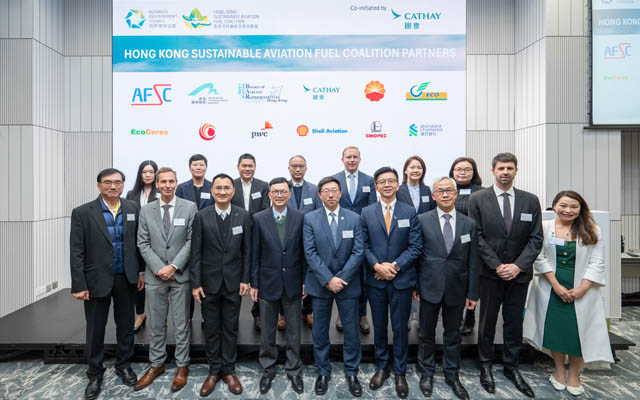
Cathay welcomed the launch of the Hong Kong Sustainable Aviation Fuel Coalition (HKSAFC) as its co-initiator – the coalition is convened and chaired by Business Environment Council (BEC), along with 13 founding partners from the sustainable aviation fuel (SAF) value chain.

The HKSAFC is a multi-stakeholder platform in the region that brings together the aviation industry, SAF producers, fuel suppliers, infrastructure developers, corporate users and policymakers to collaborate on advancing the development, supply and use of SAF.

The Hong Kong Sustainable Aviation Fuel Coalition has been launched to advance the development, supply and use of SAF in Hong Kong

The HKSAFC aims to facilitate the adoption of SAF in Hong Kong by conducting whitepaper research on SAF development, engaging with different stakeholders and the government, and raising public awareness of the benefits as well as challenges of SAF. The coalition also seeks to grow Hong Kong as a regional SAF hub that can contribute to global climate mitigation efforts and China’s carbon-neutrality target.

Cathay Group CEO Ronald Lam shared: “Sustainability is a key focus for Cathay… we firmly believe that SAF is a key enabler for the aviation industry to achieve its long-term environmental targets and to support the global transition to a low-carbon economy.

“Hong Kong has to be able to cultivate the development and use of SAF in order to retain and enhance its leading international aviation hub status. However, we cannot do this alone – it requires collaboration among all parties, and the HKSAFC is an important step in this direction.”

HKSAFC chair and CEO of BEC Simon Ng added: “Aviation is widely recognised as one of the most challenging sectors to decarbonise. In the foreseeable future, SAF is considered the most viable way for decarbonising the sector. Through the launch of HKSAFC, BEC will engage with multiple stakeholders to accelerate the deployment of SAF at HKIA, ensuring its availability and affordability.”

Aside from Cathay and BEC, other coalition partners include AFSC Operations, Airport Authority Hong Kong, Board of Airline Representatives Hong Kong, China Aviation Oil (Hong Kong) Company, ECO Aviation Fuel Services, EcoCeres, PetroChina International (Hong Kong) Corporation, PricewaterhouseCoopers, Shell Aviation, Sinopec (Hong Kong) Aviation Co., Standard Chartered Bank (HK), and Swire Pacific.

Cathay is committed to using SAF for 10 per cent of its total fuel usage by 2030. The airline has also partnered with nine corporate customers through its Corporate SAF Programme, launched in 2022, to accelerate SAF adoption and convey a signal of firm demand for SAF from multi-sectoral players.

RwandAir appoints AirlinePros as Singapore GSA

0

RwandAir has chosen AirlinePros International as their general sales agent in Singapore. The national carrier of Rwanda operates from hub Kigali in the heart of Africa.

RwandAir currently serves 25 destinations, most of which are within the African continent, to countries such as South Africa, Nigeria, Kenya, and Ghana. The airline also flies to cities in Europe, the Middle East and Asia including Brussels, London, Paris, Dubai, Doha and Mumbai.

AirlinePros International has been appointed as general sales agent for RwandAir

The fleet presently comprises Airbus A330 widebodies, Boeing 737s, Bombardier CRJ-900s, and De Havilland Canada Dash 8-Q400s.

The state-owned airline has begun an ambitious plan to expand its fleet of 13 aircraft and has taken delivery this year of three additional leased Boeing aircraft. RwandAir plans to grow its route network to 39 destinations in five years.

“AirlinePros International has been representing RwandAir in the US and Canada for many years… we are honoured to support them in Singapore and our AirlinePros team is already promoting this award-winning airline,” said Achma Asokan Foster, group CEO, AirlinePros International.

What does 2024 hold?

0

INBOUND LOOK

Providers of travel industry business intelligence, market research data and analysis of trends forecast recovery of tourism into Asia will continue in 2024 and reach close to 2019 pre-pandemic levels.

According to PATA, “the start of the coming new year looks generally optimistic” with the full removal of travel restrictions and the reopening of Asia-Pacific destinations, but Paul Pruangkarn, chief of staff, noted “uncertainties still exist, which may prevent visitor arrivals to recover to their pre-pandemic levels”.

He continued: “These uncertainties are caused by unfavourable economic conditions such as inflationary monetary policies, supply chain disruptions, and diminishing business and consumer confidence. In this regard, 2024 Asia-Pacific total visitor arrivals are forecast to recover to 109.92 per cent, 90.70 per cent, and 69.86 per cent of the 2019 level under a mild, medium and severe scenario, respectively.”

Uncertainties are caused by unfavourable economic conditions such as inflationary monetary policies, supply chain disruptions, and diminishing business and consumer confidence.
Paul Pruangkarn,
Chief of staff,
PATA

This translates to approximately 910 million arrivals, 762 million, and 593 million by the end of 2026 under the mild, medium and severe scenarios, respectively.

Euromonitor International’s senior analyst Prudence Lai expects Asia-Pacific tourism in 2024 to see sustained momentum, recovering to 90 per cent of 2019 pre-pandemic levels, and forecasts 319 million inbound trips this year.

However, Lai noted Asia-Pacific was a ”region of regions” with markets seeing “a diverse degree of recovery in 2024”.

ForwardKeys tracks customers’ air travel patterns – where they are going, when, and for how long – and market analyst Nancy Dai noted “the status of travel across Asia-Pacific is highly diverse”.

Dai said the sub-regional outlook for international arrivals from December 23, 2023 to January 6, 2024 showed South Asia (minus five per cent) as the most recovered sub-region nearing 2019 volumes, driven by the dynamism of VFR travel in major markets like India, Pakistan and Bangladesh.

“On the other hand, the Oceania sub-region (-35 per cent) is still struggling to fully recover from the impact of the pandemic due to the strong dependence on air connectivity, high fares, and the slow reactivation of key regional markets, primarily China, which have complicated the recovery of major regional destinations Australia and New Zealand.”

Seat capacity rising

Looking at global visitor arrivals to Asia-Pacific from December 23, 2023 to January 6, 2024, ForwardKeys said numbers lagged behind pre-pandemic levels by 26 per cent and 1Q2024 international arrivals to the region were 12 per cent behind 2019 levels.

ForwardKeys said 1Q2024 international airline capacity in Asia-Pacific was projected to be 11 per cent lower compared to pre-pandemic levels.

The top three countries displaying resilience and witnessing added seat capacity are India (+16 per cent), Vietnam (+ eight per cent), and Indonesia (unchanged).

In India’s case, IndiGo, Air India, and Air-India Express have surpassed their 2019 seat capacities by 177 per cent, 18 per cent, and 23 per cent respectively.

In Vietnam’s case, VietJet Air, AirAsia, and Thai AirAsia have exceeded their 2019 seat capacities by 105 per cent, six per cent, and 27 per cent respectively.

In Indonesia’s case, Garuda Indonesia Airlines, Singapore Airlines and Batik Air Indonesia have surpassed their 2019 seat capacities by seven per cent, two per cent and 321 per cent respectively.

Meanwhile, Euromonitor’s Lai acknowledged that speculation of a persistent high interest rate environment would impact discretionary spending, such as travel expenditure. Adding to uncertainties in the new year are critical political elections in the US, Taiwan and Indonesia.

“There is more uncertainty in the US and Taiwan elections as the results directly impact the US-China geopolitical tensions. Indonesia does not rank highly in terms of being an international source market and the elections may pose more of an impact on domestic tourism instead.

“The silver lining amid these uncertainties is that travel industry capacity is expected to continue its recuperation in 2024 with improving flight capacity taking pressure off airfares and hotel average room rates and normalising to pre-pandemic levels.”

Strong demand

In general, the mood among travel suppliers is upbeat, with many reporting an uptick.

Fuelled by a significant increase in demand for travel to Asia in 2023, DTH Travel Group CEO, Stephan Roemer, is positive about 2024.

“It’s already looking to be a very promising year for us,” he said, noting at press time that pre-bookings for 2024 are close to 40 per cent of 2023’s sales performance.

“We think that some of the trends we saw this year will continue into 2024; for example, travel to Asia will continue to pick up with particular interest for a deeper, more intimate experience of the destination.

“Apart from Thailand, which has always been a best-selling destination for us, we also noticed a pick-up in demand for our packages for the Philippines, Malaysia and Vietnam, which may be due to the new products that we have created for our clients, focusing on authentic travel.”

Roemer noted a 2023 trend – low-season travellers – could extend into the coming year, saying travellers have been warming up to the benefits of lower rates and less crowding.

“We also saw people starting to book more in advance compared to when borders just started to reopen following the pandemic, which may be due to the general stability of being able to travel to Asia,” he added.

The silver lining amid these uncertainties is that travel industry capacity is expected to continue its recuperation in 2024 with improving flight capacity taking pressure off airfares and hotel average room rates and normalising to pre-pandemic levels.”
Prudence Lai,
Senior analyst,
Euromonitor International

Likewise, Willem Niemeijer, founder and CEO, Yaana Ventures, was “looking back on an amazing 2023”.

“Smaller destinations like Laos and Cambodia have had a fairly slow start, but these too are fully back to where they were before the border closures. This momentum continues to drive advanced bookings for 2024, and so we are quite optimistic that the coming year will be even better than 2023,” he said.

Niemeijer added that recovery is no longer fuelled by just revenge travel.

“The region has so much to offer: nature, beaches, vibrant cities, interesting culture, great food and much more – all of these keep Asia firmly on the map for travellers. As long as pricing remains reasonable, so that Asia remains good value for money, further growth should be sustainable. However, the concern of overtourism and all its negative effects is looming, and in some cases already back,” he told TTG Asia.

A Trip.com Group spokesperson also expressed optimism for inbound travel in 2024, citing the ramping up of international flight capacity and policies which have been updated to simplify the entry process for inbound tourists.

On destination China, the spokesperson noted the requirement for inbound arrivals to fill in the Entry Health Declaration Card had been removed and unilateral visa-free entry expanded to six countries, namely France, Germany, Italy, the Netherlands, Spain and Malaysia.

In addition, Trip.com Group signed a strategic framework agreement with China International Culture Association to implement the Nihao! China programme in late-2023, which includes production of global promotional videos and a digital communications campaign.

On the hotel front, Hilton’s Ben George, senior vice president and commercial director, Asia-Pacific, said the chain, which celebrated the opening of its 700th hotel in the region, had an ambitious growth strategy in place to exceed 1,000 trading hotels by 2025.

Across Asia-Pacific, RevPAR grew about 40 per cent year-on-year, with the whole region outperforming 2019 by 10 per cent.

George said occupancy continued to be driven by leisure demand, as travellers aim to reduce other personal spending to prioritise leisure travel.

“In addition, we’re seeing a sustained uptick in corporate and group travel, with Tokyo, Bali and Shanghai standing out as our top performing destinations,” he said.

Hilton’s optimism in Asia-Pacific’s travel and tourism potential is reflected in the company’s hearty expansion plans. It will enter emerging markets such as Nepal, Laos, and Timor Leste in 2024.

We expect travel demand for Asian destinations to rise in the coming year as Asian travellers are driven by a growing desire for a deeper understanding of their own cultural and ancestral heritage.
Ben George,
Senior vice president and commercial director,
Asia-Pacific Hilton

“We’re also excited to soon introduce a new lifestyle brand, Motto by Hilton, as the first of its kind in Asia, in Hong Kong.

“At the same time, we continue to expand in key markets and popular destinations such as China, India, Japan, Australia, Vietnam, Thailand and Singapore,” he elaborated.

George added: “We expect travel demand for Asian destinations to rise in the coming year as Asian travellers are driven by a growing desire for a deeper understanding of their own cultural and ancestral heritage. In our latest trends research, Japan topped the list of popular Asian destinations among travellers across the region, followed by Hong Kong, Malaysia, and Thailand.”

In fact, to meet the needs of small and medium businesses, Hilton is launching Hilton For Business in early-2024 as part of its ongoing commitment to digitally transform the business travel experience. Guests will be able to enjoy a range of benefits, including exclusive discounted rates, travel management tools. and loyalty perks.

OUTBOUND OUTLOOK

Asia-Pacific outbound trends in 2024 are expected to be “generally positive”, where China, Hong Kong and India are said to be the region’s top three source markets while international departures in the first-quarter are expected to reach 80 per cent of 2019 levels.

Factors like visa requirements, flight connectivity and travel costs have conditioned the evolution of the travel recovery, and Nancy Dai, insights expert, ForwardKeys, noted Asia-Pacific outbound travel, from December 23, 2023 to January 6, 2024, lagged behind pre-pandemic levels by 16 per cent.

Total airline capacity for outbound travel from the region in 1Q2024, she added, was “set to decrease by nine per cent compared to pre-pandemic levels”.

“The top three resilient countries out of Asia-Pacific witnessing added seat capacity are the UAE (+ eight per cent), Australia (+ three per cent) and the US (-13 per cent).

“From the UAE, Flydubai, Air Arabia, and IndiGo have exceeded their 2019 seat capacities by 59 per cent, 16 per cent, and 56 per cent respectively. In Australia’s case, Qantas, Jetstar, and Scoot have surpassed their 2019 seat capacities by 10 per cent, 24 per cent, and 109 per cent respectively.

“Regarding the US, United Airlines, All Nippon Airways, and EVA Air have exceeded their 2019 seat capacities by 19 per cent, 22 per cent, and 19 per cent respectively.”

Euromonitor International senior analyst Prudence Lai named China, Hong Kong and India as the region’s top source markets to watch in 2024, and forecasted 341 million outbound trips from the region in the new year, which is 90 per cent of pre-pandemic 2019 levels.

A big outbound trend shows more travellers booking ahead, six to nine months in advance and as far ahead as in 2025 for cruises, where the high-end products are selling out.
Steven Ler,
Executive director and head of travel,
UOB Travel

When deciding on destinations, Lai said Asia-Pacific travellers pay attention to value for money, safety, relaxation, quality of food, and nature and outdoor activities.

Euromonitor’s Voice of the Consumer: Lifestyle Survey in 2023 also established that traveller behaviour varies across different markets, as Asia-Pacific is one diverse region.

China, for instance, is seeing a slow outbound recovery despite border reopening in early-2023.

“With unemployment rates and a sluggish economic outlook for the market, Chinese consumers are expected to maintain a cautious attitude in 2024 for discretionary spending.”

Home favourites

As consumers watch their expenses, domestic travel becomes a strong substitute for outbound travel. This is the case for China, according to Lai, as well as for Japan.

To entice travellers who are price- and value-conscious, “destinations focus on improving the quality of tourism over mere volume”.

She stated that “value tourism is a key word for 2024”.

With value tourism in mind, destinations are also paying attention to overtourism issues so as to ensure sustainability.

For example, Japan plans to introduce a tourist tax and redirect visitors to rural areas.

“Considering the headwinds for leisure travel sentiment in 2024, a lot of destinations are also ramping up their capacity and attractiveness for meetings, incentives, conferences and exhibitions (MICE). There is intense competition to be the top MICE hub in Asia as destinations and industry players collaborate to provide a seamless MICE journey for business travellers,” she added.

At PATA, chief of staff Paul Pruangkarn said the generally positive outlook for the outbound market in the region could be impacted by sluggish economic growth and associated labour and air capacity constraints continuing into 2025, resulting in a less-than-expected recovery path in terms of the outbound departures in the region.

He added: “Visitor departures from Asia-Pacific are forecasted to recover by 133.39 per cent, 113.15 per cent and 88.16 per cent of the pre-pandemic level under the mild, medium and severe scenario, respectively.

“The grand total visitor departures from Asia-Pacific are forecasted to be approximately 686 million, 582 million and 453 million by the end of 2026 under the mild, medium and severe scenarios, respectively.”

PATA further forecasts under the medium scenario, for instance, the top three Asia-Pacific source markets as China, the US and Hong Kong, respectively between 2023 and 2026.

By the end of 2026, Hong Kong is expected to exceed the US to become the second largest Asia-Pacific source market.

Under the medium scenario, over the 2024-2026 period, the top three destinations for tourists from China are dominated by Hong Kong, Macau, China and Japan. Likewise, visitors from Hong Kong will mainly visit China, Macau and Japan.

Pruangkarn also noted that “longhaul travel will be slow to recover, and tourists may substitute their longhaul destinations with short or medium-haul travel or even with domestic travel”.

“The higher operational costs and supply chain challenges may push up accommodation, transportation, food and other related prices, which will negatively affect tourists traveling outside of Asia-Pacific.

“Due to slower economic growth in key source markets, such as China, Hong Kong, Japan and South Korea, outbound travel by tourists from these countries/regions may not fully recover to pre-Covid levels.”

A Trip.com Group spokesperson also commented on China’s resilient domestic tourism, which surged 200 per cent in 2023 compared to the same period in the previous year.

With unemployment rates and a sluggish economic outlook for the market, Chinese consumers are expected to maintain a cautious attitude in 2024 for discretionary spending.
Prudence Lai,
Senior analyst,
Euromonitor International

Emerging trends

UOB Travel, a wholly-owned subsidiary of United Overseas Bank Group, has a clear view of South-east Asian outbound travel interest following its acquisition
of Citigroup’s consumer banking businesses in four key South-east Asian markets in 2022.

According to Steven Ler, executive director and head of travel, UOB Travel, the appointment of top travel agent partners in Malaysia, Indonesia, Thailand and Vietnam in late-2023 will increase opportunities for intraregional business travel.

He added: “South-east Asia was the first region to recover post-reopening, and has recovered strongly to 80 per cent.”

“A big outbound trend shows more travellers booking ahead, six to nine months in advance and as far ahead as in 2025 for cruises, where the high-end products are selling out.

“Suites on cruises for 2024 year-end are sold out and the rich continue to spend.”

However, Ler is “cautiously optimistic about 2024”, as airfares are high and seat capacity not fully recovered.

While the first-half of 2024 is back on track, the second-half may face headwinds from the uncertainty of a recession and some corporates being more cautious about spending, combining two trips into one, staying longer, and lowering frequencies of long stays.

Ler foresees leisure growing up to 20 per cent in 1H2024 “if airfares are reasonable” and a pick-up in cruise/river holidays for their “convenience”.

Train holidays, he added, were also growing and new direct flights were allowing new destinations like Palau, on the bucket list of many, to be featured as a year-round live onboard dive holiday offering eco-friendly and sustainable options.


.sister-sites .sites a { padding: 14px; }