Accor has bagged the deal to manage and plant its upmarket Pullman brand in a 200-key hotel and 900 residences units to be built starting next year in a beachfront area in Mactan, Cebu.
When completed in three to five years, Pullman Mactan Cebu Hotel and Residences will have three tower residences – including one for long-stay guests – and like the hotel, each will have separate full-service facilities including a penthouse, restaurants, contemporary lounges, leisure zones, and corporate spaces.
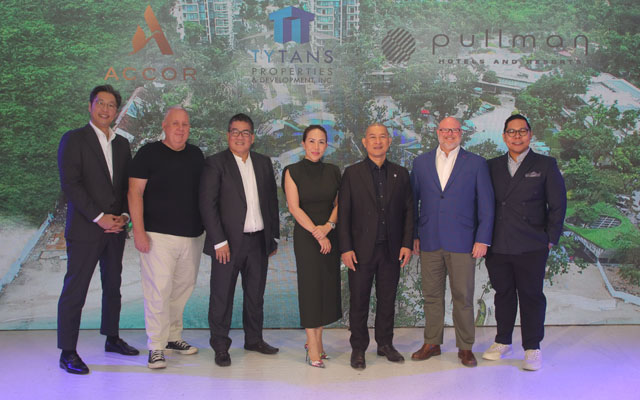
From left: Accor’s Chris Cho; C9 Hotelworks’ Bill Barnett; Tytans Properties Development’s Gerard Tan; Tytans’ Daphne Lagon and Sonny Lagon; and Accor’s Andrew Langdon and Kash Salvador
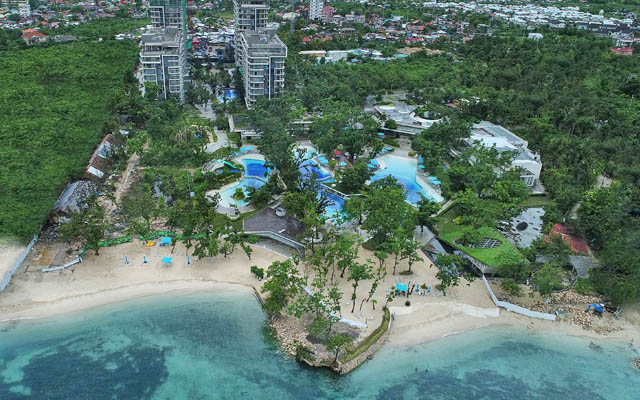
Pullman Hotel and Residences is going to be part of the 11-hectare site which houses the existing Tambuli Seaside Resort & Spa consisting of six condominium buildings with a total of 1,000 units and a vast common area for F&Bs, meeting spaces, huge swimming pools and beach facilities. Together, they will be called Tambuli Mactan Estates.
Gerard Yu, chairman of Tytans Property Development which owns the site, said Tambuli (Filipino horn or trumpet) will be retained as a heritage brand in the multi-billion peso development.
He said more facilities will be developed in the Tambuli common area, including a 20,000m² commercial boardwalk which will feature parlours, health care, children’s area, sports facilities and more F&B outlets.
The plan for an enlarged Tambuli Mactan Estates is to offer a different experience. “We would like to come up with a resort that has the fullness of the rainforest, (and) the beauty of the white sandy beach,” Yu explained.
Indeed, long before sustainability and trees preservation became fashionable, Tytans retained the numerous centuries-old trees in the area when it bought Tambuli in 2012 and “we worked around the trees in an altogether new resort although it was not an easy job”, Yu recalled.
Dusit Thani Bangkok hotel in Thailand will officially reopen later in September after undergoing reconstruction to offer its guests an opulent accommodation experience.
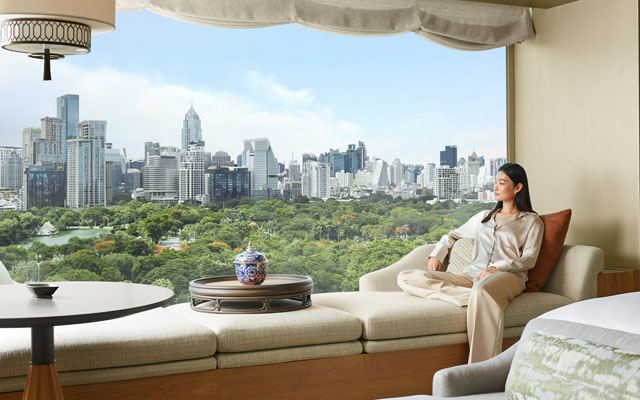
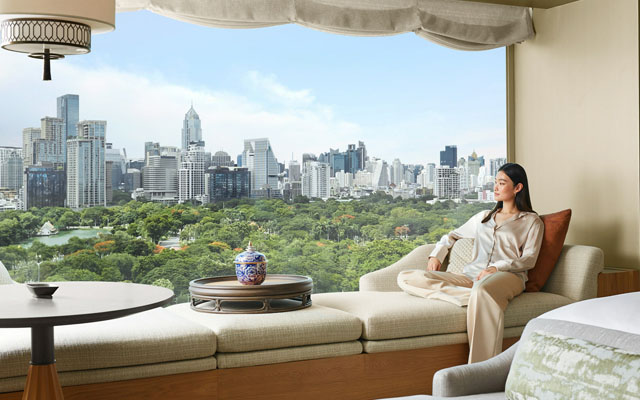
The newly-built 39-storey hotel will feature fewer rooms (257 versus the original’s 517) comprising deluxe rooms and suites, whereby a singular corridor floor plan ensures every room faces the green expanse of Lumpini Park for guests to enjoy uninterrupted scenic views through expansive floor-to-ceiling windows.
Caption: Dusit Thani Bangkok ensures every room faces Lumpini Park
The hotel will continue to boast one of the city’s largest, most elegant ballroom with banqueting and meeting facilities spanning over 5,000m².
Full details of the hotel’s wellness offerings and culinary concepts will be revealed closer to its reopening date.
The new Dusit Thani Bangkok is located at the heart of Dusit Central Park, a mixed-use development which also houses Dusit Residences and Dusit Parkside, an office tower, a high-end retail centre, and an 11,200m² Roof Park. These additional components are expected to open gradually in 2025.
Suphajee Suthumpun, group CEO, Dusit International, commented: “By blending tradition with innovation, the new Dusit Thani Bangkok has been carefully designed to surprise and delight long-time fans of the original hotel and new generations of travellers alike. This reimagined landmark also serves as a blueprint for exciting new services and experiences across Dusit Hotels and Resorts worldwide.”
Adrian Rudin, managing director, Dusit Thani Bangkok, said: “For nearly five decades, the original Dusit Thani Bangkok stood as a cornerstone of the community, crafting cherished moments and unforgettable memories for countless guests. This is a new chapter, where heritage seamlessly blends with modernity, ensuring every guest encounters the extraordinary.”
Bookings for the new Dusit Thani Bangkok will be available from May 1.
Celebrating 20 years in the air, Jetstar has unveiled its revamped uniform which will be worn by more than 5,000 of the airline’s frontline team members across Australia as well as at Jetstar airlines based in New Zealand, Japan and Singapore from late 2024.
Designed by renowned Australian fashion designer, Genevieve Smart, inspiration for the new uniforms came from the sunset as seen out of an aircraft window, a symbol of what Jetstar means to its customers and its people.
The new uniforms give the crew more freedom to choose what they would like to wear
The uniform comprises two sets: the first collection centres on the Jetstar star print where silhouettes are designed to radiate a holiday vibe while retaining a professional edge with a smart casual element; while the second collection focuses on creating an inspired travel look by the layering of textures and colours.
The pilot uniform stands out with a sleek new tailored suit, with a sharp modern cut in navy and a subtle star jacquard fabric design for the slimline tie.
Even the airline’s epaulettes, braids and wings badges have changed its look to ensure a consistently professional look.
The newly designed collection caters to everyone and gives the crew more freedom to choose what they would like to wear.
With sustainability is mind, Jetstar’s current uniforms will be repurposed into new products.
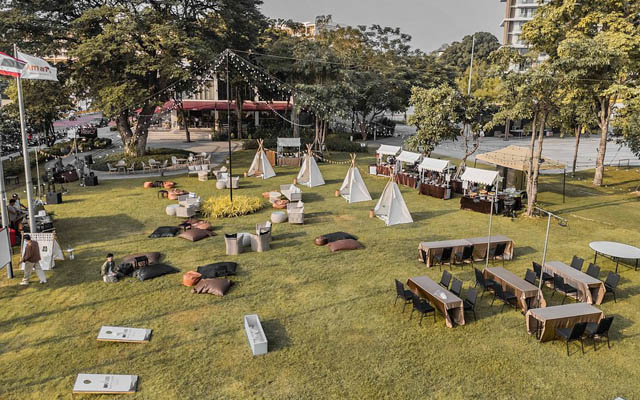
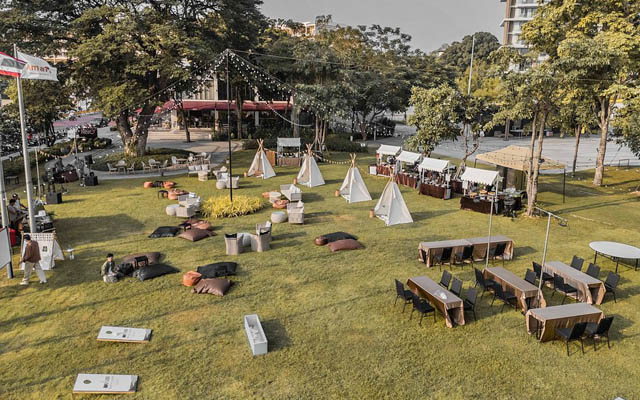
Amari Pattaya, nestled at the northern edge of Pattaya Bay, Thailand, has unveiled its new immersive Beach Lawn Glamping experience.
Tailored for families, couples, and groups of friends, this event takes place every Saturday on the resort’s lawn, set against the picturesque backdrop of Pattaya Bay’s sunset.
Families and friends are invited to join in Amari Pattaya’s lawn glamping weekends
With free entry, both resort guests and locals are invited to join in the fun with food and drink, arts and crafts, outdoor games, live music and more.
Amari Pattaya is also a family-friendly resort, with a Kids Club, large pool with fountains and slides, and play park to keep the little ones entertained.
Prices at Amari Pattaya start from 3,250 baht (US$122) per night for two. Stay before June 30 and receive a 20 per cent discount on F&B.
The once sleepy town of Ayodhya located in India’s northern state of Ayodhya is now emerging as a major destination for spiritual tourism thanks to the recent grand inauguration of the Ram Temple built at an estimated cost of US$225 million.
The consecration ceremony at the newly-built Ram temple that took place on January 22 was attended by prime minister Narendra Modi and over 7,000 guests. The temple is situated at a site where deity Lord Ram is believed to have been born, thus making it a revered place among billions of Hindus globally.
The grand launch ceremony for Ram Temple was held on January 22
According to Thomas Cook India the inauguration of the Ram Temple in Ayodhya, along with improved connectivity and infrastructure, has accelerated online searches for the destination by 10 times. Similarly, as per a recent insight on spiritual tourism in India, MakeMyTrip, one of India’s leading OTAs, shared that search for Ayodhya on its platform grew exponentially since the inauguration announcement of the Ram Temple. As per the OTA’s search date between January 1 and 12, internationally maximum search contribution came from the US followed by the Gulf countries, Canada, Nepal and Australia.
“Ayodhya is developing as India’s ‘Vatican City’. Considering the strong infrastructure investment the destination is witnessing, it is on the path of becoming a leading spiritual destination in India for both domestic and international travellers,” said Arun Anand, managing director, Midtown Travels.
As per research by the international brokerage firm Jefferies, a US$10 billion makeover (new airport, revamped railway station, township, improved road connectivity etc) is now set to transform the ancient destination from a sleepy town to a global religious and spiritual tourist hotspot. Tourism is projected to surge and multiple sectors stand to benefit, including hotels, airlines, hospitality, FMCG, travel ancillaries, among others. Jefferies estimates the annual influx of over 50 million tourists in Ayodhya which will surpass other popular spiritual sites like Tirupati Temple in Andhra Pradesh which presently attracts 25 million footfalls annually.
Rajesh Shukla, chief strategist, National Intellectual Advisory (NIA) said: “Post the consecration ceremony of Ram Temple, the number of tourists has gone up to 500,000 per day in Ayodhya. The entire scenario of the tourism industry in Ayodhya has drastically changed. The holy city’s tourism industry will witness rapid growth in the coming years, catering not only to spiritual seekers but also introducing them to Ayodhya’s rich cultural heritage.”
The new Maharishi Valmiki International Airport in Ayodhya opened its phase one built at a cost of US$175 million beginning January 6 this year. Three additional terminals including an international terminal would be operational at the airport from 2025.
Indian carriers are showing keen interest in connecting Ayodhya to the rest of the country. Air India Express has launched operations from Ayodhya to Delhi, Bengaluru and Kolkata. IndiGo started operations connecting Ayodhya to New Delhi, Ahmedabad and Mumbai. On the other hand, SpiceJet is connecting Ayodhya with eight key cities across the country including Delhi, Chennai, Bengaluru, Mumbai, Ahmedabad, Jaipur, Patna, and Darbhanga.
The destination has now become a seedbed for hospitality players. According to hotel management consultancy company Hotelivate considering the surge in tourism for Ayodhya, the destination is projected to require 8,500 to 12,500 branded hotel rooms in the medium to long term. Major hospitality brands like Radisson Hotel Group, IHCL, Marriott, Club Mahindra, Wyndham, The Leela Palace, ITC Hotels and Cygnett Hotels & Resorts have shown interest in the market, with some already opening properties in the destination.
Radisson Hotel Group recently announced the signing of a 150-room Radisson Blu Hotel, Ayodhya. Previously, the hospitality group opened Park Inn by Radisson Ayodhya in January 2024.
“Our decision to open another hotel in Ayodhya is greatly influenced by the robust guest demand and positive feedback that underscores the attractiveness of this holy city. Ayodhya stands strong as a promising market for Radisson Hotel Group, occupying a significant position in our expansion plans in 2024 and beyond,” said KB Kachru, chairman emeritus and principal advisor, South Asia, Radisson Hotel Group.
Cygnett Hotels & Resorts last year announced the signing of a 40-rooms property, Cygnett Collection KK Hotel Ayodhya. “With the official inauguration of the Ram Temple, Ayodhya is well positioned to become a spiritual centre, attracting visitors from all corners of the world. Considering the strong demand for the destination, we are planning to introduce our second property in Ayodhya soon,” said Sarbendra Sarkar, founder & managing director of Cygnett Hotels & Resorts.
However, at present there is a dearth of branded hotels available in Ayodhya, which is resulting in a big gap between demand and supply. “Ayodhya as a destination will be able to meet its potential as a spiritual tourism market for the organised tour package segment, once the hotel room supply picks up,” said PP Khanna, president, Association of Domestic Tour Operators of India.
As the Ram Mandir in Ayodhya becomes the focal point of widespread attention, it will be interesting to observe how the India tourism sector seizes this opportunity.
Digital transformation within Singapore’s hotel sector has picked up pace over the course of the pandemic disruption, as managers and operators realise a need to raise their efficiencies and service quality amid growing resource strains and changing consumer expectations.
As the national agency driving Singapore’s digital transformation and often the go-to for organisations seeking innovation clarity, the Infocomm Media Development Authority (IMDA) knows this best. It has seen a spike in assistance requests from hospitality organisations in recent years.
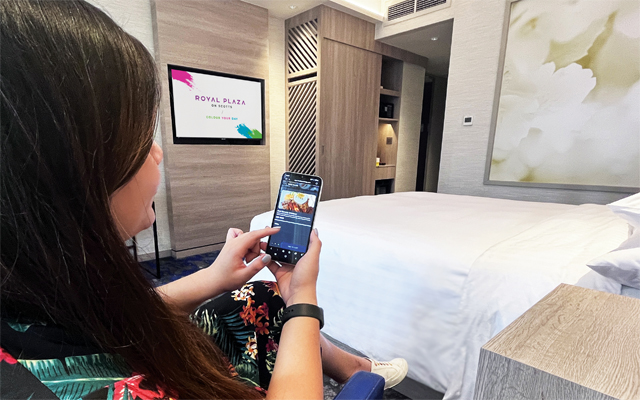
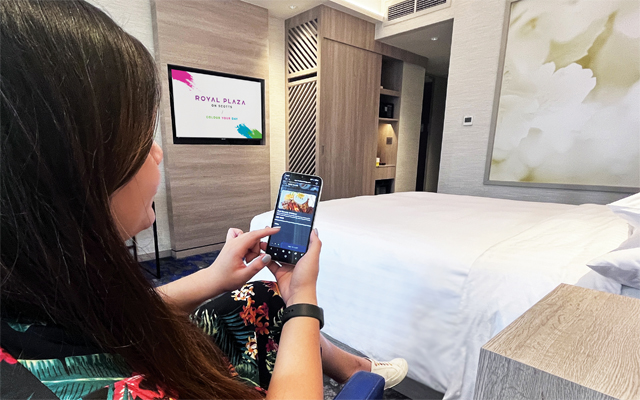
Royal Plaza on Scotts makes it easy for guests to access services
Ng Kaijie, director for innovation at IMDA, told TTG Asia that the Covid-19 pandemic was a “catalyst” for innovation.
“During the downtime, many hospitality managers were able to rethink their strategies and operations. Organisations with a bit more cash in hand were able to ponder about innovation so as to emerge better post-lockdown. The practice of social distancing then also forced hospitality managers to consider the possibility of an evolved face-to-face service expectation,” Ng elaborated.
However, the path from transformation realisation to innovation execution is not always well-lit.
“We had companies coming to IMDA saying that Generative AI is so hot now, how could it be applied to their business,” recalled Ng.
To move the cart behind the horse, IMDA leads companies into a conversation – a process the agency calls design thinking – to first identify their problem statement and desired outcome.
Ng said: “The technology to be applied is more of an afterthought; it may not be Generative AI at all.”
IMDA also helps companies to identify the right solution provider in a sea of options and stays on to provide advice throughout the innovation journey.
Ng said companies might not realise “things they need to consider in their innovation journey”, such as required equipment, customer data protection requirements, and cybersecurity strategy.
From left: Vouch’s Joseph Ling; Royal Plaza on Scotts’ Neeta Dave; IMDA’s Ng Kaijie
Essential help
IMDA’s Open Innovation Platform – which is free to use – supports and empowers companies to drive success through the innovation process. Companies seeking digital solutions start off by working with IMDA consultants to diagnose and refine their challenge statements, which are put up for quarterly Innovation Calls. During these calls, IMDA will scout for solvers from its pool of over 13,000 solution providers worldwide. Companies can then review proposals, select finalists, and fund their preferred solution provider to begin prototype.
For hoteliers that want an immediate solution to their problem, IMDA’s Discovery engine comes in handy. It functions like Google search, allowing users to type in what they are looking for and get some possibilities based on past winning solutions offered by listed solution providers. Hoteliers can then enquire with suggested solution providers.
IMDA only lists solution providers that were active in earlier Innovation Calls.
It also works with other agencies, like the Singapore Tourism Board (STB), to bring credible solution providers on board. STB has its own rigorous selection process for its Singapore Tourism Accelerator, a programme that gathers the world’s most promising technology startups or scale-ups that can power the travel and tourism industry.
Spotlight: Vouch
Established in 2016, Vouch has been catalysing digital transformation in the hospitality industry through a whole technology stack that supports rooms & housekeeping, F&B, and revenue departments. It won the Singapore Tourism Awards’ Best Business Innovation award in 2019 and was named one of PhocusWire’s Hot 25 start-ups for 2021.
Joseph Ling, CEO and founder of Vouch, recalled that Vouch started off wanting to solve hotels’ labour problem.
“It still is the main problem we are trying to solve,” he said. “Hotels in Singapore have a major labour issue, which existed even before the pandemic; Covid-19 exacerbated it.”
Ling sees the potential for technology to improve several processes in a hotel.
He said: “In some countries, language is a problem because English literacy is not very high. Communicating with foreign tourists is a challenge. Technology can help. In some countries, hotels are under pressure to drive up ancillary revenue. Technology can help.”
He added that understanding data could take innovation for efficiencies even farther. However, this requires data analysts who are also familiar with hotel operations.
“Not all hotels can afford such a resource,” reflected Ling, who is now looking at ways to use AI to process data and produce insights that enable process tweaks.
Labour pains
While acknowledging that hotels are a high-touch business, Neeta Dave, director of operations at Royal Plaza on Scotts, a hotel located in a prime section of Singapore’s Orchard Road shopping belt, has had to rely on technology to ease manpower strains.
The hotel uses a Vouch system that allows guests to convey common requests – like extra water, fresh towels, and dinner reservations at the hotel – via a QR code. Guests can also indicate in the system their desire for the concierge or housekeeping attendant to call them back for more complex requirements. With this system, the hotel no longer need to dedicate staff to answering calls.
“Our staff can be directed to other important tasks that would build their job expertise or give them a more rewarding job experience,” said Neeta.
Obstacles to change
As people are by nature resistant to change, both Ling and Neeta said patience is needed for successful transformation.
Ling said: “I’ve learnt that we cannot give a software to a customer and expect improvement to happen. Innovation adoption must be paired with change management. We have to advise them on how to improve their processes with the software, be patient, and make changes step by step for all users.”
Neeta advised communicating the need for innovation clearly to employees to eliminate suspicion that technology would replace them.
It was also important to have support from the general manager and the board for innovation to work, she added.
To further improve operational efficiencies, Royal Plaza on Scotts will by end-March install check-in kiosks in the hotel lobby. Neeta said: “Even with this facility, staff need not fear replacement because they will be stationed at the kiosks to assist guests who need help.”
Changes to real estate policies in relation to continued hybrid work preferences, growing expectations of mental wellness among staff, and intensifying seriousness towards diversity, equity, and inclusion at work are leading to corporate travel policy changes, observes Akshay Kapoor, head of sales, Asia-Pacific at CWT.
In this episode of TTG Conversations: Five Questions, Kapoor details how companies are reacting to these work culture changes and staff expectations, what expenses are being incurred to support current work and travel needs, how TMCs can help in such adjustments, and more.
When this issue lands on your lap in March, I would have just crossed my 18th year with TTG Asia Media – an auspicious number, I know. I often get asked what is keeping me this long in the same job and industry. My reply – I’m covering an ever-changing travel and tourism landscape, so there is never a dull day.
However, change is not always welcomed and understood. My interviews the past month with industry leaders have highlighted the pressing need to evolve operations, especially amid manpower challenges. Pan Pacific Hotels Group is undertaking a million-dollar job transformation exercise that involves time-motion studies and data scientists. Singapore’s Infocomm Media Development Authority is stepping up its outreach to a growing number of local hoteliers that need guidance on their innovation journey (page 8).
The purpose of innovation needs clarity and buy-in from all levels and users, so as to avoid fear and suspicion of technology coming in to replace jobs held by humans. The implementation process also needs patience, and the outcomes paired with rewards for staff who made an effort to evolve with their employer for greater productivity.
Positive changes in travel and tourism are not limited to just digitalisation for efficiency. With consumers paying more attention to responsible travel, destinations must also move in that direction. Laos, for one, has just completed its four-year SUSTOUR Laos project to transform into a sustainable tourist destination (page 11). Indonesia’s Nglanggeran Tourism Village is also setting an example of how an entire community can benefit when tourism is developed with its people at the heart (pages 18 and 19).
We are merely scratching the surface of positive changes in this issue. So, tell me, isn’t this industry so interesting?
Trisara resort in Phuket, Thailand has introduced its Stay Longer, Save More deal, offering guests an exclusive discounted rate with extra benefits if they stay a minimum of four or seven nights.
The additional benefits include daily breakfast, return airport transfer, complimentary use of non-motorised water sports equipment, complimentary daily outdoor activities, as well as 2,500 baht (US$94) in Wellbeing credits which can be used to redeem activities such as massage and beauty therapies, personal training, and yoga and meditation.
Remote workers, families and groups of friends can enjoy long-stay rates at Trisara
Perched directly over the property’s private bay, Trisara’s collection of residences range from two-bed units to multi-bedroom configurations, featuring expansive suites, sea-facing verandas, and extensive swimming pools.
Each residential villa is attended to by a dedicated maid and chef who prepare home-cooked Thai and Western dishes on demand and by request.
With privacy guaranteed, the residences are also perfect for special occasions such as anniversaries, birthdays, marriage proposals or celebrations with extended family or with groups of friends.
Marriott International has raised more than US$347,000 through its annual charity event, Road to Give, to support charitable organisations across Asia-Pacific.
Road to Give encourages Marriott International associates to support meaningful local causes while engaging in different types of movement for their physical and mental well-being – running, walking, dancing and golfing were just some of the activities organised this year.
Marriott International’s annual Road to Give event organised 96 fundraising events across Asia-Pacific to raise funds for local community causes; Road to Give event in the Philippines, pictured
More than 21,000 associates from Marriott International hotels volunteered almost 50,000 hours in the ninth edition of Road to Give, with all proceeds donated to support local causes such as providing educational support to children at local orphanages and disadvantaged backgrounds; food donations to low-income communities; cleft surgery to children; medical care to patients with cancer and kidney-related diseases; and more.
“We are proud to see our hotels stepping up their Road to Give fundraising efforts this year! We raised almost US$100,000 more than the previous year, representing our associates’ dedication and passion to make the communities where they operate better places to live, work and visit,” said Andrew Newmark, chief human resources officer, Marriott International, Asia Pacific (excluding China).
“As we look forward to Road to Give’s ten-year milestone next year, I am incredibly excited to see what lies ahead in terms of how we strive to make even stronger, positive impact in our local communities.”










Marriott International has raised more than US$347,000 through its annual charity event, Road to Give, to support charitable organisations across Asia-Pacific.
Road to Give encourages Marriott International associates to support meaningful local causes while engaging in different types of movement for their physical and mental well-being – running, walking, dancing and golfing were just some of the activities organised this year.
More than 21,000 associates from Marriott International hotels volunteered almost 50,000 hours in the ninth edition of Road to Give, with all proceeds donated to support local causes such as providing educational support to children at local orphanages and disadvantaged backgrounds; food donations to low-income communities; cleft surgery to children; medical care to patients with cancer and kidney-related diseases; and more.
“We are proud to see our hotels stepping up their Road to Give fundraising efforts this year! We raised almost US$100,000 more than the previous year, representing our associates’ dedication and passion to make the communities where they operate better places to live, work and visit,” said Andrew Newmark, chief human resources officer, Marriott International, Asia Pacific (excluding China).
“As we look forward to Road to Give’s ten-year milestone next year, I am incredibly excited to see what lies ahead in terms of how we strive to make even stronger, positive impact in our local communities.”