

NCL to expand fleet, develop private island in the Bahamas

Norwegian Cruise Line Holdings (NCLH) has unveiled a decade-long strategy which will enhance the company’s product offering, guest experiences, and operational infrastructure.
This comprises its most comprehensive new build order in its history – with a total of eight vessels, representing nearly 25,000 additional berths, and new classes of ships for each of its three brands – and the construction of a multi-ship pier at Great Stirrup Cay, the company’s private island destination in the Bahamas and its Caribbean port of call.
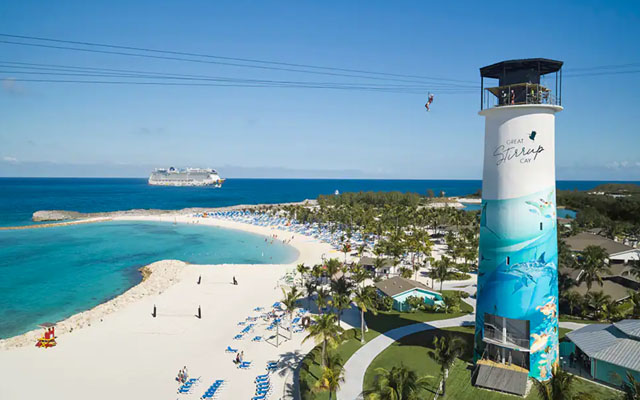
The new ship orders across all three brands are scheduled for delivery over a 10-year period, between 2026 and 2036. Following the delivery of four Prima-Plus class ships from 2025 through 2028, Norwegian Cruise Line (NCL) is expected to take delivery of four approximately 200,000-gross-ton ships – each with a capacity of nearly 5,000 guests – in 2030, 2032, 2034 and 2036, which are subject to financing.
Building on the success of its Allura Class ships, the last one being delivered in 2025, Oceania Cruises is scheduled to take delivery of two 86,000-gross-ton ships, each with a capacity of 1,450 guests in 2027 and 2029.
Lastly, Regent Seven Seas Cruises is scheduled to take delivery of two 77,000-gross-ton ships, each with a capacity of 850 guests, in 2026 and 2029.
In partnership with the Italian shipbuilder Fincantieri, each brand will design their new ship class and focus on creating the largest, most efficient, and innovative vessels of their respective fleet. Aligning with the company’s sustainability efforts, the new ship designs are expected to advance the journey towards decarbonisation.
Details regarding the ships’ amenities, staterooms, dining, recreational, efficiency, sustainability and other features will be announced in the coming months.
“This strategic new-ship order across all three of our award-winning brands provides for the steady introduction of cutting-edge vessels into our fleet and solidifies our long-term growth,” shared Harry Sommer, president and CEO of NCLH.
“It also allows us to significantly leverage our operating scale, strengthen our commitment to innovation and enhance our ability to offer our guests new products and experiences, all while providing opportunities to enhance the efficiency of our fleet.”
In addition, the new pier development at Great Stirrup Cay, NCLH’s private island in the Bahamas is slated to break ground in summer 2024 and be completed by late 2025 with an investment of approximately US$150 million.
The new pier will be constructed to simultaneously accommodate two large vessels of the company’s current and future ship classes, which will enhance the guest experience on Great Stirrup Cay.
Sommer added: “We are likewise excited with the addition of a new pier at Great Stirrup Cay to support our increased capacity in the Caribbean and multiple ships to call on the island, enhancing our guest experience and bringing seamless and reliable access to our private island year-round.”
Wyndham signs new hotel in Vietnam’s Hai Duong city
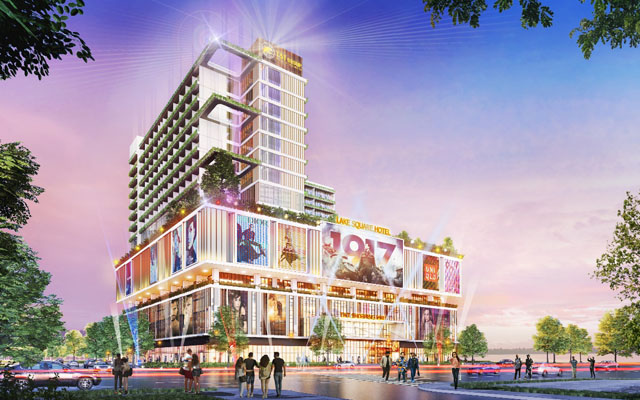
Wyndham Hotels & Resorts is expanding its presence in Vietnam with the recent signing of Wyndham T&T Hai Duong in Hanoi, Vietnam.
The hotel marks the first Wyndham in Hai Duong, and will add to the company’s portfolio of 16 hotels across seven brands in Vietnam.
Wyndham T&T Hai Duong is slated to open its doors in 2026.
Situated in the heart of Hai Duong City within the vibrant trade-service-entertainment centre complex, the 214-room Wyndham T&T Hai Duong will offer amenities such as a gym, pool, spa, meeting spaces, and dining options.
Amadeus expands presence in biometrics with acquisition of Vision-Box

Amadeus has completed the acquisition of Vision-Box, a leading provider of biometric solutions for airports, airlines, and border control customers.
The deal has now received all necessary regulatory approvals in the relevant markets.
Vision-Box solutions will become part of Amadeus’ portfolio offering for airports and airlines. The combined offering of the two companies will allow Amadeus to deliver a fully integrated traveller journey, from the moment of booking to arrival at the airport, including border control and boarding.
Vision-Box’s founder and CEO, Miguel Leitmann, will join Amadeus and report to Decius Valmorbida, president of travel, Amadeus. Vision-Box’s 470 employees will join Amadeus as well.
Vision-Box, a fast-growing global business with expected revenues of €70 million (US$75.26 million), and an estimated normalised EBITDA of close to €20 million in 2023, is partially owned by Keensight Capital, a private equity fund dedicated to pan-European Growth Buyout investments. Amadeus has acquired privately-owned Vision-Box for an agreed price (enterprise value) of approximately €320 million.
Biometrics holds the key to smarter digital travel: SITA
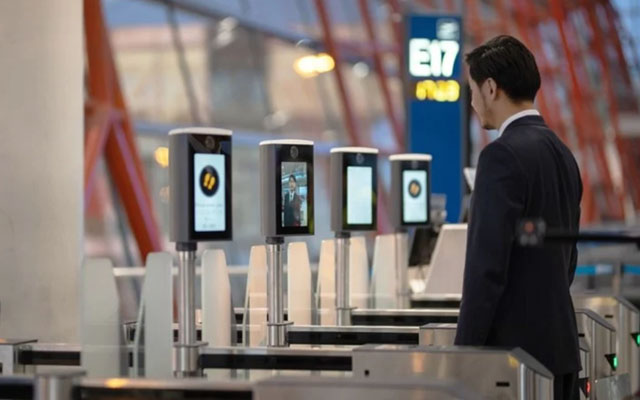
SITA’s Biometrics White Paper, Face the Future, acknowledged that the global demand for travel is rising, and biometrics is at the forefront of this transformation.
The white paper also discussed how the surge in air traveller numbers places extraordinary pressure on existing and new airports, national borders, and airline resources.
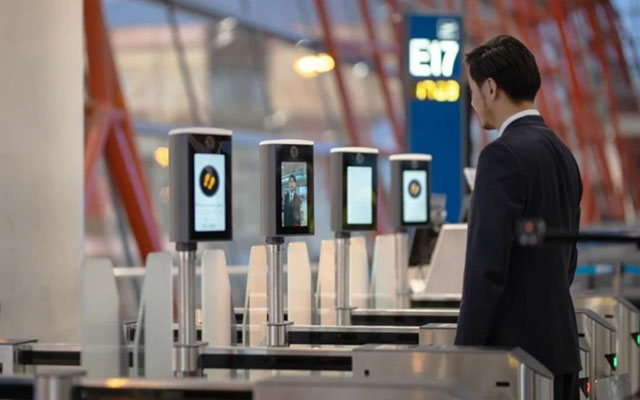
According to the CAPA-Centre for Aviation, 425 major construction projects (worth around US$450 billion) have already been put underway at existing global airports, along with 225 new airport investment projects in 2022.
However, SITA stated that “existing paper-based and manual travel infrastructure and legacy processes simply won’t be able to cope”, and that brick and mortar infrastructure is only part of the solution. Airlines and airports will struggle to manage passenger numbers, affecting the quality of the travel experience they are able to deliver.
The solution, explained SITA, is in harnessing the power of facial and fingerprint biometrics to create a safer and seamless air transport experience. By applying advanced technological solutions, SITA will also solve other industry challenges, like space constraints, specialist staff shortages, and evolving passenger wants and needs.
The white paper outlined more solutions using advanced biometrics technology, including SITA Flex, a common-use passenger processing platform, and SITA Border Management, which covers border control, risk intelligence, and travel authorisation. Both solutions are well recognised in the industry and used by more than 40 airports globally.
It also breaks down SITA’s Digital Travel Credentials (DTC) solution, a verifiable digital identity shared before arrival (with the passenger’s consent) for seamless border crossing.
Additionally, Face the Future also showcased successful case studies like the Star Alliance Biometric initiative and the Indian government’s DigiYatra programme – both cases use the end-to-end biometric passenger processing solution, SITA Smart Path.
“SITA Smart Path biometrically enables every step of the passenger journey, from mobile enrolment to aircraft boarding and every point in between and beyond,” shared Stefan Schaffner, vice president of airports at SITA.
“With facial recognition across as many airport touch points as you need, it lets passengers manage their identity across their whole journey, in a unique and touchless way. The final result is a radically improved travel experience.”
Maldives tourism ministry identifies Addu City for tourism development

Addu City and its nearby atolls in the southern-most part of the Maldives have strong potential for tourism development, with access aided by Gan International Airport. Efforts to position Addu City will include promotion of local tourism through unique marketing approaches.
Fathmath Thaufeeq, CEO & MD of Maldives Marketing & Public Relations Corporation (MMPRC) shared this opinion at the preliminary meetings for the South Symposium 2024 last week, an event that will take place later this year to foster productive exchanges on the region’s tourism industry.

Fathmath added that Addu City could leverage the Maldives’ experience in tourism development, and called on all industry stakeholders to assist and be involved in boosting tourism to the South of Maldives.
Malaysia Airlines teams up with Apple Vacations, global cruise lines
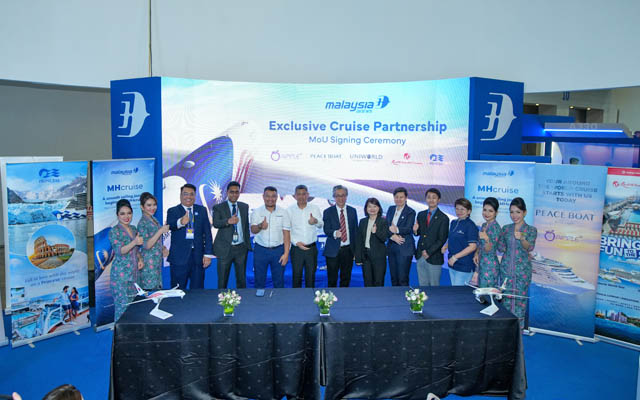
Malaysia Airlines has signed a one-year strategic cruise partnership with Apple Vacations – complemented by collaborations with global cruise lines such as Peace Boat, Princess Cruises, Resorts World Cruises, and Uniworld River Cruises – to promote a seamless air-cruise product.
This collaboration allows Malaysia Airlines to promote a seamless travel experience through MHcruise packages, complementing Apple Vacations’ fly-cruise offerings. These packages provide vacationers with the convenience of air travel and the allure of cruising at attractive and competitive fares, tailored to meet diverse preferences, from luxurious to budget-friendly options.
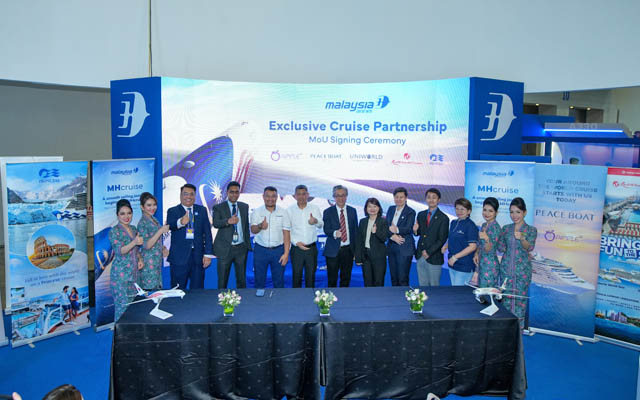
Koh Yock Heng, co-founder and group managing director of Apple Vacations, said: “The emerging trend of fly-cruise packages is appealing to holiday-goers looking for seamless connectivity and convenient booking options.”
“Through our collaboration, we’re not only expanding our offerings but also fuelling a positive ripple effect throughout Malaysia’s tourism industry. By curating unparalleled travel experiences, we’re not only attracting visitors, but also fostering sustainable economic growth and development,” commented Dersenish Aresandiran, chief commercial officer of airlines, Malaysia Aviation Group.
“Together, we are pioneering new standards, revitalising the travel landscape, and positioning Malaysia as a premier destination for global travellers as well as anchoring Malaysia as a gateway to Asia and beyond.”
APSWC annual roundtable tackles AI integration for spa and wellness industry
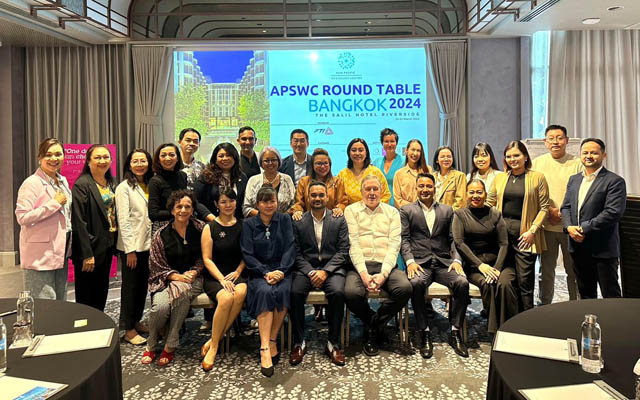
Members of the Asia Pacific Spa and Wellness Coalition (APSWC) convened at the end of March for their annual Round Table event in Bangkok, Thailand for discussions dedicated to the ethical considerations and potential benefits of integrating AI into spa and wellness services, along with other issues of weight such as sustainability, an aging workforce and how wellness can combat digital pollutants in modern life.
Amid the dialogue, it became evident that while wellness providers approach AI integration with caution, they also recognise its potential for improving various aspects of their businesses.
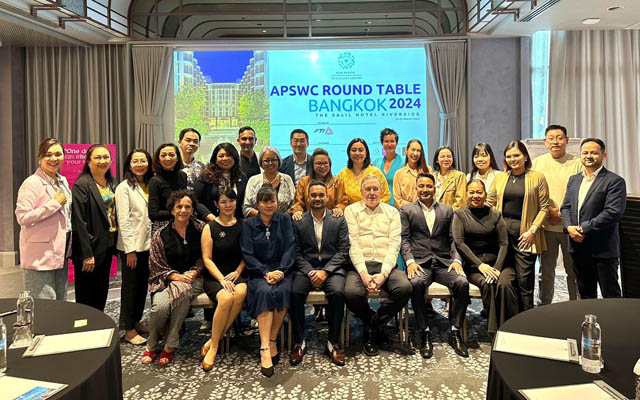
“Managing AI integration within the spa and wellness industry requires a balanced approach prioritising human values, ethics, and sustainable practices while accepting that AI can provide the ‘what’ and ‘how’ but not the ‘why’ of business,” stated Cybille Barcebal, corporate wellness manager for Araw Hospitality Group.
Victoria Kruse, brand consultant wellness and spa at JA Resorts & Hotels – whose consultancy is currently exploring the use of AI to enhance screening solutions and create more tailored programmes for well-being – encouraged the evaluation of both marketing and operational needs during integration.
“AI has the potential to address many specific pain points. We must differentiate between back-end efficiency improvements and front-end customer experiences. There should also be an expert checking (results) on both ends, because AI is not always 100 per cent accurate,” she advised.
Regarding concerns about job displacement, Faheem Ebrahim, founder and managing director of Xin Performance and head of technology on the APSWC board, reassured attendees that AI should augment rather than replace human roles. He emphasised the importance of engaging with AI at different levels, and suggested hiring a data analyst as a springboard if unsure where to begin.
The APSWC 2024 white paper summarising all discussion results will be uploaded to the association’s website later this week.
“The paper is (created) to be a catalyst for action once the key issues and the steps to be taken are identified. Some issues can be resolved with a bit of hard work and commitment by individual operators or business owners, while others require the input or assistance of third parties. It is, naturally, up to us as stakeholders to proactively request that assistance,” said APSWC chairman Andrew Jacka.
He also shared that the association is in touch with the Department of Tourism Thailand about reviewing the ASEAN Spa Services Standard, which has not been updated since its release in 2016.
Trip.com Group launches free Shanghai city tours for transit travellers

Travellers transiting at Shanghai Pudong International Airport (PVG) for more than eight hours will be able to participate in free layover city tours offered by Trip.com Group from April 15.
Transiting international travellers can choose to join these hassle-free Shanghai Express tours which include transportation, attraction tickets, e-sim cards, and team insurance.

Current itineraries include the Shanghai Highlights City Tour (09.00-14.00); the Strolling Under the Trees Citywalk Tour (16.00-22.00); and the Huangpu River Cruise Sightseeing Night Tour (18.00-23.00) – all led by English-speaking guides.
Those seeking to travel light may store their luggage at the airport or on the shuttle bus if space permits. Meals are not included.
Each free tour accommodates a maximum of ten travellers and lasts five to six hours, including transportation from and back to the airport.
The tours will be available to international travellers who are eligible for China’s 72/144-hour visa-free transit policy, as well as those holding a 24-hour temporary entry permit issued by the airport border inspection.
Travellers may head to the Trip.com Group currency exchange counter on Island A in the Departure Hall of Terminal 2 for in-person registration after passing through customs. Registrations are accepted on a first-come, first-served basis.
Trip.com’s head of marketing Han Feng said: “We will leverage our extensive resources to ensure a memorable tour experience and provide world-class customer service to help flyers enjoy what Shanghai has to offer.”
Malaysia Airlines, IndiGo boost connectivity with codeshare partnership

Malaysia Airlines and IndiGo have signed a memorandum of understanding (MoU) for a codeshare partnership and mutual cooperation agreement that will enable both carriers to provide customers with more options and flexibility for seamless travels between Malaysia and India.
Through this collaboration, Malaysia Airlines will be able to strengthen its connectivity into India as the marketing carrier on IndiGo operated flights, while IndiGo customers get to explore more South-east Asia destinations through Malaysia Airlines’ extensive network.

Malaysia Airlines currently operates 71 weekly flights to nine key hubs in India, including New Delhi, Mumbai, Bengaluru, Chennai, Hyderabad, Kochi, Ahmedabad, Amritsar and Trivandrum.
Izham Ismail, group managing director of Malaysia Aviation Group, said: “With India being our largest international market, we are delighted to enter this MoU with IndiGo to further widen our reach beyond the nine hubs we currently operate within India.”
“This partnership will not only offer seamless travel experience between India and Malaysia, but also enhance international trade opportunities by improving accessibility,” added Pieter Elbers, CEO, IndiGo.








In 2023, Hong Kong’s average room occupancy stood at 82 per cent, compared to 91 per cent in 2018, which was a record year. We are still on the recovery path, as per capita spending by overnight visitors was only HK$6,100 (US$778) versus HK$6,600 in 2018. Also, passenger flight capacity last year reached only 55 per cent of the 71.5 million recorded in 2018.
However, during the eight days of Lunar New Year 2024, hotel performance rebounded to 2019 levels. The average occupancy rate was 93.4 per cent, which was only slightly lower (0.4 percentage points) than in the same period in 2019. The average room rate was HK$1,715, an increase of six per cent over 2019, surpassing original projections.
High-end hotels performed well this Golden Week holiday, but rates of mid- to budget categories barely reached 2018 levels. This is because there are fewer group tours from China and the travel patterns of Chinese visitors are changing. For example, small-group and individual travellers are no longer staying overnight. In the old days, groups could spend on average from HK$800 to HK$1,000 per room but now can’t even afford HK$600. Yet there are opportunities: Qingdao and Xi’an, each with a population of 10 million, were recently added to the Individual Visit Scheme (IVS) cities, so travel agents and medium-tariff hotels should work together and craft group packages to court business from these cities.
The Airport Authority is projecting that air traffic at Hong Kong International Airport will recover fully by the end of this year, although (it) hasn’t shown any supporting data. I understand that less than six months ago, Cathay Pacific said it still needed 1,800 pilots. The shortage of passenger seats remains an issue and, therefore, (is) a critical part of a vicious cycle driving airfares higher as carriers try to cover overheads and overall income. (Thus), we hope Mainland China and international carriers will bring more visitors to Hong Kong.
What are the driving forces behind the industry’s pace of recovery?
We recognise the critical role of the government in organising more mega-events to enhance the city’s vibrancy, especially in providing additional funding – about HK$100 million for promotion and HK$1.95 billion to implement and execute these events. It might consider leveraging these mega-events with local district events to create activities around the clock, a dynamic environment that attracts international and Chinese mainland visitors.
Hong Kong has many attractions beyond fireworks, and things to do. Rethinking in-depth tour products and itineraries would further enhance Hong Kong as a destination.
Adding more cities to the IVS in combination with relaxing duty-free spending limits here for Chinese mainland visitors, as proposed, would be a strong incentive for more visitors to come here to spend.
However, I must say that better communication among the trade, government, the Hong Kong Tourism Board, and the retail sector would engender closer collaboration, the kind that allows local district events to be folded in with broader experiences and be better targeted to specific audiences. Since tourism came under the same bureau as culture and sports two years ago, we look forward to a culture-sports-tourism blueprint.
Hong Kong will resume its three per cent hotel accommodation tax next year. What does impact will it have on HKHA and its members?
This tax (will return) after 16 years, from January 1, 2025. The industry was not consulted, so we were surprised when it was announced in the 2024–25 Budget Speech. Even though the government has invested heavily in the mega-event economy, this tax may well give visitors pause about making extended and even overnight stays here, because hotel guests will bear the cost. It will place an additional administrative burden on hotels even as they struggle with the continuing manpower shortage.
We understand the government needs income but why impose the tax when hoteliers are still holding out for a tourism recovery? It is an unwelcome strain, especially now. Collaboration and transparency are essential to safeguarding Hong Kong’s economic recovery and ensuring the sustainability of our vital tourism sector.
Another government policy – ban on single-use plastics – will soon come into play. How will this affect the hotel industry?
This policy will come into effect on April 22. Hotels must adapt swiftly to comply with regulations, which may entail additional costs. To this end, we are working closely with the Environmental Protection Department (EPD) to arrange briefing and training for hotel members and draw up best-practice guidelines.
However, being able to use only certain types of suppliers will doubtlessly affect rates. Therefore, we urge the EPD to establish a website dedicated to approved suppliers and alternative products to disposable plastic tableware and banned hotel amenities.
Local and stand-alone hotels are going to have to bear higher costs than international hotel chains; they may have to charge for in-room amenities, affect(ing) guests’ impressions.
My own hotel chain has a green initiative to switch from plastic bottled water to water filters and smart water-refilling stations, but some clients still want free bottled water. So, I think it is vital to educate not just locals, but also travellers so they too are aware of our green movement.
What challenges does the hotel industry face today?
Manpower crunch, higher operating costs and, consequently, lower service standards. Two years ago, there were 40,000 full-time hotel staff. Last June, there were 30,000 – 25 per cent fewer! Where did they all go? Most emigrated, but apart from those, people changed jobs or were headhunted by other industries, like insurance and banking, because these types of industries appreciate hospitality skills.
Covid-19 also forced many owners to cut staff or have full-timers take unpaid leave. Even loyal, long-serving staff (were not) spared, so they lost confidence in the hotel business. Part-time staff is only a temporary solution to tight labour supply, but is more costly. We (have) appealed to the government to expedite the application process of the Enhanced Supplementary Labour Scheme and to add the hotel sector to the Sector-Specific Labour Importation Schemes.
In this difficult transition, housekeeping and F&B – service and kitchen – are suffering. Having too many part-timers can affect the quality of service. Let’s not forget that there are new hotels in the pipeline, which will add more pressure (on human resources).
The solutions? Immediately importing labour, yes, but another is to expand vocational and technical channels to attract people to work and stay in Hong Kong, such as the Vocational Professionals Admission Scheme. Hotels do not need degree holders to be waitresses or chefs.