In April, Sofitel introduced its new campaign starring Gillian Anderson and Dali Benssalah, the brand’s two ambassadors in a short film set in the Sofitel Mexico City Reforma, one of the brand’s flagship locations.
In this campaign, the brand pays tribute to cinema and Mexican culture, by showcasing Mexico City’s National Museum of Anthropology and a traditional market.
Sofitel’s new campaign video stars celebrities Gillian Anderson and Dali Benssalah
The two-and-a-half-minute film, The Encounter, shows two celebrities living the Sofitel experience differently, each at their own pace, guided by the same desire for freedom. For one, a film shoot at a colourful outdoor market, an exploration of local traditions and a lively gastronomic experience. For the other, wellness, sport, adventure and laughter with friends.
Anderson, a British-American actress famous for her roles in The X Files, The Fall, The Crown, and Sex Education, commented: “I have always had a restless spirit and this new campaign by Sofitel embodies exactly that hunger to explore and what better location to celebrate that mindset than the phenomenally stimulating and sensuous Mexico City.”
“The pleasure of getting lost in Mexico City. The joy of meeting up at the Sofitel. Both already look like movie sets. (It’s) an honour to be a Sofitel ambassador in front of these cameras,” shared Dali Benssalah, a French-Algerian Benssalah, who achieved international fame with his role in the James Bond movie, No Time to Die.
The campaign invites travellers to discover the local culture, to open up to others, and to live the Sofitel experience.
Plaza Premium Group (PPG) has opened an office in Saudi Arabia with investment plans of US$100 million to expand its presence in the Middle East.
With a major focus on Saudi Arabia, the funds will be allocated to opening world-class lounges, establishing a global airport concierge service with white-glove service, creating innovative dining outlets, and exploring opportunities for in-terminal hotels.
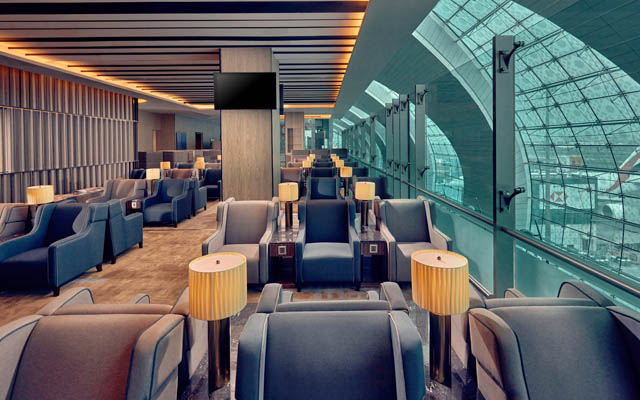
Plaza Premium Group will expand its presence in the Middle East by launching airport lounges, airport concierge services, and more
Deputy CEO Bora Isbulan will lead this initiative, and will direct the business development, commercial, and marketing divisions, as well as forge robust alliances throughout the region.
With a presence in the Middle East since 2014, PPG has developed a robust portfolio of airport lounges, hotels, and F&B outlets; the company currently operates in 15 locations across eight international airports within key regional cities including Amman, Riyadh, Jeddah, Dammam, Dubai, and Muscat.
The investment aims to establish a corporate presence in the Kingdom and support the company’s goal of expanding its global footprint to 500 locations by 2025, The targeted investment in the Middle East is part of US$300 million that PPG intends to invest over three years globally.
According to Song Hoi-See, founder and CEO of PPG, the projected investment will help to add value to development of airport hospitality services at the existing and upcoming destinations throughout the Middle East.
“This is an exciting time to invest in the Middle East, a region that exemplifies the future of travel and tourism. It is rich in ancient culture yet embraces modernity, reflecting PPG’s ethos of innovation and growth alongside our travel partners,” he said.
PPG is currently in 80 airports, 30 countries and 250 locations.
Anantara Hotels & Resorts is celebrating its 50th property milestone with a reimagined brand identity.
The brand’s refreshed look builds upon Anantara’s 23-year legacy, and has been designed to capture the imagination of today’s travellers while honouring the brand’s roots in experiential luxury.
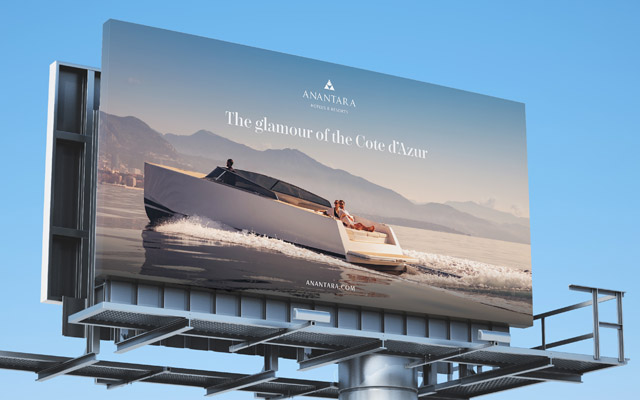
A billboard showing Anantara Hotels & Resorts’ refreshed brand identity
The reimagined Anantara identity introduces several key updates such as simplifying its name from Anantara Hotels, Resorts & Spas to Anantara Hotels & Resorts; an updated logo with a contemporary look yet retaining its distinctive icon – the ‘Naam Jai’ water jar and traditional triangular cushions; as well as a new tagline Unforgettable Journeys.
Brand enhancements include modernised design elements with a refined colour palette and elegant typography; new identities for Anantara Spa, Designer Dining and Spice Spoons by Anantara; and refined service culture with enhanced service delivery standards and team member training programmes to elevate the Anantara guest experience.
The rebranding initiative has commenced with the rollout of the new logo and visual identity across all Anantara digital assets, with guests set to experience more tangible changes in service delivery and on-property experiences in the coming months.
“Anantara’s new visual identity and evolved experiences and concepts will redefine how guests see and interact with the brand, and will elevate us to a space less cluttered by other luxury hotel brands,” said Ian Di Tullio, chief commercial officer of Minor Hotels, the parent company of Anantara.
“This will be underpinned by an increased focus on deeply embedded sustainability, both in terms of how we help the environment and local communities, and how guests experience our hotels and resorts.”
Since its inception in 2001 with the opening of its first resort in Hua Hin, Thailand, Anantara has achieved a portfolio spanning Asia, Europe, the Middle East, Indian Ocean and Africa. The brand will continue its global expansion in the coming months, with the brand set to make its India debut with Anantara Jaipur Hotel later in 2024, on top of new openings in Bali (4Q2024) and Zambia (early 2025).
SITA has acquired Materna IPS, which specialises in airport and airline solutions, in a move that will reshape the entire aviation industry and create the world’s most powerful passenger portfolio for airports and digital travel.
This integration will build on Materna IPS’s common use check-in solutions at kiosks, counters or online – multiple options for user-friendly self-bag drop, and more – which will complement SITA’s portfolio of solutions, including biometrics, computer vision, digital travel, and airport operations management.
Lavorel: passengers all over the world can look forward to a new horizon in smooth, seamless, and contactless travel
With air traffic set to double by 2040, this acquisition by SITA, subject to regulatory approval, is a vital part of its focus on innovation and reinventing travel to meet pressing industry demands for increased terminal capacities and secure solutions leading to easy travel for all passengers – it will offer the industry a unique opportunity to transform airports from simple transit hubs to digital, personalised experiences for travellers across the world.
Materna IPS’s portfolio allows airports to process more passengers and optimise resources to give travellers a better experience, offering secure solutions for all passenger touch points, from check-in to baggage claim and boarding. They are market leaders in Self-Bag Drop, with a customer base spanning North America, India, Europe, and Japan.
SITA CEO David Lavorel, said: “By combining our solutions and expertise, we’ll take the passenger journey and the operations around it to a dimension of efficiency never seen before. Airports and airlines will get the most innovative passenger handling solutions available. Passengers all over the world can look forward to a new horizon in smooth, seamless, and contactless travel.”
He continued: “This acquisition fits perfectly with our growth strategy. We wanted to take a bold step towards transforming the future of travel – we can’t wait to set off on this new journey with our colleagues at Materna IPS and reshape the future of travel together.”
Georg Oschmann, CEO at Materna IPS, added: “This strategic move is an ideal fit with our commitment to innovation and excellence. Together, we’ll create unparalleled value in our industry and beyond, using our combined strengths to drive meaningful progress and more opportunity for everyone.”
Korean Air has teamed up with Amazon Web Services (AWS) to develop an AI Contact Center (AICC) platform that will incorporate innovative artificial intelligence (AI) technologies to improve customer centre services.
A kick-off event for the AICC was held at the airline’s headquarters in Seoul on May 20.
From left: AWS’ Pasquale DeMaio, Korean Air’s Keehong Woo, AWS’ Francessca Vasquez and Ben Cabanas
The AICC is a cloud-based intelligent customer service platform that uses AI to power voice bots and chatbots to answer customer inquiries. By utilising an AICC, companies can offer more personalised and efficient customer support through innovative AI and cloud technologies, surpassing basic call centre services.
Korean Air’s AICC will complement direct customer interactions and leverage call log analysis to improve service quality. Additionally, the airline plans to bolster operational efficiency by integrating AI capabilities, reducing costs with centralised management, adding new features and expanding service channels.
Korean Air is set to streamline its call centre operations by consolidating its current infrastructure into a single AWS Cloud platform by September this year. Following this update, the airline aims to further refine its services with the integration of machine learning and generative AI by next February.
A representative from Korean Air commented that “providing personalised experiences and swiftly resolving issues are key to developing and reinforcing customer trust” and that the partnership with AWS will “leverage advanced AI technologies to transform the way we interact with our customers to enhance the customer experience”.
Korean Air is actively building its digital transformation capabilities to maximise customer satisfaction. Last year, Korean Air implemented Workday, a cloud-based financial and HR management software-as-a-service, to streamline processes, and earlier this year, the airline signed a long-term agreement with Accelya to take charge of its retailing in order to create, personalise and adjust its offers for travellers.
The Australian Tourism Exchange (ATE), Australia’s largest annual tourism trade event, will return to Brisbane next year for the first time since 2007.
ATE25 will be held at the Brisbane Convention & Exhibition Centre from April 28, 2025 to May 1, 2025, and will be delivered by Tourism Australia in partnership with Tourism Events Queensland, with support from the Brisbane Economic Development Agency.
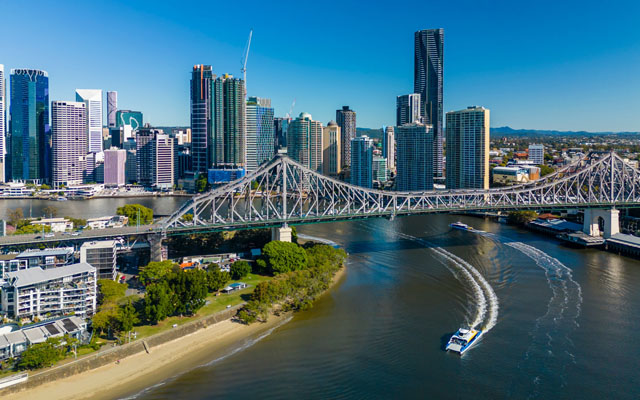
The Australian Tourism Exchange 2025 will be held in Brisbane, pictured
Each year, ATE provides the Australian tourism industry with the chance to meet with tourism wholesalers and retailers from 30 countries around the world.
Federal minister for trade and tourism, Don Farrell, said: “With Queensland gearing up to host the Olympics in 2032, it’s terrific to see ATE returning to Brisbane next year connecting international buyers and local businesses to take advantage of the green and gold decade.”
Brisbane had also previously hosted the event in 2001 and 2002.
Tourism Australia managing director, Phillipa Harrison, remarked that with the Australian tourism industry on the cusp of full recovery, the focus at ATE25 in Brisbane will help to drive the sustainable growth which will take the industry forward.
“By the time ATE returns to Brisbane next year, we expect that the Australian tourism industry would have surpassed the 2019 numbers we have been using as a benchmark and will once again be firmly focused on the future,” she said.
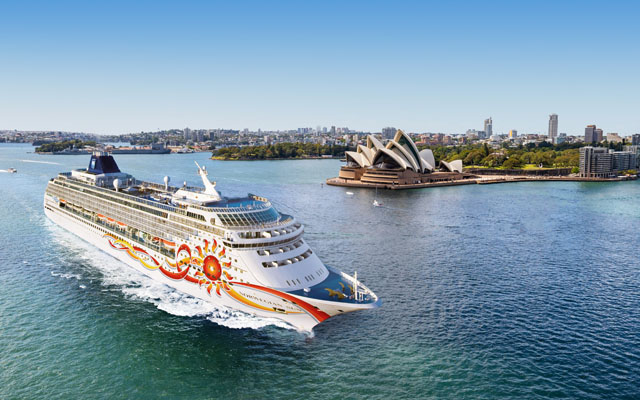
Norwegian Cruise Line (NCL) has launched 24 new port-intensive cruises across Asia, making the total of 85 Asia-Pacific voyages across Norwegian Spirit, Norwegian Sun and Norwegian Sky.
The itineraries will sail from September 2024 through March 2026.
Norwegian Cruise Line has added 24 new itineraries in Asia-Pacific
NCL will deploy the most ships in this part of the world for an extended season of voyages from 15 departure ports, including Auckland, New Zealand; Bali, (Benoa) Indonesia; Bangkok (Laem Chabang), Thailand; Manila, the Philippines; Papeete (Tahiti), French Polynesia; Seoul (Incheon), South Korea; Singapore; Taipei (Keelung), Taiwan; Tokyo and Yokohama, Japan; Vancouver, Canada; Sydney, Melbourne and, for the first time, Cairns, Australia; and Lautoka, Fiji.
These new nine-to-19-day voyages offer guests an average of 10 hours in port to over 60 locations, including NCL-first calls to Albany, Busselton, Fremantle, Port Douglas and Townsville, Australia; Matsuyama and Niigata, Japan; Aitutaki in the Cook Islands; and Suva, Fiji.
Spanning 18 months, this season will also feature 36 overnight port stays in Asia-Pacific to 11 places, including highlights like Japan’s Osaka, Himeji, and Tokushima. Other overnight calls include Hong Kong; Bangkok (Laem Chabang), Thailand; and Bali as well as Lembark (Lombok), Indonesia.
“Social media will disable geotag functions for travel content related to ecologically sensitive locations and living heritage sites, so that travellers cannot identify and swarm these destinations. Access to hidden gems of the world are only via authorised, sustainable-certified local residents who are topic experts.” Karen Yue
Group editor
“Everyone would have fulfilled their travel bucket list by then, including travelling to the moon, so travel desires are now back to good, old basics – lazy weekend getaways!” Mimi Hudoyo
Editor, Indonesia
“Space tourism is so common now, with many private companies in the field and operating with government subsidies. Everyone can afford a sojourn in space.” Rohit Kaul
Correspondent, India
“Earth’s surface is a bit crowded, so humans are getting away from it all. Space bubble gardens are a thing, so are underwater hotels.” Adelaine Ng
Correspondent, Australia
“There is no more doubt about the effects of global warming and everyone makes a conscious effort to protect the planet. Hence, access to ecologically sensitive locations, like the Himalayas or coral reefs, is reserved for responsible travellers. There is also an additional cost for visiting such places.” Fish Chan
Designer
“Decision-making on travel destinations and tourism options is now led by VR and AR experiences. Tourism show exhibitors, travel agents and tour organisers use this technology to help travellers choose where and when to go, as well as what to see and do.” Kathryn Wortley
Correspondent, Japan
“Checking out destinations ahead of booking is now a multisensory experience. You can see, touch, hear, smell, and interact with destination and communities of interest. This can be done at an incredibly low cost, making comprehensive travel planning accessible to all.” S Puvaneswary
Editor, Malaysia
“Advanced AI now allows me to access my travel memories and recreate episodes, like watching a Netflix series, of places I have visited, from cruising on the Amazon River to explore Brazil’s rainforest to trekking up Mt Annapurna in Nepal. Furthermore, supersonic travel allows me to order and get delivery of some of the amazing food and meals from overseas.” Caroline Boey
Senior correspondent, China/special projects
“No more passports! Biometrics is the way to go for travel globally.” Melissa Anne Tan
Sub-editor
“Air travel, including on space rockets, is finally built for the comfort of economy class passengers. No more middle seats while double-decker economy seats are an option. Airplanes also now feature lighting adjustments to regulate circadian rhythms and noise reduction measures.” Rachel AJ Lee
Assistant editor,
TTGmice/TTGassociations
“Travellers are not allowed to leave anything bad behind, so they will need to carry home their non-biodegradable trash. Some destinations or hotels may offer an incentive for travellers to do so.” Feizal Samath
Correspondent, Sri Lanka
“Airplanes and airports are replaced by teleport machines and teleport hubs. Travellers can be zapped directly to their final destination in accordance to GPS.” Redmond Sia
Designer
Japan is the top trending global destination due to its universal appeal and weak currency
India is becoming the biggest and fastest growing major market in the world
Chinese tourists continue to prioritise domestic over international travel
Mastercard’s Travel Trends 2024 report shows Japan as the number one trending destination worldwide
Destinations in Asia-Pacific are trending globally, snagging half of the top 10 hotspots with the greatest momentum among travellers, while passenger traffic in the region is showing strong signs of rebound, particularly for shorthaul trips, and India continues to position itself as the leading global player.
The fifth Travel Trends 2024: Breaking Boundaries report from Mastercard Economics Institute (MEI) offers insights into the evolving landscape of the travel industry across 74 markets, including 13 in Asia-Pacific.
Japan emerged as the number one trending destination worldwide, growing at 0.9 per cent, with 3,081,600 international visitors arriving in March 2024. According to the report, this is the highest level on record and sits ahead of the peak travel season.
“There’s no big surprise that we’ve been seeing Japan gain so much momentum on the travel scale. It’s an attractive place to go with many special experiences to be had and great food to be tasted, but also the weak yen, which is at the lowest level since 1990 on a bilateral basis against the Euro,” said David Mann, chief economist Asia-Pacific at Mastercard.
The report also revealed that passenger traffic in Asia-Pacific is rebounding, especially with regard to intra-regional trips. For example, it flagged up this summer’s top outbound destinations from Singapore, which includes Bangkok, Kuala Lumpur and Perth.
“Also, this year, we’re expecting to see a full recovery of tourist arrivals into Thailand, which is now only a few percentage points below where it was in 2019,” Mann said, adding that total visitor arrivals are now only seven per cent below 2019 levels.
However, inbound flight traffic from South Asia and the South-east Asia region sits at nearly 20 per cent above 2019 levels.
Eyeing up the Indian market
“The India travel story will only become bigger and bigger over the next few years and beyond. Firstly, we have to talk about the story of the middle-class itself. We have nearly 20 million more people by our estimates entering the middle-class in the next five years,” said Mann.
“We already should be seeing another two million entering the higher income groups, and we’re seeing more international trips coming from India than any time in history. In India’s case, it’s the biggest and fastest growing major market in the world now, and in the foreseeable future.”
Travellers are stay longer and spending more at destinations which helps local economies
In the first three months of 2024, 97 million passengers travelled through Indian airports. A decade ago, this figure would have taken one year to achieve. Domestic passenger traffic is 21 per cent higher than 2019 levels, with international passenger traffic up by four per cent, as of March 2024.
The MEI report also revealed that Indian travellers to key markets rose significantly in 2024 compared to 2019. Visitors to Japan increased by 53 per cent, to Vietnam by 248 per cent, which was attributed to the addition of direct flights, and visitors to the US jumped by 59 per cent.
Chinese domestic travel remains strong
The MEI report highlighted that Mainland China’s travel movement has shifted, with more Chinese tourists prioritising domestic over international travel.
“We actually saw a full recovery of travellers domestically in China one year ago. Even as of today, we’re about 15 per cent above where we had been in 2019,” Mann said.
In the meantime, international tourism traffic leaving Mainland China continues to recover. It is now at 80.3 per cent of 2019 levels. In 2024, this is expected to gain momentum due to visa exemptions in Asia-Pacific and an increase in international flight capacity, benefitting destinations including Singapore, Malaysia and Thailand.
“The majority of the outbound trips that we’ve seen from the Chinese mainland have been going elsewhere in Asia, to parts of Europe, and into the Middle East,” Mann stated.
Leisure for longer
Mann noted that there is a rise in the leisure for longer trend, stating that “we’re seeing tourists extend their trips in the Asia-Pacific region outside of Australia and New Zealand by about 1.2 days compared to what we’ve been seeing in 2019 – so, the average trip is 7.4 days”.
He added that this trend is being driven by the affordability of destinations, warm weather and favourable exchange rates. This compares to the 2019 average of 6.1 days per trip. In Australia and New Zealand, the average stay has risen to 5.4 days, which marks an increase of 0.6 days compared to 2019.
“We believe the bigger patterns that we’ve been seeing on these extra days spent on trips have been in places where the hotel price gains have been relatively lower,” said Mann, adding that “the longer people stay, there’ll be spending on other things, not just on the hotel, therefore helping local economies even more”.
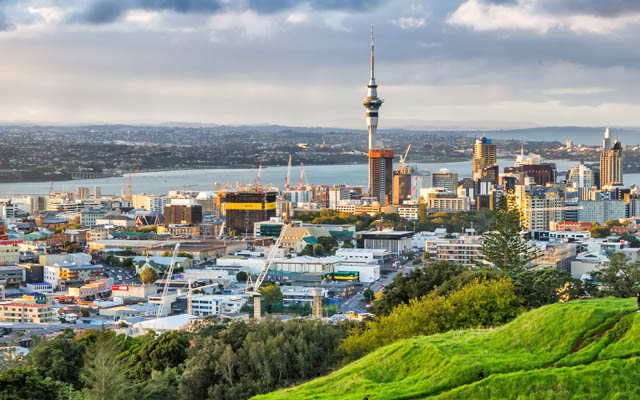
Tourism New Zealand (TNZ) is focusing on growing off-peak visitation to support sustainable and productive growth of the tourism sector, which has seen a successful recovery post-lockdown.
Visitor arrivals are returning to old patterns of peaking in summer and, without intervention, peak visitation is likely to grow faster than off-peak. Seasonal peaks and troughs result in the sector struggling to operate productively year-round.
Tourism New Zealand aims to boost New Zealand as a year-round destination; Auckland, New Zealand, pictured
TNZ chief executive René de Monchy commented that the tourism sector is now the country’s second largest export since the launch of its new four-year strategy for 2024-2028.
“We’re aiming to grow international tourism by NZ$5 billion (US$3.05 billion) over the next four years, with 70 per cent of that coming from visitors during the off-peak travel season,” he said.
In FY25, TNZ will target international tourism spend growth of 8.7 per cent equating to an additional NZ$900 million, as well as target international tourism spend growth in the off-peak of 9.6 per cent equating to NZ$655 million.
“FY25 is the first year of our four-year strategy – we’ll focus on building a long-term pipeline of visitors at the same time as we aim to boost off-peak visitation in this year,” says de Monchy.
In the first year of the new strategy, TNZ will focus on three areas, which include to build desire for New Zealand as a year-round destination, grow off-peak arrivals, and support sector sustainability and enhance the visitor experience.
de Monchy said: “TNZ will support the governments export growth goals and alleviate the industry’s seasonal visitation challenge by growing off-peak visitation alongside its work to support peak visitation”.
Dave Beeche, chief executive of RealNZ, which offers experiences that peak in the summer, like cruises in Fiordland and the TSS Earnslaw and Walter Peak in Queenstown, alongside its ski areas Cardrona and Treble Cone for winter holidays, shared how the travel company has adjusted its operations into traditional shoulder seasons.
“It means we can retain more staff, use our locations more effectively, and lead to a better guest experience – so we’re very supportive of spreading the tourism load across the seasons,” said Beeche.
Meanwhile, New Zealand International Convention Centre (NZICC) general manager Prue Daly remarked: “We believe the business events sector plays a crucial role in this effort. Business event delegates prefer travelling during less busy times to avoid crowded destinations, which enhances their experience and supports seasonality.
“TNZ’s vision aligns perfectly with the work NZICC is doing, as the majority of international congresses and business events we pursue are scheduled during the off-peak tourism months.”






















Anantara Hotels & Resorts is celebrating its 50th property milestone with a reimagined brand identity.
The brand’s refreshed look builds upon Anantara’s 23-year legacy, and has been designed to capture the imagination of today’s travellers while honouring the brand’s roots in experiential luxury.
The reimagined Anantara identity introduces several key updates such as simplifying its name from Anantara Hotels, Resorts & Spas to Anantara Hotels & Resorts; an updated logo with a contemporary look yet retaining its distinctive icon – the ‘Naam Jai’ water jar and traditional triangular cushions; as well as a new tagline Unforgettable Journeys.
Brand enhancements include modernised design elements with a refined colour palette and elegant typography; new identities for Anantara Spa, Designer Dining and Spice Spoons by Anantara; and refined service culture with enhanced service delivery standards and team member training programmes to elevate the Anantara guest experience.
The rebranding initiative has commenced with the rollout of the new logo and visual identity across all Anantara digital assets, with guests set to experience more tangible changes in service delivery and on-property experiences in the coming months.
“Anantara’s new visual identity and evolved experiences and concepts will redefine how guests see and interact with the brand, and will elevate us to a space less cluttered by other luxury hotel brands,” said Ian Di Tullio, chief commercial officer of Minor Hotels, the parent company of Anantara.
“This will be underpinned by an increased focus on deeply embedded sustainability, both in terms of how we help the environment and local communities, and how guests experience our hotels and resorts.”
Since its inception in 2001 with the opening of its first resort in Hua Hin, Thailand, Anantara has achieved a portfolio spanning Asia, Europe, the Middle East, Indian Ocean and Africa. The brand will continue its global expansion in the coming months, with the brand set to make its India debut with Anantara Jaipur Hotel later in 2024, on top of new openings in Bali (4Q2024) and Zambia (early 2025).