Experts are certain that China will continue to be the world’s top source market while recognising that the country’s inbound tourism is getting more official attention for the role it can play to boost the national economy.
Their outlook is based on factors such as unilateral and bilateral visa-free travel in 2024 announced since China exited its pandemic lockdown; a China Council for the Promotion of International Trade (CCPIT) report stating that at least 15 cities are providing incentives to boost business events; and the upgrading of travel infrastructure, and in lower-tier cities during the pandemic, fuelled by domestic demand.
According to Alexander Glos, CEO, China i2i Group, China’s rapid economic growth is the result of China’s emerging middle-class.
He said: “Less than 14 per cent of Chinese citizens have passports and even with this relatively low penetration rate, more than 150 million Chinese travelled globally in 2000.
“Envision the potential if 30 per cent of Chinese citizens possess passports in the next decade. This could result in 300 million people travelling worldwide annually.”
For Glos, one of the most significant milestones of the past decade has been the open skies between Europe and China, facilitating affordable flights between these two major economic and cultural hubs, and catalysing international travel for both Chinese and European travellers. This continues to be the primary driver behind the sustained economic growth and ongoing travel between these regions.
Wolfgang Arlt CEO of China Outbound Tourism Research Institute (COTRI) and CEO of Meaningful Tourism Center, observed: “In China, everything happens later, but faster. Tourism is no exception.”
He recalled the absence of outbound travel, missionaries or adventurers in Imperial China and tourism development delays in the 20th century due to revolution, wars and politics.
“Only after the start of reform and opening policies did China start to develop domestic tourism slowly, followed by inbound tourism and finally (after in 1997 when new regulations were issued) outbound tourism,” he said.
“Within 15 years, China (became the top) outbound tourism source market as well as the biggest domestic tourism market by far.”
To boost inbound tourism, Arlt said new efforts and policies are needed.
“China is still concentrating on first-time visitors, marketing the Forbidden City, the Great Wall and pandas. It has much more to offer and needs to develop sustainable tourism for different interest groups, including visits to national parks and other nature-based activities, cooking classes, and special interest trips,” remarked Arlt.
Confident in the lasting appeal of China’s “diverse natural features and historical landmarks, alongside modern cities and vibrant cultural landmarks”, Wong Hong, Delta’s president of China, said crucial steps toward boosting inbound and outbound tourism must include simplifying the visa application process and reducing processing times.
He said: “While China leads the way in mobile payment, it must fully address the barriers foreign tourists face in using popular platforms to make it a more attractive destination.”
On the business front, Julien Delerue, founding and managing partner, 1000meetings, said the rapid development of the Greater Bay Area (GBA) – encompassing China, Hong Kong and Macau – bodes well. Enhanced access in this region has created a host of opportunities for business travellers and economic activities.
Waikin Wong, regional director, ICCA Asia Pacific, added that China has stayed strong in the annual ICCA Country – and City – Rankings for Association Meetings even though it was the last country to lift all pandemic barriers in 2023. China has hosted more than 100 association meetings, indicating business activities are active and organisers are confident with local services and solutions.
“ICCA Asia Pacific believes China is recognising that events and business travel can play a significant role to drive the multi-disciplinary/cross-sector synergy approach to connect international business opportunities and diversification of its economy base.
“Moreover, many cities in China are welcoming international collaboration, and the establishment of the ICCA China office in Beijing is a great example.” – Caroline Boey

Tourism stakeholders in India are confident that the country will continue to rise as a major contributor to global tourism as well as a tourism destination in the years to come. The tourism landscape has witnessed great transformation, from a time in the early 70s when obtaining a passport and foreign exchange was a challenge for locals to last year, when Indian carriers, Air India and IndiGo, set a record for the most aircraft placed in a single order – 470 and 500 aircraft respectively.
Subhash Goyal, chairman – STIC Travel & Air Charter Group, recalled how travel was heavily regulated in the beginning, with people made to go through a complex web of bureaucracy and fill “never-ending forms”.
The growth of India’s outbound industry has been immense over the last decades, turning the country into a desirable market for many NTOs.
Harish Mathur, president, Concord Travels & Tours, recalled how the presence of these NTO offices and their activities since the early 2000s had played a part in raising the awareness of destinations overseas, ultimately triggering demand for outbound travel.
The international student segment was also instrumental in growing India’s outbound travel potential.
Madhavan Menon – executive chairman, Thomas Cook (India), said: “The segment has been witnessing an approximately 25 per cent growth year-on-year, with almost 1.5 million students studying overseas this year.”
On the other hand, India’s inbound potential sparked off with the liberalisation of the Indian economy in the 1990s, which led to an influx of foreign investment, benefitting business and leisure travellers.
“With the decade seeing the opening up of the Indian market, states like Kerala took an active interest in supporting tourism related businesses and entrepreneurs, as well as marketing/promotions,” said Menon.
Arun Anand, managing director, Midtown Travels, recalled the privatisation of airports and infrastructure improvements that followed.
A real gamechanger for the sector was the introduction of an e-tourist visa facility for international tourists in 2014.
“At the time I was the president of the Indian Association of Tour Operators (IATO), and the association worked relentlessly with the government to introduce an e-tourist visa facility in India which turned out to be a very positive decision for the industry,” said Goyal.
Menon also highlighted the launch of the Incredible India campaign in 2002 playing a critical role in showcasing the rich cultural heritage and diverse attractions of India to the world. Goyal beamed with pride when asked to project India’s tourism industry in the next 50 years.
He said: “By 2047, India is expected to be a US$35 trillion economy and a fully transformed developed nation. Indian carriers will have more than 2,500 planes, and India will have more than 250 airports, out of which 50 to 60 will (serve) international (flights). In the next 50 years, about 100 million people will be travelling overseas from India annually.”
Anand sees many more tourism development opportunities across India – particularly in the country’s 7,500km-long coastline that the government is eyeing for cruise tourism development.
“India will emerge as a leading player in the cruise segment,” he stated, adding that smaller cities will get their own international airports in the next 50 years, facilitating both inbound and outbound travel.
However, industry players urge the government to be more proactive in tourism development.
“India needs tourism marketing representatives in all the major source markets of the world,” noted Goyal, adding that the Indian Ministry of Tourism had closed down all of its offices abroad.
“We also need an open skies policy to become an aviation hub, just like Dubai and Singapore,” he added. – Rohit Kaul








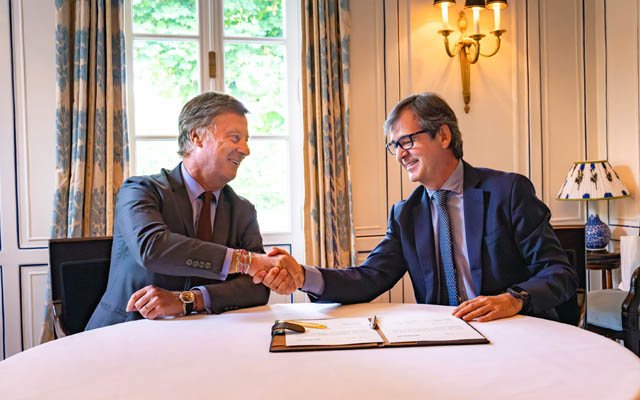

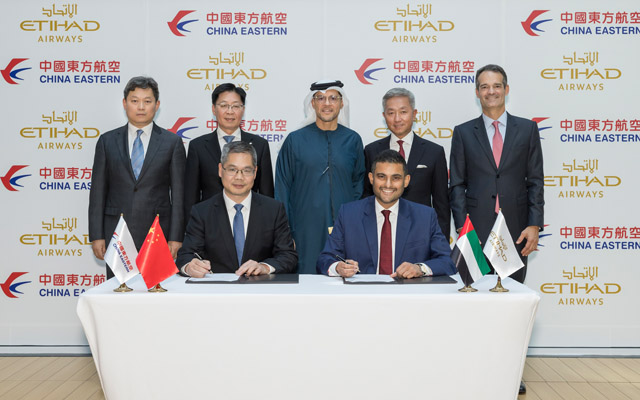

















Etihad Airways and China Eastern Airlines have signed a Joint Venture (JV) to cement the strategic partnership between the two airlines, making it the first commercial JV between a Middle Eastern airline and a Chinese airline.
The JV will allow both airlines to jointly develop and grow the routes between the UAE and China, offering expanded travel options and seamless travel experiences for passengers travelling between major Chinese cities like Shanghai, Beijing, Xi’an, and Kunming, and key cities in the UAE and across the Middle East and Africa regions.
Etihad and China Eastern Airlines will implement the JV cooperation in early 2025 when both teams secure all necessary regulatory clearances. Additionally, both airlines will introduce full reciprocity to their existing frequent flyer programmes in 4Q2024, allowing passengers to seamlessly earn points and redeem rewards when flying with either airline.
Etihad Aviation Group chairman Mohamed Ali Al Shorafa stated: “This partnership is more than the expansion of routes; it is about creating lasting and meaningful connections between our two nations which will stand for decades to come.”
“This year marks the 40th anniversary of diplomatic relations between China and the UAE. Both countries continue to develop and strengthen the high-value, strategic collaboration on the Belt and Road Initiative, and this momentum creates opportunities and motivation for deepening cooperation between China Eastern Airlines and Etihad Airways,” said Wang Zhiqing, chairman of China Eastern Airlines.
“Both China Eastern Airlines and Etihad Airways have strong global hubs, and our cooperation is highly complementary, covers a broad scope, and has great potential. We look forward to our collaboration creating more synergies, not only in facilitating passenger travel but also in building deeper economic, trade, and cultural exchanges between China and the UAE.”