

TBO goes public to accelerate growth of travel agencies in Asia-Pacific
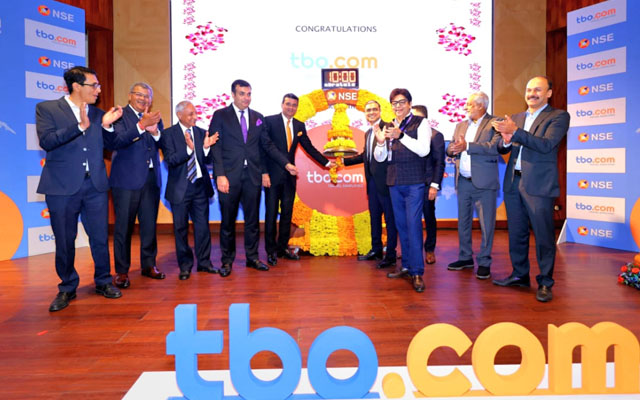
Travel distribution platform TBO.com has completed the public listing of its equity shares in India via the National Stock Exchange of India and the BSE Limited, raising approximately US$186 million.
The investments will be used to further enhance the TBO.com’s technology and services as well as expand into new markets in the region.

The public issue received an overwhelming response across all categories of investors, being oversubscribed 86.70 times overall. The Qualified Institutional Buyers portion was subscribed 125.51 times, while the Non-Institutional Investors portion received a subscription of 50.60 times. The Retail Individual Investors portion received 25.74 times, while the portion reserved for employees received 17.82 times subscription.
The company was listed on May 15 this year on the aforementioned Indian stock exchanges with a premium of 50 per cent plus over the issue price.
TBO’s two-sided technology platform enables suppliers and buyers to transact seamlessly with each other. For buyers, the platform is an integrated, multi-currency, and multi-lingual one-stop solution that helps them discover and book travel for destinations worldwide, across various travel segments such as leisure, corporate, and religious travel.
The TBO platform has a strong presence in Asia-Pacific and connects over 159,000 buyers across more than 100 countries with over a million suppliers. Their global impact was exemplified by the anchors attracted before the initial public offering, which included the Abu Dhabi Investment Authority, and institutional investors from countries like Norway, Japan and India.
“TBO’s listing on the Indian stock exchanges marks a significant milestone in our company’s journey. This accomplishment paves the way for new opportunities, enabling us to drive innovation, expand our reach, and enhance value for our shareholders and customers,” said Gaurav Bhatnagar, co-founder and joint managing director, TBO.com.
Dusit International to manage dual-branded luxury resort and residences in Phuket

Dusit International has signed a partnership agreement with VillaCarte Group, a Phuket-based real estate development company, to manage a dual-branded luxury hotel and apartment complex at the heart of VillaCarte’s Layan Verde Project on the west coast of Phuket, Thailand.
Slated to open in 2027, the 398-key Dusit Collection – Layan Verde hotel is set over five buildings, while another five buildings will be under Dusit Residences – Layan Verde comprising 388 rooms.
Guests and residents of Dusit Collection and Dusit Residences Layan Verde will enjoy a range of premium lifestyle facilities, including an all-day dining restaurant, fitness centre, swimming pool, kids club, rooftop bar, and banqueting space.
Located just 800 metres from Bang Tao Beach, Layan Verde spans over 108,000m² and will also encompass a shopping centre and an ocean club.
The hotel and apartment interiors will be finished with eco-friendly, moisture-resistant materials while advanced EDGE-certified technology will be implemented to decrease water and electricity consumption by up to 45 per cent.
“This project perfectly complements our existing Dusit Thani Laguna Phuket resort and further strengthens our commitment to providing exceptional hospitality experiences in Phuket,” said Siradej Donavanik, vice president – global development, Dusit International.
VillaCarte Group co-CEO, Vadym Bukhkalov, added: “Alongside Dusit’s renowned five-star standards of service and growing global portfolio of Dusit Hotels and Resorts, we were also impressed by the size and scale of the upcoming Dusit Central Park project in Bangkok. Its design, seamlessly integrating a luxury hotel and residences with sustainable features like a public roof park, aligns perfectly with our own commitment to creating a harmonious blend of nature and contemporary luxury at Layan Verde. This shared passion for sustainability is the cornerstone of our exciting and promising partnership with Dusit. We’re confident it will be a long-term collaboration filled with meaningful success.”
Cathay Pacific to connect Hong Kong and Riyadh
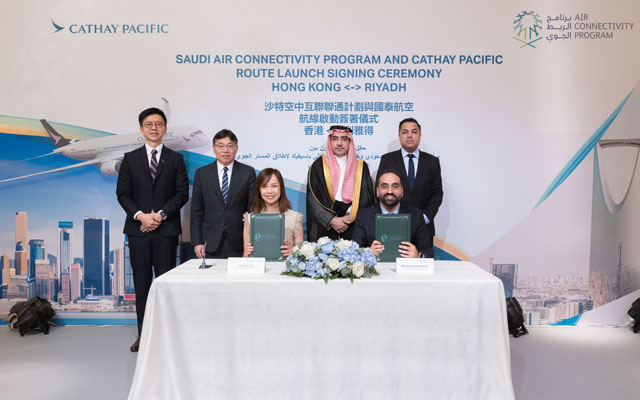
Cathay Pacific is launching direct flights to Riyadh from Hong Kong starting October 28 this year.
The airline will offer three return flights per week (Monday, Thursday and Sunday) between Hong Kong and Riyadh using its modern Airbus A350-900 aircraft, featuring Business, Premium Economy and Economy cabins.

This new service will offer more travel options and greater convenience for those travelling to and from Saudi Arabia.
TFE Hotels announces key GM appointments

TFE Hotels has announced several key hotel general manager appointments across its Adina, Vibe and Travelodge network in Australia and New Zealand.
Having been with TFE Hotels for 15 years, Shaarn Letele is the new hotel general manager of the soon-to-be-refurbished Adina Apartment Hotel Sydney Darling Harbour.

Frances Ryall joins TFE Hotels fresh from a stint with IHG, where she was operations manager of Crowne Plaza Coogee. She will head as hotel general manager at Vibe North Sydney.
Meanwhile, Arthur Rojas, who started his career with TFE in 2011, has been named cluster general manager of Travelodge Melbourne Docklands and Adina Apartment Hotel Melbourne Southbank.
In Auckland, New Zealand, Annabell Javinez takes on the role as general manager of Travelodge Hotel Auckland Wynyard Quarter, while Suzanne Pentecost has been appointed general manager of the 164-key Adina Apartment Hotel Auckland Britomart.
Indonesia combats overtourism

Infrastructure improvements and promotion of lesser-known destinations are among the steps being taken by Indonesian travel and tourism players to tackle overcrowding in hotspots like Bali.
Within Bali alone, the spread of tourists has been uneven, with a strong concentration in South Bali, which comprises Kuta, Seminyak, Legian, Jimbaran, Benoa, Nusa Dua, Uluwatu and Pecatu.

Wayan Suena, president director of Indonesia Impression, noted that hotels in South Bali are usually fully booked, while hotels in the north, east and west suffer low demand. He believes that demand can be spread out to the other regions of Bali by improving access.
To disperse travellers to other parts of Bali, the Bali Tourism Office is improving tourism hardware and infrastructure. “We are repairing the Besakih Temple; building an international theme park with Paramount Pictures in Jembrana, West Bali; completing the Singaraja-Denpasar shortcut access; and continuing construction of the toll road in West Bali,” detailed Tjok Bagus Pemayun, head of the Bali Tourism Office.
Wayan said the Singaraja-Denpasar shortcut access development has already yielded positive results – more visitors are taking one-day tours to Sekumpul waterfall and the Lovina area in Singaraja.
“More agents are also selling one-day tours for dolphin-watching in Lovina,” he added.
Beyond Bali, Wita Tour is promoting itineraries such as Bangka-Belitung, and will create tours to Komodo, Sumba and places in Sumatera.
Addressing the woe of overtourism, Dwi Nugraha, world product manager, Pacto DMC, said areas like Bali’s Canggu and Ubud were often congested due to improper traffic management, not overtourism.
“It is important to carefully assess each area and the reasons behind the high tourist numbers before labelling (the issue) as overtourism,” Dwi warned.
Meanwhile, she is hopeful that road improvements will connect all Bali regions so travellers can easily access areas such as Pemuteran, Amed, and Munduk, thus easing the burden of crowds on South Bali.
David Putrawan, sales and marketing manager of Wita Tour, opined that improved infrastructure could be a double-edged sword. With easier access, more people would visit a destination and give rise to potential overtourism.
Singapore university partners SITA to enhance air passenger experience

SITA is collaborating with Singapore University of Technology and Design (SUTD) to create new off-site passenger processing solutions, allowing airline passengers to check themselves and their luggage in from almost any location – even before they arrive at the airport.
The SUTD-SITA off-airport processing project kicked off in March this year and will run for a year. SITA will provide SUTD access to its SITA Flex solution, giving the SUTD researchers the necessary technology to turn their current physical, digital, and experiential off-airport designs into workable prototypes.
When fully integrated and completed, passenger processing procedures – passport scanning, luggage weighing, and printing of luggage tags and boarding passes – which are usually done at airports, will be available off-site using these prototypes.
Tourists could even have their luggage sent to the airport in advance right from their hotel, eliminating the need for them to leave their luggage with the hotel concierge should their flight depart hours after checking out of the hotel. They can simply carry on with their activities and head straight to the airport just an hour, instead of the usual two hours, before their flight departs.
As the hardware and service design requirements are ironed out and the solution takes shape, the off-airport concept will be tested for seamless integration and optimal performance with various SITA partners, including airlines, airports and ground handlers.
Sumesh Patel, SITA’s president for the Asia-Pacific region, commented: “SUTD’s designs break away from a traditional approach to off-airport touchpoints, and powering it will facilitate innovation and our ability to continually transform the passenger experience. It will also demonstrate the existing versatility of our solutions, which can be deployed both in- and off- airport and on non-SITA platforms.”
“We are designing the first fully integrated offsite solution to be powered by the SITA Flex solution – this will reshape and elevate global air travel with greater convenience and efficiency. We look forward to validating our designs in trials with airport and airline operators, cruise centres as well as hoteliers in the months to come,” shared Chong Tow Chong, president of SUTD.
Oceania Cruises makes cruising personal
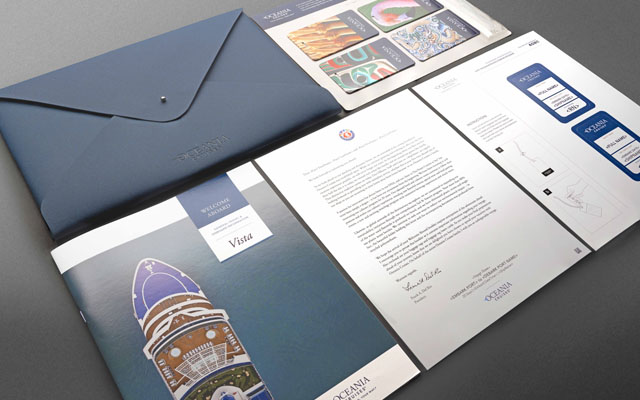
Oceania Cruises has relaunched its Cruise Vacation Guide, bringing travellers a personalised portfolio inclusive of pre-cruise information before setting sail.
Shipped to guests approximately 60 to 70 days prior to their embarkation date, the kit includes a personalised welcome letter from Oceania Cruises president, Frank A. Del Rio, a ‘Welcome Aboard’ booklet with general cruise information and a deck-by-deck guide per vessel, four reusable luggage tags and personalised luggage tag inserts that are customised with the guest’s name, sail date, ship and stateroom and colour coordinated based on booking category.

Guests previously received a shore excursion booklet in their pre-cruise documents mailed directly to them, but now, they will be able to access a digital shore excursion overview booklet on the Oceania Cruises website under Shore Excursions, and through their booking portal, in addition to receiving a digital PDF of shore excursion offerings specific to their voyage.
“It’s important to us that travellers sailing with Oceania Cruises enjoy a personalised and seamless experience from the time they book their voyage until their return home,” said Del Rio. “While most other lines are making the shift to a fully digital experience, we are responding to our guests’ preference for physical, in-hand documents, showing our dedication to meet the needs of our guests while also providing digital versions.”
PATA welcomes new executive board
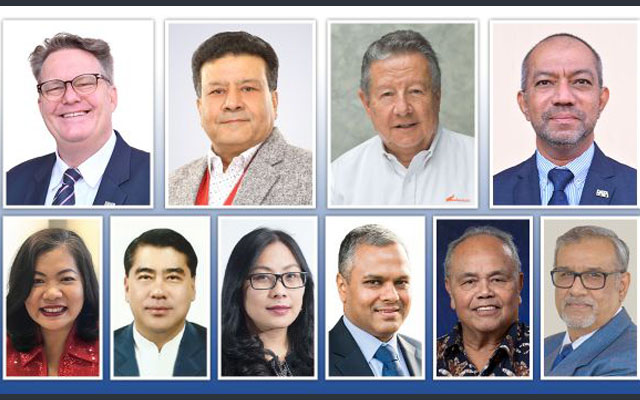
PATA has ratified its new Executive Board, which will be led by Peter Semone, who will serve as the chair for a consecutive second term.
Semone is a tourism development expert specialising in the Asia-Pacific region and has served in leadership roles for international donor funded projects in Timor-Leste, Lao PDR and Vietnam.
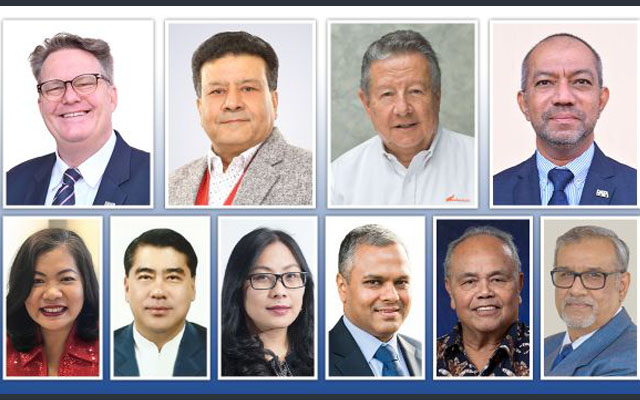
Meanwhile, Suman Pandey, president of Explore Himalaya Travel & Adventure will be the new vice chair, and Asian Trails’ chairman Luzi Matzig will serve as the new secretary/treasurer of PATA.
Other members for this term include Ben Montgomery, director of business relations management, Centara Hotels & Resorts, Thailand; Henry Oh, chairman, Global Tour, South Korea; Noredah Othman, CEO, Sabah Convention Bureau, Malaysia; Mayur Patel, head of Asia, OAG, Singapore; Gerald Perez, vice president, Guam Visitors Bureau, Guam; and SanJeet, director, DDP Publications, India.
PATA CEO Noor Ahmad Hamid remains on the Executive Board as an Ex-Officio member.
ITIF 2024 roundtable debates ways for Indonesia to grow arrivals
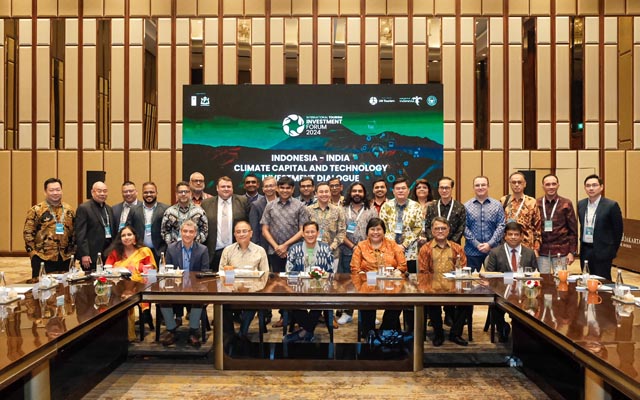
Indonesian minister of tourism and creative economy, Sandiaga Uno, has underlined the importance of the tourism industry in the country’s pursuit of economic growth at the International Tourism Investment Forum (ITIF) 2024 held in Jakarta on June 5 and 6, while noting strong performance in 2023.
Despite 2023 international arrival numbers falling short of pre-pandemic levels, reaching 11.7 million visitors and 35 per cent down from before, tourism revenue surpassed targets by 40 to 45 per cent.

Sandiaga expressed confidence in the country’s tourism performance, judging from its latest ranking on the 2024 edition of World Economic Forum’s Travel and Tourism Development Index – up 10 spots from 32nd to 22nd place. The ranking takes into account the implementation of quality and sustainable tourism, and its stronger position on the index has earned Indonesia international recognition, opined Sandiaga.
He was addressing investors, financial institutions and travel-related businesspeople at the Invest in Wonderful Indonesia Roundtable Discussion, held during ITIF 2024, which was organised by the Indonesian Ministry of Tourism and Creative Economy and supported by UN Tourism.
“We are confident that the key is to increase investment, and we need more investment in the tourism sector,” stated Sandiaga.
To entice investors, Sandiaga said Indonesia would continue to offer various tourism conveniences, such as visa-on-arrival and smart gate systems in immigration areas, as well as introduce Special Economic Zones (SEZ) and the five super-priority tourism destinations comprising Mandalika-Nusa Tenggara Barat, Lake Toba-North Sumatra, Likupang-North Sulawesi, Labuan Bajo-Nusa Tenggara Timur, and Borobudur-Central Java.
In response, Natalia Bayona, executive director of UN Tourism, urged for greater collaboration between the government and the private sector to better face global geopolitical factors, which could affect the investment climate.
She stressed: “We need more professionals’ presence, more reliable talents; we need to create more job opportunities. Therefore, investing in people is crucial to creating sustainable jobs that we can support.”
Commenting on human resource investment, Sachin Gopalan, CEO of IndoFringe, said youth programmes were needed to groom future leaders, who are all currently students, to carry on Indonesia’s Emas 2045 vision and India’s Viksit Bharat@2047 vision.
By connecting the youths of Indonesia and India, they can brainstorm and develop the future creative economy together, he opined.
In support of talent development, Indian ambassador for Indonesia and Timor-Leste, Sandeep Chacravorty, said both Indonesian undergraduates and postgraduates now have the chance to study abroad under its education programme.
Besides focus on human capital, UN Tourism’s Bayona said the industry also needed to develop start-ups and strengthen local SMEs so that they “become the backbone of the tourism sector”.
Several additional suggestions were put forth by other panellists, such as the privatisation of airports and seaports; the need for more attractions in tourist destinations to provide better visitor experiences; as well as the development of golf tourism.
Dharma Mangkuluhur, commissioner of Intra Golflink, opined: “Golf tourism is a sector that Indonesia should focus on. Our golf courses need upgrading (to meet the standards of neighbouring countries). There are 250,000 travellers coming to Indonesia (a year) for golfing while Thailand receives six million. This market is big and Indonesia should (tap it).”
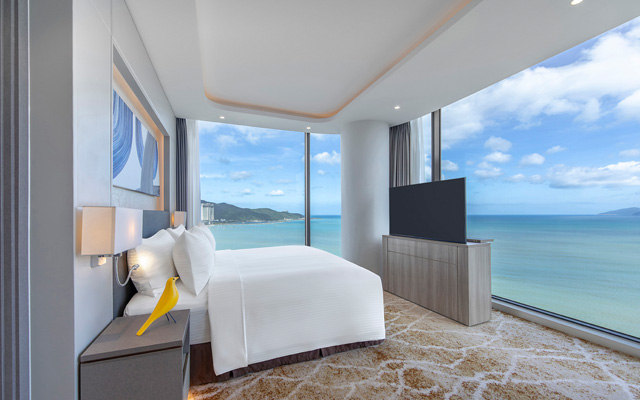








Frasers Hospitality and Sabre Hospitality have formed a strategic partnership to deploy the latter’s latest solution, SynXis Retailing, as part of Frasers Hospitality’s retailing strategy, marking a pivotal step in its commitment to retail innovation and superior guest services.
Building upon a strong partnership established in 2009, this collaboration saw Frasers Hospitality enrol one of its properties in the Preferred Launch Partnership programme as a pilot to tap into the capabilities of SynXis Retailing to elevate the overall guest experience. The outcome of the programme surpassed expectations, with the pilot property reporting a significant increase in ancillary revenue. The Retail Studio also complements the existing SynXis Booking Engine which offers a more personalised guest experience and seamless booking process via Frasers Hospitality’s platform.
SynXis Retailing provides hospitality players with the ability to “sell anything”, presenting an opportunity to introduce new revenue streams to properties with limited amenities, such as serviced residences. This flexibility enables hoteliers to enhance offerings for guests across their portfolio, from policies and services to food and beverage options, and even activities and experiences from third-party suppliers.
Sabre Hospitality president Scott Wilson said: “This collaboration underscores our shared commitment to innovation and delivering unparalleled value to hoteliers and guests alike. Hospitality retailing plays a pivotal role in this endeavour, as it allows hospitality companies to not only offer accommodation but also to curate personalised experiences and ancillary services tailored to individual guest preferences.”
“We look forward to leveraging Sabre Hospitality’s latest solutions to analyse guest preferences and personalise our offerings as part of our purpose and commitment to curate and enrich guest experiences,” added Mark Chan, chief operating officer of Frasers Hospitality.